Overwatered Bell Pepper: Wet-Mix Checks & Fixes
Quick answer
On sweet bell capsicum, overwatering usually means the upper 2–3 cm stays wet for days, the pot feels heavy, and leaves yellow or wilt while the root zone is damp—not crisp and dry. First step: pause irrigation, empty the saucer, and confirm moisture at depth before watering again.
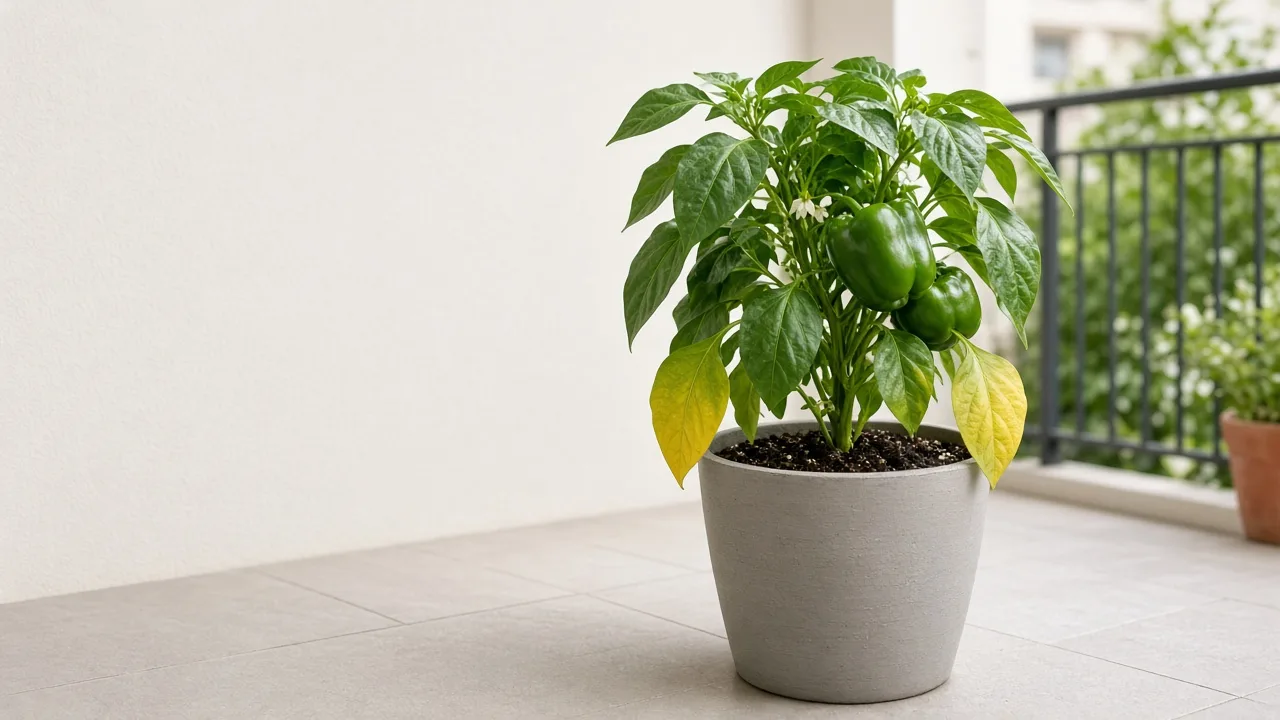
Overwatering on Capsicum: Causes, Checks & Fixes
This guide covers overwatering on Capsicum. See also the general Overwatering guide, watering, and light pages for this plant.
Overwatering on Capsicum: Causes, Checks & Fixes
Quick answer
Sweet capsicum (Capsicum annuum bell types—see the Capsicum overview) needs even moisture while flowering and fruiting, but it does poorly in heavy, wet soils and suffers when the root zone stays saturated. For how chronic wet mix damages roots in general, see our overwatering guide. On capsicum, the warning pattern is a heavy pot days after watering, sour or green algae on the surface, yellowing lower leaves, and wilt that lingers into the morning while the upper 2–3 cm is still damp—not a light dry pot with crispy leaf edges.
First step: stop irrigation immediately. Lift the container off any full saucer, confirm drainage holes are open, and check moisture at 2–3 cm depth before you change light, fertilizer, or pot size.
| What you observe | Likely issue | First move |
|---|---|---|
| Wet upper 2–3 cm + heavy pot + yellow lower leaves | Overwatering / poor drainage | Pause water; empty saucer; see recovery steps |
| Dry upper 2–3 cm + light pot + afternoon wilt only | Heat stress or underwatering | Water deeply per watering guide |
| Wet mix + morning wilt + soft stem base | Advancing root rot | Unpot same day; trim rot; dry repot |
| Wet surface + tiny flies | Fungus gnats on damp organic mix | Dry down; see gnat guide |
| Yellow leaves + wet soil but firm stem | Possible wilt disease | Reduce water; Utah Extension notes over-watering worsens some wilts—do not soak “to help” |
What overwatering looks like on capsicum
On a fruiting bell pepper, overwatering rarely starts with a single dramatic collapse. More often you notice lower leaves turning yellow while the mix stays dark and cool, flower buds dropping without setting fruit, or small fruit that stalls on a plant that still looks bushy up top. In containers, peat-heavy mix may stay wet at the centre even when the top crust looks dry—a common balcony mistake during monsoon weeks.
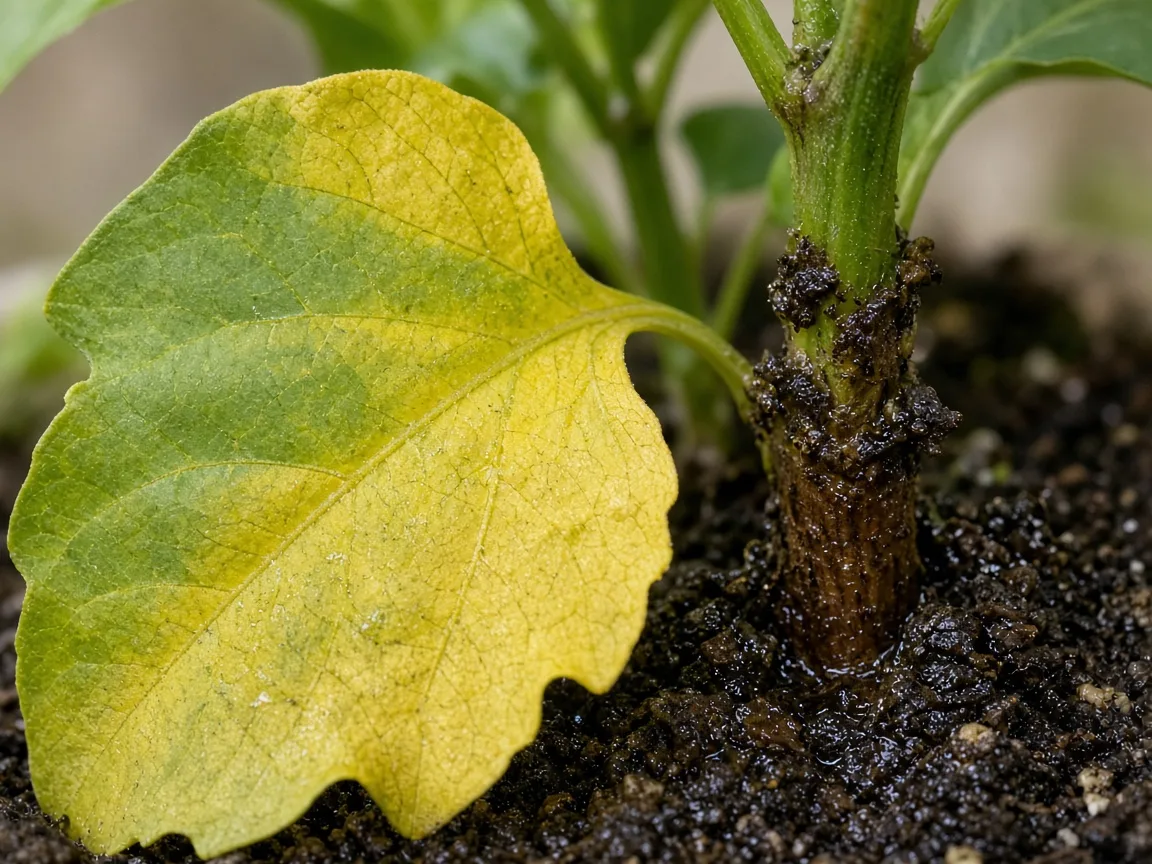
Yellowing lower leaf on a sweet bell capsicum with glossy, water-saturated mix clinging to the stem—typical early overwatering before the stem base softens.
You may also see white or green mold on the soil surface (mold on soil), fungus gnats when you disturb the pot, or a sour smell when you slide the plant out. Clemson Extension identifies fruit set and development as the critical moisture period for peppers—so capsicum tolerates neither bone-dry swings nor a swamp. Chronic saturation steals root oxygen; Missouri Botanical Garden notes that waterlogged soil limits oxygen and can kill roots, which then shows up as wilt on wet mix.
Midday wilt vs true overwatering
Capsicum in full sun often droops at the hottest part of the day even when roots are healthy. That heat wilt is misleading and drives extra watering. Use the morning test: if stems are firm and leaves open by mid-morning, afternoon limpness alone is not a call to soak. If the plant is still limp at breakfast and your finger finds wet mix at 2–3 cm, you are likely dealing with root stress from overwatering—not underwatering.
Why sweet capsicum gets overwatering
Peppers are not desert plants, but they are also not bog crops. Utah State University Extension recommends deep, infrequent irrigation and warns that irregular watering (over or under) can cause flower drop or blossom-end rot. “Infrequent” in a pot still means checking often—it means you do not re-water until the upper root zone begins to dry, then wet the whole root ball once.
Common capsicum-specific triggers:
Calendar watering in fruiting season. A plant setting blocky fruit uses more water than a young seedling, so it is easy to assume “fruiting = water every day.” In mild or rainy weather the same pot may stay wet for several days. Daily checks are not daily drinks—see the Capsicum watering guide.
Saucers and cachepots after deep watering. Sweet peppers need a thorough soak when dry, but standing water in a saucer re-saturates the bottom roots. On Indian balconies, roof runoff into a tray can do the same during monsoon.
Heavy or poorly drained mix. Peppers need well-drained soil and struggle in compacted clay or water-retentive peat without perlite. Pair fixes with the soil guide.
Cool, cloudy weeks after a wet spell. Evaporation slows; mix that felt “right” in May stays wet in an overcast June. Utah State’s irrigation guide stresses regular, uniform watering during flowering and fruiting—uniform means avoiding both drought shock and waterlogging, not keeping mix constantly soaked.
Kindness after wilt. Seeing limp leaves triggers another pour. If wilt pairs with wet soil, more water accelerates root rot and drooping leaves from damaged roots.
Oversized pots for seedlings. Large volumes of wet mix dry slowly around a small root ball. Container growers note peppers yellow and wilt when overwatered in pots that stay waterlogged—deeper pots help when drainage is good, not when the bottom never dries.
How to confirm the cause
Work through these checks before repotting or feeding:
- Moisture at 2–3 cm — Clemson’s vegetable-garden watering guidance recommends checking soil moisture at roughly 5–10 cm depth in beds; in a pot, the upper 2–3 cm is your practical proxy. Water only when that layer begins to dry while deeper mix still holds slight moisture—details in the watering guide.
- Pot weight — Lift the container. A heavy, cool pot days after watering means water remains below. Note wet versus dry weight once so future checks are faster.
- Time of wilt — Heat wilt fades overnight; overwatering wilt often persists into cool mornings on damp mix.
- Stem base — Press the lowest inch of stem above soil. Soft, dark tissue on wet mix is urgent; firm green tissue supports a dry-down first.
- Drainage path — Water should exit every hole within minutes of a soak. Blocked holes, sealed nursery pots inside cachepots, or compacted mix cause chronic saturation.
- New growth and flowers — Stalled fruit, blossom drop, or yellow leaves climbing the plant on wet mix fit overwatering. Crispy leaf margins on a light pot suggest dryness instead.
Utah Extension’s pepper FAQ also notes that yellow leaves and poor growth can signal wilt diseases—and that you should make sure you are not over-watering when those symptoms appear. Wet soil plus a firm stem may need disease consideration, not another soak.
Lookalike symptoms on capsicum
| Pattern | Overwatering | Underwatering | Heat wilt | Root rot |
|---|---|---|---|---|
| Soil at 2–3 cm | Wet for days | Dry, may pull from pot edge | Often moist | Often wet |
| Pot weight | Heavy | Light | Variable | Heavy |
| Wilt timing | Morning + wet mix | Morning + dry mix | Afternoon only | Any time, worsening |
| Leaf colour | Yellow lower leaves | Crisp edges, dull green | Temporary droop | Rapid yellow, brown stem base |
| First action | Pause water | Deep soak when dry | Shade or wait | Unpot, trim rot |
The first fix to try
Pause irrigation and remove standing water. Do not apply fertilizer, Epsom salt, or calcium sprays to “fix” yellow leaves until the root zone dries—moisture swings and saturation drive many capsicum fruit disorders more often than a missing nutrient.
Move the pot if needed so no saucer or tray holds runoff, tilt it to drain, and park it where air moves (not a dark corner—that slows drying). Give the mix several days to dry toward the centre. In hot dry weather this may take two to four days; in cool humid weather it can take longer.
When the upper 2–3 cm is dry and the pot feels noticeably lighter, resume with one deep watering at soil level until water runs free, then empty the saucer within 30 minutes. That single correction is your baseline—do not stack repotting, heavy pruning, and pesticide on the same day.
Step-by-step recovery when roots may be damaged
If the stem base is still firm but leaves keep yellowing on wet mix, escalate in order:
- Slide the plant out — Check roots. Healthy pepper roots are white or tan and firm. Brown, mushy roots mean rot—follow the root rot guide.
- Loosen only the wet outer shell — If outer mix is sour but the core roots are firm, gently remove the wettest outer layer without destroying the root ball.
- Repot into fresh, well-drained mix — Use the proportions in the soil guide. Choose a pot only large enough for the root mass plus one size up—not a huge tub “for growth.”
- Wait before the next soak — Let transplanted roots breathe 24–48 hours if you disturbed wet mix heavily, then water once deeply and drain.
- Protect fruit expectations — Existing yellow leaves may drop. Small fruit may abort; new flowers after recovery are the success signal.
If the stem is already soft or black at the soil line, salvage is uncertain. Firm side shoots above healthy tissue are sometimes worth rooting, but prevention next season is usually cheaper than repeated rescues.
Flowering, fruit set, and overwatering
Capsicum is most sensitive to moisture mistakes when flowers and young fruit are forming. Utah Extension links inconsistent water to flower drop and blossom-end rot—distinct problems that both worsen when you alternate flood and drought. Overwatering adds a third failure mode: roots cannot take up calcium and water evenly even when the soil contains enough nutrients, so fruit may show leathery blossom-end patches while leaves yellow on wet mix.
The fix is not “keep soil wet all the time.” It is steady availability: let the upper 2–3 cm begin to dry, then irrigate deeply so moisture reaches the whole root ball. Drip or soil-level watering helps on terraces because it reduces splash and wasted runoff compared with a quick overhead sprinkle that wets only the surface.
Recovery timeline
Mild overwatering caught while the stem is firm often stabilizes within one to two weeks after you establish a dry-down rhythm. Lower yellow leaves may fall; new top growth and flowers tell you roots are working again.
Moderate root damage can take three to six weeks in warm weather. Fruit already set may ripen slowly or abort—focus on firm new leaves rather than perfect cosmetics on damaged lower foliage.
Severe rot with a soft stem may not be recoverable in the same season. If you are past your region’s planting window, starting a fresh seedling in gritty mix is sometimes faster than nursing a collapsed plant.
Mistakes to avoid
Do not water because leaves look sad without the 2–3 cm check. Do not mist leaves to cool plants—wet foliage in humid evenings encourages leaf spots; capsicum needs root-zone correction, not foliar sprinkling.
Avoid heavy nitrogen fertilizer on a stressed, wet-rooted plant; Utah Extension warns excess nitrogen can delay fruiting even when roots are healthy, and salts stress damaged roots further.
Do not leave capsicum in full saucers “so it never dries out.” Sweet bells need drainage after every soak.
Do not confuse blossom-end rot with overwatering alone—BER ties to moisture management, but treatment starts with even watering, not more random soaks. Read the watering guide’s BER section before adding supplements.
How to prevent overwatering next time
Build the habit from the Capsicum watering guide: finger or skewer at 2–3 cm, pot weight, then deep base watering only when that layer starts to dry. In hot fruiting weather, check daily; in cool rain, skip days.
Use well-drained mix and open drainage holes per the soil guide. Match pot depth to root size—deep containers help when they drain, not when the bottom stays anaerobic.
Give full sun and airflow per the light guide so mix cycles between wet and dry at a healthy pace. Shade cloth may reduce heat wilt without keeping roots soggy.
During monsoon, pause irrigation when rain keeps mix damp, clear blocked holes, and divert roof spill away from pots. Empty saucers after every manual watering.
When to worry
Treat overwatering as urgent when morning wilt persists on wet mix, the stem base softens, yellowing climbs quickly, or several leaves fail within a week. Open the root rot and wilting guides the same day.
Slow yellowing on a firm stem with soil that finally dries on schedule can often wait for a rhythm reset. Wet soil plus a sour smell or black stem base cannot.
When to use this page vs other Capsicum guides
- Capsicum watering — routine depth checks and fruiting-season rhythm before assuming overwatering is the main issue
- Underwatering — dry mix, light pots, and crispy leaf edges
- Root rot — mushy roots, black stem bases, salvage trimming
- Yellow leaves — nutrient, age, or disease patterns beyond wet mix alone
- Wilting and drooping leaves — posture problems when drainage is already correct
- Capsicum problems hub — full symptom index
Related Capsicum guides
Conclusion
Overwatering on sweet capsicum is a root-zone oxygen problem dressed up as yellow leaves, dropped flowers, or confusing wilt. Pause water, drain saucers, and verify moisture at 2–3 cm before you fertilize or upsize the pot. Recovery shows up as firm new growth and stable fruit set—not necessarily re-greened lower leaves.
Related tool
Use the Root Rot Risk Checker to narrow causes for overwatering on this plant before changing multiple variables at once.