Wilting on Capsicum: Heat Wilt vs Root Failure
Quick answer
Wilting on sweet capsicum (bell pepper) is limp leaves and soft stems when the plant cannot hold turgor—often from a dry pot during fruit load, saturated mix after heavy rain, or soilborne wilt pathogens—not always thirst. First step: at midday, lift the container and press your finger into the top 2–3 cm of mix before you pour another drink.
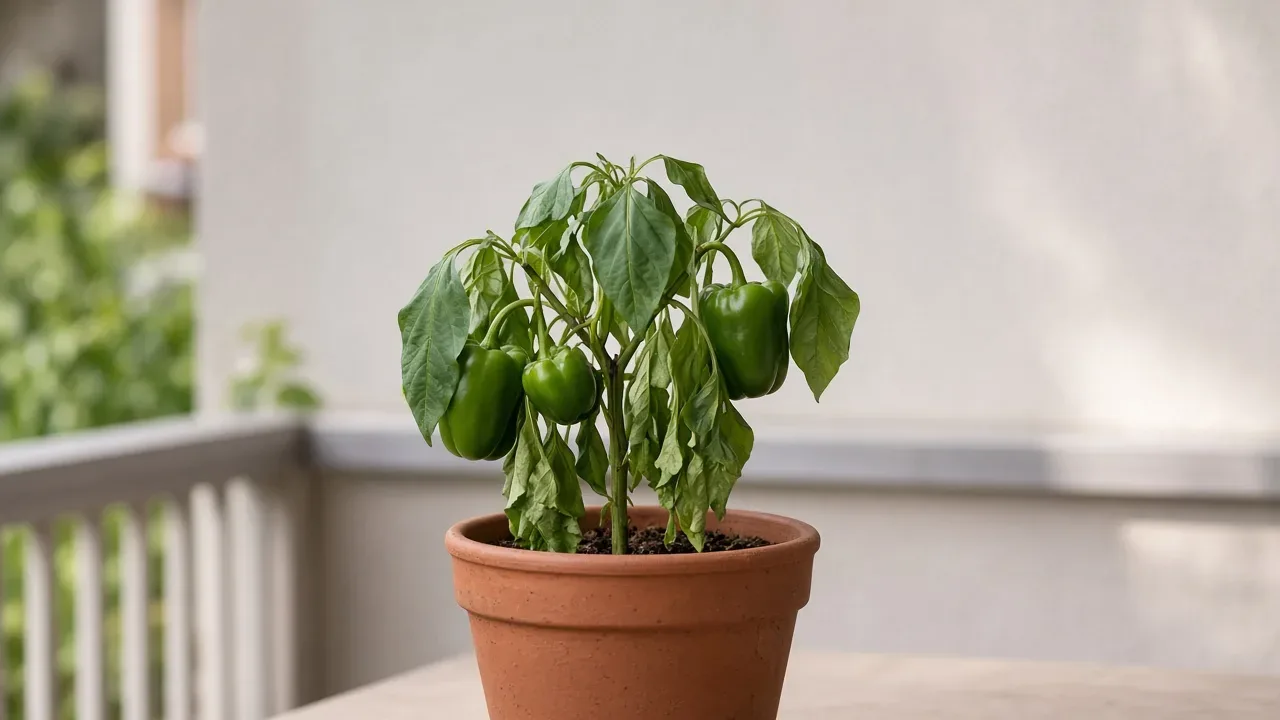
Wilting on Capsicum: Causes, Checks & Fixes
This guide covers wilting on Capsicum. See also the general Wilting guide, watering, and light pages for this plant.
Wilting on Capsicum: Causes, Checks & Fixes
Quick answer
Wilting on sweet capsicum (bell pepper, Shimla Mirch) is limp turgor loss—broad leaves hang from soft petioles and loaded branches may sag toward the pot rim. That is sharper than the slower bend in the drooping leaves guide and different from normal afternoon softening on a hot terrace. For how wilting works when roots stop moving water, see our wilting symptom hub. On capsicum, lift the pot and test the top 2–3 cm of mix before you water.
First step: at the same time of day you noticed wilt, lift the container and press your finger into the top 2–3 cm (about one knuckle) of mix. A light, dry pot with thin but firm stems calls for deep irrigation per the Capsicum watering guide. A heavy, damp pot with limp leaves means stop watering and check drainage—not thirst. Mushy stem tissue at the soil line means escalate to root rot or vascular wilt today, not tomorrow.
When to use this page vs other Capsicum guides
- Drooping leaves — gradual petiole bend over days; this page covers fast collapse or whole-plant limpness
- Underwatering — dry mix, light pot, crispy leaf margins
- Overwatering — chronic wet mix, yellow lower leaves, sour smell before collapse
- Root rot — crown mush, brown roots, wilt that worsens on wet soil
- Not enough light — pale stretchy growth, not sudden midday flop
- Aphids — sticky honeydew and curled new growth when colonies are heavy
- Problems hub — browse every capsicum issue in one place
What wilting looks like on sweet capsicum
Healthy sweet pepper forms an upright, somewhat brittle stem with glossy dark green leaves and blocky fruit at the nodes. Wilting changes that silhouette quickly—and the time of day matters as much as the leaf color.

Compare a limp bell pepper leaf beside a firmer one—note stem stiffness at the soil line and whether wilt is uniform or one-sided before you treat.
Midday heat wilt is common on balcony capsicum in Indian summer. Leaves look soft around noon on a fruiting plant in full sun, then recover by evening when temperatures drop. The pot may still feel moderately heavy. This is stressful but not the same as chronic failure—see the heat-wilt section below before you double-water.
Dry-pot wilt shows limp leaves on a lightweight container, often with mix pulling slightly from the rim and flower buds dropping. Utah State University Extension notes that irregular over- or underwatering can cause flower drop on peppers. Petioles feel thin but stems above the crown stay firm—not mushy. A fruiting Shimla Mirch in a 10–12 inch pot can go from fine to limp within a day in hot wind.
Wet-soil wilt is the dangerous misread. Multiple leaves hang limp while the mix stays dark and cool. Lower leaves may yellow first. You may see no improvement after watering. Wilting on moist soil often means roots cannot take up water—the classic pepper trap after loving it with daily shallow sips or leaving a pot in a full saucer after rain.
Vascular wilt (verticillium-type) often starts on one side or the lower leaves, with yellow wedges on blades and tan streaks inside the lower stem when cut lengthwise. UC IPM describes yellowing and drooping on a few branches or the whole plant, with brown vascular discoloration visible in a lengthwise stem cut. Cool weather favors this soilborne pathogen; there is no cure once established in the plant.
Phytophthora crown wilt can collapse the whole plant rapidly in wet weather. NC State Extension notes wilting under wet conditions followed by plant death, with crown lesions girdling the stem. Fruit may show water-soaked spots; stems darken at the soil line.
| What you see | Likely cause | Urgency | First action |
|---|---|---|---|
| Limp at noon, firm by evening, moderate pot weight | Midday heat wilt | Low | Shade during peak sun; verify evening recovery |
| Limp day and night, light dry pot, dropped flowers | Underwatering | Medium | Deep drink; drain fully |
| Limp leaves, heavy wet pot, yellow lowers | Overwatering / root stress | Medium–high | Stop water; empty saucer |
| One-sided yellowing, tan stem streaks | Verticillium-type wilt | High | Remove plant; do not reuse soil for peppers |
| Fast whole-plant collapse in rain, dark crown | Phytophthora blight | High | Remove; improve drainage for future beds |
| Sticky leaves, curled tips, colonies underneath | Aphids | Medium | Rinse or treat pests before blaming water |
Midday heat wilt on balcony bell peppers
Sweet Capsicum annuum bell types transpire heavily when carrying full-size fruit in direct sun. Afternoon limpness on an otherwise healthy plant is often temporary hydraulic lag, not root death—especially if you watered correctly yesterday and the pot is not dust-dry.
Confirm the pattern: note wilt at 2 p.m., then check the same plant at 8 p.m. If posture returns and new growth looks normal, prioritize afternoon shade, mulch on the pot surface, and consistent deep watering rather than panic repotting. If wilt never recovers overnight, move to the pot-lift split below.
Avoid blasting wilted foliage with overhead midday sprinkling on humid terraces—that can spread splash-borne pathogens. Water at the base in the morning when possible, matching deep, infrequent irrigation guidance for peppers.
The top 2–3 cm and pot-lift split
Capsicum watering on LeafyPixels follows the same threshold as the watering guide: water when the upper 2–3 cm begins to dry, not on a blind calendar. Wilting diagnosis starts there too.
- Lift the pot — a fruiting bell pepper in plastic often feels noticeably lighter when the root zone is dry; a heavy pot long after rain means saturation.
- Top 2–3 cm finger test — crumbly and pale supports thirst; cool, clinging surface on a heavy pot supports “stop watering.”
- Stem pinch at the soil line — firm green tissue versus soft brown mush separates drought from root rot.
- Branch pattern — whole-plant flop on wet soil differs from one branch dying back (vascular wilt or stem girdle).
Make one correction, then wait 24–48 hours before stacking repot, prune, and fertilizer. Peppers resent bundled stress while fruiting.
Fruit load and brittle stems
Unlike many houseplants, sweet capsicum wilts when fruit demand outruns a dry root zone—the same plant that looked fine yesterday may sag today because a set of blocky peppers pulled water faster than roots replaced it. Branches loaded with fruit are also brittle; dragging a limp stem when moving the pot can snap it.
Support loaded plants with a short stake or cage tied early, per the overview. If wilt follows a dry spell, water deeply until excess drains, then let the top 2–3 cm dry again before the next irrigation—do not leave the mix soggy “to be safe,” which invites the wet-soil wilt pattern.
How to confirm the cause
Work from fast, non-destructive checks to destructive ones only when wilt persists on damp soil.
Water and heat checks (do these first). Record pot weight, top-layer moisture, time of day, and recent rain. If the plant perks up after a single drained watering and the pot gains weight, you likely had true drought—not verticillium.
Drainage checks. Confirm drainage holes are open and saucers are empty. Review soil structure—compact peat-heavy mix in a small pot dries unevenly and rewets poorly.
Pest checks. Large aphid colonies can yellow and wilt foliage; look at new growth and undersides before assuming disease.
Disease checks (when water logic fails). If wilt progresses on wet soil, scrape the lower stem. Dark sunken girdling matches phytophthora risk in rainy beds. For suspected vascular wilt, a lengthwise cut low on the stem may show tan vascular tissue while the pith stays greener—a pattern University of Minnesota Extension associates with verticillium wilt on pepper. Gardening Know How notes that sudden wilt with yellowing from the bottom upward despite watering often points to fungal wilt rather than heat stress—lab confirmation may be needed, but home growers should still act as if the plant is not salvageable for fruiting.
The first fix to try
If the pot is light and the top 2–3 cm is dry: water slowly at the base until excess runs out, empty the saucer, and move the plant to bright but not scorching light while it rehydrates. That single deep irrigation is the correct first fix for dry-pot wilt—not foliar feed, not repotting.
If the pot is heavy and wilt persists: withhold irrigation, improve airflow, and inspect the crown. If tissue is firm and only leaves are limp after heat, shade and wait for evening recovery.
If vascular or phytophthora signs appear: remove the plant from the bed or isolate the pot, bag debris, and plan a multi-year rotation before planting peppers in the same soil. UC IPM emphasizes that there are no effective cures once verticillium wilt has occurred in the field—prevention and avoidance matter more than rescue sprays.
Recovery timeline
Same-day heat wilt: leaves often firm within hours after sunset if the root zone was adequately moist.
One dry cycle: expect noticeable recovery in 24–48 hours after a proper drink; flowers lost during stress may not return until the next flush.
Wet-root stress: recovery takes one to three weeks if roots are mostly white and firm after you dry the mix—see root rot for salvage steps.
Vascular or phytophthora wilt: do not expect meaningful fruit recovery; focus on protecting neighboring plants and future seasons.
Success looks like new leaves opening firm, stable fruit size, and wilt that no longer spreads— not every sun-bleached lower leaf returning to perfect form.
What not to do
- Do not water a heavy, wilting pot “because the leaves look thirsty.”
- Do not fertilize a collapsed pepper to “give it energy”—fix water and roots first.
- Do not overhead irrigate late in the day on crowded balcony plants when foliage stays wet overnight.
- Do not reuse potting mix from a plant that showed tan vascular streaks or crown girdle for your next bell pepper.
- Do not confuse sweet bell capsicum on this site with deliberately drought-stressed hot chilli cultivars.
How to prevent wilting next time
Anchor care to even moisture through flowering and fruiting, the stage Utah State Extension flags as sensitive to irregular watering. Use a large drained container, well-drained loamy mix, mulch the surface, and check daily in heat without watering daily by default. Provide afternoon shade on terraces, stake early, and rotate garden beds away from known wilt history. After monsoon, pause irrigation until the top 2–3 cm dries.
Related Capsicum guides
- Capsicum overview — species hub, cultivar notes, and support basics
- Watering — top 2–3 cm checks and fruiting-stage rhythm
- Light — full sun with heat management
- Soil — drainage and moisture retention balance
- Yellow leaves — often precedes wet-soil wilt
- Problems hub — full symptom list for this plant
Conclusion
Wilting on sweet capsicum is the plant telling you turgor failed—often because a fruiting pot went too dry, saturated mix smothered roots after rain, midday heat outpaced uptake, or a soilborne pathogen blocked the stems. Separate heat recovery from overnight collapse, lift the pot, and fix one cause at a time. Most balcony bell peppers recover when watering, drainage, shade, and pot size align with fruit load; the proof is new firm leaves and stable fruit, not every older blade standing tall again.
Related tool
Use the Plant Watering Calculator to narrow causes for wilting on this plant before changing multiple variables at once.