Underwatering on Capsicum: Causes, Checks & Fixes
Quick answer
Underwatered sweet capsicum wilts with dry mix 2–3 cm down, a light pot, and sometimes dropped flowers or stalled fruit. First step: water slowly at soil level until drainage runs, then empty the saucer—do not mist leaves or give shallow sips.
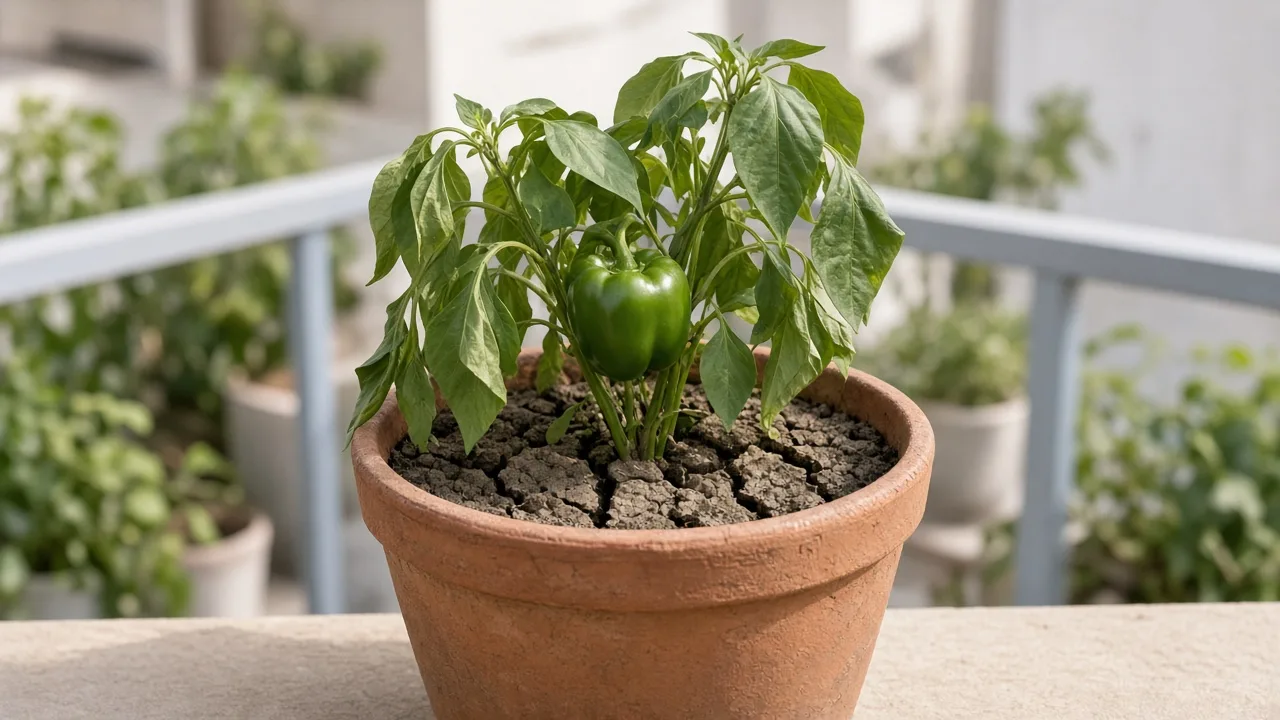
Underwatering on Capsicum: Causes, Checks & Fixes
This guide covers underwatering on Capsicum. See also the general Underwatering guide, watering, and light pages for this plant.
Underwatering on Capsicum: Causes, Checks & Fixes
Quick answer
Thirsty sweet capsicum (Capsicum annuum bell types) shows dry mix 2–3 cm down, a light container, and wilt that matches real dryness—not the heavy, cool soil you would feel with overwatering on Capsicum. For how chronic dry-down stresses roots in general, see our underwatering guide. On capsicum, the damage often shows up first as limp leaves, dropped flowers, or small stalled fruit while the top crust still looks briefly damp.
First step: water slowly at soil level until excess drains from every hole, then empty the saucer within thirty minutes. Do not mist foliage or sprinkle the surface once. One deep pass rewets the root ball; repeated shallow drinks often fail when peat-heavy mix has gone hydrophobic and sheds water down the pot wall.
Why Capsicum gets underwatered
Sweet bell peppers are productive, sun-loving vegetables that need steady root-zone moisture from flowering through fruit expansion, not a swamp and not a desert. Utah State University Extension notes that irregular watering (over or under) can cause flower drop or blossom-end rot on peppers—so both extremes hurt, but underwatering is easy to cause when heat, wind, and a loaded fruiting canopy pull water faster than a weekly habit allows.
Several patterns repeat on capsicum:
Calendar watering after a soggy-soil scare. Growers who lost seedlings to crown rot sometimes stretch intervals too far. A fruiting bell in a 30 cm pot on a south-facing rail can cross from “ready to water” to severely dry in a single hot afternoon.
Surface-only checks. The top crust can pale and crack while the centre root ball is still slightly moist—or the reverse, where the surface looks fine after a quick sprinkle but the core stayed dry. This page covers sweet Shimla Mirch–type bells, not hot green chilli deliberately stressed for heat; match your seed packet before copying a chilli neighbour’s dry-down schedule.
Heat wilt misread as thirst. Capsicum in full sun may look slightly limp at midday even when the root zone is adequate. Pouring more water without probing turns a dry spell into waterlogging.
Hydrophobic container mix. When peat-based mix dries completely, water runs down the inside wall while the centre stays dry. The plant keeps wilting after what looked like a watering.
Fruit load without more checks. As bells swell, transpiration rises. The same interval that worked at flowering may leave a loaded plant dry by evening—flower buds drop before you notice wilt on lower leaves.
What underwatering looks like on Capsicum
Underwatering on capsicum has a recognizable pattern once you know healthy turgor: blocky leaves should feel crisp, and stems should hold fruit without sagging.
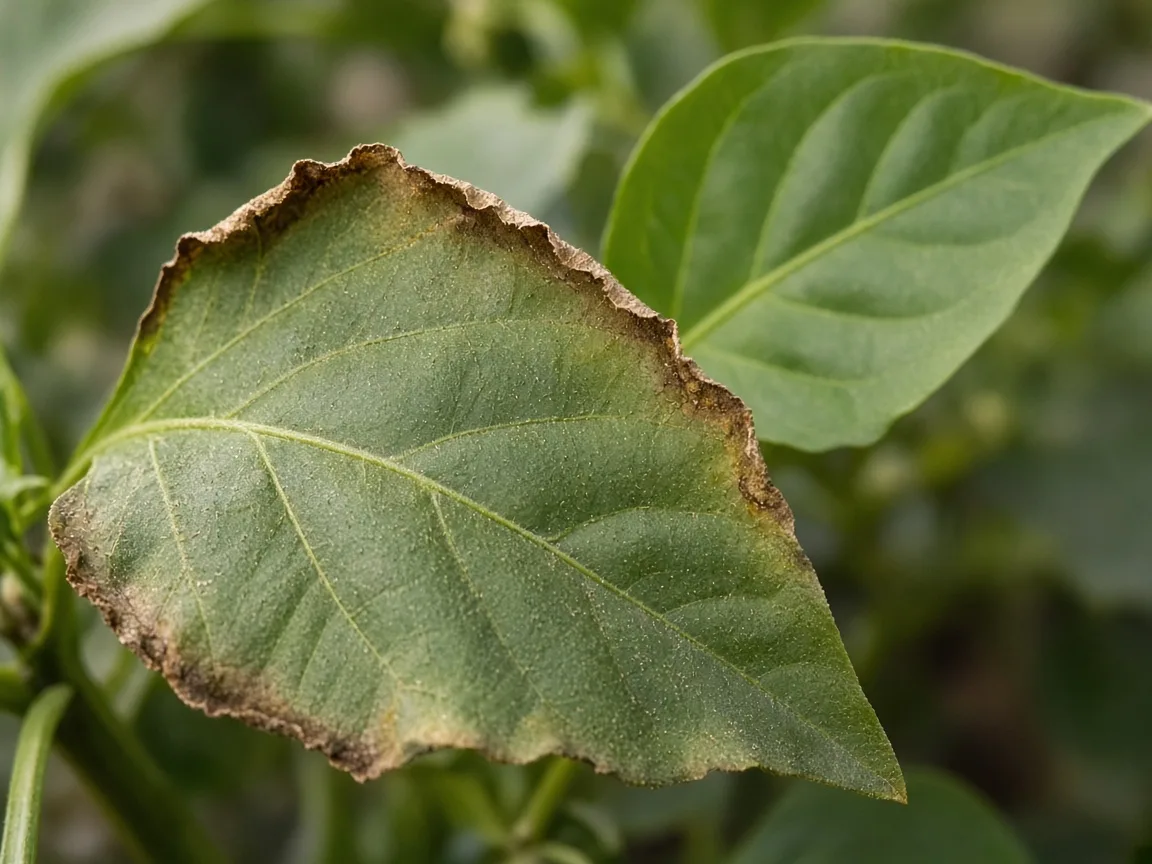
Underwatering symptoms on Capsicum — compare dry, slightly curled leaf margins with firmer new growth higher on the stem.
Typical underwatering signs:
- Wilting or drooping that persists into the morning, not just a midday slump
- Dry, lightweight pot on containers; in beds, dusty soil when you scratch 5–10 cm down
- Mix pulled away from the container rim; pale, crumbly surface
- Flower drop or small, stalled fruit after a dry stretch during bloom
- Leaf curl or dull, leathery feel on older leaves; lower leaves may yellow after repeated dry cycles
- Slowed new growth during warm weather when the plant should be pushing flowers
What underwatering usually does not include:
- Wet, cool soil that clings to your finger for days
- Soft, black tissue at the stem base or sour-smelling mix
- Uniform yellow lower leaves while the mix stays saturated
- Papery sunscald patches on fruit sides exposed to direct sun with otherwise adequate moisture
Stems should feel firm where they meet the soil. Mushy crowns point to rot, not simple thirst.
Flowering and fruit-set: where drought hurts first
Capsicum sheds flowers and mis-sizes fruit when moisture swings, not only when leaves look dramatic. Utah State links blossom-end rot to poor water management and drought stress as well as to calcium transport problems—so a dry spell during fruit swell can leave dark leathery blossom ends even if you add lime later.
During flowering, a short drought may drop open blooms before wilt is obvious on the canopy. During fruit expansion, the plant may keep older leaves stiff while new bells stall small and thin-walled. That is why this problem page pairs with the Capsicum watering guide: the same 2–3 cm dry-down check protects harvest quality, not just leaf posture.
If you are chasing colour change on ripening bells, remember that stress slows sizing and sweetness; fix moisture before chasing extra fertiliser.
Heat wilt vs true underwatering on balcony capsicum
On terrace and balcony crops, afternoon limpness is common. Heat wilt improves by evening when soil 2–3 cm down is still cool and slightly moist. True underwatering stays limp overnight and shows dry mix at depth plus a light pot.
Black plastic nursery pots and dark containers heat the root zone; they can dry the outer rim of mix hours before you notice wilt on top growth. Terracotta breathes faster than glazed ceramic. Wind along railings pulls moisture from large leaves faster than a sheltered courtyard.
When in doubt, probe at dawn. If the plant is turgid by breakfast without extra water, you likely saw heat wilt. If it is still limp with dry soil, soak at soil level—not overhead, which wets foliage without rewetting a hydrophobic core.
How to confirm the cause
Work through these checks before you pour:
- Pot weight — Lift the container. A dry capsicum pot feels distinctly lighter than after a thorough watering.
- Finger or skewer probe — Push your finger 2–3 cm deep, or insert a wooden skewer to the bottom. Dry, crumbly mix at that depth supports underwatering. A damp skewer means wait.
- Wilting pattern — Whole-plant limpness with dry soil suggests thirst. One wilted branch with firm neighbours may be mechanical damage or a localized root issue.
- Soil versus stem base — If leaves droop but soil is wet and cool, stop watering and inspect for root rot on Capsicum or crown stress.
- Fruit and flower stage — Recent flower drop with dry soil during bloom strengthens the underwatering read. Blossom-end rot on multiple fruit with swinging moisture is a related water-stress signal—see the watering guide for BER cross-checks.
- Drainage run-through test — Water slowly. If water pools on the surface and exits the drain hole in seconds without wetting the centre, the mix may be hydrophobic.
Confirmed underwatering: dry at depth, light pot, firm stems, wilt that matches soil dryness. Suspected overwatering: heavy pot, wet mix, soft stem base—different fix path.
First fix for Capsicum
Water slowly at soil level until excess runs freely from every drainage hole, then empty the saucer within thirty minutes.
Use a narrow-spout can and deliver water around the inner pot edge, moving inward—not overhead, so leaves stay dry and the crown stays safer from splash-borne disease. Continue until water drains; for hydrophobic mix, pause ten minutes and water once more so the centre rewets. Gardening Know How advises letting pepper soil dry at the top before irrigating anew—after this recovery soak, return to that dry-down rhythm rather than keeping the mix saturated.
Do not fertilize a wilted, dry plant. Rehydrate with plain water first; resume feeding only after new growth looks normal.
Do not repot on day one unless the mix is completely collapsed and water will not penetrate after two slow soaks.
Step-by-step recovery
After the initial deep soak:
- Move out of harsh midday sun if the plant was fully collapsed in extreme heat. Bright light without scorch for the rest of the day reduces transpiration while roots catch up.
- Bottom-water if top watering failed — Set the pot in a tray of room-temperature water for 30–45 minutes until the surface moistens, then drain fully.
- Repeat only when the upper 2–3 cm dries — Resist daily drowning after one dry spell; that swings to overwatering and invites root disease in solanaceous crops.
- Trim fully crisp leaves only if they shade new growth; leaves still photosynthesize once turgor returns.
- Stake if needed — Rehydrated stems may still be brittle around heavy fruit; tie loosely to an existing cage so a limp branch does not snap.
- Refresh hydrophobic mix when water consistently runs through unused soil. Plan a move into fresh, freely draining mix per the Capsicum soil guide at the next appropriate window—not as a substitute for soaking today.
Monitor daily for the first week. Adjust interval to how fast your pot dries in your light—not a generic schedule.
Recovery timeline
Mild dehydration often shows improvement within a few hours to one day after a proper soak—leaves regain stiffness overnight. Moderate stress with some crispy edges may take three to seven days before new tips look normal.
Judge recovery by turgid new leaves, fresh flowers, and firm young fruit, not old damaged margins. Crispy tissue does not revert to green.
If the plant stays limp 48 hours after two thorough soaks with appropriate dry-down between them, slide it out and inspect roots. Firm white-to-tan roots support continued care; extensive brown, slimy roots mean rot from a prior wet cycle, not current thirst alone.
Lookalike symptoms to rule out
Overwatering and root rot — Wilting with wet, heavy soil; yellow leaves on lower stems; soft stem base. Stop watering and improve drainage instead of soaking again.
Blossom-end rot from moisture swings — Dark leathery patch on the blossom end while leaves may still look green. Fix steady moisture; calcium alone does not replace irrigation discipline.
Sunscald on fruit — Papery pale patches on sun-exposed shoulders with otherwise adequate soil moisture—shade fruit or maintain leaf cover, not more arbitrary water.
Heat wilt without drought — Midday limpness that recovers by evening when soil moisture is adequate at depth.
Spider mites — Fine stippling and webbing on undersides in hot dry air; soil may be dry from both transpiration and skipped watering. Scout before assuming pure underwatering.
Mistakes to avoid
Do not assume every wilting capsicum needs water—probe first. Overwatering after misreading heat wilt is a common path to root stress on peppers.
Do not mist leaves instead of soaking roots. Wet foliage does not rewet a dry root ball and can encourage leaf diseases in humid monsoon spells.
Do not give small daily sips. Shallow watering keeps upper roots moist while the centre starves—Utah State recommends deep, infrequent irrigation for solanaceous crops so roots access moisture lower in the profile.
Do not fertilize a dry, collapsed plant hoping to push fruit—that burns stressed roots.
Do not leave the pot in a full saucer after rehydrating. Standing water suffocates roots capsicum needs for recovery.
Do not confuse this sweet bell profile with hot chilli stress training—both may be C. annuum, but bell cultivars are grown for thick, mild fruit, not deliberate drought.
How to prevent underwatering next time
Build a check-first habit tied to pot weight and the top 2–3 cm of mix, aligned with the Capsicum watering guide.
During active summer growth in full sun, many container bells need water every one to three days once the dry-down check confirms need; mulched garden beds may go longer after rain. Utah State suggests applying about 1–2 inches of water per week in the garden, adjusted for rainfall, and using drip where possible to keep uniform moisture.
Match container to habit: small pots dry fastest; add mulch in beds only after soil warms. Windy balcony rails need more frequent checks than sheltered corners.
Keep freely draining, moisture-retentive mix per the soil guide so capsicum gets full soaks followed by real dry-down—not constant saturation.
When fruit loads increase, add a second daily weight check rather than an automatic extra drink—water only when the probe confirms dryness.
When to worry
Treat as urgent when the plant is fully collapsed with bone-dry soil in hot sun, or when wilting persists 48 hours after proper rehydration. Flower and fruit loss during a critical dry spell may not fully recover even after leaves firm up.
Chronic underwatering through a bloom cycle reduces harvest and can weaken plants enough that pests exploit stressed tissue. Replace severely declined starts if recovery stalls after root inspection.
A single afternoon wilt with evening recovery and moist soil at depth is not urgent. Confirm dryness before soaking.
Conclusion
Underwatering on capsicum is a solvable moisture deficit—dry soil at depth, a light pot, and wilt that matches thirst tell the story, often alongside dropped flowers or stalled bells. Soak thoroughly at soil level, drain the saucer, and resume a rhythm keyed to how fast your container or bed dries in sun. Crispy old leaves may stay marked, but firm new growth and steady fruit set confirm you corrected the problem. Master the 2–3 cm check and pot weight, and your sweet peppers get the even moisture they need from bloom through harvest without swinging into the saturated-soil problems that cause more bell-pepper losses than a missed afternoon drink.
When to use this page vs other Capsicum guides
- Capsicum watering guide — Use for routine moisture checks before assuming underwatering is the main issue.
- Capsicum problems hub — Browse all common issues on this species.
- Wilting on Capsicum — Different entry point when symptoms overlap with underwatering.
- Drooping leaves on Capsicum — When limp foliage is the main symptom you noticed first.
- Yellow leaves on Capsicum — When colour change, not wilt, is the main clue.