Brown Tips on Capsicum: Leaf Margins, Fruit Load & Water
Quick answer
Brown tips on sweet capsicum (bell pepper) leaves are usually dry, crispy margins on older foliage from uneven moisture, heat stress, or fertilizer salts—not low indoor humidity. First step: push your finger 2–3 cm into the mix; if it is dry, deep-water at soil level until drainage runs.
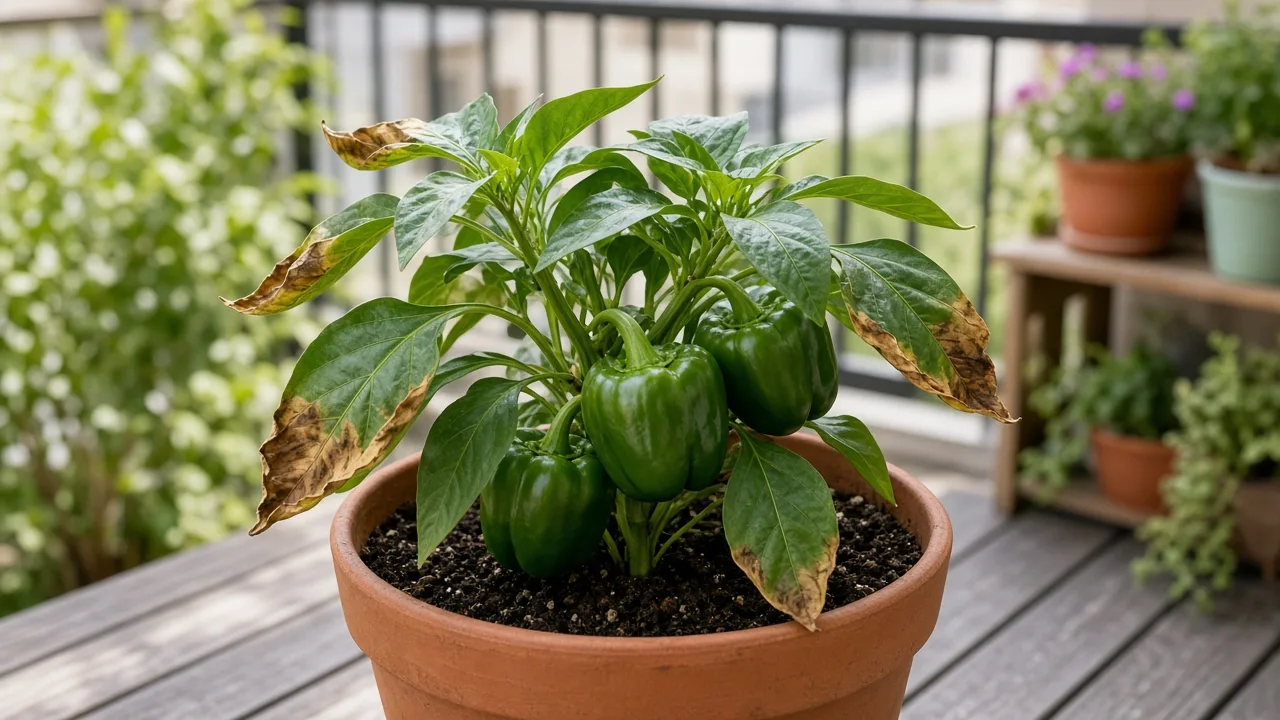
Brown Tips on Capsicum: Leaf Margins, Fruit Load & Water
This guide covers brown tips on Capsicum. See also the general Brown Tips guide, watering, and light pages for this plant.
Brown Tips on Capsicum: Leaf Margins, Fruit Load & Water
Quick answer
Dry brown tips and margins on sweet capsicum (Capsicum annuum bell types—Shimla Mirch–style blocky fruit, not hot green chilli) almost always mean leaf edges desiccated faster than roots could resupply water, or salts built up after feeding. For how marginal leaf burn works on plants in general, see our brown tips hub. On capsicum, the first fork is whether brown sits on lance-shaped foliage tips or on the bell fruit itself—fruit sunscald and blossom-end rot follow different rules than crispy leaf points.
First step: push your finger 2–3 cm into the mix beside the stem. If it feels dry and the pot is light, water slowly at soil level until excess drains from every hole, then empty the saucer. Do not mist leaves, trim every tip, or fertilize until you know whether thirst, heat, or salts drove the damage.
When to use this page vs other Capsicum guides
This page is for dry tan tips and margins on pepper leaves. Use sibling guides when the main story differs:
| What you see | Start here instead |
|---|---|
| Whole plant limp with dry mix | Underwatering on Capsicum or wilting |
| Yellowing lower leaves on wet mix | Overwatering on Capsicum or root rot |
| Pale stippling plus webbing | Spider mites on Capsicum |
| Mostly yellow blades, not crisp tips | Yellow leaves on Capsicum |
| Brown soft patch on the bell fruit bottom | Blossom-end rot (moisture and calcium)—see Capsicum watering |
| Routine moisture rhythm | Capsicum watering guide |
What brown tips look like on Capsicum leaves
Sweet bell peppers carry large, dark green, lance-shaped leaves on brittle, fruit-loaded stems. Tip burn here is usually dry, papery tan to brown tissue confined to the point or outer margin, while the rest of the blade stays green.
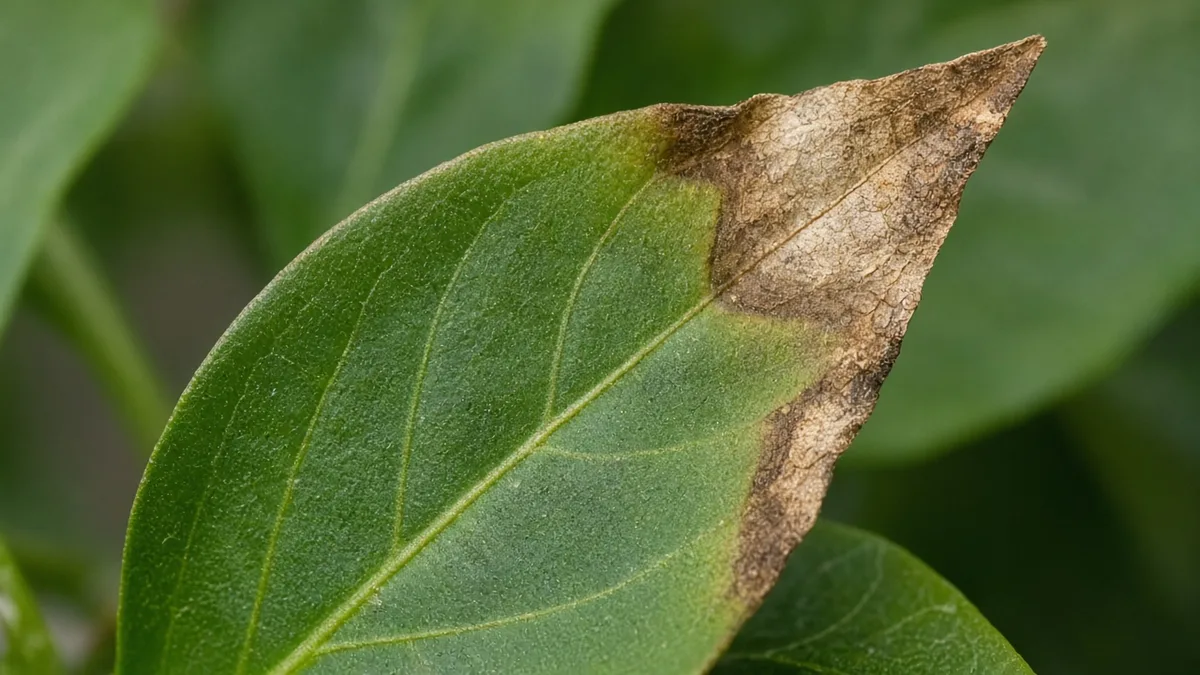
On capsicum, check whether burn sits on older sun-facing leaves only or on the newest growth—crisp tip tissue will not re-green once it has dried.
Typical capsicum patterns:
- Oldest, sun-exposed leaves first — tips and one margin crisp while new upper leaves stay clean (heat or uneven water)
- Tips plus slight midday wilt on a light container during fruit swell (transpiration outpaced uptake)
- Even brown margins on several leaves after a heavy liquid feed or white crust on the soil (salt injury)
- Lower leaves only with narrow brown edges after repeated dry cycles (often paired with yellow leaves higher up)
Not classic leaf tip burn:
- Brown, sunken patch on the bottom of a bell — fruit disorder, not a leaf-margin issue
- Papery pale spots on fruit skin in full sun — NC State notes sunscald on pepper fruit when leaf cover is thin
- Water-soaked spots with yellow halos — bacterial or fungal leaf disease, not dry margin necrosis
- Fine stippling with silk at nodes — spider mites on hot, dry terraces
Leaf tips vs brown bell fruit: do not mix the diagnoses
Capsicum growers often search “brown capsicum” when fruit, not foliage, looks damaged. Keeping the two separate saves wrong fixes.
| Location | What it often is | What to do first |
|---|---|---|
| Dry tip or margin on a leaf | Moisture swing, heat, or salts | Moisture probe 2–3 cm deep, then deep soak or shade |
| Dark leathery patch on fruit bottom | Blossom-end rot linked to uneven water | Steady moisture; see watering guide |
| Bleached papery fruit patch in sun | Sunscald on exposed bells | Improve leaf cover or afternoon shade |
| Brown cap on an otherwise firm green bell | Often cultivar colour change or minor corking—not tip burn | Compare seed label; harvest if size is right |
This article focuses on foliage margins. If fruit is the main concern, start with Capsicum watering and fruit-stage care before treating leaves like a houseplant humidity problem.
Why Capsicum gets brown leaf tips
Sweet peppers want full sun, warm soil, and moist but not saturated mix through flowering and fruit expansion (UF/IFAS pepper culture). When that balance slips, the farthest leaf tissue—tips and edges—dries first, the same marginal pattern Colorado State University Extension describes for leaf scorch.
Uneven moisture during fruit load is the most common trigger on containers. NC State Extension notes that drought stress can drop flowers and that cool weather, extreme heat, and low humidity also stress peppers. A fruiting bell on a south-facing balcony transpires heavily; letting the root ball dry while the top crust still looks pale leads to crisp margins on older leaves before you notice wilt.
Heat and reflected sun brown tips even when soil is moderately moist. Dark pots, west-facing walls, and sudden moves from a nursery shade house to all-day terrace sun can scorch exposed margins without killing the whole plant.
Fertilizer salts burn margins from the root zone outward. CSU Extension links excess fertilizer and high soil salts to marginal leaf burn on container plants. Sweet peppers need feeding during fruit set, but repeated strong doses in a small pot—especially with dry intervals between—often show up as tip necrosis while mix near the surface looks merely “dry enough.”
Shallow or hydrophobic watering leaves the core dry. Water runs down the inside wall of peat-heavy mix; the plant gets a quick surface wetting while roots stay thirsty and margins crisp.
Spider mites can mimic tip stress with stippling and edge damage in hot, dry weather—confirm with a tap test before assuming water alone will fix every brown edge (spider mites on Capsicum).
Low indoor humidity is rarely the main story for outdoor capsicum. If you are overwintering a potted bell indoors, dry heated air can nudge margins, but moisture rhythm and sun heat still matter more than misting foliage.
Tip burn while flowering and fruit are swelling
Capsicum tip burn often appears when flowers open and young bells begin to size—the same weeks Utah State University Extension warns that irregular watering can drop flowers or invite blossom-end rot. The plant shifts water toward fruit; leaves on exposed sides lose turgor at the margins first.
What to watch:
- Tips browning on lower, older leaves while upper clusters still bloom—often a water or heat pattern, not a nutrient crisis
- Flower drop after a hot dry weekend in a small pot—pair tip burn with underwatering checks, not extra fertilizer
- New leaves opening with crisp edges right after a heavy feed—suspect salts; flush before feeding again
Hold nitrogen-heavy feeds until the first fruit set, then follow label rates on the Capsicum fertilizer guide—too much nitrogen while stressed can worsen leaf burn and reduce fruit set (UF/IFAS notes reducing nitrogen once fruits form).
How to confirm the cause
Work through these checks in order:
- Moisture at 2–3 cm — Crumbly dry with a light pot supports drought-related tip burn. Cool, wet deep soil with soft stems points to overwatering instead.
- Recovery soak test — If dry, one deep watering at soil level should firm leaves within hours. Persistent crisping on wet mix means roots or salts, not simple thirst.
- Sun and heat — Did tips brown after a heat wave or a move to a sunnier light position? Are damaged leaves on the south or west side?
- Salt clues — Recent fertilizer, white crust on soil, or tip burn while the surface felt moist fits salt injury.
- Pest scan — Stippling, webbing, or crawling specks on a paper tap test redirect to mite control.
- Fruit vs leaf — Confirm brown is on foliage margins, not fruit blossom end or sunscald patches.
If only oldest lower leaves have narrow brown tips and new growth is clean, you may be seeing normal aging on heavily harvested stems—not an active crisis.
First fix for Capsicum
If the top 2–3 cm of mix is dry, deep-water at soil level now.
Set the container in a tray or sink, water slowly until it drains freely, wait ten minutes, and water once more if the mix was severely dry. Empty the saucer. That single correction fixes most capsicum leaf tip burn tied to uneven moisture.
Do not repot, prune heavily, or spray pesticides on day one. Stacking changes on a heat-stressed fruiting pepper makes it harder to read the response.
Step-by-step recovery
After the first soak—or if soil was already moist—match the path to your checks:
Drought and uneven moisture
- Return to the Capsicum watering rhythm: moist root zone, not a calendar that ignores heat and pot size.
- Gardening Know How advises letting pepper soil dry slightly at the top before the next irrigation—on capsicum that usually means the upper 2–3 cm, not waiting until the whole root ball is dust.
- Mulch garden beds; group containers so they shade each other slightly during peak afternoon heat.
Heat and sun scorch
- Provide afternoon shade on exposed balcony rails during heat waves while soil moisture stabilizes.
- Avoid dark nursery pots sitting on heat-reflective floors without a gap for airflow.
Fertilizer and salt buildup
- Stop feeding until new growth opens clean for one to two weeks.
- Flush the container: slow water through the pot until twice the soil volume drains, letting salts leach (CSU salt and scorch guidance).
- Resume at half strength on the schedule in your fertilizer guide once tips stop spreading on new leaves.
Spider mites (if confirmed)
- Rinse undersides first, then follow the mite page—do not confuse stippling with pure drought tips.
Trim fully brown leaf tips with clean snips if they snag or look unsightly; the cut edge will not regrow green. Leave blades that are mostly green unless disease is confirmed.
Recovery timeline
Expect stabilization within a few days once the root zone holds even moisture and heat stress eases. New leaves and flower clusters should open without fresh crisping within one to two weeks in warm weather.
Old tan tips remain on harvested stems. Judge recovery by clean new growth and steady fruit set, not by old margins re-greening.
If every new leaf tips brown despite corrected watering, suspect chronic salt load or root-bound drying—flush and consider repotting into fresh soil mix between crops, not mid-rescue on a loaded plant unless roots are clearly circling.
Lookalike symptoms
| Symptom | Likely cause on capsicum | Next step |
|---|---|---|
| Dry tip only, firm green blade | Drought or heat margin burn | Moisture probe, deep soak, afternoon shade |
| Yellow lower leaves, wet mix | Overwatering | Stop watering; check roots |
| Stippling + silk | Spider mites | Rinse undersides; isolate terrace nightshades |
| Brown fruit bottom | Blossom-end rot / water calcium uptake | Even moisture; not leaf trim |
| Spreading soft brown leaf spots | Disease | Remove affected leaves; improve airflow |
Mistakes to avoid
- Misting leaves instead of rewetting the root ball—foliage dries again in minutes on a sunny terrace.
- Feeding a stressed plant to “green it up”—salts often worsen marginal burn.
- Shallow daily sprinkles that never rewet the core of a dry root ball.
- Confusing fruit sunscald with leaf tip burn and shading the plant so much that flowering stalls.
- Trimming every leaf before you fix water—removes photosynthetic area while fruit still swells.
Capsicum care cross-check
Brown tips usually mean one pillar slipped:
- Moisture — Even moisture from bloom through fruit swell (Capsicum watering).
- Light and heat — Full sun with heat management on containers (Capsicum light).
- Soil and drainage — Fertile, well-drained mix that rewets evenly (Capsicum soil).
- Feeding — Enough nutrients after fruit set, without salt spikes (Capsicum fertilizer).
If tips keep browning on new growth after a flush and shade adjustment, pot size and root mass matter more than another drink.
How to prevent brown tips next time
- Check containers daily in hot weather; water when the upper 2–3 cm begins to dry.
- Deep soak at soil level; avoid hydrophobic dry pockets in peat-heavy mix.
- Mulch in-ground beds and use afternoon shade on heat-reflective balconies.
- Feed at label rates after fruit set; flush salts if you feed frequently in small pots.
- Stake or cage early so leaf cover shields developing fruit from sunscald without breaking brittle branches (Capsicum overview).
- Scout for spider mites when dry winds return.
When to worry
Escalate if brown margins spread inward as soft, water-soaked spots, stems blacken at the base, or new leaves brown as they unfurl despite moist mix—inspect for root rot or disease rather than trimming tips.
Persistent tip burn on every new leaf after flushing and shade adjustment suggests a root-bound pot or chronic salt load; plan a fresh mix at season end.
If the plant collapses after corrective watering, unpot and check roots. Firm white roots with a dry surface mix mean keep adjusting water; mushy roots mean rot protocol on the root rot page.
Conclusion
Brown tips on sweet capsicum are a water- and heat-balance warning on foliage, not a mystery houseplant humidity problem. Confirm dryness at 2–3 cm, separate leaf margins from fruit disorders, then deep-soak, shade, or flush salts in that order. Old tips stay tan, but clean new leaves within a week or two mean you fixed the right stressor. Keep fruiting bells evenly moist in sun, manage balcony heat, and feed thoughtfully while fruit swells.