Low Humidity on Capsicum: Balcony RH & Flower Set
Quick answer
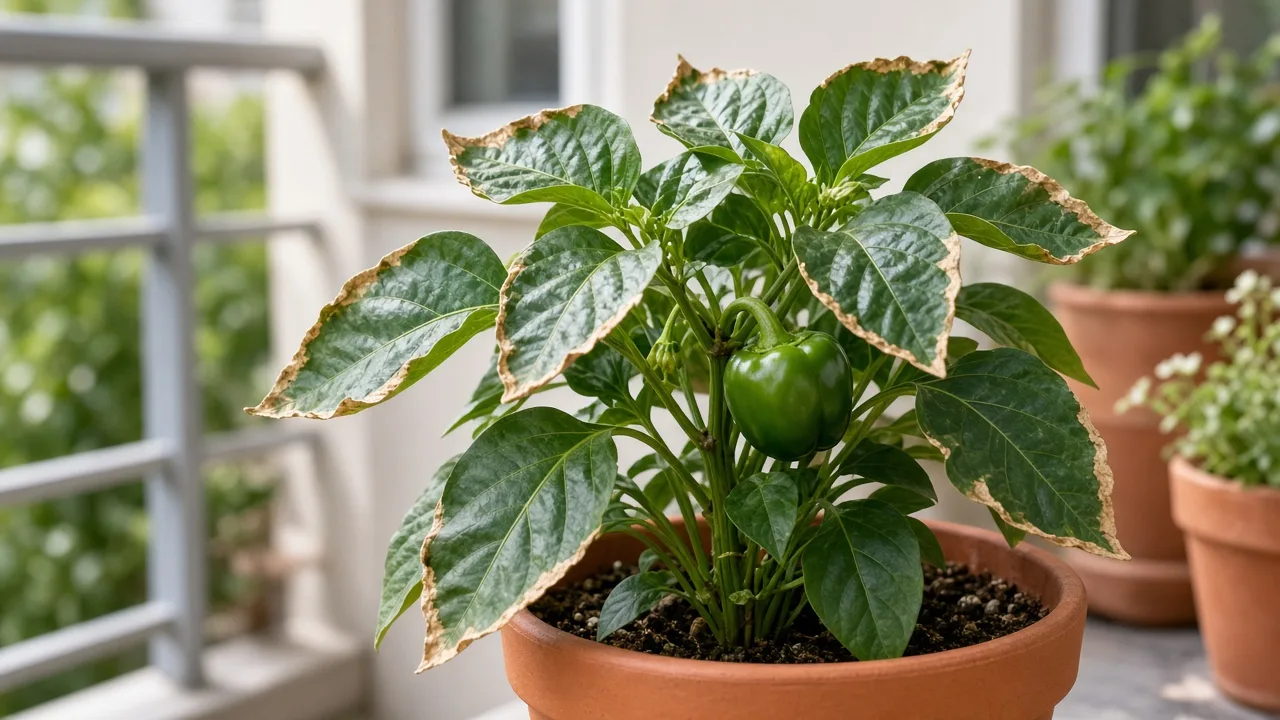
Low humidity on sweet bell Capsicum (*Capsicum annuum*) shows as papery brown leaf margins, stuck new leaves, or flower drop when dry air stacks with heat—often while the upper 2–3 cm of mix still feels appropriately moist. First step: log RH beside the canopy and move the pot off radiator ledges, AC streams, and hot reflective paving; raise ambient moisture with grouping or a humidifier, not another deep watering.
Low Humidity on Capsicum: Causes, Checks & Fixes
This guide covers low humidity on Capsicum. See also the general Low Humidity guide, watering, and light pages for this plant.
Low Humidity on Capsicum: Causes, Checks & Fixes
Quick answer
Low humidity on Capsicum here means sweet bell pepper (Capsicum annuum cultivars with blocky, non-pungent fruit—not hot green chilli). For how dry air crisp leaf edges on plants in general, see our low humidity hub. On bell peppers, dry air usually shows as papery brown margins on thick glossy leaves, flowers that dry and fall without fruit, or small fruit that stalls—often while the upper 2–3 cm of mix still reads appropriately moist.
NC State Extension describes Capsicum annuum as full-sun, heat-tolerant, and best with consistently and evenly moist, well-drained, rich soil. Broad pepper foliage still loses water fast when relative humidity (RH) drops beside a balcony railing, a grow-light shelf, or dry pre-monsoon wind—even when roots are drinking on schedule.
First step: log RH within 12 inches of the canopy and move the pot off the driest microclimate—radiator ledges, AC streams, hot west-facing paving, or direct contact with sun-heated glass. Then raise ambient moisture once (group pots, pebble tray with water below pot bases, or a humidifier into the air). Read RH for 24 hours before you soak the pot or repot.
When to use this page vs other Capsicum guides
| Pattern | Read next |
|---|---|
| Narrow tan band at leaf tips only | Brown tips |
| Light pot, dusty-dry upper mix, wilt into evening | Underwatering |
| Yellow lower leaves, heavy wet pot, soft stem base | Overwatering |
| Midday collapse on dry mix | Wilting |
| Bleached or papery patches on sun-facing leaf faces | Light / scorch |
| Stippling plus fine webbing on undersides | Spider mites |
| Dark leathery patch on fruit bottom | Blossom-end rot from uneven moisture—see watering and USU pepper guidance |
This page covers dry-air stress on bell pepper foliage and flowers when the root zone is not obviously thirsty.
What low humidity looks like on Capsicum
Sweet bells carry thick, glossy, entire-margined leaves on brittle, fruit-loaded stems. The outer leaf edge is the last tissue to receive water and the first to lose it when RH is low—the same scorch pattern Missouri Botanical Garden describes when foliage loses water faster than roots can replace it.
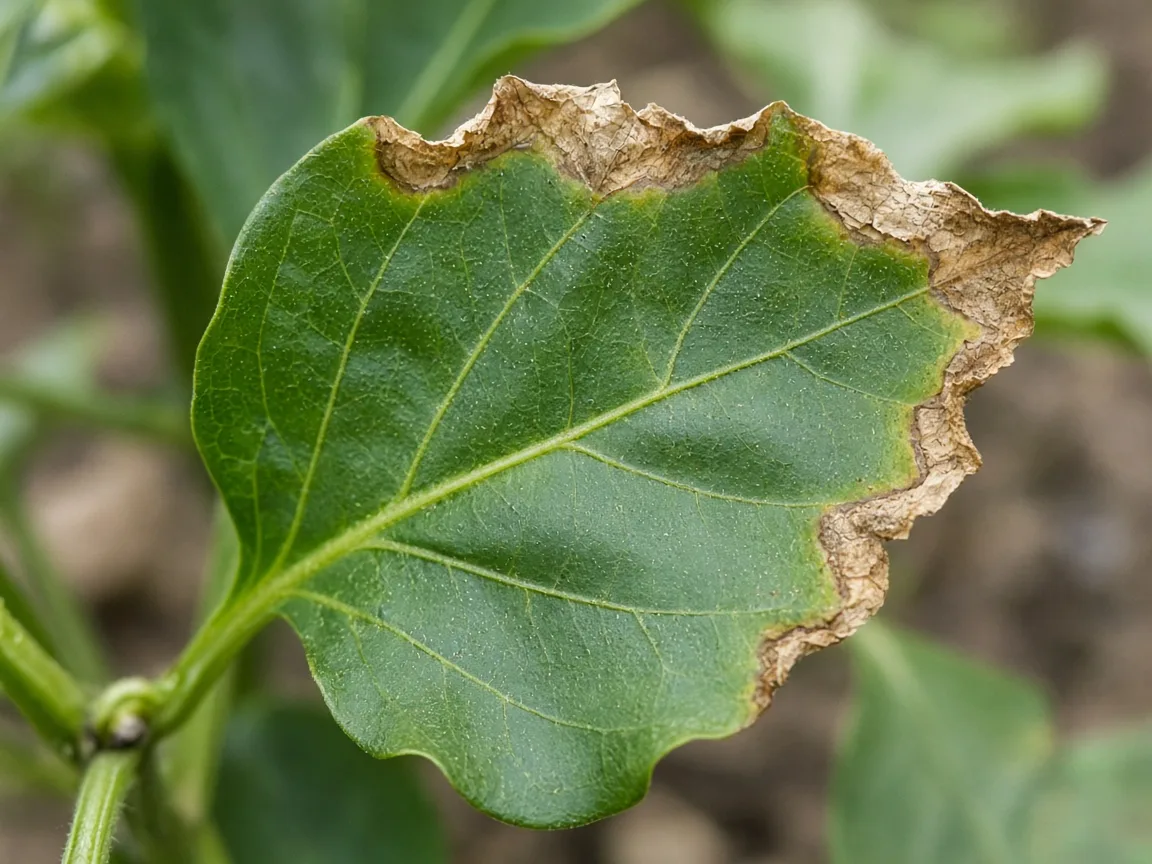
Papery tan margins on a glossy bell pepper leaf—dead edge tissue will not re-green; watch the next flush for smooth margins.
Typical dry-air pattern:
- Papery brown or tan margins along one or more leaves, sometimes on several blades at once
- Firm green midrib and stem while edges crisp—mix at 2–3 cm may still feel normally moist
- Worst on leaves nearest a heat register, AC vent, grow-light heat, or sun-baked balcony tile
- White flowers that yellow, dry, and drop during hot, dry spells when nights stay warm but air is parched
- Slow spread over days to weeks in dry rooms or windy terraces—not overnight mush on wet soil
Usually not low humidity alone:
- Dusty-dry mix, light pot, and dull wilt that perks after one deep soak — underwatering
- Yellow lowers with cool, clinging soil — overwatering or root rot
- Isolated tip bands without full margin involvement — brown tips
- Stippling, dull patches, and webbing — spider mites in hot dry air
- Pale stretched stems toward a dim window — not enough light
Seedling domes and the hardening-off humidity crash
This section is bell-pepper-specific—it does not apply to a humidity-loving fern.
Pepper transplants are often started indoors 8–10 weeks before outdoor planting, under lights with a vented humidity dome until true leaves expand. Penn State advises keeping seedlings below 80°F and not below 50°F during indoor growth. Once the dome comes off and trays move to a bright windowsill or open balcony, RH crashes. Cotyledons and first true leaves then show crisp edges even though you water on schedule.
What to do: Harden off gradually—PSU recommends setting plants outdoors in filtered light for lengthening periods about 10 days before transplant—rather than moving straight from a humid tray into dry room air. If edges crisp under lights, lower fixture heat and raise RH around the tray, not soil volume.
Flowering, pollen, and dry balcony heat
During flowering and early fruit swell, transpiration jumps on a fruiting container. Penn State notes peppers set fruit between nighttime temperatures of 60° and 75°F, while daytime temperatures above 95°F abort blossoms. Gardening Know How lists a similar flowering window—roughly 70–85°F days with nights not below about 60°F.
Dry wind on a south- or west-facing terrace adds another layer: margins crisp at the leaf edge while open flowers fail to set. Utah State Extension reports that during unfavorable weather—nights lower than 55°F or days above 90°F—pepper flowers abort, and that irregular watering can also cause flower drop. On a sheltered balcony with no bee traffic, gently shake flowering branches or brush pollen between blooms when RH is adequate—lack of pollination mimics blossom drop indoors.
Before you double watering: Match the 2–3 cm dry-down check. Saturated mix in humid monsoon weeks is a different problem—see overwatering.
Blocky leaves vs blossom-end rot on fruit
Low humidity crisping hits leaf margins. Blossom-end rot on pepper fruit is a separate physiological issue—USU links it to poor water management and drought stress during flowering, showing as a dark leathery spot on the flower end of the fruit. If margins are tan but a developing bell shows a sunken brown patch on its bottom, fix even moisture per the watering guide and soil mix—not only RH.
How to confirm the cause
Work through these checks in order. Change one variable at a time.
-
Hygrometer at canopy height — Log RH for 24 hours. Below roughly 40–45% beside the leaves while margins crisp strongly suggests dry air. RH in the middle of the room can mislead.
-
2–3 cm finger test — From the watering guide. Dusty-dry at depth plus a light pot points to underwatering, not humidity alone.
-
Microclimate history — Did damage start after removing a humidity dome, turning on central heat, opening every greenhouse vent in a heat wave, or parking on hot paving?
-
Flower timeline — Did blooms open then dry and fall during a dry heat spell while nights stayed above 55°F? That pattern fits heat plus dry air more than a root disease.
-
Pest scan — Hold leaves to the light. Dry air encourages spider mites on stressed peppers—stippling and webbing mean pests, not RH alone.
-
New-growth watch — The next glossy leaf opening after your humidity fix should have smooth margins. Repeated crisping on new flushes means another stressor is still active.
First fix for Capsicum
Apply one humidity and placement correction first, then wait for the next leaf flush before stacking changes.
If RH is low beside the canopy (indoor or balcony)
Move the pot several feet from vents, radiators, and sun-heated glass or tile. Then raise ambient moisture toward a comfortable band—many warm-season crops tolerate 40–60% room RH, but local dry zones matter more than the thermostat reading. Use a pebble tray with the pot base above standing water, group containers so shared transpiration lifts local moisture slightly, or run a cool-mist humidifier near—not blasting—the foliage.
If seedlings just left a humidity dome
Restore a vented cover for 3–5 days while hardening off, and keep trays out of direct dry heater airflow. Open vents progressively as edges stay green.
If dry wind hits a fruiting patio pot
Shield the plant once—group with other pots, add a mesh or cloth windbreak, or shift to morning sun with afternoon shade per the light guide before you respond with a second deep soak.
Cosmetic trim (after RH stabilizes)
Snip dead margin tissue with clean scissors. Brown edges will not re-green; trimming is optional. Support loaded branches when you work—stems can snap under full-size fruit.
Recovery timeline
Damaged leaf margin tissue is permanent. Judge success by stopped spread and clean edges on newly opened leaves, plus flowers that set fruit.
- After humidity rises: Existing tan margins stay tan; new leaves should open without fresh crisping within one to two weeks during active warm-season growth.
- After a seedling hardening fix: Cotyledon damage may remain; true leaves should look cleaner within 10–14 days if RH holds.
- If spider mites were involved: Margin recovery waits until mite pressure drops—often two to three weeks after humidity improves and you follow the spider mites guide.
If three consecutive new leaves open with intact margins and small bells keep swelling, consider the dry-air problem controlled.
What not to do
- Do not soak the pot because margins are brown while the upper 2–3 cm is already cool and moist—that deepens overwatering on a collar-sensitive nightshade.
- Do not mist constantly on a still indoor windowsill; thick leaves stay wet and invite leaf spots. Prefer ambient humidification.
- Do not fertilize a crisping plant to “push” fruit—balance feed only after growth stabilizes per the fertilizer guide.
- Do not ignore mites when stippling appears—dry air and spider mites often arrive together.
- Do not confuse margin crisping with blossom-end rot on fruit bottoms—fix moisture rhythm, not only air moisture.
How to prevent low humidity damage on Capsicum
- Plan hardening off when seedlings leave heat mats—vented cover, then open air per PSU transplant timing.
- Group patio containers and mulch the soil surface on in-ground beds to slow evaporation from the root zone.
- Water when the upper 2–3 cm dries, with full drainage—especially during fruit load on the overview.
- Manage heat during flowering—afternoon shade or windbreaks when days push past the 90–95°F range that Penn State links to blossom abortion.
- Inspect new shoots weekly in dry seasons so margin damage is caught while the fix is still one humidity adjustment.
When to worry
Treat as urgent if crisping spreads to most new leaves within a week, stems soften at the soil line on wet mix, or webbing covers undersides—those patterns point past dry air toward root rot, chronic wet stress, or mite explosion.
Lower urgency: papery edges on a few older leaves while stems stay firm, the 2–3 cm check reads normal, and flowers or small fruit keep developing. Fix RH and wind exposure before repotting.
Conclusion
Low humidity on Capsicum is usually an air-layer problem on warm-season bell pepper foliage and flowers, not a mysterious leaf disease. Capsicum annuum sweet bells tell you the balcony, greenhouse, or room air is too dry when several glossy margins crisp while roots still drink on schedule—or when blooms abort in dry heat. Measure RH at the canopy, fix placement once, humidify the air without flooding the pot, and keep the 2–3 cm dry-down honest. Return to everyday Capsicum care when symptoms overlap sibling guides.
Related Capsicum guides
- Capsicum overview — sweet bell vs hot chilli, cultivar checks
- Capsicum watering — 2–3 cm check and fruiting rhythm
- Capsicum light — full sun vs scorching reflected heat
- Capsicum soil — moisture retention without waterlogging
- Brown tips on Capsicum — when only leaf points crisp
- Capsicum problems hub — all common issues on this crop
- Wilting on Capsicum — midday collapse on dry mix
- Slow growth on Capsicum — when dry air slows warm-season expansion
Related tool
Use the Humidity Calculator to narrow causes for low humidity on this plant before changing multiple variables at once.