Spider Mites on Capsicum: Stippling & Webbing Fixes
Quick answer
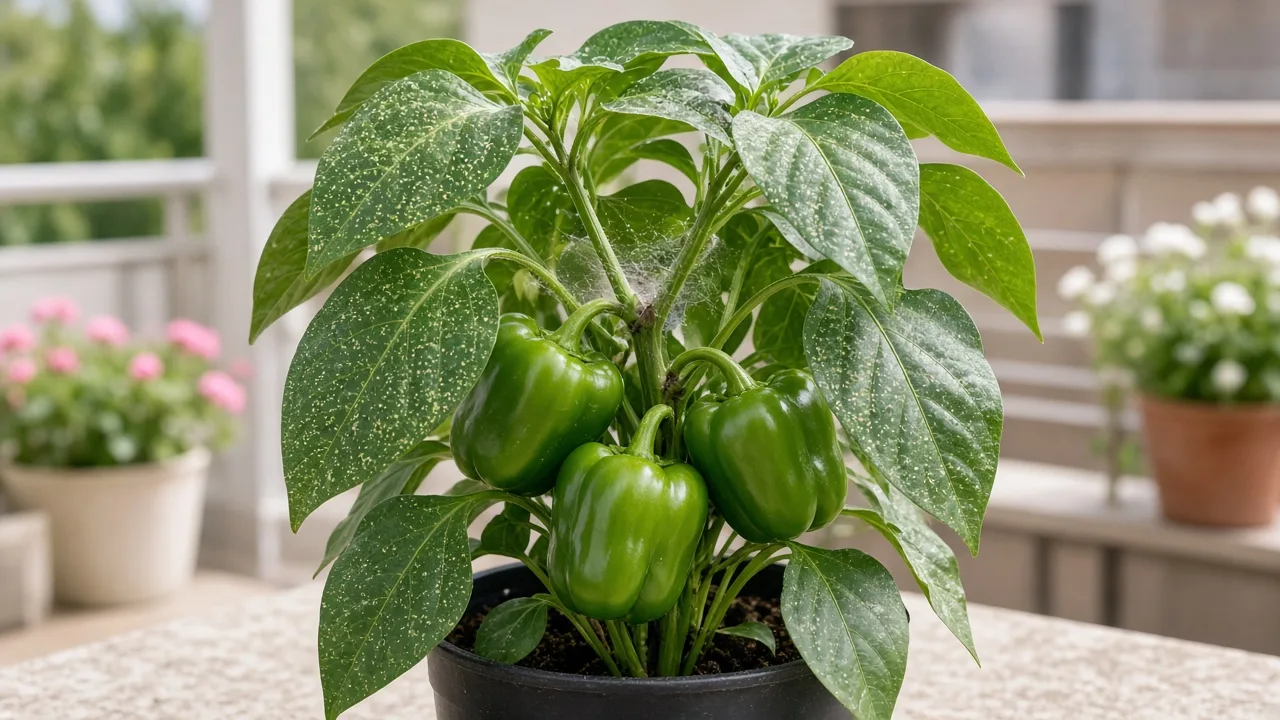
Spider mites on capsicum (sweet bell pepper) show as pale stippling on broad upper leaves and fine webbing at stem nodes, often during hot, dry balcony weather. First step: move the pot away from tomato or chilli neighbors and rinse every leaf underside with lukewarm water before any spray.
Spider Mites on Capsicum: Causes, Checks & Fixes
This guide covers spider mites on Capsicum. See also the general Spider Mites guide, watering, and light pages for this plant.
Spider Mites on Capsicum: Causes, Checks & Fixes
Quick answer
Pale sandpaper speckles on your sweet bell pepper’s broad upper leaves—but the upper 2–3 cm of mix is moist and the stem base is firm? That pattern often means spider mites, not overwatering. Capsicum annuum sweet types carry wide, glossy blades that show stippling early when twospotted spider mites pierce cells on the underside. Fine webbing at nodes, plus crawling specks on a white-paper tap test, confirms them. For how mites behave on many crops in general, see our spider mites hub. On capsicum, damage usually clusters on the newest leaves and stem forks just above setting fruit.
First step: move the pot away from tomato, brinjal, or hot chilli neighbors and rinse every leaf underside thoroughly with lukewarm water. Target the tender shoots capsicum pushes while flowering, where mites colonize before webbing is obvious on top. Because you harvest this crop, mechanical removal and labeled insecticidal soap beat harsh residual pesticides on a kitchen terrace.
What spider mites look like on Capsicum
Sweet bell pepper leaves are thicker than herb foliage but still show mite feeding clearly when you know where to look.
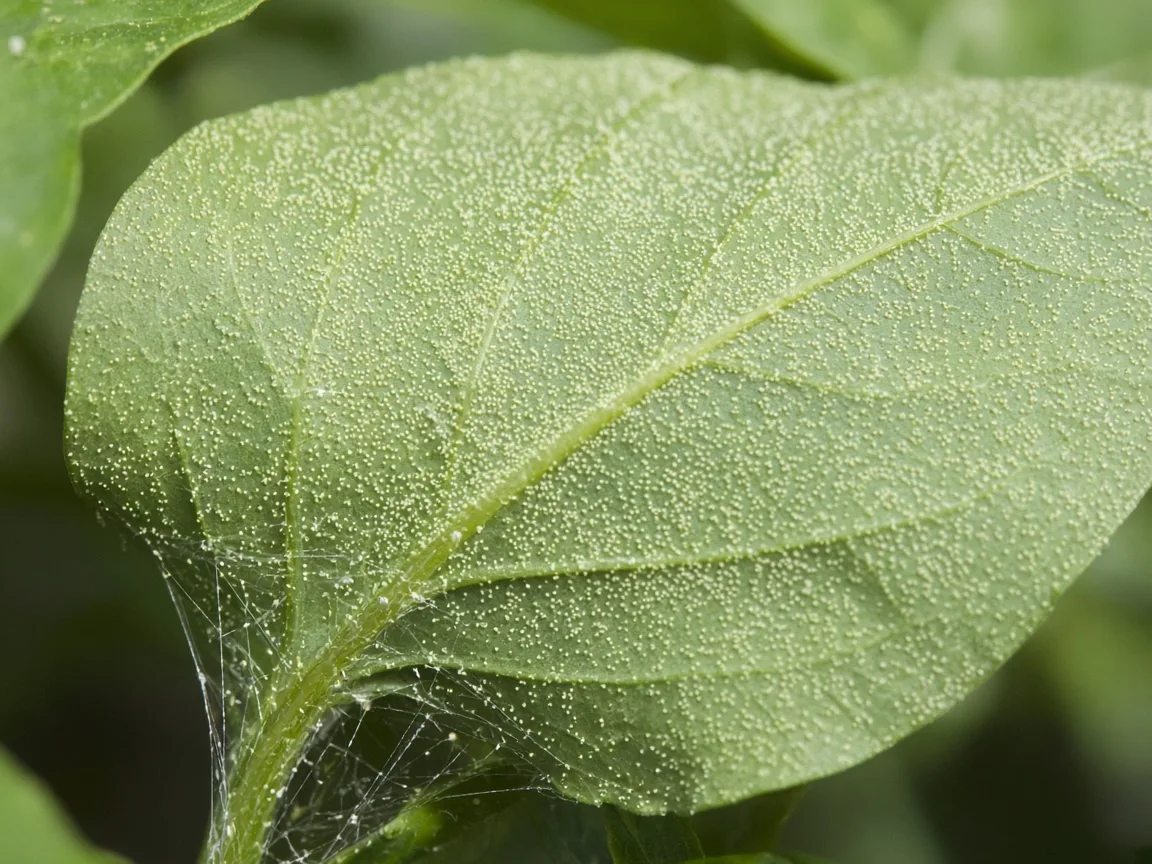
Pale stippling and fine silk on a sweet bell pepper leaf underside—compare with healthy green tissue on the same plant.
Early feeding:
- Tiny yellow or white dots scattered across upper leaf surfaces, often on the newest expansion leaves above small fruit
- Individual blades look dull or lightly bronzed while neighboring leaves stay deep green
- Slight cupping or stiff texture on affected leaves without the soggy limpness of root stress
Established infestation:
- Stippling spreading along branches that carry fruit weight
- Fine silk webbing at leaf bases, crotches where side shoots branch, or where the stem meets the cage
- Lower leaves may yellow and drop while the top still pushes flowers—unlike uniform bottom-up yellowing on wet mix
- New leaves stay small or look washed out even when watering rhythm is correct
The tap test: Hold white paper under a suspect leaf and strike the foliage sharply. Wait a few seconds. Mites fall as pinhead specks that crawl—often yellow-green with two dark spots on twospotted species. Red or orange fast movers may be predatory mites; plant-feeding mites usually look greenish when crushed.
Capsicum’s broad leaves make a good tap-test surface. Webbing at a single node above a setting pepper can mean an early colony; sheets of silk across multiple stems mean the population is well established.
Why sweet bell peppers get spider mites on the terrace
This page covers sweet bell pepper (Shimla Mirch–type Capsicum annuum), not hot green chilli. Both are nightshades, but sweet types push large, non-pungent fruit on brittle stems that need steady moisture and full sun—conditions that collide with hot, dry balcony air during Indian summer and with crowded Solanaceae groupings on a terrace.
Twospotted spider mites reproduce fastest in hot, dry weather and feed primarily on leaf undersides. Illinois Extension notes populations can explode within days when heat and low humidity align—exactly what container peppers experience beside sun-warmed railing pots.
Capsicum-specific risk factors:
- Large container + radiant heat — Dark pots on concrete or tile heat leaf surfaces faster than in-ground beds, drying the microclimate around fruiting plants
- Fruit-load stress — A plant carrying full-size bells still pushes tender leaves at the top; mites prefer that soft tissue while roots demand steady moisture from the watering guide
- Shared nightshade trays — Tomato, brinjal, and capsicum on one terrace share dry air and let mites walk between pots within days
- Greenhouse or poly tunnel carryover — Mites survive on weeds and neighboring crops; UF/IFAS lists many vegetable hosts including tomato and cucumber in the same mite complex
- Predator loss on balconies — Lady beetles and predatory mites that limit outdoor populations rarely persist on isolated high-rise pots
Overwatering is not the classic mite driver on capsicum—that pattern leads to yellow lower leaves, sour mix, and soft stems instead. If mix stays wet and the plant wilts at midday on a heavy pot, inspect roots before blaming mites.
Unlike tropical houseplants, sweet peppers want bright sun and even moisture—not swampy soil. “Raise humidity” on a terrace means spacing pots and rinsing foliage, not misting crowns that stay damp and invite mold on the soil surface.
How to confirm the cause
Work through these checks in order so you do not treat wilting from dry mix or aphid honeydew as mites.
- Stippling pattern — Mite damage is speckled on individual upper leaves. Uniform fade from old lowers on soggy soil points to watering stress, not random dots on new growth.
- Webbing — Fine silk at stem joints strongly supports mites. Aphids leave sticky honeydew and soft-bodied clusters, not sheet webbing.
- Tap test — Confirm crawling specks on white paper after tapping a suspect leaf.
- Underside inspection — Use a hand lens on lower leaf surfaces and inner stems where mites feed and lay eggs.
- Soil moisture at 2–3 cm — Push your finger in. Soggy mix with limp stems points to overwatering; very dry mix with midday wilt may be underwatering weakening the plant alongside mites.
- Fruit and flower audit — Flower drop from heat or drought stress is common on peppers, but stippling plus webbing with a positive tap test means pests—not just low humidity alone.
- Neighbor plants — Check tomato and other capsicum pots on the same terrace. Shared stippling means quarantine the whole group.
| What you see | Likely cause | Key difference from mites |
|---|---|---|
| Pale stippling on upper leaves + fine webbing + crawling tap-test specks | Spider mites | Webbing at nodes; mites move on paper |
| Bottom-up yellow leaves + wet soil + soft stem base | Overwatering | No webbing; uniform fade from old leaves |
| Pear-shaped clusters on tender tips + sticky residue | Aphids | Insects visible; no fine silk sheets |
| Midday wilt + light dry pot + no specks | Underwatering | Tap test negative; soil dry at depth |
| Only pale new growth; no insects or webbing | Not enough light or nitrogen stress | Fix light or feeding—not miticides |
| Silvery streaks; slender fast insects | Thrips | Scraping damage; minimal webbing |
If stippling is mild, webbing is absent, the tap test is negative, and leaves feel firm, wait and re-check in three days before spraying—occasional lower-leaf yellowing after heavy fruit load can be normal senescence.
First fix for Capsicum
Move the pot away from other nightshades and rinse every leaf underside thoroughly with lukewarm water, using enough pressure to knock mites and webbing loose.
Set the container in a shower or use a gentle hose with a spray wand. Work from below so water hits undersides and stem forks, especially above small setting bells. Use moderate pressure—pepper leaves tear if blasted, but you need flow strong enough to dislodge mites. Rotate the plant so each side gets direct rinsing. Let foliage air-dry in bright light the same day.
This single step physically removes mites, eggs, and protective webbing before any chemical control. UC IPM ranks forceful water spray as the first line for twospotted spider mites on garden and landscape plants.
Do not apply horticultural oil or insecticidal soap in the same session as your first heavy rinse unless the label allows it—you need dry leaf surfaces for soap coverage on the follow-up day. Do not fertilize a mite-hit pepper hoping to push new growth; tender shoots are easier mite targets. Do not repot on day one.
Step-by-step recovery
After the initial isolation and rinse:
- Repeat water rinses every two to three days for at least two weeks. Mite eggs in webbing hatch on a cycle; one shower rarely clears an established colony.
- Apply insecticidal soap or horticultural oil if live mites persist after several rinses. Coat all leaf undersides and stem joints until runoff; soaps and oils kill only pests they contact directly. Repeat every five to seven days for three full cycles to break the generation chain.
- Treat every Solanaceae neighbor on the same schedule—even tomatoes with lighter stippling. Mites walk between pots faster than damage spreads visibly.
- Remove heavily stippled leaves only after mites are gone if they block spray coverage. Sweet peppers regrow from nodes; do not strip the whole canopy while fruit is sizing.
- Improve the microclimate without overwatering roots. Move pots off heat-radiating surfaces, space them so leaves do not touch, and follow the capsicum watering guide for dry-down timing—not a fixed calendar.
- Hold harvest until sprays dry and label intervals pass. Read the product label for re-entry timing before picking bells for the kitchen. Rinse fruit and foliage well; when in doubt, take clean peppers from lower branches until one treatment cycle completes.
Outdoor in-ground peppers in cool morning weather often recover with repeated hose rinses plus natural predators. Reserve repeated soap courses for persistent balcony or greenhouse outbreaks.
Recovery timeline
You should see fewer live specks on the tap test within three to five days of the first thorough rinse when the infestation is moderate. A full soap or oil course typically runs two to three weeks with label-interval repeats.
Old stippled leaves stay marked—expect pale or bronze patches on prior damage even after mites die. New shoots above clean nodes should emerge deep green and unstippled within one to two weeks once webbing stops returning. Because sweet peppers fruit on the same plant for months, you may harvest lower clean bells while upper foliage finishes treatment.
Worsening signs: webbing returns within a week of three soap applications, upper stems crisp despite correct watering, flowers abort on every new cluster after two rinse cycles, or mites appear on every nightshade on the terrace—those mean escalation or reinfestation from an untreated neighbor, not patience.
Lookalike symptoms to rule out
Overwatering — Yellow lower leaves, soggy mix at 2–3 cm depth, soft stem base. No webbing, no crawling specks on paper. Fix drainage and dry-back per our overwatering guide; mite stippling persists after soil correction if pests remain.
Aphids — Soft-bodied clusters on tender tips with sticky honeydew, not fine sheet webbing. See aphids on capsicum for the rinse-first protocol on edible foliage.
Underwatering — Midday wilt on a light pot, dry mix, and crisp leaf edges without stippling or tap-test mites. Correct the underwatering rhythm before stacking pesticides.
Low humidity or heat stress — Flower drop and slight leaf curl without insects, webbing, or speckling. Compare the low humidity guide and ensure sun exposure matches the light guide.
Thrips — Silvery scrape marks and black specks; insects are slender and fast. Webbing is absent or minimal.
What not to do
Do not spray only the top of pepper leaves—mites colonize undersides and stem forks first.
Do not stop after one rinse or one soap application. UF/IFAS notes two or more miticide applications at five- to seven-day intervals are usually required because most products do not kill eggs.
Do not apply soap or horticultural oil in direct midday sun on a hot terrace. Treat in early morning or evening when leaves are cool—oil and soap on sun-heated foliage scorch easily.
Do not harvest treated peppers for the kitchen until the product label interval passes and you rinse thoroughly.
Do not assume insecticides labeled for general insects will control mites—mites are arachnids, not insects, and need miticides, soaps, or oils labeled for mites.
Do not ignore neighboring tomatoes or chillies—isolating only capsicum while another nightshade stays untreated is the most common reason mites return within a week.
Do not compost heavily webbed foliage beside active pots where crawlers can reinfest.
How to prevent spider mites next time
Prevention on capsicum is mostly about catching stippling early on a crop you inspect weekly for fruit size and color.
- Quarantine new seedlings two weeks before grouping them with established terrace peppers.
- Inspect undersides when you check fruit—the same visit that notes bell color is your best pest check.
- Rinse foliage with plain water every one to two weeks through peak dry season. Disrupts early colonies before webbing spreads.
- Space pots so leaves do not touch; airflow dries foliage faster on sunny railings.
- Keep containers off heat-radiating tile when possible, or use lighter-colored pots.
- Scout every nightshade weekly in summer—not only capsicum. Mites often appear on tomato first, then walk to sweet pepper.
- Avoid broad-spectrum sprays that kill predatory mites and lady beetles when outdoor biocontrol is available.
For baseline care that keeps peppers resilient, see our capsicum overview and soil guide.
When to worry
Treat as urgent when webbing spans most of the plant, upper leaves crisp and drop despite correct watering, new shoots stay deformed after two full rinse cycles, or mites appear on multiple Solanaceae pots in the same space. Shared terrace collections can lose every fruiting nightshade within two mite generations if nothing is isolated.
A single stippled branch on an otherwise firm plant with a positive tap test is serious but not hopeless—start rinsing today and treat every neighbor pot before the colony spreads.
If three weeks of disciplined rinsing and three soap intervals fail, assume a nearby untreated plant or eggs in dense webbing is the source. Strip the worst shoots after mites are dead, isolate longer, and inspect the whole collection. Starting fresh with a quarantined seedling is often less costly than fighting a reservoir plant that reinfects the terrace through harvest.
Contact your local cooperative extension office if populations persist after labeled miticide courses—you may need a product rotation because twospotted spider mites can develop resistance after prolonged use of one active ingredient.
Conclusion
Spider mites on capsicum are a hot, dry terrace problem as much as a pest problem. Confirm with stippling plus webbing and a tap test—not yellow leaves alone—isolate the whole nightshade group, rinse every underside thoroughly, then repeat through the mite life cycle if soap is needed. Old stippled leaves may stay marked; clean new shoots above nodes mean you are winning. Scout every pepper and tomato pot each week through peak summer and mites are far less likely to ruin your bell harvest.
For related issues, see aphids on capsicum, yellow leaves on capsicum, low humidity stress, and the global spider mites guide when woody or herb neighbors share your space.
When to use this page vs other Capsicum guides
- Capsicum watering guide — Use for routine moisture checks before assuming spider mites is the main issue.
- Capsicum problems hub — Browse all common issues on sweet bell pepper.
- Low humidity on Capsicum — Different entry point when flower drop overlaps with dry air but tap tests are negative.
- Wilting on Capsicum — Use when the whole plant limps and soil moisture—not speckled leaves—is the main clue.
Related Capsicum guides
- Capsicum overview
- Capsicum watering
- Capsicum light
- Capsicum soil
- Low humidity on Capsicum
- Capsicum problems
- Root rot on Capsicum
Related tool
Use the Pest Identifier Tool to narrow causes for spider mites on this plant before changing multiple variables at once.