Yellow Leaves on Capsicum: Causes, Checks & Fixes
Quick answer
Yellow leaves on sweet capsicum (bell pepper) are chlorosis on foliage—not the normal yellow-to-red ripening of fruit on the stem. First step: confirm you are looking at leaves, then press your finger into the top 2–3 cm of mix and note whether lower leaves are uniformly pale while the pot is light (dry) or heavy (wet).
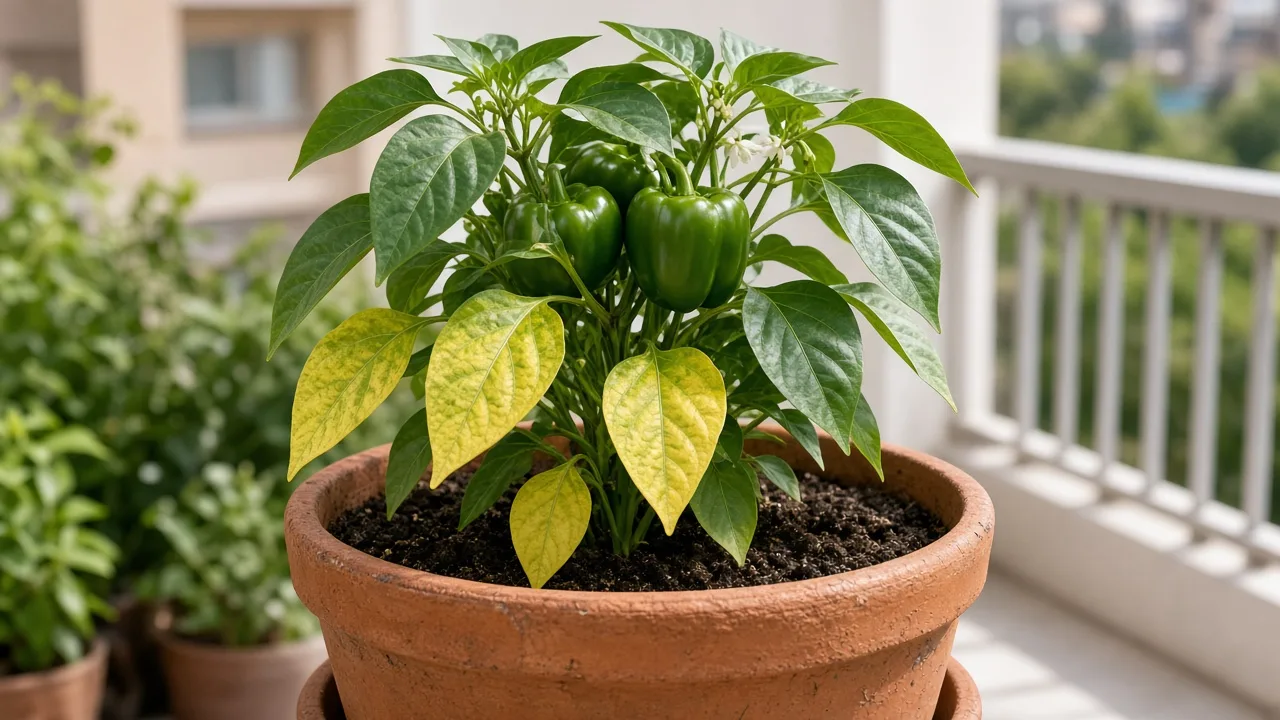
Yellow Leaves on Capsicum: Causes, Checks & Fixes
This guide covers yellow leaves on Capsicum. See also the general Yellow Leaves guide, watering, and light pages for this plant.
Yellow Leaves on Capsicum: Causes, Checks & Fixes
Quick answer
Yellow leaves on sweet capsicum (bell pepper, Shimla Mirch) mean chlorophyll loss on foliage—not the normal color shift when a blocky fruit ripens from green toward yellow, orange, or red on the same plant. For how yellowing works when roots, nutrients, or pests interrupt chlorophyll production, see our yellow leaves hub. On capsicum, the first fork is leaf versus fruit: if blades on the stem are fading while fruit color is the only yellow you see, you are watching ripeness, not a leaf emergency.
First step: look at leaves on the stem, then press your finger into the top 2–3 cm of mix and lift the pot. A light, dry container with uniform pale lower leaves often means nitrogen draw-down or drought on a fruiting pepper that drinks fast from a small pot. A heavy, damp pot with yellowing starting on the lowest leaves usually means root oxygen loss—fix moisture before any fertilizer. Mosaic mottling with distorted new growth is a different lane entirely.
Full species context: capsicum overview.
When to use this page vs other Capsicum guides
- Overwatering — chronic wet mix, sour smell, soft crown; yellow often starts low
- Underwatering — dry rim, light pot, thin papery leaves with wilt
- Wilting — limp turgor loss, often faster than slow yellow fade
- Root rot — mushy stem base when yellow spreads on wet soil
- Aphids and spider mites — stippling, curl, or webbing with chlorosis
- Not enough light — pale stretchy growth, not classic lower-leaf nitrogen yellow
- Problems hub — all capsicum issues in one list
What yellow leaves look like on sweet capsicum
Sweet bell pepper carries broad, somewhat brittle leaves on an upright stem that can look sparse once fruit loads the branches. Yellowing shows up in patterns that map to cause—ripening fruit on the node is the lookalike that sends many balcony growers down the wrong path.
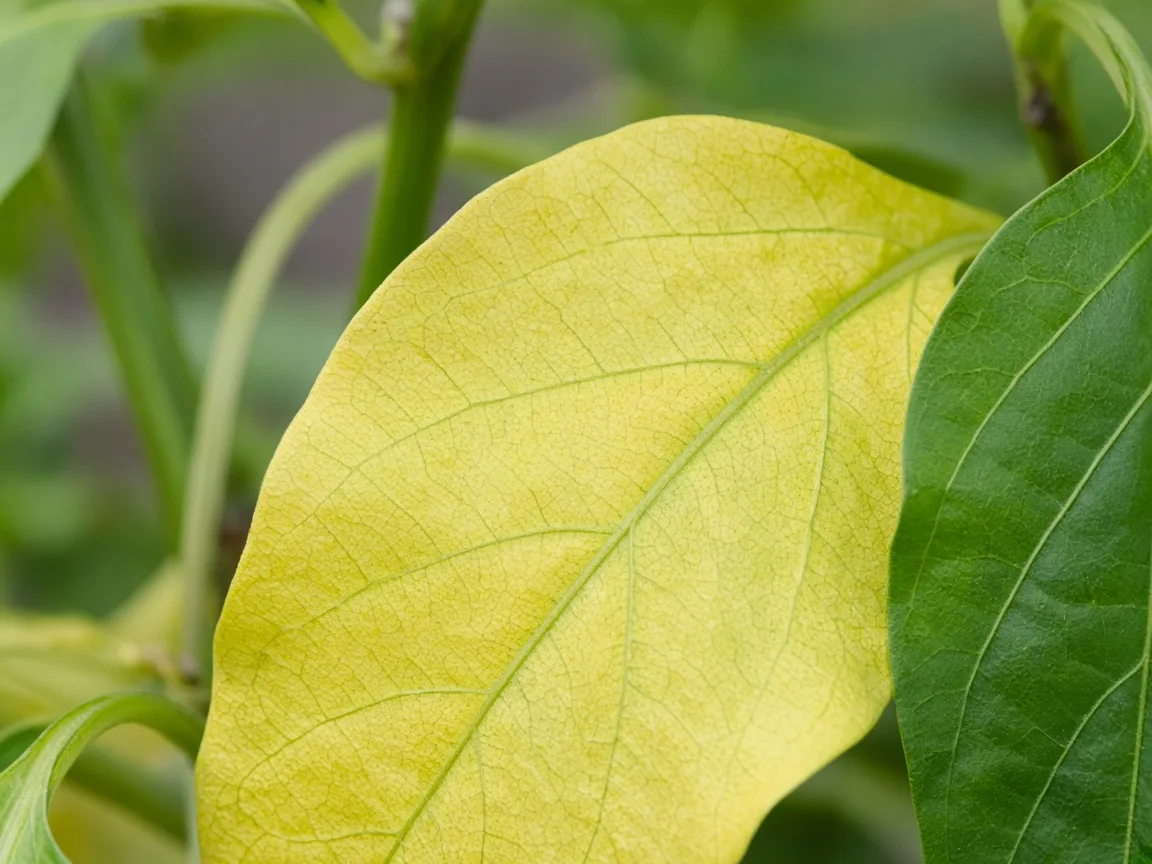
Compare a uniformly pale lower leaf with greener tissue above—note whether veins stay green (interveinal) or the whole blade washes out evenly.
Normal fruit ripening (not leaf disease):
- Color change on the pepper fruit, not the foliage
- Leaves stay mostly dark green; stem firm
- Fruit swells, then shifts toward yellow, orange, or red by cultivar
Nitrogen deficiency on a fruiting plant (very common in pots):
- Older lower leaves turn uniform yellow; may drop
- New growth at the top may stay greener at first, then pale if feeding lags
- Plant may look otherwise sturdy but set fewer new flowers
- Pot dries quickly between waterings during hot weather
- Gardening Know How lists underwatering and lack of nutrients among the most frequent reasons pepper leaves yellow
Overwatering and root stress:
- Lower leaves yellow first, sometimes with limp petioles
- Mix stays wet for days; pot feels heavy; saucer may hold stale water
- May pair with fungus gnats or mold on soil
- NC State notes sweet pepper wants consistently and evenly moist, not saturated, soil
Drought and irregular watering:
- Yellow from edges or whole blades; leaves feel thin
- Mix pulls from pot walls; container is light
- Utah State Extension warns that irregular over- or underwatering can cause flower drop—yellow often appears before buds abort
Virus and wilt diseases:
- Mosaic: light green mottling, malformed or curled leaves; fruit shape may suffer (NC State Capsicum annuum)
- Verticillium wilt: yellow wedges, often from lower leaves upward; vascular browning inside stems
- Utah State FAQ notes peppers with yellow leaves and no growth may have curly top virus or wilt diseases—often no cure; remove plants
Sap-feeding pests:
- Stippled yellow patches, sticky honeydew, distorted new growth
- Heavy aphid or mite colonies divert water and nutrients (Gardening Know How)
Natural lower-leaf aging:
- One or two oldest bottom leaves fade slowly while top growth and fruit look fine
- Common late in season on a long-fruited plant
Sweet bell vs hot chilli on the same species name
This page targets sweet bell types (Capsicum annuum cultivars grown for thick, non-pungent fruit)—not Indian hot green chilli, which shares the species name but needs hotter, leaner care. If your packet says bell, sweet, or blocky, use the moisture and feeding patterns here. If leaves yellow on a hot chilli in the same pot size, nitrogen and drought show up faster; still run the 2–3 cm finger test first, but expect a smaller canopy to exhaust a pot in fewer days.
Why capsicum gets yellow leaves
Nitrogen draw-down while fruit swells
Peppers are moderate to heavy feeders in containers. Utah State Extension recommends side-dressing nitrogen to grow a large plant in the garden; in pots, leaching is faster. As fruit loads branches, the plant remobilizes nitrogen from older leaves, which turn yellow—a classic lower-leaf pattern.
The fruiting-season twist: UF/IFAS Gardening Solutions advises that once peppers begin producing, you should reduce the amount of nitrogen in fertilizer because too much nitrogen can cause peppers to produce fewer fruits. That means yellow lower leaves on a loaded plant are not always solved by a heavy nitrogen blast; match feed to pale new growth and steady moisture, and follow the capsicum fertilizer guide.
Overwatering and poor drainage in containers
Sweet pepper does poorly in heavy, wet soils. On a balcony, “heavy soil” is usually a small pot that never dries or a cachepot holding runoff. Roots lose oxygen; lower leaves yellow while the crown may still look green briefly. This overlaps with overwatering on capsicum and root rot when stems soften.
Underwatering and moisture swings during flowering
UF/IFAS notes peppers prefer moist, but not wet, soil and benefit from regular watering that keeps production going. A fruiting Shimla Mirch in afternoon sun can go from fine to stressed in one missed day. Repeated dry cycles yellow leaves and trigger flower drop—Utah State links irregular watering to blossom loss.
Cold, heat, and transplant shock
Peppers want warm soil and steady growth. Utah State recommends transplanting when soils are 60ºF or after frost danger and notes that nights below 55ºF or days above 90ºF can abort flowers—stress that often comes with pale or yellowing foliage on exposed terraces. Transplants with flowers or fruit at planting establish slowly and yield poorly; pinching blooms at transplant reduces yellow shock leaves after repotting—see capsicum repotting.
Calcium and water stress (fruit vs foliage)
Blossom-end rot is a fruit disorder from calcium delivery problems tied to water fluctuations, not classic leaf yellowing—but severe stress can stunt new leaves. If yellow leaves pair with tan blossom-end scars on fruit, fix even moisture per capsicum watering before chasing sprays.
Disease and virus
Bacterial leaf spot, wilt, and phytophthora can yellow leaves with spots or sudden wilt (Gardening Know How). NC State lists mosaic virus as uniform yellow-green mosaic with wilt on Capsicum annuum, and verticillium wilt as a fungal risk. Many soilborne infections are not curable on the same plant—rotation and removal matter for the next season.
How to confirm the cause
Work through these checks in order. One strong pattern match beats treating every yellow leaf the same.
- Fruit vs leaf — Is only the pepper fruit changing color? If yes, ripeness—not chlorosis.
- Moisture at 2–3 cm — Press your finger into the top layer. Dry and light pot → drought or nitrogen on a hungry plant. Wet and heavy → stop watering; inspect drainage.
- Which leaves — Older lower only → nitrogen or natural aging. New growth pale with green veins → possible iron/pH issue (UF/IFAS suggests pH around 6.5); test if yellowing persists after moisture fixes.
- Pest scan — Undersides of new growth and stem tips for aphids, mites, honeydew.
- Disease clues — Brown leaf spots, one-sided yellow wedge, mosaic mottling, or mushy crown → sibling problem pages, not more fertilizer.
- Recent changes — Cold night after heat wave, repot with root disturbance, or flower load step-up.
The first fix to try
If soil at 2–3 cm is dry and lower leaves are uniformly yellow on an otherwise firm plant: water deeply until a little drains from the bottom, empty the saucer, and wait 24 hours before any feed. Then, if new leaves still look pale yellow-green after moisture stabilizes for several days, apply a modest balanced or slightly nitrogen-forward fertilizer per the fertilizer guide—not a double dose on stressed roots.
If soil is wet and the pot is heavy: skip fertilizer entirely. Let the top 2–3 cm dry, improve drainage, and read overwatering before the next irrigation.
If mosaic mottling or one-sided wilt appears: isolate the plant, do not propagate from it, and consider removal if symptoms spread—feeding will not clear virus.
Step-by-step recovery
- Correct one variable — moisture or feed or pest treatment, not all three the same afternoon.
- Remove spent yellow leaves that crumble—energy goes to fruit and new leaves on a loaded bell pepper.
- Shade during heat spikes if midday wilting and yellowing coincide on a west-facing terrace; peppers need sun but extreme heat aborts flowers.
- Mulch the pot surface (coconut coir, straw) to slow drying once moisture rhythm is right—UF/IFAS notes mulching helps hold moisture as temperatures rise.
- Re-check weekly until new leaves stay dark green for two growth cycles.
Recovery timeline
Uniform drought or nitrogen yellow on lower leaves often stops spreading within a week once moisture and a light feed align. Fully yellow blades rarely re-green; judge success on new foliage and steady fruit size. Virus or vascular wilt may worsen despite care—if yellow climbs the stem in 48–72 hours on damp soil, switch to salvage mode or discard the plant to protect neighbors.
Lookalike symptoms
| What you see | Likely cause | Where to go next |
|---|---|---|
| Yellow fruit, green leaves | Ripening | Harvest when firm; not a leaf problem |
| Lower leaves uniform yellow, dry pot | Drought / nitrogen | Water deeply; then light feed if new growth pale |
| Lower yellow, wet heavy pot | Overwatering / root stress | Overwatering |
| Yellow with limp midday leaves | Heat + dry combo | Wilting and watering checks |
| Mottled yellow-green mosaic | Virus | Remove plant; control aphids |
| Yellow wedge, one branch | Verticillium wilt | Remove; do not replant pepper in same bed soil |
| Stippled yellow patches | Mites / aphids | Spider mites or aphids |
Mistakes to avoid
- Feeding a waterlogged capsicum because leaves look pale—roots cannot take up nutrients in sour mix.
- Confusing fruit color with leaf chlorosis and waiting while roots fail.
- High nitrogen doses on a plant already carrying full fruit—can reduce yield per UF/IFAS guidance.
- Ignoring transplant flowers—leaves yellow while the plant tries to ripen fruit on weak roots.
- Spraying pesticides before confirming pests—stressed peppers burn easily in hot sun.
Capsicum care cross-check
Align yellow-leaf fixes with baseline care:
- Light — Full sun; pale stretchy growth may be not enough light rather than nitrogen alone. See light guide.
- Soil — Slightly acidic, well-drained mix; soil guide for pH 5.8–6.8 range on the plant profile.
- Water — Even moisture from flowering through fruit expansion; watering guide.
- Support — Heavy fruit on brittle branches increases stress yellowing after wilt episodes—stake early per pruning notes.
How to prevent yellow leaves next season
- Size up pots before roots circle and the plant wilts daily.
- Pinch early flowers on transplants so leaves stay green during root establishment.
- Water on pot weight and 2–3 cm dryness, not a calendar.
- Feed lightly and regularly in containers; back off nitrogen only when new growth is deep green and fruit set is strong.
- Rotate garden beds; do not follow tomato or potato with pepper where wilt occurred.
- Inspect weekly during hot weeks—yellow lower leaves are early warnings on sweet pepper, not decoration.
Conclusion
Yellow leaves on sweet capsicum usually trace to moisture rhythm, nitrogen while fruiting, or wet roots in a container—not mystery deficiency. Confirm you are diagnosing leaves, not ripening fruit. Run the top 2–3 cm finger test and pot lift before fertilizer. Recovery shows up as dark green new leaves; fully yellow blades are done. Virus and wilt patterns need removal, not another feed cycle.