Capsicum Pruning: Safe Cuts, Training & Harvest
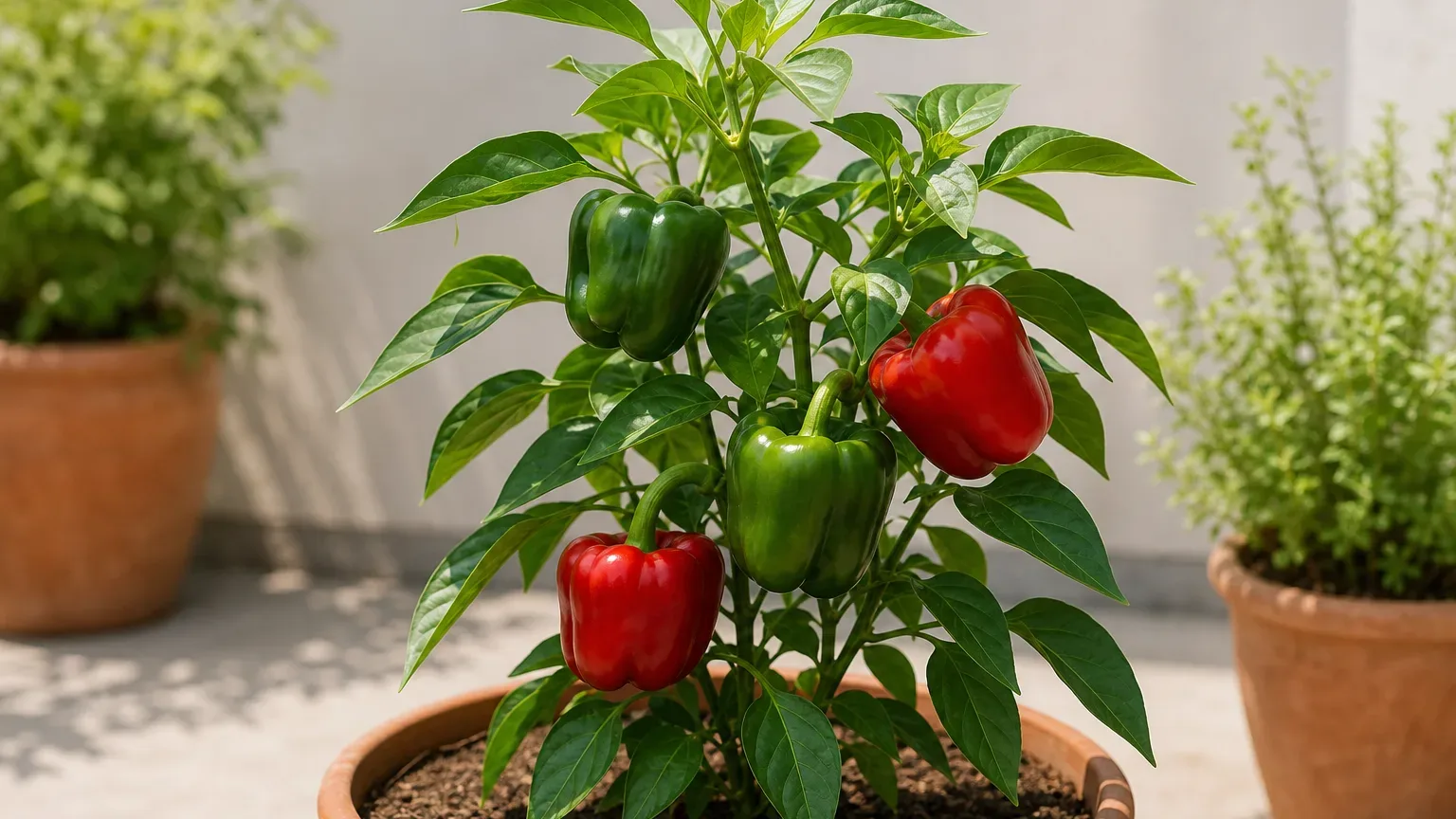
Capsicum Pruning Guide: What to Cut and What to Keep
Capsicum Pruning Guide: What to Cut and What to Keep
First, remove one dead, broken, or clearly diseased leaf or stem if one is present. Then stop and support any fruit-laden branches before considering cuts to healthy growth. Capsicum is naturally an upright, branching plant, and a healthy shoot is potential leaf area, flowers, and fruit—not a “sucker” that automatically needs removing.
Reviewed by LeafyPixels Review Board · Author: sai-ananth
Quick answer
Sweet bell pepper or Shimla Mirch (Capsicum annuum) usually needs cleanup, support, and careful harvest cuts, not routine hard pruning. The Royal Horticultural Society says pinching out pepper growing tips is not usually needed for a good crop. Pinching may be used on a young plant around 30 cm tall to encourage more branches, but the stated trade-off is a larger number of smaller fruits and delayed fruiting.
That makes topping a choice, not a rule. Keep a compact patio cultivar largely intact, support a tall or heavily loaded cultivar, and reserve branch removal for damage, disease, crowding that cannot be solved by tying, or a deliberate protected-crop training system. Before changing the canopy, check the plant’s identity and growing needs in the Capsicum overview.
What pruning can and cannot do
Light pruning can remove non-functional tissue, prevent a split branch from hanging on the plant, or shape a young plant for a specific support. A single soft-tip pinch removes the terminal growing point and may encourage branches below it. It does not guarantee a higher home-garden yield, and it cannot correct weak light, water stress, a root problem, or a cultivar that naturally stays compact.
The evidence is especially important here. A greenhouse study archived by the World Vegetable Center found that one-, two-, and four-branch systems changed yield and fruit traits differently across three bell pepper cultivars; one branch increased fruit size and early yield but reduced total yield, while four branches gave the highest total yield in one cultivar (cultivar-specific pruning results). A separate controlled soilless-culture experiment compared unpruned plants with two-, three-, and four-stem systems and also found that pruning altered growth, yield, and fruit quality (controlled greenhouse comparison). These are trained greenhouse systems, not proof that every balcony or garden capsicum should be topped or stripped of side shoots.
Inspect the plant before cutting
Trace the main stem from the soil to the first fork, then follow each branch to its tip. Identify leaves, flower buds, open flowers, young fruit, and the nodes where leaves and side shoots arise. Do not confuse a flower-bearing branch with disposable growth.
Check these points before choosing a cut:
- Plant condition: postpone optional pruning if leaves are limp beyond normal midday heat, yellowing is spreading, or the plant has just been transplanted.
- Crop load: a bending branch may need a soft tie or cane rather than removal.
- Light: long, weak growth will repeat unless placement improves; use the Capsicum light guide before trying to prune stretch away.
- Moisture: drought stress can cause flower drop, so stabilize the root zone with the Capsicum watering guide before sacrificing healthy leaves.
- Cut purpose: cleanup, repair, optional young-plant branching, harvest, or end-of-season renewal. If the cut serves none of these, leave the shoot.
Support before you prune
Sweet pepper stems can become brittle under a load of full-size fruit. RHS recommends tying the main stem to a sturdy cane and adding support around fruit-laden side shoots because they can snap under a heavy crop. Install or adjust that support before deciding a leaning branch is expendable.
Use soft ties in a loose figure eight, with one loop around the cane and one around the stem. Place the tie below a strong fork, not around a flower stalk or directly against a developing pepper. A supported productive branch is normally more valuable than a tidier plant with less canopy.
Tools and sanitation
Use clean, sharp scissors or bypass pruners. Soft growing tips can be pinched with clean fingers, but a blade gives better control on leaf stalks, mature stems, and fruit pedicels. Iowa State Extension lists 70% isopropyl alcohol as an effective pruning-shear disinfectant; wet the cutting surfaces and allow the product its labeled contact time.
Clean the tool before starting, after cutting suspicious tissue, and before moving to another plant. Do not leave spotted or rotting trimmings in the pot. If a stem is merely bent but remains well connected, splint and support it first; remove it only when it is split, collapsing, or cannot carry its fruit safely.
Where to make each kind of cut
Dead or diseased leaves
Cut the leaf stalk near its attachment to the branch without slicing into the branch itself. Remove only leaves that are fully dead, clearly infected, or so damaged that they no longer function. A leaf with a small dry edge still feeds and shades the crop.
Broken branches
Follow the break back to firm, uncrushed tissue. Make a clean cut just above a healthy branch junction or node, preserving the strongest remaining branch. If fruit is attached to the damaged section and is usable, harvest it before removing the stem so its weight does not tear the wound farther.
Optional tip pinching
Only pinch a healthy, actively growing young plant when you deliberately want a shorter, more branched framework and can accept later fruiting. Remove the soft terminal tip just above a healthy leaf node; do not cut below the first major fork or remove several established branches to imitate a commercial greenhouse system. Skip pinching on compact cultivars, late plantings, stressed plants, or plants already carrying flowers and fruit.
Harvest cuts
Hold the pepper in one hand and cut through its small fruit stem with scissors or pruners; do not twist the fruit against a brittle branch. NC State Extension recommends harvesting sweet peppers regularly and says the best method is cutting fruit from the stem. RHS likewise notes that leaving fruit to ripen fully can slow further fruit development, so harvest stage should reflect whether your priority is ripe colour or continued production.
Do not remove every side shoot
Capsicum side shoots are part of its normal bushy framework. They carry leaves, flowers, and fruit, and the plant does not share the simple “remove every sucker” rule often repeated for some trained tomatoes. Remove a side shoot only when it is damaged, diseased, trapped against the soil, or deliberately excluded from a defined supported-stem system.
Even in protected cultivation, stem number is a production decision involving cultivar, spacing, trellis design, labour, fruit-size target, and harvest period. For a single pot or garden plant, preserving a balanced canopy is usually the conservative choice. NC State notes that good leaf coverage helps protect sweet pepper fruit from sunscald, so thinning until peppers hang exposed to harsh afternoon sun can create a new problem.
How much to remove
There is no useful universal percentage for capsicum pruning. Remove dead tissue completely, but keep optional live cuts minimal: one soft tip, one irreparable branch, or a few clearly affected leaves, followed by reassessment. Preserve the main fork, healthy side branches, flowers, and enough foliage to shade fruit.
Stop immediately if the remaining canopy looks sparse or fruit that was shaded becomes exposed. If a plant needs several repairs, support it first and stage non-urgent cuts rather than stripping it in one session. Do not combine heavy pruning with repotting or an unscheduled fertilizer dose; use the Capsicum repotting guide and fertilizer guide to plan those jobs separately.
Aftercare and recovery
Return the plant to its normal sunny position and keep moisture even without keeping the mix saturated. Do not water extra merely because a cut was made. Healthy recovery means remaining leaves stay firm, cut edges dry cleanly, flowers continue developing, and active tips or side shoots resume growth.
Pause further pruning if the plant develops persistent wilt, rapid yellowing, flower drop, a soft dark stem below a cut, or no active growth in otherwise warm bright conditions. Pruning cannot cure bacterial wilt, root rot, or a virus. Diagnose the underlying moisture, root, pest, or disease problem before making another cosmetic cut.
Healthy soft tips are not the usual or most reliable way to start another sweet pepper plant; seed is the standard route. If you want another plant, follow the Capsicum propagation guide rather than treating every removed shoot as a cutting.
Overwintering only when it makes sense
Sweet pepper is a tropical perennial but is usually grown as an annual vegetable; NC State records both that life-history distinction and that a plant may be brought indoors for winter (perennial grown as an annual). Overwintering is relevant only when the plant is healthy, worth keeping, and can receive strong light, warmth, and pest monitoring. In many warm Indian locations, continued outdoor or sheltered growth may make a dramatic dormant-season cutback unnecessary.
Before moving a plant into protected space, harvest usable fruit, remove only dead or infected material, inspect leaf undersides and branch forks for pests, and shorten a branch only if it physically will not fit. Do not assume a severe cutback is required. If the plant is heavily diseased, badly infested, or declining after its crop, replacing it from seed may be more practical than carrying the problem into the next season.
Common capsicum pruning mistakes
- Topping every seedling without considering cultivar, planting date, or fruiting delay.
- Calling every side shoot a sucker and removing productive branches.
- Cutting off flowers or fruiting forks while trying to open the centre.
- Pruning a wilted or newly transplanted plant before stabilizing water and roots.
- Removing leaves that shade peppers from intense sun.
- Cutting a heavy branch when a cane and soft tie would preserve it.
- Twisting peppers off and splitting the branch instead of making a harvest cut.
- Copying a greenhouse two- or four-stem system without its trellis, spacing, and cultivar context.
Related Capsicum guides
- Capsicum overview — confirm sweet bell pepper identity and whole-plant growth needs.
- Capsicum light — correct weak, stretched growth before pruning for shape.
- Capsicum watering — stabilize moisture before and after any live cut.
- Capsicum soil — maintain the root conditions that support steady growth.
- Capsicum fertilizer — feed by growth stage rather than automatically after pruning.
- Capsicum propagation — start replacement plants using the appropriate method.
- Capsicum repotting — separate container changes from optional pruning.
Conclusion
Capsicum pruning begins with one cleanup cut, then restraint. Support fruiting branches, preserve the healthy bushy canopy, and use scissors for harvest instead of twisting peppers from brittle stems. Tip pinching and fixed-stem training are optional systems with real fruit-size, timing, and cultivar trade-offs—not universal routes to a better crop.