Capsicum Fertilizer Guide for Sweet Bell Peppers
Capsicum Fertilizer Guide for Sweet Bell Peppers
Capsicum Fertilizer Guide for Sweet Bell Peppers
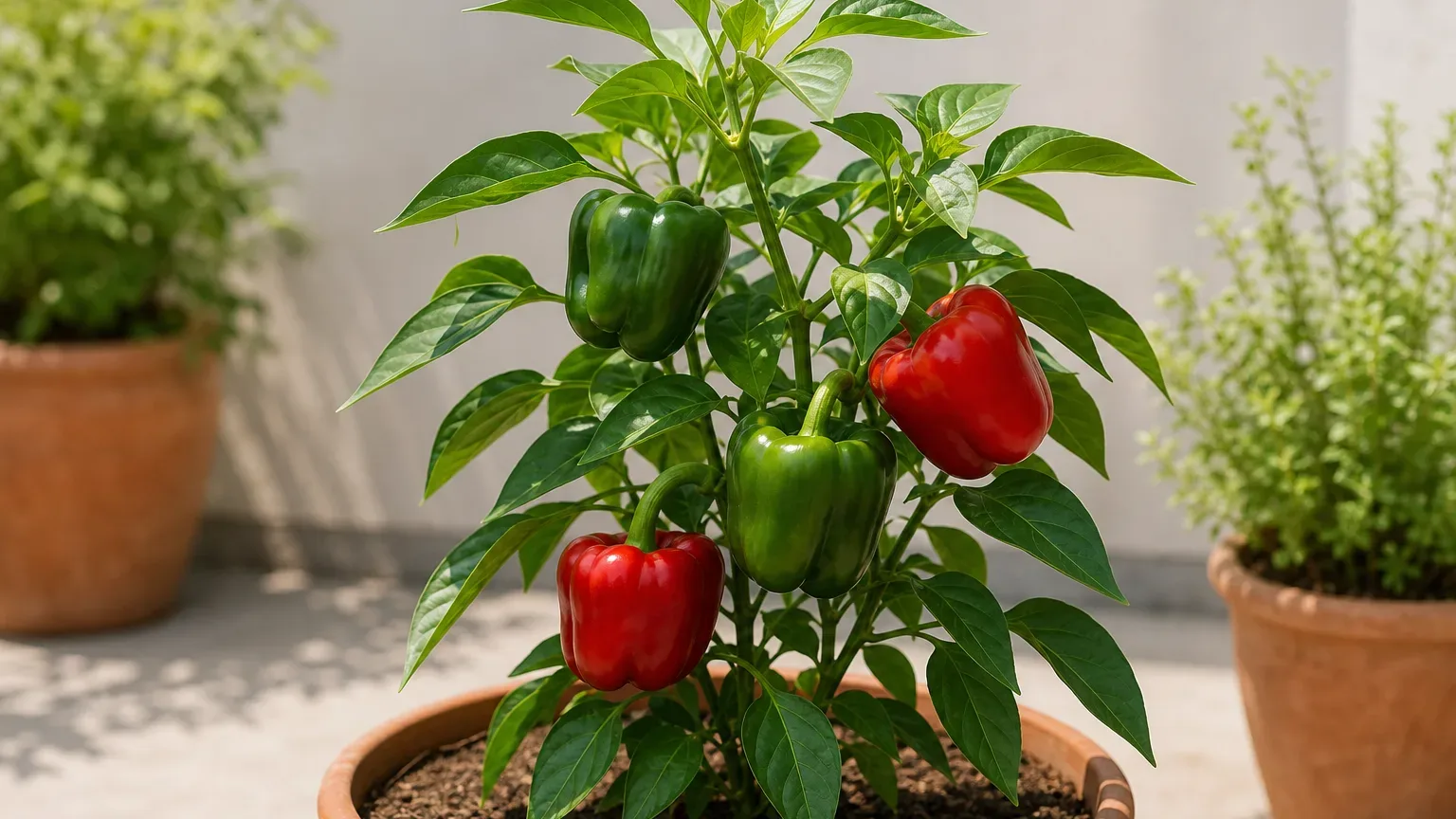
Capsicum on this page means the sweet bell pepper or Shimla Mirch form of Capsicum annuum, not a hot green chilli. It is a fast-growing crop that must first build roots and leaves, then carry flowers and expand thick-walled fruit. Fertilizer should support those changing jobs; it cannot compensate for a dim balcony, cold roots, severe heat, dry soil or waterlogging.
The safest approach is deliberately less precise than many home recipes. Test garden soil where possible, start with a fertile growing medium, use a complete fertilizer whose label allows edible vegetables, and divide the seasonal supply rather than applying a large dose at once. Never convert an extension field rate expressed per acre or per 100 square feet into an improvised spoonful per pot: product concentration, release speed, container volume and existing nutrients differ too much for that conversion to be reliable.
Quick answer: feed the crop, not the calendar
For sweet capsicum in a bed, use a soil test to decide whether phosphorus, potassium or lime is actually needed, incorporate any recommended pre-plant amendment, and reserve part of the nitrogen for active growth after transplanting. Both Oklahoma State Extension and Penn State Extension describe split nitrogen programs for commercial peppers rather than placing the entire supply at planting. That principle translates to a home bed even though their farm-scale rates do not.
For one plant in a container, begin with a quality potting mix and follow the measured directions for a complete vegetable fertilizer. Once flowering starts, the RHS advises a high-potassium liquid feed for container-grown sweet peppers; use its product label rather than a universal homemade dilution. Reduce or pause feeding if growth slows, the mix remains wet, salts crust the surface, or the plant is already making dense dark foliage with few flowers.
Understand what a sweet capsicum plant is building
Nitrogen drives chlorophyll, shoots and leaf area, so a young transplant needs enough to establish a canopy that can power fruit growth. Phosphorus and potassium are also essential, but the familiar claim that a very high-phosphorus “bloom booster” automatically creates more flowers is too simple. A plant cannot use extra nutrient that is already adequate in its root zone, and accumulated salts can injure roots.
The crop’s priorities shift when buds and flowers appear. It still needs nitrogen, but more nitrogen is not automatically better: Clemson’s pepper guidance notes that abundant foliage with few blooms and fruit indicates nitrogen over-fertilization. For sweet bell types, that imbalance is especially costly because each large fruit needs a stable canopy, steady water and time to expand; continual soft leaf growth competes with the reproductive phase rather than guaranteeing a larger harvest.
Test before choosing an NPK number
A soil test is the best starting point for an in-ground capsicum because it reports pH and existing phosphorus and potassium. Oklahoma State recommends testing before building a pepper fertility plan and gives a preferred soil pH of about 6.0 to 6.8; Clemson similarly bases pre-plant fertilizer on test results. If a report says phosphorus is already high, adding more in a “fruiting” blend is wasteful and can complicate nutrient balance.
Container potting mix is different from garden soil. A fresh commercial mix may include a starter charge or controlled-release fertilizer, while an old reused mix may be depleted or salt-laden. Read the bag before adding anything. If fertilizer is already incorporated, note how long the manufacturer says it supplies nutrients and do not immediately layer a full-strength liquid program on top.
The same restraint applies to compost. Mature compost improves organic matter and contributes nutrients, but its analysis is variable, so a handful cannot be treated as a known NPK dose. USDA nutrient-management guidance recommends testing nutrient sources and matching them to crop demand, a useful principle whether the source is granular fertilizer, manure-based compost or a liquid organic product.
A stage-aware feeding plan for capsicum
Think in checkpoints rather than dates. At each stage, look at the newest growth, root-zone moisture, recent weather and what fertilizer is already present. A plant that is actively extending stems can use nutrients; a heat-stalled or waterlogged plant usually cannot use another dose effectively.
Seedlings: avoid forcing soft growth
Seedlings started in a formulated seedling or potting medium often have enough nutrition for their earliest growth. Begin supplemental feeding only when the mix instructions indicate its starter nutrients are ending or when established seedlings show sustained pale new growth despite correct light and moisture. Use a product labelled for seedlings or edible vegetables at its seedling rate; adult-strength feeding can raise salts around a small root system.
Judge seedlings by proportion, not maximum size. A transplant should be compact, well rooted and sturdy rather than very tall, dark green and tender. If growth is stretched, fix Capsicum light before reaching for more nitrogen, because fertilizer cannot correct insufficient sun.
After transplanting: establish roots and canopy
At transplanting, avoid placing concentrated granules against roots or the stem. If a tested bed needs pre-plant fertilizer, mix it evenly through the intended root zone before planting. NC State’s sweet pepper profile supports a well-balanced fertilizer at planting, while Clemson places side-dressed fertilizer away from pepper roots to reduce burn.
Wait for signs that the plant has resumed active growth before making the next container feed, especially after root disturbance. New leaf expansion is a better signal than a rigid number of days. During this establishment phase, a complete balanced feed is reasonable when the potting mix does not already contain fertilizer; the goal is enough canopy to shade fruit later, not a surge of weak stems.
Flowering and fruiting: stop chasing leaves
When the first flowers appear, reassess. NC State recommends balanced fertilizer both at planting and when the first flowers appear, while RHS specifically shifts potted sweet peppers to a high-potassium liquid feed after flowering starts. These are compatible principles: maintain complete nutrition, avoid escalating nitrogen, and use a fruiting-vegetable product whose analysis and directions fit the growing system.
Do not assume every dropped flower calls for fertilizer. Sweet peppers can shed flowers under drought, cool conditions, extreme heat or low humidity, and NC State documents those stresses on the same species profile. In an exposed Indian summer, improving afternoon heat protection and following the Capsicum watering guide may restore fruit set more effectively than adding nutrients.
Continue only while the plant is growing and carrying fruit. Heavy monsoon rain can leach mobile nutrients from beds and pots, but waterlogged roots also absorb poorly. Check drainage and growth first; after prolonged leaching, resume a measured label-rate feed rather than “making up” several missed applications at once.
Choose fertilizer for the growing system
There is no single best NPK printed on every capsicum fertilizer bag. A suitable product supplies nitrogen, phosphorus, potassium and necessary micronutrients, is approved for edible crops, and can be measured accurately for your bed or pot. The existing soil or mix determines whether “balanced” or “higher potassium” is the better description at a particular stage.
Avoid choosing by a dramatic middle number alone. Phosphorus should be driven by the soil test in beds, and a soluble container feed should remain complete rather than supplying only potassium. Also avoid raw manure or an unverified ferment close to harvest; unknown nutrient strength, salts and food-safety risks make them poor substitutes for a labelled product or properly matured compost.
Capsicum in garden beds
Prepare the bed according to the soil report, then split the nitrogen rather than applying the whole seasonal amount in one pre-plant event. Penn State bases phosphorus, potassium and lime on annual testing and distributes part of the nitrogen through the growing season. At home scale, the soil laboratory’s crop recommendation and the fertilizer label should determine the actual amount.
Apply a side-dress in a shallow band away from the stem and foliage, then water the root zone if rain is not imminent. Do not copy Clemson’s square-foot calcium-nitrate rate into a container, and do not assume calcium nitrate cures every blossom-end rot case. Clemson explains that interrupted water supply can prevent calcium movement to developing fruit even when soil calcium is present, so consistent moisture comes before blind calcium application.
Capsicum in containers
Pots have a small nutrient reservoir and lose dissolved nutrients through drainage, so repeated modest feeding is generally more controllable than one large application. They also accumulate salts when repeatedly fertilized without adequate drainage. The RHS weekly high-potassium advice is useful for actively fruiting container peppers, but it must be read together with the feed label and any controlled-release fertilizer already in the mix.
A large, fruiting plant in bright sun may use feed rapidly, while the same cultivar in a shaded, rain-soaked pot may barely grow. Check the Capsicum soil guide if water runs straight down gaps, remains stagnant, or the surface develops a persistent crust. Correcting root-zone structure is more important than increasing concentration.
How to feed a potted capsicum safely
First, read the potting-mix bag and fertilizer label. Confirm the product is suitable for edible vegetables, identify whether it is liquid, soluble or controlled-release, and use the supplied measuring device. If the plant was recently repotted into a pre-fertilized mix, delay additional feed for the stated charge period.
Second, check moisture. Apply liquid feed to a normally moist root ball unless the product specifically directs otherwise; do not pour concentrated solution onto severely dry roots. Water plain water first if the root ball has pulled from the pot edge, then feed at a later normal irrigation after it has rehydrated.
Third, measure once and distribute evenly over the pot surface without wetting leaves or piling granules against the stem. Let excess drain and discard runoff. Never combine a full granular dose, controlled-release pellets and a full liquid dose merely because each product is marketed for vegetables.
Finally, log the application and watch the next one to two weeks of growth. Continue at the label interval only while new leaves, flowers or fruit are developing. Pause during prolonged cool, dark or saturated conditions, after serious transplant shock, or when the plant approaches the end of its productive season.
Excess nitrogen: lots of leaves, few peppers
The classic over-nitrogen capsicum is tall, lush and very dark green, with long internodes, tender shoots and few flowers or fruit relative to its leaf mass. This pattern is more persuasive when it follows repeated high-nitrogen feeding. One large healthy plant with temporarily low fruit set is not proof by itself, because temperature and pollination conditions also affect flowering.
If excess nitrogen is likely, stop nitrogen-rich feeds rather than trying to “balance” them with a large phosphorus or potassium dose. Keep the plant in adequate sun, maintain even moisture, and allow it to use nutrients already in the root zone. Do not hard-prune healthy foliage: bell pepper fruit benefits from leaf shade, and sudden canopy loss can expose it to sunscald.
Nutrient deficiency or a different stress?
Uniform paling that begins on older leaves can fit nitrogen shortage, while interveinal yellowing or distorted new growth points toward other nutrient or pH problems. Symptoms overlap heavily with root damage, drought, waterlogging and disease. Diagnose the pattern, test the root zone where feasible, and review recent applications before adding a broad “deficiency cure.”
Poor flowering is often environmental. Check whether the plant receives enough direct sun, whether daytime heat is extreme, and whether the root ball repeatedly dries during bloom. The Capsicum overview and Capsicum watering guide help separate whole-plant stress from a genuine fertilizer problem.
Blossom-end rot deserves special caution. The sunken dark patch at the blossom end reflects inadequate calcium reaching the developing fruit, but that does not prove the soil lacks calcium. Uneven moisture, damaged roots and excessive salts can interrupt uptake; stabilize watering and inspect the root zone before applying calcium products.
When to stop feeding and recover the root zone
Stop feeding immediately if leaf edges scorch soon after application, a white crust forms rapidly, the plant wilts despite moist mix, or roots smell sour. Move the pot out of harsh midday heat while you assess it, but keep it bright. Remove any visible granules resting against the stem or exposed roots.
If the container drains freely and roots are not rotting, leach excess soluble salts with plain water by thoroughly wetting the mix and allowing all runoff to escape. Do not do this repeatedly to a waterlogged pot; inspect drainage and follow the Capsicum repotting guide if the mix is compacted or roots are failing. Resume feeding only after healthy new growth appears, starting with the product’s conservative label option.
In a bed, do not attempt aggressive flushing. Stop further fertilizer, maintain normal irrigation, and obtain a soil test if the problem persists. The next correction may be waiting, adjusting pH or improving drainage—not adding another product.
When to use this page vs other Capsicum guides
- Use the Capsicum overview to confirm that you are growing sweet bell pepper or Shimla Mirch and to review the whole crop cycle.
- Use Capsicum light when stems stretch or flowering is weak on a shaded balcony.
- Use Capsicum watering for dry-down checks, fruit-set moisture and blossom-end rot prevention.
- Use Capsicum soil when pH, drainage, compaction or potting-mix quality may be blocking nutrient uptake.
- Use Capsicum repotting when a crowded or damaged root system makes feeding ineffective.
Related Capsicum guides
- Capsicum care overview
- Capsicum light requirements
- Capsicum watering guide
- Capsicum soil guide
- Capsicum repotting guide
- Capsicum propagation guide
- Capsicum pruning guide
Conclusion
A productive sweet capsicum needs measured, stage-aware feeding, not a homemade high-dose formula. Establish seedlings gently, support transplant growth with complete nutrition, then reassess at first flowering so nitrogen does not keep driving leaves at the expense of a balanced fruiting plant. In beds, let a soil test decide phosphorus, potassium, lime and the overall program; in pots, account for nutrients already in the mix and use a labelled edible-crop feed in modest, repeatable applications.
Watch the plant and root zone between feeds. Lush foliage with few flowers calls for less nitrogen, while pale leaves require diagnosis before correction. Heat, low light, moisture swings and damaged roots can all imitate a nutrient problem. When conditions and feeding are aligned, Capsicum annuum can build enough canopy to protect and fill its sweet bell fruit without carrying an avoidable load of salts.