Capsicum Watering Guide for Pots and Gardens
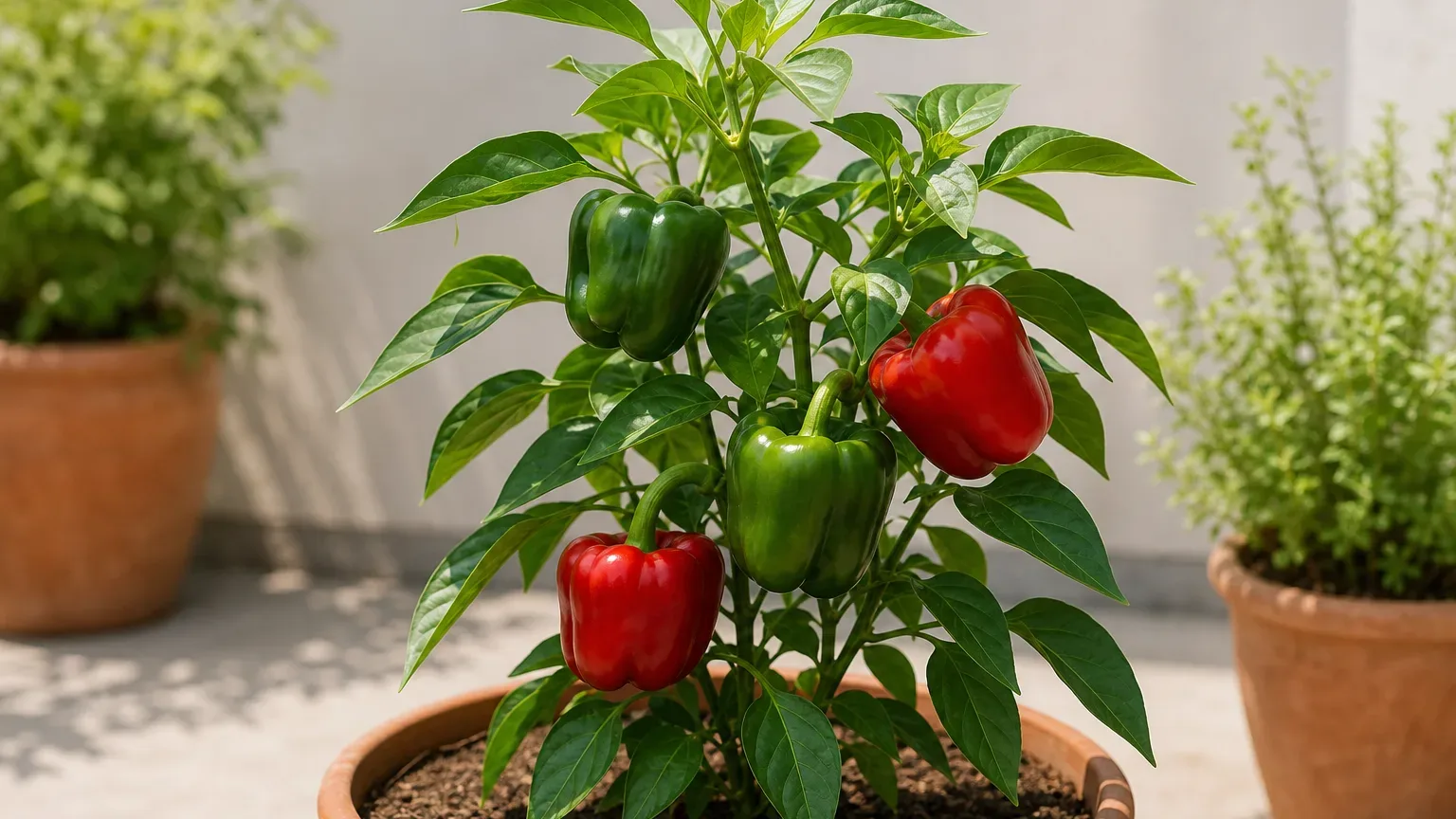
Capsicum Watering Guide for Pots and Gardens
Capsicum Watering Guide for Pots and Gardens
Capsicum watering works best when you keep the root zone consistently moist without keeping it saturated. This page covers sweet bell pepper or Shimla Mirch cultivars of Capsicum annuum, not a hot chilli crop being deliberately stressed for pungency. The practical rule is simple: check below the surface, water thoroughly when the upper 2–3 cm begins to dry, and let excess water escape.
That rule matters most from flowering through harvest. Peppers respond poorly to large swings between dry and soaked soil, while permanently wet roots face low-oxygen conditions and disease pressure. A potted plant on a hot balcony may need a check every day; a plant in mulched garden loam after rain may need no irrigation for several days. Checking daily is not the same as watering daily.
The short answer: when to water capsicum
Push a finger 2–3 cm into the mix or soil near, but not against, the stem. Water when that layer feels slightly dry while the soil beneath still has a trace of moisture; wait when it feels cool, wet, or sticky. For a pot, confirm the result by lifting it: a noticeably lighter container supports the decision to water, while a heavy one usually means moisture remains lower down.
When you water, wet the whole active root zone rather than sprinkling only the surface. Clemson Extension recommends a uniform moisture supply and identifies fruit set and fruit development as the critical moisture period for peppers. There is no reliable fixed interval because temperature, wind, plant size, pot material, mix, rainfall, and soil texture all change the drying rate.
Why capsicum needs steady moisture
Sweet capsicum has a productive canopy and expanding, water-rich fruit but does not benefit from swampy soil. Utah State University Extension advises regular, uniform watering for peppers and notes that inconsistent availability can contribute to weak early growth, flower drop, sunburn, blossom-end rot, and fruit cracking; it recommends deep, infrequent irrigation rather than repeated shallow wetting.
“Infrequent” is relative to the soil and weather. It means allowing air to return to the root zone between complete waterings, not letting a fruiting plant wilt hard. Read this together with the Capsicum soil guide: a moisture-retentive but freely draining root zone makes even watering possible, while compacted or poorly drained soil turns ordinary irrigation into waterlogging.
Check the root zone before watering
The surface can dry within hours while the root ball remains wet, especially in a large plastic pot. Conversely, a peat-based mix may shrink from the pot wall and let water run down the sides without rewetting the centre. Test where the roots live, not just the colour of the top crust.
In beds, use a finger or hand trowel to inspect several centimetres down and check rainfall before opening the hose. Clemson recommends checking vegetable-garden soil at roughly 5–10 cm depth rather than waiting for visible wilt. Check two places in uneven beds because a drip emitter, roof overhang, slope, or nearby wall can create wet and dry pockets.
Use touch, pot weight, and plant signals together
Touch tells you whether the upper root zone is drying. Pot weight tells you whether substantial water remains deeper in a container. Plant posture adds context, but it should not make the decision alone: capsicum can droop temporarily at the hottest part of the day even when the soil is moist.
If leaves recover as the evening cools and the root zone is still damp, wait. If the plant remains limp in the morning and the soil is dry, water thoroughly. If it wilts while the soil is wet, suspect root stress or waterlogging rather than giving another drink.
How to water capsicum deeply
Water slowly at soil level over the root area. In a pot, continue until water begins to leave every drainage hole, then let the container drain fully and empty its saucer. If dry mix sheds water down the sides, apply a small first pass, wait a few minutes, and water again slowly so the centre rehydrates.
In a bed, a drip line or soaker hose can deliver moisture with less leaf wetting and less runoff than a fast overhead spray. Utah State specifically describes drip irrigation as well suited to peppers because it helps maintain uniform root-zone moisture. Water early enough that any splashed foliage dries during the day, and avoid small daily sprinkles that train roots near the surface.
Watering capsicum in pots
Containers have little moisture reserve, so the useful habit is a daily check during hot or windy weather, not an automatic daily pour. Small pots, terracotta, mature fruiting plants, and exposed balconies dry fastest. Large plastic pots and dense mixes dry more slowly, particularly in cloudy or humid weather.
Use one capsicum plant per roomy pot with unobstructed drainage holes. Never leave the nursery pot standing in runoff inside a decorative cachepot. If the plant repeatedly wilts within a day of a thorough watering, the root ball may be too crowded, the mix may be water-repellent, or the pot may be undersized; review the Capsicum repotting guide instead of compensating with constant shallow sips.
A practical container routine
Check 2–3 cm down in the morning. If dry and the pot is light, water slowly across the surface until runoff appears, allow it to drain, and check again later only during severe heat. If the mix is damp or the pot remains heavy, skip watering and reassess the next day.
Keep a simple note for one week when conditions change. Recording the weather, whether you watered, and how long the pot took to lighten reveals the plant’s real rhythm. It also prevents two family members from watering the same pot.
Watering capsicum in garden beds
Garden soil usually dries more slowly than a pot, but the top can mislead you after a brief shower. Check below the surface and water deeply enough to wet the root zone. Utah State’s home-garden guidance gives 2.5–5 cm of water per week as a broad field starting point and stresses that irregular over- or underwatering can cause flower drop or blossom-end rot; rainfall and soil type must be subtracted from that estimate.
Sandy soil needs smaller, more frequent applications than moisture-holding loam, while heavy clay needs slower application and longer pauses. If water ponds or runs off, stop and let it soak before continuing. Planting on a raised mound or bed is safer than trying to solve chronically wet ground with a reduced schedule alone, because peppers perform poorly in heavy, wet soils.
A 5–7 cm layer of clean organic mulch can soften moisture swings once the soil is warm. Keep mulch a few centimetres away from the stem. Mulch reduces evaporation, but it also hides wet soil, so always move it aside before testing.
Flowering and fruiting need the steadiest supply
Do not wait for repeated wilt once buds open. Adequate water is especially important from flowering until harvest, according to Clemson’s vegetable watering guidance. During fruit expansion, both the plant’s demand and the cost of a dry–wet swing increase.
This does not mean flooding the pot every morning. It means checking more often, watering before severe drought, and avoiding abrupt catch-up soaking after the plant has been left dry. Pair watering with the Capsicum light guide, because hot reflected sun and strong dry wind can raise demand even when the air temperature alone seems manageable.
Blossom-end rot: water first, calcium only when evidence supports it
Blossom-end rot appears as a sunken, leathery brown or black area at the flower end of developing fruit. It reflects a localized calcium shortage in the fruit, but that does not automatically mean the garden soil lacks calcium. Clemson explains that interrupted root water uptake can interrupt calcium delivery and that foliar calcium sprays do not correct the transport problem.
First stabilize moisture: water deeply, prevent hard dry-downs, mulch warm beds, protect roots from cultivation damage, and confirm drainage. Utah State likewise recommends uniform moisture, drip irrigation, mulch, and avoiding overwatering in heavy clay for blossom-end-rot management. Add lime or calcium only when a soil test or qualified local recommendation shows a deficiency or pH correction is needed; unnecessary additions do not repair fruit already damaged.
Remove badly affected fruit so the plant can direct resources to later fruit. The next flush may develop normally after moisture steadies. Also review the Capsicum fertilizer guide, because overfertilization and root injury can complicate calcium uptake even when watering improves.
Adjust watering during extreme heat
Heat, low humidity, and wind speed water loss from leaves and containers. Check pots early each morning and again in late afternoon during a heatwave, but water the second time only if the root-zone test shows it is needed. A mature fruiting plant in a small pot may genuinely require daily irrigation; the same plant in a large mulched bed may not.
Give water before the most intense heat rather than trying to revive a severely wilted plant at midday. Utah State notes that irrigation demand should rise as temperatures increase and plants grow. Temporary midday droop with moist soil can be a heat response, so use shade during extreme afternoon exposure and do not drown the roots in response.
Change the plan during monsoon rain
During humid, cloudy monsoon periods, evaporation slows and rain may wet only one side of a sheltered balcony pot. Check each container rather than assuming all received the same amount. Pause routine irrigation when the root zone is damp, remove saucers, and make sure drainage holes are not blocked by roots or settled mix.
For plants in the ground, redirect roof runoff and avoid low spots where water stands. Pepper guidance consistently calls for well-drained loam or sandy loam, not merely less frequent watering in saturated soil. If a bed remains puddled long after rain, open drainage routes or move future crops to a raised bed; extra fertilizer cannot compensate for oxygen-starved roots.
Overwatering and waterlogging signs
Warning signs include soil that stays glossy-wet for days, a sour smell, yellowing lower leaves, stalled growth, and wilt despite a wet root zone. Dark or soft tissue at the stem base and collapsing fine roots require urgent attention. Stop irrigation, empty standing water, improve airflow and drainage, and inspect the roots if decline continues.
Do not diagnose from yellow leaves alone. Nutrient problems, pests, and normal older-leaf loss can look similar. The decisive clue is the combination of symptoms with persistently saturated soil.
Underwatering signs
Dry mix pulling from a pot’s edge, a very light container, dull or limp leaves that do not recover after the day cools, flower drop, and small stalled fruit point toward drought. Rehydrate slowly and thoroughly; if water races around a shrunken root ball, use two passes a few minutes apart.
Do not follow severe drought with several days of extra watering. Once the root ball is evenly wet and drained, return to checking the upper 2–3 cm. Consistency repairs the pattern; oscillating from drought to saturation repeats it.
Common capsicum watering mistakes
The most common errors are watering by weekday, mistaking a dry surface for a dry pot, giving shallow daily cups, leaving runoff in a saucer, and continuing irrigation through heavy rain. Another is reacting to every midday droop with water without first touching the soil.
Blossom-end rot also tempts growers into adding calcium without testing. Correct the moisture pattern and protect the roots first. Use the Capsicum overview when symptoms involve light, temperature, fruit set, or general growth rather than watering alone.
When to use this page vs other Capsicum guides
- Use this page to decide when and how to water, and to distinguish dry soil from waterlogging.
- Use the Capsicum soil guide when mix stays wet too long, sheds water, compacts, or drains poorly.
- Use the Capsicum fertilizer guide for nutrient timing, soil-test decisions, and feeding during fruit production.
- Use the Capsicum repotting guide when roots fill the container or the pot dries implausibly fast.
- Use the Capsicum propagation guide for seedling moisture and establishment rather than mature-plant irrigation.
Related Capsicum guides
- Capsicum overview — identity, season, growth habit, and whole-plant care
- Capsicum light — sun exposure and heat management
- Capsicum soil — drainage and moisture-holding balance
- Capsicum fertilizer — feeding without disrupting fruit set
- Capsicum repotting — container size and root-space decisions
- Capsicum propagation — seed and young-plant care
- Capsicum pruning — canopy and support decisions
Conclusion
Water sweet capsicum by observation, not by calendar. Check 2–3 cm below the surface, water the full root zone when that layer begins to dry, and let every pot or bed drain. Pots need more frequent checks than garden soil, and flowering and fruiting plants need the smallest moisture swings.
Increase checks in heat and wind, then pull back during cool rain or monsoon humidity. Treat blossom-end rot first as a moisture-and-root-uptake problem rather than proof that the soil needs calcium. The target is steady moisture with air still reaching the roots: neither repeated drought nor waterlogging.