Root Rot on Sweet Bell Pepper: Container Rescue
Quick answer
Root rot on sweet bell Capsicum usually starts when a moisture-loving fruiting plant sits in saturated, low-oxygen mix—often a saucer of runoff on a hot balcony. First step: stop watering, lift the pot out of standing water, and check whether the upper 2–3 cm is still wet after 24 hours; if the pot stays heavy, unpot and inspect roots the same day.
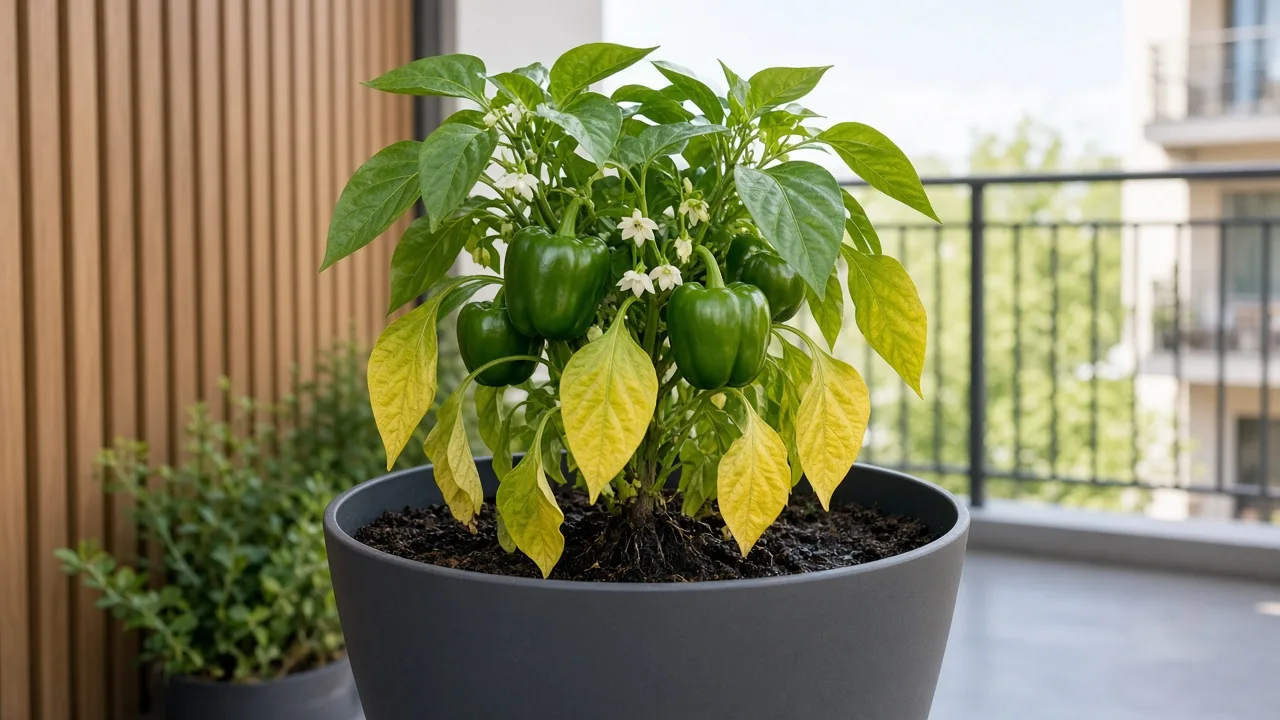
Root Rot on Capsicum: Causes, Checks & Fixes
This guide covers root rot on Capsicum. See also the general Root Rot guide, watering, and light pages for this plant.
Root Rot on Capsicum: Causes, Checks & Fixes
Quick answer
Root rot on sweet bell Capsicum (Capsicum annuum cultivars grown for blocky, non-pungent fruit) is root and crown failure from chronically wet, low-oxygen potting mix—not every midday wilt during fruit swell or a single yellow leaf on an otherwise firm stem. Bell peppers are correctly described as needing moist, well-drained, rich soil with even moisture, which pushes many balcony growers toward frequent drinks in hot weather. When drainage fails, a saucer holds runoff, or cool nights slow evaporation in a plastic pot, that “steady moisture” habit can leave the root zone saturated for days.
For how chronic wet mix destroys roots in general, see our root rot guide. On sweet bell Capsicum, the warning pattern is yellowing lower leaves on soil that stays wet, a heavy pot, sour smell at the drain hole, wilt that does not match a dry upper 2–3 cm, soft dark tissue at the stem base, and brown mushy roots when unpotted—not tan leathery patches only on the blossom end of fruit.
First step: stop all watering and lift the container out of standing water. Then check whether the upper 2–3 cm has begun to dry before you add another drink. A heavy, soggy pot means unpot and inspect roots the same day—do not fertilize, “stress feed,” or move into a larger pot first.
When to use this page vs other Capsicum guides
| What you see | Read next |
|---|---|
| Heavy wet pot, yellow lowers, soft stem base (this page) | Stay here for root inspection and salvage |
| Wet mix but roots still mostly firm | Overwatering on Capsicum — dry-down pause may be enough |
| Light dry pot, wilt in afternoon heat only | Underwatering or wilting |
| Limp leaves on wet soil through the night | Drooping leaves after you rule out saturated mix |
| Tan dry patch on fruit bottom only, firm stems | Blossom-end disorder — see NC State blossom-end rot guidance; fix moisture swings, not roots first |
| Surface mold or gnats, firm stems | Mold on soil or fungus gnats |
| Lower yellow only, firm stem, neutral smell | Yellow leaves — senescence vs root failure |
Browse overlapping symptoms on the Capsicum problems hub when more than one pattern fits.
What root rot looks like on Capsicum
Sweet bell pepper is an upright, brittle-stemmed warm-season annual (often grown as a single-season container crop) with broad leaves and heavy fruit that transpire hard in full sun. Root rot hides under productive top growth: upper leaves may still look green while lower leaves yellow and the crown softens at the soil line.
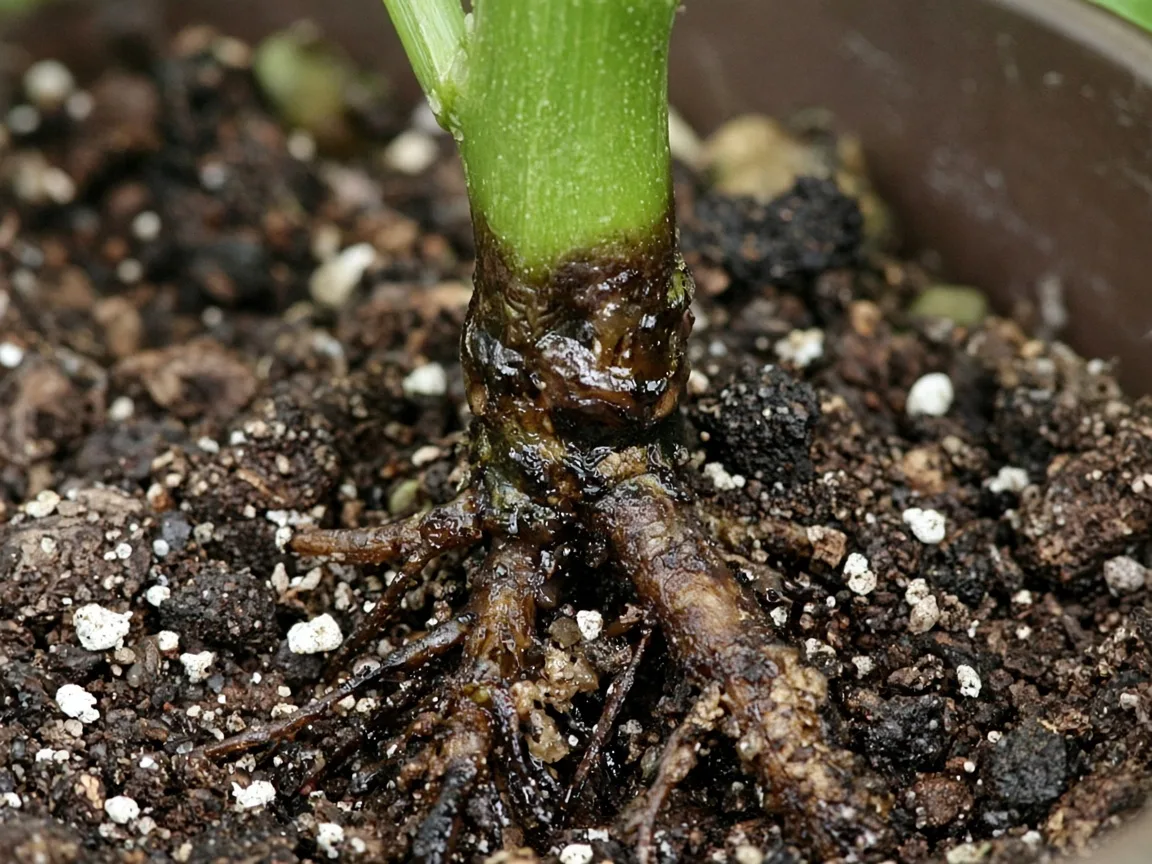
Root rot at the Capsicum crown—darkened stem tissue at the soil line and brown mushy root segments on damp container mix; upper fruit may still look firm.
Early signs
- Yellowing lower leaves while the upper 2–3 cm of mix feels moist or wet for many days
- Midday wilt on a heavy container—leaves limp even though you watered recently (roots in waterlogged soil cannot absorb oxygen)
- Flower or small fruit drop on soggy mix—not the same as brief wilt on a dry pot during a heat spike
- Sour or musty smell when you tilt the pot or empty a cache tray
- Stalled new leaves at the growing tip while lower foliage declines
- Fungus gnats over constantly wet surface mix
- Quick unpotting shows brown, mushy roots; healthy pepper roots are firm and pale
Advanced signs
- Soft, dark stem tissue at the soil line; the plant wobbles in the pot
- Whole-plant collapse on soggy mix because decaying roots cannot move water upward—same visual as drought, opposite soil condition
- Dark brown crown lesions climbing the stem under wet conditions (Phytophthora blight often starts at the soil line on peppers)
- Most root mass slimy on inspection; only small firm sections remain
- Multiple leaves fail within one to two weeks after a cold spell on wet roots or an oversized pot that never dries
Lower leaves that fully yellow rarely return to deep green. Judge recovery by new leaves opening firm and stable flowering, not by old leaf color.
Fruit-load wilt vs rot wilt (balcony heat check)
Loaded bell stems are brittle; fruit expansion pulls water fast on sunny balconies. Owners often see afternoon limp leaves, assume thirst, and water a root zone that is already saturated from morning irrigation plus a full saucer.
- Afternoon: Note whether leaves droop but the upper 2–3 cm is dry and the pot feels light—classic heat wilt on a healthy root system.
- After watering (if dry): Leaves should recover by evening if roots are sound.
- Rot pattern: Leaves stay limp into the cool evening on a heavy pot, often with yellow lowers and no firm new growth.
Cultivated Earth’s pepper watering guide stresses that wilting on wet soil is a red flag for root problems—cross-check wilting only after you confirm moisture at depth is not saturated.
Flowering and fruit-set moisture trap
From flowering through fruit swell, peppers need consistent moisture—dry spells can drop flowers and distort fruit. That real need collides with container physics: peppers in pots dry faster than in-ground plantings and may need daily checks in heat, but deep drinks into mix that cannot drain still create anaerobic roots.
The failure mode looks like good care: you water to “keep fruit happy,” mulch the surface, but the core of a peat-heavy mix in a plastic pot stays wet while leaves still transpire. You see droop and add another shallow sip instead of fixing drainage—then roots lose oxygen while the plant looks “thirsty.”
Count saucer water and rain overflow as irrigation. Water when the upper 2–3 cm begins to dry, align mix structure with the soil guide, and never leave the pot standing in runoff after a deep soak.
Phytophthora crown rot vs cultural root rot
On peppers, soilborne Phytophthora can cause crown rot and sudden wilt under wet conditions—often with dark lesions girdling the stem (NC State describes wilt followed by death when soils are saturated). Cultural anaerobic root rot from overwatering can look similar at the crown.
| Clue | More likely cultural rot | Consider Phytophthora / blight |
|---|---|---|
| History | Saucer standing water, heavy peat, no drainage holes | Splash from infested soil onto stems, shared garden beds |
| Roots | Mushy brown roots throughout wet mix | Crown lesion dark and fast; may occur with fruit rot in wet weather |
| Salvage | Trim mush, refresh mix, dry-down | Often rapid collapse; isolate from other nightshades |
Home balcony containers rarely need fungicide programs; fix waterlogging first and discard severely infected plants rather than composting them near future pepper pots.
Blossom-end tan patch vs whole-plant failure
Blossom-end rot on pepper fruit is an abiotic fruit disorder from calcium delivery problems, often linked to moisture swings—tan, leathery tissue on the fruit bottom while stems stay firm. Root rot shows whole-plant wilt, yellow lowers on wet mix, and mushy roots, not damage isolated to fruit skin.
If only fruit bottoms look damaged, stabilize even moisture and calcium availability before you unpot for rot. If stems soften at the soil line on a heavy pot, treat as root failure here.
Why Capsicum gets root rot
Sweet bells combine high transpiration in full sun with sensitive roots—NC State notes plants can be temperamental if roots are disturbed and prefer evenly moist, well-drained soil. Common triggers on home pots:
- Standing water in saucers or cachepots after deep watering
- Compacted or peat-heavy mix that stays wet in the center while the surface looks dry
- Oversized pots that stay cold and wet in spring before soil warms
- Repotting shock plus immediate heavy watering on damaged roots
- Cool nights after hot days when evaporation stalls but irrigation continues
- Disease pressure when saturated soils favor Phytophthora on peppers
How to confirm the cause
Work top to bottom before you change five variables at once.
- Moisture at depth: Finger the upper 2–3 cm; knock a small container out of the pot if needed. Waterlogged soil often smells sour.
- Pot weight: Heavy days after watering on a plant that still wilts suggests failed roots, not drought.
- Stem base: Firm green tissue vs soft brown crown at the soil line.
- Root sample: Trim away mix and rinse roots—white and firm vs brown mush.
- Fruit pattern: Fruit-only tan patches point to blossom-end issues, not this page.
Use the Root Rot Risk Checker if several capsicum problem pages match.
The first fix to try
Stop watering and remove standing water immediately. Set the container on dry bricks or a rack so the drain hole can breathe. Wait 24 hours, then re-check the upper 2–3 cm.
If mix is still wet and stems are softening, unpot the same day. Rinse roots gently, cut away brown mush with clean scissors, and set the plant in shade with airflow—do not leave it baking on a railing while roots are exposed.
Only after you know how much root mass remains should you repot into fresh, well-drained mix (see soil) in a clean pot with holes—usually the same size or slightly smaller, not a big upgrade “to help it recover.”
Step-by-step recovery
- Trim all mushy roots back to firm tissue; dust cuts if you wish, but airflow matters more.
- Repot shallowly so the stem crown sits at the previous soil line—burying peppers deep invites stem rot on wet mix.
- Water once lightly to settle mix, then let the upper 2–3 cm dry before the next drink.
- Stake brittle stems before fruit weight returns; support reduces crown snaps during weak-root recovery.
- Hold fertilizer until new leaves look firm and color stabilizes—see the overview hub for baseline nutrition timing.
Recovery timeline
Expect one to three weeks before you trust new growth on a moderate salvage. Mild cases may show a clean new leaf within seven to ten days in warm sun and good airflow. Cool spring weather slows recovery; do not interpret slow growth as failure if mix is finally drying on rhythm.
Improvement signals: new leaves open flat and firm, flowers hold without instant drop, no new yellowing at the base, and mix dries predictably between drinks.
Worsening signals: stem softening climbs above the soil line, sour smell returns within days of repotting, or the plant wilts through cool nights on freshly moistened soggy mix.
Mistakes to avoid
- Watering because fruit is sizing without checking whether the saucer is full.
- Moving a rotting plant to a darker corner—peppers need sun; fix roots and drainage instead.
- Composting infected roots next to future pepper containers.
- Stacking repot, prune, and fertilizer the same day—you will not know which step helped.
- Confusing blossom-end fruit patches with crown rot—stems stay firm in the former.
How to prevent root rot next time
- Water when the upper 2–3 cm begins to dry, not on autopilot—align with watering.
- Use drainage holes; empty saucers after every soak.
- Refresh perlite-rich, fertile mix each season for container bells.
- Harden off and transplant before roots circle tight cells; disturbed roots plus floodwater invite decay (NC State capsicum profile).
- In fruiting season, favor deep drinks that drain freely over frequent shallow sips that keep the core wet (pepper watering guidance).
- Inspect weekly on the problems hub while issues are still small.
Related Capsicum guides
- Capsicum overview — sweet bell type, sun, and fruiting basics
- Watering — upper 2–3 cm dry-down through fruiting
- Soil — moisture-retentive but drained loam-style mix
- Overwatering — when roots are still firm
- Wilting — heat wilt vs failed roots
- Problems hub — full symptom index
Related tool
Use the Root Rot Risk Checker to narrow causes for root rot on this plant before changing multiple variables at once.