Not Enough Light on Capsicum (Bell Pepper): Causes & Fixes
Quick answer
Not enough light on capsicum shows as leaning stems, wide leaf spacing, pale foliage, and few peppers even when watering looks fine. Sweet bell pepper needs at least six hours of direct sun on the leaves during warm growth. First step—relocate the pot to the sunniest unobstructed spot you have and acclimate over 7–10 days before repotting, pruning hard, or feeding heavily.
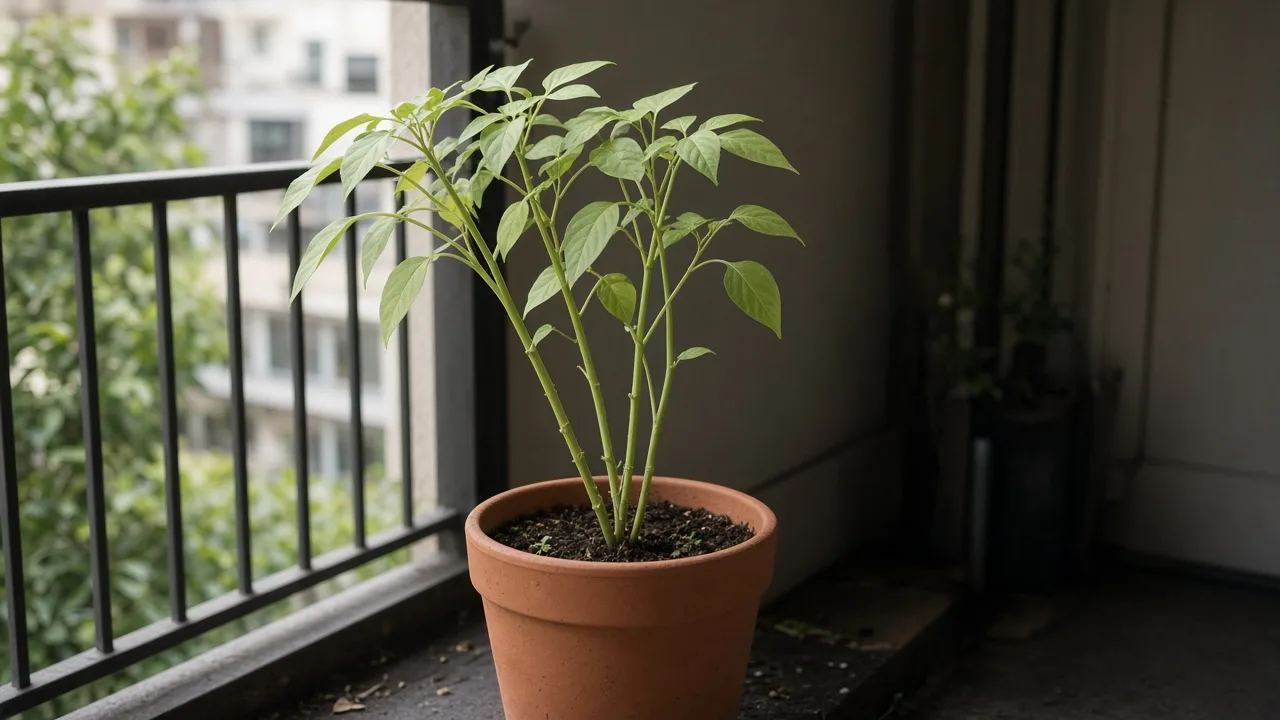
Not Enough Light on Capsicum: Causes, Checks & Fixes
This guide covers not enough light on Capsicum. See also the general Not Enough Light guide, watering, and light pages for this plant.
Not Enough Light on Capsicum: Causes, Checks & Fixes
Quick answer
Not enough light on capsicum (sweet bell pepper, Shimla Mirch) shows up as leaning stems, wide gaps between leaves, pale new foliage, and few or undersized peppers even when you water on schedule. NC State lists sweet pepper for full sun—six or more hours of direct light on the leaves during warm active growth—and Utah State Extension recommends a sunny location for best pepper yields.
The crop distinction: a capsicum can survive in bright shade while failing to fruit. Treat open flowers as a checkpoint, not proof that light is adequate.
First step: move the pot to the sunniest unobstructed position you can offer—typically a south- or west-facing balcony rail, terrace edge, or window where leaves receive direct sun for much of the day. Acclimate over 7–10 days if the plant came from a shaded nursery bench. Do not repot, hard-prune, and fertilize on the same day you change light.
Use this page when stretch, pale leaves, missing fruit, or one-sided growth make you question placement. Use the leggy growth guide instead when long bare internodes and floppy shoots are already the main issue. Window math, Indian summer heat, and grow-light setup live on the capsicum light guide.
For how chronic low light limits edible and ornamental plants in general, see our not enough light hub. On capsicum, the decisive read is internode length on the newest growth and whether flowers turn into full-sized fruit—not whether older leaves still look green enough to hide the problem.
Not enough light vs. leggy growth on capsicum
Both problems share weak light as the root cause, but these URLs serve different search moments:
| Your situation | Start here |
|---|---|
| Pale leaves, few peppers, balcony feels “bright” but sun hits leaves briefly | This page — full low-light diagnosis and prevention |
| Long bare internodes, thin stems flopping toward one direction, empty middle on branches | Leggy growth guide |
| Plant is green but growth rate collapsed without dramatic stretch | Slow growth guide |
| Yellow leaves with wet soil in a shady corner | Yellow leaves and overwatering |
| Foot-candle bands, morning vs afternoon sun, shade cloth in heat | Light guide |
| Buds drop in heatwaves despite strong sun | Drooping leaves and heat notes on the light guide |
Fixing low light always means brighter placement described on those sibling pages—the difference is how you confirm the diagnosis before you move the pot.
What not enough light looks like on capsicum
Sweet pepper is an upright, warm-season Capsicum annuum crop bred for blocky fruit—not a low-light foliage houseplant. When photosynthesis falls short, the plant reaches toward the brightest source instead of building a compact fruiting canopy.
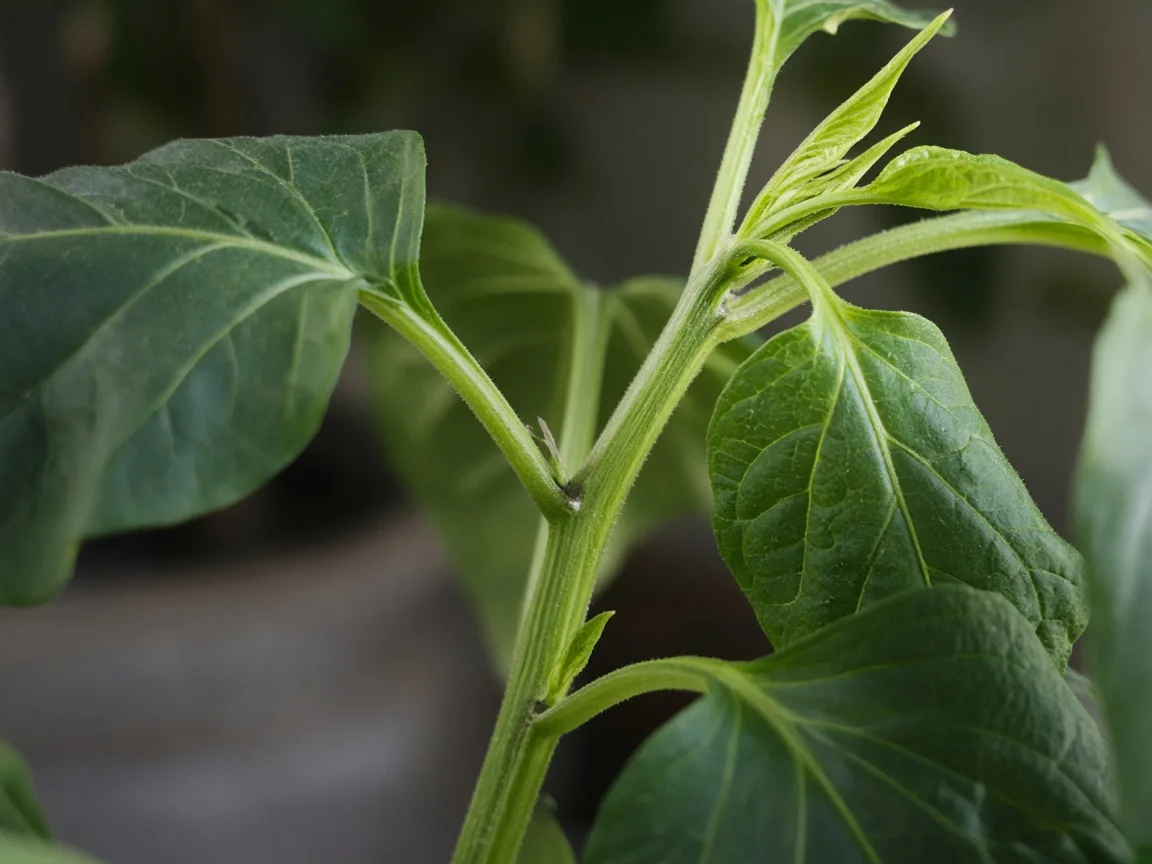
Low-light capsicum—compare internode spacing on the newest stem section with older sun-grown tissue lower on the plant.
Watch for these patterns during warm active growth:
- Leaning, etiolated stems — internodes lengthen, branches look thin, and the whole pot tilts toward one balcony edge or window.
- Pale or small new leaves — foliage opens lighter green and stays smaller than older sun-grown leaves on the same branch.
- Sparse flowers or fruit — blooms may open, but peppers stay small, slow to colour, or fail to set when light and warmth do not align.
- One-sided canopy — only the sun-facing side stays leafy while the shaded side goes bare.
- Indoor “survival mode” — dark green older leaves with no new fruit after months on a middling windowsill.
These signs differ from sunscald, which shows bleached or papery patches on fruit or leaves after a sudden jump into harsh afternoon sun. NC State notes that good leaf cover protects fruits from sunscald. They also differ from heat-stress flower drop, when nights are cool or days spike hot while light is actually strong—Utah State links flower abortion to temperatures below 55°F or above 90°F during bloom.
Balcony “bright shade” that fails bell peppers
A common Indian terrace pattern: the space looks luminous all day, but direct sun reaches the pot for only 90–120 minutes between buildings. The plant stays alive, opens occasional flowers, and never sizes a blocky bell. That is survival light, not the full sun Penn State ties to pepper productivity.
Why capsicum gets not enough light
The most common cause is treating sweet pepper like a decorative pot plant instead of a sun crop. NC State describes sweet pepper culture in full sun and well-drained soil. The RHS advises plenty of light and warmth for container sweet peppers, with outdoor success depending on a warm, sunny patio or wall—not a default shaded veranda.
Placement mistakes on terraces and windows
- Counted room brightness, not leaf sun — light intensity drops sharply even a meter from glass; middle-of-room shelves rarely qualify.
- North-facing or deeply recessed windows — fine for herbs, below what bell peppers need for reliable fruit.
- Railings, insect screens, and tinted glass — each cuts usable direct light more than owners expect.
- Competing climbers or taller pots — neighbour plants shade the pepper crown while the top still looks acceptable.
Seedling and nursery carryover
Peppers started indoors need strong artificial light before transplant. Utah State warns that adequate light is essential for quality transplants, with cool fluorescent tubes 5–8 cm (2–3 in) above seedlings for 14–16 hours daily. Penn State likewise tells growers to give indoor seedlings plenty of light and to harden off gradually before outdoor placement. A leggy nursery transplant moved straight to a partially shaded balcony often never recovers compact form without brighter sun and selective pruning.
Light–water–fruit interaction
Low light slows evaporation from the root zone. That matters on capsicum because irregular moisture contributes to flower drop and blossom-end rot on developing fruit—Utah State ties uneven watering to blossom-end rot and flower loss. A dim corner that stays wet longer than a sunny rail invites yellow leaves and root stress while the plant still looks “thirsty” on top. Pair any light fix with the dry-down rhythm on the watering guide.
Heat versus shade confusion
Peppers thrive in warm weather, yet extreme heat can abort flowers even when light is strong—Oklahoma State notes high-temperature fruit-set problems on bell types. Do not solve a shade problem by parking the pot in all-day dense shade to escape afternoon heat; use temporary open shade during the hottest hours while keeping strong morning or filtered midday light, as detailed on the light guide.
How to confirm the cause
Work through these checks before changing fertilizer or pest sprays:
- Direct sun hours — on a clear warm-season day, count hours when sunbeams hit the leaves, not the pot rim. Fewer than six direct hours during active growth strongly points to this diagnosis, aligned with NC State full-sun guidance for sweet pepper.
- Newest internodes — compare the last two leaf pairs. Long gaps and pale color confirm stretch; compact darker pairs on the same branch mean light dropped recently.
- Flower-to-fruit ratio — if blooms open but fruit stalls while nights stay between about 60–75°F (15–24°C), suspect light before nitrogen deficiency. Penn State lists favorable fruit-set night temperatures in that band.
- Pot weight and soil moisture — firm stems with a pot that stays heavy for days in shade suggests slow drying, not pure underwatering. Cross-check underwatering only if the root ball is truly dry.
- Recent moves — transplant shock can pause growth without fixing light. Hold placement steady for 10–14 days after a sun upgrade, then read new tip growth.
If stems lean, internodes stretch, fruit set is weak in mild weather, and roots are healthy in appropriately dry soil, you have enough evidence to fix light first.
The first fix to try
Relocate the pot to the brightest location available and change nothing else for one week.
Outdoors, that usually means an unobstructed south- or west-facing edge where leaves receive direct sun for much of the day. If the plant grew in shade, acclimate over 7–10 days—start with morning sun, add hours gradually, and watch for bleaching on leaves formed in dim light. Penn State describes hardening pepper seedlings by lengthening outdoor time gradually before full exposure.
Indoors or on short winter days, add a full-spectrum horticultural LED 30–45 cm (12–18 in) above the canopy for 12–14 hours daily. Maryland Extension notes that inadequate light causes leggy stretch and that photoperiod matters when supplementing natural light.
Rotate the pot a quarter turn every few days so branches do not set permanently toward one window or railing gap.
Step-by-step recovery after light improves
Once the plant is in stronger light, follow this order:
- Wait 7–10 days before hard pruning, repotting, or heavy feeding. Let new tip growth confirm the placement works.
- Adjust watering — brighter sun dries the mix faster; check dryness 5–8 cm (2–3 in) deep before each drink per the watering guide. Do not pour extra water because leaves look pale—that often worsens shade-induced soggy soil.
- Pinch or prune lanky tips after several weeks of good light if stems stayed wand-like. Remove the top few inches above a leaf node to encourage bushier side shoots. Detailed stretch recovery lives on leggy growth.
- Resume light feeding only after new leaves look normal green and nights stay warm. Penn State suggests side-dressing after fruit begins to set—feeding a still-stretching plant in dim light builds soft foliage, not peppers. Follow the fertilizer guide once fruit set resumes.
Do not stack repot, hard prune, and a full fertilizer dose in the same week you fix light.
Recovery timeline
| Milestone | What to expect |
|---|---|
| 1–2 weeks | Lean slows; newest leaf pairs open closer together and slightly darker. |
| 3–5 weeks | Side branches thicken; more flowers appear if nights stay warm. |
| One season | Fruit count and size improve when light, water, and heat align. Old stretched sections remain long unless pruned. |
| After selective pinching | Bushier shoots often emerge within 3–4 weeks in strong summer sun. |
Stretched internodes from months in shade do not shrink back. Judge success by new growth and fruit set, not old stems.
Lookalike symptoms to rule out
Overwatering in a dim corner — yellow lower leaves, sour-smelling mix, and a heavy pot while the plant sits far from direct sun. Light helps only if you also correct dry-down timing—see overwatering.
Underwatering — wilt at midday with a light, dry pot and curling leaf edges while sun is actually strong. Fix moisture before moving the plant deeper into shade.
Nitrogen hunger — uniform pale green on old and new leaves across the whole canopy in good sun. Low light pale is usually paired with stretch toward one light source.
Heat or cold flower drop — buds abort when nights are cool or days exceed about 90°F (32°C) even in bright sun. Utah State documents temperature-linked flower loss. Add shade for heat, not permanent deep shade for light shortage.
Pests on buds — aphids or thrips on flowers can block fruit in otherwise sunny sites. Inspect buds before assuming placement is fine—see aphids if insects are present.
Mistakes to avoid
- Keeping a fruiting pepper as living-room décor — capsicum is a sun crop first; dim rooms produce stretch, not blocky bells.
- Jumping from shade to harsh afternoon wall sun in one day — causes sunscald on leaves and fruit formed in low light. Acclimate gradually.
- Watering more because the plant looks weak — in dim corners wet soil lingers and invites root issues. Check dryness first.
- Fertilizing for “energy” without sun — nitrogen pushes more weak stretch when light is still inadequate.
- Confusing heat protection with permanent shade — open shade during extreme heat is not a substitute for six hours of useful direct light across the season.
- Buying the largest bell cultivar for a shaded balcony — compact varieties save space but do not remove the light requirement; choose genetics for pot size, not for shade tolerance.
How to prevent not enough light next time
Before you buy transplants, confirm you can deliver at least six hours of direct sun on leaves through the warm season—NC State’s full-sun classification for sweet pepper is the baseline for cropping, not just keeping green leaves.
Place new pots on the sunniest rail, moveable dolly, or wheeled grow bag so you can chase seasonal sun angles on Indian terraces. Clean balcony glass and prune overhanging branches that steal midday beams. When starting seed indoors, provide 14–16 hours of strong seedling light before transplant, and harden off outdoors per Penn State gradual exposure steps.
When monsoon cloud cover or short winter days cut intensity, either accept slower growth and reduce watering, or add supplemental LEDs as described on the light guide. The RHS notes that sweet peppers need consistent warmth above about 15°C (59°F) for active growth—cool dim windows fail both tests at once.
Grow-light backup for fruiting capsicum
When no outdoor or window position clears six direct hours:
- Fixture: Full-spectrum horticultural LED, not warm household bulbs alone.
- Photoperiod: 12–14 hours daily on a timer during active growth; avoid extremely long dim light that still fails intensity targets.
- Distance: 30–45 cm (12–18 in) above the highest leaves—close enough for intensity, far enough to limit heat burn.
- Coverage: Light the whole canopy; a single desk lamp on one side produces one-sided stretch.
If new growth still elongates with 14 hours of lamp time, raise intensity (closer fixture or stronger panel), not just duration—Maryland Extension emphasizes intensity and duration together.
When to worry
Low light alone rarely kills capsicum overnight, but weak light plus wet soil can derail a crop. Escalate if stems soften at the base, roots smell sour, or fruit develops dark leathery blossom-end rot while the mix stays damp in shade—pair placement fixes with watering corrections and read root rot if decay is advanced.
If you cannot provide more natural or supplemental light, the plant may remain a leggy ornamental with occasional small fruit. That is a placement limit, not a failure of your fertilizer program.
Related Capsicum guides
- Capsicum overview — hub for sweet pepper care, varieties, and seasonal planning
- Capsicum light — sun hours, Indian heat, shade cloth, and grow lights
- Leggy growth on capsicum — long internodes and stretch-specific pruning
- Slow growth on capsicum — when the plant is green but not advancing
- Capsicum watering — dry-down rhythm tied to balcony brightness
- Capsicum fertilizer — feeding after fruit set, not as a shade substitute
FAQs
How many hours of sun does capsicum need to avoid low light?
Aim for at least six hours of unobstructed direct sun on the foliage during active warm-season growth, matching extension guidance for sweet bell pepper in full sun. Count light that actually hits the leaves, not hours when the balcony looks bright. A short morning strip followed by deep shade often keeps the plant alive without supporting a bell-pepper crop.
Can capsicum grow on a bright indoor windowsill?
A very sunny south or west window may support a small plant, but most indoor positions are too dim for reliable large bell peppers. Leaves need direct sunbeams for much of the day, not ambient room brightness. Without a horticultural grow light covering the whole canopy, expect stretch, dropped buds, and green fruit that never sizes up.
Why does my capsicum flower but not set fruit in shade?
Flowers can open when the plant has enough stored energy, but fruit set needs strong light, warm nights, and steady moisture. Cool nights below about 55°F (13°C) and heat above about 90°F (32°C) also abort blooms, so confirm temperature before blaming light alone. If nights are mild, sun hours are short, and internodes keep lengthening, low light is the lead suspect.
Will stretched capsicum stems shorten after I add light?
Old elongated internodes do not shrink back. New leaves should sit closer together and look darker within two to three weeks once direct sun improves. Pinch or prune lanky tips only after the plant proves it is happy in the brighter spot—see the leggy growth guide for cut placement on sweet pepper.
When is low light urgent on capsicum?
Shade alone rarely kills a pepper overnight, but weak light plus wet soil invites root problems and blossom-end rot on developing fruit. Treat as urgent if stems soften at the base, leaves yellow while the mix stays damp in a dim corner, or fruit stalls small and mushy at the blossom end. Fix placement and dry-down watering together rather than adding more fertilizer.
Conclusion
Not enough light on capsicum is a placement and cropping diagnosis, not a mystery disease. Lean stems, pale new leaves, and missing fruit in mild weather point to insufficient direct sun before you reach for stronger fertilizer or pest sprays. Move to the sunniest unobstructed spot first—six or more direct hours on leaves during warm growth—acclimate gradually, match watering to brighter drying, then prune or feed only after compact new growth and fruit set return. Old stretched internodes never shorten, but tighter new leaves and swelling peppers tell you sweet bell pepper is back in the light it needs to crop.