8 Fragrant Patio Flowers for Containers
Turn a patio into a scented garden escape with eight fragrant flowers, plus container tips, evening-scent picks, pet-safety notes, and common mistakes.
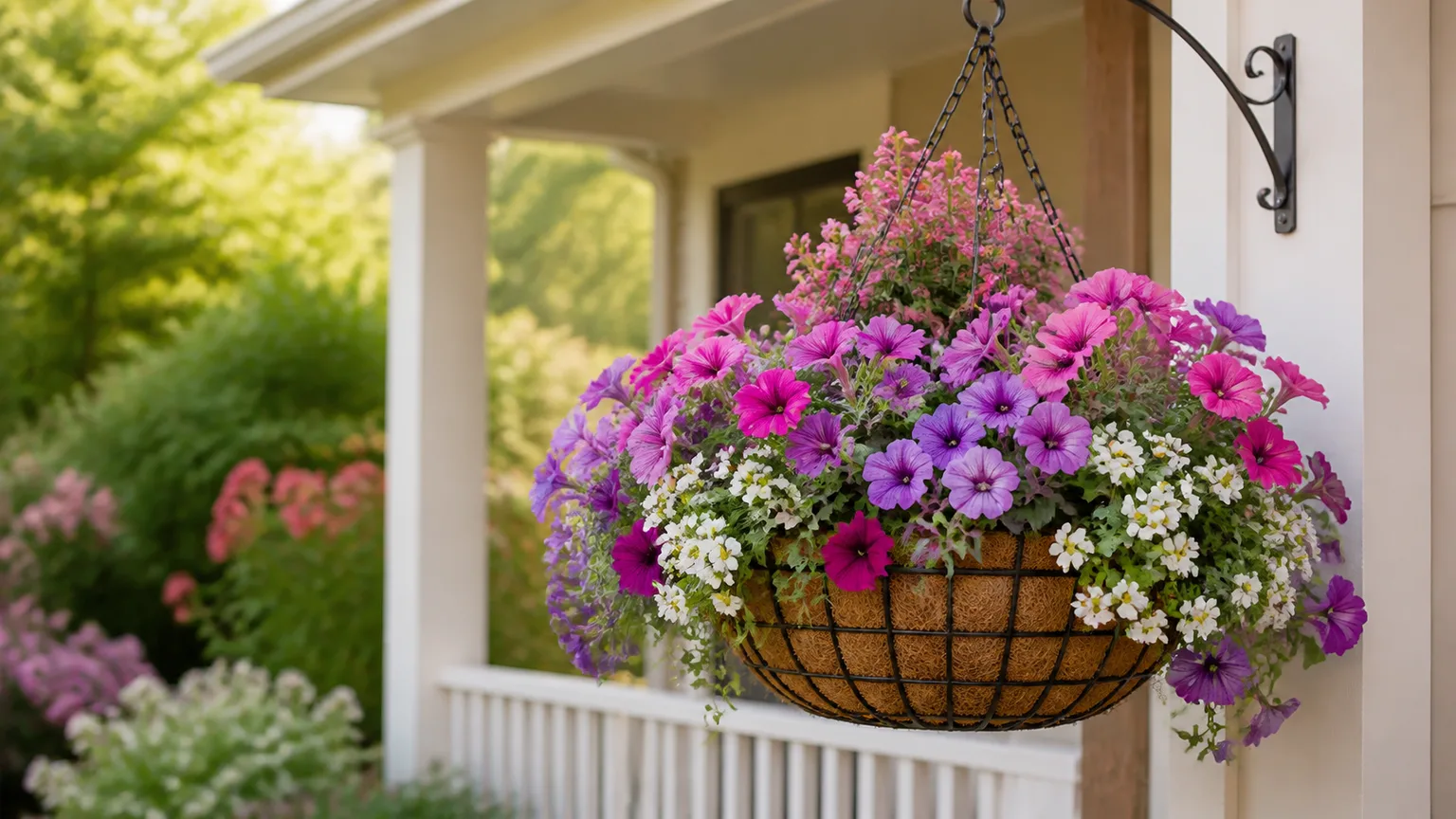
A patio can look finished and still feel flat. Add fragrance in the right places, though, and the space changes as soon as you walk through the door: a rose near the chair, lavender along the path, or a vine that releases perfume while you eat outside.
The trick is not to buy the flower with the strongest label. Fragrance only helps when the plant fits the light, the pot, the season, and the distance between the bloom and your nose. These eight fragrant patio flowers cover different jobs—from a short spring bulb display to a warm-climate vine that scents the air after sunset—so you can build a patio that smells good without turning it into a high-maintenance border.
Choose Scent by Patio Conditions, Not Just Flower Color
Fragrant plants are especially effective in small outdoor spaces because walls, railings, and nearby containers can hold scent close to where you spend time. The RHS guide to fragrant plants recommends sheltered positions and placing smaller scented plants near doors or in containers where people pass; that is a more useful rule than treating fragrance as a feature to admire from across the yard.
Start with the patio’s actual conditions. Count direct sun at the pot, notice whether a wall reflects afternoon heat, and decide whether you use the space mainly for breakfast, late-afternoon reading, or evening meals. Then choose a plant whose scent arrives during that window instead of choosing a plant that blooms beautifully when nobody is outside.
Put fragrance where you sit and pass
Place one or two pots within a few feet of a chair, doorway, or frequently used path. A lavender pot at ankle height, a rose at seat height, or a jasmine trellis beside the dining area will be noticed far more often than the same plants lined up at the far edge of the patio.
Shelter matters because wind can carry scent away before it accumulates. A wall or screen behind the pot is useful, but leave enough open air for leaves to dry after watering; a sealed, humid corner can encourage fungal problems and make a fragrant plant perform poorly.
Avoid putting every intense scent in one cluster. A better arrangement is a gentle herbal note at the entrance, a floral plant by the seating area, and a stronger evening-scented vine near the table. That sequence lets each plant register instead of creating one confusing cloud.
Plan for morning, evening, and different seasons
Many flowers smell most noticeable in warm, still air, and some are especially effective in the evening. Epic Gardening’s fragrance overview notes that many plants are most fragrant in the morning or evening, depending on the pollinators they attract. Gardening Know How’s evening-fragrance guide also makes a useful distinction: a patio used after sunset needs plants chosen for evening scent, not simply flowers described as fragrant in a catalog.
For a long season, combine plants with different calendars. Hyacinths and some sweet peas can perfume spring, roses and gardenias carry the main warm-season display, lavender contributes flower and foliage scent, and star jasmine or honeysuckle can take over as summer evenings become the main time you use the patio.
The 8 Best Sweet-Smelling Flowers for a Patio
The best choice depends on the job you need the plant to do. The notes below call out the scent, the container reality, and the mistake most likely to make the plant disappointing.
1. Gardenia for creamy summer fragrance
Gardenia (Gardenia jasminoides) is the choice for a rich, sweet fragrance and glossy evergreen foliage in a warm, sheltered patio. Its white flowers are powerful enough for a small seating area, and compact cultivars can stay manageable in a container. Epic Gardening’s gardenia profile describes gardenia as a late-spring to early-summer bloomer that can be grown in containers and needs acidic, well-drained, consistently moist soil.
Give gardenia bright light with protection from the harshest afternoon sun, especially when a dark wall or concrete patio reflects heat. Use an acid-loving container mix, never let the pot dry to dust, and never leave it sitting in water; gardenia needs steady moisture and oxygen at the roots at the same time.
This is a rewarding plant for a gardener who can check it regularly, not a set-and-forget pot. In a cool climate, choose a compact variety and plan to move it into a bright, cool indoor space before frost; abrupt changes in light, temperature, or watering can cause buds to drop.
Gardenia is also a plant to place thoughtfully around pets. The ASPCA cat plant list includes gardenia among plants toxic to cats, so keep the pot inaccessible if a cat is likely to chew foliage or flowers.
2. Fragrant roses for repeat-blooming color
Roses bring the most familiar garden perfume, but “rose” is not a fragrance guarantee. Look for a patio, miniature, or compact shrub rose whose plant tag specifically describes its scent; old-fashioned, damask, and many English-style roses are often stronger-smelling than cultivars bred primarily for color or disease resistance.
Choose a container wide and deep enough for the mature plant, with several drainage holes, and set it where the leaves receive at least half a day of direct sun. A pot that is too small turns a rose into a cycle of midday wilt, shallow watering, and weak flowering, while a pot tucked against a hot wall can overheat roots even when the leaves appear fine.
Roses reward a simple routine: water deeply when the upper layer begins to dry, feed during active growth according to the product label, remove spent blooms when the variety benefits from deadheading, and leave space around the foliage for air movement. The Missouri Botanical Garden’s fragrant-plants guide lists roses as sweetly floral and notes their long bloom window, from late spring into frost in suitable climates.
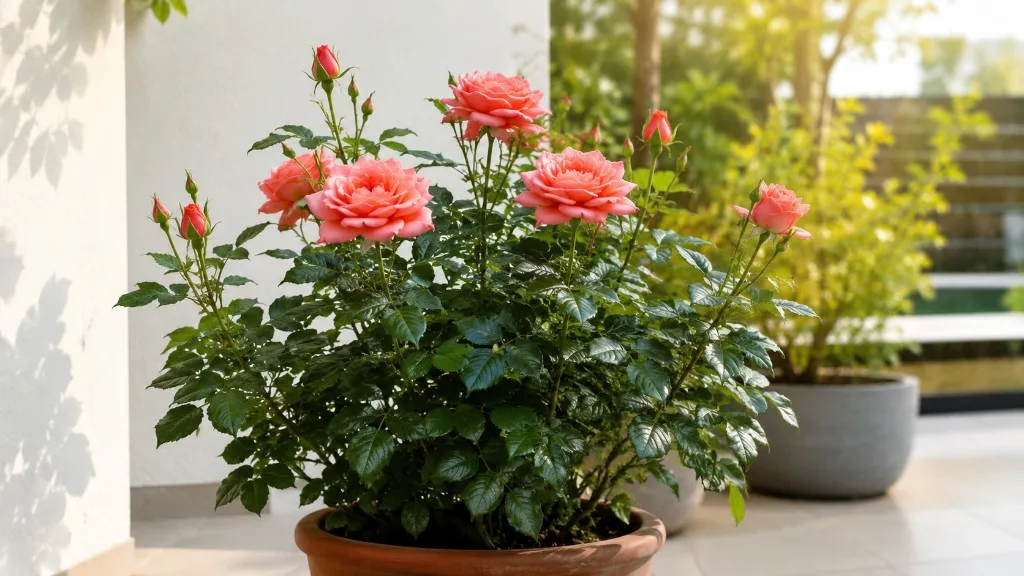
For a more complete pruning and watering routine, use the LeafyPixels rose care guide. The patio version of rose growing is not about keeping a tiny plant permanently miniature; it is about choosing a naturally compact cultivar and giving its roots enough room to support repeated bloom.
3. Oriental lilies for high-impact scent
Oriental lilies are the dramatic option: large flowers, tall stems, and a fragrance that can fill a patio during their summer bloom. A deep container gives the bulbs the vertical root room they need, and a cluster of several bulbs creates much more impact than a single thin stem.
Use a pot with excellent drainage and follow the bulb supplier’s planting-depth instructions rather than burying bulbs in an improvised shallow bowl. Give the stems strong light, protect the pot from drying winds, and add a discreet support if the flowers make the plant top-heavy. After flowering, leave the foliage in place until it yellows naturally so the bulb can store energy for next year.
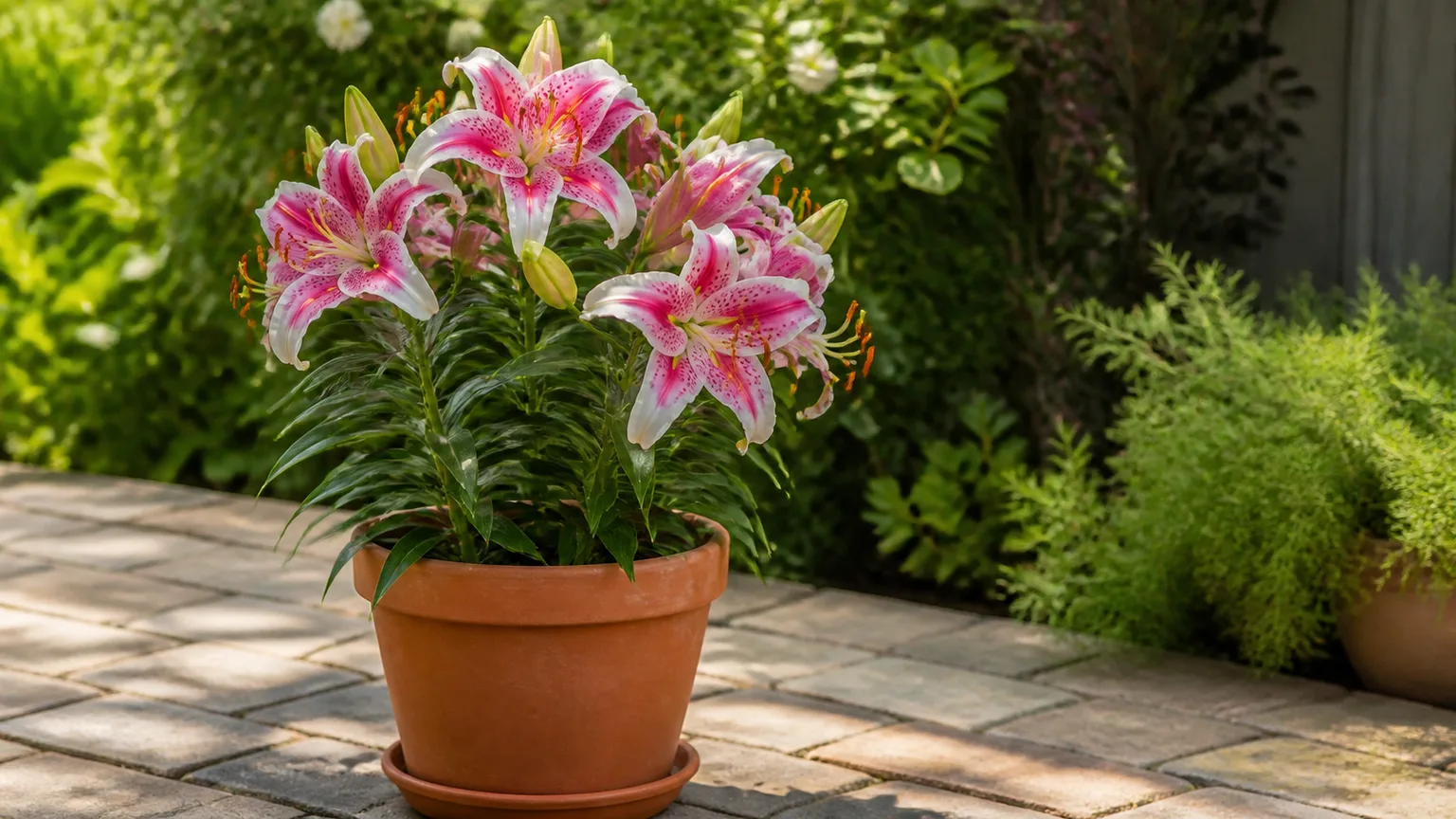
There is one non-negotiable placement rule: do not grow true lilies where cats can reach them. The ASPCA’s toxic plant list for cats includes Stargazer lily and other Lilium species; choose a different flower for a cat-accessible patio rather than relying on height or a temporary barrier.
Oriental lilies are also a seasonal accent, not a year-round source of scent. Pair them with lavender, a compact rose, or a flowering vine if you want the container display to keep its structure after the lily bloom fades.
4. Hyacinths for a short, powerful spring show
Hyacinths (Hyacinthus orientalis) earn their place in a patio pot by making a small space smell unmistakably like spring. Their flower spikes are short-lived, but the fragrance is strong and concentrated, making a cluster near the door or breakfast table more effective than a large pot placed far away.
Plant firm bulbs in a fall container for spring flowers, or buy prechilled bulbs when your climate does not provide a long enough cool period. The Missouri Botanical Garden identifies common hyacinth as a full-sun bulb with sweet, fresh fragrance and an April bloom window; exact timing shifts with climate and whether bulbs were chilled.
Use a free-draining potting mix and a container that will not stay saturated through cool weather. After bloom, remove the spent flower spike but keep the leaves until they fade; then move the pot out of the main seating area if the foliage looks untidy. Hyacinth bulbs are also listed by the ASPCA among plants toxic to cats, so keep them away from pets that dig or chew.
The realistic promise is a concentrated spring opening, not continuous summer perfume. Follow the hyacinths with a rose or sweet pea rather than trying to make one bulb provide the whole season.
5. Sweet peas for cool-season scent and vertical color
Sweet peas (Lathyrus odoratus) are ideal when you want fragrance above the rim of a pot. Their vines climb a small trellis, obelisk, or railing support, and fragrant cultivars such as ‘High Scent’ make the most of a cool spring or early-summer window. The RHS patio-plant guide specifically highlights ‘High Scent’ and a shorter sweet pea suitable for a large container.
Give sweet peas full sun, rich moisture-retentive but well-drained mix, and a support installed before the vines start grabbing nearby furniture. A container with enough volume prevents the root zone from drying every afternoon; five gallons is a useful practical starting point for a vigorous planting, but use the seed packet or nursery label for the cultivar you buy.
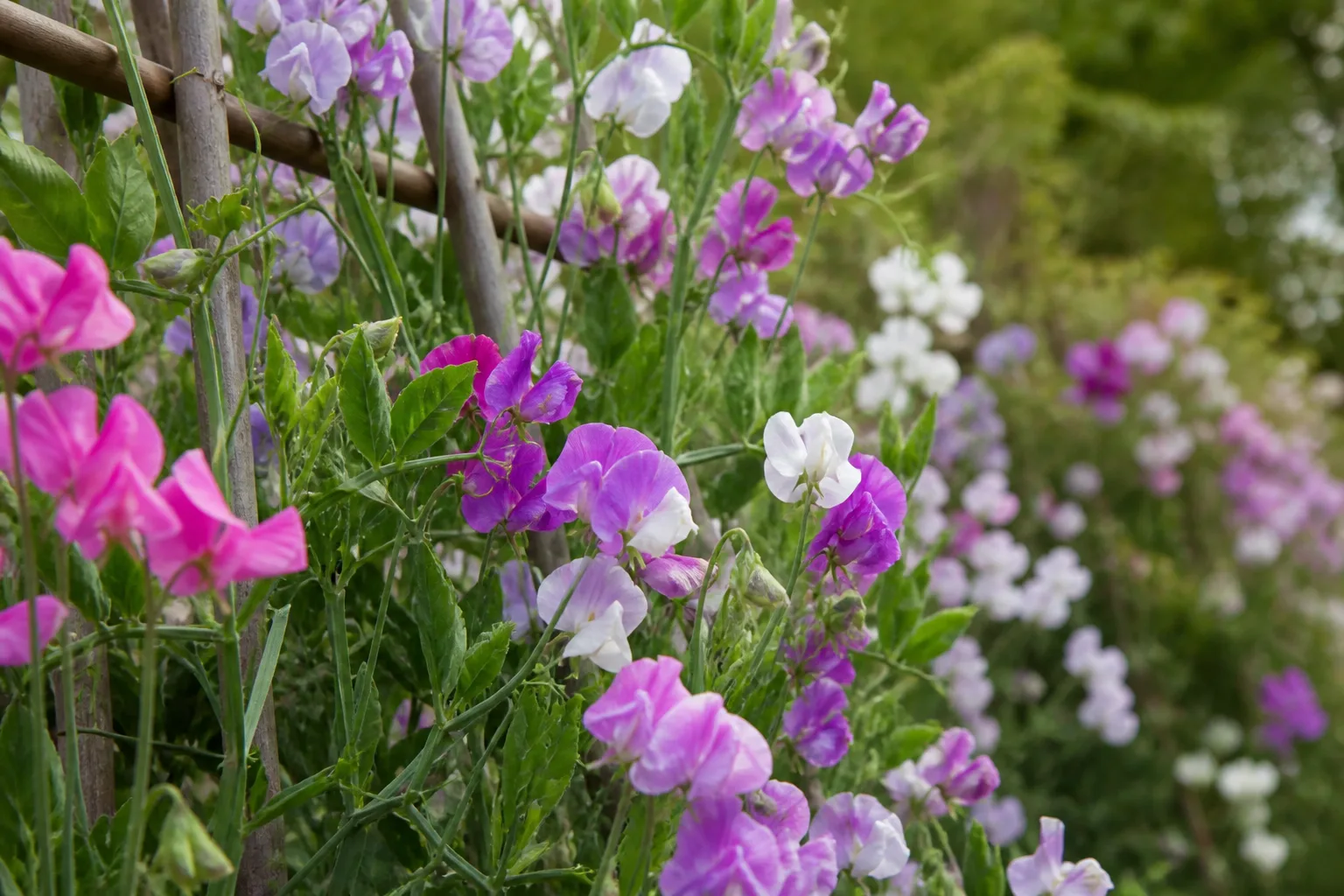
Keep picking flowers and remove fading blooms before they form many seed pods. That encourages the plant to keep producing, although heat will eventually shorten the display even when watering is perfect. In a hot-summer climate, treat sweet peas as a seasonal spring feature and replace them with lavender or a heat-tolerant container plant when the vines decline.
Do not confuse annual sweet peas with everlasting pea, a different plant that is grown more for its flowers than its classic perfume. Check the botanical name when fragrance is the reason you are buying the seed.
6. Star jasmine for warm evening fragrance
Star jasmine (Trachelospermum jasminoides) is one of the best patio vines for a warm, sheltered site. It is not a true Jasminum, but its glossy leaves, white star-shaped flowers, and rich scent make it a strong choice for a trellis beside a dining area. The RHS’s fragrant patio-plant guidance specifically notes its warm-evening fragrance and suitability for a generous-sized pot.
Give it a large, stable container, bright light, and a support that can carry a woody vine as it matures. Tie young stems loosely until they find the trellis, then prune after the main flowering flush to control the shape and keep the vine from swallowing a railing, light, or doorway.
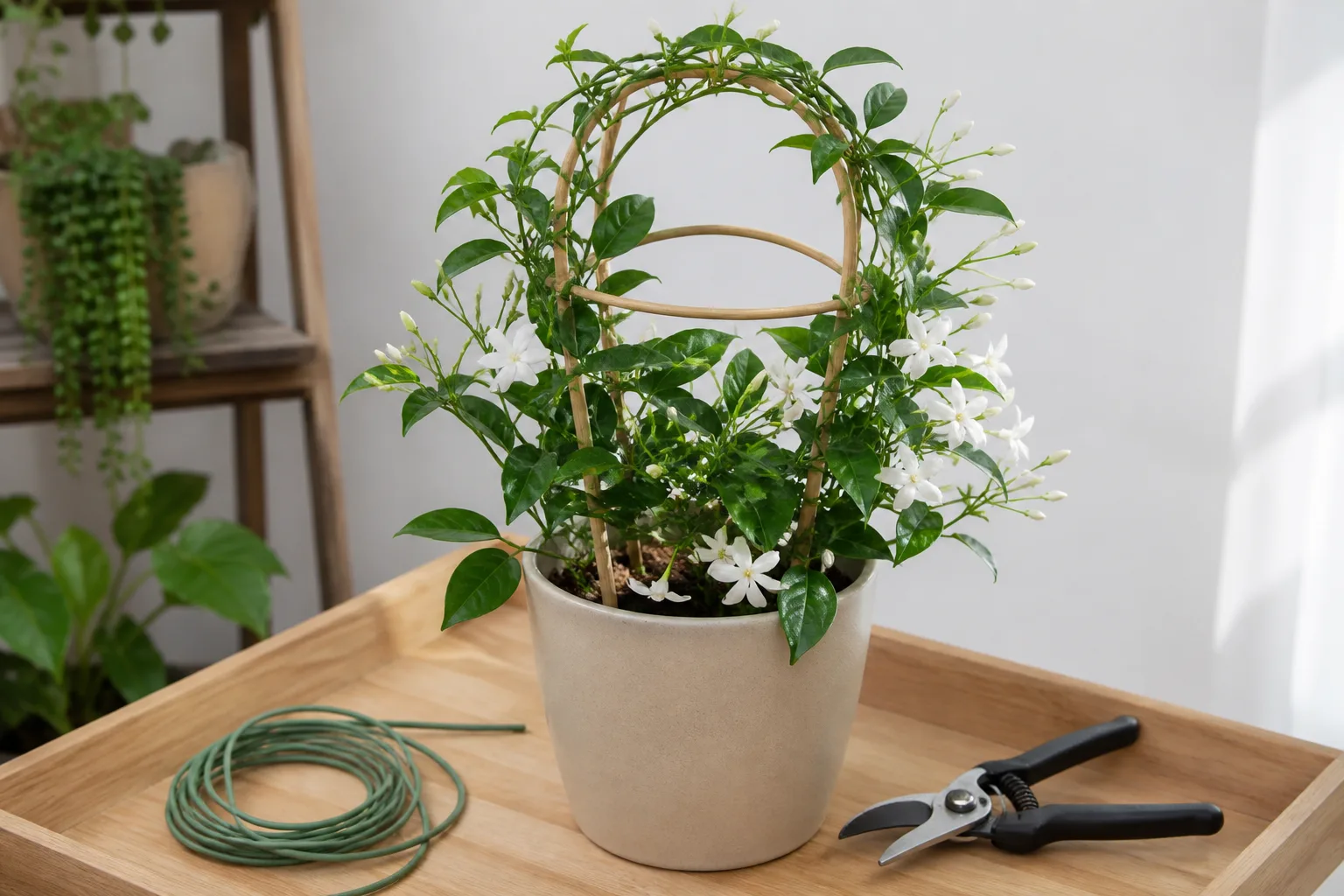
The name “jasmine” is a buying decision, not a complete plant description. True jasmine species vary in cold tolerance and growth habit, and some are better suited to overwintering than others; Gardening Know How’s container guide also warns that star jasmine is not a true jasmine and that species can differ in invasiveness. Read the botanical name and hardiness information before choosing a plant for a cold-winter patio.
For a species-specific pruning and training sequence, see the LeafyPixels jasmine care guide. A well-trained vine can make the patio feel enclosed without taking over, but only if you start guiding it while the stems are flexible.
7. Lavender for scent you can brush past
Lavender is the easiest way to make fragrance part of movement. Put a pot beside the path from the house, and the foliage releases a clean, herbal scent when clothing or a hand brushes past it; the flower spikes add color and draw pollinators without demanding a constantly wet root zone.
Choose English lavender (Lavandula angustifolia) or another cultivar suited to your climate, use full sun, and give it the fastest-draining mix of the eight plants here. The Missouri Botanical Garden lists lavender as sweetly floral and adapted to dry-to-medium moisture, while Gardening Know How’s container guidance points to its strong container fit because it prefers well-drained soil.
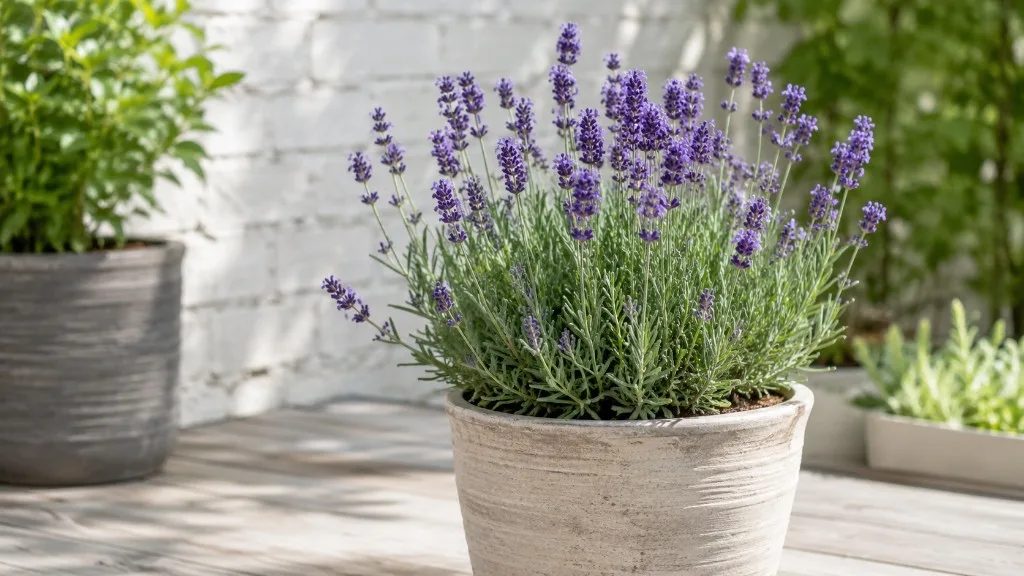
The most common lavender mistake is treating gray foliage as a sign of thirst and watering more often. Let the mix dry somewhat between waterings, keep the crown from sitting wet, and trim lightly after flowering to keep the mound compact; avoid cutting deep into old, leafless wood because many plants do not reshoot reliably from it.
Lavender is also a good “bridge” plant. It can carry scent before and after a brief lily or hyacinth display, and its evergreen or semi-evergreen foliage gives a patio pot something to look at when the main flowers are between flushes. For a full routine, use the LeafyPixels lavender care guide.
8. Honeysuckle for a trellis near the patio
Honeysuckle can deliver the kind of warm, nostalgic fragrance that makes an evening patio feel older and more established than it is. Choose a fragrant species or hybrid such as common honeysuckle (Lonicera periclymenum) or a fragrant hybrid like Lonicera × heckrottii, rather than assuming every honeysuckle has a strong scent.
Give the vine a sturdy support and enough root volume to stay hydrated while it establishes. Train new growth across the trellis instead of letting all the stems pile at the top, and prune after flowering when you can see which older wood needs thinning. The RHS fragrance guide includes scented Lonicera among plants that can add interest to a garden outside the main summer peak, and the plant’s placement near a seat makes its perfume far more useful than a vine on a distant fence.
Check your local invasive-plant list before buying honeysuckle. Names and rules vary by region, and a plant that is a manageable ornamental in one place can escape or become difficult to control in another. Container growing can limit root spread, but it does not remove the need to deadhead berries, contain stems, and prevent cuttings from reaching natural areas.
Match the Flower to Your Patio in Five Minutes
Use this quick-fit guide before you buy. When two plants appear in one row, the first is the stronger match for that condition and the second is a useful alternative.
| Patio condition | Best first pick | Why it fits | Watch out for |
|---|---|---|---|
| Warm, sheltered patio with winter protection | Gardenia or star jasmine | Both reward warmth and put strong fragrance close to the seating area | Tender plants may need indoor overwintering |
| Hot, sunny, dryish pot | Lavender | Aromatic foliage and flowers tolerate a drier container rhythm | Wet mix and poor drainage cause decline |
| Cool spring display | Hyacinth or sweet pea | Both add strong seasonal scent before summer gets intense | Heat shortens the show |
| Evening dining area | Star jasmine or honeysuckle | Vines can rise to nose height and scent a sheltered wall | They need a real support and pruning |
| Small sunny container | Lavender or a compact rose | Both can stay visually useful without a large trellis | Rose cultivars vary widely in fragrance and vigor |
| Tall, dramatic flower display | Oriental lily | Large blooms create a strong visual and scent moment | Not suitable for cat-accessible patios |
| Morning seating or a doorway | Hyacinth, rose, or lavender | A close, high-traffic position makes a short or brush-activated scent count | Do not place strong scents where wind strips them away |
| Patio with little direct sun | None of these as a first choice | Most need bright light to flower well | Choose a shade-tolerant fragrant plant instead of forcing a weak display |
If the patio is small, start with one plant that matches its hardest constraint, not with eight pots. A lavender pot for dry sun, a gardenia for warm partial shade, or a star jasmine for a sheltered trellis gives you a reliable baseline; add a seasonal bulb or annual after you learn how quickly the site dries.
Container Setup That Keeps Fragrant Flowers Blooming
Fragrance is a flower-quality issue, and flower quality is often a root-zone issue. A stressed plant may survive while producing fewer blooms, dropping buds, or growing leaves with little scent, so the container deserves as much attention as the cultivar.
Pot size, drainage, and soil
Choose the pot from the plant’s mature habit, not the size it has at the garden center. A stable, generous container is especially important for roses, lilies, jasmine, honeysuckle, and sweet peas because their top growth either gets tall or loses water quickly. RHS container-gardening guidance treats containers as a flexible way to add plants to patios and balconies, but flexibility does not mean every plant can live in a tiny pot.
Every container needs an unobstructed drainage hole. Use a quality potting mix rather than garden soil, which can compact in a pot and reduce oxygen around the roots. Do not add a deep layer of gravel to the bottom as a substitute for drainage; it takes away usable root volume without fixing a blocked hole.
Match the mix to the plant. Gardenia needs an acidic mix that stays evenly moist, while lavender needs a sharply draining mix that dries between waterings. Roses and vines want an airy, fertile container mix, and bulbs need enough drainage that cool-season rain does not leave the pot saturated.
Leave a little space below the rim so water can soak in instead of running over the sides. Put saucers under pots on a patio if needed to protect the surface, but empty them after watering; a full saucer turns a well-drained container into a standing-water container.
Watering, feeding, and seasonal maintenance
Check moisture at the root zone rather than watering every pot on the same calendar. Insert a finger into the mix, lift the pot when you can, and water slowly until excess drains from the bottom. Small pots, dark walls, strong wind, and hanging containers dry faster; cool weather, shade, and oversized pots dry more slowly.
Feed flowering containers according to the label and the plant’s growth cycle. Too much nitrogen can produce lush leaves and fewer flowers, while repeated heavy watering can leach nutrients from a small pot. Avoid changing light, pot size, watering, and fertilizer all at once; if a plant is failing, change one variable and watch the response.
Give climbers their support before they need it, rotate containers so growth is not permanently one-sided, and remove diseased leaves promptly. Move tender plants before the first cold snap rather than waiting for a damaged plant to recover indoors. In spring, refresh the top layer of mix and check that roots have not filled every available space.
For a container that stays in bloom, deadhead the flowers that benefit from it, but do not treat deadheading as a cure for poor light or a root-bound pot. The LeafyPixels container-blooming guide is useful when a pot has healthy foliage but is producing fewer flowers.
Common Mistakes That Flatten a Fragrant Patio
- Buying by flower color instead of cultivar fragrance. Scent varies dramatically between roses, sweet peas, petunias, jasmine types, and honeysuckle varieties. Read the botanical name and look for a specific fragrance description.
- Putting the pot too far from people. A scented plant at the back of a large yard may be healthy but functionally invisible. Put the strongest fragrance beside a seat, doorway, or path.
- Treating every jasmine as the same plant. True jasmine and star jasmine differ in botany, hardiness, growth habit, and winter needs. Buy from the botanical name, not a vague common-name label.
- Letting a vine become patio furniture. Honeysuckle and jasmine need support and post-bloom pruning. A trellis is part of the planting plan, not an optional decoration added after the vine has tangled itself.
- Using a tiny pot for a vigorous plant. A small root zone dries quickly and forces constant watering. Move up to a stable, appropriately sized container before the plant is permanently wilted.
- Assuming fragrance means pet-safe. True lilies, including Stargazer lilies, are toxic to cats, and the ASPCA list also flags gardenia and hyacinth for cats. When pets can reach the patio, verify each plant by botanical name and choose a safer alternative when necessary.
- Keeping dry-loving and moisture-loving plants on one schedule. Lavender wants a drier root zone; gardenia does not. Group pots by watering needs so the easiest plant is not overwatered to keep the thirstiest plant happy.
- Expecting one plant to scent every month. Hyacinth and sweet pea can be spectacular but seasonal. Layer short spring displays with roses, lavender, gardenia, star jasmine, or honeysuckle to keep the patio interesting as one bloom window closes.
Conclusion: Build a Scent Sequence, Not a Single Bloom
The most successful fragrant patio is not a contest to find the strongest-smelling flower. It is a small sequence: a spring bulb near the door, a rose or gardenia by the chair, lavender along the path, and a star jasmine or carefully chosen honeysuckle trained where evening air can hold the scent.
Choose the first pot by the patio’s hardest condition—light, heat, winter cold, or pet access—then add plants with different bloom windows and compatible watering needs. Give each one a container large enough to support its roots, place it close enough to enjoy, and the patio will begin to feel like a garden escape in the moments you actually spend there.



