32 Deer-Resistant Flowering Plants for Any Garden
Find 32 deer-resistant flowers matched to light, soil, bloom season, and garden size, with honest caveats about hungry deer and toxic plants.
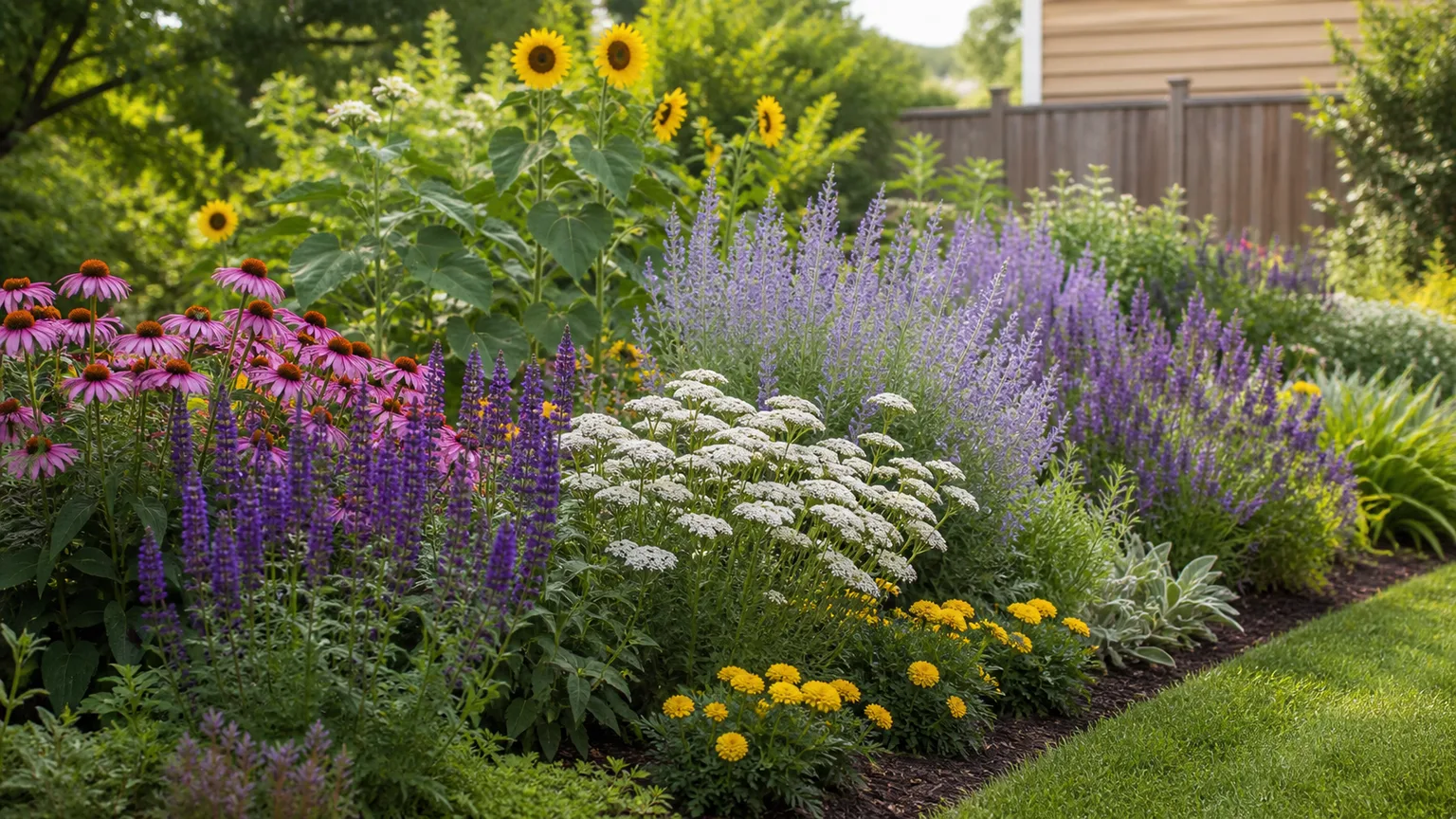
A deer-resistant garden starts with a useful distinction: resistant is not the same as untouched. Deer preferences change with season, population, weather, and what else is available, so the best planting is a layered decision—not a single magic flower.
The 32 flowering plants below are grouped by how they work in a real garden. You will find full-sun perennials, shade plants, annuals, bulbs, and flowering shrubs, along with the problems that can turn a good recommendation into a bad purchase: toxic foliage, aggressive spread, wet-soil requirements, and invasive potential.
What “deer-resistant” actually means
Deer usually pass over plants with one or more unappealing traits: strong aromatic foliage, bitter or toxic compounds, coarse or fuzzy leaves, prickly growth, or a texture that is difficult to chew. That is a pattern, not a guarantee. Tender new shoots and flower buds are more tempting than mature foliage, and a hungry herd may sample plants it normally ignores.
Rutgers Cooperative Extension separates plants into four damage categories, from “rarely damaged” to “frequently severely damaged,” and specifically warns that local deer populations and weather affect results. The Rutgers landscape plant ratings are a better way to think about this list than the phrase “deer-proof.” A separate RHS survey-based plant guide makes the same practical point: plant choice helps, but new plantings still deserve temporary protection.
Treat resistance as a probability that improves your odds. If deer pressure is light, a border of aromatic annuals and textured perennials may be enough. If deer visit nightly, start with a resistant palette and plan netting or fencing at the same time.
Choose by the garden you have
The most reliable flower is the one that is healthy in its location. A stressed lavender in wet clay may be easier for deer to browse than a vigorous lavender in sharp drainage, and a shade perennial placed in hot afternoon sun will not create the dense foliage that makes it less appealing.
Use the quick filters below before you choose by flower color:
| Your site | Strong starting group | Check before buying |
|---|---|---|
| Full sun, dry or average soil | Lavender, yarrow, coreopsis, coneflower, liatris, salvia | Winter drainage, mature height, and spread |
| Full sun, summer color | Marigold, sunflower, zinnia, verbena, floss flower | Annual status, watering, and air circulation |
| Bright shade or woodland edge | Bleeding heart, corydalis, lungwort, foxglove | Summer dormancy, moisture, and toxicity |
| Moist shade | Astilbe, bee balm, monkshood, lily of the valley | Drainage, spread, and pet or child access |
| Early spring color | Daffodil, winter aconite, lungwort, bleeding heart | Bulb or foliage toxicity and local hardiness |
| Flowering structure | Butterfly bush, lilac, forsythia, rose of Sharon | Mature size, pruning time, and invasive status |
Full sun and dry soil
Start with plants whose foliage is naturally aromatic, rough, silvered, or strongly textured. Lavender, yarrow, coreopsis, coneflower, liatris, and salvia make a durable backbone; add marigolds, zinnias, or verbena for seasonal color. Do not turn “drought-tolerant” into “never water”: new plants need consistent moisture while roots establish.
Shade and moisture
Shade choices are more conditional. Bleeding heart and corydalis may disappear or slow down in summer, while astilbe and monkshood need soil that does not dry sharply. A plant can be deer-resistant and still fail because the bed is too dry, too hot, or poorly drained.
Shrubs, bulbs, and cool-season color
Flowering shrubs give deer less low foliage to reach once established, but young shrubs are still vulnerable. Daffodils and winter aconite offer useful early-season color because their chemistry makes them poor browsing choices; bulbs and seeds, however, can create separate pet-safety concerns.
32 deer-resistant flowering plants
This list uses “usually avoided” language deliberately. The resistance of a genus can vary by species and cultivar, and a plant that is rarely damaged in one region can be browsed in another. Use the names as a shortlist, then check your local extension plant list and the exact nursery tag.
Sun-loving perennials for dependable color
1. Coneflower (Echinacea spp.) is one of the best first choices for a sunny pollinator border. Its rigid stems, coarse leaves, and raised seed cones are less inviting than soft bedding plants, and it tolerates heat once established. Leave some seed heads for birds, but cut diseased foliage and divide crowded clumps when flowering declines.
2. Coreopsis (Coreopsis spp.) brings yellow, orange, or red flowers to lean, sunny soil without demanding heavy feeding. It handles dry spells after establishment, and deadheading can extend the display. Choose a clumping cultivar for a small border; some species spread more freely than the tidy nursery pot suggests.
3. Yarrow (Achillea millefolium) combines ferny foliage with flat flower clusters that work well for butterflies and beneficial insects. NC State Extension’s plant profile notes both its deer resistance and its ability to spread by rhizomes and seed. Plant it where a colony is welcome, or shear spent flowers before they mature if you need tighter control.
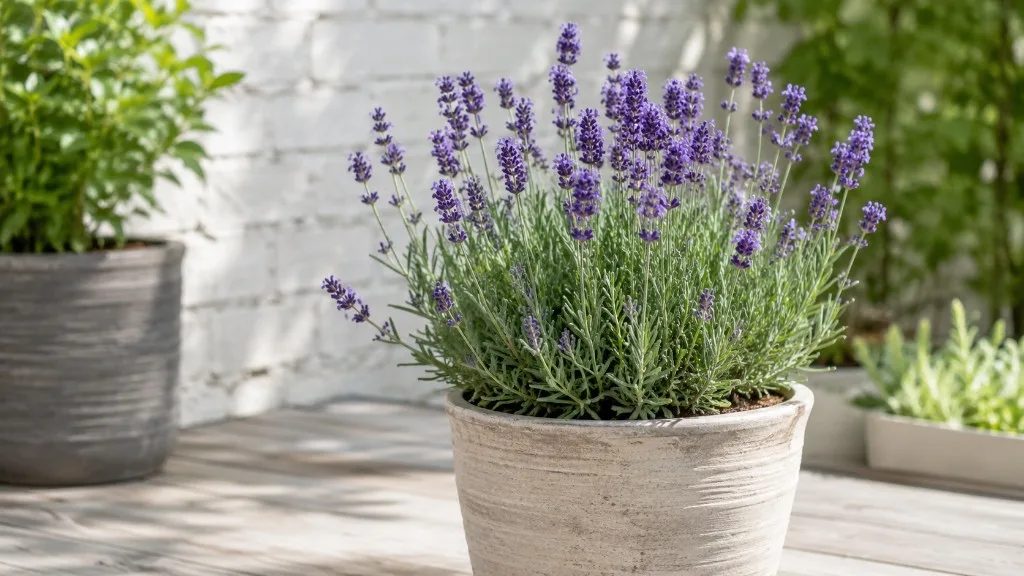
4. Lavender (Lavandula spp.) is a strong choice for hot, sunny edges because its fragrant foliage and dry-site preference do double duty. The usual failure is not deer but wet winter soil, so use a raised or gravelly bed and avoid frequent irrigation after establishment. Spanish lavender is listed as deer-resistant by NC State Extension, but hardiness varies widely across lavender types.
5. Liatris, or blazing star (Liatris spicata), sends up purple spikes from a clump of narrow leaves and provides excellent vertical contrast. It suits full sun and tolerates a range of moisture once rooted, but plant corms in soil that drains rather than puddles. Penn State describes it as deer-resistant and valuable to bees, moths, butterflies, and hummingbirds in its blazing-star plant profile.
6. May Night salvia (Salvia sylvestris ‘May Night’) offers deep blue-purple flower spikes and aromatic foliage that deer commonly avoid. Cut the first flush after flowering to encourage a second show, and keep the crown in well-drained soil. It is a useful front-to-middle border plant, especially beside silver foliage or pale daisies.
7. Bearded iris (Iris × germanica) pairs sword-like leaves with spring flowers in an unusually broad range of colors. Deer generally dislike the foliage and rhizomes, but the plant needs sun and a rhizome that is not buried deeply; overly wet soil is more dangerous than deer browsing. Divide when the center of the clump becomes crowded, ideally after flowering.
8. Peony (Paeonia spp.) is a long-lived spring perennial with substantial foliage and flowers that return for decades once established. It is not a zero-risk plant—new shoots may still be sampled—but mature peonies are commonly left alone. Give them sun, airflow, and support for heavy blooms; the ASPCA plant list includes peony among plants toxic to dogs.
9. Poppy (Papaver spp.) is useful when you want a late-spring or early-summer accent with crinkled petals and ornamental seed pods. Oriental poppies prefer sun and sharp drainage, and their foliage often retreats after flowering, so place later perennials around the gap. Identify the species before planting near pets or children because “poppy” covers plants with different toxicity profiles.
10. Shasta daisy (Leucanthemum × superbum) gives a bright white-and-yellow display in full sun and makes an effective repeatable mass. Deer usually ignore the coarse foliage, while pollinators use the open flower centers. Divide vigorous clumps before they crowd neighboring plants, and deadhead if you want to keep the border looking deliberate.
Shade-tolerant woodland and moisture lovers
11. Bleeding heart (Lamprocapnos spectabilis) is a graceful spring choice for light shade, with arching stems and heart-shaped flowers. It can go dormant when summer heat arrives, so mark its location and underplant it with a later fern or groundcover rather than assuming it has died. The plant is toxic if eaten, making it a poor choice for a pet or child play area.
12. Corydalis (Corydalis spp.) supplies fern-like foliage and small blue or yellow flowers in cool, lightly shaded beds. It prefers consistent moisture without waterlogging and may self-sow where conditions suit it. Use it as a woodland accent, not as a universal shade substitute; hot, dry summer soil can shorten its show.
13. Lungwort (Pulmonaria spp.) earns space in a shade border for early flowers and spotted or silver-marked leaves that stay interesting after bloom. Keep it evenly moist and give it airflow in humid climates. Its foliage is a useful contrast beneath shrubs, where deer pressure is often higher on broad-leaved host plants.
14. Astilbe (Astilbe spp.) makes feathery plumes in pink, red, purple, or white where soil stays reliably moist. It handles shade well but is not a drought plant; crispy foliage is usually a site or watering problem, not a deer problem. Mulch the root zone, keep crowns near the soil surface, and choose a cultivar sized for the front or middle of the bed.
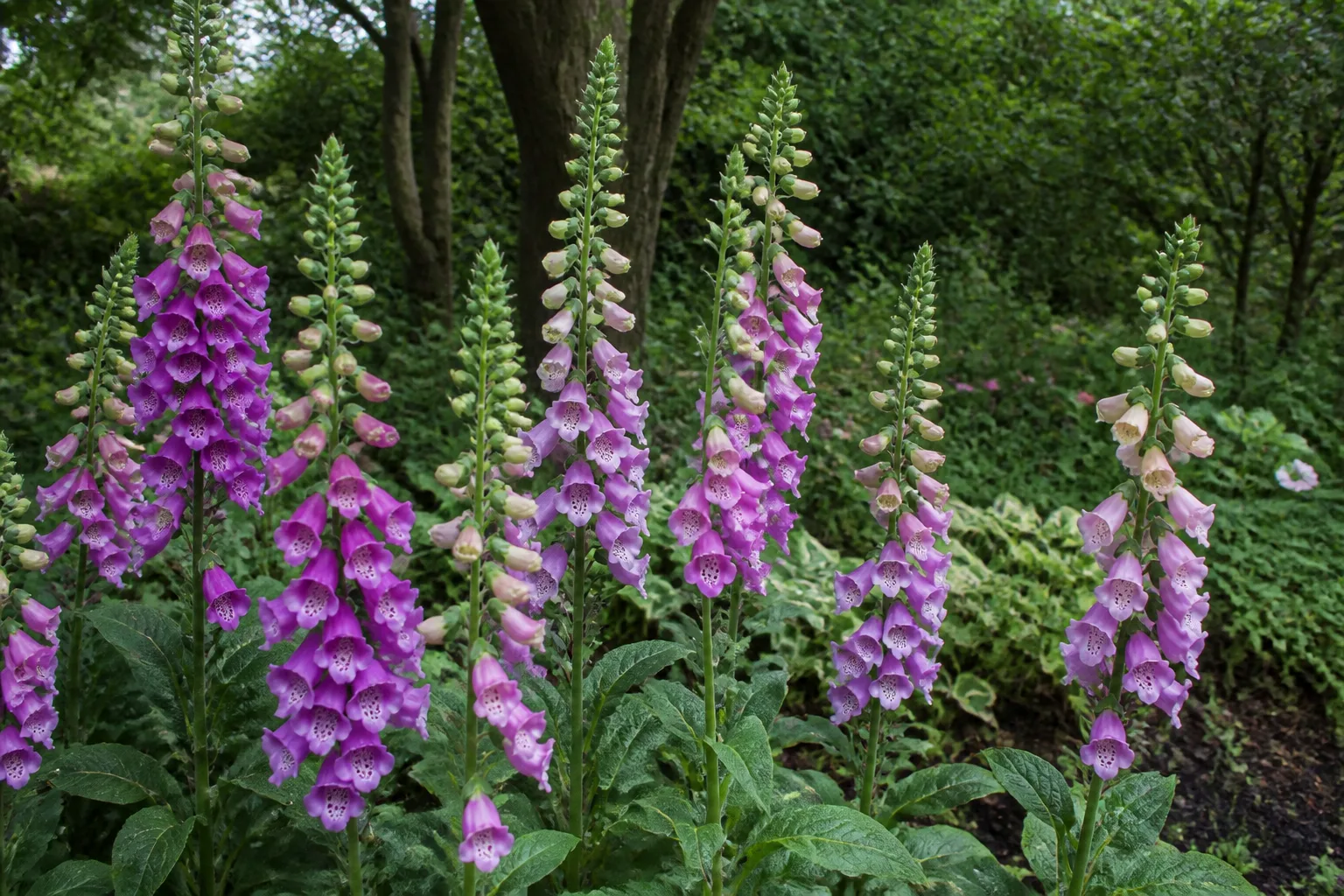
15. Foxglove (Digitalis purpurea) is a tall biennial or short-lived perennial that brings dramatic tubular flowers to part shade. Deer tend to avoid it because of its chemical defenses, and NC State Extension classifies it as highly poisonous to people and animals. Grow it only where children and pets cannot chew the leaves, and do not handle it casually as a “safe deer barrier.”
16. Bee balm (Monarda spp.) has aromatic leaves, shaggy flowers, and a long summer display that attracts hummingbirds and pollinators. It tolerates sun to part shade and prefers even moisture, but powdery mildew appears when plants are crowded or stressed. Divide spreading clumps and thin stems so the foliage dries quickly after rain.
17. Monkshood (Aconitum spp.) is a striking late-season perennial for cool, moist part shade, with hooded blue, purple, pink, or white flowers. It is also one of the most dangerous garden plants to place near people or pets: all parts are highly toxic, and gloves are sensible when handling it. Choose it only for a controlled, inaccessible planting where its safety risk is understood; deer resistance alone is not a reason to grow it.
18. Lily of the valley (Convallaria majalis) covers shady ground with fragrant white bells and broad leaves. It spreads by underground rhizomes and can become difficult to remove, while its berries and foliage are poisonous. The ASPCA guidance on lilies specifically warns that lily of the valley can cause serious poisoning, so keep it away from pets and consider a less aggressive shade groundcover.
Annuals for fast color
19. Marigold (Tagetes spp.) is one of the simplest annual tests for a deer-troubled sunny bed. The scented, divided foliage is commonly ignored, and the plants flower quickly from seed or transplants. Do not assume a row of marigolds can defend lettuce or hostas by itself; use them as color and texture, with netting or fencing for high-value plants.
20. Sunflower (Helianthus annuus) brings height, bird food, and strong summer color, especially in a back border. Hairy stems and leaves make mature plants less appealing, but deer may browse seedlings and young growth, so protect the plants until they are established. Choose a branching cultivar if you want several cut flowers instead of one towering stem.
21. Zinnia (Zinnia elegans) is a heat-loving annual with a long run of bright flowers in full sun. Rough foliage usually helps it avoid serious browsing, but plants can still be nibbled in a food shortage. Space zinnias generously, water at the soil line, and remove badly mildewed leaves rather than creating a humid wall of plants.
22. Annual vinca (Catharanthus roseus) is a heat-tolerant bedding and container plant with glossy leaves and flowers that continue through hot weather. It is useful where other annuals wilt, but it is not a substitute for good drainage or for pet-safe planting; vinca is listed among toxic plants by the ASPCA dog plant list. Treat it as a decorative annual for inaccessible beds.
23. Heliotrope (Heliotropium spp.) contributes intensely fragrant purple, lavender, or white flower clusters and a compact habit for pots or the front of a sunny border. It is frost-tender in many climates, so gardeners outside warm zones grow it as an annual. Give it regular water without soggy soil, and verify the species’ safety before placing it where pets chew.
24. Floss flower (Ageratum spp.) supplies soft blue or violet flower clusters that bridge the gap between spring and late-summer color. It prefers sun, moderate moisture, and well-drained soil, and its fuzzy foliage is not a favorite browsing texture. Use compact cultivars along the front edge or in containers, then remove exhausted plants before they become untidy.
25. Verbena (Verbena × hybrida and related types) works in sunny beds, hanging baskets, and dry borders where you want a long season of clustered flowers. Rough leaves and a slightly aromatic habit often reduce deer interest, while deadheading keeps the plant looking fresh. Separate annual bedding verbena from perennial species when checking hardiness; the label “verbena” covers very different plants.
26. Snapdragon (Antirrhinum majus) is most useful as a cool-season annual in climates with hot summers, flowering in spring and again in fall. It tolerates full sun to part shade and comes in dwarf and tall forms, so it can fill both containers and cut-flower beds. Heat slows flowering, and seedlings need protection while young even if mature plants are usually ignored.
Bulbs and early-season flowers
27. Daffodil (Narcissus spp.) is the dependable bulb for a deer-prone spring garden. Its foliage and bulbs contain compounds that deer and many rodents avoid, but that same chemistry makes it toxic to dogs, cats, and horses; ASPCA’s jonquil profile notes that the bulb is the most poisonous part. Plant firm bulbs in well-drained soil and let the foliage yellow naturally after bloom.
28. Winter aconite (Eranthis hyemalis) opens small yellow flowers in late winter or very early spring, often beneath deciduous trees that are sunny before leaf-out. It suits cool, moisture-retentive soil but should not sit in standing water. The tubers are toxic, so place this naturalizing bulb where pets and children will not dig or chew.
Flowering shrubs that add structure
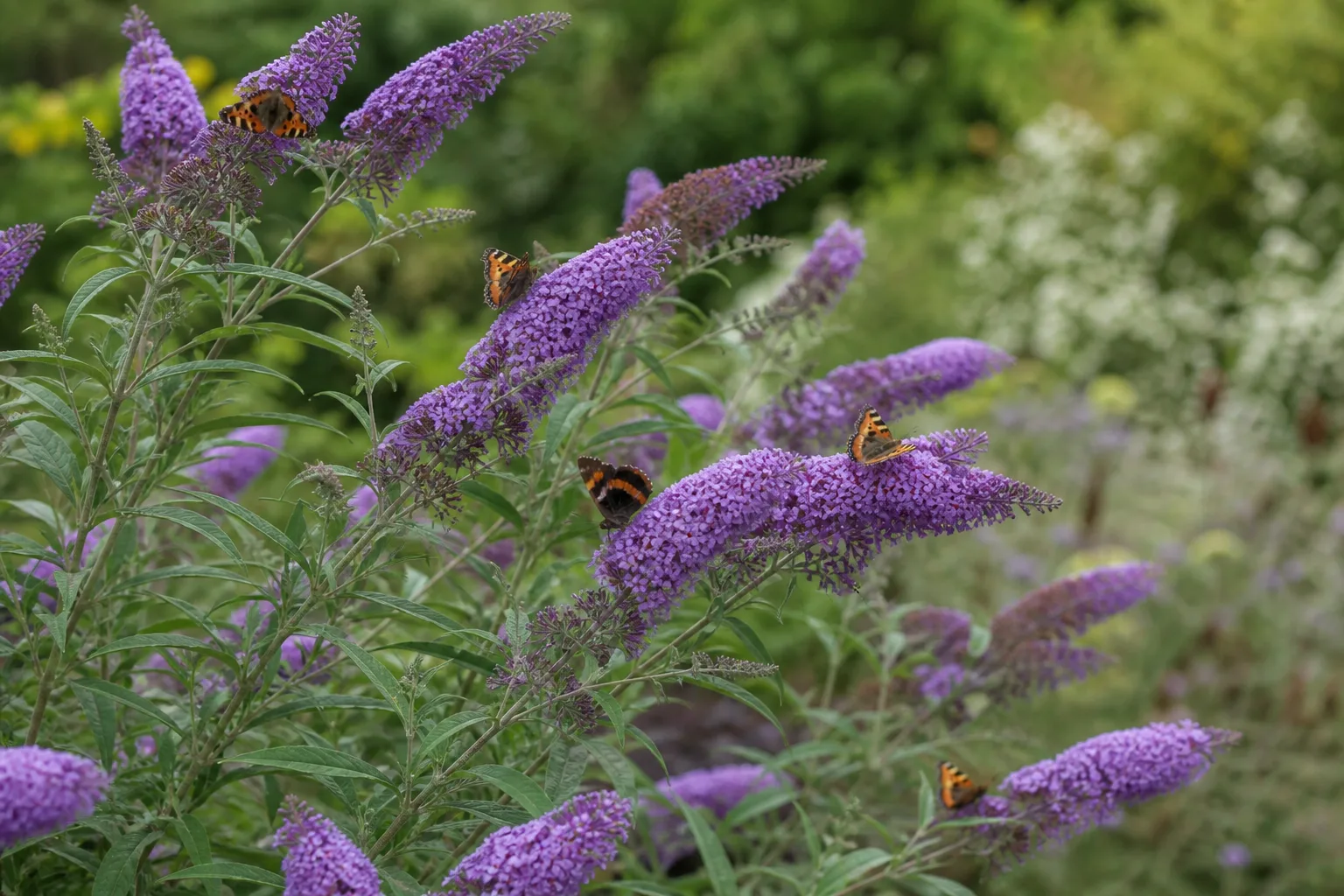
29. Butterfly bush (Buddleja spp.) offers long flower spikes and a valuable late-summer nectar source in full sun. Deer generally leave it alone, but the species and cultivar matter: Buddleja davidii has escaped cultivation in some regions, as documented by the USDA Forest Service invasive plant profile. Check local invasive-plant guidance and favor non-invasive or sterile cultivars where they are available.
30. Lilac (Syringa spp.) provides intensely fragrant spring flowers and can become a substantial shrub or hedge. Deer usually browse it lightly once established, although new plantings and soft spring growth still deserve protection. Give it full sun, good airflow, and enough room for mature width rather than pruning it into a permanently cramped ball.
31. Forsythia (Forsythia spp.) is an early-spring shrub whose yellow flowers appear before the leaves. It is a useful low-stakes choice for a sunny edge, but its deer resistance is not absolute and its arching growth can outgrow a narrow bed. Prune after flowering, not in late winter, if you want to preserve the next spring’s buds.
32. Rose of Sharon (Hibiscus syriacus) extends the shrub calendar into summer with large, hibiscus-like flowers and a tolerance for heat and urban conditions. Cultivars vary in seed production and deer tolerance; NC State’s profile of the sterile ‘Diana’ cultivar describes only mild deer resistance. The USDA Forest Service profile reports invasive behavior in several states, so check local status before planting a seed-producing form.
Safety, spread, and local fit
Deer resistance is only one line on a plant tag. Before buying, check mature size, moisture, hardiness, toxicity, and whether the species spreads by seed or rhizome. A plant that solves browsing but creates a pet emergency or crowds out native plants is not a successful garden choice.
Treat toxic plants as a separate decision
Foxglove, monkshood, lily of the valley, daffodil, winter aconite, annual vinca, peony, and some poppies are not interchangeable with pet-safe flowers just because deer avoid them. The ASPCA emphasizes that plant toxicity depends on the species and the animal; use its toxic and non-toxic plant database and ask a veterinarian promptly if ingestion may have occurred.
Keep toxic plants away from dog runs, children’s play areas, grazing animals, and places where bulbs are likely to be dug up. Wear gloves for plants known to irritate skin or contain potent compounds, wash tools after handling sap, and do not use “poisonous” as a casual synonym for “deer-proof.”
Check invasive status before planting
Spread is not automatically bad: a bee balm clump that stays in a planned bed is different from a shrub that seeds into a natural area. Still, check state or regional invasive-plant lists for butterfly bush, rose of Sharon, lily of the valley, yarrow, and any plant you intend to naturalize. Choose sterile cultivars where appropriate, deadhead plants that seed aggressively, and do not release garden divisions into nearby woods or waterways.
Local fit matters as much as the common name. “Lily of the valley,” “verbena,” “lavender,” and “poppy” each represent groups with different hardiness and behavior. Match the botanical name on the tag to a regional extension source before buying a large quantity.
Build a deer-smart border instead of a plant wall
A border works better when resistant plants are arranged as a sequence of textures, heights, and bloom windows. Put lavender, yarrow, salvia, coreopsis, and liatris in the sunny, well-drained backbone; use coneflowers and peonies for long-lived volume; then add annual zinnias, marigolds, or verbena where you need quick color.
In shade, combine a spring layer of bleeding heart, corydalis, or lungwort with a later layer of astilbe, bee balm, or a carefully sited foxglove. Repeat the strongest textures in groups of three or five instead of scattering 32 different plants like a catalog display. Repetition makes the garden easier to water, deadhead, and protect.
Place the plants deer are most likely to test—new shrubs, young annuals, and tender host plants—near the house or inside a protected enclosure. Use aromatic or coarse plants along the approach, but treat that planting as a speed bump, not a wall. Deer can walk through a border if the reward on the other side is high enough.
Protect every new transplant for its first few weeks with visible netting, a temporary cage, or another physical barrier. Remove netting before it becomes a wildlife hazard, keep it taut, and inspect the bottom edge after storms; a gap at ground level can undo an otherwise careful setup.
What to do when deer start browsing anyway
First, identify the pattern. Ragged tips and missing buds point to browsing; a plant disappearing overnight may also involve rabbits, groundhogs, or insects. Photograph the damage, look for tracks or droppings, and note whether it appears after rain, during winter, or as soon as new plants go in.
Use repellents as a short-term tool
Repellents work by making foliage smell or taste bad, and they are most useful when damage is light or when a new planting needs a bridge until it establishes. Michigan State Extension’s deer-repellent trial summary reports that products vary substantially; putrescent egg solids were among the better-performing ingredients in the studies it reviewed, but no product is permanent.
Use only products labeled for the plant and site, follow the application rate, and reapply as the label directs after rain or irrigation. Rotate tactics when deer learn a repeated pattern, and do not rely on home remedies such as coffee grounds, cinnamon, soap, or hanging objects as your primary defense.
Use fencing for high-pressure sites
When deer visit every night, eat resistant plants, or destroy an expensive bed, exclusion is usually more efficient than endlessly buying replacements. Penn State Extension describes an approximately eight-foot fence as an effective barrier, while University of Minnesota Extension warns that motivated deer can clear even higher fences if they have space for a running start.
Make the fence hard to jump and hard to crawl under: keep mesh close to the ground, close gates consistently, and make the enclosed area wide enough that deer cannot comfortably land inside. For a small bed, a sturdy cage or slanted double fence may be more practical than a tall perimeter fence. Check local wildlife rules before installing electric fencing or handling deer-related problems beyond ordinary garden protection.
Conclusion
The best deer-resistant flowering garden is not built around a promise that deer will never touch it. It is built around good odds: choose aromatic, coarse, fuzzy, bitter, or toxic plants that fit the site; protect new growth; avoid invasive and unsafe choices; and use a barrier when deer pressure is high.
For a sunny starter border, begin with lavender, coneflower, yarrow, liatris, salvia, and a few zinnias or marigolds. For shade, combine bleeding heart or lungwort with astilbe or bee balm, then add the safety checks before planting foxglove, lily of the valley, or monkshood. That approach gives you flowers worth growing and a plan that still works when the deer do not read the plant label.



