20 Best Ground Covers for Full Sun Gardens and Slopes
Find a full-sun ground cover for dry rock gardens, sunny paths, slopes, or coastal beds, with realistic notes on watering, weeds, and aggressive spread.
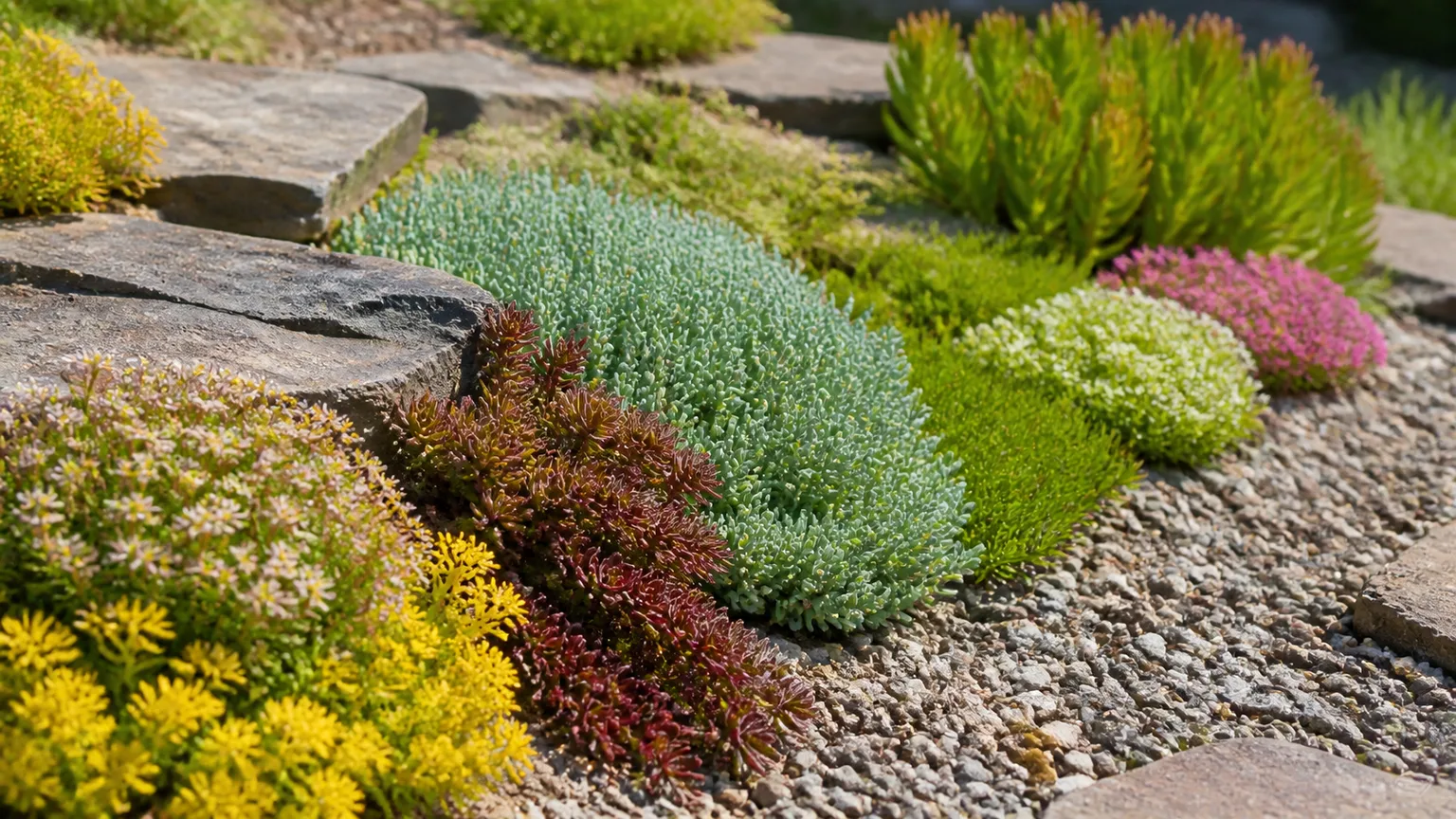
A sunny site can support a surprising range of groundcovers, from thyme that softens a path to evergreen shrubs that hold a dry bank. The best pick depends less on the phrase “full sun” than on what happens after the sun hits: does the soil drain quickly, bake hard, stay moist, or get walked on? Match the plant to those conditions and the groundcover will fill its space with fewer replacements and less maintenance.
“Ground cover” describes a job in the landscape, not one plant shape. Some options make a low, walkable mat; others are flowering mounds or shrubs that spread sideways. The 20 plants below include both, with the trade-offs spelled out so you can choose a useful cover rather than a fast-growing problem.
Quick Picks: Match a Ground Cover to Your Site
| Sunny site or goal | Good starting choices | Important limit |
|---|---|---|
| Dry, gritty bed or rock garden | Creeping thyme, ice plant, low stonecrops, basket-of-gold | Most fail in waterlogged winter soil |
| Sunny slope that needs year-round cover | Creeping juniper, bearberry, Pacific Mist manzanita | Check mature width and local climate before planting |
| Path edge with occasional brushing or stepping | Creeping thyme, sea thrift, creeping red fescue | None should replace a true paved path for regular traffic |
| Spring flowers and a dense low mat | Moss phlox, basket-of-gold, snow-in-summer | Trim or edge plants that creep beyond the bed |
| Regionally native dry-sun planting | Bearberry, beach strawberry, local native species | Native ranges and nursery availability vary by region |
| A temporary or seasonal carpet | California poppy, purple poppy mallow | Self-sowing plants leave gaps in some years |
There is no single “best” plant for every sunny yard. For example, creeping thyme can thrive between stepping stones but will struggle in soggy clay; a spreading shrub may cover a sunny bank well but be too tall for a narrow path. Use the table to narrow the options, then check the plant’s expected mature width, not just the height listed on its label.
What “Full Sun” Means for a Ground Cover
In horticultural descriptions, full sun generally means at least six hours of direct sunlight a day. The NC State Extension profile for moss phlox uses that threshold and notes that even a sun-loving groundcover can appreciate dappled shade during hot, humid summers. A bed that gets morning sun and afternoon shade may therefore behave very differently from a west-facing slope with reflected heat off stone or pavement.
Track the sunlight at soil level, where the groundcover will grow. A tree that leafs out later in spring may shade the bed in summer; a wall can reflect heat even when the plant gets the same number of sun hours as a cooler lawn edge. In hot climates, “full sun tolerant” does not mean “never needs water,” and in cooler climates a species may need more sun to flower well.
Choose by Moisture, Soil, Traffic, and Spread
Sunlight does not tell you whether soil is dry
Before shopping, dig a small test hole after rain or irrigation and see whether water drains away or sits. Dry, gritty soil and a sunny slope favor thyme, sedums, bearberry, and other plants adapted to low moisture. Dense clay that stays wet favors neither drought-tolerant succulents nor plants that need sharp drainage; improve the planting area broadly or choose a species that tolerates the site rather than adding a pocket of potting mix around each root ball.
Also consider the pattern of rain and irrigation. A dry slope can shed water before roots establish, while a sunny low spot can remain saturated through winter. The RHS ground-cover guide recommends continued weeding before plants knit together and watering during dry spells in the first season or two. That is a useful reminder that a plant’s eventual drought tolerance does not cancel the care it needs while rooting in.
Decide how much spread and trimming you can manage
A groundcover suppresses weeds most effectively after its foliage and roots occupy the open soil, but the same spreading habit can cross a border or enter a neighboring natural area. Some plants creep by stems that root at nodes; others spread by rhizomes, suckers, or seed. A slow mat may take longer to cover a bed but remain easy to contain, while a fast runner can look finished sooner and demand regular edging.
Think about maintenance at the boundary. A mown strip, path, retaining wall, or deep edging can make spreading plants easier to manage. If a bed touches woodland, a stream, or uncultivated land, favor locally native plants and consult your state or county invasive-plant list before buying a fast spreader. A plant sold as “low maintenance” may still require frequent containment.
20 Best Ground Covers for Full Sun
These recommendations are grouped by the job they do. Sizes and vigor vary by cultivar and climate, so treat nursery labels as a starting point and verify the mature width for the variety you plan to buy.
Low mats for paths and garden edges
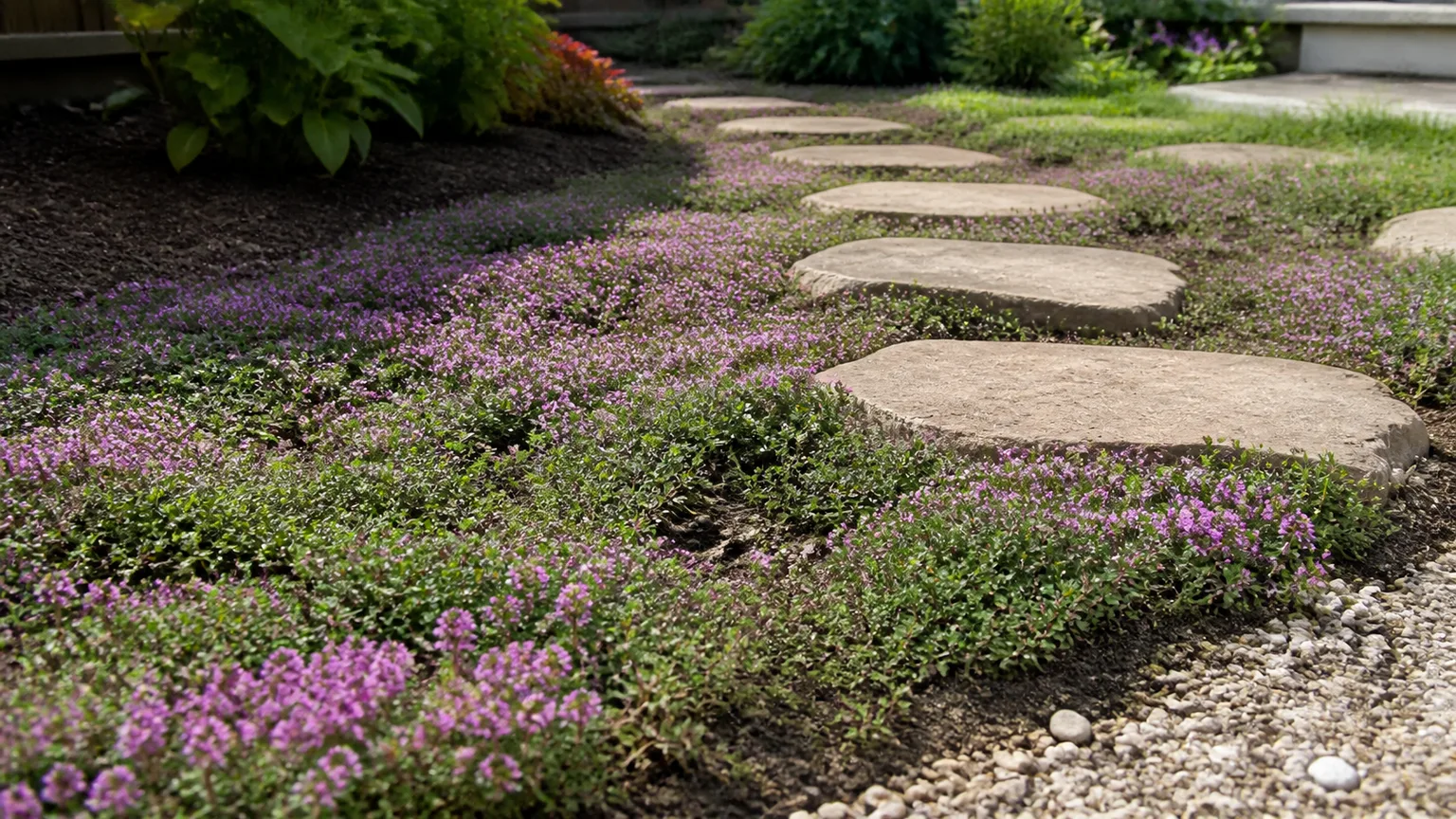
- Creeping thyme (Thymus species). Choose a low-growing thyme for sunny paths, stone joints, and the edge of a dry bed. Its leaves release fragrance when brushed, and it tolerates occasional light foot traffic once established. It is not a substitute for lawn where children or pets run every day; repeated hard traffic can leave bare soil, and thyme dislikes wet, compacted ground. Plant it where the soil drains and let the surface dry between deep waterings.
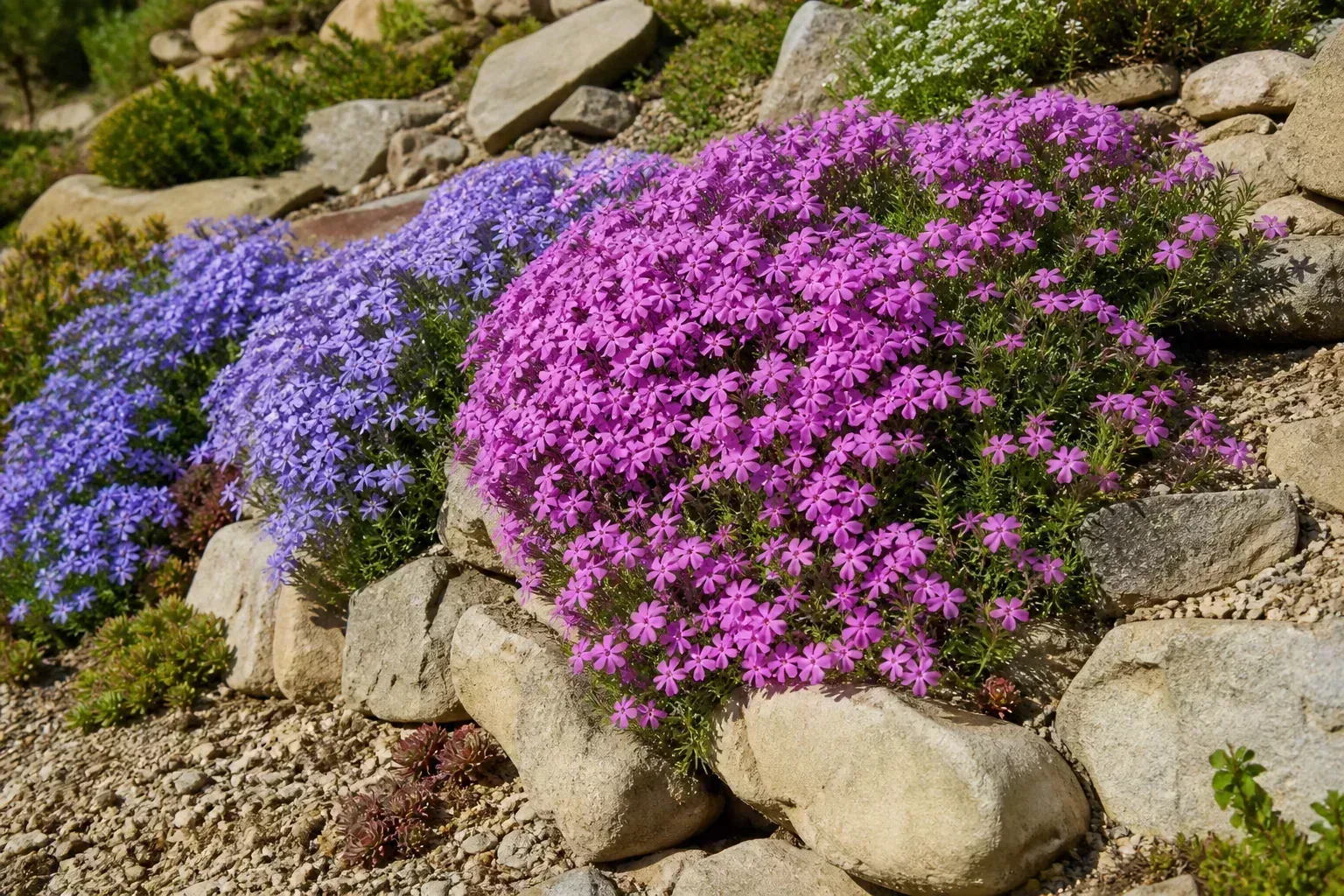
- Moss phlox (Phlox subulata). This is the creeping phlox to choose for a sunny spring display: it forms a low evergreen mat, then covers itself with pink, purple, or white flowers. NC State Extension describes it as a dry-site groundcover for rocky areas and sunny slopes, with a mature spread wider than its height. Shear lightly after flowering if the mat looks ragged. Do not confuse it with woodland phlox; species within the same genus do not all want the same light.
-
Creeping red fescue (Festuca rubra). This fine-textured grass can replace a small, low-use lawn or knit together an informal sunny bank. It looks more like a soft meadow than a flowering carpet and can tolerate some shade, but performance varies with cultivar and climate. Select a named lawn or groundcover type for your region, and expect occasional mowing or trimming if you want a tidy edge. It is a better fit for cooler summers than for a hot, dry gravel bed.
-
Sea thrift (Armeria maritima). Sea thrift makes rounded, grass-like tufts and cheerful flower globes, making it useful along a sunny path, at the front of a border, or in a coastal-style gravel bed. King County’s dry-sunny native planting plan includes it as a compact groundcover for that regional climate. It is not a fast weed-blocking carpet, so use closer spacing or combine it with another compatible plant if you want continuous cover. Avoid rich, soggy soil that encourages floppy growth.
Dry-site plants for hot beds and slopes
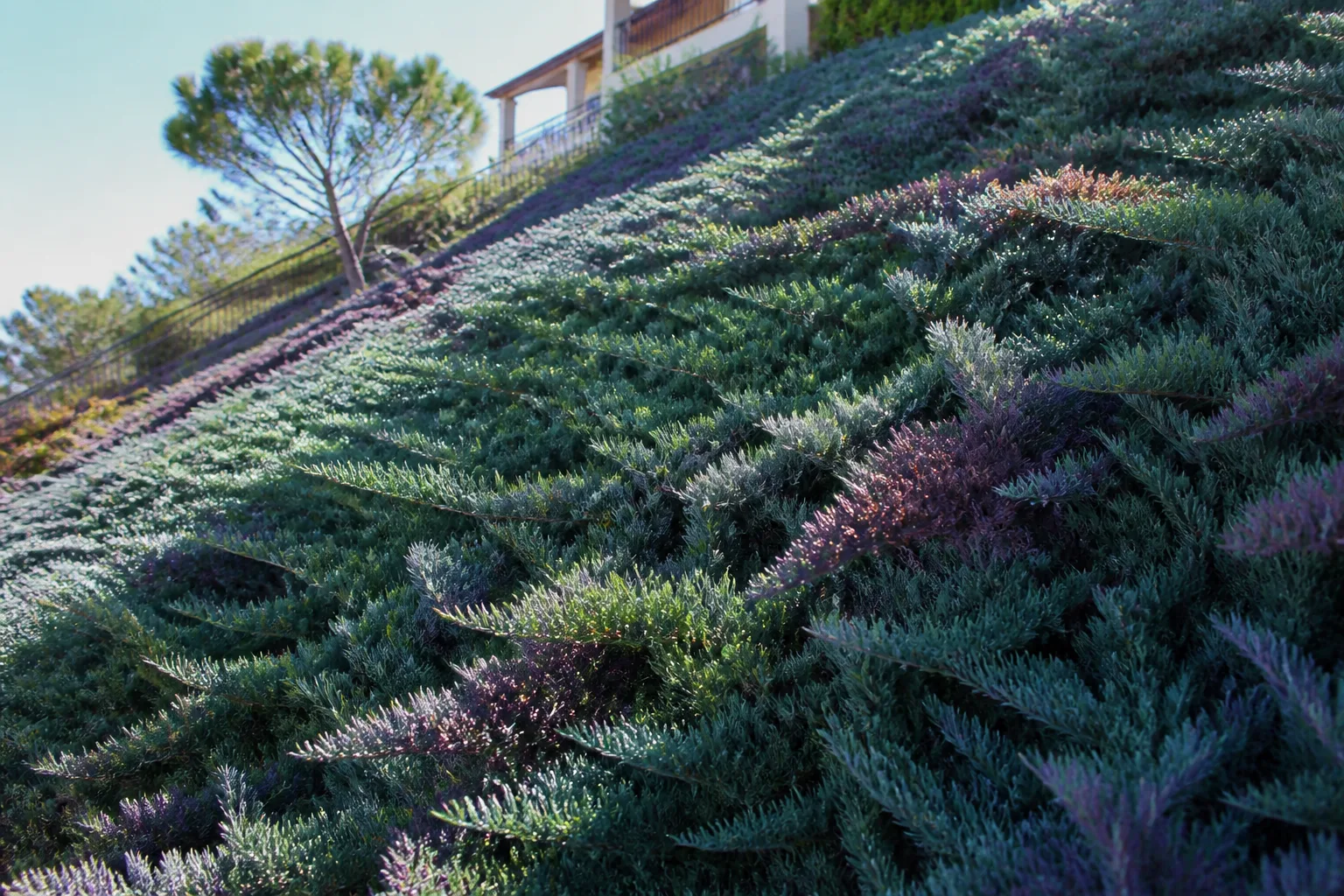
- Creeping juniper (Juniperus horizontalis cultivars). For a sunny bank that needs an evergreen layer, creeping juniper is among the sturdier choices. It spreads outward and roots into the soil rather than forming a soft walkway, so place it where a broad mat can remain in place. A single plant may cover several feet depending on cultivar, which makes spacing important; small nursery pots can look far apart at first and then overlap substantially. Water regularly while it establishes, then reduce irrigation once the root system is settled.
-
Basket-of-gold (Aurinia saxatilis). Also sold as yellow alyssum, this spring bloomer combines bright yellow flowers with blue-gray foliage. It suits dry, rocky soil, retaining walls, and the sunny edge of a path. Once flowering finishes, shear the plant lightly to encourage a tighter mound and reduce a tired, sprawling look. It is not a good choice for a rich, frequently irrigated bed, where the stems may loosen and the crown can decline.
-
Silver mound artemisia (Artemisia schmidtiana ‘Nana’). Pick this for foliage and texture rather than flowers. Its soft silver leaves form low cushions that contrast well with dark stone, green sedum, and spring bulbs. The RHS award-winning groundcover list highlights this cultivar for gravel gardens in sun, and a light trim in early summer helps keep the mound compact. Good drainage is essential: the silvery foliage may look drought-ready, but plants can thin or rot when the root zone stays wet.
-
Snow-in-summer (Cerastium tomentosum). This plant creates a pale carpet of silver leaves and white flowers, especially effective spilling over a wall or covering a dry bank. It tolerates poor, shallow soil, but can spread well beyond the spot where it was planted. Cut it back after flowering and remove runners that cross the edge. In humid regions or hot, wet summers it can decline, so treat it as a site-specific choice rather than a universal low-care solution.
-
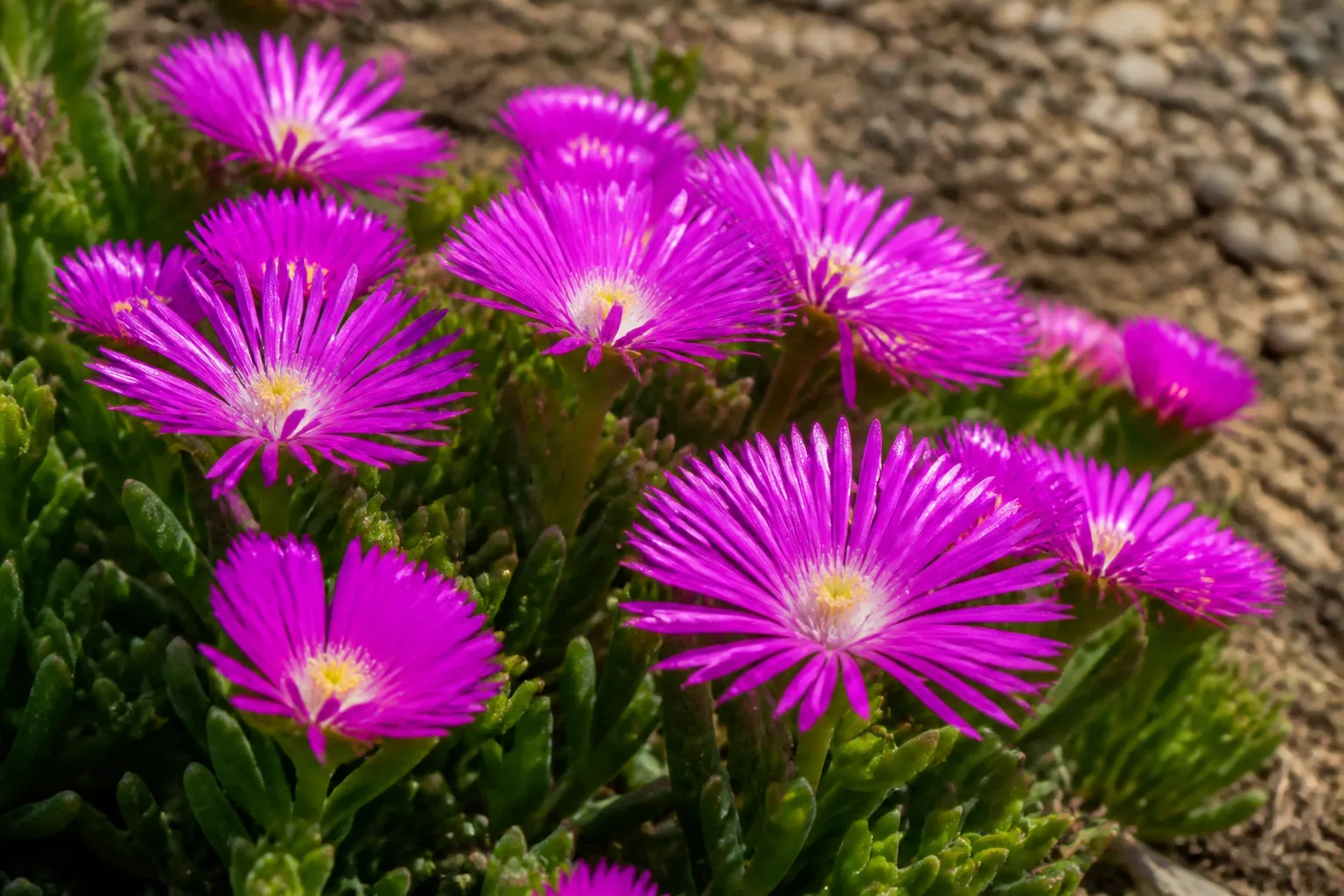
Hardy ice plant (Delosperma cooperi and related cultivars). Ice plants bring vivid daisy-like flowers to sunny gravel, rock gardens, and hot edges where many perennials struggle. Fleshy leaves store water, so the plant needs a gritty, well-drained root zone, especially through cold or rainy winters. Hardiness differs by species and cultivar; check the label for your winter minimum instead of assuming every ice plant is equally cold-hardy. A wet crown in winter is a more common failure than a dry summer once established.
-
Angelina stonecrop (Sedum rupestre ‘Angelina’). The gold-green foliage of this low sedum brightens a dry border and takes on warmer tones in strong light or cool weather. Use it around rocks, in a trough, or along the lip of a raised bed where its stems can spread. It handles lean soil better than a moisture-loving perennial, but it can rot in a pot or bed that stays wet. Remove damaged stems and let the remaining mat fill back in instead of feeding it heavily.
-
Cape Blanco stonecrop (Sedum spathulifolium ‘Cape Blanco’). This compact succulent has pewter leaves and small yellow flower clusters, making it a useful contrast plant in western rock gardens and other dry, sunny beds. It is slower and more restrained than many vigorous groundcovers, so it will not cover a large bare bank quickly. Give it sharp drainage, avoid burying the crown under mulch, and leave enough space for the low rosettes to expand without crowding.
-
Orange stonecrop (Phedimus kamtschaticus ‘Variegatum’, often sold under Sedum). This is a useful low spreader for sunny borders and dry corners where a little seasonal color is welcome. Its green-and-gold foliage and yellow flowers make it brighter than the pewter stonecrops, and its relatively dense growth can soften a gravel edge. Keep the root zone from staying soggy and trim stems that move into neighboring plants. Botanical labels may use either the older Sedum name or the newer Phedimus name.
Regional shrubs and native groundcovers
-
Bearberry (Arctostaphylos uva-ursi). Also called kinnikinnick, bearberry forms a low evergreen carpet with small leaves and red berries. It is a strong fit for dry, sunny, acidic ground in cooler regions, including exposed banks where regular irrigation is difficult after establishment. King County lists it for dry, sunny native planting in the Pacific Northwest; its soil preference makes it a poor match for alkaline or persistently wet sites. It grows slowly, so do not expect an instant weed-proof mat.
-
Beach strawberry (Fragaria chiloensis). This coastal strawberry spreads by runners into a low cover that can bear small edible fruit and hold dry, sandy ground. The King County native plant plan combines it with bearberry for a regional dry-sun planting and warns that it spreads aggressively. Give it a clear boundary and enough room to run; its runners are useful for filling soil but can overtake a small, mixed border if you let them.
-
Pacific Mist manzanita (Arctostaphylos ‘Pacific Mist’). This low, sprawling evergreen shrub can cover a broad sunny bank with gray-green foliage and small flowers. It is most useful in mild western climates and sandy, well-drained soil; it is not a general-purpose choice for cold winters or humid summers. Allow for its eventual width and avoid trying to keep it as a tiny edging plant through repeated severe pruning. Manzanitas often resent disturbance after they have settled in, so choose the location carefully.
-
Rockspray cotoneaster (Cotoneaster horizontalis). This woody shrub grows in horizontal layers and can cover a slope more like a spreading groundcover than a compact border plant. It offers spring flowers and red berries, but it becomes taller and broader than a creeping mat. Before planting, check regional invasive-plant guidance: cotoneasters can escape cultivation in some places, and birds can carry seed beyond the bed. Choose a compact, locally appropriate alternative if it is flagged in your area.
Flowering carpets and seasonal fillers
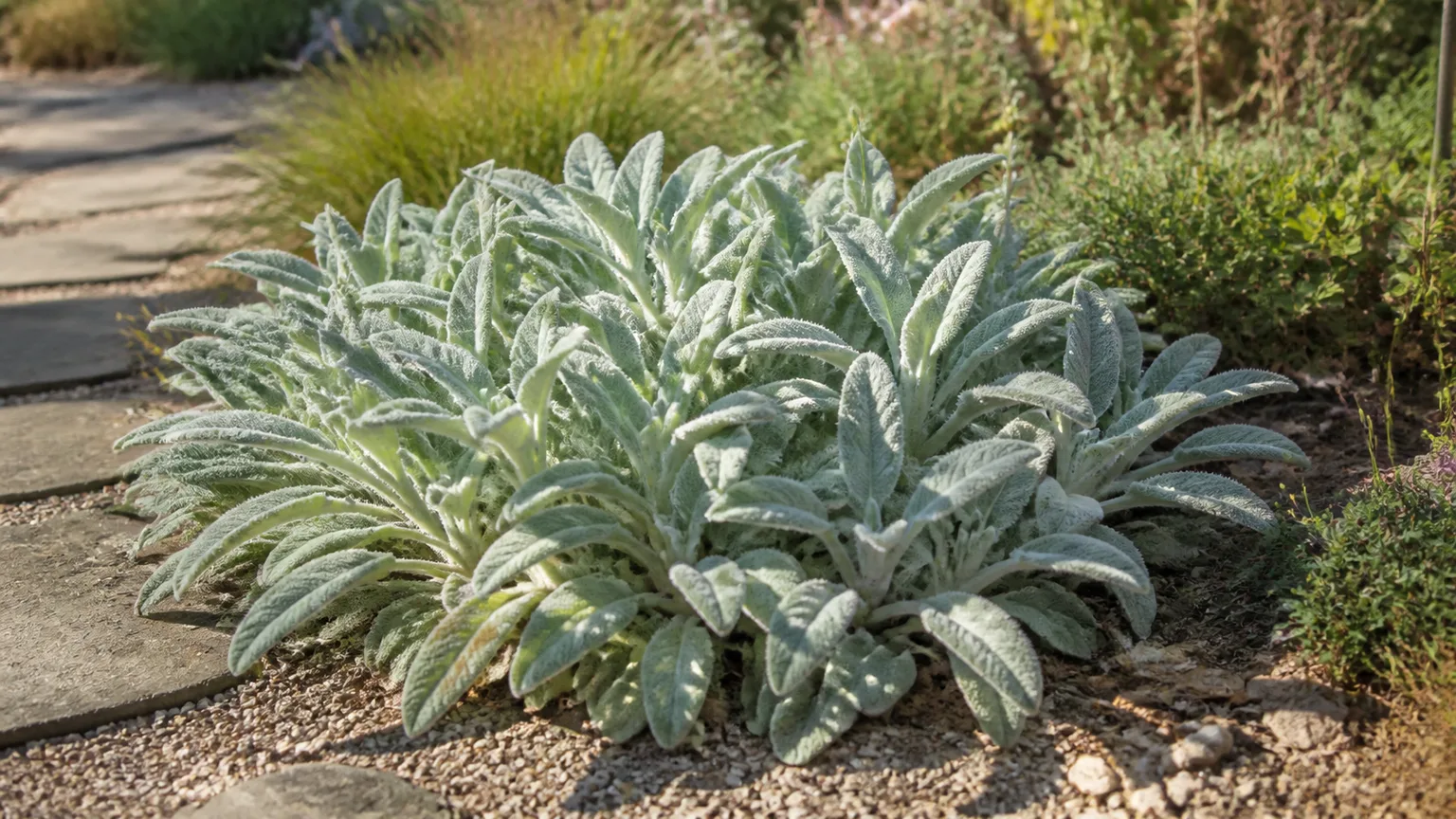
- Lamb’s ear (Stachys byzantina). The soft silver leaves make this perennial a strong edging plant in sunny, dry beds. It can spread into a broad, low carpet, and flower stalks attract pollinators, though you can remove them if you prefer a shorter outline. In humid or rainy climates, improve spacing and airflow so the leaves dry quickly; avoid crowding it into damp soil. Its texture is appealing but not durable under regular foot traffic.
-
‘Six Hills Giant’ catmint (Nepeta × faassenii). Catmint is a flowering mound rather than a flat creeping mat, but several plants can knit together into a low, fragrant border. It thrives in sun and tolerates dry spells once established, while pollinators visit the long-lasting blue-violet flowers. Cut plants back after their first flush if they become floppy; that usually encourages tidier regrowth. Give the clumps breathing room and do not choose them for a path where the foliage will be crushed every day.
-
Purple poppy mallow (Callirhoe involucrata). This low, sprawling native perennial is suited to sunny, rocky soil and produces magenta cup-shaped flowers. Fine Gardening’s regional groundcover report describes it as a drought-tolerant full-sun planting choice, where the foliage may go dormant in summer but the roots continue to hold soil. It can be slow to establish and dislikes being transplanted once settled, so sow or plant it where it can remain. Match it to its regional range rather than treating it as a coast-to-coast native.
-
California poppy (Eschscholzia californica). For a seasonal, self-sowing carpet rather than an evergreen mat, California poppy can fill open sunny ground with orange or yellow flowers. Fine Gardening notes its use in full-sun, rocky plantings and that it can go summer-dormant while roots remain in place. Allow some seed to mature if you want it to return; deadhead if you want fewer seedlings. It is a flexible filler, not a reliable year-round weed barrier.
Establish a Dense Cover Before Weeds Take Hold
Prepare the planting area
Remove perennial weeds and their roots before planting, especially bindweed, quackgrass, or other weeds that can push through a mat later. Loosen compacted soil across the bed rather than digging isolated holes in a hard surface; water will otherwise collect in each amended pocket. Add compost only when the soil needs organic matter, and do not enrich a naturally lean rock garden for plants that prefer sharp drainage.
Lay out the plants before opening every pot. Measure each one’s expected spread, then mark centers in staggered rows so plants can close the gaps evenly. The RHS provides species-specific spacing recommendations for groundcovers, ranging from closer perennial spacing to wider intervals for shrubs; follow the plant profile or nursery label for the variety you bought rather than using one spacing number for all 20 options. Closer spacing fills faster but raises the upfront cost and can create crowding later.
Set spacing, then water through establishment
Water the root balls before planting and settle each plant at the same depth it grew in its pot. Apply a thin mulch between plants where it will not smother low crowns, then keep the bare spaces weeded while the foliage spreads. Do not assume a fast-growing plant will eliminate weeds immediately: the RHS notes that maintenance continues until a dense cover forms and recommends watering through dry spells in the first season or two.
For the first weeks, check soil beneath the leaves rather than watering by calendar. The goal is consistent moisture around new roots without keeping the bed saturated. Reduce irrigation as plants establish, and continue to inspect boundaries after flowering or fruiting; runners and seedlings can move farther than a plant’s central clump suggests.
Prevent Aggressive Plants from Escaping Their Beds
Fast coverage is not automatically a benefit. English ivy, for example, makes a dense ground layer but can escape into woodlands and climb trees; NC State Extension’s guidance on English ivy describes how difficult it can be to control once established. Extension offices in North Carolina also list English ivy and common periwinkle among invasive groundcovers, while Purdue Extension describes Vinca minor as a rapid spreader and recommends restricting it to contained areas in Indiana.
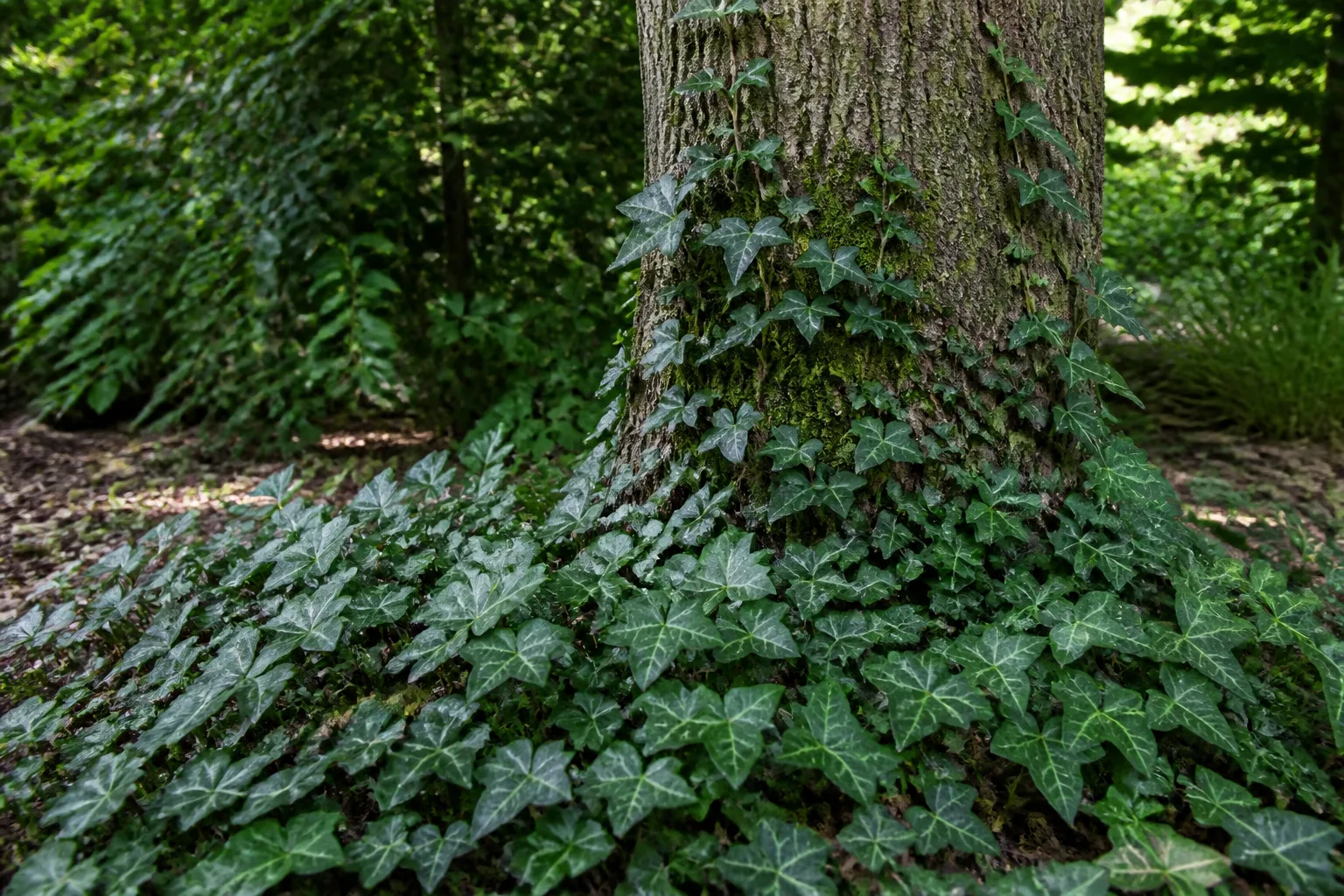
Those recommendations are regional, not a blanket legal classification for every state. Henderson County Cooperative Extension also lists common periwinkle among invasive groundcovers in its area. Before buying ivy, periwinkle, cotoneaster, snow-in-summer, or any vigorous runner, check your state invasive-species authority or county extension guidance. If a plant is listed as invasive nearby, pick a native alternative that suits the same light and moisture: a locally native shrub or low perennial may take longer to fill, but it will not ask you to fight its spread later.
Conclusion
Choose a full-sun groundcover by starting with the soil and the job: dry slope, path edge, low-water rock bed, pollinator border, or seasonal color. Creeping thyme, moss phlox, low sedums, bearberry, and creeping juniper solve different problems, so the right choice is the one whose mature habit and water needs fit your site. Give plants time to root, keep the gaps weeded, and water through establishment before judging whether the cover is succeeding.
Fast spread can help close bare ground, but it can also make a planting harder to control. Use regionally appropriate plants, confirm the mature width on the label, and check local invasive-plant guidance before letting a runner or shrub loose near a natural area. With that small amount of planning, a sunny bed can become a durable, attractive layer instead of another section of ground you have to replant.