Gardenia Care for Glossy Leaves and Fragrant Blooms
Learn gardenia care indoors or out: choose the right cultivar and spot, keep roots evenly moist, support flowering, and diagnose dropped buds or yellow leaves.
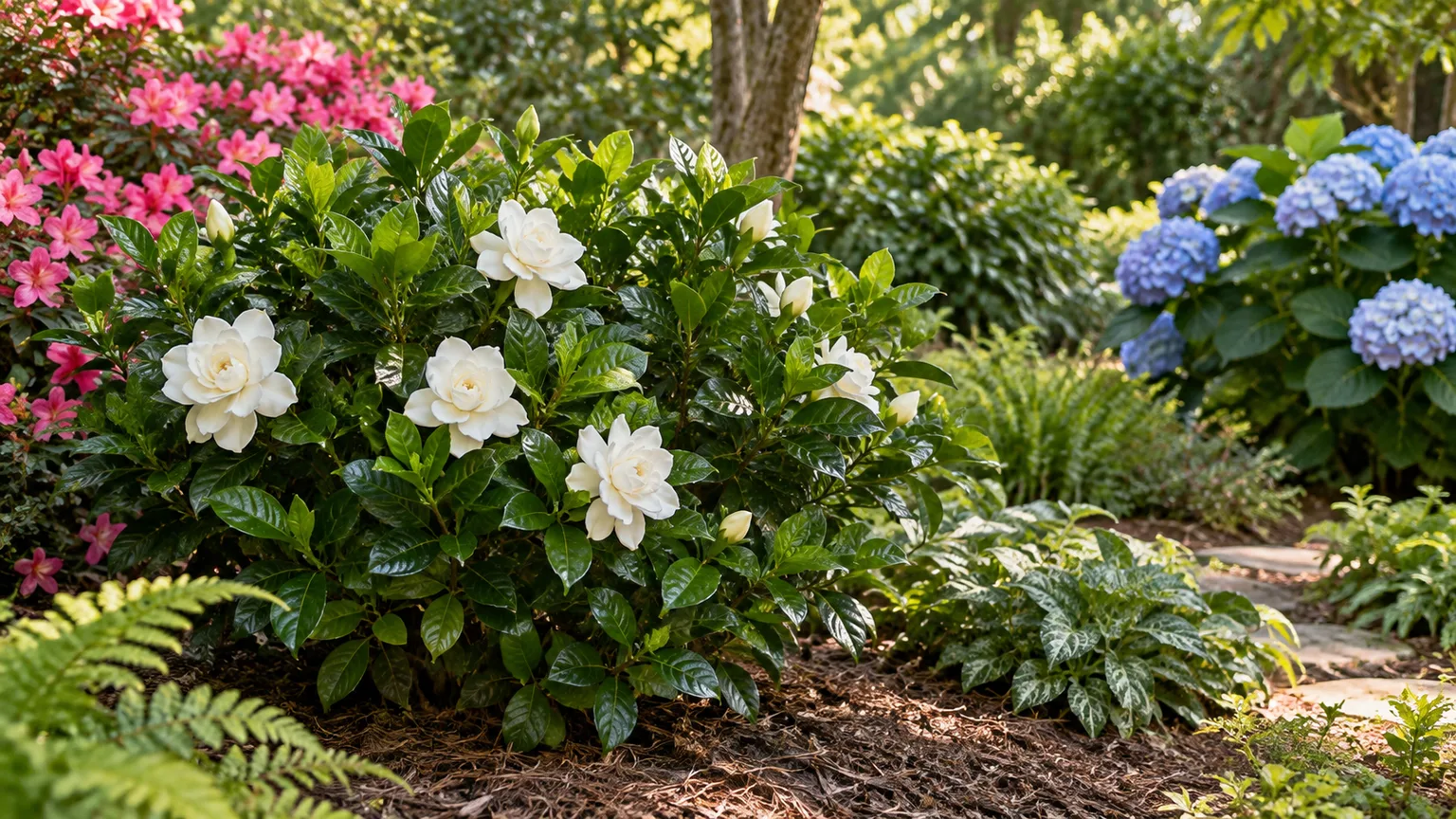
Gardenia rewards a good location with glossy evergreen foliage and creamy, fragrant flowers, but it is less forgiving of soggy roots, alkaline soil, and abrupt changes in temperature or moisture. The most dependable routine is simple: give it bright light with some protection from harsh afternoon sun, use acidic but freely draining soil, and water when the root zone is beginning to dry rather than following a fixed calendar.
First decide whether your climate suits an in-ground shrub or whether a container you can move is the safer choice. Then treat yellow leaves and dropped buds as clues to investigate, not automatic instructions to add fertilizer or water. Gardenia jasminoides is the species most often grown as cape jasmine; it is an evergreen shrub in the coffee family, native to parts of East Asia, and its mature size varies considerably by cultivar (NC State Extension).
Decide Whether Gardenia Fits Your Climate and Space
In warm regions, gardenia can grow outdoors as a shrub, foundation planting, informal hedge, or fragrant specimen near a patio. In colder climates, many gardeners have better results treating it as a container plant that spends warm months outside and winters in a bright, protected place. Gardenias are often listed for roughly USDA Zones 8–11, but hardiness differs by cultivar and local conditions; wind, drainage, winter exposure, and the plant’s establishment all affect survival. A zone label is a planning guide, not a guarantee that a particular gardenia will come through a cold snap.
Gardenia is an evergreen with a strong fragrance, so choose the spot as carefully as the soil. Near a path or seating area, you can enjoy the flowers without brushing past the shrub; right beside a bedroom window, the scent may be more intense than you want. Give the plant enough room for its mature width, airflow, and root zone. Avoid a place where tree roots will compete for moisture or where building runoff leaves the soil saturated.
Choose a cultivar for mature size and winter exposure
Read the cultivar name on the nursery label before buying. A compact form such as ‘Radicans’ can work as a low-growing groundcover or in a wide container, while ‘Kleim’s Hardy’ is a smaller shrub often chosen where winters are cooler; ‘Frostproof’ and ‘Crown Jewel’ are other named selections promoted for improved cold tolerance. Sizes, flower form, bloom timing, and hardiness claims vary between growers, so confirm the exact plant’s mature dimensions and minimum temperature rating with a regional nursery or extension service. Clemson Extension describes meaningful differences among common selections, including size and cold tolerance (Clemson Cooperative Extension’s gardenia guide); NC State Extension notes that standard gardenias can become 4 to 8 feet tall and wide (NC State Extension).
For a borderline climate, prioritize a locally proven cultivar and a sheltered planting site over a broad online claim that a variety is “hardy.” A south- or east-facing protected spot can reduce exposure to cold winds, but it cannot change a cultivar’s genetic limits. If winter temperatures regularly fall below the rating on the plant label, choose a pot you can move, or select a different evergreen shrub that naturally fits the site.
Build the Root Zone Gardenias Need
Gardenias need a moist, acidic root zone with good drainage. Clemson Extension recommends soil below pH 6, while other regional guidance commonly places gardenias near pH 5 to 6; the useful takeaway is to test before trying to acidify a bed. High pH can make iron less available even when the soil contains iron, so adding a general-purpose fertilizer may feed the wrong problem. NC State Extension also cautions that gardenias have shallow roots, dislike root disturbance, and do poorly where tree roots compete (NC State Extension; Clemson Cooperative Extension).
If you are planting in the ground, test the bed rather than guessing from nearby plants. Work mature organic matter through a broad planting area if the soil needs better structure, and address drainage before planting; an amended planting hole surrounded by heavy, water-holding soil can become a basin. Do not apply sulfur or other acidifying products by an improvised teaspoon recipe. Soil texture, starting pH, and product concentration determine the amount, so follow a soil-test recommendation or the product label. For container growing, choose a commercial mix formulated for acid-loving plants and a pot with open drainage holes.
Plant at the right depth and protect shallow roots
Set the root ball at the same height it grew in its nursery pot, or slightly above the surrounding soil if the site drains slowly. Planting too deep keeps the crown wet and makes root problems more likely. Loosen only the outermost circling roots if necessary; gardenia roots are sensitive to disturbance, so avoid tearing the root ball apart or bare-rooting the plant.
Water the planting area slowly to settle soil around the roots, then spread a 2- to 3-inch layer of organic mulch over the root zone. Keep mulch a few inches back from the stems so the crown is not held constantly wet. A wide mulched circle is more useful than piling material against the trunk because the roots extend outward, where they compete with nearby trees and turf.
Choose Light That Supports Growth Without Scorch
Outdoors, aim for bright light or partial shade, often with morning sun and afternoon shade in hot-summer climates. A site with dense shade may keep the foliage alive but produce weak, stretched growth and fewer flowers; intense midday sun can scorch leaves or shorten the life of open blooms. In cooler climates, a gardenia may tolerate more sun than one in a hot, dry location, so observe the plant through its first summer and adjust if leaf edges bleach, brown, or wilt despite adequate soil moisture.
Indoors, give the plant the brightest position you can provide without baking it behind hot glass. A bright east or west window is often a practical starting point; in winter, more direct sun may be beneficial because days are shorter. If a room is dim, a grow light can help maintain foliage, but it cannot correct alkaline soil or a pot that stays waterlogged. The Royal Horticultural Society recommends bright light away from strong direct summer sun, with more winter light and good airflow away from cold drafts (RHS gardenia growing guide).
Water by Root-Zone Moisture, Not a Weekly Rule
Keep the root ball evenly moist while allowing excess water to drain away. For a container, check the mix with a finger: when the top inch is beginning to dry, water thoroughly until water runs from the drainage holes, then empty the saucer. In a garden bed, check below the mulch and water when the upper few inches of soil are drying. Heat, wind, pot size, root growth, and rainfall all change how quickly the soil dries, so a fixed “once a week” schedule can leave one gardenia thirsty and another waterlogged.
Use a slow soak that reaches the root zone rather than frequent splashes on the surface. During hot, dry weather, new plantings and containers may need checks more often; in cool weather or winter, growth slows and the soil takes longer to dry. Do not let the plant sit in standing water, but do not wait until it wilts to water. Repeated drying can cause buds to abort, while saturated soil deprives roots of oxygen and encourages root rot.
Water quality matters most where tap water is very alkaline or leaves a mineral crust on pots and soil. If that describes your water, use collected rainwater when practical or ask your local extension service about water alkalinity; simply labeling water “hard” does not tell you how quickly it will shift a particular potting mix. The RHS recommends rainwater for gardenias in hard-water areas to help preserve acidic compost (RHS gardenia information). Avoid adding vinegar or other kitchen acids to irrigation water by guesswork. A small dosing error can damage roots, and it does not correct poor drainage.
Keep Indoor Temperature and Humidity Steady
Gardenias prefer warmth but often form flower buds more reliably when nights are cooler than days. Temperature advice varies: the Chicago Botanic Garden gives a target of 60–65°F at night with days about ten degrees warmer for indoor bud formation, while Clemson Extension describes cooler nights around 50–55°F as favorable. These figures come from different growing contexts, and cultivars respond differently. Use the shared practical rule: avoid hot nights, large temperature swings, and drafts; a stable room with cooler nights is better than repeatedly moving the plant to chase a precise number (Chicago Botanic Garden; Clemson Cooperative Extension).
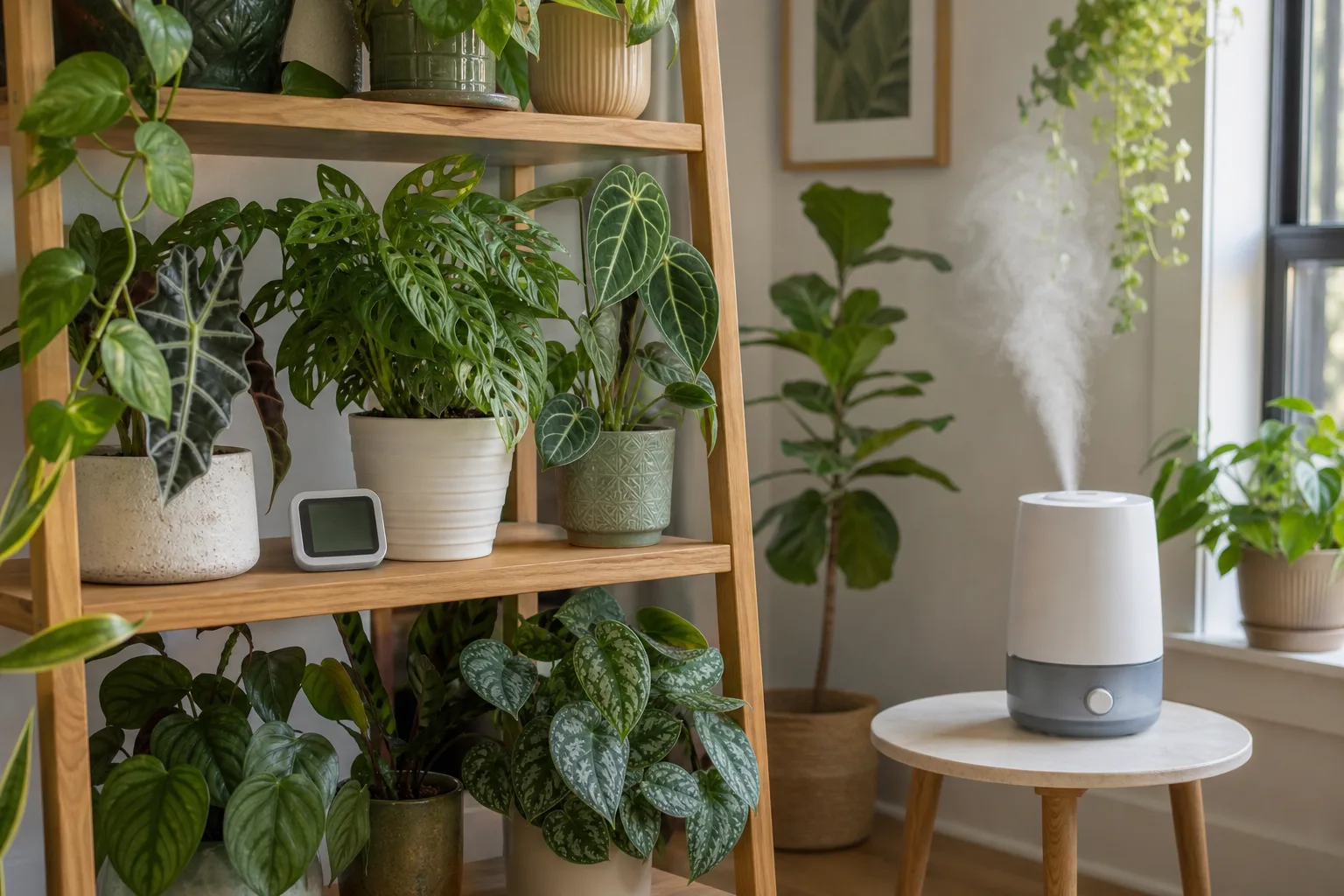
Indoor heating can make the air very dry even when the soil is moist. A room humidifier placed nearby is more reliable than frequent misting; grouping plants may also create a slightly more humid pocket. A pebble tray can have a small local effect, but it should not become a reservoir that keeps the pot standing in water. Avoid placing gardenia beside a heat vent, radiator, drafty exterior door, or air conditioner. The Missouri Botanical Garden also emphasizes evenly moist—not soggy—mix, cool nights, and protection from hot, dry air for indoor bud development (Missouri Botanical Garden gardenia care).
Fertilize Lightly and Fix the Cause Before Feeding
Feed gardenias during active growth, usually in spring and summer, with a fertilizer labeled for acid-loving shrubs such as azaleas or camellias. Follow the product label for the plant’s size and whether it is in a bed or pot; do not combine multiple fertilizers just because the foliage looks pale. Clemson Extension recommends light spring feeding and a second application about six weeks later in its regional guidance, while UF/IFAS uses different seasonal timing in Florida, illustrating why local climate and the product label matter (Clemson Cooperative Extension; UF/IFAS Extension gardenia guide).
Stop feeding in autumn in climates where a flush of tender growth could meet cold weather, and do not fertilize dry or stressed roots. Excess fertilizer can raise salt levels around roots and contribute to bud drop. If new leaves are yellow but their veins remain green, check soil pH, drainage, and root health before adding iron or a stronger dose. Correcting the conditions that make nutrients unavailable is more durable than repeatedly treating the visible symptom.
Grow Gardenias in Containers and Repot Only When Needed
A container gives you control over the soil mix and the option to move a tender cultivar before frost. It also dries faster than garden soil, warms more quickly in sun, and can become root-bound; those trade-offs mean container gardenias need more frequent moisture checks. Choose a stable pot with several drainage holes, only modestly wider than the root ball, and fill it with an acidic, free-draining mix. Decorative cachepots are fine if the nursery pot can drain freely and is removed from standing water after each watering.
Repot in spring when roots circle the pot, emerge from drainage holes, or the mix has broken down and no longer drains evenly. Move up only one container size at a time. A very large pot holds extra wet mix that the roots cannot use yet, which increases the risk of root trouble. Slide the plant out carefully, keep the root ball mostly intact, and replant at the same depth. If it is not root-bound, refreshing the top layer of mix can be less disruptive than repotting on a calendar. The RHS recommends only a slightly larger container and acidic compost when repotting (RHS gardenia growing guide).
Move Potted Gardenias Through the Seasons
Move a container gardenia outside only after nights are reliably mild and return it indoors or under cover before frost threatens. Acclimate it over about a week: begin in bright shade, then gradually add morning light. A sudden move from a protected room to intense sun, wind, or cold can stress leaves and buds. Outside, keep the pot in a sheltered place with good airflow and drainage rather than under a roof edge that sheds heavy runoff into the container.
Before bringing it in for winter, inspect leaf undersides, stem joints, and buds for scale, whiteflies, aphids, mealybugs, and mites. Rinse the foliage if needed and isolate the plant from other houseplants while you watch for pests. Indoors, the priorities shift to the brightest available light, modest watering as growth slows, and protection from dry heat. Do not expect every gardenia to bloom indoors in winter: flower timing depends on cultivar, light, temperature, and the plant’s previous growing season. The Old Farmer’s Almanac and BBC Gardeners’ World both describe container growing as a practical way to move gardenias into protected conditions where winters are too cold (Old Farmer’s Almanac gardenia guide; BBC Gardeners’ World gardenia guide).
Encourage Flowers and Prevent Bud Drop
The best bloom strategy is to stabilize the conditions that support buds rather than trying to force flowers with extra fertilizer. Gardenias need enough light, steady root moisture, an acidic growing medium, and temperatures that are not excessively hot or erratic. Buds that turn yellow, brown, or fall before opening can reflect several stresses at once. Check the last few weeks for dry soil, waterlogged soil, a move between rooms, a cold night, a heat vent, reduced light, or a sudden fertilizer application before changing the routine.
If buds are dropping, inspect them and the new growth closely for tiny thrips or other pests. UF/IFAS notes that bud drop can follow dry, hot, or unusually cool weather, pests such as flower thrips, excess fertilizer, and poor drainage; Clemson also lists low humidity, over- or underwatering, insufficient light, and high temperatures among possible causes (UF/IFAS Extension; Clemson gardenia problems guide). Change one likely cause at a time where possible. If you move the plant, correct watering, change fertilizer, and repot all at once, it becomes difficult to tell what helped—and the added disturbance can create more stress.
Prune after the main bloom, not by a fixed calendar
Gardenias usually need only light shaping and removal of dead, damaged, or crossing growth. Prune after the main flowering flush has faded, using the plant’s actual bloom cycle rather than a universal month; warm-climate and reblooming cultivars can flower at different times. Heavy pruning late in the season may remove growth that would otherwise carry next season’s buds. Clemson Extension specifically warns that hard pruning after early October can reduce the following year’s bloom in its region (Clemson Cooperative Extension).
Use clean, sharp pruners and cut back to a healthy branch or outward-facing node. Avoid shearing the entire shrub into a tight ball, which can create a dense outer shell with poor airflow. Remove faded flowers if you want a tidier plant, but deadheading does not compensate for insufficient light, unsuitable pH, or damaged roots. If the plant is healthy but larger than its space, prune selectively after flowering or replace it with a more compact cultivar rather than repeatedly cutting it back at the wrong time.
Propagate Gardenia from Cuttings
Stem cuttings are more predictable than seed when you want another plant like the parent. Take a 3- to 5-inch cutting from healthy, nonflowering new growth in late spring or summer, cutting just below a leaf node. Remove the lower leaves and any flower buds, then place the stem in a clean, moist medium such as a mix of perlite and peat-free propagation compost. A small pot with drainage is important; soggy medium can rot the cutting before roots form.
Keep the cutting warm in bright, indirect light and cover it loosely with a clear bag or propagation dome to slow moisture loss. Keep the medium lightly moist, not wet, and air the cover regularly to limit mold. Rooting can take several weeks; UF/IFAS notes that gardenia cuttings may root in roughly six to eight weeks under suitable propagation conditions (UF/IFAS Extension gardenia guide). Once new growth appears and the cutting resists a gentle tug, acclimate it gradually to room air and pot it into acidic mix. Seed is possible, but plants may take years to reach flowering size and may not match the parent, so it makes more sense for experimentation than for a quick replacement.
Diagnose Yellow Leaves and Other Stress Signals
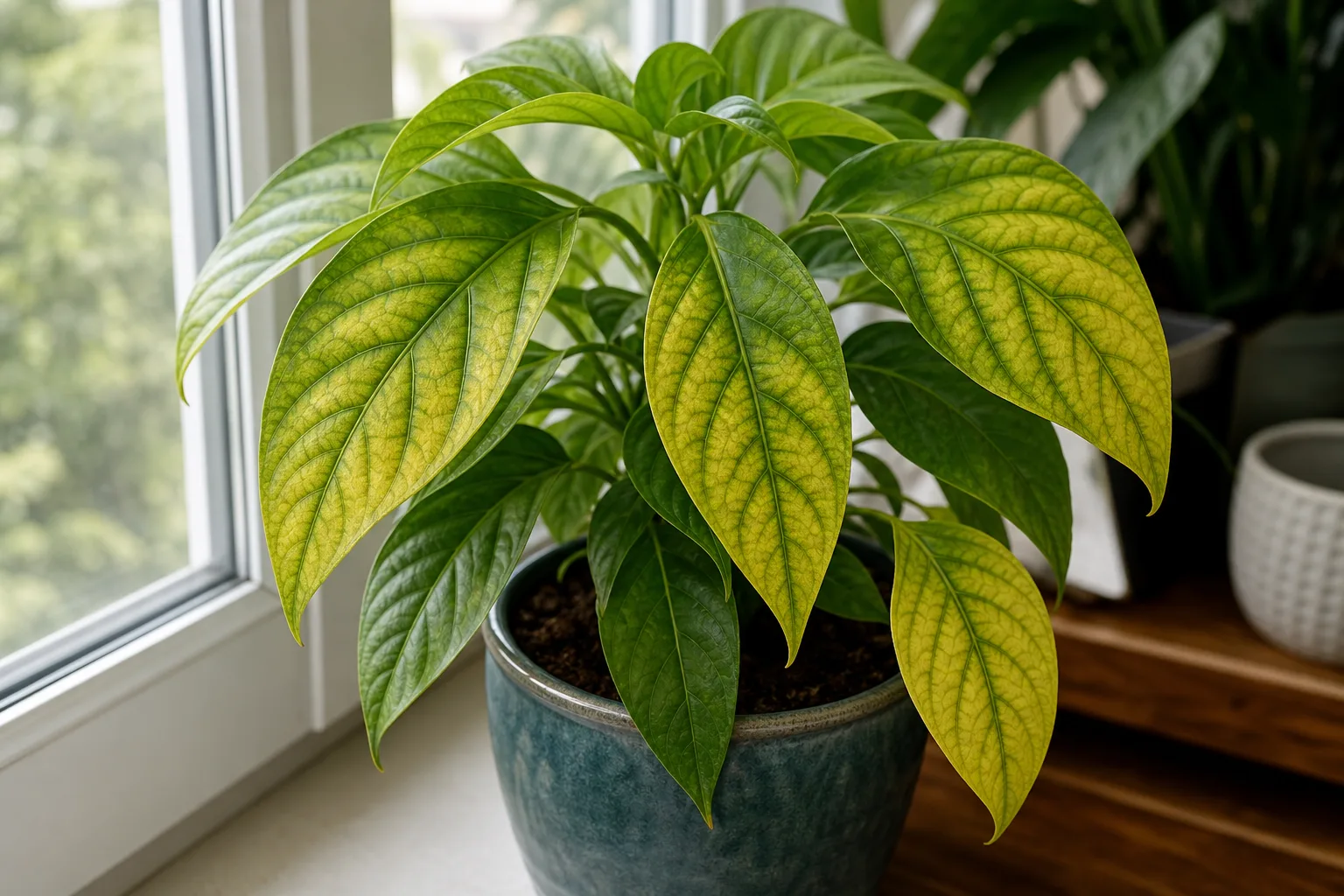
A few old leaves yellowing as new growth starts can be normal on an evergreen shrub. Widespread or repeated yellowing, especially on fresh leaves, signals that something deserves a closer look. Start with the pattern: Are only older leaves yellow? Are the newest leaves pale but still veined green? Is the whole plant drooping in wet soil? Are there sticky leaves, tiny insects, or black residue? Those observations narrow the likely cause better than a calendar-based fertilizer dose.
Next check soil moisture at root depth and look for drainage problems. A dry root ball, a pot without working drainage holes, and soil that remains saturated can all cause yellowing, even though the fixes are opposite. If moisture seems reasonable, test the soil pH and check whether water quality or nearby concrete could be raising it. Then inspect the undersides of leaves and the growing tips for pests. Clemson Extension notes that older leaf loss can be seasonal, while new chlorotic growth can be linked to iron availability, soil pH, root dysfunction, or other stressors (Clemson gardenia problems guide).
Separate normal leaf turnover from chlorosis and root trouble
Yellow new leaves with green veins often point to iron chlorosis, especially when the newest growth is affected first. Iron may be present in the soil but unavailable at a high pH. Test the root-zone pH; if it is too high, use a locally recommended correction rather than continually applying iron. A temporary iron product may green new growth, but unless the pH or root problem is addressed, symptoms can return.
Uniform yellowing, wilting, and a sour-smelling or constantly wet mix suggest root stress or poor drainage. Slip a container plant partly out of its pot to inspect roots: healthy roots are firm, while rotten roots are often brown and soft. Trim only clearly dead material with clean pruners and repot into fresh, free-draining acidic mix if enough healthy roots remain. If most roots are mushy or the main stems are collapsing, replacement may be more realistic than prolonged rescue attempts.
A few older leaves yellowing while new growth stays green can be ordinary leaf turnover, especially during seasonal transitions. Remove leaves that have fully died, but do not strip healthy foliage in response to a few yellow leaves. If discoloration spreads, flowers fail, or the plant loses vigor, return to the moisture, pH, light, root, and pest checks above rather than assuming every yellow leaf means a nutrient shortage.
Check for Pests, Disease, and Pet-Safety Risks
Inspect gardenias weekly during active growth, especially the undersides of leaves and the tender tips where pests cluster. Scale insects may look like fixed bumps on stems; whiteflies lift off when disturbed; aphids and mealybugs gather on new growth; spider mites can leave fine stippling or webbing; thrips may scar flowers and buds. Sticky honeydew and black sooty mold often point to sap-feeding insects rather than a fungal problem that should be sprayed blindly. UF/IFAS recommends managing sooty mold by addressing the honeydew-producing insects (UF/IFAS Extension gardenia guide).
For a small infestation, isolate a potted plant, rinse pests from leaf undersides, and remove badly affected growth. If you use insecticidal soap or horticultural oil, identify the pest, follow the product label for gardenias and the intended setting, and test a small area first; do not spray open flowers where pollinators may visit. Persistent wilting in wet soil, cankers, or recurring leaf spots may need a local extension diagnosis, since root rot and other diseases are not solved by adding fertilizer. Good drainage, airflow, and clean tools reduce avoidable stress.
Keep gardenia leaves and clippings out of reach of pets. The ASPCA lists Gardenia jasminoides as toxic to dogs, cats, and horses, with possible vomiting, diarrhea, or hives after ingestion; contact a veterinarian or animal poison-control service if a pet chews the plant (ASPCA gardenia safety information). This is pet-specific safety guidance; it should not be expanded into an unsupported claim that ordinary handling is dangerous to people.
Conclusion
Gardenia is easier to manage when its basic constraints are handled before problems appear: match the cultivar to winter conditions, choose bright light with afternoon protection, keep the soil acidic and well drained, and water according to the root zone. Indoors, stable temperatures, bright light, and moderate humidity make flowering more likely, though no routine can guarantee blooms on every plant. When buds drop or leaves yellow, check moisture, drainage, pH, temperature changes, and pests before reaching for fertilizer. That sequence protects the roots and gives you the best chance of keeping the plant healthy for the next flush of fragrant flowers.