Does Cayenne Pepper Deter Squirrels? What Works
Does cayenne pepper deter squirrels? Learn how capsaicin works, where it helps, why it fails, and which humane barriers make the biggest difference.
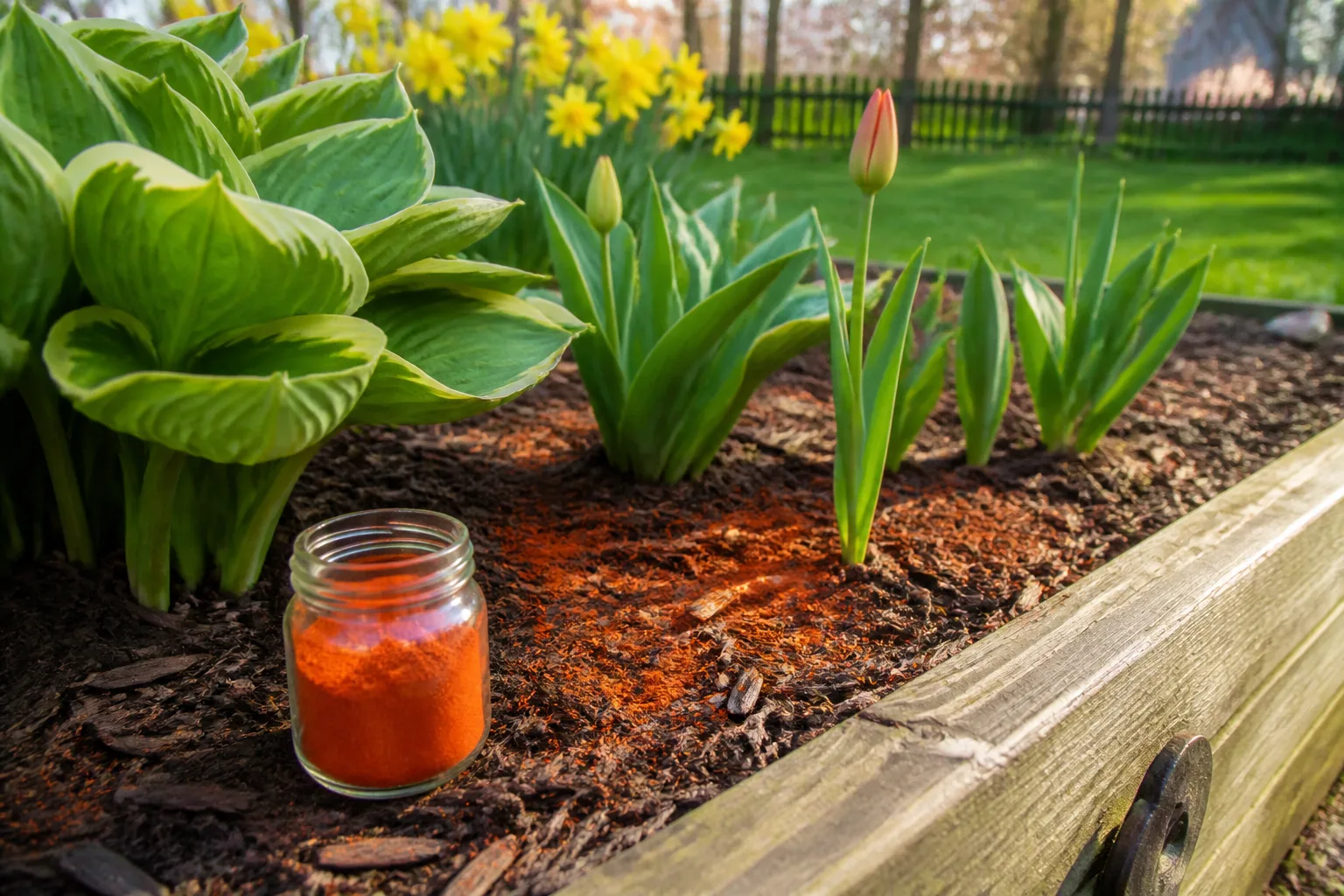
If squirrels are digging in your pots, raiding a feeder, or sampling your garden, cayenne pepper may make the next bite unpleasant enough to interrupt the habit. It is not a force field, though. Cayenne can deter some squirrels for a short time, but rain, hunger, easy access, and repeated exposure quickly reduce the effect.
The useful question is not simply whether cayenne works. It is where the squirrel is getting its reward, whether a light treatment can reach that contact point, and what physical change will still work after the powder blows away. Extension wildlife guidance consistently treats repellents as one layer in a broader plan: identify the animal, remove or block the attraction, and combine tactics instead of betting everything on one scent or taste.
The short answer: yes, but only as a temporary nudge
Cayenne contains capsaicin, the compound responsible for hot-pepper heat. When a squirrel tastes treated seed, mulch, or plant material, the sensation can make that food source less appealing. The effect is aversive rather than lethal: the goal is to make a location feel like a poor meal and encourage the animal to look elsewhere.
That distinction matters because a repellent is not the same as exclusion. The University of Florida IFAS Extension explains that wildlife can become accustomed to deterrents and may ignore them when the protected food, water, or shelter is especially valuable. It recommends starting early, changing hazing tactics, and using more than one sensory or physical strategy (UF/IFAS Extension).
In practical terms, cayenne is most worth a trial when the damage is new, localized, and moderate: a few freshly dug bulb holes, a squirrel sampling container soil, or a feeder that has just become a regular stop. It is a weak stand-alone answer when a squirrel has already learned that your yard supplies dependable food or when the animal can simply jump around the treated area.
Why capsaicin can change a squirrel’s decision
Squirrels are mammals, and capsaicin creates a burning or irritating sensation when it contacts the mouth and other sensitive tissues. That makes a treated seed or leaf different from an ordinary snack. A squirrel may taste it, back off, and remember that the location is not worth the effort—especially if an untargeted food source is close by.
The effect is not magic, and smell alone should not carry the whole explanation. Dry cayenne on mulch has to remain where the squirrel’s nose or paws encounter it, while a treated plant has to receive enough contact to be noticed without being coated so heavily that people, pets, or beneficial wildlife are exposed to unnecessary dust. A light, targeted treatment makes more sense than covering an entire yard in red powder.
The treatment also has to compete with the animal’s alternatives. A squirrel passing through a bed may leave after one irritating encounter. A squirrel defending a nest, feeding young, or returning to a tree full of ripe fruit has a stronger reason to keep trying. Nebraska Extension notes that the effectiveness of taste repellents depends on the situation and that capsaicin products have specific registered uses; it also cautions that wildlife-control methods can be subject to local legal restrictions (Nebraska Extension).
Why a hungry or habituated squirrel may ignore it
There are four common reasons cayenne appears to “stop working.”
- The weather removed it. Rain, irrigation, heavy dew, and wind thin or carry away both dry powder and homemade liquid mixtures.
- The reward is better than the discomfort. A ripe peach, a feeder full of sunflower seed, or a newly planted bulb may be worth another attempt.
- The animal found a bypass. Powder on the soil does nothing to stop a squirrel that reaches fruit from a nearby roof, fence, or branch.
- The cue became background noise. Repeated exposure without a meaningful consequence lets wildlife habituate to a single smell or taste.
This is why adding more cayenne is not always the right response. If new damage continues after a fresh, carefully targeted application, look for the route and reward before increasing the concentration. More powder raises handling and non-target risks without solving a gap in a fence, baffle, net, or harvest routine.
Read the damage before choosing a deterrent
The same squirrel can require different tactics in different parts of the yard. Start by checking the newest damage and asking what the animal was trying to obtain. A little red dust may help at the contact point, but it will not substitute for a barrier that stops access.
Bulbs, pots, and freshly dug soil
Squirrels often dig soon after bulbs are planted because loose soil is easy to work and the bulbs themselves are a food or curiosity target. They may also dig in containers to bury or recover food. In both cases, cayenne can serve as a temporary taste-and-scent interruption, but the stronger move is to cover the surface.
Lay wildlife-safe hardware cloth or chicken wire flat over a bulb bed, secure the edges, and leave enough room for shoots to emerge. For a container, use a cut-to-fit mesh cover or a physical top layer that does not block drainage or compress the plant. The University of Florida’s guidance specifically describes half-inch hardware cloth buried above bulbs and extending beyond the bed edge as a way to prevent access (UF/IFAS Extension).
If you do test cayenne here, use a thin ring or light dusting around the exposed soil rather than a deep pile. Apply on a calm day, keep the powder out of the foliage and flowers, and treat the first re-dig as information: it means the barrier needs improvement, not necessarily that the next layer of spice should be hotter.
Bird feeders and spilled seed
A bird feeder creates a very different squirrel problem. The reward is concentrated, replenished, and easy to find, so even an irritating taste may not overcome a feeder that squirrels can reach from a nearby branch or pole.
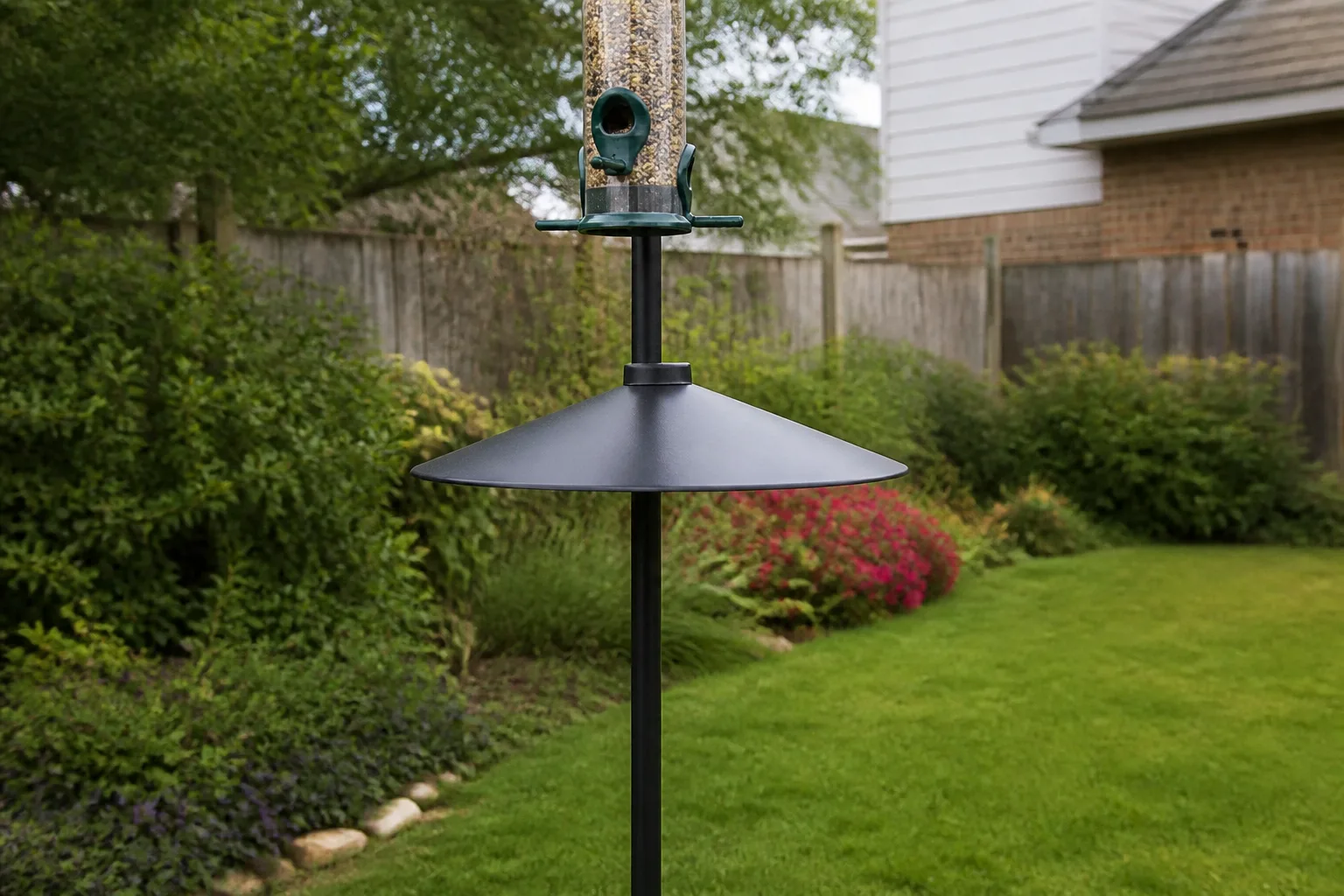
Start with placement and hardware. Move the feeder away from launch points, add a correctly fitted baffle, and sweep up seed beneath it. The City of Long Beach Animal Care Services describes caged feeders, dome-style baffles, and capsaicin-treated seed as possible ways to reduce squirrel access, while also warning against solutions that stick to or shock animals (Living With Squirrels).
If you choose hot-pepper seed, use a commercially prepared product or follow the product’s directions rather than pouring loose kitchen powder into a feeder. Keep the feeder dry so the coating does not wash off into a clump, clean spilled seed, and watch whether the birds continue feeding normally. A baffle is usually the more controllable first choice because it blocks the route instead of asking every animal to taste a deterrent.
Fruit trees, bark, and the route to the canopy
Fruit-tree damage is where cayenne most often gets overpromoted. A squirrel that can leap from a fence or neighboring tree straight into the canopy does not care much what is sprinkled at the trunk. Similarly, a spray on the ground cannot protect fruit hanging above the animal’s head.
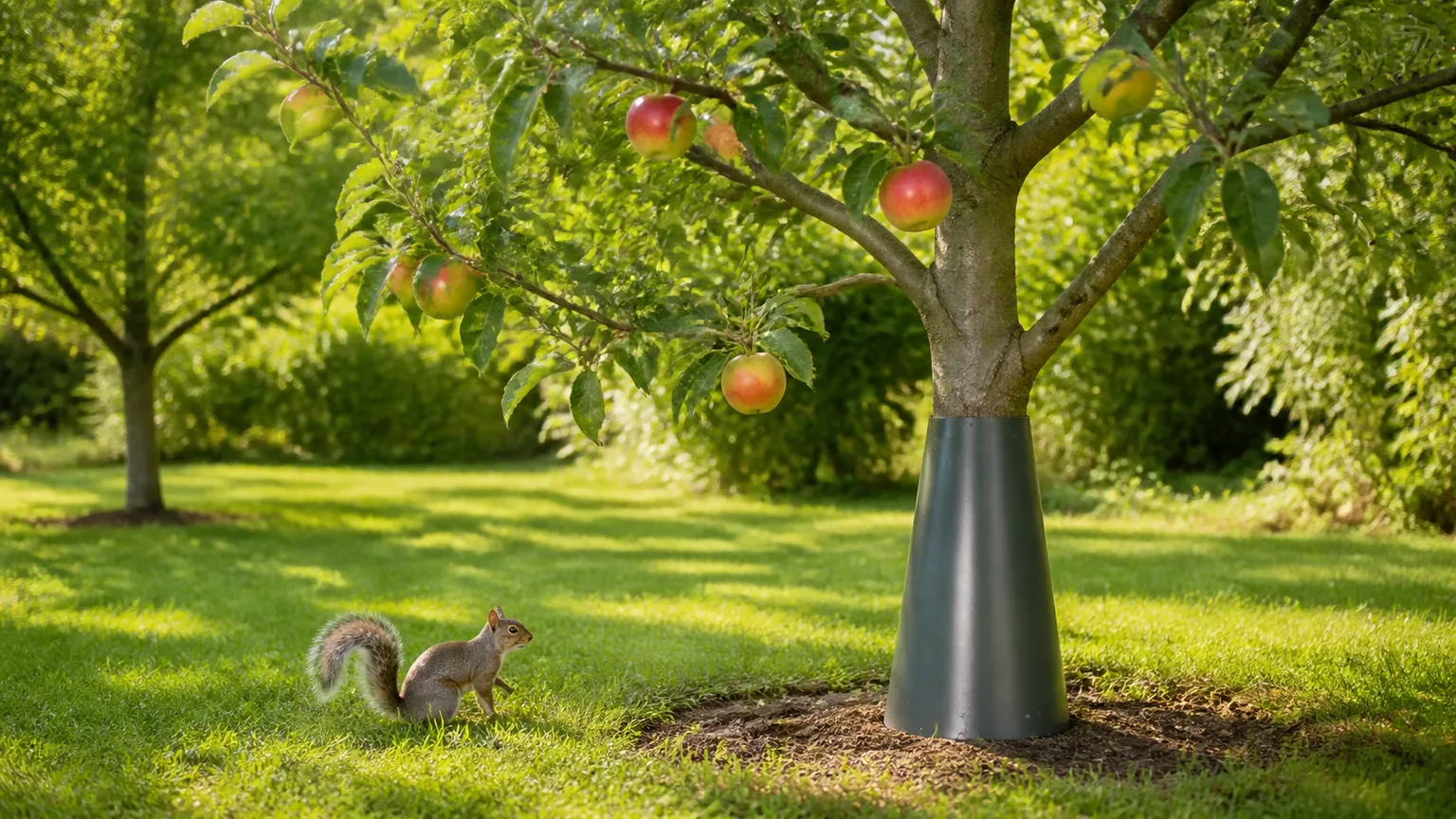
Watch the tree long enough to see whether the squirrel climbs the trunk, uses a connected branch, or approaches from a building. Then remove the easiest launch point if that can be done safely, add a smooth trunk baffle to an isolated tree, or use wildlife-safe netting over a small high-value tree. Do not prune near power lines or install devices on utility equipment; that work belongs to the utility or a qualified professional.
Penn State Extension describes exclusion as the most effective way to prevent many types of squirrel damage and discusses metal collars, feeder baffles, and tree-to-building access routes (Tree Squirrels). K-State Extension likewise recommends a broad metal collar for isolated trees and notes that branches and other structures can provide a bypass (Landscape Protection from Wildlife). Cayenne can be a temporary extra layer while a barrier is being fitted, but it is not the part that physically protects the crop.
Where cayenne fits in a humane squirrel-control plan
Think of squirrel control as a sequence rather than a shopping list:
- Confirm the culprit. Look for digging, gnaw marks, chewed fruit, feeder visits, droppings, or an entry hole. Do not assume every garden disturbance is a squirrel.
- Remove the easiest reward. Pick fallen fruit, clean seed beneath feeders, secure trash and compost, and bring pet food indoors.
- Block the specific route. Use mesh for beds, a baffle for a pole, netting for a small tree, or repairs for a building opening.
- Add a short-term cue. Cayenne, a motion-sensitive sprinkler, or a changing visual deterrent may help while the animal learns that the route is no longer profitable.
- Check the weak link. If damage continues, inspect for a jump route, mesh gap, baffle bypass, or new food source.
The International Wildlife Damage Management Council lists habitat modification, exclusion, repellents, and other control methods separately because no single tool solves every squirrel conflict (Tree Squirrel Damage Prevention and Control Methods). That layered approach is also kinder to the yard: it reduces the reason for repeated visits without turning the whole garden into a treated surface.
How to use dry cayenne with less risk
Dry cayenne is the simplest method, but it is also the easiest to misuse. Loose powder can become airborne, drift into eyes or open windows, cling to a pet’s paws, or reach flower visitors. Use it only where you can target a small area and observe the result.
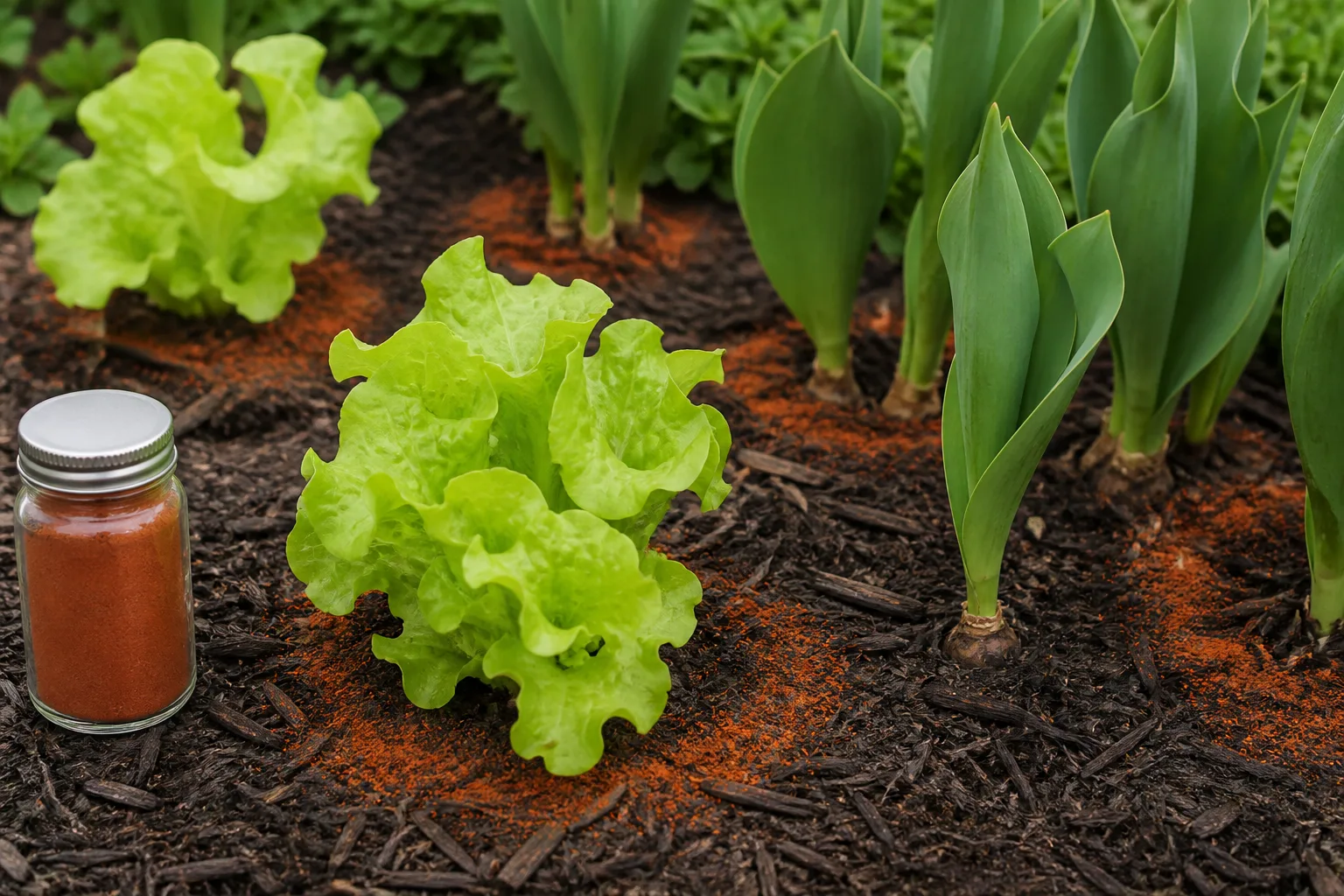
Choose a calm, dry period. Put on gloves and eye protection, and use a well-fitting mask if you are sensitive to dust. Sprinkle a thin, visible layer around the soil edge, bulb bed, container rim, or other contact zone. Do not create a thick mound, dust into the air, or apply it to a windy boundary where it can drift toward people, animals, or neighbors.
Avoid open flowers and plants that are being actively visited by bees. Keep children and pets away from freshly treated areas, especially dogs that investigate or lick soil. Wash your hands and tools after use, and store the spice where it cannot be mistaken for food that is ready to serve.
Do not treat cayenne from the pantry as automatically approved for edible crops. The powder’s heat level and purity vary, and a home mixture has no tested label rate, crop list, or harvest interval. For food plants, use a product whose label specifically allows the crop and situation, or keep the dry dust to surrounding non-edible soil and use mesh to protect the edible portion.
A small-area test for garden beds
Testing is more useful than coating an entire bed and hoping. Pick a small section with the same kind of damage as the rest of the planting, photograph it, and mark the date.
- Clean up the immediate attractant, such as a fallen fruit or spilled seed.
- Apply the light dusting only to the target contact area.
- Check the bed at roughly the same time each day for fresh digs, bites, tracks, or displaced powder.
- Reapply only after weather removes it and only while the test remains safe for people, pets, and pollinators.
If the treated patch is quiet but the untreated patch is damaged, cayenne may be helping. If both patches are damaged, the animal is likely bypassing the treatment or the food pressure is too high. If the patch is quiet only until the next rain, the limitation is durability. Stop the trial after about a week of repeated fresh damage or two weeks without a meaningful improvement; at that point, install a barrier instead of escalating the powder.
What about cayenne pepper spray?
A liquid treatment can reach stems, vertical surfaces, and low foliage more evenly than dry powder. It can also spread capsaicin beyond the spot you meant to treat, injure tender leaves when combined with soap or oil, and create a false sense that a homemade recipe is equivalent to a tested repellent.
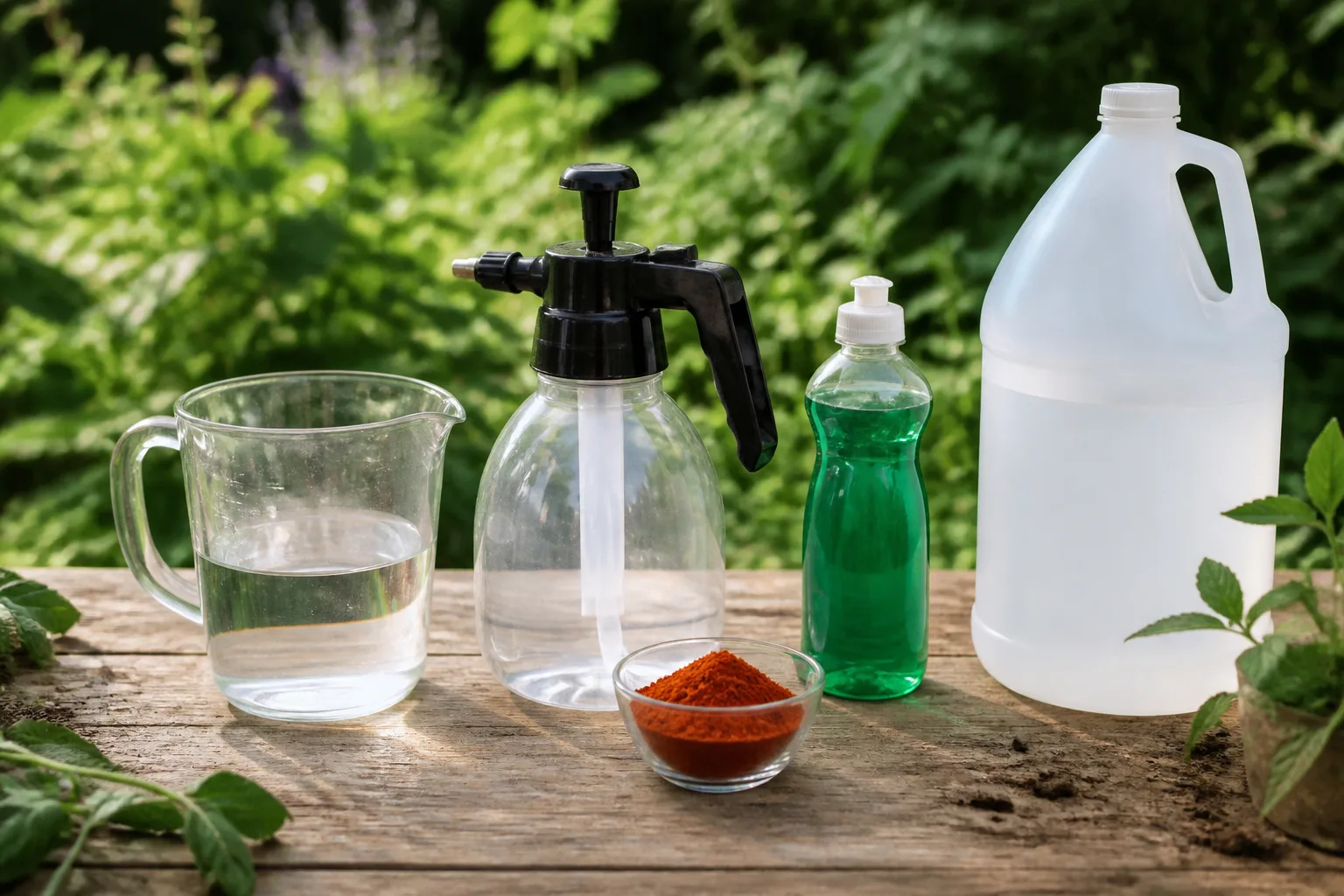
For that reason, I would not treat a pantry recipe as a universal instruction for fruit, vegetables, or ornamental plants. A mixture of cayenne, water, and dish soap may look practical, but the final capsaicin concentration, spray coverage, plant sensitivity, and wash-off behavior are uncontrolled. The University of Florida advises following labels carefully for chemical repellents because each product is labeled only for particular plant species and uses (UF/IFAS Extension).
If you use a commercial capsaicin repellent, read the entire label before mixing or spraying. Check the target animal, plant or surface, protective equipment, weather restrictions, reapplication interval, and harvest restrictions. Test a small non-flowering area first and wait to see whether the plant spots, wilts, or changes color before treating more.
Spray the route or browse height that the label permits, not every leaf in the garden. Avoid flowers, open water, feeder platforms, and areas where pets lie down. Never increase the rate because the first application did not work; if the animal is still reaching the reward, improve exclusion and remove the attractant.
Protect pets, people, birds, pollinators, and produce
Cayenne is often described as “natural,” but natural is not a safety category. The relevant question is who or what can contact the treatment and whether the use is covered by a product label.
Protect yourself first. Powder and spray can irritate eyes, skin, nose, and throat. Avoid windy application, do not rub your eyes while working, wash your hands before touching your face, and launder dusty clothing separately from kitchen towels. If a product label requires a respirator, gloves, or eye protection, follow it rather than improvising.
Protect pets and children. Keep them out of treated beds until the powder is settled and the area is no longer a likely licking or rolling spot. A dog that walks through cayenne can transfer it to its eyes or mouth. Do not put cayenne on toys, decks where children crawl, or surfaces where a pet regularly eats.
Protect birds and pollinators. Capsaicin-treated seed is used in some feeder strategies because it can discourage mammals, but that does not mean loose powder belongs in every feeder or that every bird will respond identically. Start with a baffle or cage, keep feed dry, and avoid contamination of birdbaths. Do not spray open flowers or active pollinator patches; mesh and timing are better choices when a bed is busy with bees.
Protect produce. Never assume that a homemade spray is safe to harvest simply because the ingredients came from a kitchen. If a labeled product is approved for the crop, follow its harvest interval. Otherwise, keep the treatment on non-edible surfaces, use a physical cover, and wash produce under running water before eating.
Remove the food and access loop that keeps squirrels returning
Repellents fail fastest when the yard keeps paying the squirrel. A feeder that drops seed onto the ground, ripe fruit left beneath a tree, an unsecured compost bin, and an open bag of birdseed can outweigh an unpleasant patch of mulch.
Sweep beneath feeders, use a tray that does not scatter seed widely, and move the feeder away from branches, roofs, fences, and low walls. If you keep feeding birds, let the feeder design and placement do most of the squirrel control. Penn State Extension notes that squirrels commonly raid feeders and can chew their way into them; a stable pole and baffle are more dependable than repeatedly seasoning the seed (Penn State Extension).
Harvest ripe fruit promptly and collect windfalls daily during the short period when squirrels are most interested. Pick up dropped nuts if the goal is to protect a specific bed, and keep pet food indoors. This does not make a yard wildlife-proof—and it should not—but it removes the easy reinforcement that teaches squirrels to return on schedule.
Trim only what you can safely reach and what will not harm the tree. A branch that touches a roof or neighboring tree is an access route; a healthy tree should not be heavily cut just to make a squirrel problem disappear. For tall trees, consult an arborist instead of climbing with netting or pruning tools.
When a baffle, net, or hardware cloth beats cayenne
Use a physical barrier first when the protected item is valuable, edible, or easy for a squirrel to reach.
- Bulb beds: Lay half-inch hardware cloth above the bulbs and secure it beyond the bed edges. Remove or lift it as shoots grow if the design would restrict growth.
- Containers: Cover the soil with a fitted mesh or cage that still allows water and air through. Secure it so a squirrel cannot simply flip it aside.
- Bird feeders: Use a smooth baffle or squirrel-resistant cage, create distance from launch points, and clean the ground beneath the feeder.
- Small fruit trees: Use a correctly fitted wildlife-safe net and inspect it daily for gaps, tears, or entangled animals. Mesh must be tight enough that animals cannot become looped in it.
- Isolated trunks: Use a smooth, adjustable collar or commercial baffle that cannot girdle the tree. Check it as the trunk grows and after storms.
- Buildings: Repair openings only after confirming that no squirrel is inside. A trapped animal may chew through a new barrier to escape.
The best barrier is the one that blocks the actual route. A baffle on a pole will not protect a feeder that hangs from a branch. Netting over a tree will not help if it has a gap at the ground. Hardware cloth over bulbs will not stop a squirrel that is eating fruit in the canopy. Matching the tool to the geometry is more effective than adding a stronger smell.
Avoid glue traps, poison, mothballs, shock devices, and sticky coatings on trunks or feeder poles. The wildlife-management guidance from ICWDM states that no toxicants are registered for tree-squirrel control and warns about non-target and humane concerns with some trapping methods (ICWDM). Check state and local rules before trapping or relocating a squirrel; hire a licensed wildlife professional for a building infestation or a situation involving young.
A seven-day plan for deciding whether it worked
Use a short trial so you do not keep reapplying a weak tactic indefinitely.
Day 1: Map the problem. Photograph the newest damage, note the time, and identify the reward. Is the squirrel digging, eating, climbing, or nesting? Check nearby branches, roofs, fences, feeders, trash, compost, and dropped fruit.
Day 2: Remove the easy reward. Sweep seed, pick ripe fruit, secure containers, and clear loose nesting material near the protected area. Add the smallest physical barrier that fits the problem.
Day 3: Add a light cayenne test. Treat one small, non-flowering contact zone on a calm, dry day. Keep the powder out of the air and away from pets, children, edible harvest, and open water.
Days 4–6: Watch the route. Look for fresh digs, bites, tracks, displaced mesh, or a new approach. If the animal bypasses the treated patch, do not respond by adding more spice; close the bypass.
Day 7: Decide. If damage stopped and the powder stayed in place, cayenne may be a useful temporary layer. If damage resumed after rain, the method is weather-limited. If damage continued on dry days, the barrier or food plan is the missing piece. If the animal has entered a building, stop experimenting outdoors and move to safe exclusion.
This log gives you a defensible answer for your own yard. “It seemed to work” is not enough when the weather changed, the fruit ripened, or the squirrel moved to a different plant. The goal is a repeatable reduction in damage, not a dramatic first reaction.
If the squirrel is in your attic, wall, or chimney
Cayenne is not an attic-exclusion method. Do not scatter powder into a wall, chimney, vent, or nest. It can create a contaminated indoor space without showing you whether an animal, young, or nesting material remains inside.
First identify the entry point and listen for movement. Do not seal the hole while a squirrel may be inside, especially during seasons when young may be present. The City of Long Beach advises checking for a mother and young, allowing a family to leave when possible, and hiring a professional when safe reunification or exclusion is needed (Living With Squirrels).
Keep pets and people away from the opening. Never smoke an animal out of a chimney, use poison, or reach into a dark cavity with bare hands. If there is chewed wiring, have an electrician inspect it after the animal is gone; squirrels can turn a wildlife problem into a fire risk.
Once you are sure the building is empty, close the opening with durable materials and address the route that led to it. Tree limbs near a roof, loose vent screens, and gaps under eaves can reopen the problem if only the visible hole is patched. A licensed wildlife-control professional can assess the structure, seasonal young, local laws, and humane exclusion options.
Conclusion: use cayenne as a test, not a promise
Cayenne pepper can deter squirrels, but it works best as a short-lived taste or odor interruption in a targeted area. Rain, hunger, easy food, alternate routes, and habituation can erase the effect quickly. It is most reasonable for a small, new problem while you remove attractants and install the barrier that actually blocks access.
Start with the damage: dust lightly around a bulb bed, use a baffle at a feeder, or protect a small tree with safe netting and a route-aware barrier. Treat homemade sprays cautiously, follow commercial labels on plants and crops, protect pets and pollinators, and never use cayenne as a reason to skip exclusion. If a week of observation shows continued damage, the answer is not more spice—it is a better barrier, less food reinforcement, or professional wildlife help.



