Tomato Whitefly Companion Plants Guide
Marigolds, nasturtiums, and zinnias can slow tomato whiteflies—but only if you plant them early and know each plant's job. ID signs, layout rules, and when to spray.

Brush a tomato leaf in midsummer and a cloud of tiny white insects lifts off—that flutter is usually glasshouse whitefly (Trialeurodes vaporariorum), one of the most frustrating sap-feeders on warm-season vegetables. Tomatoes are a favorite host. Left alone, whiteflies drain vigor, coat leaves in sticky honeydew, and open the door to sooty mould and virus transmission. Companion plants to protect tomatoes from whiteflies work best as an early-season prevention layer—not a substitute for scouting and sprays once populations explode.
The three flowers gardeners reach for most are French marigolds, nasturtiums, and zinnias. Each plays a different job: repellent chemistry, trap-crop distraction, and predator support. Used together with sensible spacing and a clear IPM ladder, they can slow whitefly buildup enough that you harvest full trusses instead of wrestling insects every August afternoon.
Why Whiteflies Are a Tomato Harvest Problem
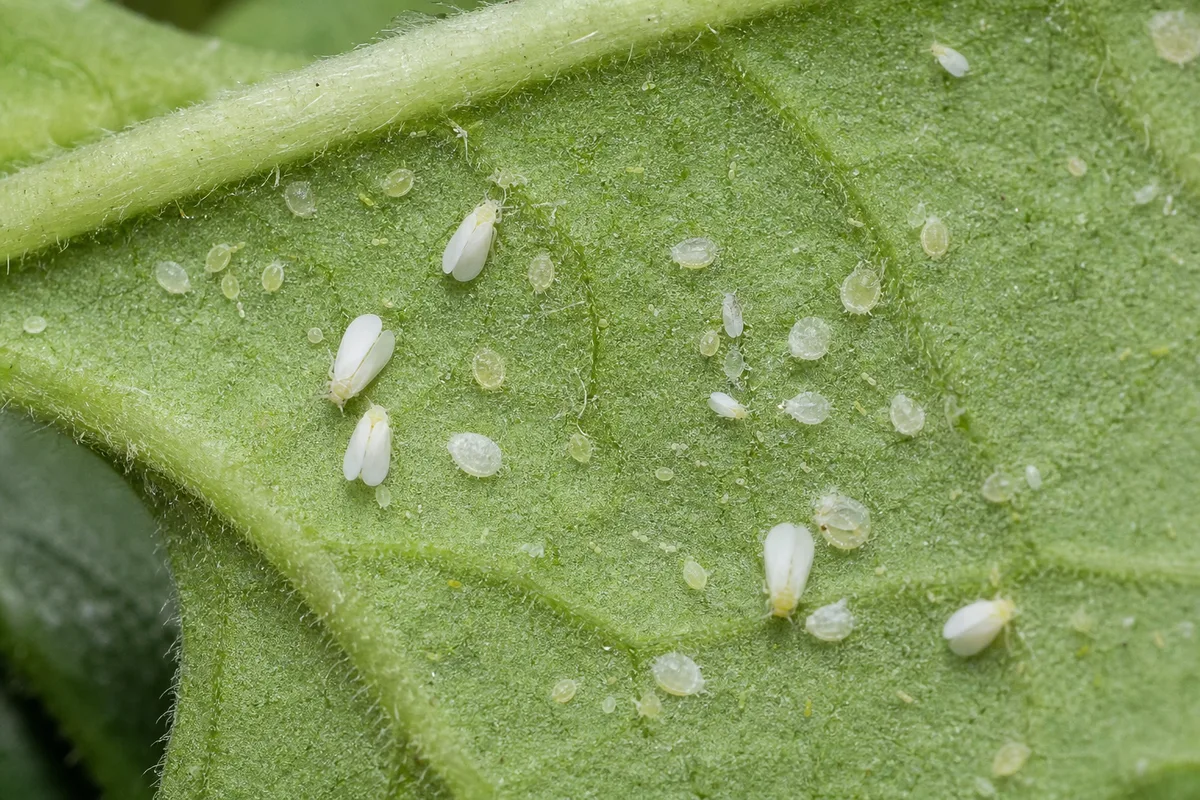
Whiteflies are not flies—they are sap-sucking relatives of aphids and scale. Adults are about 1.5 mm long with powdery white wings. They feed on leaf undersides, reproduce fast in heat, and keep all life stages on the plant at once: eggs, nymphs, pupae, and adults. That mixed population is why one spray rarely clears a bed.
The Royal Horticultural Society notes that glasshouse whitefly excretes honeydew, a sugary film that fuels black sooty moulds on foliage and fruit. Sooty growth blocks light, so even moderate feeding can cut photosynthesis and fruit quality. On outdoor tomatoes in warm summers, the same species can move from greenhouse stock, purchased transplants, or neighboring ornamentals into your vegetable row.
Population math is the real threat. A single female can lay hundreds of eggs over her life, and the cycle can complete in roughly three weeks at room-temperature warmth—similar timing extension guides cite for indoor whitefly (Missouri Botanical Garden whitefly guidance). A few adults in June can become thousands by late July if nights stay warm and no control runs in parallel.
Glasshouse Whitefly vs Other Tomato Pests
Do not confuse every white speck with whitefly. Aphid cast skins on the upper leaf surface look pale but do not fly when disturbed. Powdery mildew forms flat white patches on tops of leaves without insects underneath. Tomato yellow leaf curl virus causes upward cupping and marginal yellowing with severe stunting—a plant looks “bonsai,” not merely dusty (UC IPM tomato yellow leaf curl).
Two whitefly groups matter on tomatoes:
- Glasshouse whitefly (T. vaporariorum) — classic greenhouse and warm-summer outdoor pest; primary target of marigold-limonene research.
- Sweetpotato / silverleaf whitefly (Bemisia tabaci group) — major vector of tomato yellow leaf curl virus (TYLCV) in subtropical and Mediterranean climates, including parts of California where the virus is established.
Companion flowers help both situations by reducing vector pressure, but TYLCV management still requires resistant varieties, clean transplants, and whitefly suppression—flowers alone cannot cure an infected plant.
Signs You Have Whiteflies (Not Aphids or Leaf Curl)
The fastest field test is disturbance. Gently shake or brush a stem. Whiteflies fly up in a cloud and resettle slowly. Aphids usually stay put. Look at leaf undersides with backlight: flat oval nymphs, waxy white scales, and sometimes a faint spiral of eggs.
Leaf symptoms build gradually:
- Yellowing or pale mottling on upper surfaces from sap loss
- Sticky honeydew on leaves, stems, or fruit
- Black or brown sooty mould on honeydew-coated tissue
- Stunted new growth and smaller fruit when pressure stays high for weeks
Outdoor tomatoes in cool nights may show fewer adults than a greenhouse bench, but eggs and nymphs still accumulate on undersides where sprays miss. Scout weekly from transplant date—not only when you see flying adults.
When Companion Planting Alone Won’t Fix the Bed
Companion planting is prevention and partial suppression, not erasure. Large-scale glasshouse research found that French marigolds intercropped from the start significantly slowed glasshouse whitefly population growth on tomato, with airborne limonene identified as a key repellent volatile (companion planting with French marigolds study). The same research line showed that introducing marigolds after a heavy infestation was already established had limited benefit—and in one emergency trial, marigold intercropping did not outperform controls on settling adults while limonene dispensers performed better.
Translation for home beds: if you are already coated in nymphs by late August, add companions for next year’s rotation and run soap, traps, and removal now. Penn State Master Gardener material on good-neighbors companion planting frames polyculture as diversity that supports ecological balance—not a single swap that replaces IPM.
How Companion Planting Actually Helps Against Whiteflies
Companion planting here means growing a second species beside tomatoes because it changes pest behavior, supports predators, or uses space the tomato does not need. For whiteflies, the useful mechanisms are:
- Push — repellent scent (marigold limonene) makes tomato leaves less attractive.
- Pull / trap — alternative hosts concentrate pests where you can monitor or remove them (nasturtiums for aphids; partial whitefly effect).
- Predator support — nectar-rich blooms feed wasps and hoverflies that hunt soft-bodied pests (zinnias).
No flower does all three perfectly. The winning combo is marigold border + nasturtium skirt + zinnia clump at the bed edge, with tomatoes trellised in the center so companions do not steal sun from fruiting trusses.
Prevention vs Established Infestations
| Stage | What companions can do | What you must add |
|---|---|---|
| Transplant through early fruit set | Slow whitefly colonization; confuse settlers | Weekly underside checks; yellow traps as monitors |
| Moderate infestation (nymphs on 20–30% of leaves) | Marginal help if marigolds already flowering | Insecticidal soap or oil on schedule; prune worst leaves |
| Heavy infestation (sticky leaves, sooty mould, flying clouds) | Little immediate effect | Soap/oil cycles; row cover on young replacements; rogue virus suspects |
Treat companions like row-cover insurance: invaluable if installed early, frustrating if you expect them to rescue a neglected crop.
Lay Out Your Tomato Bed Before You Plant Companions
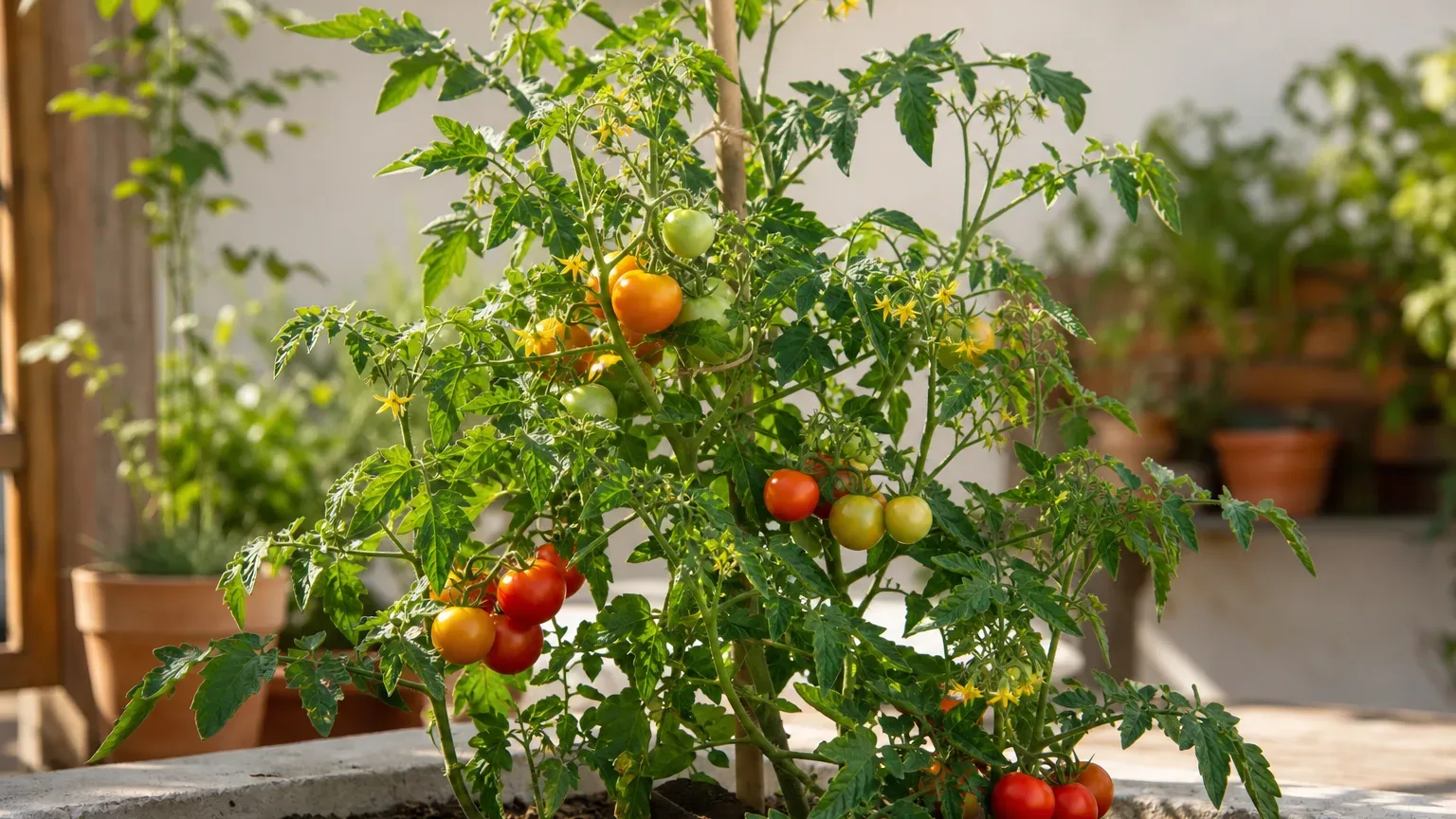
Tomatoes want full sun, steady moisture, and airflow. Companions that sprawl or bloom heavily can shade lower tomato leaves if you pack them tight against main stems—raising humidity and helping whiteflies, not hurting them.
Trellis or stake tomatoes so the interior canopy stays open. Our tomato hub covers variety-specific spacing; as a rule, leave 18–24 inches between staked plants in a row and 3–4 feet between rows. Place French marigolds every 18–24 inches along the row edge or between plants—not a single ring ten feet away. Nasturtiums can spill outside the row on the sunniest side. Zinnias belong at row ends or the north side of a north–south row so they do not cast afternoon shade on fruit.
If you also grow cucurbits, many of the same flowers appear in companion planting for cucumbers—but do not reuse last year’s cucurbit bed for tomatoes without rotation. Shared whitefly hosts and virus risk make dirty overlap a bad trade.
Spacing for Intercropping and Trap Crops
Marigolds: One French marigold (Tagetes patula) per tomato is a practical minimum in research-scale intercropping. Home gardeners often plant two marigolds per tomato on the south or west edge where sun is strongest. Keep marigold foliage below the lowest tomato fruit cluster so limonene volatiles drift through the canopy without blocking trusses.
Nasturtiums: Sow 2–3 seeds at each row corner and every 4–6 feet along the outer edge. Let vines run on bare soil or mulch outside the tomato root zone. Pull or cut back if they climb stems.
Zinnias: Group 3–5 plants at row ends or in a 2-foot cluster beyond the drip line. Tall Zinnia elegans cultivars can reach 3 feet—plant them where they will not lean across tomato cages.
Water companions on the same schedule as tomatoes early season, then slightly reduce nasturtium water once vines cover soil—they tolerate drier edge conditions that tomatoes dislike.
Marigolds — The Limonene Repellent Border
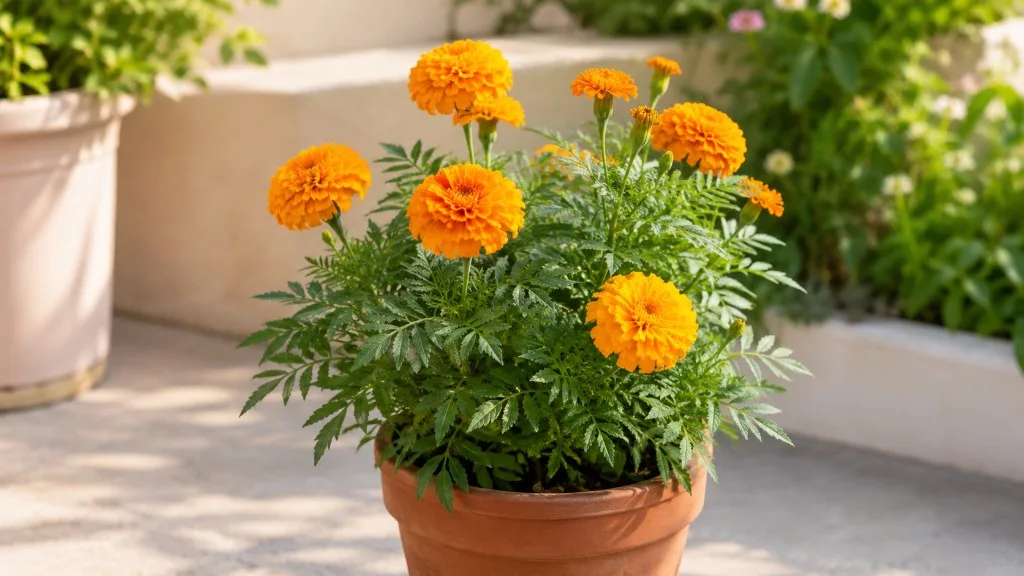
French marigolds (Tagetes patula) are the strongest evidence-backed whitefly companion for tomatoes. Gardeners have paired them for decades; glasshouse trials now show significantly lower whitefly numbers on tomato when marigolds are intercropped from the beginning of the season, with repellent effects linked to airborne limonene released from marigold flowers and foliage (PMC marigold–tomato whitefly study).
Limonene is a volatile organic compound many insects avoid. In choice tests, tomato seedlings intercropped with flowering marigolds received fewer settling adults and fewer eggs than tomatoes alone. Root exudate sharing did not explain the effect—scent in the air did.
For home beds, that means flowering marigolds matter. A late planting of tiny seedlings without blooms delivers less limonene. Start marigolds indoors 4–6 weeks before tomatoes or buy budded transplants at the same time you buy tomatoes. Tuck plants into the same bed, not a distant flower patch the wind never crosses.
Home for the Harvest—a long-running vegetable gardening resource—lists marigolds among top tomato companions for whitefly and nematode pressure, matching what UK horticulture trials measured in controlled glasshouses.
French Marigolds vs African Marigolds
Not every marigold is equal for this job.
- French marigolds (T. patula) — compact, resinous, heavy limonene producer; best match to published whitefly trials.
- African marigolds (T. erecta) — taller, larger flowers; still aromatic but bred more for show height than dense intercropping.
- Signet marigolds (T. tenuifolia) — edible, fine-leaved; useful in herb knots but fewer large marigold trials tie them to whitefly push.
Choose single-flower French types in orange or yellow—they bloom steadily and fit under tomato cages. Deadheading extends limonene production through peak whitefly months. If marigolds get leggy, pinch tops to force branching rather than letting one spike shade neighboring tomato leaves.
Nasturtiums — Trap Crop and Living Mulch
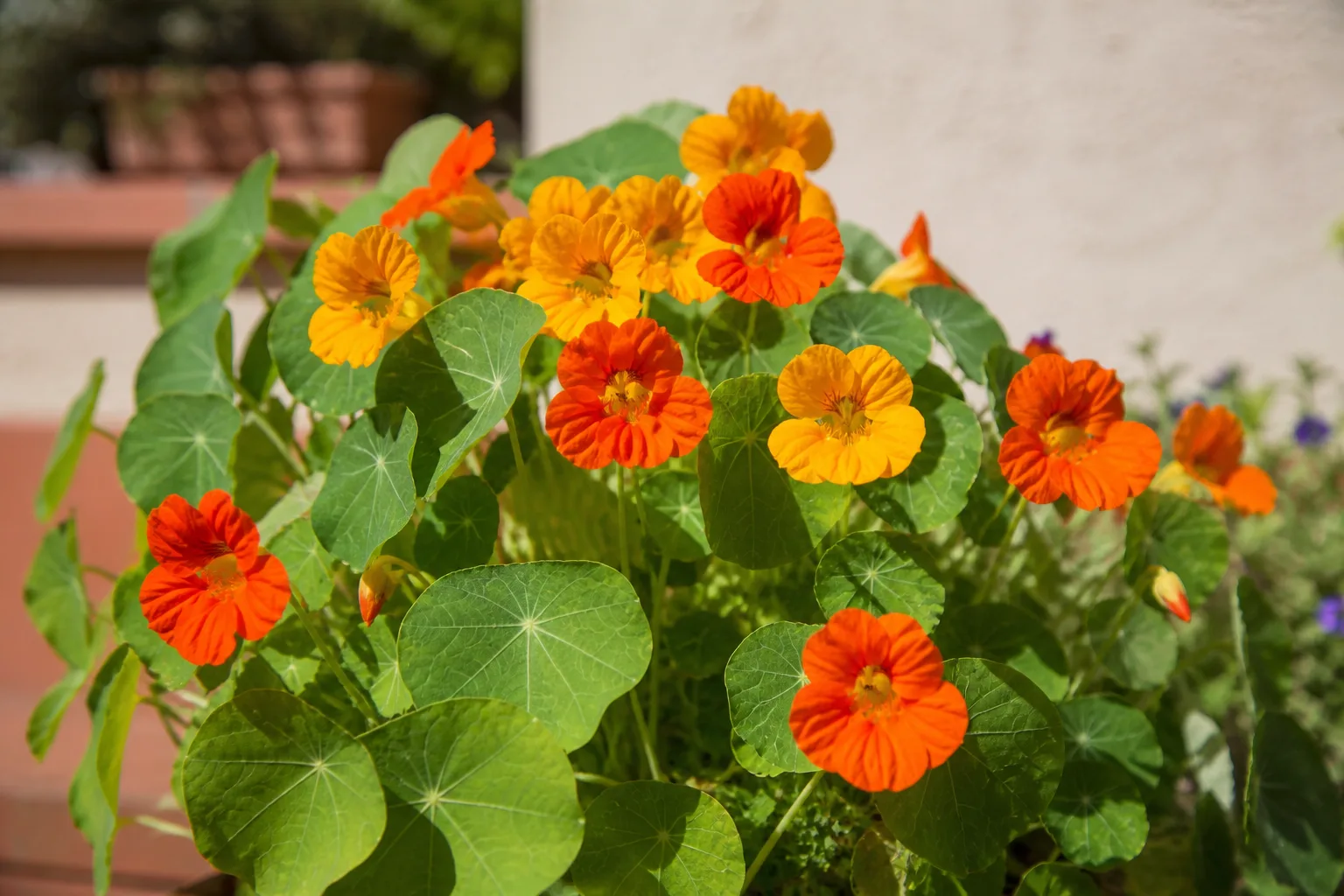
Nasturtiums (Tropaeolum majus) are the classic trap crop in tomato rows. They attract aphids aggressively—drawing colonies off tomato stems so you can hose or remove one sacrificial plant instead of the crop. Many gardeners also report fewer whiteflies on tomatoes when nasturtiums edge the bed, though evidence is more anecdotal than marigold trials.
Nasturtiums release peppery-scented compounds from leaves and roots that may confuse some pests. They also cover bare soil, keeping summer splash off lower tomato leaves and hosting spiders and ground beetles that patrol at night. Home for the Harvest recommends nasturtiums specifically alongside tomatoes, parsley, and alliums.
The honest caveat: trap crops concentrate pests on the trap plant. That only helps if you manage the trap. A nasturtium covered in aphids still feeds thousands of insects that can walk back to tomatoes when the trap collapses. Skeptical horticulturists note trap crops can raise local pest totals if left unmanaged—valid if you plant nasturtiums and never look at them again.
Managing a Nasturtium Full of Aphids
Use nasturtiums as active tools, not passive decoration:
- Inspect trap plants twice weekly when tomatoes set fruit.
- When aphid clusters cover more than a third of a nasturtium, spray the nasturtium with a hard water jet or cut the plant at soil line and bag it.
- Do not compost infested trap material in an open pile beside the garden.
- Sow replacement seeds at the same spot within a week so the trap keeps working through fall.
For whiteflies specifically, nasturtiums are weaker than marigolds—but the living mulch and aphid-trap roles still reduce overall sap-feeder pressure on the row.
Zinnias — Predator Magnets Beside Your Tomatoes
Zinnias (Zinnia elegans) do not repel whiteflies. They help by feeding beneficial insects that hunt whitefly nymphs and other soft-bodied pests. Open zinnia blooms supply nectar to parasitic wasps, hoverflies, and lady beetles—the same guild that keeps aphid explosions in check.
That is still valuable. Whitefly control fails when predators starve between tomato flushes. A zinnia clump blooming from July through September gives beneficials a calorie source at the row edge. Expert gardeners often pair tomatoes with zinnias for pollinator diversity and wasp support even though the headline benefit is not direct repellency.
Plant single-flower or semi-double zinnias—doubles can hide nectar from short-tongued beneficials. Heights from 18–36 inches work beside trellised tomatoes without blocking sun. If you grow zinnias for cut flowers, stagger sowings so fresh blooms open as whitefly pressure peaks.

Beneficial Wasps and Hoverflies Zinnias Support
Hoverfly larvae eat aphids and some soft scales; adults need pollen and nectar. Parasitic wasps in the Encarsia group attack whitefly nymphs in greenhouse systems and can contribute outdoors where populations overlap. Zinnias alone will not recruit enough wasps to clear a heavy infestation—but on a prevention-first bed with marigolds already slowing settlement, predator support closes the gap.
Avoid broad-spectrum sprays on open zinnia blooms during midday when wasps forage. If you must spray tomatoes for whiteflies, target dawn or dusk, hit undersides, and accept that you may need three to five repeat applications because eggs and pupae survive each pass (see whitefly lifecycle on houseplants for the same staggered-schedule logic).
When Whiteflies Are Already Established — IPM That Works
Companion flowers are the first layer. When nymphs coat undersides or honeydew drips off trusses, add controls that contact insects directly.
Start here:
- Prune the worst two or three leaves per plant—bag and trash, do not shake over soil.
- Blast undersides with a sharp water jet in early morning; repeat every 48 hours for three cycles to knock nymphs off before they resettle.
- Hang yellow sticky traps above the row, not inside foliage. Traps catch adults but miss nymphs; use them as monitors and adult reducers, not sole treatment. Replace when coated or every 2–3 weeks.
- Spray insecticidal soap on leaf undersides when nymphs persist. Colorado State University Extension emphasizes complete coverage of soft-bodied stages and repeat applications every 4–7 days while pests are active—usually at least three to four rounds for aphids, mites, or whitefly nymphs because new eggs hatch on staggered schedules. Our how to use insecticidal soap guide covers dilution, heat-stress cautions, and pollinator timing.
Neem oil or horticultural oil can follow soap if nymphs remain after two soap cycles—see using neem oil as an organic insecticide for tomato-safe intervals and bloom-time limits.
Row cover on new transplants for the first 3–4 weeks blocks flying adults during the most vulnerable seedling stage. Remove cover when flowers open unless you are growing a parthenocarpic type.
Insecticidal Soap, Yellow Traps, and Row Cover
Soap kills only what it wets today—no residual. That is why schedule beats strength:
- Mix per label; never exceed concentration hoping for a one-shot kill.
- Spray cool mornings; soap plus hot sun can spot tender tomato leaves.
- Target undersides where nymphs feed; adults fly away but leave eggs behind.
- Stop if leaf burn appears; switch to water-blast and traps for a week before resuming at half strength if the label allows.
Yellow traps work because whiteflies orient to yellow. Place one trap per 4–6 feet of row, 6–12 inches above plant tops. Too many traps in a small bed can pull adults from outside the garden—acceptable when you are monitoring, risky if traps are your only tool.
Tomato Yellow Leaf Curl Virus and Bemisia Whiteflies
Where TYLCV occurs, whitefly management is virus management. UC IPM recommends resistant varieties, virus-free transplants, whitefly IPM, weed control, and roguing infected plants when incidence is low. TYLCV is spread primarily by Bemisia tabaci whiteflies—not always the same species as glasshouse whitefly, but the scouting and suppression steps overlap.
If a stunted tomato shows severe upward leaf curl, marginal yellowing, and flower drop without heavy honeydew, suspect virus—not soap deficiency. Pull and bag the plant; do not compost. Plant TYLCV-resistant varieties next season and keep marigold–nasturtium–zinnia prevention running from transplant day.
Our tomato diseases guide covers additional leaf spots and wilts that mimic pest stress.
Conclusion
Companion plants to protect tomatoes from whiteflies work when you match each flower to a job and start early. French marigolds supply limonene-backed push repellency proven in glasshouse trials. Nasturtiums trap aphids and skirt the row as living mulch—if you prune or remove traps before pests spill back. Zinnias recruit predators without repelling whiteflies directly.
Plant all three from transplant week, keep tomatoes trellised and airy, and scout undersides before you see flying adults. When populations jump, soap, water blast, traps, and rogue infected plants finish what flowers cannot. Next year’s clean start is cheaper than fighting August clouds over every truss.



