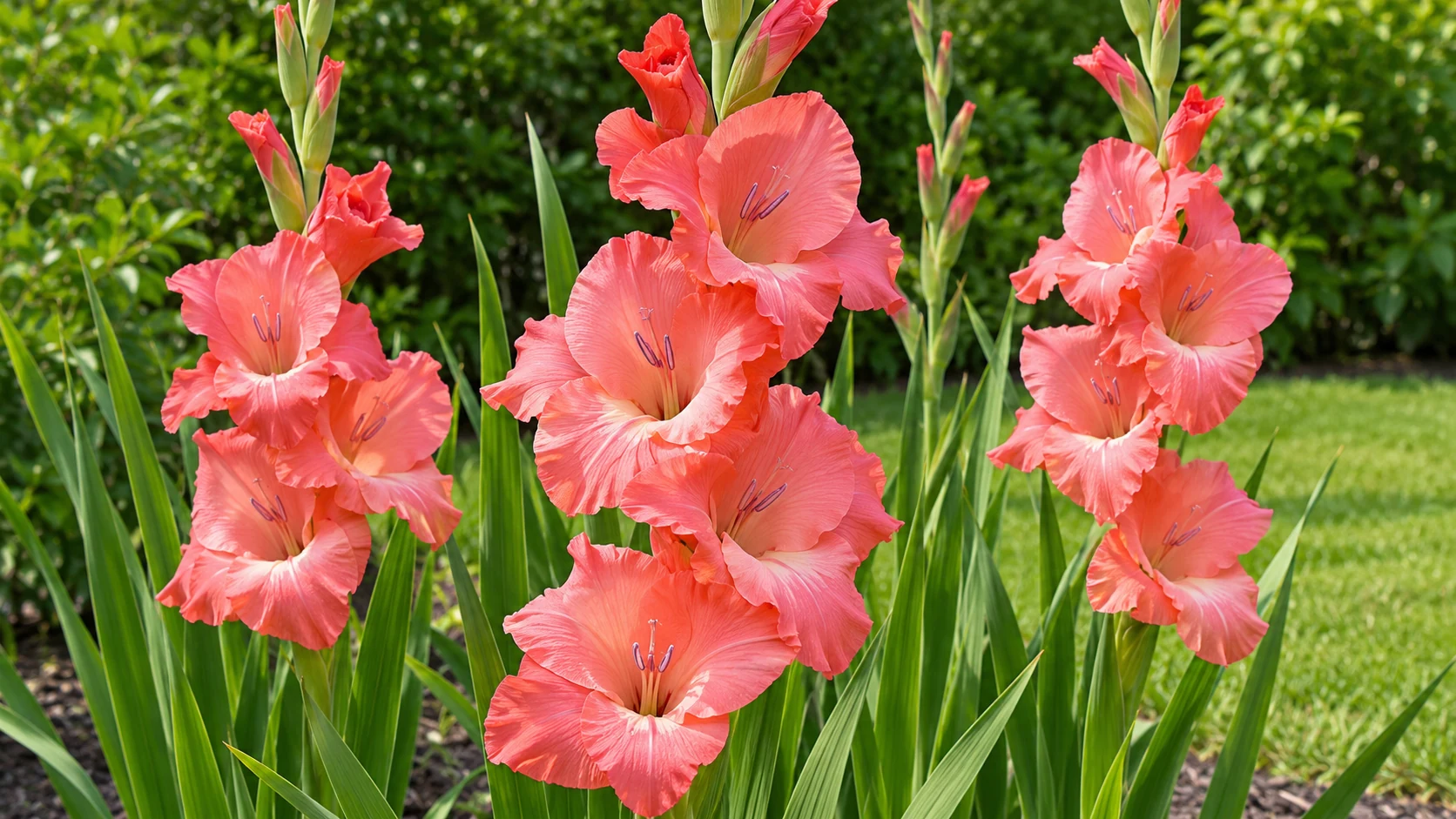
Gladiolus grows from a corm, a swollen underground stem that stores food. Corms look bulb-like but are structurally different from true bulbs.
Does gladiolus need full sun?
Yes. A sunny, open place gives most garden gladioli the best chance to produce strong flower spikes. Tall cultivars also benefit from shelter from strong winds or a support stake.
How often should I water gladiolus?
Water during dry periods while the leaves and flower spikes are growing. Check the soil and rainfall instead of following a fixed schedule, and keep the bed or pot well drained so the corm does not stay waterlogged.
Do gladiolus corms need to be dug up for winter?
It depends on the species or cultivar and your winter conditions. Some hardy gladioli can stay in the ground, while many popular garden hybrids need to be lifted, dried, and stored frost-free in cold climates.
Are gladiolus plants toxic to pets?
ASPCA lists Gladiolus species as toxic to cats, dogs, and horses, with the highest toxin concentration in the corms. Keep corms and plant material away from pets and contact a veterinarian if ingestion occurs.
What light does Gladiolus need?
Gladiolus needs bright, indirect light for steady indoor growth.
How do I propagate Gladiolus?
Propagate Gladiolus from healthy stem or root divisions during active growth.
Written by Sai AnanthLead content writer at LeafyPixels. B.Pharmacy graduate from Andhra University with a background in pharmacognosy, turned indoor gardening writer after a long-time plant hobby became a research-led resource for home growers.View Sai Ananth's profile · Reviewed by LeafyPixels Review Board
This Gladiolus problems problem guide was researched and written by Sai AnanthLead content writer at LeafyPixels. B.Pharmacy graduate from Andhra University with a background in pharmacognosy, turned indoor gardening writer after a long-time plant hobby became a research-led resource for home growers.View Sai Ananth's profile. Problems symptoms on Gladiolus, lookalike causes, and step-by-step fixes are cross-checked against extension pest, disease, and care references before publication.
We prioritize sources that hold up under scrutiny:
University cooperative extension bulletins and fact sheets (Penn State, Clemson, UMD, NC State, and similar programs)
Botanical garden and horticultural society publications
Peer-reviewed plant science and veterinary toxicology references where pet safety matters (including ASPCA Animal Poison Control)
Established reference works on indoor plant culture
The LeafyPixels editorial team then reviews the draft for clarity, step-by-step usefulness, and fit with real apartment and home conditions-not ideal greenhouse setups. When guidance changes materially, we update the page and note the revision date.
Better Homes & Gardens — How to Plant and Grow Gladiolus (n.d.) Garden hybrid size range, full sun and drainage, spring planting, staggered bloom timing, cutting, and corm care. [Online]. Available at: https://www.bhg.com/gardening/plant-dictionary/bulb/gladiolus/ (Accessed: 1 March 2024).
NC State Extension Gardener Plant Toolbox — Gladiolus (n.d.) Genus identity, family, native range, corm habit, flower form, sunlight, soil, moisture, winter hardiness variation, and garden pests and diseases. [Online]. Available at: https://plants.ces.ncsu.edu/plants/gladiolus/ (Accessed: 1 March 2024).
Royal Horticultural Society — How to Grow Gladioli (n.d.) Species and hybrid hardiness differences, planting and spacing, sunny sheltered sites, soil and watering, corm lifting and storage, and division. [Online]. Available at: https://www.rhs.org.uk/plants/gladioli/growing-guide (Accessed: 1 March 2024).