9 Feng Shui Money Plants: Types, Care, and Placement
Learn the nine houseplants most often called feng shui money plants, how to tell them apart, where to place them, and which are safe for pets.
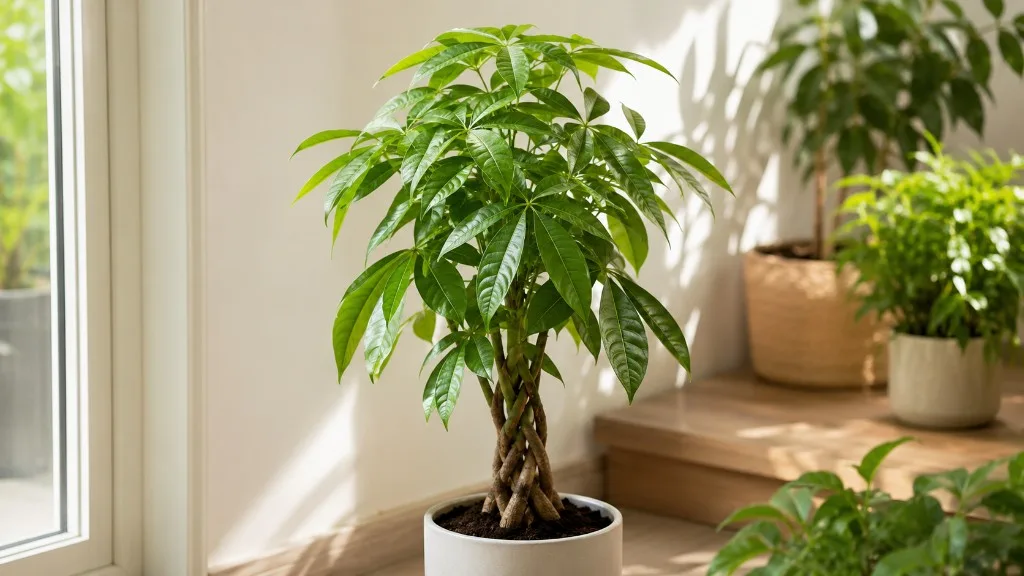
Walk into almost any plant shop and you will hear “money plant” applied to a pilea, a pothos, a jade, and a braided Pachira within ten minutes. In feng shui, the label matters less than what the plant looks like, how healthy it stays in your home, and where you can place it without fighting your room’s light and humidity. The nine species below are the ones most often sold or recommended as feng shui money plants because of coin-shaped leaves, upward growth, or a long symbolic tie to prosperity—not because they share one botanical family.
What “Money Plant” Actually Means (and Why the Name Confuses Everyone)
A feng shui money plant is not a single species. It is usually a houseplant chosen for wealth-related symbolism: round leaves that resemble coins, steady green growth, braided trunks that suggest interconnection, or a cultural association with luck and abundance. Nurseries reuse the nickname across unrelated genera, which is why two pots labeled “money plant” can need opposite watering schedules.
Botanical names vs. feng shui nicknames
Before you buy, write down the botanical name on the tag. Common names overlap constantly. “Money tree” might mean Pachira aquatica in a garden center and Crassula ovata in an older houseplant book. “Money plant” in India often refers to pothos (Epipremnum aureum), while “Chinese money plant” almost always means Pilea peperomioides. Feng shui practice cares about the plant’s form and your intention, but your success still depends on giving the right species the right light and water.
| Common feng shui label | Likely botanical name | Coin-like or symbolic trait |
|---|---|---|
| Chinese money plant | Pilea peperomioides | Round, coin-shaped leaves |
| Jade / money tree (succulent) | Crassula ovata | Thick, jade-green coin leaves |
| Money tree (braided) | Pachira aquatica | Five-lobed leaves, braided stems |
| Golden / marble queen money plant | Epipremnum aureum cultivars | Trailing growth, easy abundance metaphor |
| Swiss cheese money plant | Monstera species | Large fenestrated leaves, upward energy |
| Silver money plant | Scindapsus pictus | Silvery leaf patterns |
| Silver dollar vine | Xerosicyos danguyi | Small round succulent leaves |
| Lucky bamboo | Dracaena sanderiana | Bamboo-like stems, luck symbolism |
Why Houseplants Show Up in Feng Shui Practice
Feng shui treats the home as a system of energy flow. Living plants are popular adjustments (sometimes called cures) because they reintroduce nature into indoor spaces, add movement and color, and connect you to care routines that slow down anxious scrolling and rushed evenings. That is the practical side. The symbolic side is where “money plants” enter the conversation.
Wood element, living qi, and symbolic leaf shapes
In five-element theory, healthy plants represent the wood element: growth, flexibility, and renewal. Practitioners often describe vibrant foliage as supporting lively qi—the sense that a room feels awake rather than stale. Round leaves read as coins; upward stems read as rising fortune; easy propagators like pilea read as abundance that spreads when shared.
None of this replaces horticulture. The Royal Horticultural Society’s houseplant guidance is blunt in the right way: position plants for actual light, temperature, water, and humidity, not decoration alone (RHS houseplant growing guide). A feng shui money plant in a dark corner will yellow, drop leaves, and work against the fresh-energy goal you wanted. Plant health comes first; symbolism second.
How to Choose the Right Feng Shui Money Plant for Your Home
Start with your room, not the bagua map. Note the brightest window, whether you tend to overwater, whether pets chew leaves, and whether you want a tabletop plant or a floor specimen. Then pick the species that will stay healthy there. After that, choose a placement that supports your intention—office desk for career focus, wealth corner for abundance themes, or a bright shelf simply because the plant needs it.
Match the plant to light, humidity, and your room first
| Your home | Strong feng shui money plant matches | Non-negotiable care |
|---|---|---|
| Bright east or south window | Jade, silver dollar vine, pilea | Let succulents dry between waterings |
| Bright indirect light, average humidity | Money tree, monstera, marble queen pothos | Drainage and stable temperatures |
| Lower light hallway or office | Golden pothos, silver satin | Avoid direct sun; do not overwater |
| Desk with indirect light | Lucky bamboo, small pilea | Use appropriate water for dracaena |
| Pet-free vs. pet household | Changes the list entirely | Check ASPCA by botanical name |
If you want one starting point for an easy, bright room, golden pothos tolerates a wide range of conditions. If you want the classic braided look, choose Pachira aquatica. If you love round leaves and sharing cuttings, choose pilea.
Pilea Peperomioides (Chinese Money Plant)
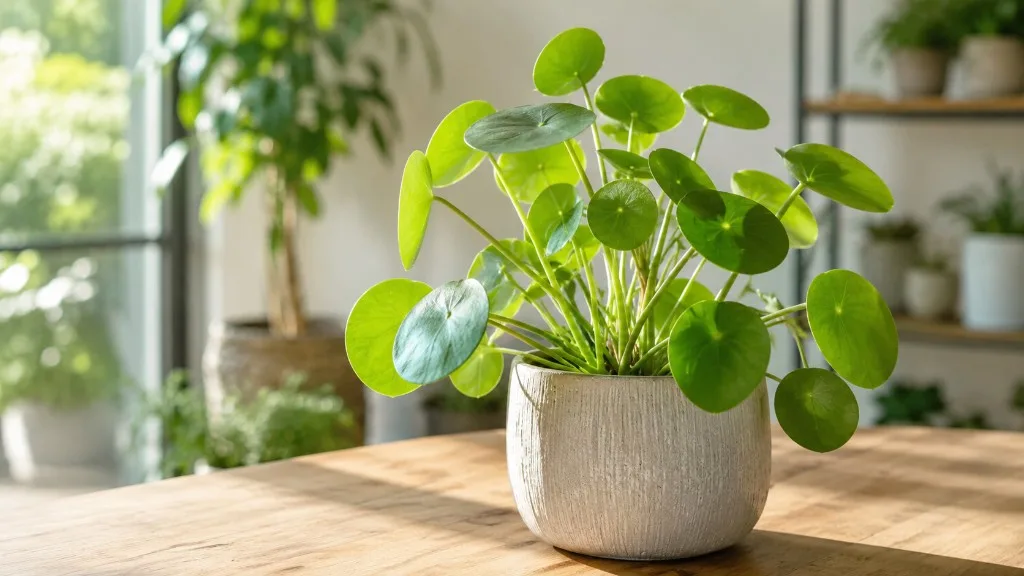
Pilea peperomioides is the plant most clearly tied to the Chinese money plant name. The RHS lists it with common names Chinese money plant and coin plant (RHS pilea profile); its glossy, pancake-shaped leaves on long petioles are the visual reason it became a feng shui favorite. It suggests coins and sharing—pilea produces offsets (“pups”) you can pot up or give away, which fits prosperity narratives about circulating abundance rather than hoarding it.
Indoors, pilea wants bright indirect light and a well-draining mix. It tolerates partial shade but becomes leggy and sparse in dim rooms. Water when the top inch of soil dries; soggy soil causes collapsed stems fast. Rotate the pot weekly so leaves stack evenly. For deeper care, see the pilea peperomioides hub.
In feng shui, pilea works well on a desk, shelf, or wealth-corner table where it receives enough light. Sharing pups with friends is a small ritual that matches the plant’s symbolism—generosity as part of prosperity practice.
Jade Plant (Crassula ovata)
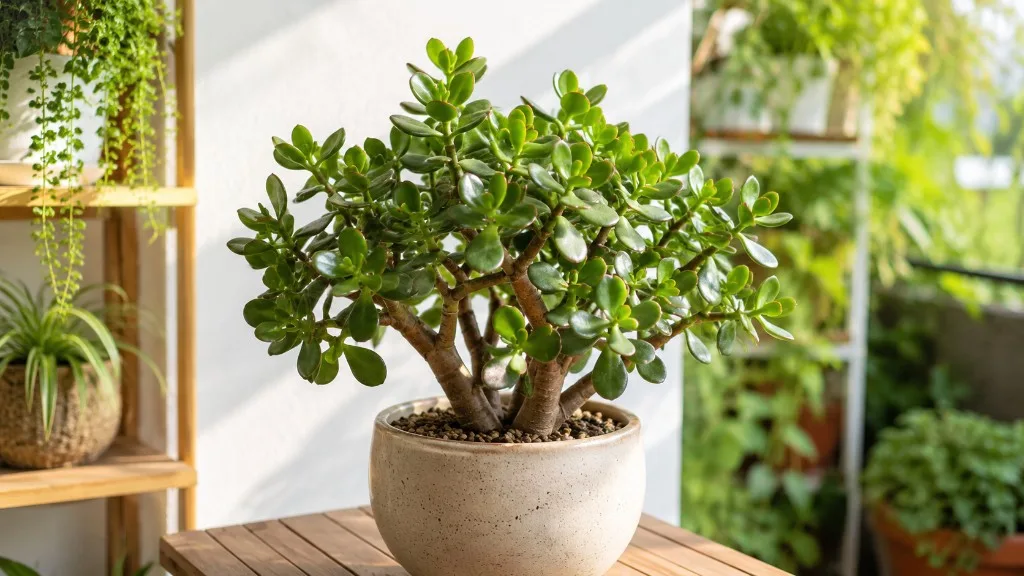
The jade plant (Crassula ovata, sometimes still sold as Crassula argentea) is another succulent sold as a money tree or money plant. Thick, oval, jade-green leaves resemble coins and precious stone. Slow, steady growth fits stories about wealth accumulated over time rather than overnight luck.
Jade needs strong light—a sunny south or west window is ideal—and infrequent watering. Let the potting mix dry well between drinks; winter rest means even less water. A leggy, pale jade is asking for more light, not more fertilizer. The ASPCA lists jade plant as toxic to dogs, cats, and horses, with vomiting and depression among possible signs if ingested (ASPCA jade plant).
Place jade where it can see the sky: a bright office windowsill, a sunlit wealth corner, or a conservatory shelf. In feng shui, jade is often linked to long-term stability and the precious jade stone’s luck associations. Keep it out of reach if pets nibble plants.
Money Tree (Pachira aquatica)
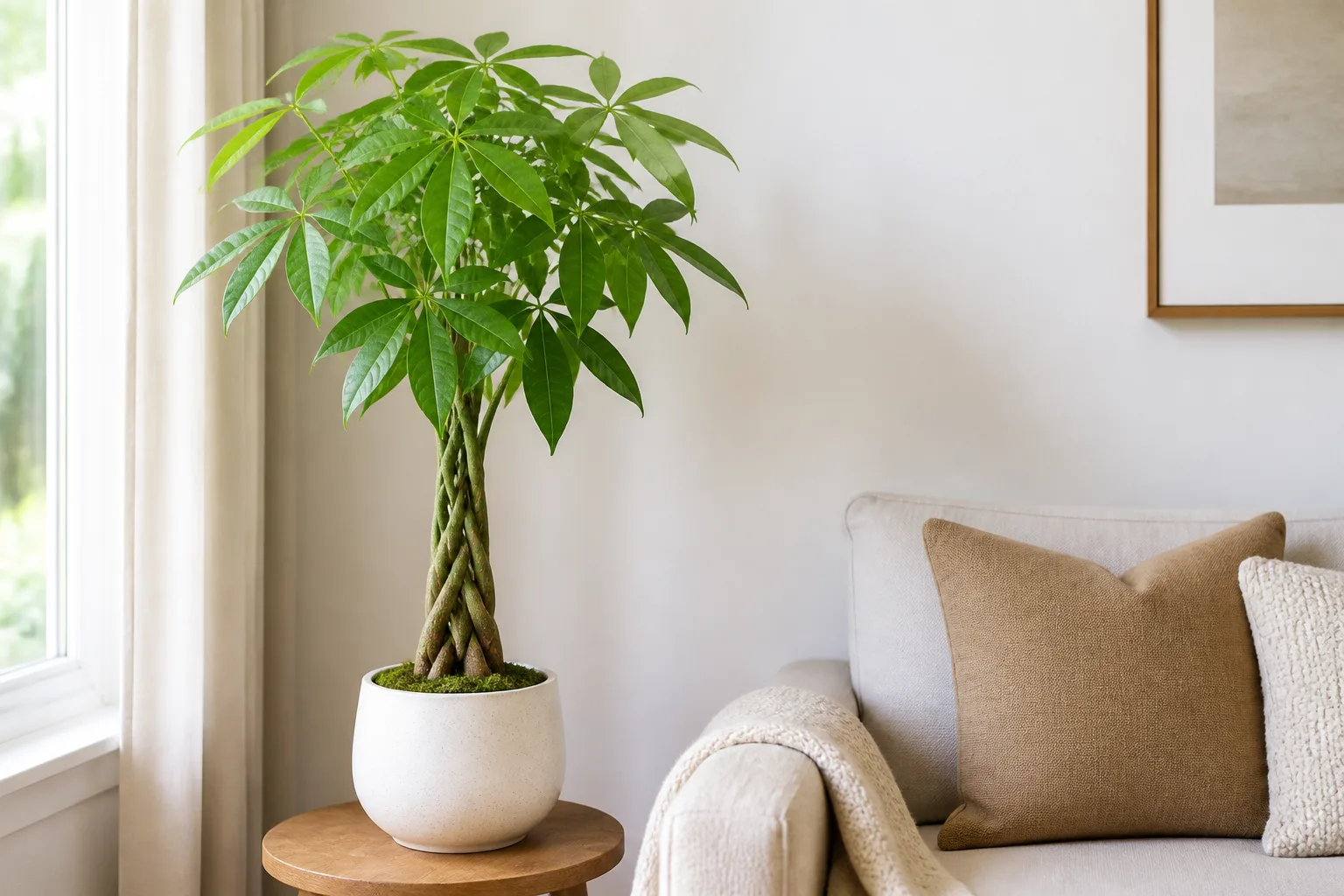
When shoppers ask for a money tree in the feng shui sense, they usually mean Pachira aquatica—not jade. Garden centers sell young plants with braided trunks, a nursery technique done while stems are pliable. Braiding does not change the plant’s biology, but it creates a sculptural focal point. Epic Gardening notes that feng shui practitioners often value stems with five leaflets, tying them to the five elements (Epic Gardening money tree guide); an occasional three-leaflet stem is normal, not a crisis.
Pachira prefers bright indirect light, warm indoor temperatures, and deep watering followed by a partial dry-down. It tolerates average humidity but appreciates consistency. Yellow leaves often mean too much direct sun or watering on a calendar instead of by soil moisture. Braided specimens can live a decade or more indoors with good care.
Use a money tree as a floor plant in a living room, office, or wealth corner with enough light. Three braided stems are sometimes said to represent new beginnings; five relate to elemental balance. Choose the healthy plant you can maintain—not a stem count superstition that forces you into a dark corner.
Golden Pothos and Marble Queen Pothos
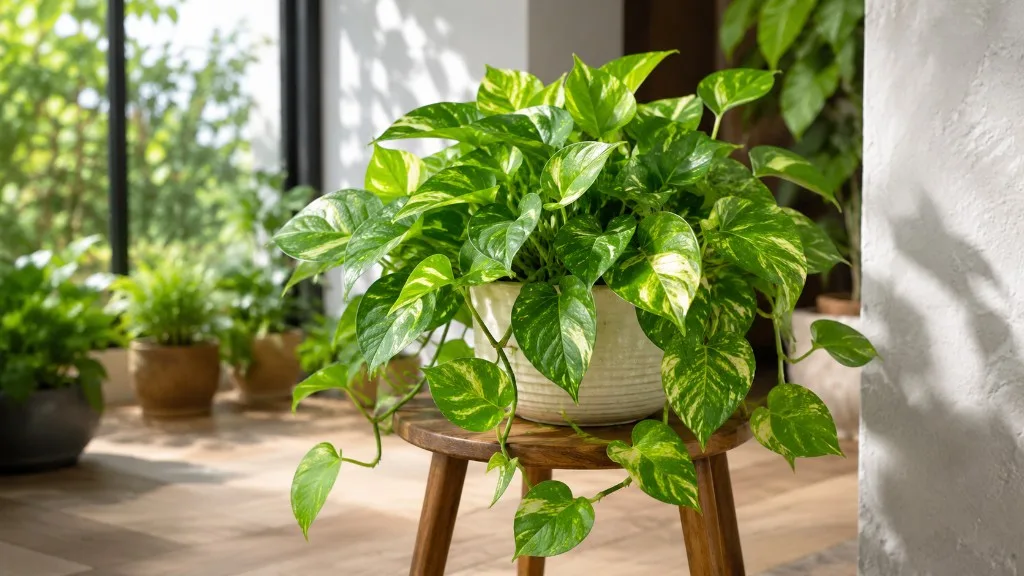
Epipremnum aureum is the species behind golden pothos and the variegated Marble Queen (often called golden queen in feng shui shops). In parts of Asia the same species is simply “money plant,” which creates endless confusion with pilea and Pachira. Golden pothos has chartreuse-splashed leaves; Marble Queen shows white and cream marbling that needs brighter indirect light to stay patterned.
Pothos tolerates low to bright indirect light, dries down between waterings, and trails beautifully from shelves or high cabinets. That trailing habit is why some practitioners use it to “frame” a wealth area or soften sharp corners. It is also forgiving for beginners who want a prosperity symbol without succulent discipline.
The ASPCA lists golden pothos and Marble Queen as toxic to pets because of insoluble calcium oxalates (ASPCA golden pothos). Symptoms can include oral irritation and vomiting. If you have cats that climb, pothos is a poor feng shui choice no matter how auspicious the corner.
Monstera Species Called Money Plants
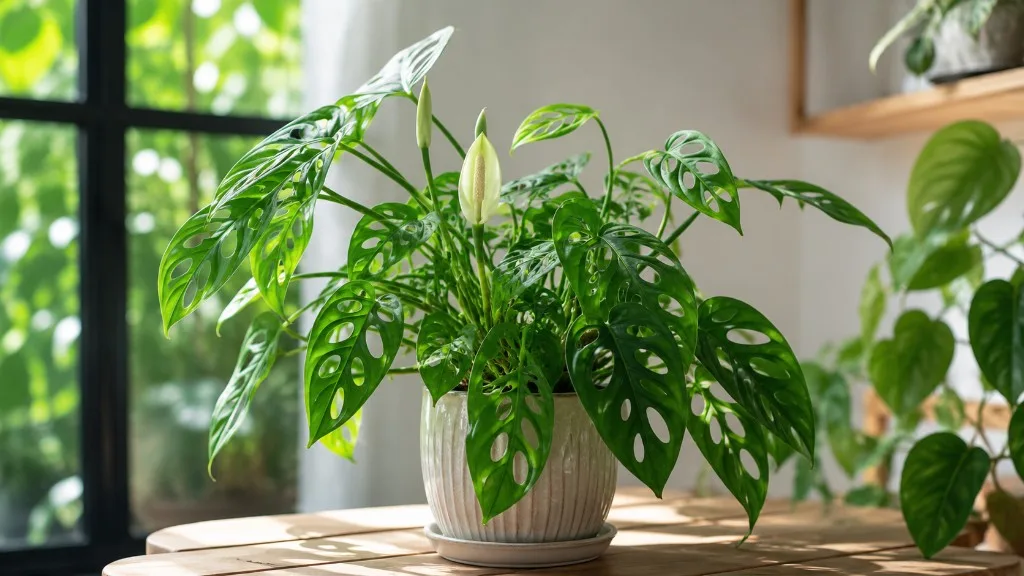
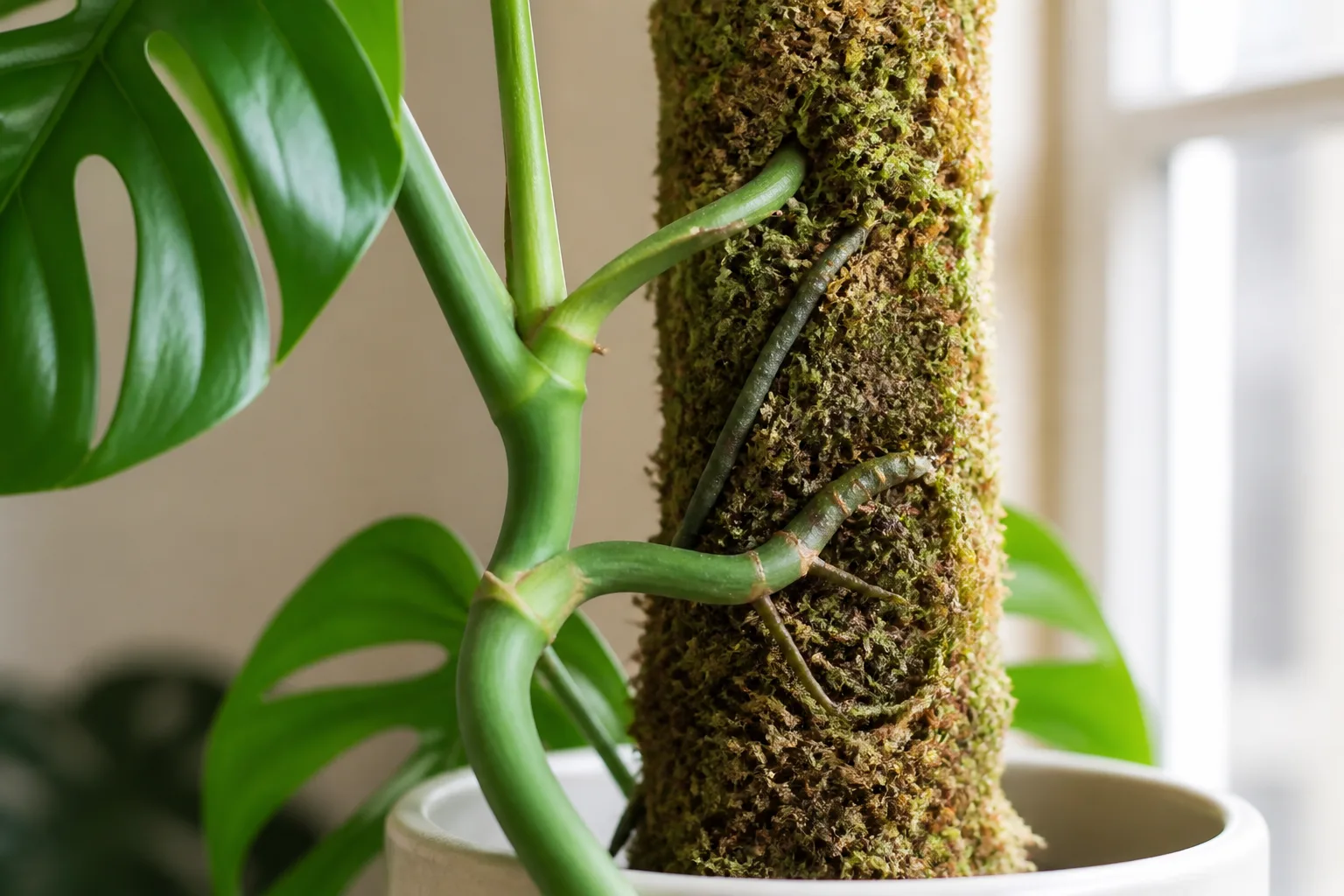
Several Monstera species pick up money-plant nicknames: Monstera adansonii (monkey mask money plant), Monstera deliciosa (split-leaf money plant), and the rare Monstera obliqua. Fenestrated leaves and vigorous climbing growth read as upward, expansive energy in feng shui—abundance that keeps opening.
Monstera wants bright indirect light, a chunky aroid mix, and support if you want height. Overwatering is the usual killer; yellow leaves and mushy stems mean pull back and check roots. The ASPCA lists Swiss cheese plant (Monstera deliciosa and related entries) as toxic to pets (ASPCA Swiss cheese plant).
A monstera belongs in a bright living room or office with space to climb. It is a poor fit for a dim bedroom wealth corner unless you supplement with a grow light. Choose M. adansonii for smaller spaces and M. deliciosa when you have floor space and a moss pole.
Silver Satin Pothos (Scindapsus pictus)
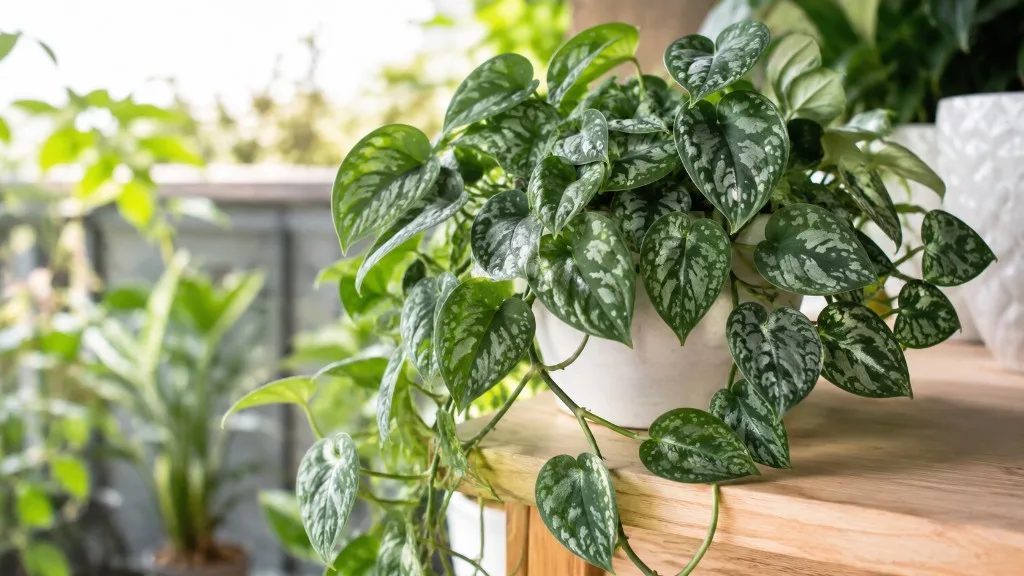
Scindapsus pictus—silver satin pothos or silver money plant—is not a true pothos, though care is similar. Silvery speckles on deep green leaves catch light and feel “active” in a room. It climbs or trails, prefers bright shade to indirect light, and should dry slightly between waterings.
Some feng shui writers link satin scindapsus with repelling stagnant energy because shimmering foliage brightens flat walls. Horticulturally, it is a stylish choice for bathrooms with frosted windows or east-facing shelves with filtered sun. The ASPCA groups satin pothos with pothos relatives as toxic to pets.
Silver Dollar Vine (Xerosicyos danguyi)
Silver dollar vine (Xerosicyos danguyi) is a succulent climber with small, round, coin-like leaves on thin stems. It wants bright light, infrequent watering, and excellent drainage—closer to jade than to pothos. It is less common in big-box stores but appears in feng shui lists because the leaf shape is unmistakably coin-like.
Grow it in a hanging basket or trellis in a sunny window. Underwatering shows as wrinkled leaves; overwatering rots the base quickly. Toxicity data is thinner than for pothos or jade; treat it as a keep-away-from-pets plant unless you confirm otherwise for your exact species.
Lucky Bamboo (Dracaena sanderiana)
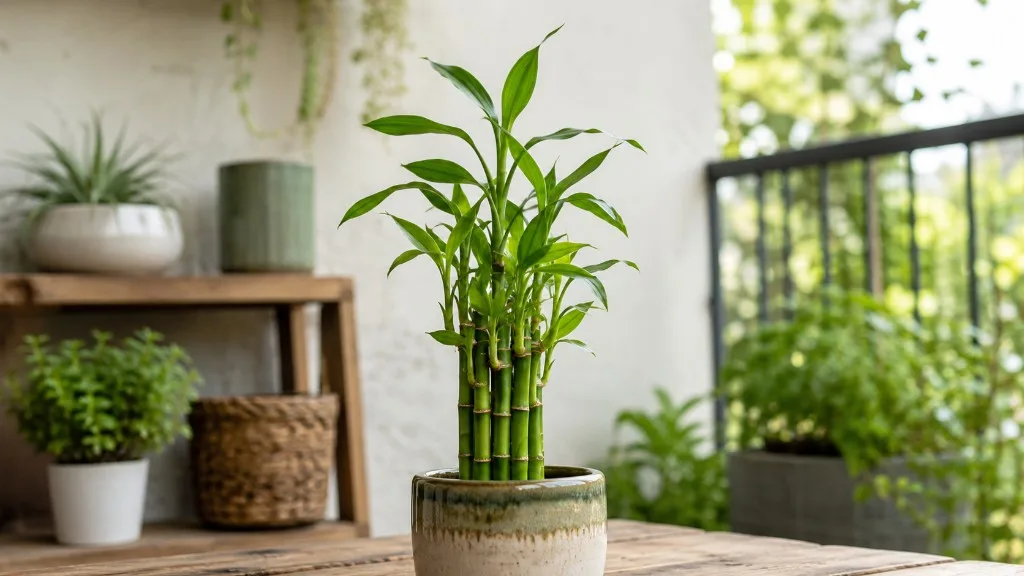
Lucky bamboo is Dracaena sanderiana, not bamboo. Stalks are fleshy, often grown in water or moist pebbles, and sold in arrangements of different stalk counts with various symbolic meanings. In feng shui it is a prosperity and resilience symbol—tough, structural, and vertical.
Give lucky bamboo indirect light and clean water. Tap water high in fluoride or chlorine causes brown leaf tips; many growers use filtered, distilled, or rainwater. If grown in soil, keep it lightly moist but not sodden. The ASPCA lists Dracaena species as toxic to cats and dogs (ASPCA dracaena).
Lucky bamboo fits desks, entry tables, and offices where you can maintain water quality. For propagation steps, see how to propagate lucky bamboo.
Best Places to Put Money Plants in Feng Shui
Placement only works if the species can grow there. An unhealthy plant—yellow leaves, gnats, moldy soil—creates the opposite of the fresh qi you want. Once you have matched species to conditions, these zones are the usual feng shui targets.
Office or workspace: A healthy money tree, jade, or pilea on a desk or shelf near a window supports focus and career-intention rituals. You are not summoning a paycheck; you are keeping a living symbol in the place where you do income-related work.
Bedroom: Plants can work in bedrooms with good light and airflow, but many money plants are toxic to pets and some people dislike soil gnats near the bed. If you sleep with a door closed and no chewers, a small pilea or pothos on a bright dresser is reasonable. Skip large monsteras in dark corners “because feng shui said so.”
Wealth corner: Classical bagua places the wealth and abundance sector (Xun) in the far left corner of a space when you stand at the doorway looking in—sometimes described as the southeast wall area of a room or home. A simpler method overlays a three-by-three grid on your floor plan, stand at the front door facing in, and locate the far left rear cell. Place the plant that already wants that room’s light.
Finding the wealth corner without guesswork
- Stand in the main doorway of the room (or home) looking inward.
- Imagine a tic-tac-toe grid covering the space.
- The far left corner farthest from you is the traditional wealth corner.
- Confirm the spot has adequate light for your chosen species; if not, use the brightest acceptable nearby surface and treat intention as secondary to plant health.
- Repeat for a home office or bedroom using that room’s doorway as your reference.
Some practitioners also emphasize the southeast direction for wealth energy. If your far-left corner is a closet, the adjacent bright southeast wall may be a better horticultural home for the plant.
Pet Safety: Which Money Plants Are Toxic to Cats and Dogs
“Money plant” is a useless toxicity search term. Always look up the botanical name on the ASPCA toxic and non-toxic plants database. For the nine species in this guide:
| Plant | ASPCA status (typical listings) |
|---|---|
| Jade (Crassula spp.) | Toxic to dogs, cats, horses |
| Golden pothos / Marble Queen | Toxic to dogs, cats |
| Swiss cheese / monstera | Toxic to dogs, cats |
| Satin pothos (Scindapsus pictus) | Toxic to dogs, cats |
| Lucky bamboo (Dracaena) | Toxic to dogs, cats |
| Pilea peperomioides | Not listed on ASPCA; still discourage chewing |
| Pachira aquatica | Check current listing; treat as caution for pets |
| Xerosicyos danguyi | Limited data; keep away from chewers |
If a pet ingests any houseplant and shows vomiting, drooling, or lethargy, contact your veterinarian or the ASPCA Animal Poison Control Center at (888) 426-4435.
Common Feng Shui Money Plant Mistakes
Buying for symbolism in the wrong light. Jade in a north-facing hallway will stretch and drop leaves. Fix the location or change the species.
Treating braided stems as magic. Braiding is aesthetic. Water, light, and drainage determine whether the tree thrives.
Overwatering because “abundance” feels generous. Succulent money plants need dry cycles. Pothos needs dry-down too—not constant moisture.
Ignoring pet risk because the plant is “lucky.” Luck does not neutralize calcium oxalates. Hang pothos high or choose pet-safe rooms.
Letting declining plants stay for feng shui. Remove dead leaves, repot when roots circle, and replace a plant that cannot recover. Fresh qi requires fresh health.
Conclusion
Feng shui money plants are a category of symbolism, not one lucky species. Pilea peperomioides brings coin-shaped leaves and pups to share; Crassula ovata and Xerosicyos danguyi bring succulent coin foliage; Pachira aquatica brings the braided money-tree silhouette; pothos, monstera, and scindapsus bring trailing or climbing abundance; lucky bamboo brings vertical resilience. Choose the plant your room can actually grow, verify the botanical name for pet safety, and place it where light and your daily life intersect—wealth corner included only if the species will stay healthy there. That combination—living plant first, intention second—is what makes a feng shui money plant feel meaningful instead of miserable.