11 Zinnia Companion Plants for Healthier Blooms
The 11 best companion plants for zinnias, grouped by job: pollinators, pest support, ground cover, and vegetable-bed allies. Plus two to avoid.
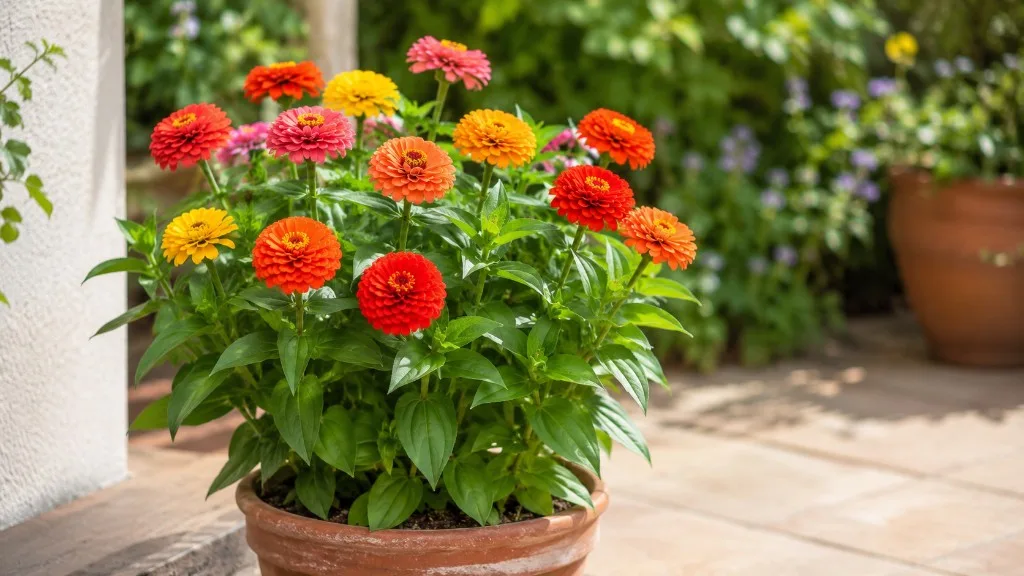
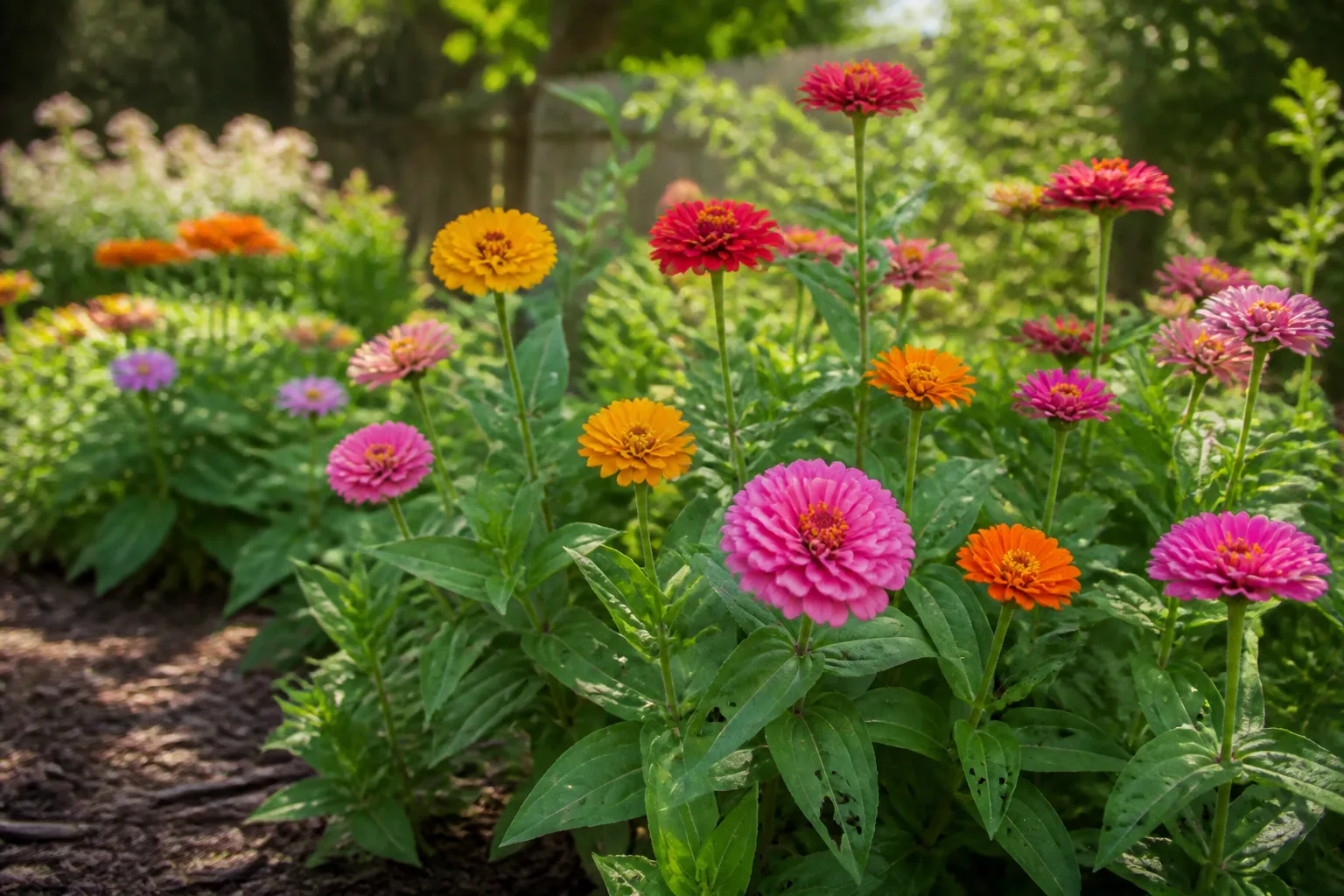
Zinnias (Zinnia elegans and close hybrids) are the annual you plant when you want nonstop color from midsummer until frost without babysitting a finicky perennial. They want full sun, warm soil, and drainage that never stays soggy overnight. Pair them with the right neighbors and you get more pollinator traffic, a tidier border, and—sometimes—less pest pressure on nearby vegetables. Pair them with the wrong ones and you are fighting shade stress, powdery mildew, or a dry-soil plant drowning beside a thirsty zinnia row.
This guide lists 11 companions worth planting, groups them by the job they do in the bed, and explains two common pairings to skip. You will also get spacing numbers and two sample layouts you can copy into a 4×8-foot raised bed or a sunny foundation border.
What companion planting can—and cannot—do for zinnias
Companion planting means growing two or more species close enough to interact—through pollinator attraction, root-zone differences, physical shading, or scents that make a pest’s life harder. Penn State Master Gardener material on good-neighbors companion planting frames it as polyculture that mimics natural diversity, not a guarantee that pests vanish.
For zinnias specifically, companions help most when they (1) bloom in the same sunny, well-drained conditions, (2) attract bees and hoverflies before or during zinnia peak bloom, or (3) fill a different vertical layer without crowding airflow at the crown. Marigolds may reduce aphid landing; they do not replace weekly scouting when humidity climbs. Zinnias planted beside cauliflower can draw aphids away from brassica leaves—but only if you accept that those zinnia blooms may get chewed. Honest expectations keep companion planting useful instead of disappointing.
How zinnias actually use neighboring plants
According to the NC State Plant Toolbox, common zinnia thrives in loam with high organic matter, full sun, and good drainage. It attracts butterflies, hummingbirds, bees, and other pollinators while resisting deer browsing. Those traits make zinnias a hub plant in a summer bed: insects visit zinnia nectar, then drift to tomatoes, cucumbers, or herbs nearby.
Tall cutting types reach 3–4 feet; dwarf series stay under 18 inches. That height gap matters. A low vinca skirt under 4-foot ‘Benary’s Giant’ zinnias works; planting shade-loving begonias at the same row depth does not. Before you buy six companion species, decide whether your zinnias are back-of-border tall or front-of-border compact—then match neighbor height accordingly.
What every zinnia bedmate must share
Any plant on this list needs:
- Six or more hours of direct sun daily (dappled shade only for a few hours at dawn)
- Even moisture while establishing, then tolerance for brief dry spells once rooted
- Neutral to slightly acidic soil that drains within hours after rain
- Room to breathe—zinnias packed tight against wet foliage invite powdery mildew, especially on older cultivars in humid summers
If a companion prefers dry Mediterranean soil (lavender) or shade (wax begonias), keep it in a different bed no matter how pretty the color combo looks on paper. Cultural match beats catalog romance every time.
Set up the zinnia bed before you pick companions
Spacing, airflow, and watering rules
Space tall zinnias 9–12 inches apart in the row with 18–24 inches between rows if you run a double line. Dwarf types can go 6–8 inches apart for a solid ribbon of color. Leave 12 inches minimum between a zinnia crown and the root zone of a heavy feeder like tomato or dahlia tuber so neither steals water at transplant shock.
Water at the soil line with drip or soaker hose. Overhead sprinkling that wets zinnia leaves every evening is how mildew starts—and stressed plants send out signals aphids notice. If your zinnias already look tired midseason, our how to make zinnias bloom again guide covers deadheading, feeding, and recovery before you add more neighbors.
Airflow: In humid zones, thin the weakest stems when plants reach 8 inches tall. One strong leader per cell beats three crowded stems rubbing together after rain. Choose disease-resistant zinnia series—‘Profusion’, ‘Zahara’, and many landscape mixes—if your summers run hot and sticky; older heirloom singles show powdery mildew first and can infect neighbors through spores on shared breeze paths.
Soil prep: Work 2–3 inches of compost into the top 8 inches before transplanting. Zinnias are not heavy feeders, but companions like tomatoes and dahlias are. A single compost layer at bed prep beats side-dressing every neighbor on a different schedule midseason.
Choose companions by job—not by color alone
Pick two or three roles per bed instead of planting all eleven companions at once:
| Job | What it does | Examples from this list |
|---|---|---|
| Pollinator magnet | Feeds bees and butterflies across a long bloom window | Cosmos, coneflower, basil, dahlias |
| Pest-support border | Adds scent and beneficial-insect habitat at bed edge | Marigolds, basil |
| Skirt / ground fill | Covers bare soil under tall zinnias without competing for height | Annual vinca, angelonia (front row) |
| Vegetable ally | Brings pollinators to cucurbits or sacrifices blooms as trap crop | Tomatoes, cucumbers, cauliflower |
For a deeper look at what science supports—and what is garden lore—see does companion planting actually work.
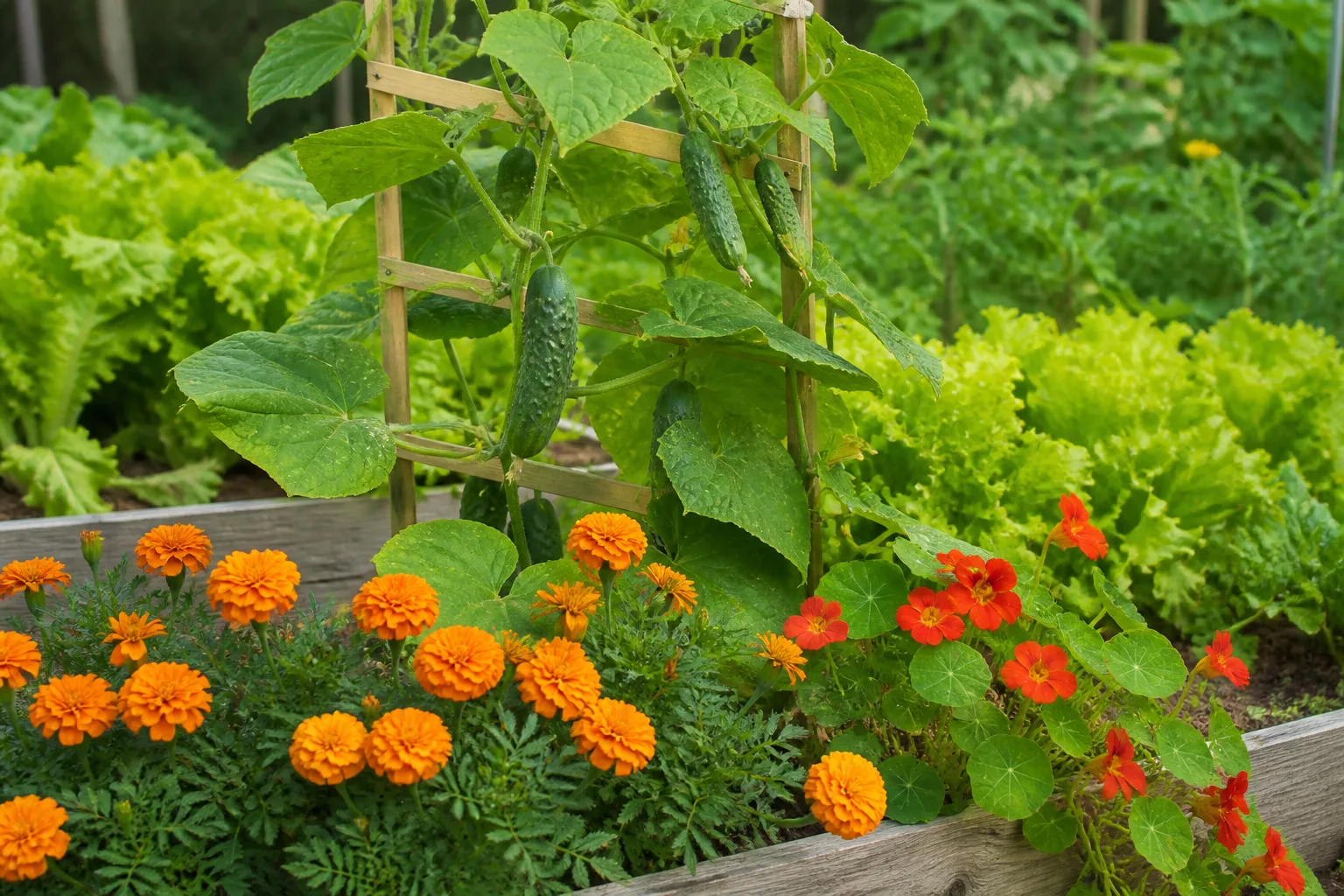
11 zinnia companion plants worth planting
The plants below are grouped by what they do in your bed, with spacing and realistic pest expectations. None require a separate microclimate if your zinnias are already thriving.
Marigolds: border color and beneficial-insect support
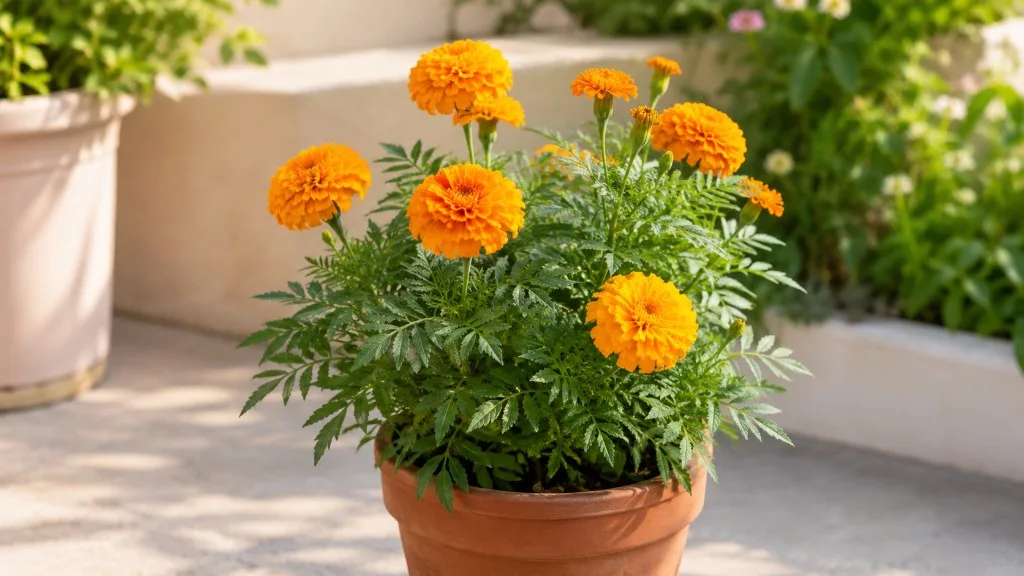
Marigold (Tagetes spp.) is the classic zinnia neighbor for a reason. French and African types bring intense orange and gold at the bed edge while their resinous foliage hosts hoverflies and lady beetles that eat aphids. Plant marigolds 6 inches in front of dwarf zinnias or along the front lip of a raised bed with tall zinnias at the back. French marigolds (T. patula) stay compact; African types (T. erecta) add height behind a marigold skirt if you want a tiered color block.
Research on marigold pest effects is mixed—some trials show reduced root-knot nematode pressure in vegetable rotations, others show little change in above-ground aphid counts. Treat marigolds as habitat plus border color, then confirm whether your garden responds over two seasons before you rely on them alone.
Marigolds are not a pesticide. They may lower aphid pressure in some gardens; they will not stop a Japanese beetle outbreak alone. If beetles skeletonize blooms, pair marigolds with hand-picking and the ID steps in our zinnia pest guide. Zones 2–11 (annual); full sun; evenly moist, well-drained soil.
Basil and culinary herbs: pollinators you can harvest
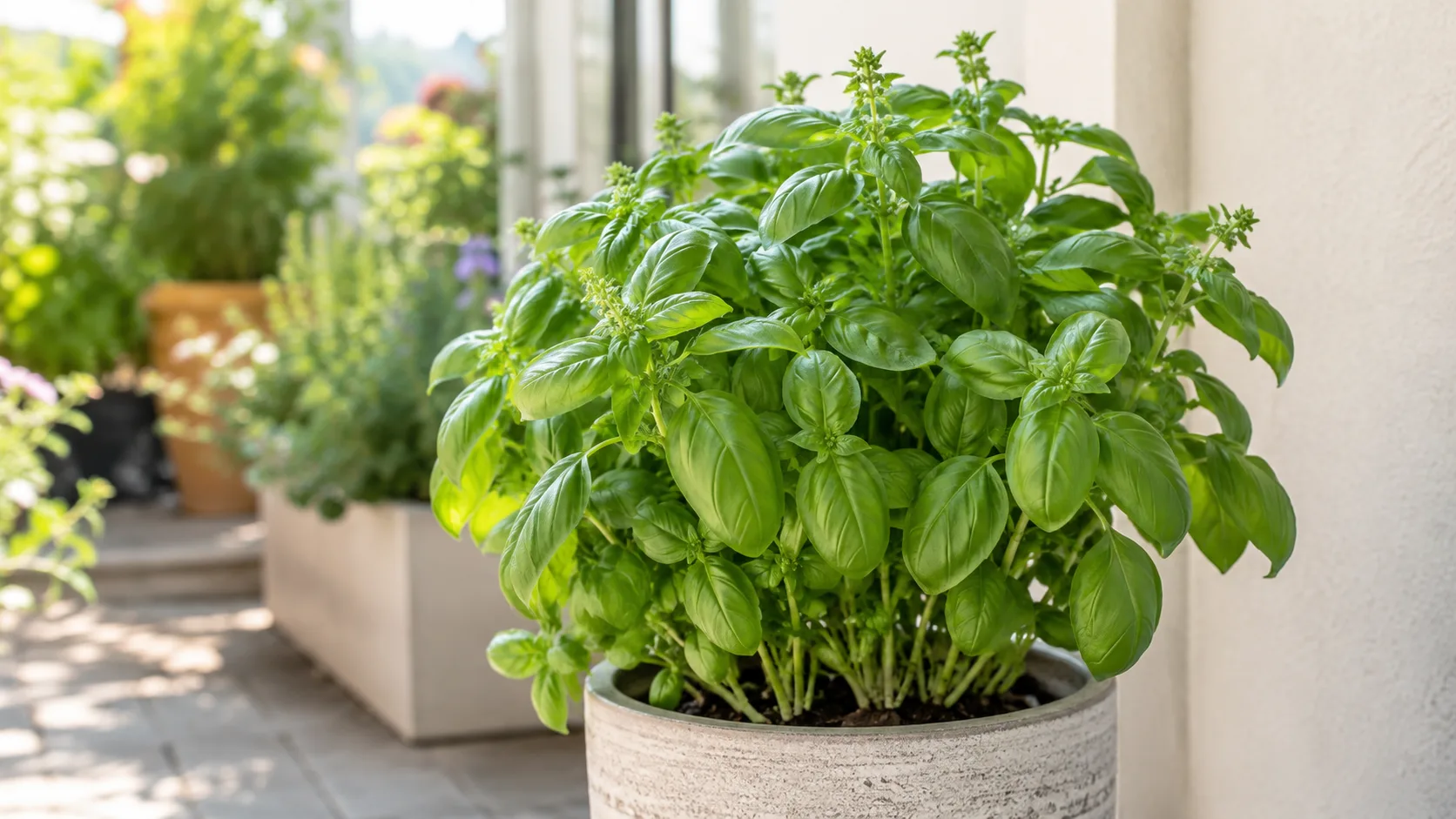
Basil (Ocimum basilicum) shares zinnia’s love of heat and sun. Let a few plants bolt slightly—or plant flowering varieties like ‘African Blue’—and bees work the spikes while you harvest leaves for cooking. Basil’s aromatic oils are sometimes credited with repelling flies and mosquitoes; the stronger win is constant pollinator traffic between herb and flower rows.
Keep basil 12–18 inches from zinnia stems so neither shades the other at noon. Pinch flower spikes on culinary basils if you want maximum leaf harvest; leave one plant flowering for insects. Zones 10–11 as a perennial; grow as annual elsewhere. Moist, rich, well-draining soil.
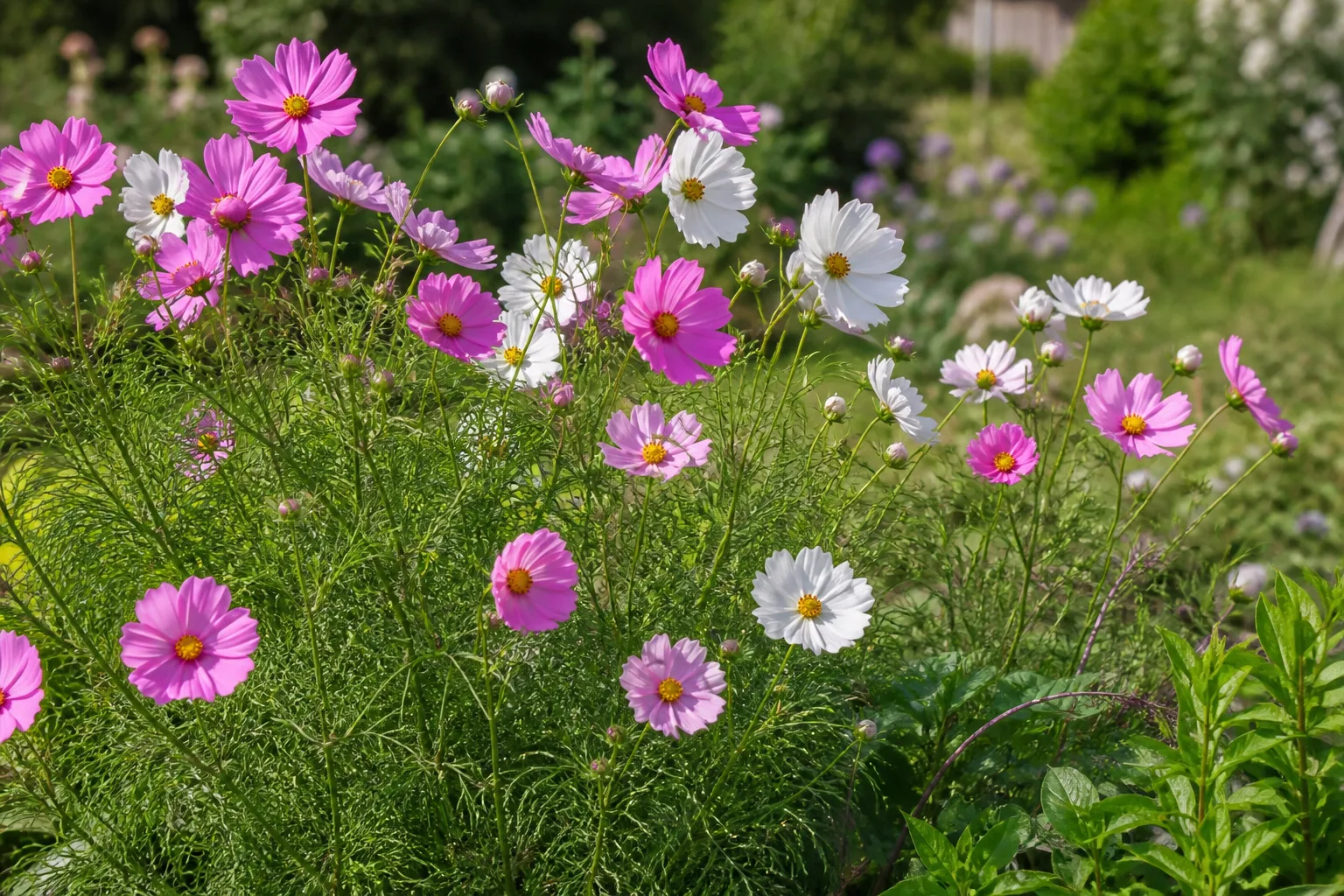
Cosmos and purple coneflower: tall pollinator backbone
Cosmos (Cosmos sulphureus and C. bipinnatus) adds airy, daisy-like blooms on slender stems—perfect behind mid-height zinnias in a cottage border. They reseed lightly in warm zones and bloom until frost with minimal feeding. Space cosmos 12–18 inches behind zinnias so the combined mass does not block airflow. Orange C. sulphureus handles drought better than pink-and-white C. bipinnatus; mix both if you want height without identical bloom timing.
Purple coneflower (Echinacea purpurea) is a perennial that returns while you replant zinnias each spring. Plant coneflower clumps at the back center of a mixed border; sow or transplant zinnias 18 inches forward so the annual row gets full sun on its south face. Coneflower’s sturdy stems support goldfinches in fall after petals drop—bonus winter interest. Divide congested coneflower clumps every three to four years so they do not shade young zinnia seedlings each May. Zones 3–8; full sun to light afternoon shade in hottest deserts; well-drained soil.
Dahlias and May Night salvia: height and late-season structure
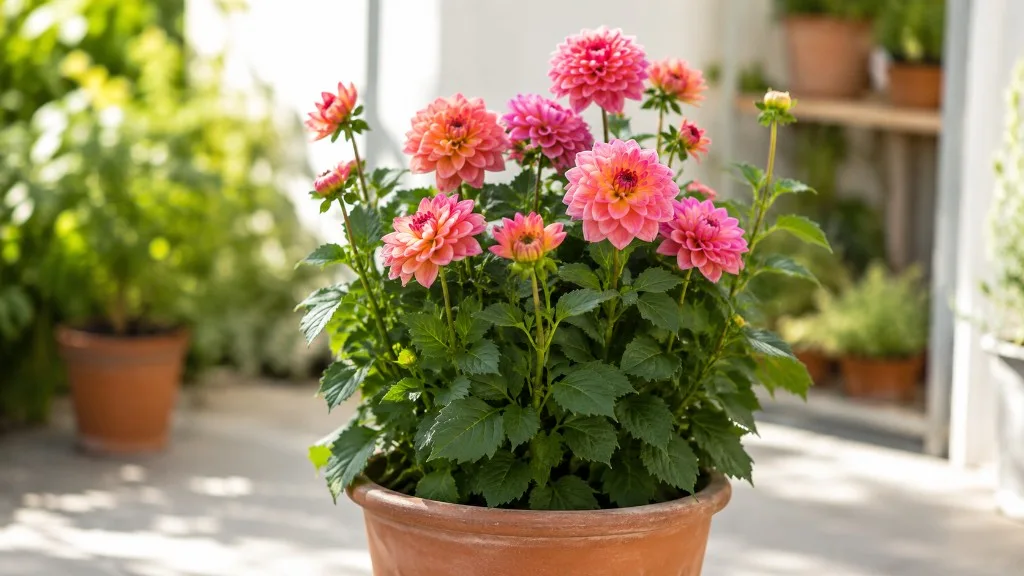
Dahlias (Dahlia spp.) and tall zinnias compete for the same “wow” slot, so treat them as alternating pillars rather than a solid wall. Stake dinnerplate dahlias; let zinnias carry color between tubers while dahlia buds swell. Both attract bees; together they extend the season if you choose late-blooming dahlia forms. Lift dahlia tubers after frost in zones colder than 8 while zinnias die with the first hard freeze—plan the bed so you are not stepping on dahlia roots when you pull spent zinnia stalks in October.
May Night salvia (Salvia nemorosa ‘May Night’, often sold as S. sylvestris hybrids) sends up violet spikes 18–24 inches high—ideal beside 2–3-foot zinnias. Salvia tolerates drier soil once established, but do not let it bake while zinnias wilt; mulch both at the same depth. Cut spent salvia spikes to encourage rebloom into early fall. The cool violet-blue reads sharper against orange and magenta zinnias than another warm-tone flower would. Zones 4–8; full sun; well-drained, slightly alkaline to neutral soil.
Angelonia and annual vinca: heat-tolerant skirt plants
Angelonia (Angelonia angustifolia), sometimes called summer snapdragon, handles heat and humidity that shuts down spring annuals. Its spiky blooms echo zinnia cheer at 12–18 inches tall—plant it in front of zinnias as a middle layer. Angelonia needs consistent moisture at root depth; match your watering schedule to zinnias during establishment. Serenita and Archangel series stay tidy without constant pinching—useful when you want structure without another deadheading chore.
Annual vinca (Catharanthus roseus) spreads low and glossy, filling soil that tall zinnias leave bare. Use it as a skirt under 3-foot zinnias, not packed against the crown where trapped moisture encourages stem rot. Vinca is drought-tolerant once rooted but hates cold wet soil in spring—plant after soil warms, same as zinnias. Avoid overhead irrigation that splashes soil onto vinca leaves; fungal spots spread fast in July humidity. Zones 9–11 as perennial; annual elsewhere. Full sun; sandy loam.
Vegetable-garden companions: tomatoes, cucumbers, and cauliflower
Zinnias belong in the vegetable garden as often as in a cutting border—if you place them where they attract pollinators without blocking harvest paths.
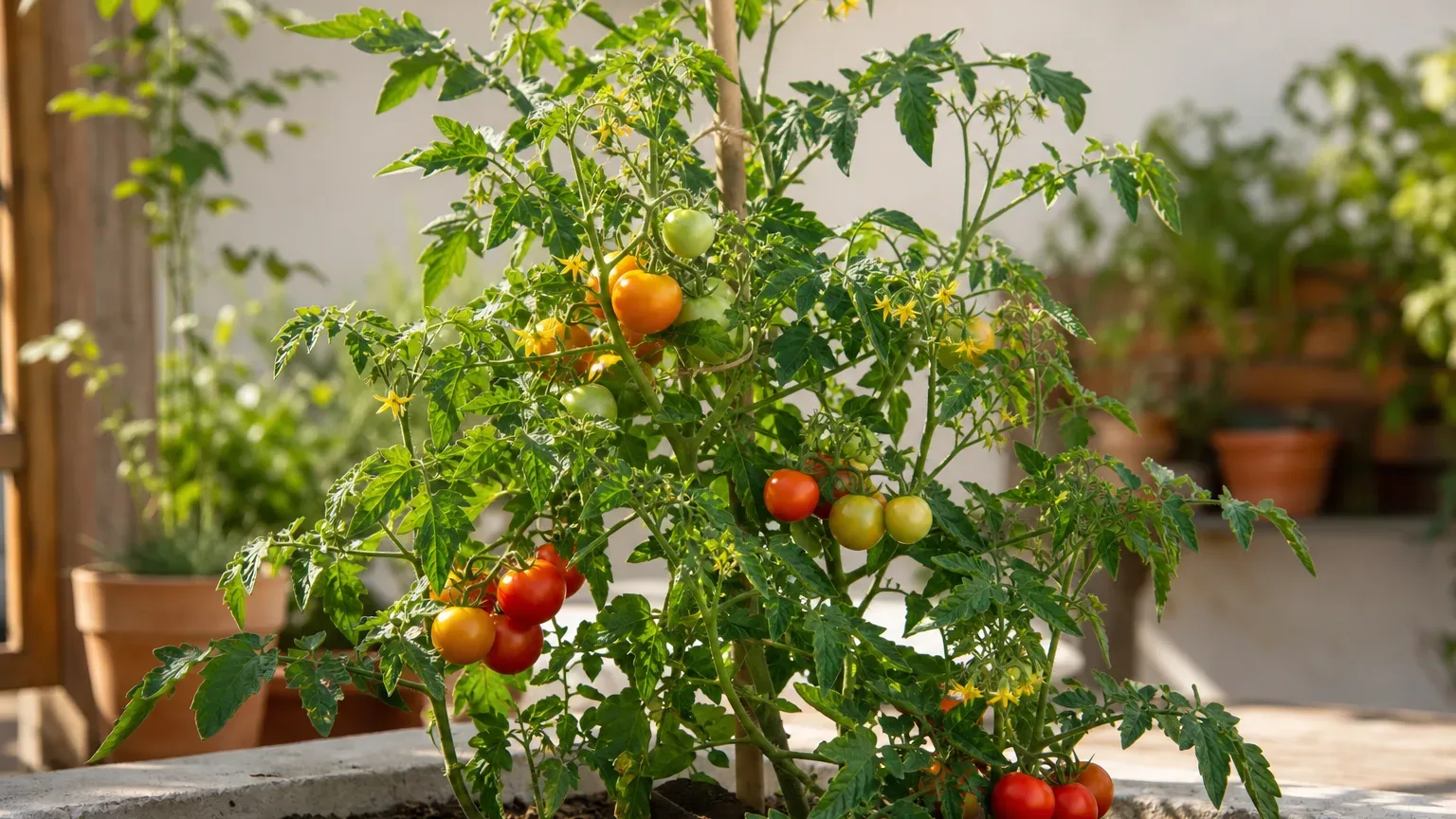
Tomatoes (Solanum lycopersicum) and zinnias both want full sun and fertile soil. Plant zinnias at the north or east edge of a tomato row so vines do not shade fruit. Zinnia blooms draw bees and hoverflies; hoverfly larvae eat aphids that cluster on tomato stems. Leave 24–30 inches between tomato cages and the zinnia row. For whitefly-specific pairings, see companion plants to protect tomatoes from whiteflies.
Cucumbers (Cucumis sativus) need insect pollination for fruit set. A strip of zinnias 6–10 feet long beside a cucumber trellis noticeably increases bee visits on cool mornings. Zinnias also host predatory insects that target aphids and whiteflies. Match watering: cucumbers want steady moisture; do not let zinnias at the row end dry to wilting while cukes stay soaked. More cucumber neighbors are covered in our companion plants for cucumbers guide.
Cauliflower (Brassica oleracea) benefits from zinnias used cautiously as a trap crop for aphids, slugs, and snails that prefer tender brassica leaves. Plant colorful zinnias on the south side of cauliflower seedlings; pests may colonize zinnias first. You must scout both crops—trap cropping fails when zinnias become a nursery that spills aphids back onto cauliflower. Sacrifice heavily infested zinnia stems rather than letting populations peak. Brassicas also want consistent nitrogen and cooler roots than zinnias prefer at peak summer—mulch cauliflower heavily and keep zinnia trap rows on the sunnier, slightly drier edge of the bed rather than directly over the brassica root zone.
Trap-crop reality check for brassicas and cucurbits
Trap crops work only when you (1) plant enough decoy biomass, (2) monitor weekly, and (3) remove or treat infested decoys before pests reproduce. Zinnias are expendable annuals—good decoys—but they are also your cutting flowers. If you need perfect zinnia blooms for vases, keep trap-crop zinnias in the vegetable bed and grow show rows elsewhere.
The UC IPM zinnia page lists aphids, spider mites, and several chewing insects on zinnias. Expect decoy plants to show damage; that is the point. Do not interpret holey trap-crop petals as failure unless brassicas stay clean and you are still losing yield.
What not to plant near zinnias
Lavender, begonias, and other mismatched neighbors
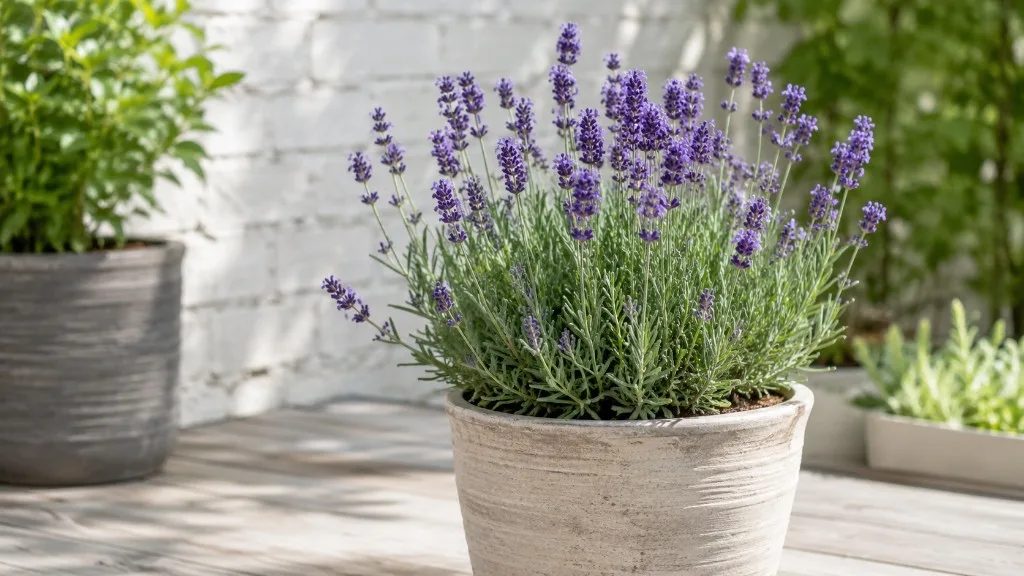
Lavender (Lavandula spp.) wants lean, dry soil and excellent drainage—opposite of the steady moisture zinnias prefer during bloom flushes. In a mixed border, lavender sulks or zinnias wilt. Plant lavender in a separate dry bank or container.
Begonias—especially wax and bedding types—are shade plants. Full-sun zinnia rows scorch begonia leaves by July. If you need low color under tall zinnias, use annual vinca or angelonia instead.
Also avoid:
- Large mint patches that overrun zinnia roots (contain mint in pots)
- Fennel near young zinnia seedlings—allelopathic compounds can stunt neighbors in tight rows
- Overhead-only irrigation on dense zinnia + dahlia combos without thinning—mildew risk rises fast
When in doubt, match the zinnia care guide cultural baseline: sun, drainage, moderate fertility, and space.
Sample bed layouts that actually work
Layout A — Cut-flower border (4×8 feet, tall zinnias): Back row: purple coneflower (2 clumps) + cosmos (3 plants). Middle: ‘Benary’s Giant’ zinnias every 10 inches (8 plants). Front: marigolds every 8 inches + angelonia between marigold gaps. Drip line along middle row; mulch 2 inches, pulled back from stems. Stagger bloom times by sowing half the zinnias two weeks after the first batch—companions stay constant while zinnia peaks roll.
Layout B — Vegetable ally strip (4×8 raised bed): North side: one tomato cage (1 plant) or cucumber trellis (2 hills). East edge: zinnia row (6 plants, 10-inch spacing). South front: basil (3) + marigolds (4). West end: 2 cauliflower plants with 3 trap-crop zinnias between them—scout twice weekly. Run one drip line with tees to each crop block so tomatoes do not get zinnia-level saturation and zinnias do not dry out beside the trellis.
Adjust for your compass orientation so tall crops never shade zinnias before 4 p.m. In tight yards, containers of zinnias beside vegetable pots achieve the same pollinator effect without redesigning the whole plot.
Conclusion
The best zinnia companion plants share full sun, good drainage, and enough spacing for airflow—then add a clear job: pollinator magnet, pest-support border, heat-tolerant skirt, or vegetable-bed ally. Marigolds, basil, cosmos, coneflower, dahlias, salvia, angelonia, vinca, tomatoes, cucumbers, and cauliflower all fit that frame when you match height and water. Skip lavender and shade begonias, and treat trap-crop zinnias as expendable scouts you monitor—not set-and-forget pest control.
Start with two or three companions for your bed’s main need, nail spacing and drip irrigation, and expand next year once you see which pairings actually performed in your climate. For species-level culture on the star of the show, visit /plants/zinnia/ and keep bloom troubleshooting one click away in our zinnia guides.



