How and When to Cut Back Ornamental Grasses
Cut ornamental grasses at the right time with a grass-type decision chart, crown-safe cut heights, bundling steps, and fixes for late or harsh pruning.
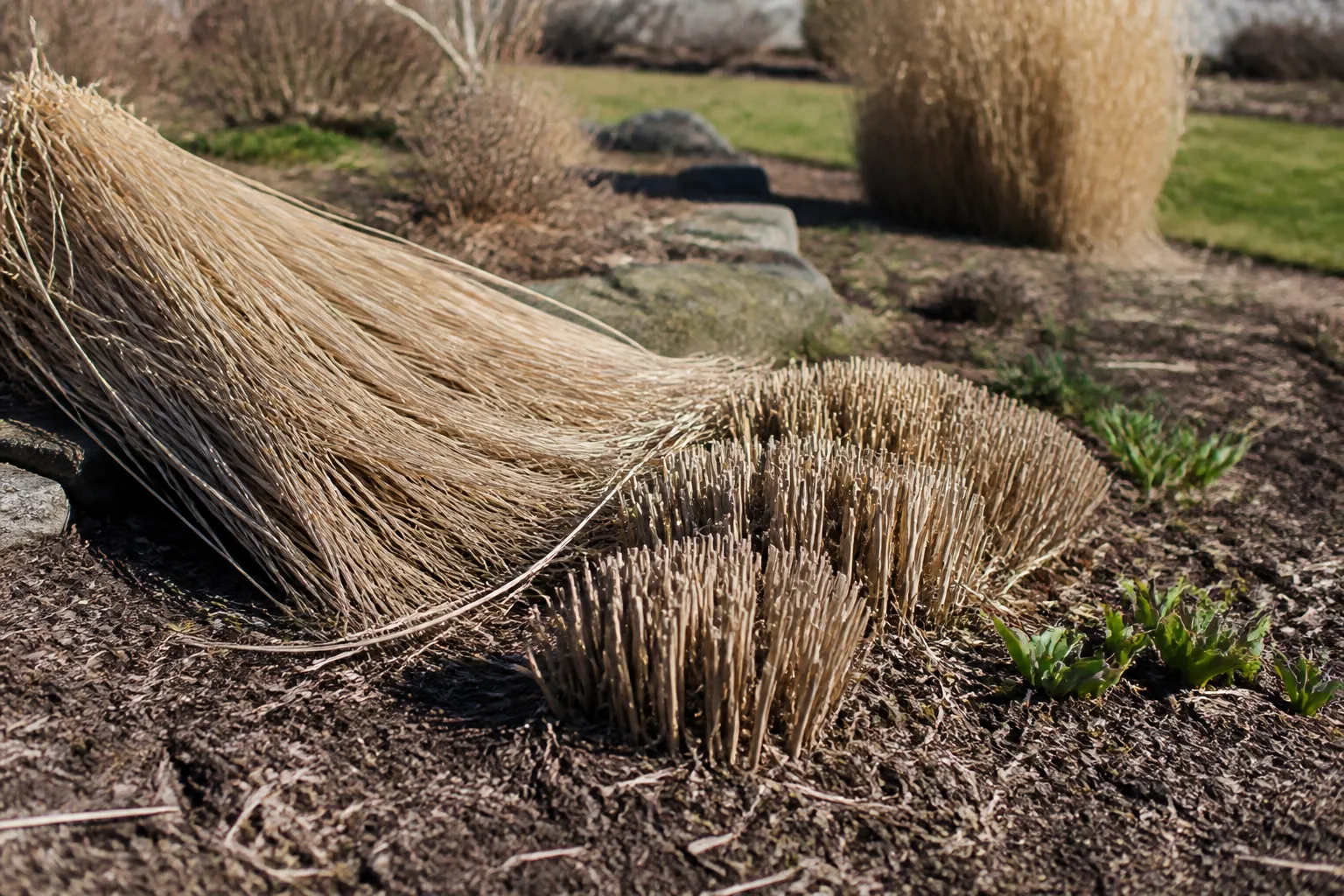
Ornamental grasses earn their place with movement, texture, and plumes that hold through fall — but once blades turn straw-brown or collapse under snow, the same foliage becomes a maintenance job. Cut back ornamental grasses at the wrong time and you lose winter structure, stress the crown, or shear off new shoots that were already emerging. Cut at the right time with the right height for your grass type, and the clump bounces back with clean, full blades within a few weeks.
The job is not complicated, but it is not one-size-fits-all. Warm-season grasses tolerate a hard reset. Cool-season types need a lighter touch. Evergreen sedges and grass-likes often need combing, not shearing. This guide walks through identification, timing, cut height, the bundling trick that keeps the mess contained, and the regional exceptions that matter in fire-prone yards.
Quick Answer: Spring Is the Default, but Grass Type Sets the Rules
For most perennial ornamental grasses in North American gardens, late winter or early spring — before new shoots emerge — is the best time to cut back. The RHS advises early to mid-spring for deciduous types, aiming to finish before fresh growth starts. UF/IFAS Gardening Solutions recommends February–March in North and Central Florida and January–February in South Florida.
Use this quick decision path:
| Grass category | Typical examples | Best timing | Cut height |
|---|---|---|---|
| Warm-season deciduous | Miscanthus, switchgrass, fountain grass, little bluestem | Late winter to early spring (fall optional) | 3–6 inches above crown |
| Cool-season deciduous | Karl Foerster feather reed, blue oat grass, fescues | Very early spring, before new shoots | Remove about two-thirds; leave one-third standing |
| Evergreen / grass-like | Blue fescue, Carex, Pennsylvania sedge | Spring tidy only | Comb dead blades; light trim if needed |
If you see green shoots at the base, you are in the window — but do not wait much longer. The goal is to remove old stems before they mix with new blades and before accidental crown damage from late shearing.
Know Your Grass Type Before You Cut
Ornamental grasses are not one botanical group. The term covers true grasses (Poaceae), sedges (Cyperaceae), and rushes (Juncaceae) — plants that look grassy but follow different pruning rules. Growth timing splits the field further into warm-season and cool-season types, while evergreen plants may never need a hard annual cut.
Misidentifying the type is the fastest way to cut too hard, too early, or at the wrong season.
Warm-Season Grasses
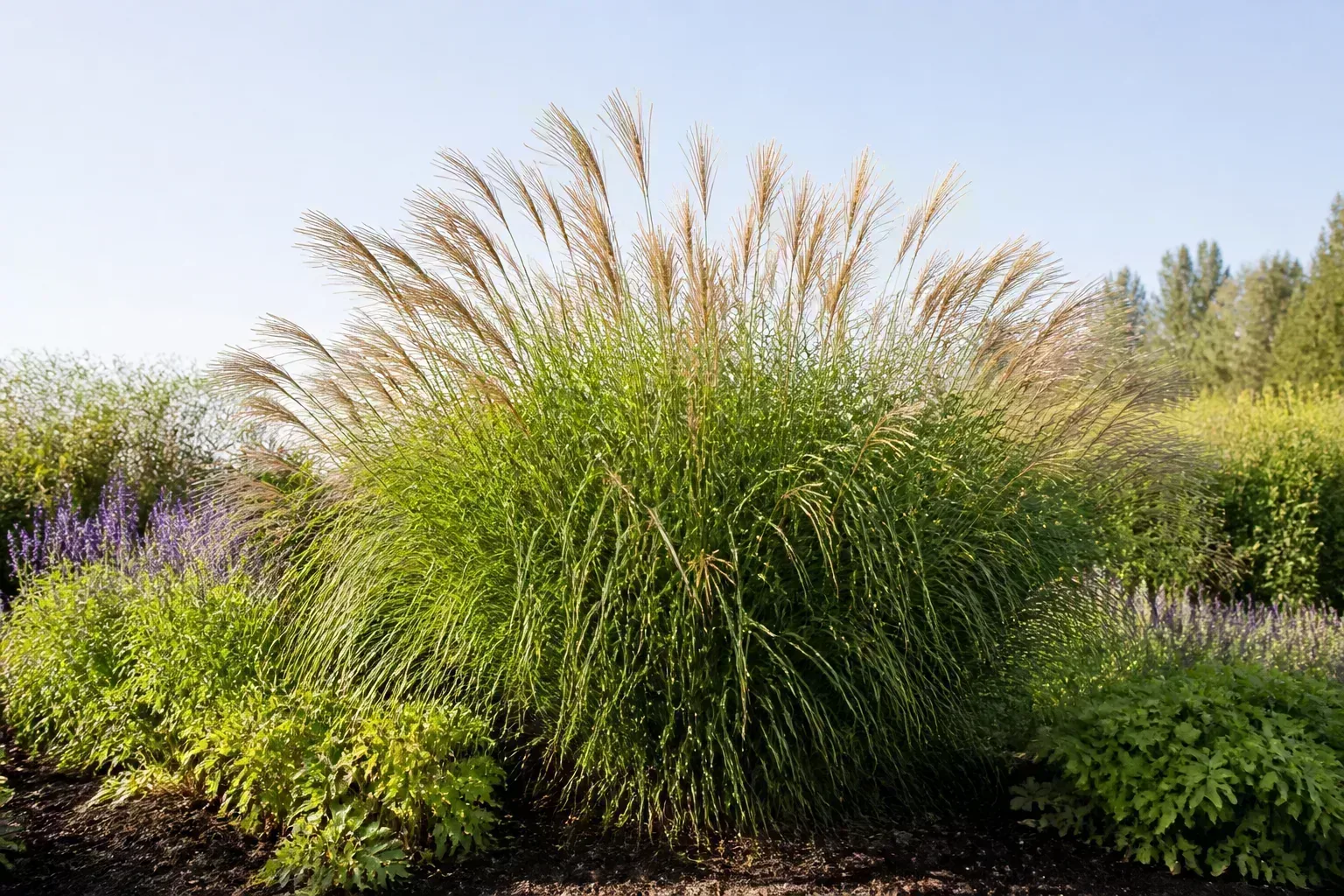
Warm-season grasses wake up in mid- to late spring and push most growth during summer heat. They turn brown or tan after frost and stand dormant through winter. Examples include Miscanthus (maiden grass), Panicum (switchgrass), Pennisetum (fountain grass), Schizachyrium (little bluestem), Muhlenbergia (muhly grass), and Chasmanthium (river oats).
These grasses tolerate a hard cutback — typically 3 to 6 inches above the soil — because new shoots emerge from the crown each year rather than from last year’s leaf tips. Epic Gardening’s ornamental grass cutback guide notes that warm-season types can be cut nearly to the ground with good recovery when cut during dormancy.
Warm-season grasses are also the group where fall cutback is sometimes reasonable: after a few hard frosts they are fully brown, and removing them before winter eliminates fire fuel or untidy collapsed stems. You trade away winter interest and seed-head forage for birds if you cut in autumn.
Cool-Season Grasses
Cool-season grasses grow actively in spring and again in fall when temperatures stay below about 75°F (24°C). Summer heat slows new blade production, but many keep green color. Examples include Calamagrostis × acutiflora (‘Karl Foerster’ feather reed grass), Festuca (blue fescue), Helictotrichon (blue oat grass), Deschampsia (tufted hair grass), and Sesleria (moor grass).
These types need a lighter cut. Remove about two-thirds of the height in very early spring, leaving roughly one-third of the foliage standing. Cutting cool-season grasses to the ground can weaken the crown and delay recovery. Savvy Gardening’s ornamental grass pruning guide and multiple extension-aligned sources converge on this two-thirds rule for cool-season deciduous grasses.
Cool-season grasses are also the ones most likely to show mixed brown-and-green clumps if you wait too long in spring — old tan blades intertwined with fresh green shoots. That is your signal to stop delaying the job.
Evergreen Grasses and Grass-Likes
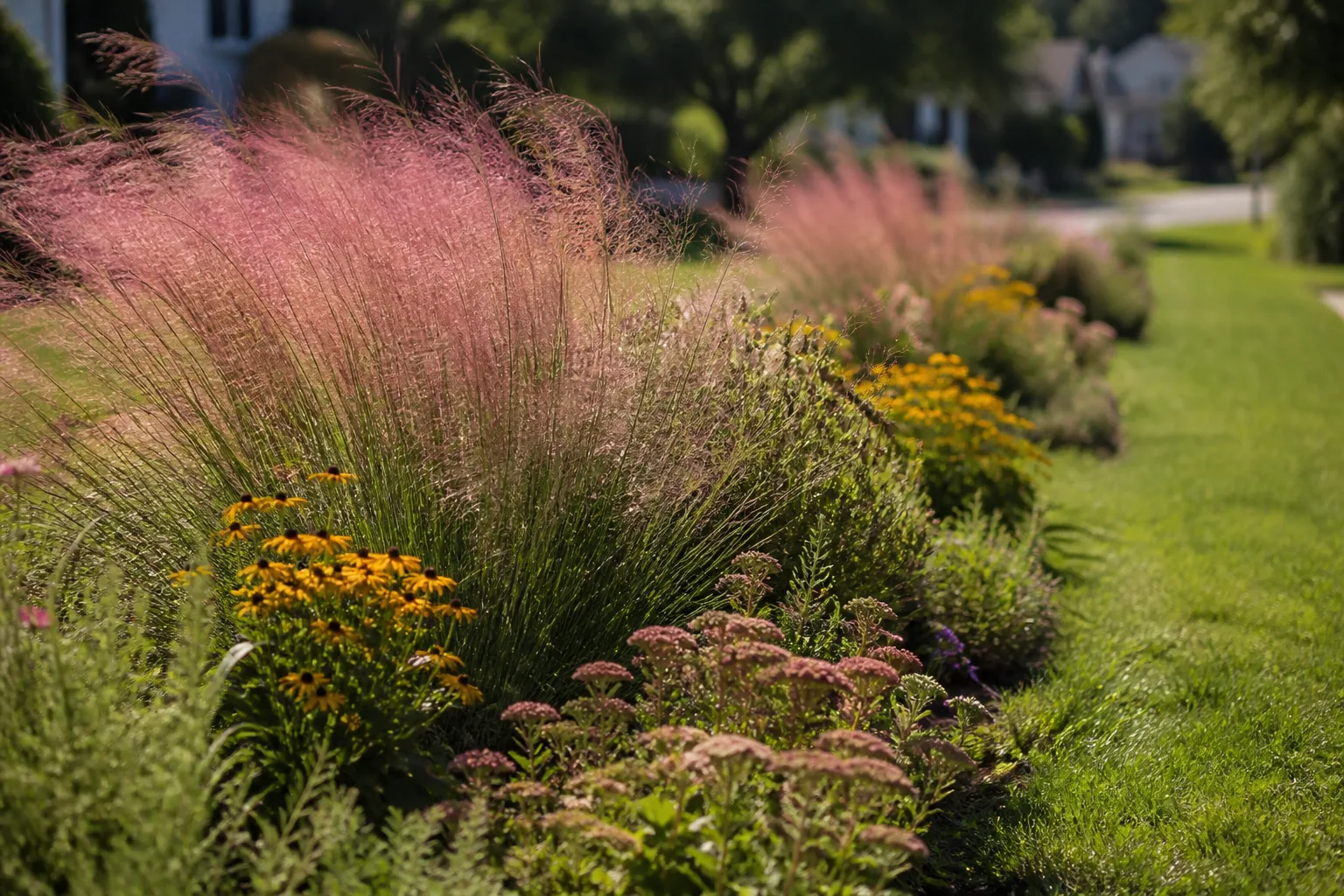
Evergreen grasses and grass-likes keep living foliage through much of the winter. They usually do not need an annual hard cut. Instead, comb out dead blades, pull accumulated debris from the crown, and trim only what is clearly dead or ratty.
This group includes many Carex sedges, Luzula woodrushes, Festuca glauca in mild climates, Ophiopogon (mondo grass), Liriope, and semi-evergreen Stipa tenuissima (Mexican feather grass) in warm regions. The RHS distinguishes deciduous grasses that turn golden-straw from evergreens that need hand-combing rather than hard pruning — and notes that Stipa tenuissima may behave like an evergreen in warm areas or like a deciduous grass where dead material builds up heavily.
Larger evergreen species such as pampas grass (Cortaderia selloana) are the exception: they benefit from hard annual pruning in early spring, cutting back as far as possible without damaging new growth. Wear eye protection and thick gloves — leaf margins are sharp. The RHS explicitly advises against burning pampas grass because flame can damage the crown.
When to Cut Back Ornamental Grasses by Season
Calendar month matters less than grass dormancy, local frost patterns, and whether new shoots are visible. Still, season-level framing helps you choose between a winter stand, a fall cleanup, or a spring reset.
Late Winter and Early Spring — the Best Default Window
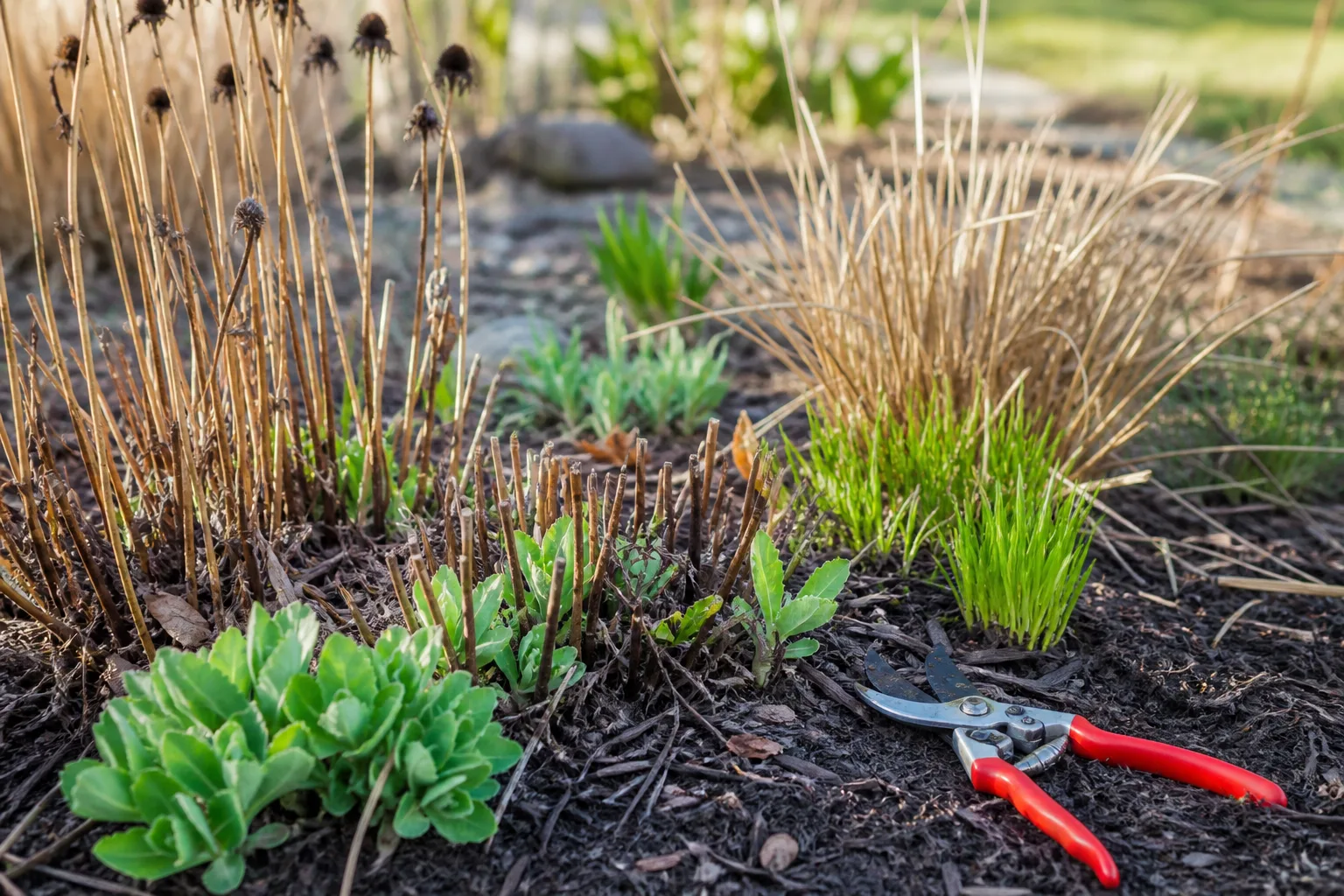
Late winter through early spring is the right window for most cutbacks because:
- Dormant blades have already delivered winter structure and wildlife value.
- New shoots are not yet tall enough to be sheared accidentally.
- Removing old foliage lets sun warm the crown, which can accelerate spring regrowth compared to leaving a dense thatch of dead blades on top.
Gardeners in cold northern zones often work in March or April; mild southern zones may cut as early as January or February, matching UF/IFAS regional guidance. The signal that beats the calendar: small green shoots at the crown mean it is time, and also mean you should not wait much longer.
Some slow-starting warm-season grasses deserve a slightly later cut. The RHS recommends delaying Miscanthus and Pennisetum orientale until mid-March to late April because old stems protect the crown from late cold snaps and these species sprout later than faster grasses.
Fall Cutback — When It Actually Makes Sense
Fall cutback is optional for most grasses — not the default. Standing dried foliage insulates the crown, shelters overwintering insects and small mammals, and holds seed heads birds use. Epic Gardening and Ornamental Grassworks both recommend resisting fall pruning unless a specific reason applies.
Fall cutback makes sense when:
- Fire is a regional risk and dried grass near structures acts as fuel.
- Snow and ice routinely flatten tall grasses into a muddy mat on the crown.
- You prefer a clean winter bed and accept losing dormant-season display.
- The grass is an annual or tender perennial in your zone and will not overwinter anyway.
If you cut warm-season grasses in fall, wait until they are fully brown after several frosts. Cut to the same 3–6 inch height you would use in spring. Do not cut evergreen types hard in fall — they are still photosynthesizing.
How Much to Cut: Height Rules by Grass Type
Cut height is where many gardeners damage otherwise tough plants. Use the crown — the tight growing point at soil level — as your reference, not the top of the brown blades.
Warm-season deciduous grasses: shear to 3–6 inches above the crown. Switchgrass cultivars such as ‘Northwind’ recover well at this height. Fountain grasses and miscanthus follow the same rule. You are clearing old stems, not scalping into living tissue.
Cool-season deciduous grasses: remove about two-thirds, leaving one-third of the clump height. ‘Karl Foerster’ feather reed grass is the classic example — cut after snow melts in late winter, but do not buzz it to the ground.
Evergreen grasses and grass-likes: pull dead blades by hand or comb with fingers or a rake. Trim brown tips on dense clumps like blue fescue. Only cut back fully if dead material dominates the clump.
Pampas and other large evergreens: hard prune in early spring, cutting old stems as low as possible while avoiding new green shoots. Use loppers on thick stems.
If you are unsure, err on leaving more height rather than less. Grasses recover slowly from crown injury; they recover quickly from slightly tall stubble.
Tools and Materials You’ll Need
The right tools turn a messy chore into a twenty-minute job:
- Bypass pruners for thin stems and touch-up cuts after bundling.
- Bypass loppers or hedge shears for dense warm-season clumps.
- Cordless hedge trimmer for large miscanthus or switchgrass stands — faster than hand shears when blades are dry.
- Wide tape, twine, or bungee cords for bundling.
- Work gloves — grass blades can cut skin; pampas grass margins are notably sharp.
- Leaf rake for final cleanup.
- Eye protection when working on tall grasses overhead.
Clean tools before you start if you recently pruned diseased woody plants. Grasses are not highly disease-prone via tools, but clean cuts heal faster than ragged tears.
How to Cut Back Ornamental Grasses Step by Step
Once you know type, timing, and target height, the physical job follows a repeatable sequence. Dry, dormant blades are easier to cut than wet or partially green clumps — schedule the task on a dry day.
Bundle Tall Clumps Before You Cut
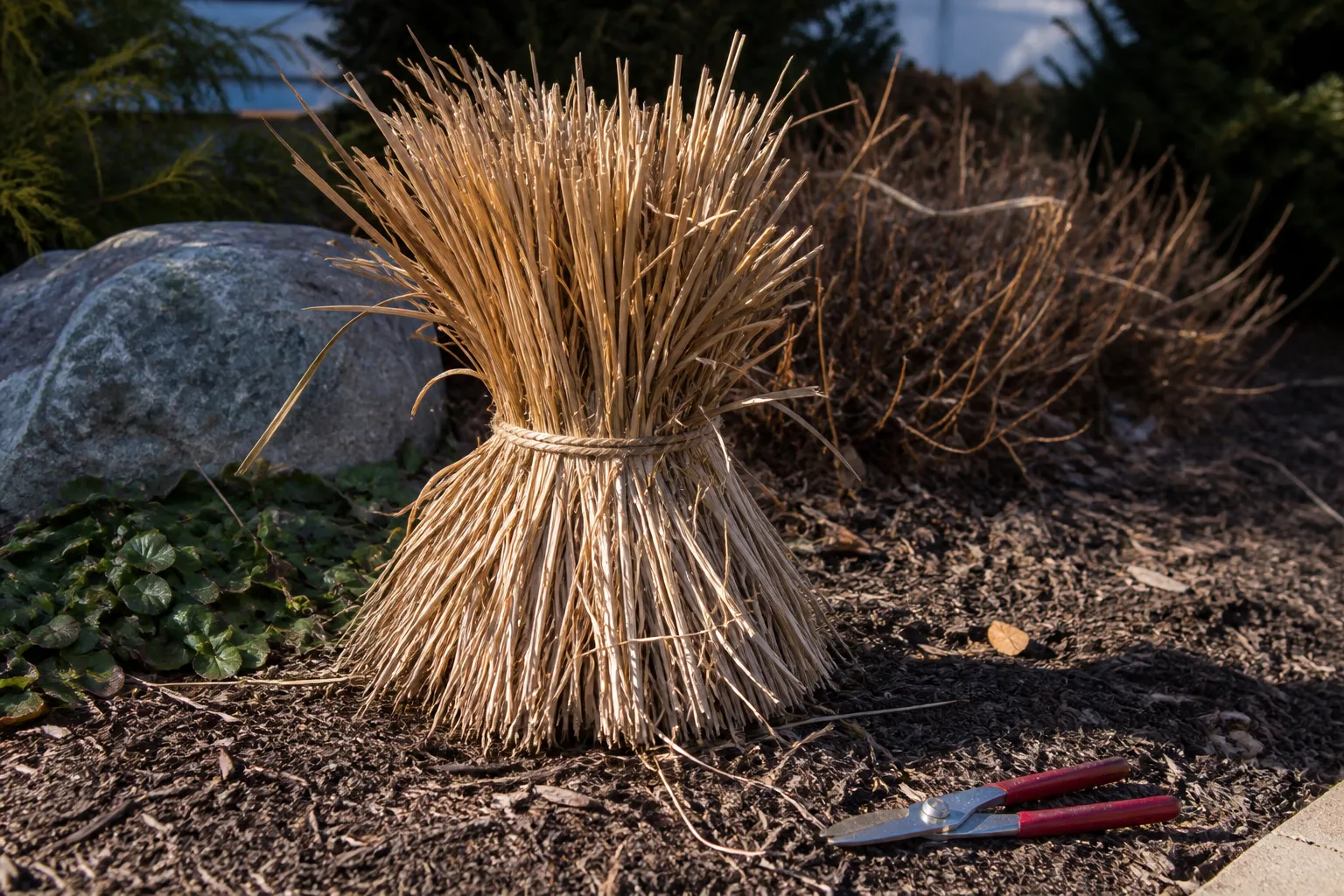
Bundling is the single best trick for controlling mess on grasses taller than 18 inches. Without it, every shear stroke sends blades flying across the bed and paths.
- Comb or shake the clump to drop loose debris.
- Wrap wide tape, twine, or a bungee cord around the stems two or three times along the height of the clump — bottom, middle, and near the top for very tall grasses.
- For wide miscanthus or pampas clumps, divide the plant into two or more sections and bundle each separately.
- Pull the bundle slightly away from the crown as you cut so blades fall outward, not onto the crown.
Biodegradable paper tape or natural twine can go straight to compost with the bundle. Remove vinyl or plastic tape before composting — it does not break down and contaminates mulch piles.
Cut Low Without Damaging the Crown
With the bundle secured:
- Cut across the base with hedge shears, a trimmer, or loppers at your target height — 3–6 inches for warm-season, higher for cool-season.
- Lean the bundle away from the crown as blades fall.
- Remove the bundle intact and repeat on any remaining sections.
- Reach into the remaining stubble and pull loose dead material from the crown center — this improves air circulation and reduces rot risk.
- Rake the surrounding soil and remove stray blades.
- Inspect for new green shoots and adjust: if many shoots are already 2–3 inches tall, trim only above them rather than shearing through green tissue.
Avoid stepping on the crown or cutting so low that you nick the growing points at soil level. Crown damage shows up weeks later as weak regrowth or a dead center.
Fire-Prone Landscapes and Dried Grass Cleanup
In wildfire-prone regions, standing dried grasses are not just untidy — they are flammable fuel, especially within the first 30 feet of structures. Many fire-smart landscaping programs recommend removing dead ornamental grass foliage at the end of the growing season rather than leaving it through winter, and keeping grasses away from fences, eaves, and wooden decks.
If fire risk is your primary concern, cut warm-season grasses in late fall once fully dormant, or at minimum remove blades before peak dry-wind season in your area. Rake cut material away from the bed — do not leave dry piles near buildings. This is one of the few cases where fall cutback is a safety decision, not an aesthetic one.
Do not burn grass clippings in the garden. Ornamental Grassworks notes that burning trimmings is poor practice for plant health and personal safety; compost or municipal yard-waste disposal is safer.
After the Cut: Cleanup, Compost, and Division Timing
Cutback day is also a good inspection day. Look into the crown for mushy tissue, rodent damage, or weeds embedded in the clump.
Composting: Bundled warm-season stems compost well when chopped into shorter lengths — easy to do while the bundle is still tied. Balance high-carbon grass debris with green material or a nitrogen source if you are adding a large volume to a home pile. UF/IFAS and standard compost guidance apply: dry grass is carbon-heavy and breaks down faster when mixed, not piled alone.
Mulch: After weeding around the clump, a thin layer of compost or shredded bark around the base — not piled on the crown — supports soil structure. Established grasses rarely need heavy feeding; the RHS notes that additional fertilizer is usually unnecessary on average garden soils.
Division: If the center of the clump is dead while outer rings grow vigorously, the plant wants division — not just a harder cut. Warm-season grasses divide best in spring as new growth starts; cool-season types often divide better in early fall when they resume root growth. See our maiden grass care guide for miscanthus-specific division timing, or browse low-maintenance ornamental grasses if you are reconsidering which species fit your yard long term.
For purple fountain grass and other tender warm-season grasses in cold zones, cutback in spring precedes either new container growth or replacement — our purple fountain grass guide covers overwintering and annual-zone treatment.
Common Mistakes That Weaken Grass Clumps
Even experienced gardeners slip on a few predictable errors:
Cutting cool-season grasses to the ground. Feather reed grass and fescues need partial height retained. A hard buzz delays recovery and can open the crown to rot in wet springs.
Pruning evergreen sedges like miscanthus. Carex and liriope need combing, not crown-level shearing. Hard cuts on evergreens produce ugly brown tips that persist for months.
Waiting until new growth is tall. Late shearing produces a half-green, half-brown clump all season. Once you see basal shoots, cut within the next week.
Leaving wet thatch on the crown. Matted dead blades hold moisture and encourage crown rot, especially on poorly drained soil. Pull debris out after cutting.
Using dull tools. Torn stems dry out unevenly and look ragged; sharp bypass blades make cleaner entry points for new shoots.
Skipping cutback entirely every year. Grasses survive occasional neglect, but accumulated thatch delays spring warming and new blade emergence. Old foliage left multiple seasons also increases self-seeding mess on spreading types.
Burning grass clumps. Flame damages crowns on pampas and large grasses and creates fire hazard. Compost or haul away cut material.
Troubleshooting Late or Harsh Cuts
New shoots already 4–6 inches tall: Trim only the brown stems above the green shoots rather than shearing the whole clump flat. You may accept a slightly shaggy look this year; next year, cut earlier.
Cut too low and crown looks damaged: Stop cutting. Keep soil moderately moist but not soggy. Do not fertilize heavily — wait for regrowth signals. If no shoots appear by mid-spring while neighboring grasses green up, the crown may be dead; divide or replace.
Clump hollow in the center: Division time, not harder pruning. Dig, split live outer sections, and replant or discard the dead core.
Grass still floppy after spring cutback: Check sun exposure, soil drainage, and age. Overgrown clumps and shade-grown miscanthus flop regardless of pruning. Division or relocation solves structural flop better than annual lower cuts.
Is it too late in June? For warm-season grasses already in active summer growth, do not hard cut unless you accept losing the current year’s plumes. For cool-season types, a light cleanup of obvious dead blades is fine, but save the main cutback for next early spring.
Conclusion
Cutting back ornamental grasses is a simple seasonal rhythm once you match grass type to timing and height. Late winter and early spring before new shoots emerge is the default for most deciduous grasses. Warm-season types take a hard 3–6 inch reset; cool-season types keep one-third of their height; evergreens and grass-likes need combing and light tidying rather than crown-level shears.
Bundle tall clumps before you cut, protect the crown, rake debris away from the base, and compost or haul cuttings instead of burning them. In fire-prone yards, fall cleanup of dried warm-season grasses is a legitimate safety choice even though it costs winter display. Get the type right, cut once at the right moment, and the clump returns with the movement and texture that made you plant it — without the tangled brown-and-green mess that sends gardeners back to search results every April.