How to Grow and Care for Maiden Grass
Learn maiden grass care, from sun and soil to watering, pruning, division, bloom timing, invasive-region cautions, and how to stop flopping clumps.
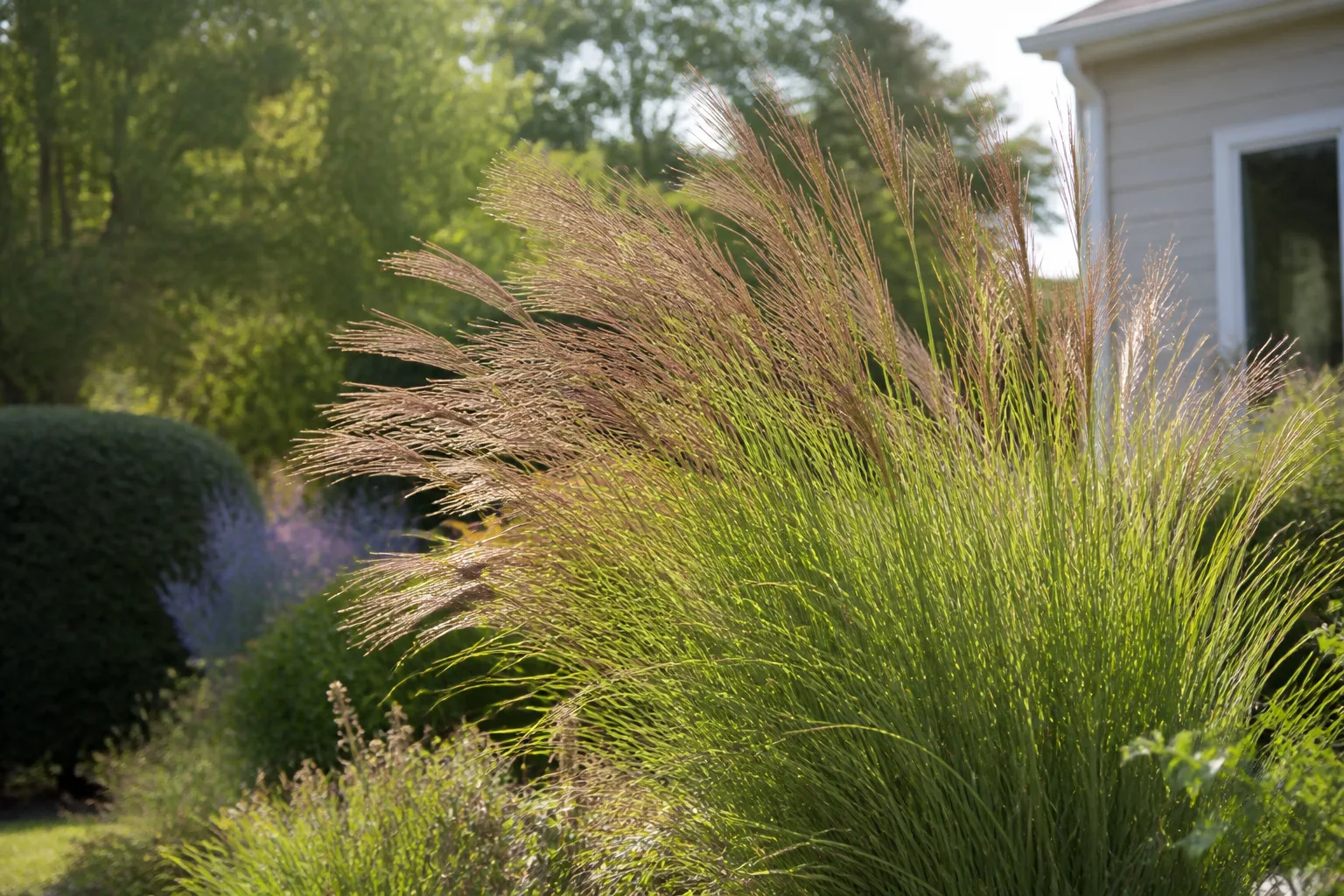
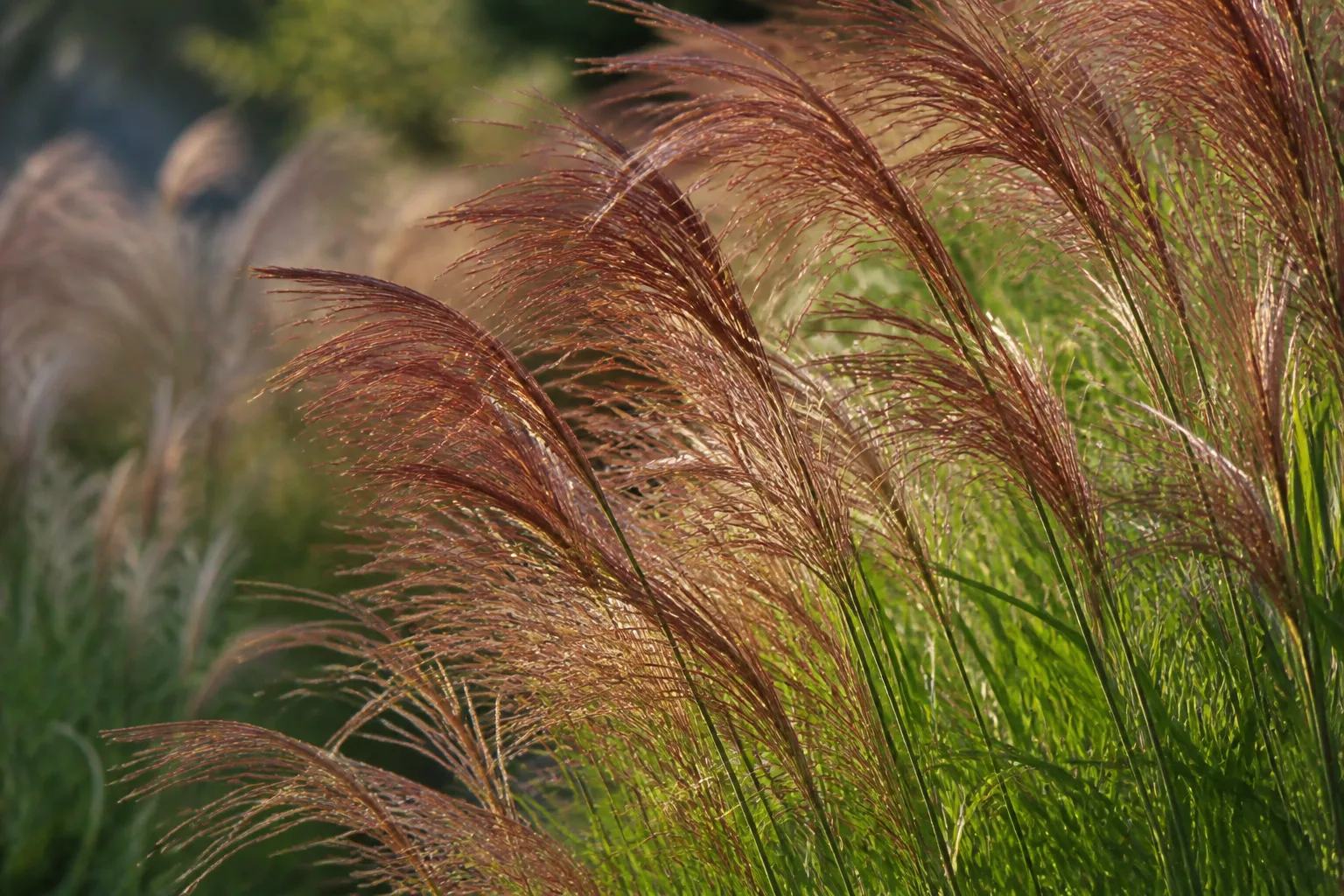
Maiden grass is one of those plants that can make a border look finished almost overnight. A single mature clump adds height, movement, and fall color. In late summer and fall, the copper-toned flower plumes catch low light and then fade to silvery seed heads that stay handsome well into winter. When the wind hits, the whole clump moves instead of just sitting there like a block of green.
That beauty is exactly why gardeners keep planting Miscanthus sinensis ‘Gracillimus’ and related cultivars. It is also why this plant deserves a more honest care guide than the usual light-soil-water template. Maiden grass can be easy once established, but it is not consequence-free. In some regions it self-seeds aggressively, it can flop in the wrong site, and mature clumps become heavy enough to need dividing if you want them to stay dense and upright.
What maiden grass is and why gardeners still plant it
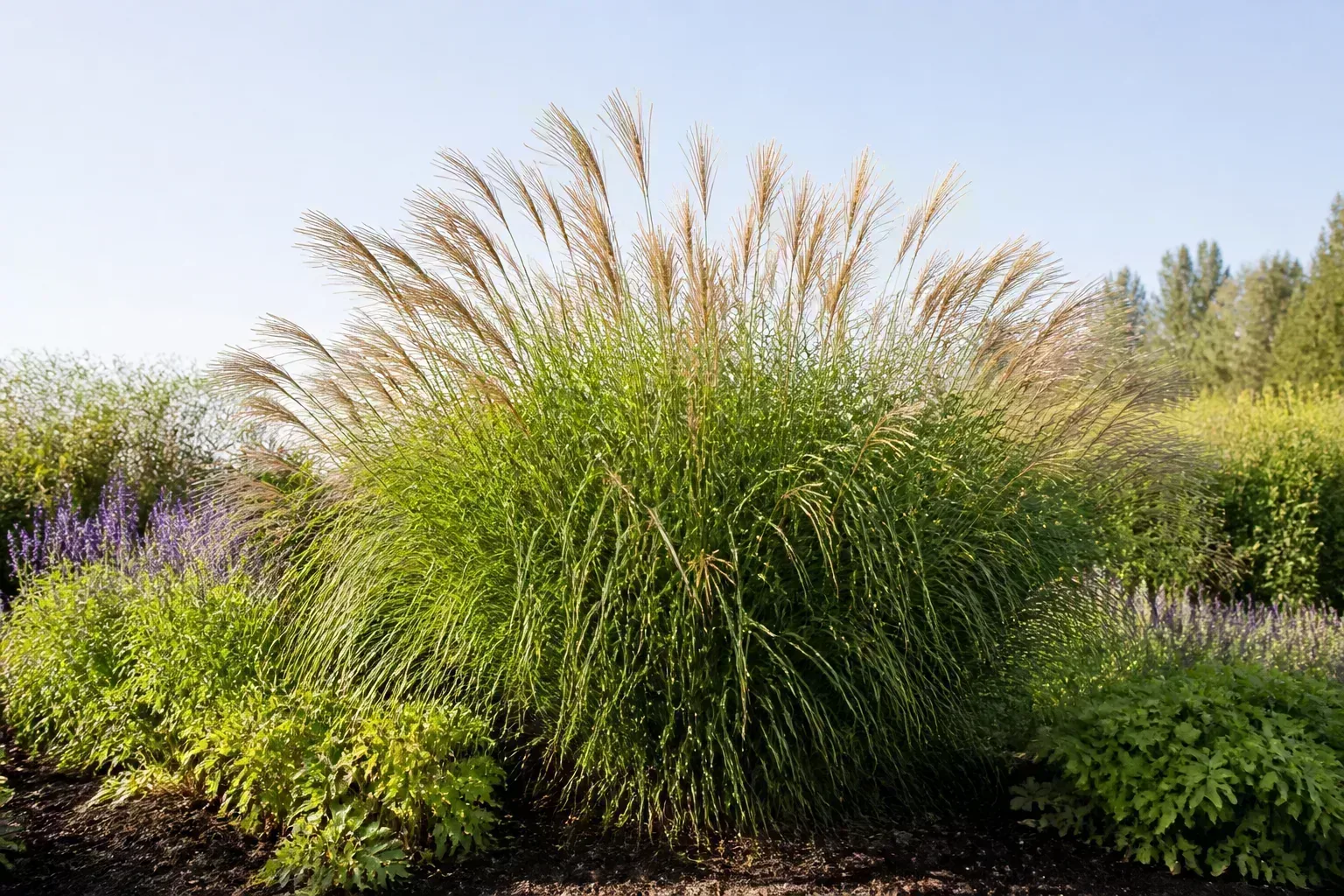
Maiden grass is a warm-season, clump-forming ornamental grass in the Poaceae family. Missouri Botanical Garden describes Miscanthus sinensis ‘Gracillimus’ as a rounded, arching clump with narrow green leaves, a silvery midrib, and reddish-copper flowers that mature to silvery plumes later in the season (Missouri Botanical Garden). In foliage, most plants reach about 4 to 6 feet tall, and flowering stems can lift the display into the 7- to 8-foot range.
The plant’s appeal is simple. It works as a specimen, a loose screen, a border anchor, or a mass planting near water or at the back of a perennial bed. UF/IFAS notes that maiden grass is often used as an accent, specimen, screen, or grouped planting, especially where the shifting foliage can animate the landscape (UF/IFAS). It is also drought tolerant once established, tolerant of a broad range of soils, and attractive through multiple seasons rather than peaking for two weeks and disappearing.
Before you plant: invasive risk, fire risk, and better alternatives
This is the section too many care guides treat like a footnote. In several parts of the United States, maiden grass is not a harmless ornamental. NC State Extension explicitly flags Miscanthus sinensis as invasive in North Carolina, describes it as highly flammable, and warns that its wind-dispersed seed makes it hard to contain once established (NC State Extension). Missouri Botanical Garden also notes that the species has escaped cultivation across much of the central and eastern U.S. and can disrupt native grasslands and fire regimes in some eastern states (Missouri Botanical Garden).
That does not automatically mean you must never plant it. It means you should check your state or regional invasive-plant guidance before buying it. If you garden near natural areas, roadside edges, meadows, or woodland openings, treat this as a real landscape decision, not a technicality.
If you still want the look but not the risk, lower-fertility or sterile selections are safer bets than the species. NC State points to lower-fertility cultivars such as Bandwidth, My Fair Maiden, and Scout as less weedy options. If you want to avoid Miscanthus altogether, native substitutes like switchgrass (Panicum virgatum), little bluestem (Schizachyrium scoparium), or Indiangrass (Sorghastrum nutans) can fill a similar structural role with less ecological downside in many eastern landscapes.
Fire risk matters too. Dry ornamental grass left standing through winter looks great, but in wildfire-prone areas it should not be planted close to buildings or inside defensible-space zones. NC State specifically advises against planting this grass near homes where flammability is a concern.
Quick maiden grass care snapshot
| Factor | Best target | What goes wrong |
|---|---|---|
| Sun | Full sun; light shade only in hotter climates | Too much shade leads to weaker bloom and floppy stems |
| Soil | Well-drained soil with average to medium moisture | Wet winter soil can weaken crowns and invite rot |
| Water | Regular moisture during year one; much less after establishment | Constant sogginess causes weak growth and disease pressure |
| Spacing | Usually 3 to 6 feet apart, depending on cultivar size | Tight spacing creates crowding and poor airflow |
| Fertilizer | Light compost or no feed in decent soil | Rich feeding encourages lush, floppy growth |
| Pruning | Cut back in late winter or early spring | Fall cutting removes winter interest and exposes crowns |
| Division | Every few years when the center thins or the clump sprawls | Old clumps get sparse, heavy, and harder to manage |
Best place to plant maiden grass
The best site for maiden grass is one that solves two needs at once: room to arch and sun to stay upright. This is not a plant for wedging into a narrow gap beside a walkway. Even moderate cultivars create broad mounds, and the blades naturally spill outward in a fountain shape. If the plant has to fight for light or space, the result is usually disappointing rather than elegant.
Use maiden grass where you want height and movement without a rigid hedge line. It performs well at the back of mixed borders, in island beds, beside large water features, or in repeated drifts through a larger landscape. UF/IFAS highlights mass planting, border use, and screening as strong applications, which fits how most successful gardens actually use it.
Avoid low pockets where winter water sits, tiny foundation beds, and narrow strips between pavement and fences. Avoid placing it directly against a house where dry winter stems create a maintenance or fire concern. If you live in an area with regular strong winds, give the plant enough surrounding space that a little lean still looks intentional rather than messy.
Spacing rules that prevent crowding later
Do not space maiden grass by how small the nursery pot looks. Space it by mature width. UF/IFAS lists typical spacing at 36 to 60 inches, while Missouri Botanical Garden gives mature spread for ‘Gracillimus’ at roughly 3 to 6 feet. If you are planting a screen or mass, crowding it now only buys you extra division work later.
A simple rule works well:
- 3 feet apart for compact cultivars or a faster visual fill
- 4 to 5 feet apart for most ‘Gracillimus’ type clumps
- 6 feet or more for taller or more vigorous selections
If you want an immediate wall of foliage, it is usually better to plant fewer grasses and underplant around them than to overpack the grasses themselves.
Light: full sun gives the best shape and bloom
Maiden grass can survive in partial shade, but it performs best in full sun. That means at least 6 hours of direct light, and more is usually better if the soil drains well. Missouri Botanical Garden notes that reduced light leads to less vigorous growth, weaker flowering, and more flopping. That is exactly what many gardeners misread as a fertilizer or staking problem when the real issue is placement.
If your plant gets tall but not full, blooms sparsely, or opens up down the middle by midsummer, check light before you change anything else. Shade stretches the stems and weakens the overall posture. A grass with a naturally arching habit still needs enough sun to build strong stems.
In very hot climates, partial shade can be tolerated, but it should be bright rather than deep afternoon gloom. The goal is still a strong, sunny site, just without baking reflected heat in a tight corner.
Soil: drainage matters more than perfection
Maiden grass is adaptable. NC State says it can handle a surprisingly wide range of soils and drainage levels, while UF/IFAS lists tolerance for sand, loam, clay, acidic soils, and slightly alkaline soils. That flexibility is one reason the plant is so successful.
But adaptable is not the same as invincible. The sweet spot is average to medium-moisture, well-drained soil. Missouri Botanical Garden notes that ‘Gracillimus’ grows easily in soils from sandy to heavy clay, but it still performs best where the soil is not waterlogged. Rich, moisture-retentive soil can drive impressive growth, though it may also produce a larger, heavier clump that flops sooner if light is lacking.
If your soil is heavy clay, amend only enough to improve structure and surface drainage, or better yet plant on a gentle rise. If your soil is fast-draining sand, add compost to help hold moisture during the establishment phase. The plant will tolerate less-than-ideal texture more readily than it tolerates sitting in stale, saturated winter soil.
Watering maiden grass in year one vs after establishment
This is where the word drought tolerant causes confusion. Established maiden grass can handle dry spells much better than a fresh planting can. Newly planted clumps need consistent moisture while they build roots.
During the first growing season, water deeply enough to moisten the full root zone whenever the top few inches of soil begin to dry. In practical terms, that often means about an inch of water per week, more during intense heat or in sandy soil, and less in cool or rainy stretches. Deep watering is better than shallow daily splashes because it pushes roots downward and outward.
After establishment, maiden grass needs far less intervention. UF/IFAS and Missouri Botanical Garden both characterize it as fairly drought tolerant once rooted in. During normal weather, mature clumps usually get by on rainfall. Step in during extended drought, especially if leaf tips curl inward, older foliage scorches early, or the plant is in a highly exposed site.
One warning: wet soil is more dangerous than dry soil for this plant over the long haul. Repeated sogginess encourages weak growth, winter stress, and fungal issues. Water the root zone, not the leaves, especially if rust has ever been a problem in your garden.
Temperature, hardiness, and winter behavior
Maiden grass is hardy across a broad range, typically USDA Zones 5 to 9 for ‘Gracillimus’, with some references stretching the species wider depending on cultivar and site. UF/IFAS lists the species as suitable for Zones 4 through 9, while Missouri Botanical Garden gives ‘Gracillimus’ a range of Zones 5 to 9.
The important thing to understand is that maiden grass is a warm-season grass. It does not wake up early in spring the way many cool-season plants do. You can stare at a seemingly dead clump in early spring and assume it failed, only to see new growth emerge once the soil warms.
Leave the old stems standing through winter if possible. They protect the crown and provide one of the plant’s best features: winter interest. The dried plumes and straw-colored foliage are often the reason people plant maiden grass in the first place. Cut too early in fall and you lose both the look and some of that natural crown insulation.
Fertilizer: less is usually better
Most maiden grass does not need much fertilizer if the soil is reasonably healthy. In fact, overfeeding is one of the fastest ways to create a floppy, overgrown clump that disappoints by midsummer. UF/IFAS notes the plant is widely grown without major feeding demands, and Missouri Botanical Garden lists ‘Gracillimus’ as low maintenance.
If your soil is poor, a spring topdressing of compost is usually enough. In noticeably weak soils, a light application of balanced slow-release fertilizer in spring can help establishment, but heavy summer feeding is rarely worth it. More nitrogen means more lush leaf growth, and lush leaf growth is exactly what starts toppling when flower plumes arrive or storms roll through.
If the plant is already flopping, do not solve it with more fertilizer. That almost always makes the problem worse.
Cultivars worth knowing, including Gracillimus
‘Gracillimus’ is the classic maiden grass for a reason. Missouri Botanical Garden describes it as a late-blooming cultivar with narrow green leaves, a silver midrib, and reddish-copper flowers that age to silver. It forms a substantial, rounded clump and usually blooms later than many other Miscanthus selections.
That said, not every gardener needs ‘Gracillimus’ specifically. A few useful comparisons:
- ‘Morning Light’: narrower leaves with white striping and a shimmering effect; generally more refined and compact.
- ‘Strictus’: upright habit with horizontal yellow banding; strong visual character but a stiffer look.
- ‘Adagio’: a shorter, more compact option for smaller spaces.
- ‘Yaku Jima’: dwarf and more manageable where full-sized maiden grass would dominate.
If you garden in a region where self-seeding is a concern, put fertility ahead of looks. Lower-fertility or sterile selections are a smarter choice than any famous cultivar that sheds viable seed into adjacent open ground.
How and when to prune maiden grass
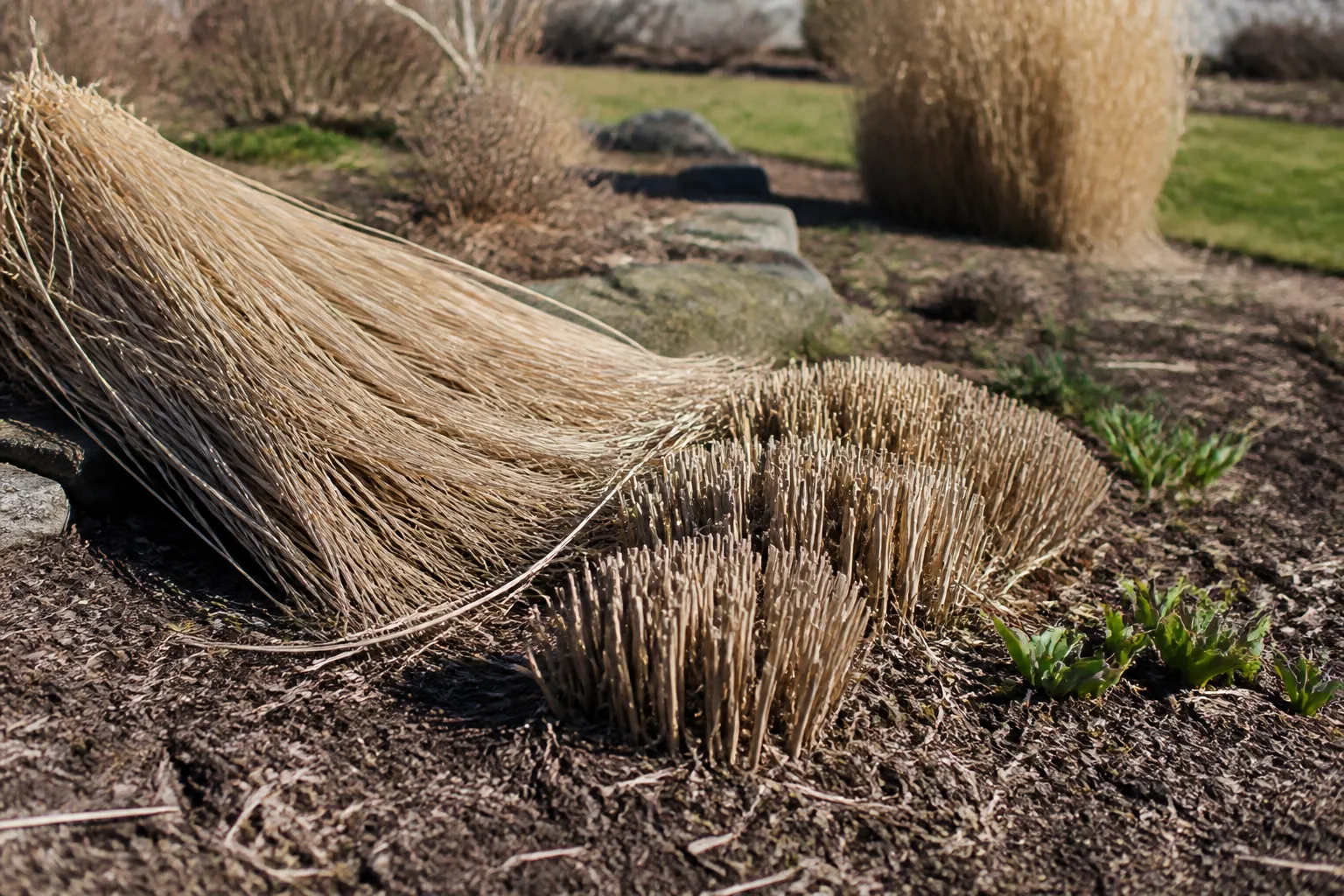
Prune maiden grass in late winter or very early spring, just before new shoots start pushing from the base. That timing preserves winter structure while keeping old blades from tangling with fresh growth. Missouri Botanical Garden and UF/IFAS both support this timing.
The easiest method is simple:
- Tie the clump loosely around the middle with rope or twine.
- Use hedge shears, a powered trimmer, or sharp loppers.
- Cut the entire plant back to about 4 to 8 inches above the ground.
- Remove the bundle before new shoots thread through it.
Wear gloves and long sleeves. Maiden grass leaves can be surprisingly sharp at the edges. If self-seeding is a major concern in your area, you can remove seed heads earlier, but that means giving up some of the winter display.
How to divide maiden grass without wrecking the clump
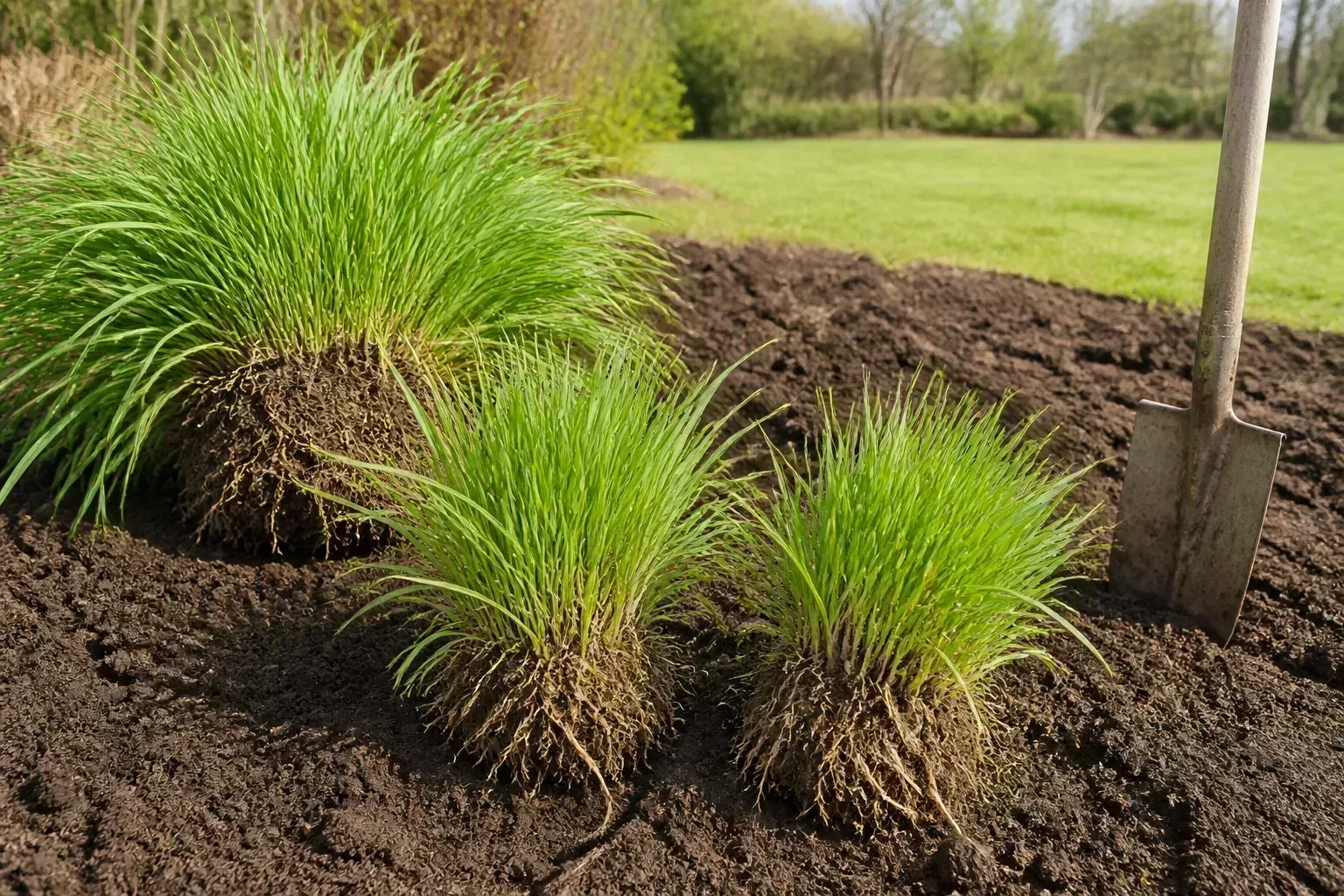
Division is how you keep old maiden grass from turning into a donut-shaped clump with a dead-looking center. It is also the easiest way to make more plants if you actually want them. Mature clumps often benefit from division every three to four years, or sooner if the center thins, bloom declines, or the plant sprawls beyond its space.
Early spring is the easiest window because the foliage is already cut back and the plant is about to regrow. The process is more physical than technical:
- Cut back the old foliage first if you have not already.
- Dig a wide circle around the crown so you lift as much of the root mass as possible.
- Lever the clump out of the ground with a spade.
- Split it into large sections with a sharp spade, root saw, or two digging forks.
- Replant divisions immediately at the same depth and water them in well.
Big, old clumps are heavy. On mature plants, division can feel more like small-scale demolition than gentle propagation. That is normal. The goal is not to keep every root intact. The goal is to replant vigorous outer sections and discard tired, hollow center wood if necessary.
Growing maiden grass from seed
You can grow maiden grass from seed, but it is not always the best choice. Seed-grown plants take longer to become substantial, and seedlings from named cultivars may not come true. If your region already has self-seeding issues with Miscanthus sinensis, sowing more seed is not exactly a win.
Still, if you want to start seed, use warmth and surface light. Trusted horticultural sources like Epic Gardening and Gardening Know How both note that Miscanthus seed germinates fairly readily in warm conditions, often within one to three weeks. Sow on the surface or barely cover the seed, keep the medium lightly moist, and transplant young plants after they develop enough roots and outdoor conditions have warmed.
Division remains the better method for preserving a named cultivar and getting a landscape-sized plant faster.
How to get better blooms and stronger winter interest
Maiden grass flowers best when three things line up: enough sun, reasonable moisture during active growth, and not too much shade or fertilizer. Weak bloom is usually a cultural issue, not a mystery.
If your plant has healthy foliage but poor plumes, check these in order:
- Is it getting full sun?
- Is the clump overcrowded or aging?
- Has it been overfed with nitrogen?
- Is the cultivar slower or later to bloom than you expected?
- Did a cool season or a soggy winter set the plant back?
‘Gracillimus’ blooms later than many other cultivars, so impatience sometimes gets mistaken for a problem. When it does bloom well, the sequence is one of its best features: coppery flower color, then pale, silvery seed heads, then a straw-toned winter silhouette that still reads clean and architectural from a distance.
Common maiden grass problems and what to do first
The most common maiden grass problems are not exotic diseases. They are placement and age problems.
Flopping over: This usually points to too much shade, an overlarge clump, excessive fertility, or stems weighted down by moisture and plumes. First fix: increase sun or divide the clump. If the plant is in rich soil and growing like a monster, stop feeding it.
Center dying out: This is classic old-clump behavior. The living growth moves outward and the middle loses vigor. First fix: divide the plant in spring and replant the healthiest outer sections.
Rust on leaves: Rust can show up as orange-brown pustules or streaking, especially when foliage stays wet. UF/IFAS notes that rust often improves in drier weather. First fix: improve airflow and avoid overhead watering.
Miscanthus mealybug: Missouri Botanical Garden warns that miscanthus mealybug can cause stunted growth and is difficult to eradicate because it hides inside stems. First fix: cut back heavily at the right season, inspect the crown, and treat early infestations before they build.
Poor flowering: Usually too much shade, a cool season, or a weak site. First fix: reassess sun exposure before changing anything else.
Plants showing up where you did not plant them: That is the invasive warning becoming real. First fix: remove volunteer seedlings early and reconsider whether this is the right grass for your site.
Conclusion
Maiden grass earns its popularity because it is dramatic without being fussy. Give it full sun, decent drainage, enough room to arch, and patience through the first season, and it can become one of the strongest structural plants in the landscape. But good maiden grass care starts before planting, not after. If the site is too shady, too wet, too tight, or too close to natural habitat where self-seeding is a problem, the better move may be a safer cultivar or a native grass instead.
If you choose the right spot and manage it honestly, ‘Gracillimus’ rewards you with one of the best four-season silhouettes in the ornamental-grass world. If you choose the wrong spot, it tells you quickly. Listen to that signal early, and this plant becomes much easier to live with for the long run.