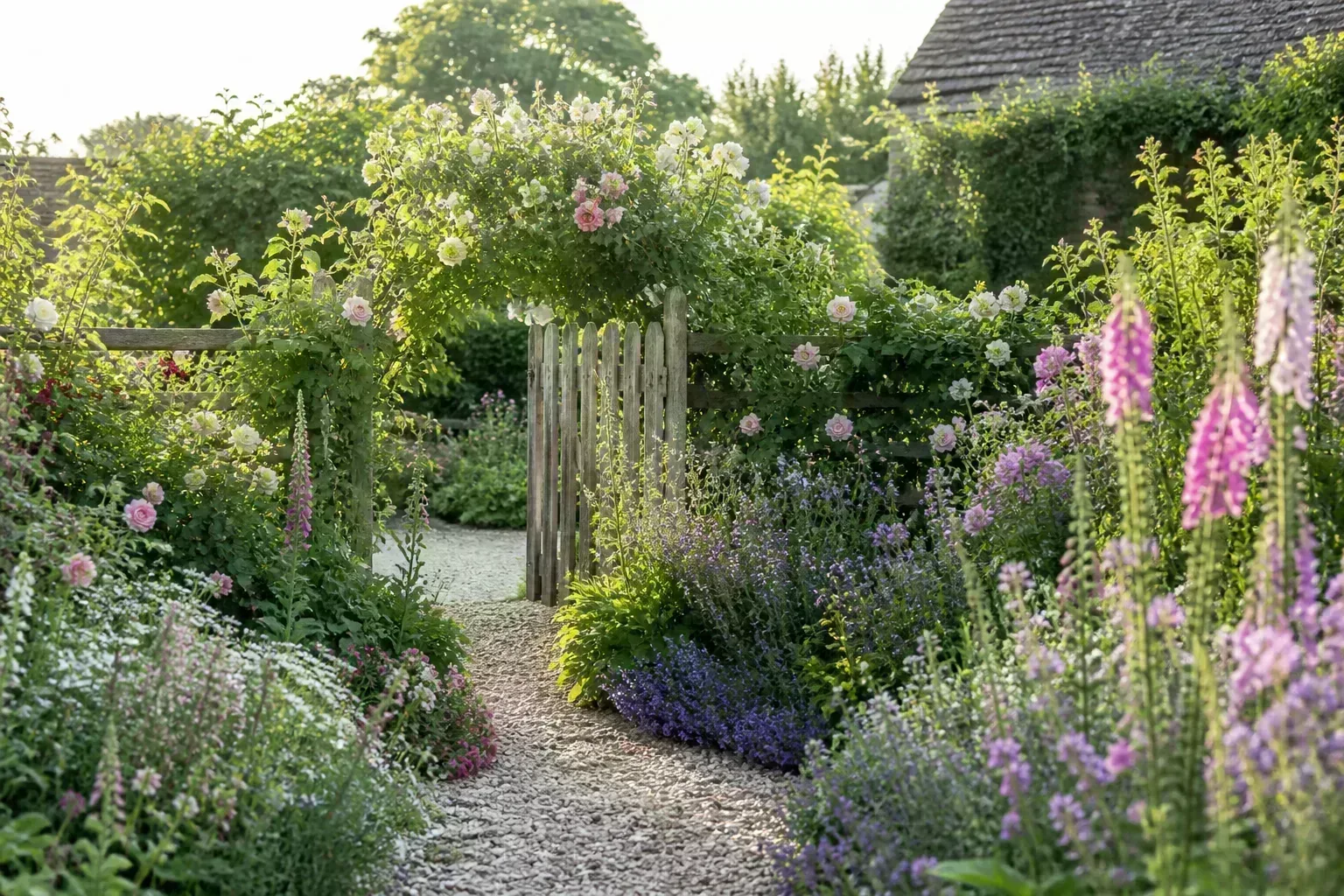
Early-Blooming Perennials for Spring Gardens
Nine early-blooming perennials for shade and sun—plus bloom timing, planting windows, and how to build a March-to-May flower relay without gaps.
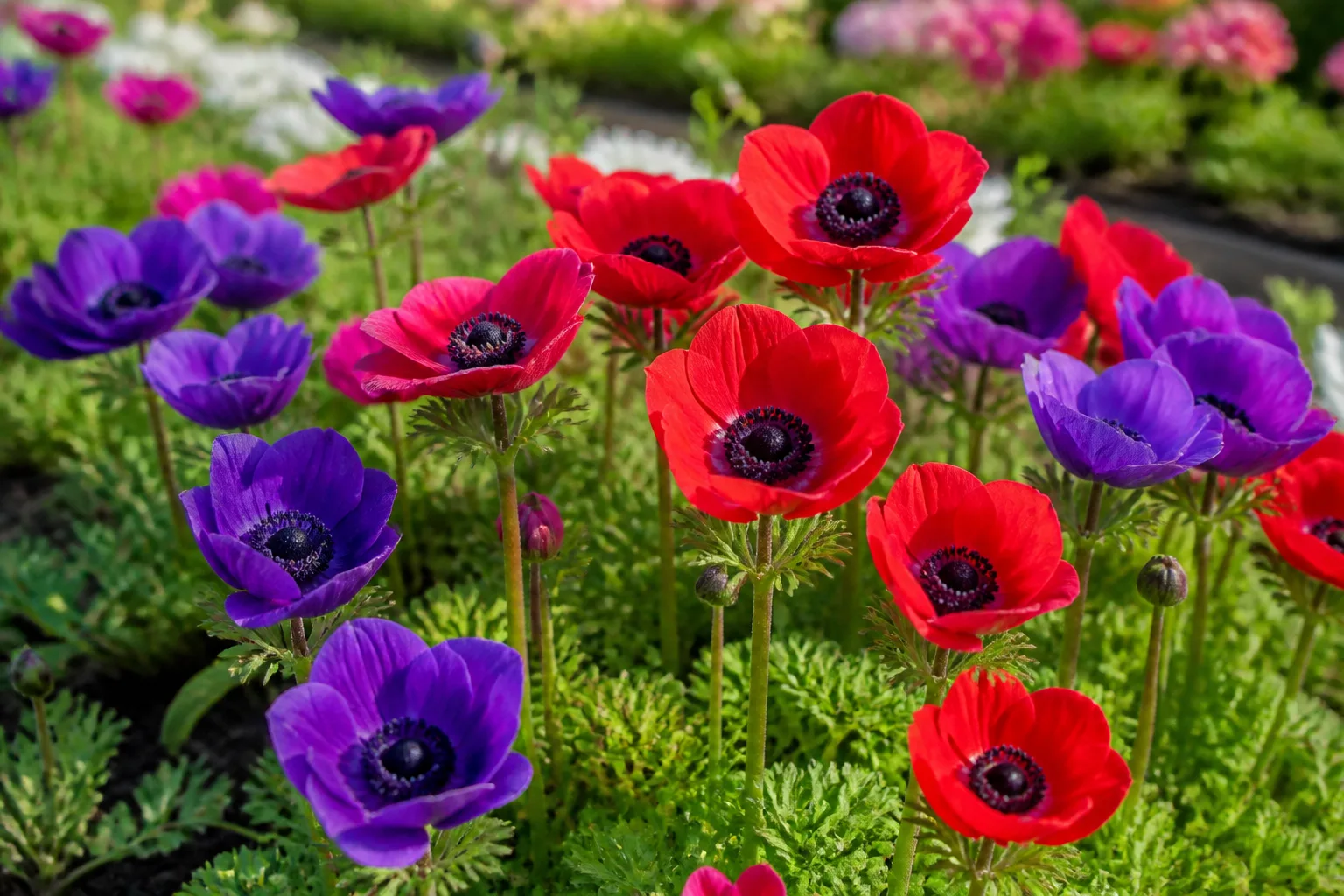
Daffodils and crocuses get the credit, but early blooming perennials are what turn a two-week bulb show into a garden that looks alive from late winter through May—and keeps feeding pollinators while nights are still cold. The nine below bloom in cool weather, tolerate spring frost once hardened off, and return from root or crown year after year. Match them to your sun and soil, plan for what happens after petals drop, and you will stop wondering why the yard goes quiet in June.
Unlike tulips that need replanting when they fizzle out, these perennials build underground structure season after season. Some spread politely into colonies; others stay tidy clumps. A few vanish above ground by July but reliably reappear next March. Knowing which is which before you shop saves money and prevents the classic spring mistake—filling a gap in June with a sun-loving perennial that never belonged in that shady bed to begin with.
Why Early Perennials Deserve Space Beside Your Bulbs
Bulbs store energy underground and push flowers fast—that is their superpower and their limit. Most spring bulbs peak and fade within a few weeks, leaving empty soil unless you planned ahead. Early spring flowering perennials spread from persistent crowns or rhizomes, bloom across a longer window, and many offer foliage or seed interest after flowers finish.
Native early bloomers add another layer bulbs rarely provide: larval host value and nectar for specialist bees active before tree leaves fully open. NC State Extension notes that bloodroot supports mining bees and sweat bees at a time when few other flowers are open. That timing matters if you garden for wildlife, not just color.
Spring Ephemerals vs Plants With Staying Power
Not all early perennials behave the same after bloom. Spring ephemerals—bloodroot and Virginia bluebells are classic examples—emerge, flower, set seed, and die back to the ground by early summer as shade deepens and heat rises. The plant is not dead; it is resting underground until next spring. If you do not know that cycle, you may accidentally dig up “empty” spots or cram in aggressive spreaders that steal next year’s show.
Persistent early perennials keep leaves through summer or beyond. Hellebores hold glossy foliage all year in mild climates. Lungwort’s spotted leaves stay attractive after blue flowers fade. Wild geranium blooms in spring but often carries green foliage—and sometimes red fall color—until frost. When you design a bed, underplant ephemerals with summer companions so you are not staring at bare mulch by July.
Build a March-to-May Bloom Relay
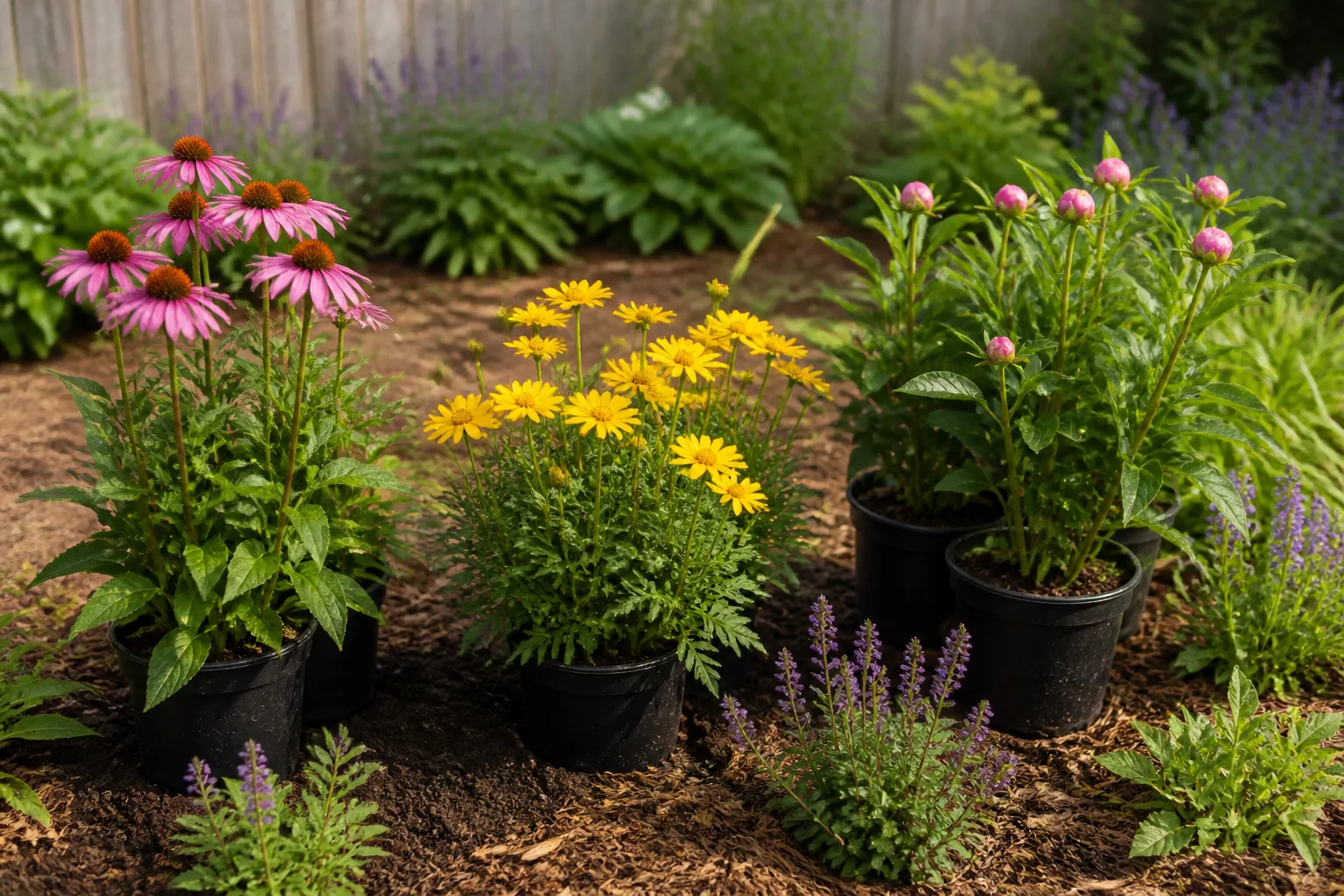
The best spring gardens sequence blooms rather than stacking them on one weekend. Think in three waves:
Late winter to early March: Hellebores and pasque flowers in mild Zones 6–8; hellebores can push buds through snow in Zone 5 with protection.
Mid-March to April: Bloodroot, Virginia bluebells, lungwort, primroses, wild geranium starting, bleeding heart opening.
April into May: Creeping phlox mats peak; wild geranium in full flower; bleeding heart still arching; primroses extending in cool climates.
Layer behind these early actors with summer perennials—coneflower, bee balm, garden phlox, black-eyed Susan—whose foliage fills space as ephemerals retreat. Our guide to perennials that bloom all summer is the natural next read once your spring list is set.
Plant Early Perennials Without Losing Them to Frost
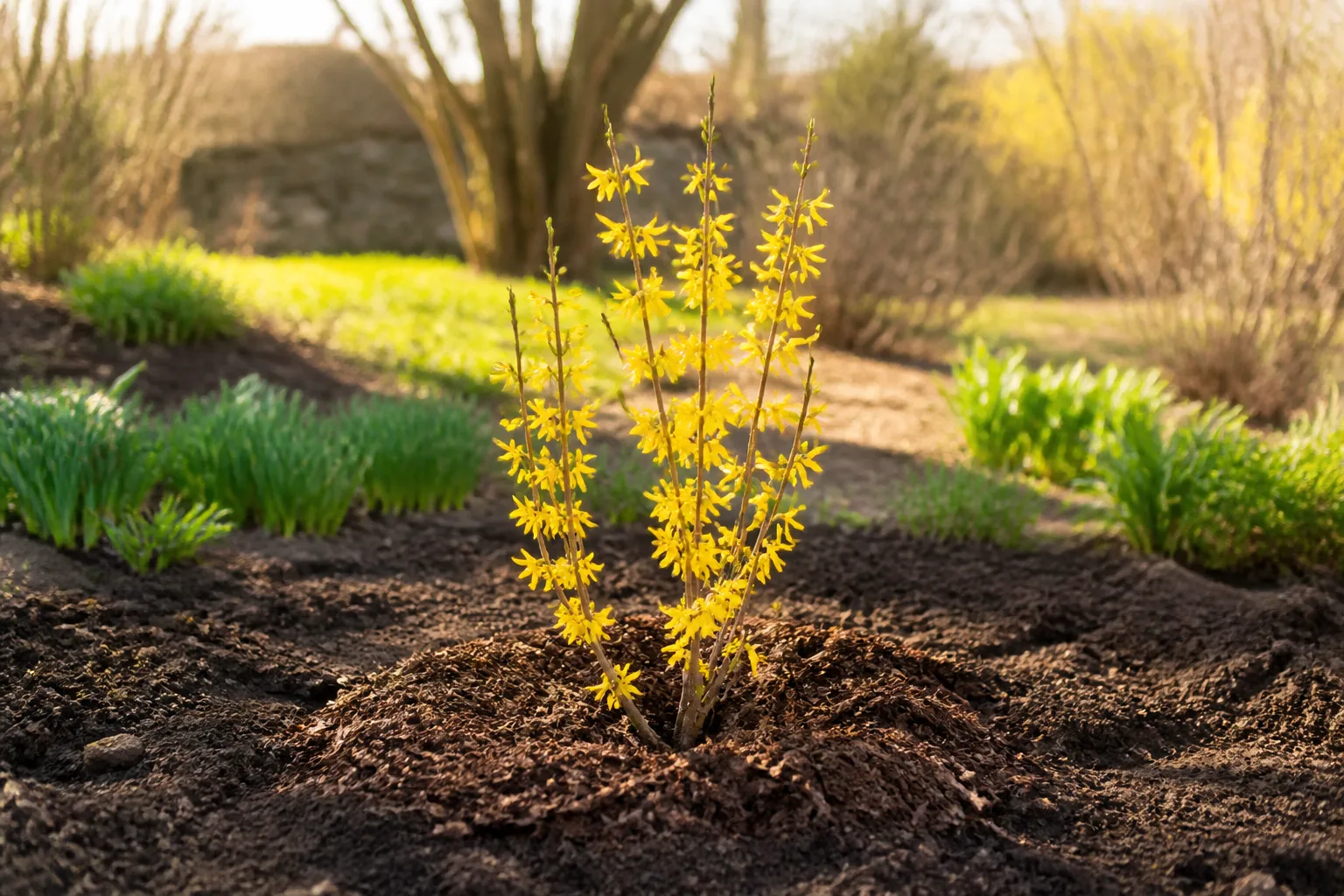
Container-grown perennials can go in when soil is workable and crumbles instead of clumping—usually after your last hard frost, though hellebores and pasque flowers tolerate planting during cool stretches if you avoid waterlogged soil.
Zones 5–6: Mid-April through May for most entries; buy container stock for same-year bloom on wild geranium, lungwort, and phlox.
Zones 7–8: Late March into April; watch primroses in sudden heat spikes above 80°F.
Zones 3–4: Late May into early June; favor larger pots and mulch new plantings lightly.
Water deeply at installation, then check the root zone twice weekly the first six weeks. Penn State Extension emphasizes consistent moisture during establishment—surface sprinkles do not reach new roots. If you are also shopping summer performers, see perennial flowers to plant this spring for overlap plants that extend the season past May.
Bloodroot — White Flowers Before the Canopy Closes
Bloodroot (Sanguinaria canadensis) is a native spring ephemeral of eastern North American woodlands. Single white flowers—usually eight petals, bright yellow centers—open on sunny days and close at night, often before most trees leaf out. The common name comes from orange-red sap in the rhizome; wear gloves if you divide plants.
Quick specs: USDA Zones 3–8; part sun to full shade; moist, rich, slightly acidic soil; moderate water during spring growth.
Bloodroot spreads slowly by rhizomes and self-seeding in ideal woodland conditions. It goes dormant by June, so mark clumps or plant low summer groundcovers around them. Pollinator value is high for native mining bees and flies active in cool weather. Do not expect bloodroot to thrive in hot, dry, full-sun borders—it wants the edge of shade and consistent spring moisture.
Ants often distribute bloodroot seeds, which carry an edible appendage called an elaiosome—a natural partnership that helps the plant colonize without becoming invasive in average garden soil. If you buy rhizomes mail-order, plant them shallowly as soon as they arrive in fall or early spring; dried rhizomes lose viability quickly. Never collect from wild populations—nursery-propagated stock is widely available and protects native woodland populations under pressure from habitat loss.
Best paired with: Virginia bluebells, wild geranium, ferns, and later-emerging hostas that cover the gap after die-back.
Hellebore (Lenten Rose) — Blooms Through Late Frosts
Hellebores (Helleborus hybrids and species)—called Lenten roses—are often the first perennial flowers you will see in a cold garden, sometimes nodding through late snow from February into April depending on cultivar and zone. Flowers hang face-down in shades of white, cream, pink, burgundy, green, and spotted bicolor forms; many stay ornamental on the plant for weeks.
Quick specs: USDA Zones 4–9; partial shade; rich, well-drained soil with compost; moderate moisture.
Hellebores are toxic if ingested and can irritate skin—wear gloves when cutting old foliage. Remove last year’s leaves in late winter before buds rise so flowers show cleanly; that is usually the only maintenance. They resent division; leave established clumps alone unless you are willing to wait several seasons for recovery.
In hot, humid summers (Zone 8 south), foliage may look tired by August but revives in fall. Pair hellebores with bleeding heart, lungwort, and spring bulbs for a layered shade vignette. For more low-effort spring color in similar conditions, our low-maintenance spring-flowering perennials guide overlaps several shade-friendly picks.
Double-flowered hellebore cultivars show off well in cut bowls floated indoors—snip stems when stamens are visible and change water every two days. Outdoors, leave spent flowers if you want seedlings; hybrids may not come true from seed, but volunteer plants can still fill woodland edges where you want a naturalized look.
Virginia Bluebells — Pink Buds That Open Sky Blue
Virginia bluebells (Mertensia virginica) produce one of spring’s most graceful shows: clusters of tubular flowers start pink and shift to sky blue as they mature, on arching stems 18–24 inches tall. Native to moist eastern woodlands, this spring ephemeral dies back completely by early summer—plan for that disappearance.
Quick specs: USDA Zones 3–9; part sun to full shade; moist, rich, slightly acidic soil; moderate water.
Bluebells spread by seed and rhizomes in happy sites, forming colonies that hummingbird moths and bumblebees visit heavily. They pair beautifully with bleeding heart, wild geranium, and daffodils that bloom in the same window. Avoid planting in dry shade under thirsty tree roots unless you can irrigate during spring; bluebells wilt quickly when soil dries during bloom.
Mertensia virginica is native across much of the eastern United States and prefers base-rich, mesic forest soils—the same niche as bloodroot and wild geranium. In gardens, a yearly top-dress of compost mimics woodland leaf litter without making soil soggy. If leaves yellow before bloom, the site is too dry or too sunny; move divisions in early fall rather than mid-spring when roots are actively growing.
Because plants vanish underground, interplant with ferns, astilbe, or hosta so the bed does not collapse visually in June.
Creeping Phlox — The Sunny Groundcover Carpet
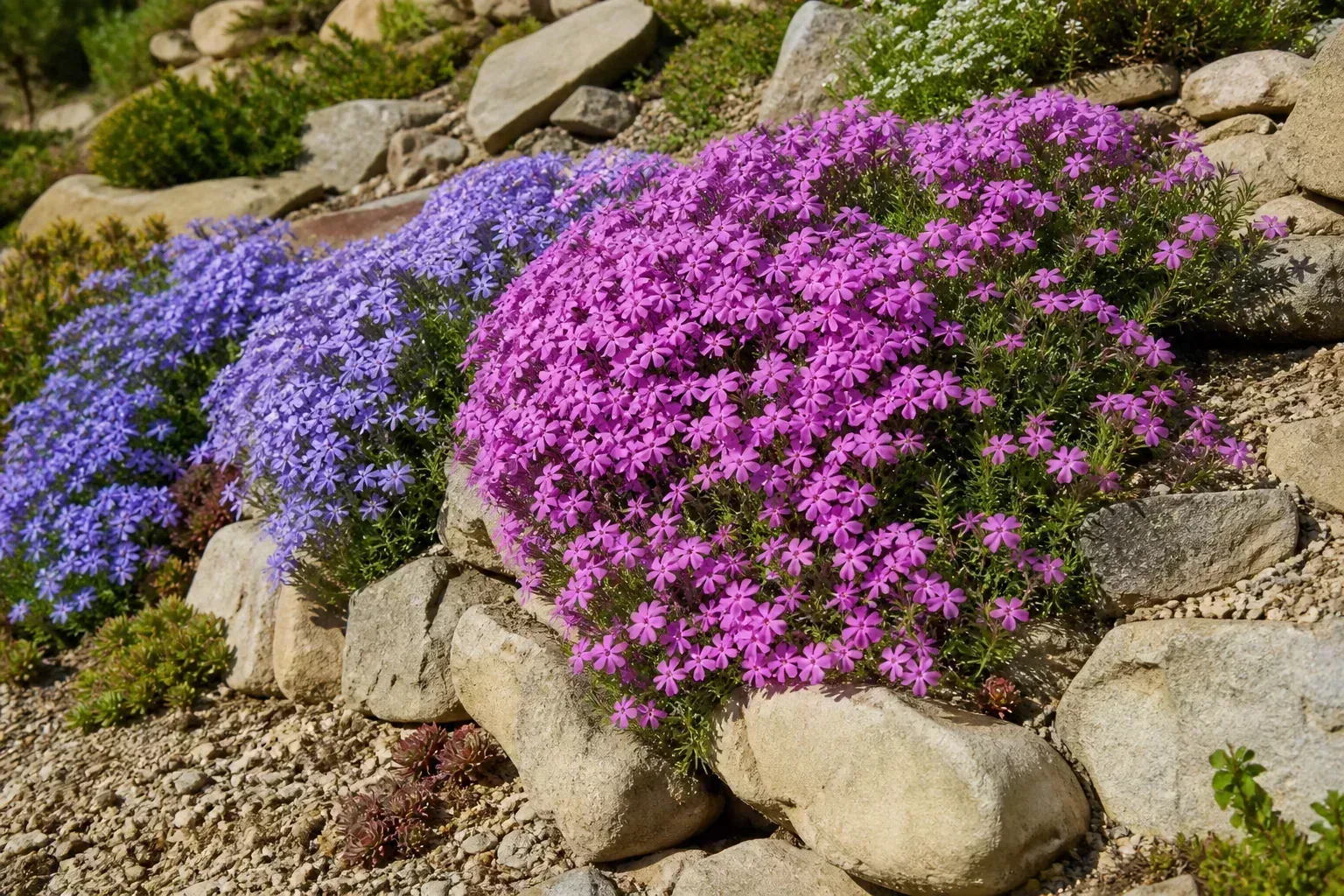
When people say creeping phlox, they usually mean moss phlox (Phlox sublata)—a sun-loving, needle-leaved mat that smothers slopes and rock edges with pink, purple, white, or bicolor flowers in mid- to late spring. It is the plant behind the “pink moon” nickname for April’s full moon, when mats bloom across Appalachia and the Midwest.
Quick specs: USDA Zones 3–9; full sun; well-drained, slightly acidic soil; moderate to low water once established.
Do not confuse moss phlox with Phlox stolonifera, a shade-loving stoloniferous species with similar common names but opposite needs. Moss phlox wants sharp drainage; wet winter soil rots crowns. Once rooted, it is drought-tolerant and rarely needs division unless the center thins.
Trim lightly after bloom to encourage dense foliage. For species-level care and mildew-prone tall cousins, see our phlox care guide—moss phlox is the easy branch of the family.
Bleeding Heart — Arching Hearts for Shady Borders
Bleeding heart (Lamprocapnos spectabilis, formerly Dicentra spectabilis) sends up ferny foliage and arching stems hung with pink or white heart-shaped flowers in mid-spring. Old-fashioned and reliable in partial shade, it reaches 2–3 feet and makes a strong backdrop for lower bluebells and phlox mats.
Quick specs: USDA Zones 3–9; part sun to full shade; moist, rich, slightly acidic soil; moderate water.
Bleeding heart is deer resistant in many gardens and handles cold springs well. In warmer climates, plants often go dormant in midsummer—yellowing and disappearing after heat arrives. That is normal, not failure. Mark the spot and avoid digging. Fringed bleeding heart (Dicentra eximia) and cultivars like ‘Gold Heart’ extend interest with longer bloom or yellow foliage in some regions.
Install bare-root crowns in early spring with the top bud 1 inch below soil, or buy potted plants for faster impact. Keep soil evenly moist the first season; established clumps tolerate brief dry spells in shade.
Wild Geranium — Native Color That Stretches Into Summer
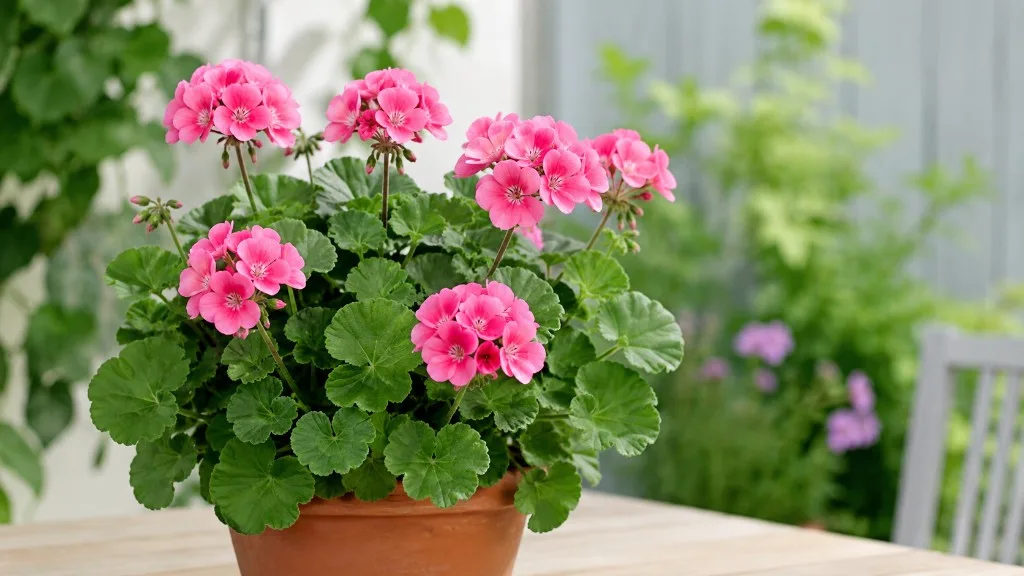
Wild geranium (Geranium maculatum)—cranesbill, not the red pelargonium sold as “geranium” in summer pots—is a eastern North American woodland native with deeply lobed leaves and saucer-shaped pink to lilac flowers from mid-spring into early summer, sometimes into July in cool sites.
Quick specs: USDA Zones 3–8; part shade to partial sun with adequate moisture; rich loam; moderate water.
NC State Extension lists wild geranium among the showiest native cranesbills, noting deer resistance, pollinator value, and red fall foliage on some plants. It naturalizes politely in woodland gardens without the aggressive spread of some groundcovers. Shear lightly if foliage yellows during hot dry spells mid-summer.
Cultivars like ‘Espresso’ (dark leaves, pale pink flowers) and ‘Album’ (white) extend design options. Unlike bloodroot and bluebells, wild geranium keeps presence after bloom—use it to bridge spring ephemerals and summer shade perennials.
Pasque Flower — Low, Fuzzy Blooms for Dry Sunny Edges
Pasque flower (Pulsatilla vulgaris and related species) blooms near Easter with silky buds opening to purple, red, or white cup-shaped flowers on fuzzy stems 6–12 inches tall. Feathery seed heads follow—attractive if you leave them—and plants prefer full sun and lean, well-drained, slightly alkaline soil.
Quick specs: USDA Zones 4–8; full sun; dry to moderate moisture; sandy or gravelly drainage.
Pasque flowers hate wet winter crowns. Plant on slopes, rock garden pockets, or raised beds amended with grit, not heavy compost alone. They are slow to establish from seed but long-lived once settled. Combine with moss phlox on sunny edges and leave room—roots resent frequent disturbance.
The silky seed heads that follow flowers are worth leaving intact—they catch morning light and extend the display into May without competing with summer perennials below. If slugs chew emerging foliage in wet springs, hand-pick at dusk for a week rather than broadcasting bait near early pollinators.
In windy sites, stake is rarely needed because stems stay low; do watch for slug damage on emerging foliage in wet springs.
Lungwort — Spotted Leaves After the Blue Flowers Fade
Lungwort (Pulmonaria spp.) earns its place in shade gardens: clusters of pink buds open blue or purple in early spring, and many cultivars carry speckled or silver-spotted foliage that looks fresh after flowers finish. Height stays around 10–14 inches; clumps spread slowly.
Quick specs: USDA Zones 3–9; part sun to full shade; moist, rich, slightly acidic to neutral soil; moderate water.
Lungwort is low maintenance if sited in humus-rich shade with even moisture—powdery mildew appears when plants bake in afternoon sun with dry soil. Cut tired flower stems after bloom; leave foliage for summer texture. Pairs with hellebore, bleeding heart, and wild geranium in cottage woodland borders.
Silver-spotted cultivars like ‘Majesté’ and ‘Samurai’ read well from a distance in dim corners where solid green hostas disappear. If your lungwort blooms pink instead of blue, you likely have a seedling from a mixed planting—both colors are normal and attractive to early bumblebees regardless of shade.
Divide overcrowded clumps in fall or early spring every four to five years if the center dies out.
Primrose — Cold-Hardy Cups for Partial Shade
Primroses (Primula spp.) include hundreds of species and hybrids with cup-shaped flowers in nearly every color. English primroses and hardy hybrids bloom early in partial shade and moist, organic soil; they are true perennials in cold climates (Zones 3–8) and often treated as cool-season annuals where summers run hot and humid.
Quick specs: USDA Zones 3–8 for hardy types; part sun; moist, rich, slightly acidic soil; moderate water.
In Zone 7 and south, expect primroses to fade when sustained heat arrives—plant them as spring accent pots or replace in fall in mild regions rather than fighting dormancy. In northern gardens, primroses self-seed lightly in ideal woodland edges.
Match primroses with lungwort and bluebells for a pastel spring shade palette; avoid blasting afternoon sun that scorches petals and invites slugs.
Match Each Plant to Your Sun and Soil
Use this table before you buy pots on impulse. Wrong light is the fastest way to lose early bloomers.
| Plant | Best exposure | Soil / drainage | Bloom window | Notes |
|---|---|---|---|---|
| Bloodroot | Part shade–shade | Moist, rich, acidic | Late March–April | Ephemeral; dies back by June |
| Hellebore | Partial shade | Rich, well drained | Feb–April | Toxic; keep foliage in winter |
| Virginia bluebells | Part shade–shade | Moist, rich, acidic | April–May | Ephemeral; colony-forming |
| Moss phlox | Full sun | Well drained, lean OK | April–May | Not for wet shade |
| Bleeding heart | Part shade | Moist, rich | April–May | Summer dormancy in heat |
| Wild geranium | Part shade | Rich loam | April–July | Keeps foliage; native |
| Pasque flower | Full sun | Dry, alkaline, gritty | March–April | Needs sharp drainage |
| Lungwort | Part shade–shade | Moist, humus-rich | March–April | Foliage interest after bloom |
| Primrose | Part sun | Moist, organic | March–May | Often annual in hot zones |
Confirm your USDA zone on our zone finder guide if you are borderline—microclimates under trees can shift effective shade and frost dates by two weeks.
Pair Early Bloomers With Summer and Fall Perennials
Early flowers solve March and April; they do not replace July. When ephemerals retreat, you want established roots of midsummer performers already in place:
- Behind bloodroot and bluebells: Plant coneflower, black-eyed Susan, or ornamental grasses that emerge later and hide bare soil.
- Under bleeding heart and lungwort: Hosta, fern, and astilbe fill shade gaps; astilbe adds early-summer plumes in the same moisture niche.
- Alongside moss phlox: Low sedum, thyme, or creeping juniper carry sunny edges through summer without competing for spring light.
- Near wild geranium: Later cranesbill species or shade-tolerant Solomon’s seal extend interest without matching bloom time.
Think in height layers when you shop: hellebores and bleeding heart as backdrop, bluebells and wild geranium in the middle tier, moss phlox and pasque flowers at the front edge. Repeating each species in drifts of three to five plants reads more intentional than single “specimen” dots scattered across a bed. Spring bulbs still belong in the mix—plant daffodils between emerging hellebores and bluebells for vertical contrast. Just do not stop at bulbs alone.
Common Mistakes With Early Spring Perennials
Treating ephemerals like summer failures. Yellowing bloodroot or vanishing bluebells in June is the natural cycle. Mark locations and plant companions instead of replanting every year.
Planting moss phlox in shade because the tag said “creeping phlox.” Check the botanical name. Phlox sublata needs sun; Phlox stolonifera wants shade. Mixing them up produces rot or no bloom.
Digging hellebores every few years. They resent disturbance. Trim old leaves; leave roots alone unless you must propagate from seed.
Letting new shade plantings dry out under trees. Spring ephemerals compete with tree roots for moisture during their only active months. Irrigate during bloom if rain is sparse.
Expecting primroses to behave the same in Zone 5 and Zone 9. Heat ends the show in warm climates; buy for spring display or choose heat-tolerant summer perennials for the same bed long term.
Skipping pollinator continuity. Early natives feed bees when little else is open; spraying insecticides during bloom undercuts the reason many gardeners choose these plants.
Conclusion
Early blooming perennials fill the gap between snowmelt and summer—hellebores and pasque flowers in sun and shade, bluebells and bloodroot in woodland light, moss phlox on sunny slopes, and wild geranium bridging into June. Treat spring ephemerals as part of a relay, not standalone stars, and pair them with summer and fall plants whose foliage picks up when early flowers rest. Match sun and drainage first, plant container stock after workable soil returns in your zone, and your spring garden will wake up weeks before the neighbor’s bulb-only border fades to mulch.