How to Keep Zinnias Blooming All Summer
Learn when to pinch zinnias, where to cut spent flowers, how to prevent mildew, and what to change when plants slow down in late summer.
The short answer: manage flowers, roots, and leaves together
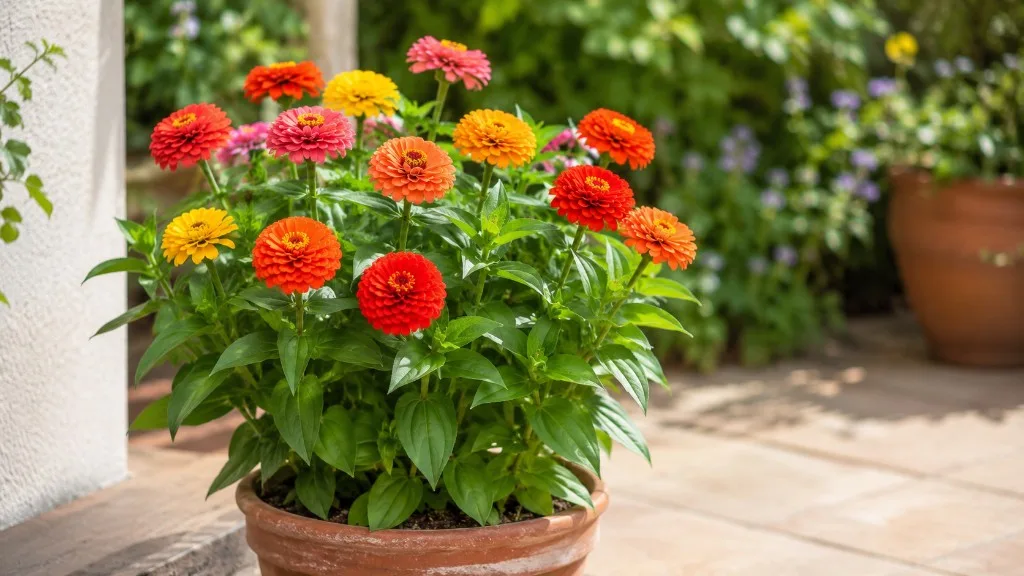
To keep zinnias blooming, give them full sun, enough room for air to move, steady moisture without chronically wet foliage, and light feeding when the soil or container mix needs it. Then use the right cut at the right stage: pinch young plants to create branches, and deadhead or harvest flowering stems once the plant is in bloom.
Deadheading helps, but it is not a magic switch. Many compact, highly branching zinnias will continue flowering with little attention, while tall cut-flower types respond especially well to regular harvesting. The most reliable long-season routine is therefore a short loop: inspect the plant, correct the growing condition that is limiting it, and remove fading flowers without stripping healthy leaves.
Zinnias are warm-season annuals that can flower from summer toward frost when their conditions stay favorable. North Carolina State Extension’s zinnia profile describes them as low-maintenance plants for full sun, well-drained soil, and good air circulation, with deadheading used to encourage more blooms. That combination is the foundation; pruning simply helps the plant spend its remaining energy where you want it.
Start with a zinnia setup that can carry a long season
A tired zinnia bed is often difficult to rescue because the original setup was limiting it from the start. Choose the sunniest practical site, work with soil that drains rather than staying saturated, and avoid placing tall plants where a wall, fence, or dense neighboring planting traps humid air around the leaves.
If you are starting from seed, wait until the soil and nights are warm enough for a warm-season annual. The RHS zinnia growing guide cautions against starting too early and notes that cold, wet conditions can leave young plants vulnerable. Direct sowing after frost or planting hardened-off seedlings usually gives a sturdier beginning than rushing tender transplants into chilly soil.
Match spacing to plant size and airflow
Use the seed packet or plant label as the first spacing authority because a six-inch bedding zinnia and a four-foot cut-flower zinnia do not occupy the same air space. As a practical starting point, compact plants can often stand about 8 to 12 inches apart, while tall or bushy types deserve roughly 12 to 18 inches or the spacing recommended for that cultivar.
The goal is not an empty-looking bed. It is a canopy that dries reasonably quickly after dew, rain, or irrigation. Wisconsin Horticulture’s zinnia guidance links generous air circulation and disease-resistant varieties with fewer powdery mildew problems, a useful reminder that spacing protects future leaves as much as it prevents crowding today.
Choose varieties that tolerate your conditions
Cultivar choice can save more work than a stricter pruning schedule. The Profusion and Zahara groups are compact examples bred for strong heat, drought, or disease performance, while tall series such as Benary’s Giant and Oklahoma are valued for long stems and cutting. That does not make one group universally better: a compact hybrid suits a border or container, while a tall type may be the better choice when bouquets are the priority.
If your garden is humid, look for disease resistance and prioritize airflow. If summers are hot and dry, choose a type known for heat or drought tolerance and plan a watering routine before the first heat wave. The Wisconsin cultivar notes and NC State’s plant profile show why “zinnia” is not one uniform plant with one fixed height, flower form, or stress response.
Pinch young plants once to build more flowering stems
Pinching and deadheading are different jobs. Pinching removes the growing tip of a young plant before flowering is fully underway; deadheading removes a flower that has already faded. If you pinch a young zinnia, the plant typically redirects growth into side branches, giving you more places where later flowers can form.
When a young plant is about 8 to 12 inches tall and actively growing, use clean fingers or snips to remove the central tip just above a pair of leaves. The RHS recommends this 20-to-30-centimeter timing and notes the trade-off plainly: you may sacrifice or delay the first flower, but you can gain a fuller plant with more flowering stems later.
Do not pinch every zinnia automatically. Compact bedding types may already branch freely, and a plant that is drought-stressed, recently transplanted, diseased, or already carrying many buds needs stabilization rather than another cut. If the plant is already flowering and your goal is to extend the current display, switch to deadheading or harvest instead.
Deadhead with a leaf-joint cut, not a bare stem
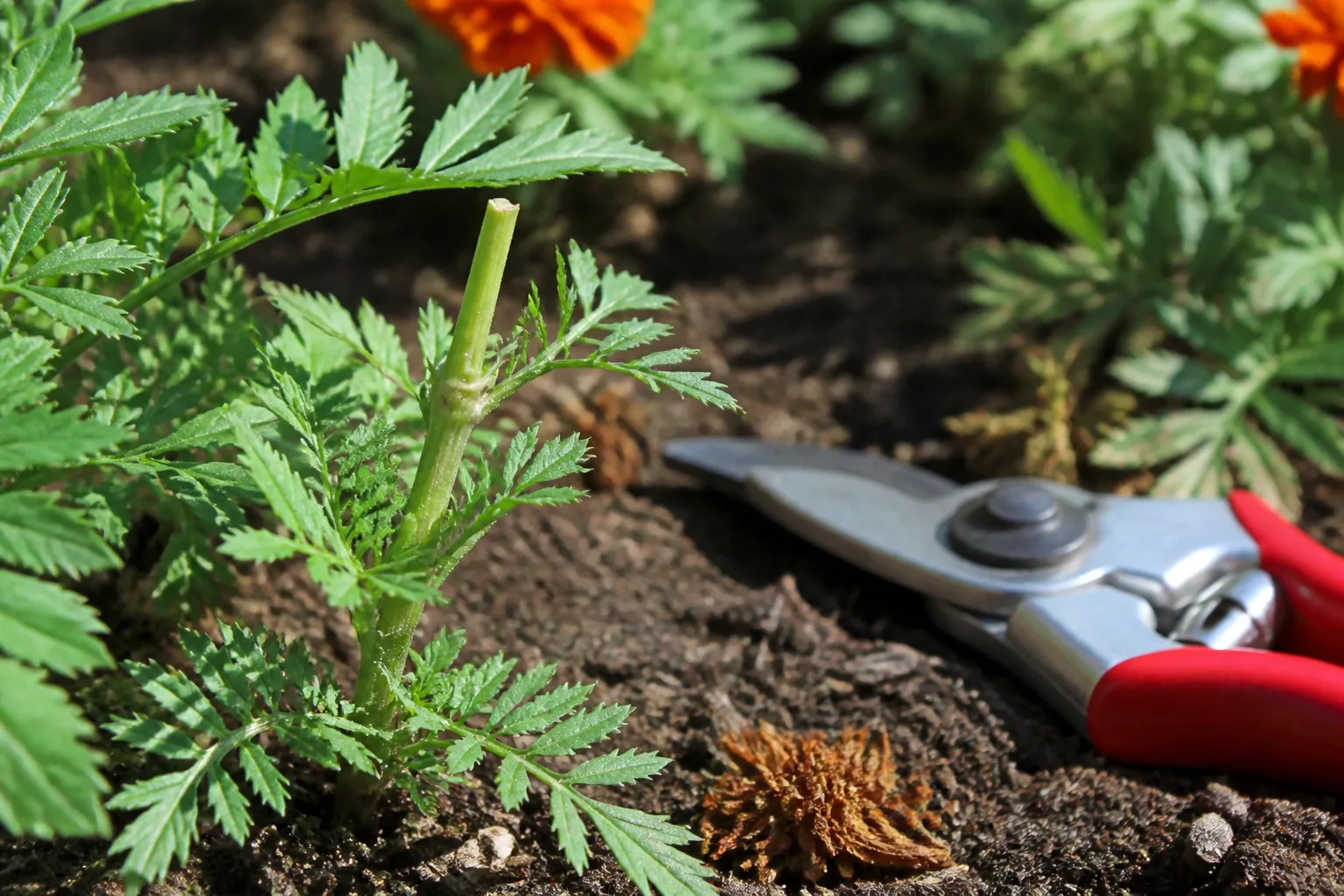
Deadheading is most useful when the spent bloom is removed with enough stem to reach a healthy branch point. Cutting only the flower head leaves an unattractive stick and may leave the plant with a weak, unproductive tip. Removing a little more stem, just above a leaf pair or side shoot, keeps the plant tidy and directs new growth toward a useful node.
When a bloom is ready to remove
Look for petals that have lost their clear color, dried, curled, or browned at the edges. The center may look dull and seed-like, and the stem may no longer be supporting a fresh-looking bloom. You do not have to wait until the whole flower is brown; removing it as it passes its best keeps the plant from spending weeks maintaining a fading head.
During the main flowering season, check every few days if you are growing tall cut-flower zinnias, or about once a week for a smaller, low-maintenance planting. Real Simple’s expert-guided deadheading article makes an important distinction: deadheading is optional for many newer bedding types, but it is especially worthwhile when you want peak production, a tidy display, or a steady supply of stems.
How far back to cut
Find the nearest healthy pair of leaves, side shoot, or small V-shaped branch junction below the faded flower. Make one clean cut slightly above that point, leaving the leaves in place. Those leaves continue to photosynthesize and help the plant rebuild the growth that will carry the next flowers.
If a stem is long and bare, cut farther down to a strong side branch rather than making a series of tiny snips. If the plant is compact and the flower sits close to a healthy leaf pair, a shorter cut is enough. Avoid removing a large portion of green growth in one pass, especially during a heat wave; several modest cuts are easier for the plant to absorb than a severe haircut.
Use sharp, clean snips when stems resist. Cut on dry foliage when possible, and avoid moving from a visibly diseased plant to a healthy one without cleaning the blades. The aim is a small wound that heals quickly, not torn tissue or a crushed hollow stem.
Harvest bouquets: the best kind of pruning
Cutting a zinnia for a vase is not stealing a flower from the garden; it is another form of pruning. Removing a mature stem encourages the plant to branch and keeps the plant from leaving that flower to develop seeds. Tall types bred for cut flowers can respond particularly well because their long stems are meant to be harvested.
Cut in the cool part of the morning when the stems are hydrated. Choose flowers that are fully open but still fresh, then follow the stem to a leaf pair or side branch and cut there rather than leaving a long bare stalk. Place the stems in water quickly, and handle them gently because some zinnia stems are hollow and can crush, which shortens vase life. The RHS also recommends care when harvesting for this reason.
If a plant looks sparse after heavy harvesting, stop cutting for a week and check light, moisture, and nutrition. Harvesting increases the number of useful branches only when the plant has enough healthy leaves and roots to replace what you remove. A bouquet routine should make the plant branchier over time, not leave it leafless.
Water deeply without keeping leaves wet
Zinnias tolerate heat once established, but “drought-tolerant” does not mean “never water.” In a bed, water slowly enough to wet the root zone when the upper soil is drying and the plant shows genuine need. In containers, check more often because a sunny pot can dry much faster than garden soil.
Water at the base in the morning when possible. Wet foliage that stays damp overnight creates a friendlier environment for fungal disease, while early watering gives leaves and soil surface time to dry. UF/IFAS Gardening Solutions notes that zinnias handle Florida’s heat but are more prone to powdery mildew and leaf spots in humid conditions, and RHS watering guidance for zinnias likewise advises keeping water off the foliage.
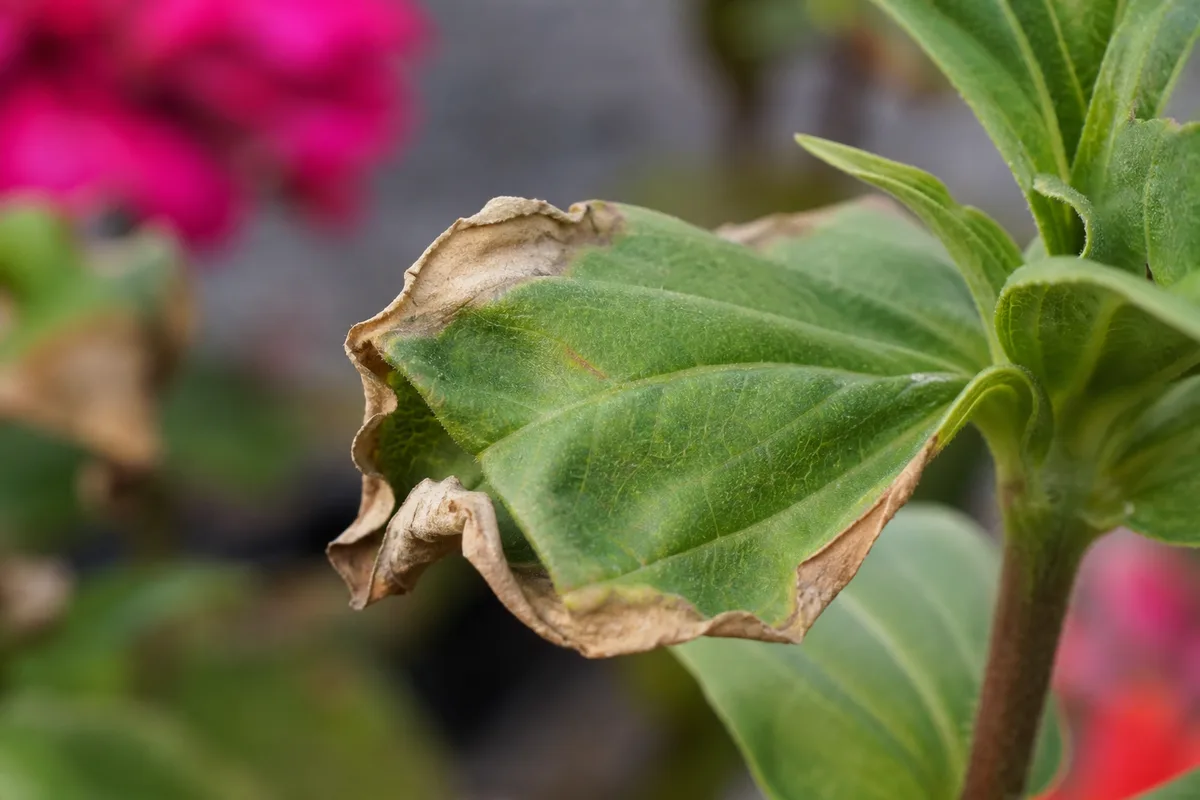
Learn the difference between a hot afternoon slump and a plant that is actually running out of water. A plant that droops only in the hottest part of the day and recovers by evening may be managing heat load; check the soil before watering again. A plant that is limp in the morning, has dry soil below the surface, or is shrinking at the newest growth needs a deeper drink and a review of container size or irrigation coverage.
Repeated swings from bone-dry to saturated are harder on flowering than a consistent routine. Improve the soil’s structure, add mulch, or move a container to a position where you can water thoroughly and let excess drain. Do not keep the soil constantly wet to prevent wilting; zinnias still need oxygen around their roots.
Feed lightly and avoid the foliage-only trap
Healthy zinnias do not need a complicated fertilizer calendar. Start with reasonably fertile soil and watch the plant. If growth is steady, leaves are a healthy color, and flowering is regular, adding more fertilizer may do nothing useful. Excess feeding, especially when it pushes soft, leafy growth, can leave you with a large plant and fewer visible flowers.
For poor soil, use a modest complete fertilizer according to the label rather than doubling the rate. Container plants lose nutrients with repeated watering and may benefit from feeding while in flower; the RHS recommends a potassium-rich liquid feed for container zinnias, with the product’s dose and frequency followed exactly. In a garden bed, a soil test is a better reason to amend than a calendar reminder.
If your zinnia suddenly produces leaves but few buds, do not assume the answer is “more bloom fertilizer.” Check sunlight, crowding, recent pruning, heat, and water first. A nutrient problem is only one possibility, and adding fertilizer to a dry or root-stressed plant can compound the problem.
Use mulch without burying the crown
A 2-to-3-inch layer of organic mulch can slow evaporation, moderate soil temperature, and reduce weed competition around established zinnias. Leave a small clear ring around each stem so mulch does not stay pressed against the crown or trap moisture at the base. In containers, use a thinner layer so the potting mix can still dry at a reasonable pace.
Mulch is a moisture buffer, not a watering schedule. Feel or inspect the soil below the mulch before irrigating, especially after rain. A thick, wet layer over compacted soil may keep the root zone too cold or airless, while a thin, even layer around—not over—the plants supports steadier growth through hot weather.
Troubleshoot a midseason bloom slowdown
When flowers slow down, resist changing everything at once. Start with the simplest sequence: confirm the plant receives enough direct sun, inspect the soil and roots for water stress, look under leaves and around buds, check airflow, and only then decide whether pruning, feeding, or a treatment is appropriate.
Leggy growth and plenty of leaves but few flowers
Long gaps between leaf pairs usually point to insufficient light, crowding, or a naturally tall cultivar. Move a container into stronger light if the plant can be acclimated safely, or thin neighboring growth in a bed so the zinnia is not competing for sun. Do not solve a shade problem by adding fertilizer; that often creates even more leaves without fixing the missing light.
If the plant is young and has not reached its normal flowering size, give it time. If it is mature, green, and repeatedly leafy with few buds, review feeding and pruning history. A late or repeated hard pinch can postpone flowers, while an unpruned tall plant may still flower but look sparse at the base. Use a few selective cuts to encourage side shoots rather than removing every growing tip.
Powdery mildew, leaf spots, and wet foliage
Powdery mildew looks like a white, dusty coating on leaves and can spread quickly in crowded, humid conditions. Leaf spots, yellowing, or collapse can have several causes, so do not diagnose every brown mark from a photograph alone. Remove badly affected leaves, clear fallen debris, improve spacing and airflow, and water at the soil surface.
For a serious or spreading disease, identify it through a local extension service or use only a product labeled for the plant and problem. Follow the label’s rate, timing, protective equipment, and re-entry instructions. Spraying a random household mixture can damage leaves and does not fix the humidity or crowding that allowed the problem to spread.
Pests, herbicide drift, and heat stress
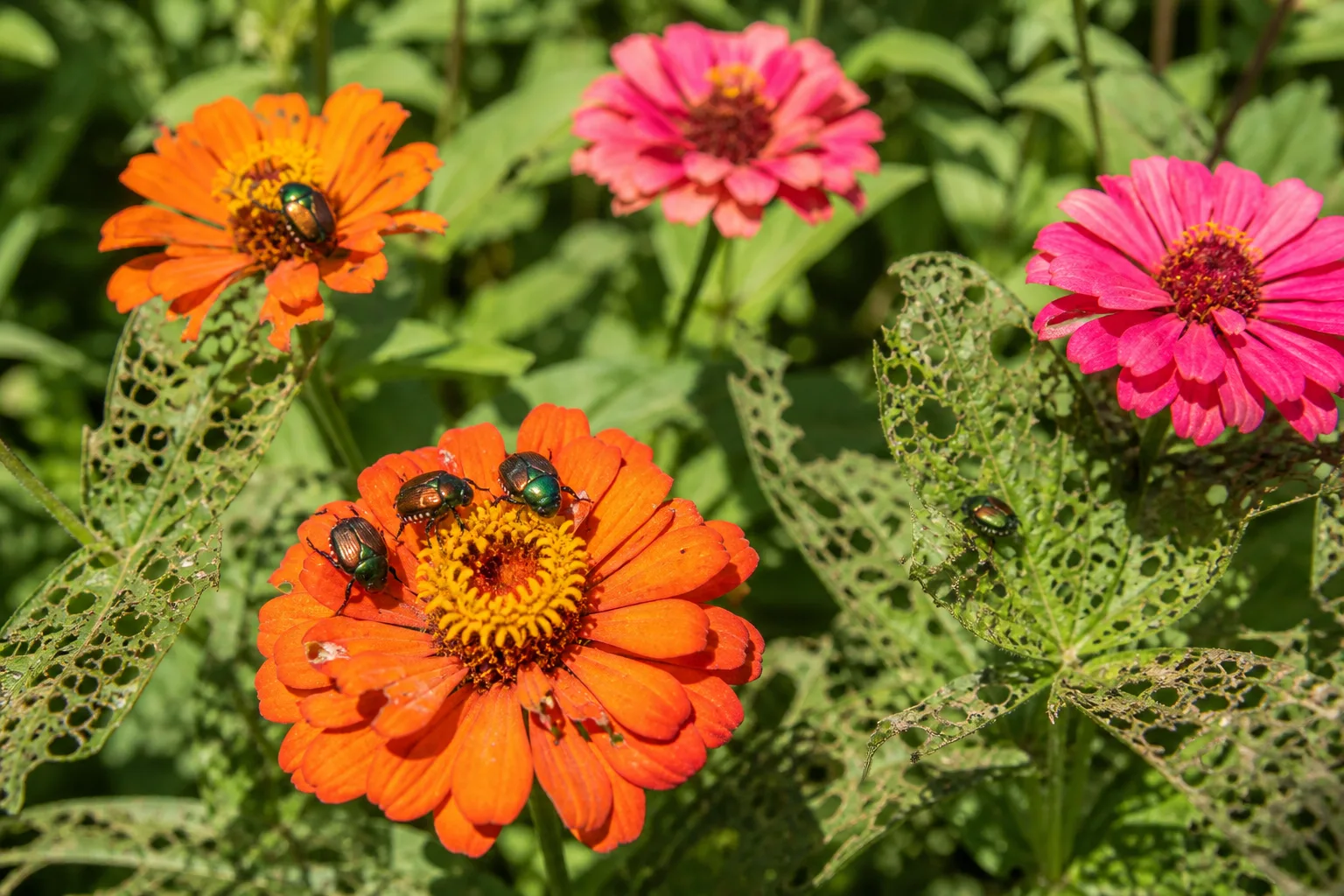
Inspect the undersides of leaves and the soft tips for aphids, spider mites, and other sap-feeding pests. Chewed leaves and flowers suggest a different group, including beetles or caterpillars. A few insects do not automatically justify treatment, especially on a flowering plant visited by pollinators; identify the pest, use physical removal when practical, and follow the label if a treatment is needed.
Sudden twisted, cupped, or distorted new growth after a nearby lawn or weed treatment can point to herbicide drift rather than a fertilizer shortage. Move the plant away from further exposure if possible, avoid adding more chemicals, and ask a local extension professional to help identify the pattern. A damaged zinnia may recover with healthy new growth, but no pruning trick can reverse tissue that was already injured.
Heat stress is different from permanent decline. Shade the root zone with mulch, water deeply when the soil is dry, and avoid major pruning during the hottest part of the day. If leaves are scorched, buds abort, and soil stays dry despite watering, check whether a container is undersized or whether nearby paving is reflecting extra heat. Once the plant has recovered, return to light deadheading rather than cutting it back hard.
Decide when to let a few blooms go to seed
An all-season flower display and a seed-saving garden have different priorities. Deadheading delays seed production and can encourage more flowers, but a mature seed head is useful if you want birds to forage or you want to collect seed for next year. You do not have to choose one goal for the whole bed: deadhead most plants and mark a few healthy, open-pollinated plants to finish their cycle.
Leave selected flowers on the plant until the petals and head are fully dry, then collect the seed on a dry day and store it cool and dry. The NC State profile specifically recommends leaving some seed heads for birds. Treat saved seed as a new genetic experiment, not a guaranteed clone; hybrid series may produce seedlings that differ in color, flower form, height, or disease resistance from the parent. The RHS notes this limitation for F1 hybrids.
What to do in the final weeks before frost
Late summer is a good time to lower the garden’s workload rather than chase every last bloom with fertilizer. Keep harvesting and deadheading while the plant is healthy, water during dry spells, remove diseased debris, and support tall stems that are flopping into wet soil. The exact stopping point depends on your local first frost and the condition of the plants, not the calendar date.
When nights turn cold, flowers will slow even if the foliage looks acceptable. Let a few final heads mature if you want seed, and continue cutting fresh blooms while they are worth bringing indoors. Do not try to overwinter ordinary annual zinnias outdoors after frost; save seed or plan a fresh sowing next season.
If you want a later wave of flowers next year, stagger sowings during the warm part of the current season where your climate allows. The timing must still respect local frost dates and the cultivar’s days to maturity. A succession planting is often more dependable than expecting one early planting to look perfect from June through frost.
Conclusion: make the small cuts count
The best way to keep zinnias blooming again and again is not a single secret. Give them sun, room, well-drained soil, and steady root-zone moisture; pinch young plants only when branching will help; then deadhead or harvest by cutting just above healthy leaves or a side branch.
When the display pauses, diagnose before feeding. More sun may matter more than more fertilizer, airflow may matter more than a fungicide, and a deeper drink may matter more than another round of pruning. Keep most spent flowers moving out of the plant, but leave a few to support birds or next year’s seed, and your zinnias can keep earning their space until heat, cold, or frost finally ends the season.