How to Mow a Lawn Properly: Height, Timing, Tips
Learn how to mow a lawn properly: choose the right height, follow the one-third rule, mow dry grass, sharpen blades, manage clippings, and prevent brown patches.
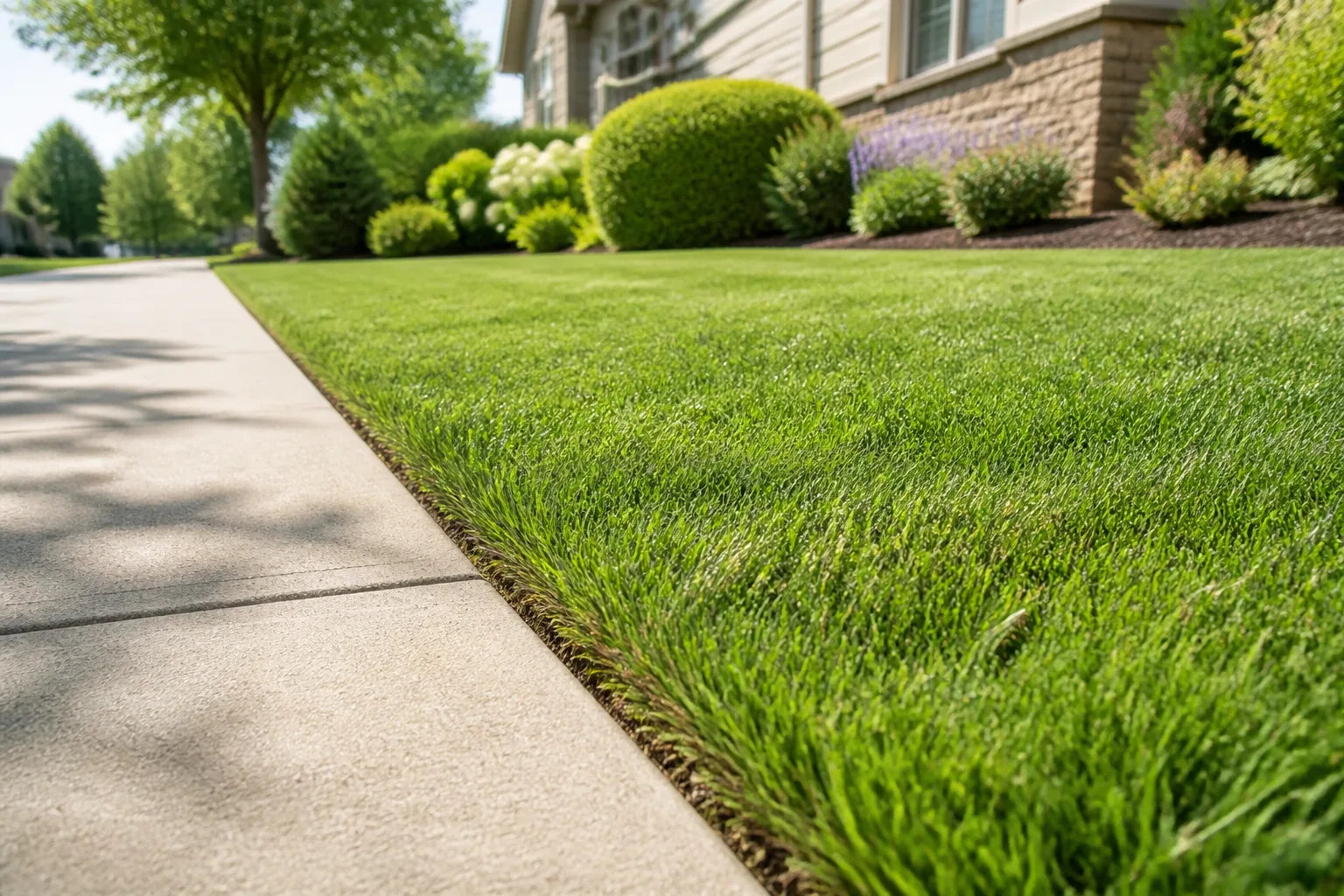
The best way to mow a lawn is to remove a small amount of growth from dry, actively growing grass with a sharp blade, leaving enough leaf surface to protect the crown and roots. Set the deck for your grass type, follow the one-third rule, vary your direction, and leave only a thin layer of finely cut clippings.
That routine matters more than chasing a perfectly striped finish. A lawn can look freshly cut and still be stressed if it was scalped, mowed while the soil was soft, cut with a dull blade, or covered with wet clumps. The steps below give you a practical mowing system that works across common cool-season and warm-season lawns, with clear exceptions for heat, drought, shade, slopes, and overgrown grass.
The quick answer: mow high enough, often enough, and only when conditions are right
Before you start, ask four questions: Is the foliage dry? Is the soil firm enough to support the mower without ruts? Is the blade sharp? Will the planned cut remove no more than one-third of the leaf height? If the answer to any of those is no, change the plan before you start the engine.
For an established lawn, a low-stress mowing session usually looks like this:
- Remove branches, stones, toys, hoses, and other debris.
- Set the deck high enough for the grass species and current weather.
- Trim around trees, beds, fences, and hardscape where the mower cannot safely reach.
- Mow in overlapping, straight passes at a steady pace.
- Alternate the direction from the previous session.
- Leave fine, scattered clippings; collect or redistribute any wet piles.
- Brush off the deck only after the mower is fully stopped and disconnected from its power source.
Do not use a fixed weekly schedule as the rule. Weather controls growth, and the correct interval is the one that keeps you from taking off a large portion of the blade in one visit.
Set the mowing height for your grass
Mowing height is measured from the soil surface to the top of the standing leaf, not from the mower deck to the ground. The right setting depends on the grass species, cultivar, shade, traffic, season, and whether you are maintaining a formal short lawn or a more relaxed yard.
As a starting point, use this range and adjust when you know the species:
| Lawn type | Useful starting height | When to move higher |
|---|---|---|
| Cool-season mix, such as tall fescue or Kentucky bluegrass | 2.5–4 inches | Heat, drought, shade, or a long gap between cuts |
| Warm-season turf, such as bermudagrass or zoysia | 1.5–3 inches | Heat stress, uneven ground, or a lawn that is not growing vigorously |
| Fine, closely managed turf | Follow the species and mower guidance | When the lawn shows scalping, dryness, or weak density |
| New or recovering grass | Highest practical setting | Until roots are established and the lawn is growing evenly |
These are working ranges, not a universal prescription. A tall-fescue lawn at the short end of its range may struggle in a hot, dry summer, while bermudagrass can become thin and floppy if maintained much higher than its preferred habit. If you do not know the grass, start moderately high, watch how it responds for two or three cuts, and identify the species through a local extension service or a reliable turf guide.
Use the one-third rule instead of waiting for a calendar day
Never remove more than one-third of the leaf blade in a single mowing whenever you can avoid it. If you want the lawn at 3 inches, mow before it grows much beyond 4.5 inches; if it has reached 6 inches, raise the deck and make staged cuts rather than dropping the mower to 3 inches immediately. The Royal Horticultural Society and Purdue Turfgrass Science both emphasize the one-third limit as the safer long-term routine, while Purdue notes that an occasional larger cut after a rainy stretch is unlikely to cause lasting damage if it is not your normal program.
The one-third rule protects the plant’s remaining leaf area. Cutting away most of the canopy at once forces the grass to use stored energy to replace leaves, exposes the crown and soil to more sun, and leaves less surface to support recovery. That is why frequent light cuts usually produce a denser-looking lawn than long gaps followed by severe cuts, a point also emphasized by Gardening Know How’s practical mowing guidance.
If the lawn is badly overgrown, raise the deck to remove about one-third, wait several days while the grass recovers, then lower it gradually on the next cut. Collect heavy windrows instead of leaving them to shade the turf. The temporary result may look less tidy than a single aggressive cut, but it avoids the shock that causes pale crowns, brown tips, and bare scalped spots.
Choose the best time to mow
Mow when the grass is dry enough to cut cleanly and the ground is firm enough that mower wheels will not sink. In many yards, late morning after dew has dried or midafternoon before evening moisture returns works well. The best time changes with climate, but the conditions matter more than the clock.
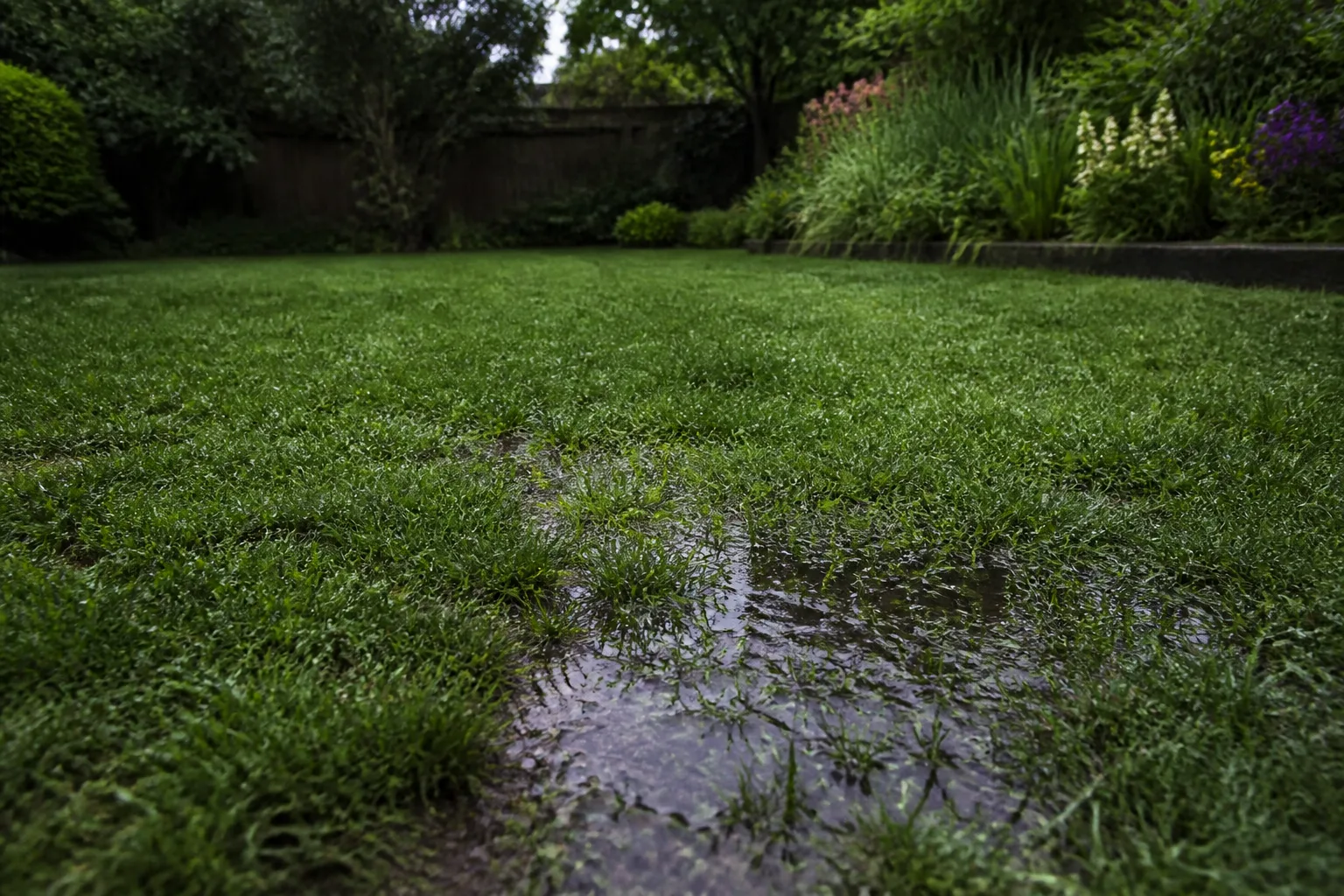
Avoid mowing when the foliage is soaked with dew, rain, or irrigation. Wet blades bend away from the cutting edge, clump under the deck, and leave an uneven finish. More importantly, a heavy mower on saturated soil can create ruts and compact the root zone; NC State Extension notes that mowing wet turf can also spread disease-causing organisms from infected leaves to healthy ones. Purdue’s wet-turf guidance allows that a light, damp cut may sometimes be necessary after a long rainy period, but it recommends a higher setting, careful turns, and clipping management rather than treating wet mowing as ideal.
Wait longer when the soil is soft, not merely when the leaf tips are damp. Press a shoe into an inconspicuous area: if it leaves a deep footprint or the mower would need sharp turns, postpone the job. Never mow frozen or frosted turf, and avoid the hottest part of the day when the grass is already wilted from heat. If the lawn is dormant from drought, mowing less often and higher—or waiting until active growth resumes—is kinder than forcing a cosmetic cut.
Prepare the lawn and mower before the first pass
A calm two-minute inspection prevents most avoidable mowing problems. Walk the lawn in the direction you plan to mow, look under low shrubs and around play areas, and identify steep slopes, exposed roots, drainage depressions, and places where the mower should not go.
Clear debris and plan the edges
Pick up stones, sticks, wire, glass, toys, hoses, and fallen fruit. A mower blade can throw small objects a surprising distance, and a hidden rock can nick the blade or bend the crankshaft. Wear sturdy shoes, eye protection when debris is possible, and hearing protection around loud gas or high-powered electric equipment.
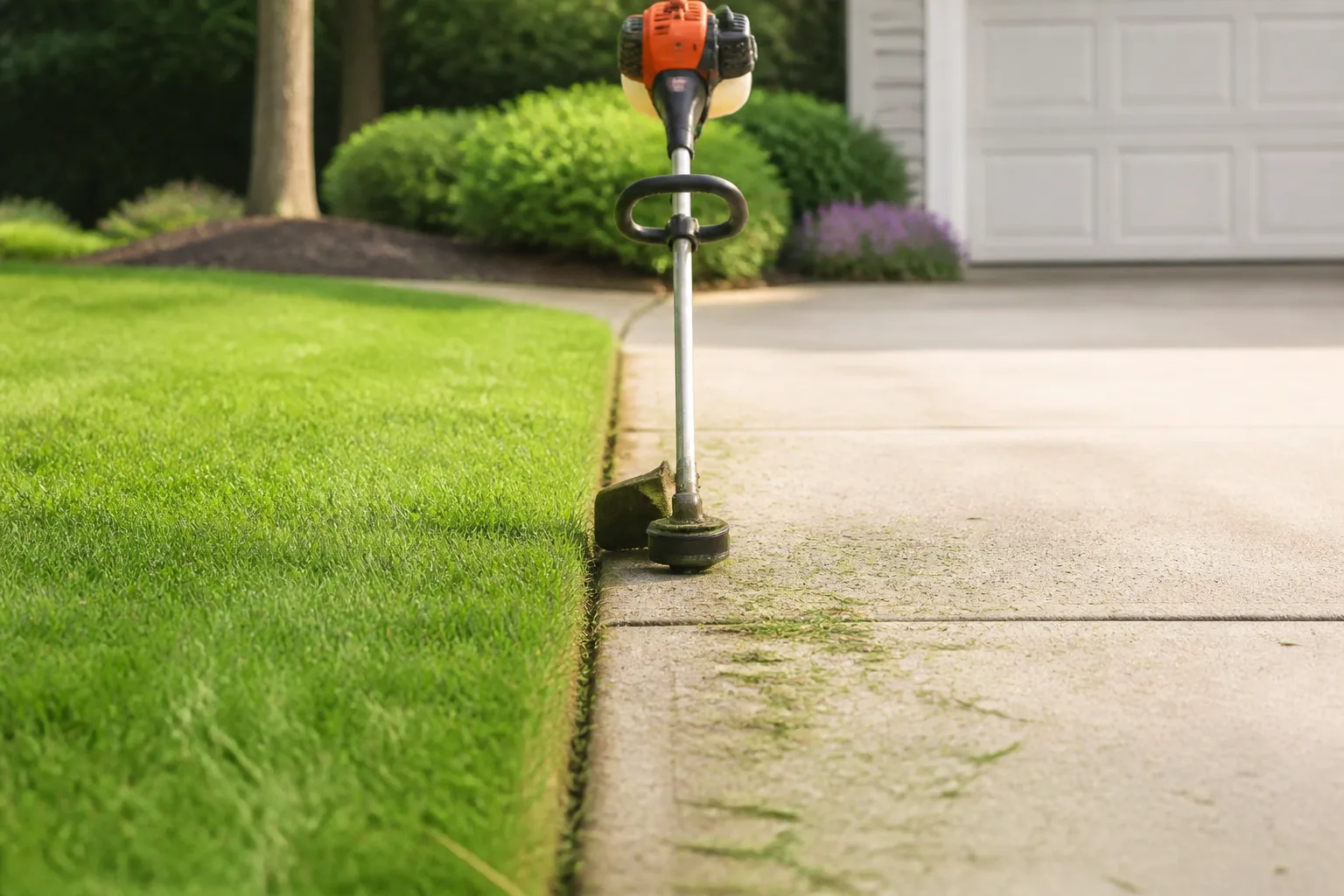
Use a string trimmer or lawn shears around trees, fence lines, mailbox posts, raised beds, and walls rather than steering the mower deck into them. Trimming these boundaries first establishes a clean edge and reduces the temptation to make unsafe close passes. Keep the trimmer head parallel to the soil so it does not gouge the crown of grass beside the hardscape.
Check the blade, deck, power, and safety equipment
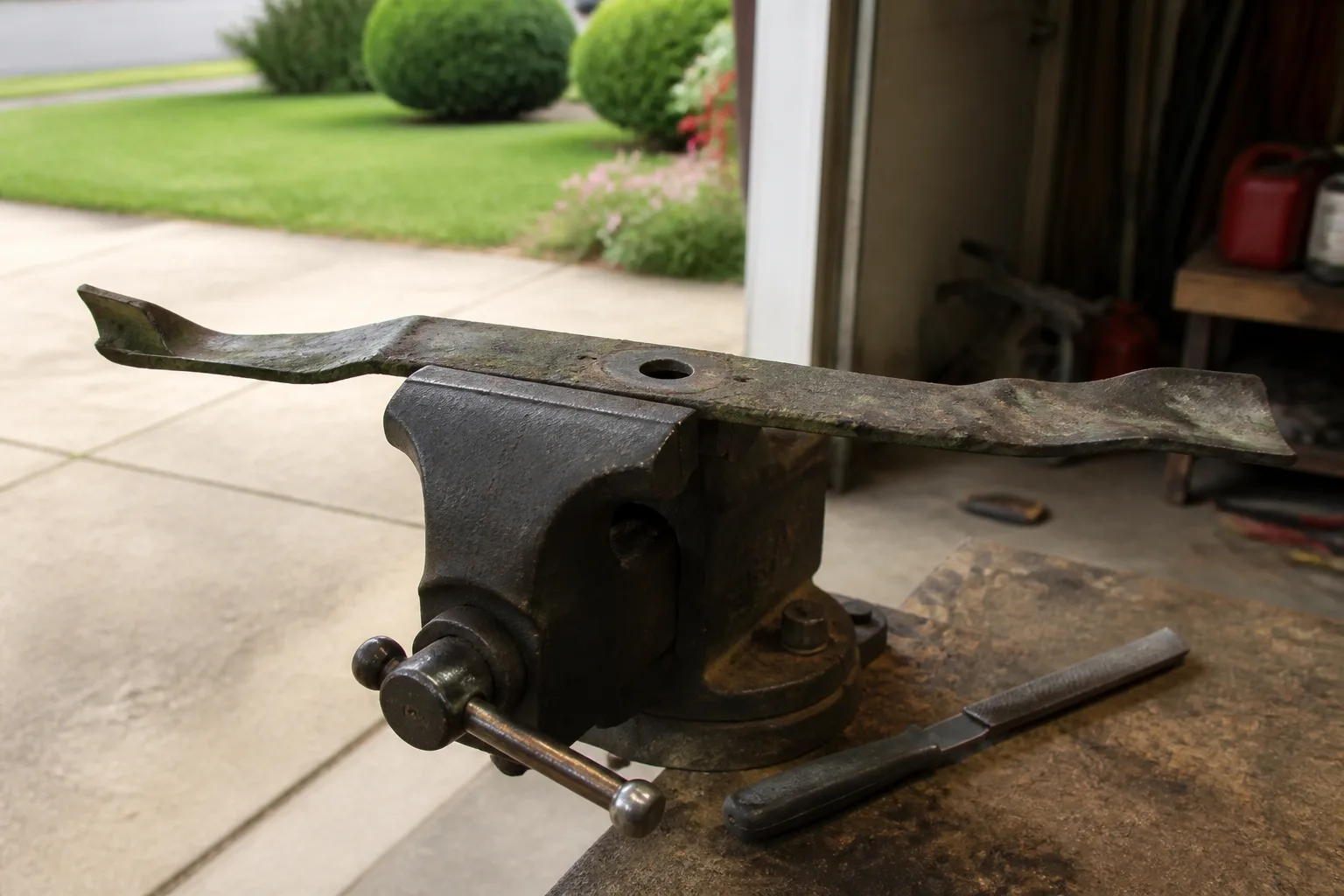
A sharp blade makes a clean cut; a dull one tears and shreds the leaf tip. Torn tips can look gray or brown across the lawn, lose moisture faster, and leave openings where disease organisms can enter. Purdue Turfgrass Science’s blade guidance recommends examining blades several times during the growing season, because frequent mowing can dull them faster than a homeowner expects.
Inspect the blade for a rolled edge, deep nicks, cracks, or heavy corrosion. If it is only dull, sharpen it evenly and confirm it is balanced. Replace it if it is bent, cracked, badly worn, or cannot hold a consistent edge. Before touching the blade or clearing a clogged deck, switch off the mower, remove the ignition key or battery, unplug a corded machine, and disconnect the spark-plug wire on a gas mower according to the manual.
Check the deck-height levers, wheels, discharge chute, catcher, and dead-man handle. Confirm the battery is charged or the fuel and oil are appropriate for the machine. Do not bypass a safety switch, mow barefoot, or reach under a running mower even if the clog looks easy to remove.
Follow a low-stress mowing sequence
Start with the highest-risk decisions, not the decorative finish. Set the height, trim tight boundaries, and choose where clippings will go before beginning the open lawn. If the grass is long, wet, or uneven, slow down and make the first pass a cleanup cut rather than trying to create stripes.
Begin at the outer edge and use it as a guide for the interior passes. Overlap each pass slightly so strips of uncut grass do not remain between the wheels. Keep a steady walking speed; rushing can leave uneven cut height, while moving too slowly in tall grass can overload the deck and produce clumps.
Make straight passes and change direction
For a rectangular lawn, work in long back-and-forth rows. On an irregular lawn, choose a visible focal point—such as the edge of a path or a far corner—and use it to keep the first line straight. Turn on a firm surface whenever possible; tight turns on wet soil are a common cause of ruts.
Change direction at the next mowing. If you mowed north to south today, mow east to west next time; use diagonal passes occasionally if the shape of the lawn allows them. Alternating direction distributes wheel traffic, keeps the grass from leaning permanently, and reduces the chance that repeated wheel paths become compacted ruts. The pattern is for turf health first and appearance second.
On a slope, follow the mower manufacturer’s safety guidance. A walk-behind mower is generally safer across a manageable slope than straight up and down, while riding mowers have different rollover risks and must not be used where the manual prohibits them. Never rely on a neat stripe pattern to justify a dangerous route, and keep children and pets away from the area until debris and clippings are cleared.
Decide what to do with grass clippings
Fine clippings are not lawn litter. When the grass is healthy, dry, and cut regularly, small pieces can fall between the standing blades and decompose, returning some nutrients and organic matter to the root zone. The RHS mowing guide explains why mulching mowers return finely shredded clippings to the turf, while Gardening Know How notes that the layer must stay light enough not to smother the grass. Even a standard rotary mower can leave useful clippings when you are removing only a little growth.
Leave clippings when they are short, scattered, and not stuck together. Bag them or rake them lightly when the grass is wet, the clippings form continuous mats, the lawn is so overgrown that piles remain, or you are actively managing a disease and your local extension guidance recommends removing infected material. Do not use a bagger as a substitute for a correct height: collecting every clipping will not compensate for scalping or dull blades.
If clumps appear, stop and diagnose the cause. The grass may be too wet, the deck may be packed, the bag may be full, the discharge chute may be blocked, or the mower may be moving too slowly through tall growth. Turn the machine off and disconnect it before clearing the deck. Spread small remaining clumps with a rake or a second light pass only after the surface is dry enough to support it.
Prevent brown patches and diagnose mowing damage
Brown grass after mowing does not always mean the mower caused a disease. The location, shape, timing, and texture of the damage are more useful clues than color alone.
Grass that turns pale or brown only at the tips across most of the lawn often points to a dull blade, an overly low setting, or a stressful cut during heat. Grass that is brown in broad wheel tracks may have been compressed while the soil was wet. A sharply defined patch on a bump may be scalped because the deck bottomed out, while a thin, tan area in full sun may have been exposed after a height reduction.
Match the symptom to the likely cause
Use this first-response sequence:
- Torn, gray-brown tips: stop lowering the deck, sharpen or replace the blade, and mow when the foliage is dry.
- A uniform pale lawn after a very short cut: raise the deck and allow the canopy to regrow; check soil moisture before adding fertilizer.
- Brown wheel tracks or muddy turns: stay off saturated areas until they firm up, then vary the route and address compaction later.
- Wet clumps that smother small areas: rake or redistribute the clippings once dry; do not add more water.
- Circular or expanding patches, especially in hot, humid weather: consider disease, not just mowing injury. NC State Extension describes brown patch as circular brown areas that develop under hot, wet conditions and recommends improving drainage, reducing prolonged leaf wetness, and avoiding excess summer nitrogen on susceptible turf.
- Patchy browning with loose turf or visible insects: investigate pests, roots, irrigation coverage, and soil before applying a treatment.
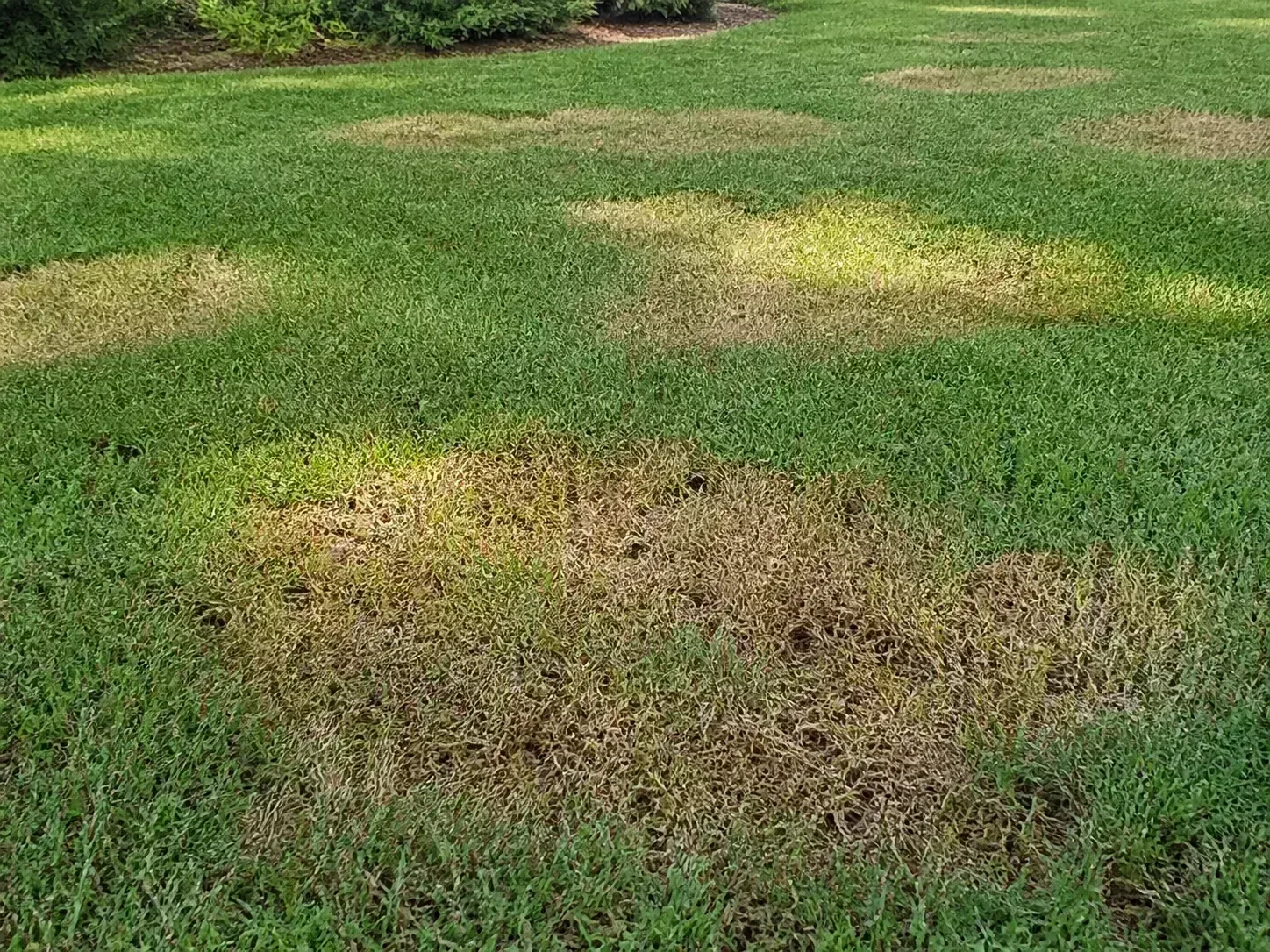
Do not respond to every brown patch with fertilizer or more water. Feel the soil several inches down, compare the damaged area with a healthy area, inspect the leaf tips, and look at the pattern of the damage. If the problem expands, returns despite correct mowing, or appears after prolonged humidity, use your local extension diagnostic service rather than guessing at a pesticide or fungicide.
Adjust mowing for spring, heat, drought, shade, and winter
The same deck setting will not fit every month. In spring, growth can accelerate after rain, so mow often enough to avoid a large one-time cut. The first cut of the season may require the highest setting and a slower pace, especially if long growth has fallen over. The RHS recommends a high setting for long grass and warns that excessively close mowing can encourage shallow rooting, drought damage, weeds, and moss.
During heat or drought, keep enough leaf area to shade the crown and soil, but do not assume that “higher” is always safe for every species. Raise the deck gradually within the grass’s recommended range and stop mowing if the turf is dormant, brittle, or not actively growing. Avoid fertilizing simply because the color changed after a stressful cut; correct the height, irrigation, and soil conditions first.
Shady grass usually grows more slowly and may need a higher setting and fewer cuts than sunny turf. It also dries more slowly, so wait for a firm surface rather than copying the schedule used on an open, sunny lawn. In autumn, continue cutting while the grass is growing, tapering frequency as growth slows. In winter, mow only during mild active growth and never when the ground is frozen or soft.
Choose a mower that fits the lawn
The best mower is the one that can hold the correct height, handle the terrain, and be maintained safely. A rotary mower suits most ordinary home lawns and handles longer or slightly uneven grass better than a low-cut reel mower. A reel or cylinder mower can make a fine finish on a smooth, closely maintained lawn, but it needs the right height, a properly adjusted cutting system, and more consistent mowing.
Battery mowers are quieter and avoid fuel storage, but runtime and cutting width matter on a large or overgrown lawn. A second battery may be more useful than running the first pack completely flat, and letting grass grow too tall can overwhelm a compact electric mower. Gas mowers can handle demanding cuts and refuel quickly, but they need more engine maintenance and produce fumes and noise.
Mulching capability is helpful when you mow regularly and the grass is dry. A bagging system is useful for an overgrown first cut, heavy clippings, or disease management. A side-discharge mower can be the least frustrating choice immediately after a wet spell because it is less likely to pack with clippings than a mulching setup, but it still requires you to keep discharge away from people, pets, roads, and garden beds.
Finish safely and clean the equipment
After the final pass, check for missed strips, clumps, and objects pushed into beds or paths. Blow or sweep clippings off driveways and sidewalks so they do not wash into drains or create a slippery surface. Return pets and children only after the lawn is clear and the equipment is shut down.
Disconnect the mower before inspecting the underside. Remove packed grass with a tool rather than your hand, brush dry debris from the deck, empty the catcher, and store batteries, fuel, and extension cords according to the manufacturer’s instructions. A clean deck and a sharp, balanced blade make the next session easier and help you notice cracks, loose fasteners, or damaged safety parts before they become a larger problem.
Conclusion: make the next cut easier on the grass
Proper lawn mowing is a small set of repeatable choices: use the right height for the grass, remove no more than one-third of the blade, wait for dry foliage and firm soil, use a sharp blade, change direction, and manage clippings according to their texture. Those choices protect the living canopy instead of rewarding the shortest possible cut.
If brown patches appear, look at the pattern before you reach for a product. A clean blade, a higher deck, a dry mowing window, and fewer wheel tracks may solve mowing stress; expanding circles, persistent drought symptoms, insects, or disease-like patterns need a wider lawn diagnosis. Once the routine fits your grass and weather, mowing becomes quicker, safer, and much less stressful for both you and the turf.



