How to Grow and Care for Canna Lilies in Pots
Learn canna lily care in pots, from choosing a stable container and planting rhizomes to watering, feeding, troubleshooting, and overwintering them safely.
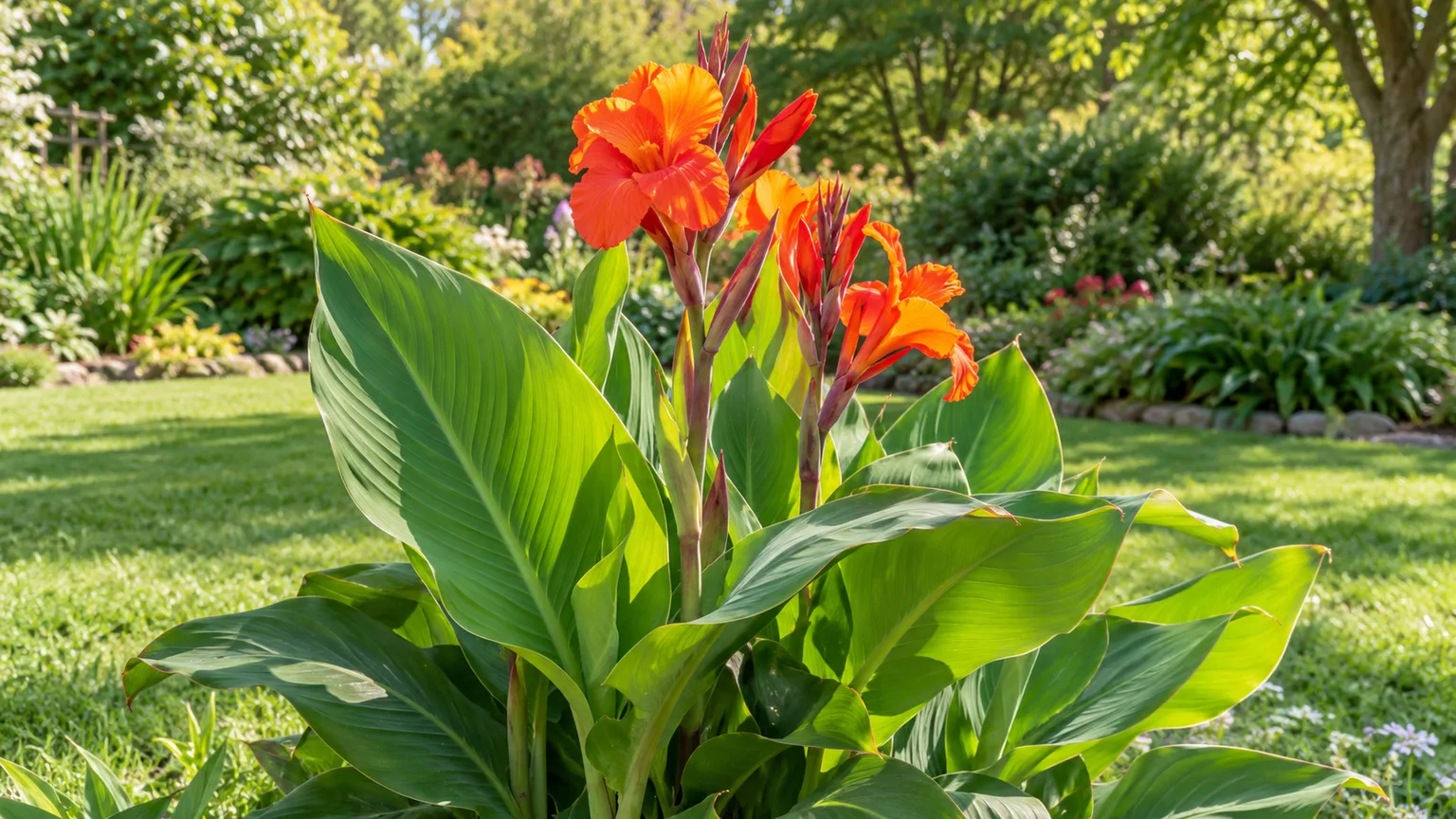
A canna lily in a pot can turn a sunny patio into a lush focal point, but it is not a small plant in a decorative container. Canna grows from a spreading rhizome, sends up broad leaves that catch wind, and uses plenty of water while it is actively growing. A roomy, stable pot with drainage makes those needs manageable; a cramped pot or a soggy cachepot makes them harder.
Containers also give you control over the plant’s winter. You can move the whole pot to a frost-free place or lift the rhizome after frost and store it until spring. That flexibility is useful in cold climates, but a pot left outside can freeze faster than garden soil, so container growing does not make a tropical rhizome hardy.
Is a Canna Lily Right for Your Container?
Cannas work especially well as a tall centerpiece, a living screen near a patio, or a bold foliage plant where a garden bed is unavailable. Their leaves may be green, bronze, burgundy, or striped, and their flowers range from red and orange to yellow and pink. They are not true lilies: plants sold as canna lilies are members of the Cannaceae family, and the underground structure is a rhizome rather than a scaly bulb. NC State Extension describes cannas as large, upright plants suited to containers, rain gardens, and poolside or pond settings.
The trade-off is scale. Even a medium cultivar can reach several feet, and the same wide leaves that make cannas dramatic can split in strong wind. If your only spot is a narrow, shaded, exposed balcony, choose a compact cultivar and a heavy pot—or choose a smaller plant. A container is a good match when you can provide sun, water during active growth, room for the rhizome, and a frost-free winter plan.
Rhizomes, Not Bulbs
Canna rhizomes are horizontal, fleshy stems with buds called eyes. Each eye can produce a shoot, so buy or divide pieces that feel firm and show one or more visible eyes; a shriveled, mushy, or eyeless piece is a poor bet. Catalogs may call them bulbs, but knowing the difference helps: rhizomes spread sideways, need a wide planting area, and should not be left in frozen soil.
A single rhizome is often enough for a medium pot. It will send up additional shoots as it establishes, and planting several pieces tightly together can create fast color but also a crowded, thirsty pot that needs earlier division. For a container, plan around mature spread, not the small size of the dormant piece you bought.
Choose a Cultivar for the Pot and the Display
Select a canna by mature height and foliage as well as flower color. Compact cultivars such as ‘Lucifer’ suit smaller containers and are less likely to dominate a balcony; ‘The President’ is a moderate-height choice with scarlet flowers and green leaves. Tall selections such as ‘Pretoria’ (often sold as ‘Bengal Tiger’), ‘Tropicanna,’ and ‘Stuttgart’ make more sense in large, heavy pots where their striped or variegated leaves can be seen from a distance. Longfield Gardens’ container guide likewise recommends matching plant stature to pot size and wind exposure.
Read the cultivar label carefully because names and reported heights vary among sellers, climates, and growing conditions. If the leaves are the main attraction, choose a foliage pattern you like even before flowering begins; not every cultivar has the same bloom color or timing. For a windy deck, put the tallest plant in the most sheltered position, not at the exposed edge where its leaves act like sails.
Choose a Container That Is Deep, Stable, and Draining
For one canna, start with a pot about 15 to 18 inches wide and deep; a larger vessel is safer for a tall cultivar or a hot, sunny location. The RHS advises a container at least 30 centimeters (about 12 inches) wide, while Longfield Gardens recommends a wider range for tall plants and mixed arrangements. Those are not contradictory rules: the minimum can work for a compact plant, while extra soil volume buffers moisture and anchors a larger canopy.
Choose a pot with unobstructed drainage holes. Cannas like steady moisture, but water trapped in an outer decorative pot can leave the rhizome sitting in stale, airless mix. Set the nursery pot inside a cachepot if you prefer the look, then pour away collected water after rain or irrigation. A layer of gravel at the bottom does not replace drainage holes.
Weight matters as much as width. Terracotta, glazed ceramic, or a heavy resin planter can resist tipping better than a light plastic pot, particularly once the plant is tall and the foliage is wet. If the pot must stay lightweight for a balcony, use a compact cultivar and a sheltered corner; do not plan to add loose stones in the base as a substitute for adequate pot size and drainage.
When to Plant Canna Rhizomes
Wait until frost danger has passed and the potting mix is warm before moving a dormant rhizome outdoors. In a short-season climate, you can start it indoors several weeks before the local last frost, but keep it protected and avoid keeping cold, damp mix around a dormant rhizome. The RHS growing guide suggests starting rhizomes in pots in early spring at about 50–60°F (10–16°C), then hardening plants off before setting them outdoors after frost risk has passed.
If your rhizome is already sprouting, handle the shoot gently and keep it in bright light so it does not stretch. When bringing a plant started indoors outside, acclimate it over several days: give it a few hours outside in a sheltered spot, then gradually increase exposure. This reduces sun scorch and wind shock on new leaves. If the outdoor soil or potting mix still feels cold, waiting is better than trying to force a tropical plant through an early start.
How to Plant a Canna Lily in a Pot
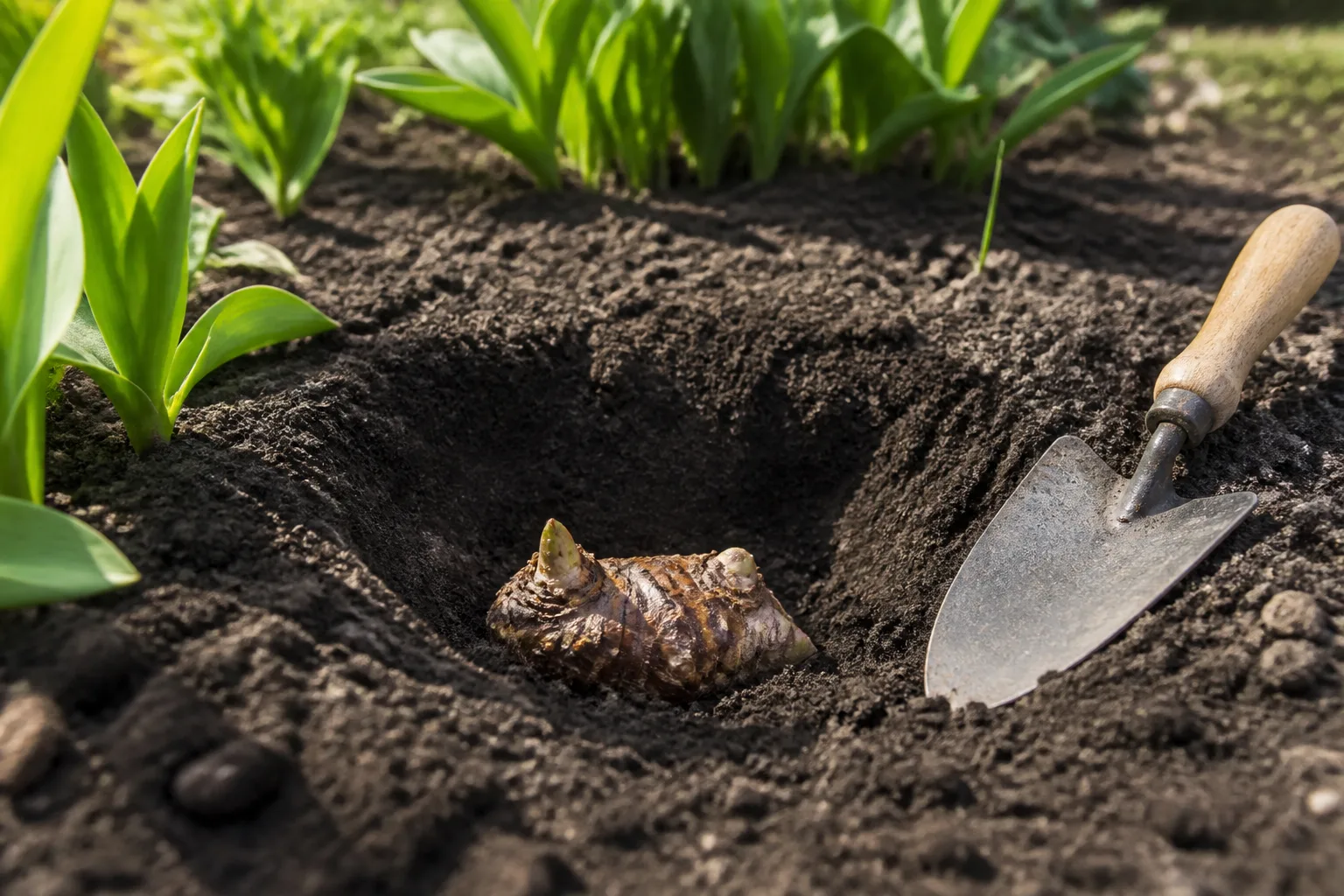
Use fresh, high-quality container mix rather than garden soil, which can become dense in a pot. Moisten the mix lightly before planting so it settles around the rhizome without turning into mud. If the pot is very deep, fill it partway first so the rhizome will sit at its proper depth rather than at the bottom of a tall column of wet soil.
Set the rhizome horizontally with its eyes facing upward and cover it with roughly 4 inches of mix. The NC State plant profile gives a 4-to-6-inch planting depth for canna rhizomes in the ground; in a pot, use the same general depth while leaving enough room below the rim for watering. Avoid burying an emerging shoot. Add one rhizome to a medium pot, or use the cultivar’s expected spread to decide whether a larger pot can support more than one without crowding.
Water once after planting to settle the mix, letting the excess drain away. Keep the pot warm and evenly moist as growth begins, then move it to its final sunny location after frost danger. If no shoot appears after several weeks, check that the rhizome is still firm and that the mix has not remained cold and waterlogged before deciding it has failed.
Light, Potting Mix, and Water
Give a canna the sunniest practical position, ideally with at least six hours of direct sun. Too little light often means lush leaves but few flowers and weaker stems. In places with intense afternoon heat, especially near reflective paving or a south-facing wall, some late-day shade can help flowers last longer; the right balance depends on your local summer rather than a universal rule.
Use a rich, moisture-retentive potting mix that still drains freely. A little finished compost can improve water-holding and fertility, but do not fill the container with heavy garden soil or fresh manure. The goal is a mix that stays evenly moist between checks while allowing excess water to escape. Cannas tolerate moist soil and some species are used around water gardens, but that does not mean every potted hybrid should stand in stagnant water. The RHS distinguishes water cannas from ordinary container culture and notes the need to protect tender plants before autumn frost.
Water by Checking the Root Zone
Do not rely on a fixed once-a-week schedule. In warm weather, check the mix every day or two; small pots, wind, and heat can dry them much faster than a large planter in a protected spot. Insert a finger a couple of inches into the mix. If it is beginning to dry, water slowly until water exits the holes, then empty the saucer or cachepot.
If water runs straight through a bone-dry root ball, water in two passes a few minutes apart so the mix can absorb it. If the pot stays heavy and wet for days, check the drainage holes and move it out of constant rain; repeated watering is not the fix for drooping leaves when the roots are already saturated. Get Busy Gardening also emphasizes consistent moisture for cannas while warning that saturated container soil can rot the rhizome. This balance is the key: do not let the pot dry completely, and do not leave it standing in runoff.
Fertilize for Steady Growth and Flowers
Start with a potting mix that contains little or no fertilizer, then follow the label for a controlled-release fertilizer suitable for flowering plants. If the mix is already enriched, wait before adding more; a double dose can burn roots and create excessive leafy growth. The RHS recommends a controlled-release feed at planting and a potassium-rich liquid fertilizer for container plants in midsummer, applied according to the product instructions.
A light, regular feeding during active growth is more useful than a strong dose given all at once. If you see abundant leaves but few flowers, review the whole setup before adding extra phosphorus: the plant may need more sun, a longer warm season, or a less crowded rhizome. Stop feeding as growth slows in fall. Fertilizer does not compensate for cold, shade, or waterlogged roots.
Can You Grow Cannas Indoors?
Cannas can be started indoors before spring, and a potted plant can be overwintered in a protected room, but that is different from growing it as a year-round houseplant. A sunny window may not provide enough light for a tall, vigorous canna to remain attractive through winter. If you want it actively growing indoors, choose the brightest available location and expect it to need substantial space, water, and support.
For most gardeners, the lower-effort indoor strategy is dormancy. After frost damages the foliage, move the pot to a cool, frost-free space and cut back the dead stems. Keep the mix nearly dry but not bone-dry, and do not fertilize until growth resumes in spring. If the storage area is warm enough that shoots begin stretching in darkness, move the pot to a brighter or cooler place.
Keep Flowers Coming Through Summer
A canna may take weeks to get moving after planting, especially when spring is cool. Once established, it flowers on new growth through the warm season, but bloom timing varies with cultivar, climate, and starting date. If a flower spike has finished, cut it back to the next side shoot or remove that spent stem so the plant can keep directing growth toward fresh shoots. The RHS recommends deadheading and cutting a finished spike to a side shoot when one is present.
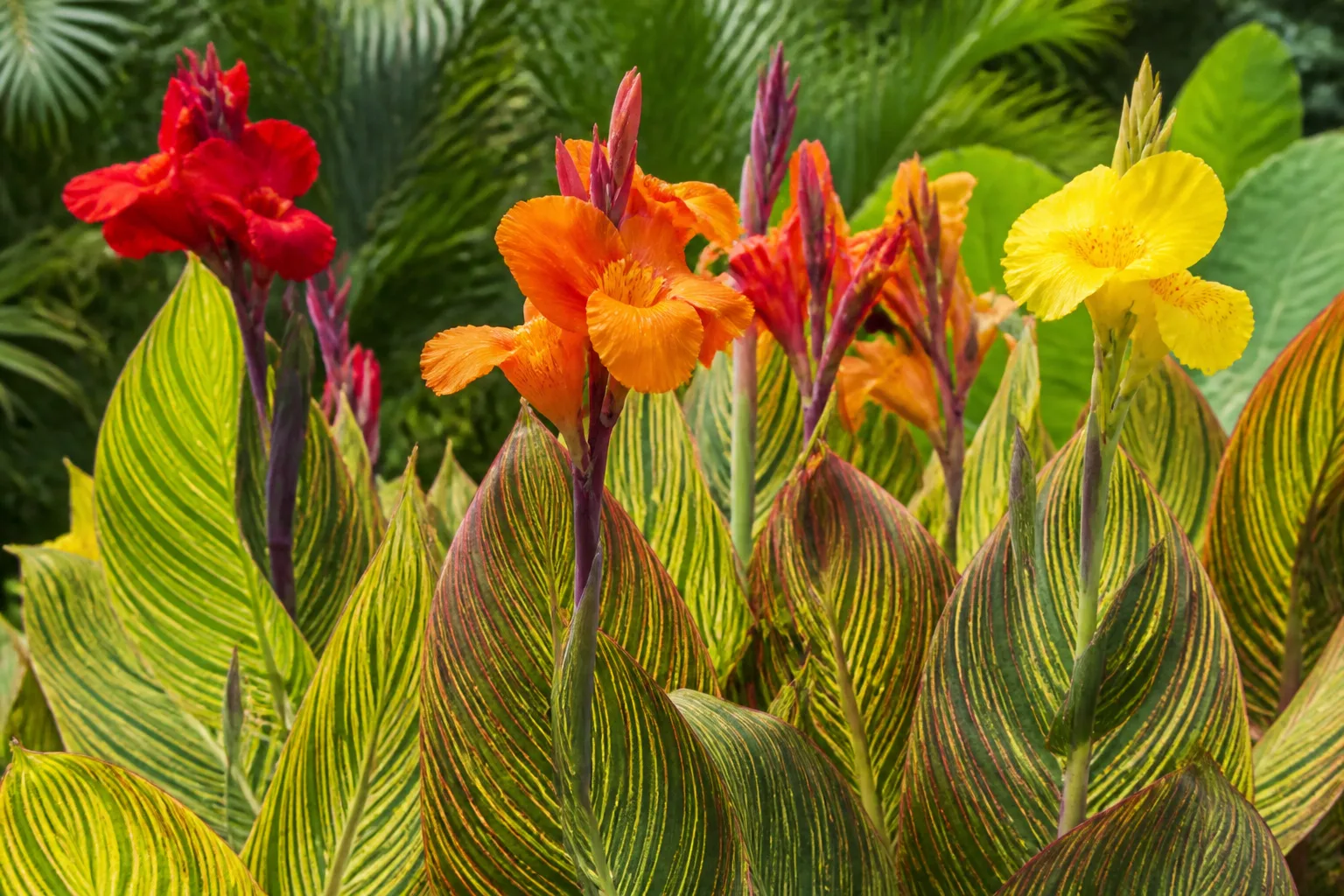
Keep watering steady while buds develop and rotate the pot if one side leans toward the light. Do not expect deadheading to make a shaded or recently planted canna bloom immediately; the plant needs enough warmth and leaf growth to support flowers. For a foliage-first display, remove flower spikes only if you prefer the leaves’ pattern and accept that you will give up the blooms.
Troubleshoot Slow Growth, Torn Leaves, and No Blooms
If a new rhizome has not emerged, check its condition before changing several things at once. A firm rhizome in cool mix may simply be slow; a soft rhizome in cold wet mix is more likely rotting. Let the container warm, improve drainage, and keep moisture moderate while the plant wakes. If the rhizome has become mushy or smells sour, remove it and any affected mix rather than planting it deeper.
Torn leaves are common after wind or rough handling, and they can also signal that the pot dried too far during active growth. Move the planter to a more sheltered spot and check the root zone before increasing water. Older leaves yellowing at the end of the season can be normal, but widespread yellow leaves in midsummer call for a closer look at light, drainage, and moisture; yellowing alone does not identify a single cause.
A canna that grows leaves but no flowers is often short on direct sun or warmth, especially when planted late in a cool season. Also check whether several rhizomes are competing in a small pot or whether high-nitrogen feeding is pushing leaf growth. Fix the most likely constraint first and give new growth time; moving a mature plant repeatedly or applying several fertilizers at once can add stress without clarifying the cause.
Check for Pests and Virus-Like Symptoms
Inspect the undersides of leaves and the folds of new growth when you see holes, sticky residue, or leaves that remain rolled together. Slugs and snails make irregular holes, beetles may chew leaves, and caterpillars can shelter in folded foliage. Open a damaged fold carefully and remove visible pests by hand; rinse aphids off with water. The NC State Extension profile lists Japanese beetles, slugs, snails, rust, bud rot, aster yellows, and mosaic virus among problems associated with cannas.
Pale streaks, mosaic patterns, or distorted new leaves can have causes other than insects. Isolate a plant with persistent virus-like symptoms and compare new growth before sharing or dividing its rhizomes; the RHS describes canna viruses as a disease concern, and infected plants should not be treated as if they have a simple nutrient deficiency. Avoid spraying on a guess. If a treatment is needed for an identified pest, use only a product labeled for that pest and setting and follow the label.
Divide and Repot a Container Canna
A container can become crowded as the rhizome expands and sends up multiple shoots. Repot or divide when growth is congested, flowering declines despite good light and water, or the rhizome mass fills the available space—not just because a calendar says it is time. Spring, as growth is about to resume, is a convenient time to remove the clump, brush away loose mix, and separate sections with clean, sharp tools.
Keep a visible eye on each division and discard soft or diseased pieces. Plant one or more healthy sections into fresh mix, choosing a pot wide enough for the cultivar’s mature size. If you divide in fall, store the rhizomes until spring rather than planting them into cold soil. The RHS propagation guidance recommends spring division into sections with two or three growing points; a single healthy eye can still be viable, but a larger division is more likely to establish quickly.
Overwinter Potted Cannas Without Losing the Rhizome
Your winter method depends on how cold and wet the site gets. In reliably frost-free regions, cannas can remain outdoors in the ground, but a pot is more exposed because cold surrounds its sides and base. In regions where the container or soil may freeze, move the whole pot to a frost-free location or lift the rhizomes after frost has blackened the foliage. NC State Extension warns that canna rhizomes can be injured by extended temperatures below 25°F and recommends lifting them in colder areas; wet winter conditions can also raise rot risk.
For the whole-pot method, cut back dead foliage and store the container in a cool, sheltered, frost-free place. Keep the mix barely moist or close to dry while the plant is dormant, and check occasionally for rot or premature shoots. This is convenient when you have space for a large pot, but it is not ideal if the container is too heavy to move or the storage room is warm and bright enough to trigger weak growth.
Lifted Rhizome Storage
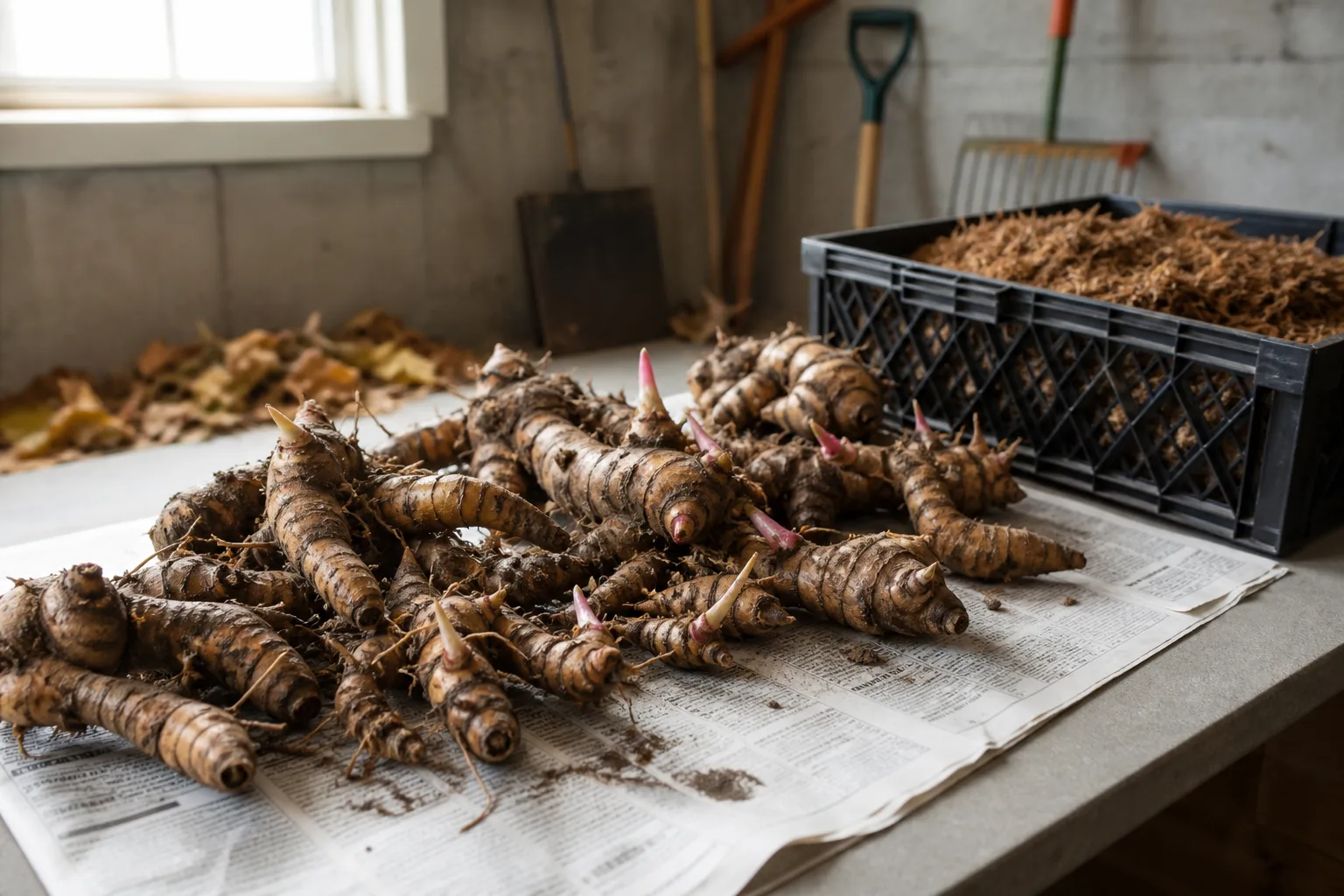
If you prefer to store the rhizome separately, wait until frost blackens the leaves, then cut stems back and lift the clump carefully so you do not slice through it. Shake off loose soil, let the surface dry in a shaded, airy place, and remove only damaged or rotten tissue. Pack firm rhizomes loosely in a ventilated box with a dry or barely moist medium such as vermiculite; label cultivars if you have more than one.
Keep the box cool and frost-free and inspect it periodically. If the rhizomes shrivel, the air may be too dry; if they soften or mold, the medium is too wet or the storage is poorly ventilated. Adjust gradually rather than spraying the rhizomes or sealing them in a plastic bag. NC State Extension recommends a cool, dry storage area that stays above 40°F, while the RHS advises frost-free storage with little watering. Bring rhizomes back into growth several weeks before your last frost only if you can provide warmth and bright light; otherwise, plant them after frost danger passes and accept a later start.
Conclusion
Canna lilies grow well in pots when their container suits the cultivar: wide enough for the rhizome, heavy enough for the leaves, and open enough to drain freely. Plant the rhizome horizontally in warm mix, give the growing plant sun and steady moisture, and let drainage—not a rigid watering calendar—set your routine. Feed moderately, remove spent flower spikes, and diagnose poor growth before reaching for fertilizer or spray.
Plan the winter before you plant. In a mild climate, an in-ground clump may return; in a cold climate, a potted canna needs a frost-free place or a lifted rhizome kept cool until spring. That seasonal decision is what turns a dramatic one-year patio display into a plant you can enjoy again.



