How to Grow and Care for Siberian Bugloss Plants
Learn how to grow Siberian bugloss in cool shade with moist, well-drained soil. Get practical advice on planting, watering, cultivars, division, and problems.
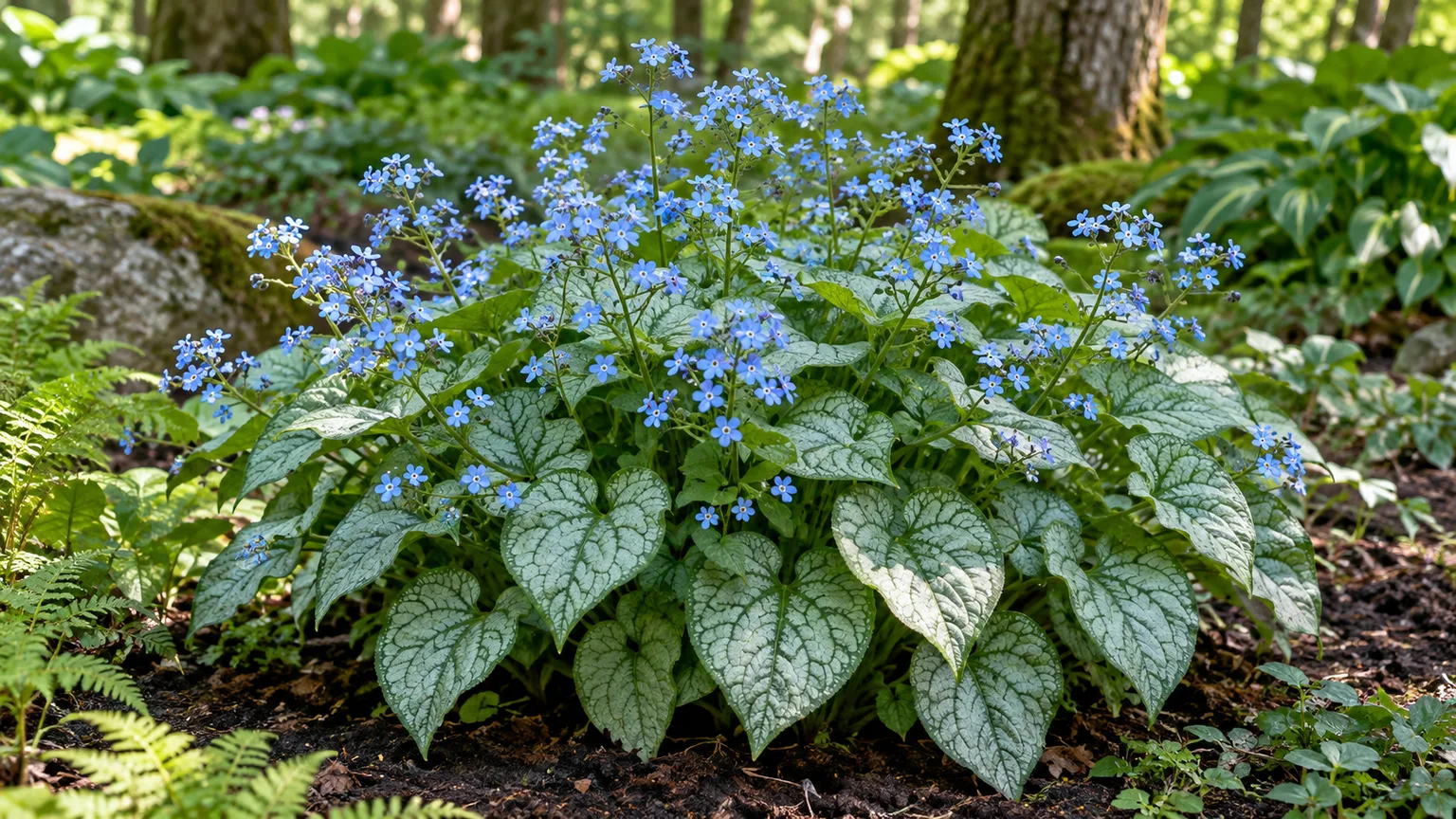
Siberian bugloss (Brunnera macrophylla) is a shade perennial grown for two seasons of interest: airy blue flowers in spring and broad, often silver-patterned leaves after the flowers fade. It succeeds when you give it cool shade and soil that stays lightly moist while draining freely. Those needs sound simple, but they rule out many hot, dry, or waterlogged spots.
The useful first question is not “How often should I water?” but “Will this location stay cool enough in summer?” A good site makes the rest of Brunnera care fairly easy. Choose one before buying a cultivar, because even a tough plant can struggle when its roots bake under afternoon sun or compete with thirsty tree roots.
What Siberian Bugloss Needs at a Glance
| Growing factor | Practical target |
|---|---|
| Light | Partial to full shade; protect from hot afternoon sun |
| Soil | Humus-rich, evenly moist, and well-drained |
| Typical size | About 12–18 inches tall and 18–30 inches wide |
| Flowers | Small blue or, in some cultivars, white spring flowers |
| Growth | Clumping perennial that spreads gradually by rhizomes |
| USDA hardiness | NC State lists zones 3a–8b; heat and humidity still matter |
NC State Extension describes Siberian bugloss as a clumping, rhizomatous perennial for moist, well-drained shade, with a typical height of 1 to 1.5 feet and spread of 1.5 to 2.5 feet. Its listed hardiness range is USDA zones 3a–8b, but the same profile warns that hot, humid summers can be a poor fit. Use the range as a starting point, not a promise that every garden in those zones will suit it. (NC State Extension)
The plant is herbaceous: leaves die back after frost in colder gardens and return from the crown in spring. Its common names include heartleaf Brunnera and false forget-me-not, a reference to the small blue flowers, not a close botanical relationship to true forget-me-nots. The leaves are the longer-lasting feature, especially on silver and variegated selections.
Choose a Shade Site That Stays Cool
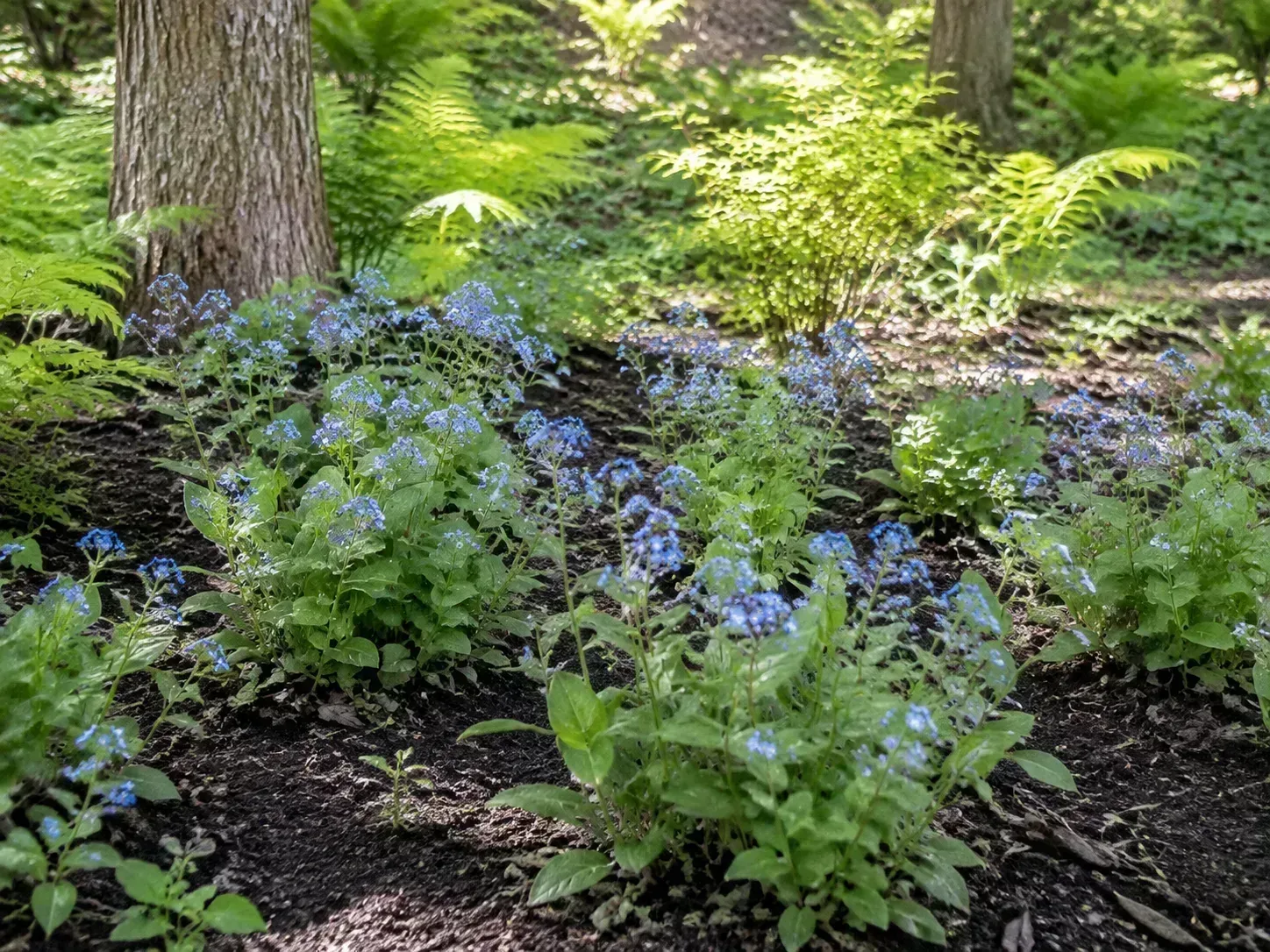
Look for a north- or east-facing border, the filtered edge of a tree canopy, or a woodland bed where the soil does not dry out every afternoon. Brunnera’s natural woodland habit is a useful model: it gets shelter from intense sun, leaf litter that enriches the soil, and more even moisture than an exposed border. It can grow under trees, but avoid the driest zone directly beneath a dense canopy if roots there already monopolize water.
This is not a drought-tolerant groundcover. A shaded strip beside a foundation can still be too dry if a roof overhang blocks rainfall, while the low ground beside a downspout may stay too wet. Before planting, check the spot after a normal rain and again during a dry week. If water stands there for hours or the soil turns powdery between waterings, improve the site or choose a plant better suited to those conditions.
NC State Extension recommends partial to full shade and protection from afternoon sun, and notes that heat and humidity can limit performance in the Southeast. The Royal Horticultural Society likewise recommends a cool, sheltered position in partial shade or shade. These climate notes matter more than a zone number alone: a cool summer in zone 7 can be easier for Brunnera than a hot, humid microclimate at the same nominal hardiness rating. (RHS plant profile)
Read Sunlight Across the Day
Watch the site from morning through late afternoon rather than estimating light from one glance. A few hours of gentle morning sun may be acceptable in a cooler climate, especially for a silver-leaved cultivar, but the same exposure can become stressful during a hot summer. Direct late-day sun is the exposure most likely to scorch leaves, particularly when the soil is also dry.
Green-leaved forms are often the safest choice for a deeply shaded bed; silver-patterned cultivars add brightness where filtered light reaches the planting. Do not assume silver foliage makes a plant sunproof. If the site gets strong sun after lunch, prioritize shade over the cultivar’s color, or use a taller shrub or canopy to soften the light. Gardeners’ World recommends a cool area and dappled shade for Brunnera, while Epic Gardening also advises morning exposure only in cooler climates. (BBC Gardeners’ World; Epic Gardening)
Prepare Soil to Hold Moisture Without Staying Wet
The target is a soil that feels cool and slightly damp below the surface, not a permanently soggy planting hole. Brunnera tolerates a range of soil textures and pH, but it performs best in fertile, humus-rich ground that drains after rain. The RHS lists chalk, clay, loam, and sand as possible soil types while still specifying “moist but well-drained” conditions. In other words, texture alone does not decide success; water movement and summer moisture do. (RHS plant profile)
For compacted or low-organic soil, work compost or leaf mold into a broad planting area rather than filling only the planting hole with rich material. A heavily amended pocket can behave differently from the surrounding ground and collect water. In dense clay, improve the bed’s structure across a wider area or plant on a modest raised mound; in fast-draining sand, incorporate organic matter and plan to check moisture more often.
Do not add gravel to the bottom of a planting hole as a shortcut to drainage. It will not correct a site where water has nowhere to go. If the ground remains saturated after rain, select another location or raise the bed so excess water can move away from the roots.
Plant in Spring or Early Fall
Plant nursery Brunnera when the soil is workable and the weather is mild. Spring gives a new plant a full growing season to root in; early fall can also work when the soil is still warm and there is time before hard freezes. Avoid setting it out during a heat wave, a drought, or when frozen ground prevents good root contact. Gardeners’ World recommends spring or fall planting and watering new plants regularly until they establish. (BBC Gardeners’ World)
Water the nursery pot before planting so the root ball is evenly damp. Loosen circling roots gently if the plant is pot-bound, then place it in a hole no deeper than the root ball and wider than the container. Backfill with the same soil you removed, firm lightly to remove large air gaps, and water slowly so the root ball and surrounding soil settle together.
Set the Crown at Soil Level and Space for Mature Width
Keep the crown—the point where leaf stems emerge—at the same level it sat in the nursery pot. Burying it can leave the center damp and stressed; planting too high exposes roots to drying. Space plants roughly 18–30 inches apart, adjusting for the cultivar’s mature width and whether you want individual mounds or a connected groundcover. NC State Extension lists a mature spread of about 18–30 inches, and Gardeners’ World advises planting with the top of the root ball level with the soil. (NC State Extension; BBC Gardeners’ World)
Water for Steady Moisture, Not Soggy Roots
Water a new planting deeply after setting it in place, then check the soil every few days during the first weeks. Water again when the root zone begins to dry; do not wait until leaves collapse. The exact interval depends on rainfall, temperature, shade, soil texture, and nearby tree roots, so a weekly calendar is less reliable than touching the soil an inch or two below the surface.
Once established, Siberian bugloss needs less attention, but “established” does not mean drought-proof. Water during extended dry spells, especially in sandy beds, under large trees, or during hot weather. A plant that wilts in the afternoon but recovers overnight may be signaling heat stress; if the soil is already wet, adding more water can make the root environment worse. First check soil moisture, then decide whether to water or provide more shade.
Aim water at the soil rather than repeatedly wetting the leaves. A slow soak helps moisture reach the roots without runoff, while a thin mulch layer reduces evaporation and moderates soil temperature. Gardening Know How emphasizes the balance that matters here: Brunnera does poorly in soil that dries out, but it also does not flourish in soggy ground. (Gardening Know How)
Mulch and Fertilize Lightly
Spread a thin layer of shredded leaves, compost, or fine bark over the root zone to keep the soil cooler and reduce moisture swings. Leave a small open ring around the crown instead of piling mulch against the stems. In a woodland-style bed, fallen leaves can serve the same purpose as long as they do not mat into a dense, water-blocking layer.
Brunnera does not need heavy feeding in reasonably fertile soil. A top-dressing of compost in spring is usually enough; use a balanced fertilizer only when a soil test or weak growth points to a nutrient need, and follow the product label. Too much fertilizer will not fix insufficient shade, dry roots, or standing water. Correct the site first, because those are the conditions most likely to limit the plant.
Understand the Spring Flowers and Summer Leaves
Small sprays of blue flowers rise above the foliage in early to mid-spring, with bloom sometimes continuing into early summer. Individual flowers are delicate, so view them as a seasonal layer rather than the plant’s main long-term display. NC State Extension describes blue flowers with pale centers and notes the bloom period can extend from early to mid-spring into early summer. (NC State Extension)
After flowering, leaves expand and form a low mound that can soften the front of a border or cover open soil beneath taller shrubs. Green forms offer a calm, woodland texture; silver-marked foliage reflects more light and can make a dark corner feel brighter. In winter, cold-climate plants usually die back rather than keeping a tidy evergreen mound, so pair them with evergreen groundcover if you need year-round coverage.
Choose a Cultivar for Foliage and Site
Start with the amount of light and space you have, then choose leaf color. The species form has solid green heart-shaped leaves and is a reliable fit for deeper shade. Named selections may be more striking, but their pattern, size, and seedling behavior vary. NC State Extension lists ‘Jack Frost’, ‘Looking Glass’, ‘Sterling Silver’, ‘Alexander’s Great’, ‘Diane’s Gold’, and ‘Variegata’ among the cultivars. (NC State Extension)
| Cultivar or type | What to expect | Best reason to choose it |
|---|---|---|
| Species form | Green leaves and blue spring flowers | Deeper shade or a quieter woodland look |
| ’Jack Frost’ | Silver leaves with green veins and margins | Foliage contrast in filtered shade |
| ’Looking Glass’ | Broad, silvery leaves | A bright visual mass in a shady border |
| ’Alexander’s Great’ | Large leaves with strong silver patterning | A bold focal clump with room to expand |
| ’Variegata’ | Green leaves with irregular creamy margins | A softer, edged pattern |
| ’Diane’s Gold’ | Golden foliage with blue flowers | Warm leaf color in a protected shady spot |
Treat cultivar descriptions as selection clues, not guarantees about performance in every climate. Silver or gold foliage may show more clearly in filtered light, but intense afternoon sun can still damage the leaves. Check the nursery tag for the plant’s mature width and any propagation restrictions. Some named cultivars are protected by plant patents; do not divide or sell a patented plant without checking its current status and label.
Prune Selectively Through the Season
After flowers fade, cut the spent flower stems if you want a tidier mound or fewer self-sown seedlings. Deadheading is optional; it does not make the plant bloom continuously. Remove a few leaves that are badly torn, diseased-looking, or scorched, but keep healthy foliage in place because it continues to support the crown.
In late summer, a tired or brown outer leaf does not automatically mean the whole plant is failing. Trim only damaged leaves at the base and check the soil and light before making a broader cut. If a large part of the mound has been scorched, moving or dividing it into a cooler site is more effective than repeatedly cutting off the symptoms.
In cold climates, wait until foliage naturally declines before clearing it away. Remove old leaves as new growth appears in spring, taking care not to nick emerging shoots. A quick cleanup also makes it easier to spot slugs and inspect the crown without stripping healthy leaves too early.
Divide Only When the Clump Needs It
Brunnera spreads slowly through rhizomes and often stays manageable for years. Divide when the clump has outgrown its space, its center is thinning, or you want another plant for a similar shady location. Do not divide it automatically every year: each split has to rebuild roots and may flower less the next spring.
Early spring as new growth begins is a dependable time. Early fall can also work in regions where the soil remains warm and the plant has time to establish before freezing weather. Gardeners’ World recommends division in early spring or autumn and advises making sure each section retains a good set of roots. (BBC Gardeners’ World)
Replant Divisions at Their Original Depth
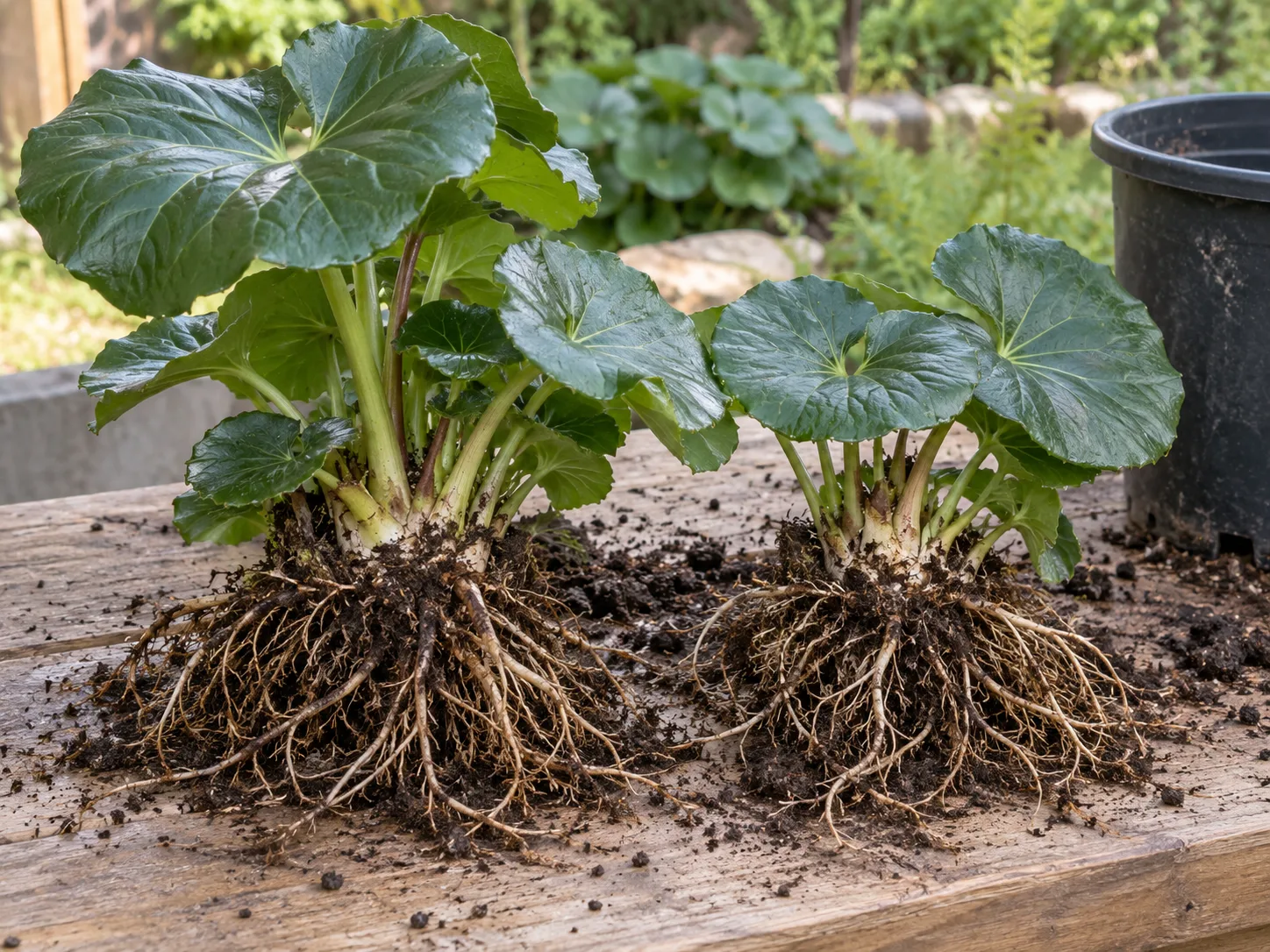
Water the clump the day before dividing if the soil is dry. Lift around the plant with a garden fork, working far enough from the crown to preserve a useful root ball. Shake or rinse away only enough soil to see the natural divisions; pull apart smaller crowns by hand or use a clean, sharp knife for a firm section.
Keep several healthy shoots and a substantial set of roots on each division. Discard soft, badly damaged, or dried-out pieces rather than expecting them to recover. Replant promptly at the original depth, firm the soil gently, and water thoroughly. Keep the soil evenly moist while new roots take hold, but do not leave the divisions sitting in water.
If the existing site is too sunny or dry, use division as a chance to correct the growing conditions instead of replanting the problem. A healthy division in the wrong place will repeat the same cycle of scorch or wilting. Mark each cultivar before lifting so silver-, gold-, and green-leaved forms do not get mixed up.
Grow from Seed When Variation Is Acceptable
Established plants may produce seedlings around the parent. You can move a small volunteer while it is young, keeping as much of its root system as possible and watering it in well. Allow seedlings to remain only where you have room for them; they are easier to relocate before they become entangled with neighboring groundcovers.
Seed is a poor way to reproduce a named cultivar faithfully. A seedling from a silver or variegated plant may grow green leaves or otherwise differ from its parent, so divide the original plant when you need a matching clone and when its label allows propagation. This distinction is especially useful if you bought a cultivar for a particular leaf pattern. Gardening Know How notes that Brunnera can self-seed, while both NC State Extension and the cultivar guidance emphasize that seedlings may not retain selected foliage traits. (Gardening Know How; NC State Extension)
Grow Siberian Bugloss in Containers
A pot works when you can give the plant shade, steady moisture, and free drainage. Choose a container with unobstructed drainage holes and enough room for a broad clump to expand. Use a quality outdoor potting mix that holds some moisture but does not pack into a waterlogged mass; do not fill the base with gravel as a substitute for drainage.
Position the pot in bright shade or gentle morning light, protected from hot afternoon sun. Containers dry faster than garden beds, so check the mix more often during warm weather and water when the upper layer begins to dry. A large pot usually buffers moisture changes better than a small one, but it still needs regular checks during the first growing season.
In winter, container roots are more exposed to cold than roots in the ground. Move the pot to a sheltered outdoor location in climates with severe freezes, and avoid placing it somewhere warm enough to push tender winter growth. Divide or repot when roots crowd the container or the plant outgrows its space, not just because a calendar says it is time. Epic Gardening similarly cautions that container Brunnera needs more frequent watering and a shaded position. (Epic Gardening)
Diagnose Common Problems Before Reacting
Most Brunnera problems are environmental or cosmetic rather than signs of a serious disease. Start with the pattern: are the damaged leaves on the sunny side, are they dry throughout the mound, or are there irregular holes? Check soil moisture and inspect the undersides of leaves before adding fertilizer or reaching for a pesticide.
| What you see | Likely cause | First response |
|---|---|---|
| Pale or bleached patches, then crisp edges on the exposed side | Too much direct sun or heat | Add shade or relocate the plant during mild weather |
| Limp or crisp leaves throughout a dry root zone | Drought stress | Water the root area deeply and add a light mulch |
| Ragged holes, often on lower leaves | Slugs or snails | Inspect after dusk, hand-pick, and reduce hiding debris nearby |
| Brown leaves after frost or at the end of the season | Normal seasonal decline | Wait for the plant’s cycle, then clear old foliage as spring growth starts |
NC State Extension describes slugs and snails as occasional pests and reports no significant disease problems. That means a few holes rarely justify treating the entire bed. If damage spreads rapidly, new leaves distort, or the crown becomes soft, inspect drainage and look for other clues before assuming the plant has a pest problem. (NC State Extension)
Separate Sun Scorch, Dry Soil, and Slug Damage
Sun scorch often begins on leaf surfaces that face the strongest light. The tissue may look faded, pale, or crispy while the shaded center remains greener. Move the plant to a cooler position or increase overhead shade; adding water alone will not make exposed foliage tolerate harsh afternoon sun.
Drought stress is more likely when the soil beneath the plant is dry and leaves across the mound droop or crisp at the edges. Water slowly at the root zone, then recheck the soil the next day. If the soil is moist but the plant still wilts, consider heat stress, root competition, or poor drainage rather than watering again automatically.
Slug feeding leaves irregular holes and ragged edges, often on leaves close to damp mulch. Check after dark with a flashlight, remove hiding places such as dense debris, and protect seedlings while they establish. Avoid blanket treatment for a few holes; choose a targeted response only if damage is ongoing, and follow the product label if you use a control product.
Use Brunnera as Woodland Edging and Groundcover
Place it near the front or middle of a shady border where the heart-shaped leaves can be seen, or use several clumps to soften the edge of a path beneath trees. Its spring flowers pair naturally with hellebores and spring bulbs; later, the foliage contrasts with ferns, hostas, bleeding hearts, and other shade perennials. Leave enough room for the mature spread so the plants can knit together without burying smaller neighbors.
Brunnera is also useful where you want a low, leafy layer rather than a fast, dense carpet. It grows by clumps and rhizomes, so it fills gradually and can be divided if it spreads farther than you want. It is often less appealing to deer and rabbits than some broad-leaved perennials, but no plant is immune to browsing when animals are hungry. (NC State Extension)
Conclusion
For a reliable Brunnera planting, choose cool shade first, then prepare soil that holds moisture without staying saturated. Plant at the crown’s original depth, water regularly while roots establish, and use mulch to reduce summer swings. Once settled, the plant needs little routine feeding or pruning.
Choose a cultivar for the foliage you want and the light your site can actually provide. Divide only when the clump needs room or you want another plant, and diagnose brown leaves by checking sun exposure and soil before changing your care routine. With those choices right, Siberian bugloss can return each spring with blue flowers and a durable layer of shade-friendly foliage.



