How to Grow and Care for Crinum Lilies in Your Garden
Get crinum lily care for light, soil, planting depth, watering, containers, winter protection, pests, and slow flowering—with species limits explained.
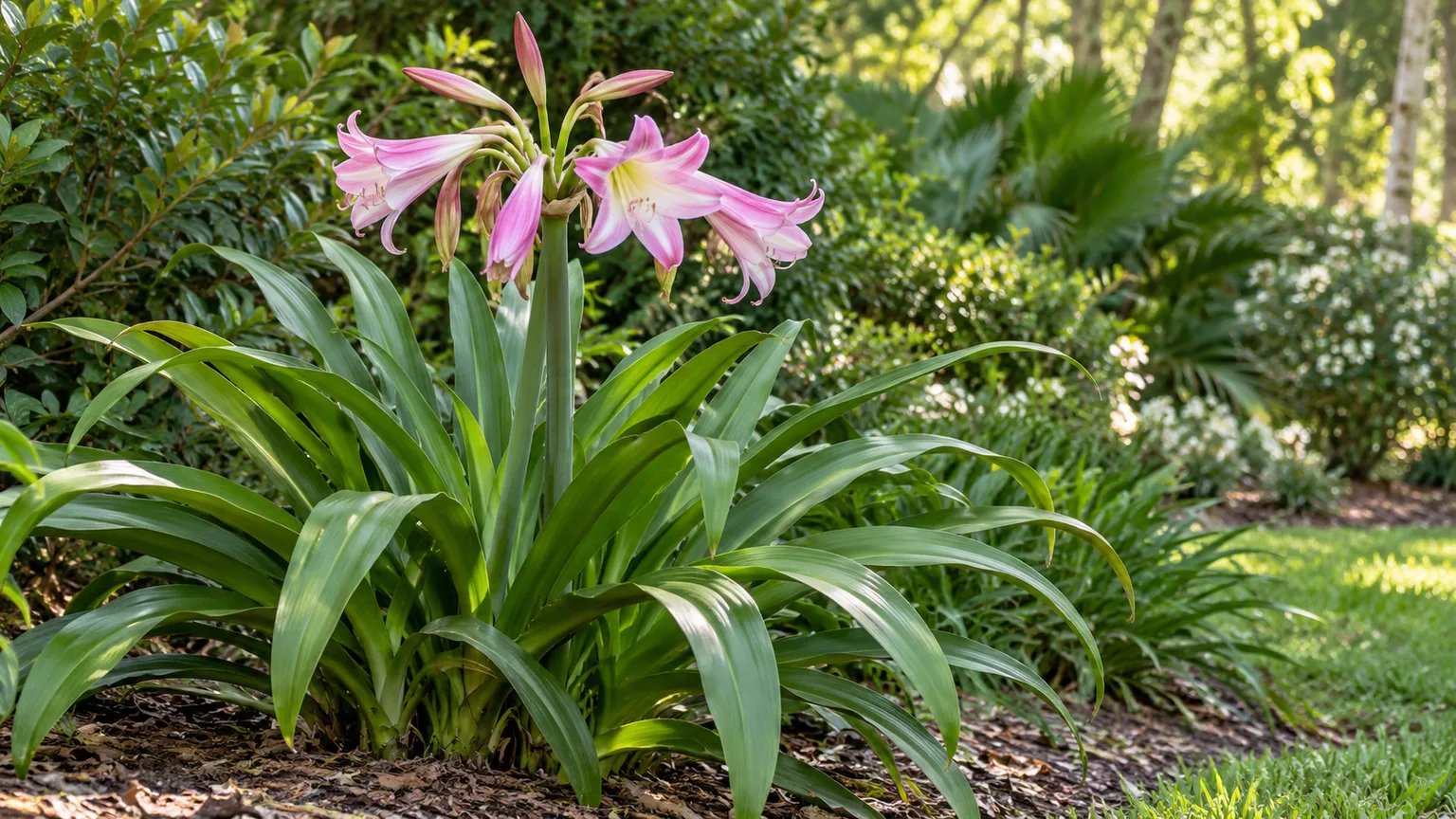
Crinum lilies reward a permanent spot with bold foliage and flower stalks that can appear for decades, but “crinum” is a genus, not one plant with a single hardiness zone or watering rule. Before planting, find the species or cultivar name on the bulb label and match it to your winter climate, soil, and available space. That one check can prevent the two most common disappointments: burying a bulb where its roots struggle, or expecting a newly moved plant to flower immediately.
What a Crinum Lily Is (and What It Is Not)
Crinums are perennial bulbs in the amaryllis family, Amaryllidaceae. They are not true lilies in the genus Lilium, despite the familiar common name. A mature crinum usually forms a basal rosette of long, strap-shaped leaves and sends up a separate, often leafless stalk with a cluster of trumpet- or spider-shaped flowers. Depending on the species or hybrid, blooms may be white, pink, deep rose, striped, fragrant, and open in spring, summer, or into fall.
The scale is just as variable. University of Florida IFAS describes cultivated crinums from about 13 inches to 6 feet tall, while some bulbs and clumps become exceptionally large. The same label can refer to plants with different flower shapes, spreading habits, and moisture needs. For care, use the botanical name when you have it; if the label only says “crinum lily,” ask the nursery which cultivar it is before you rely on a generic zone range. UF/IFAS Gardening Solutions describes the genus and its range of sizes and species, while Clemson Extension explains why the common name does not make a crinum a true lily.
Choose a Crinum for Your Climate and Space
Start with the coldest winter conditions you actually get, not a broad zone number copied from a genus-level description. The UF/IFAS profile for Crinum lists zones 8b through 11, while Clemson’s 2025 factsheet gives zones 7 to 10 and explicitly says hardiness varies by cultivar. Those ranges are not interchangeable guarantees: a cold-tolerant named hybrid can survive where a tender species will not, and a newly planted bulb can be more vulnerable than a mature clump.
For a cold-winter garden, buy a named cultivar from a regional grower and verify its local winter performance. Clemson highlights ‘Cecil Houdyshel’ as a cold-tolerant Crinum × powellii selection and identifies C. bulbispermum as a cold-tolerant species. In warmer regions, the wetland-adapted C. americanum (swamp crinum) is a different kind of choice: it can suit pond margins or persistently moist sites, and it spreads by underground stolons. A typical clumping hybrid is a poor substitute for that wetland role.
Also plan for mature width, not the dimensions of the bulb in its shipping box. The UF/IFAS landscape profile gives a general spacing of 4 to 6 feet for mass plantings; the right distance depends on cultivar size and whether you want separate specimens or a joined clump. Avoid the temptation to plant a rare bulb beside a path where its leaves or large offsets will crowd traffic. A location that is easy to reach for deadheading and safe to leave undisturbed is more valuable than a spot chosen only for the first season’s appearance.
Give It a Permanent Spot With the Right Light
Choose a place you are willing to keep. Crinums dislike repeated disturbance, and their roots and mature bulbs can be difficult to dig around. Full sun generally supports strong flowering, but part sun or dappled shade can also work. In very hot climates, some afternoon shade can limit scorching; Clemson Extension notes that intense direct sun can burn foliage in the hotter part of South Carolina, while dappled shade can still provide enough light for bloom.
Use the plant’s performance to fine-tune the site. Long stretches of deep shade may leave a leafy plant with few flower stalks, while bleaching or scorched patches on exposed leaves can signal overly intense sun combined with heat or dry soil. Before moving an established plant, first try removing a competing branch or adjusting irrigation if those fixes are practical. Because flowering can pause after transplanting, moving a mature clump is a bigger intervention than giving it one more growing season to settle.
Crinum flower stalks can catch wind even when the foliage looks sturdy. If the planting site is exposed, set a discreet stake near the stalk as it emerges, tying it loosely so the stem can still move. Clemson Extension recommends staking scapes in strong winds; staking is most useful before a gust bends a loaded stalk, not after it has fallen onto neighboring plants.
Prepare Soil for Roots, Drainage, and Moisture
Aim for soil that holds enough moisture to support growth but does not keep most crinum bulbs submerged. Many garden crinums tolerate a range of soils and can handle short flooding, yet that does not mean every species belongs in permanently wet ground. Clemson Extension says bulbs may withstand brief flooding but advises against continually wet soil for crinums other than native swamp crinum. C. americanum is specifically suited to pond or stream banks; a named ornamental hybrid usually needs ordinary garden moisture and a site that drains between rains.
Check the planting area after a hard rain. If water remains around the bulb for days, improve the bed’s drainage or choose a raised site rather than trying to correct a chronically wet subsoil with a handful of gravel in the hole. In heavy clay, work compost through a broad bed if appropriate for the soil and local guidance; do not create an isolated, loose “bathtub” surrounded by dense clay where water collects. In sandy soil, organic matter can help even out moisture, but it cannot turn a dry site into a wetland.
Do not over-focus on an exact pH or fertilizer amendment without a soil test. Crinums are durable landscape plants; a moderately fertile garden bed is usually a better start than a highly amended pocket that settles or stays soggy. If your intended location has standing water, use the identity of the bulb to decide: swamp crinum can be a candidate, but “crinum” alone is not enough evidence that the plant will thrive there. UF/IFAS describes C. americanum as a native swamp lily for pond and stream banks.
Plant the Bulb With the Neck at the Right Level
Plant during active warm growing weather, commonly spring into summer, so roots have time to establish before cold arrives. In a warm climate, the planting window may be longer, but planting immediately before a cold snap still exposes a new bulb to stress. If the bulb arrives bare-root, keep it shaded and plant it promptly; do not leave roots drying in the sun while you finish preparing the bed.
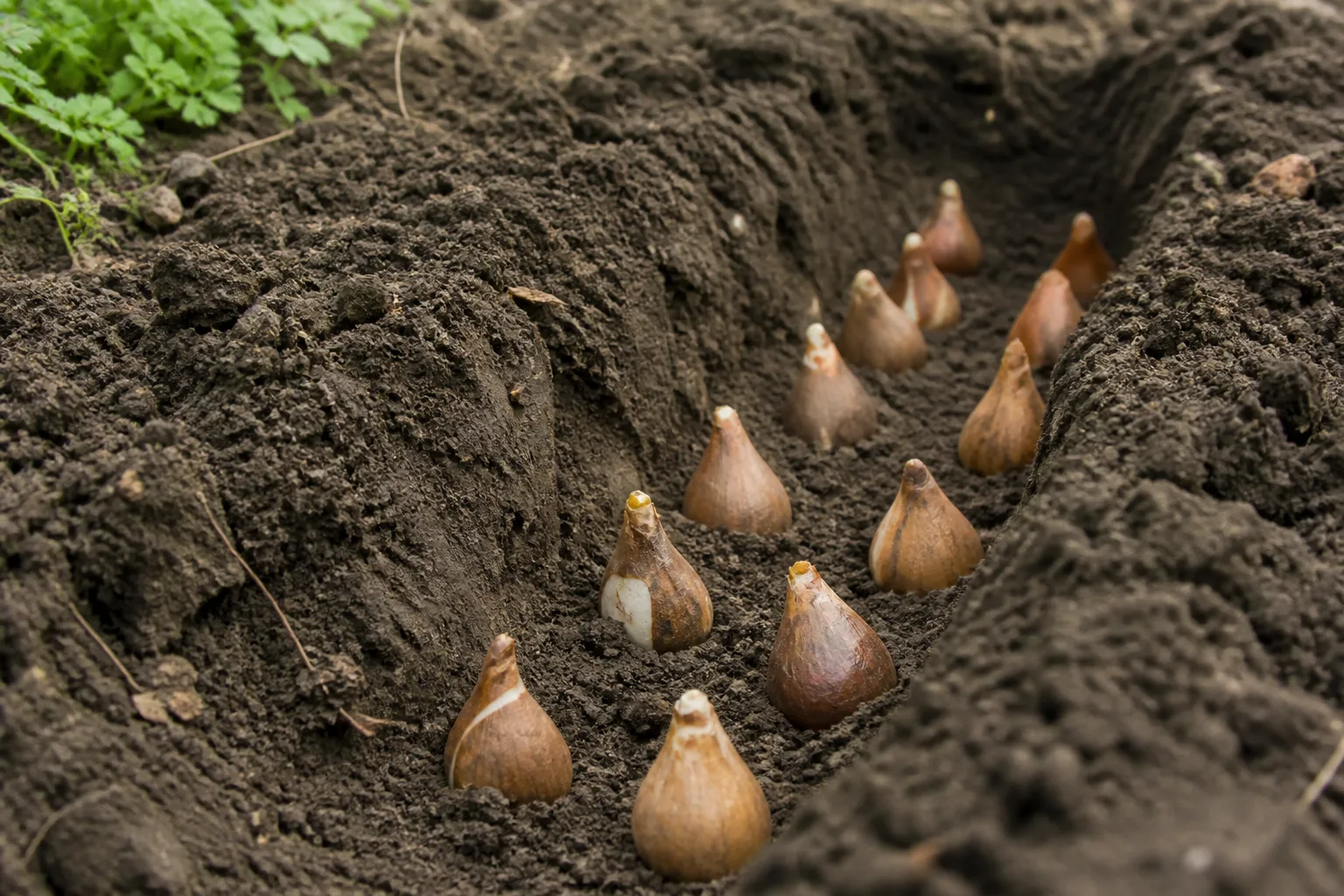
Find the basal plate—the flatter bottom where the roots emerge—and point it down. The tapered upper part, where leaves emerge, is the neck. Crinum planting directions often say “plant up to the neck,” but sources vary on how much neck to cover. Clemson Extension says the bulb and several inches of neck can be set below the surface, while warning that burying the entire neck in heavy soil can inhibit root growth. UF/IFAS uses “up to their necks” as a practical planting description, and the trusted garden guide Gardener’s Path places the tapered neck just below the soil line.
Use those recommendations as a range, not a fixed measurement for every bulb. In loose, freely draining soil, set the bulb so the basal portion is covered and some of the neck is below grade; in dense clay or a shallow topsoil layer, leave more of the neck exposed rather than burying the leaf bases in cold, wet subsoil. Follow the named cultivar’s nursery directions when available. Backfill firmly enough to remove large air gaps, water once to settle the soil, and mark the planting spot so the bulb is not accidentally dug up while dormant.
Water for Establishment and Flowering
During the first growing season, water when the upper soil begins to dry instead of relying on rainfall assumptions. The goal is even moisture around the developing roots—not a permanently saturated bulb. A slow soak wets a larger area than a brief splash at the neck. In a dry, sandy bed or a container, check more often; in a clay bed during a rainy spell, wait until the soil begins to drain and dry.
Once a clump is established, many crinums tolerate dry intervals. They are more likely to need supplemental water during a prolonged drought or while buds and flowers are developing. Clemson Extension recommends watering during flowering when weather is dry, while UF/IFAS describes established plants as drought-resistant and needing only occasional irrigation. Let the root zone, rainfall, and flowering stage guide you. If leaves wilt in afternoon heat but recover overnight and the soil is moist, adding more water may do little; if the soil is dry several inches down, soak deeply and reassess the next day.
The wet-soil exception matters: C. americanum is adapted to wet banks and can tolerate conditions that are unsuitable for many other crinums. Do not copy swamp-lily watering into a landscape bed of an unidentified hybrid. Conversely, a healthy established plant that has survived a short dry spell does not prove that a new bulb or potted crinum can be left dry through its first summer. Containers dry faster and have less root-zone volume, so check them more often but never leave their drainage holes standing in water.
Feed Lightly Instead of Chasing More Blooms
Do not try to force a new bulb to flower by repeatedly adding fertilizer. The first priority is a healthy root system; some crinums establish for a season or longer before blooming freely. For an established clump in average soil, a thin layer of compost in spring may be enough. If growth is weak or the soil is depleted, get a soil test and follow the resulting recommendation rather than applying a high-phosphorus product by habit.
Extension recommendations are not identical: NC State’s genus profile advises a high-phosphorus fertilizer after the first flowering season, while UF/IFAS presents crinum as a low-input landscape plant and does not prescribe a universal fertilizer schedule. That is a good reason to consider local soil conditions, not to assume that extra phosphorus is always the answer. Excess fertilizer can produce soft foliage or accumulate nutrients the plant does not need, and it cannot compensate for deep shade, damaged roots, an unsuitable cultivar, or a newly divided bulb.
If you choose a granular fertilizer, use the product label’s rate for the planted area, keep granules away from the neck, and water them in as directed. Do not fertilize a dormant bulb or a stressed plant with damaged roots. If the leaves are already vigorous but the plant has not flowered, wait through a full growing season before changing the feeding program.
Know When to Expect Flowers
Crinum bloom timing depends on species, cultivar, climate, bulb maturity, and recent disturbance. Many garden varieties flower in spring or summer, but the exact month is not universal. Clemson’s South Carolina cultivar notes, for example, describe ‘Cecil Houdyshel’ flowering earlier than summer cultivars such as ‘Ellen Bosanquet’. UF/IFAS describes the genus as especially colorful in summer, which is a useful regional pattern, not a calendar promise for every plant.
New bulbs and transplants may spend their first season making roots and leaves instead of flowers. A bulb planted in an unfamiliar garden, a small offset, or a clump divided recently can take a year or more to resume flowering; seedlings are slower still. Clemson reports that seedlings can require more than five years to reach bloom. If you are confident about the label and hardiness, a year without flowers is not by itself a reason to dig the plant up.
Use a simple diagnosis before intervening: Is the plant in deep shade? Was it planted or divided recently? Did its leaves die back after a cold winter? Did a drought coincide with bud formation? Has a competing tree begun shading it? Correct the factor you can identify, protect a loaded stalk from wind, and give the bulb time. More water and fertilizer cannot reliably compensate for an immature or recently disturbed bulb.
Deadhead Flowers and Leave Green Leaves
When individual flowers fade, remove them or the spent flower cluster to keep the plant tidy and limit seed formation if you do not want seedlings. Cut the stalk near its base with clean pruners after the full cluster has finished. If you want to collect seed from a species known to set viable seed, leave the developing fruit to mature instead; hybrids may not come true from seed, so offsets are usually the more predictable way to reproduce a named selection.
Keep healthy green leaves in place. They replenish the bulb after flowering and help it build energy for the next cycle. Remove leaves only when they are fully yellow, dead, or diseased, using clean tools. If winter cold browns the foliage, wait until damaged tissue is clear rather than cutting into still-green leaves simply to make the bed look bare. An evergreen clump may keep foliage year-round in a mild region, while a newly planted bulb or a plant hit by cold can die back and regrow.
Grow Crinum in a Large Container
Container growing is useful where the local winter is too cold for the chosen cultivar or where a gardener wants a movable accent. Pick a sturdy, broad, deep container with several drainage holes; a mature crinum has substantial roots and can become top-heavy. Use a quality potting mix that drains while holding some moisture, and leave space for the bulb neck at the surface. Do not choose a narrow pot that will need frequent repotting, because crinums resent unnecessary disturbance.
Check moisture by touch rather than following a rigid calendar. A container can dry quickly in wind and sun, but a large pot can remain wet for a long time after rain or in cool weather. Water thoroughly when the surface layer has begun to dry, then allow excess water to escape. Empty any saucer; do not leave the pot sitting in water unless you are deliberately growing a wetland-adapted species in a setup designed for that purpose.
Before buying, estimate whether you can move the container. Use a wheeled base or a lighter potting mix if the plant needs to be moved seasonally, and remember that the bulb and wet soil become heavy. In a marginal climate, a pot improves winter options but does not make a tender cultivar frost-proof. Bring it to a protected, cool, bright or otherwise cultivar-appropriate winter location before a damaging freeze, and adjust watering as growth slows. Keep the original label with the pot so you can match its care to the actual plant.
Protect Bulbs From Winter Cold
Use the cultivar’s verified cold tolerance and your site’s winter pattern to decide whether to leave the plant in the ground. Broad guidance gives different ranges for the genus: UF/IFAS lists 8b–11 for its profile, while Clemson’s current factsheet gives a wider 7–10 range with the caveat that it varies by cultivar. Those numbers describe different selections and growing contexts, not a guarantee that any unnamed crinum can overwinter in the coldest zone listed.
For an established, locally hardy in-ground plant, a cold spell may brown foliage without killing the bulb. Leave the site marked and wait for spring growth before deciding the bulb is lost. A new planting is more vulnerable, so spring planting in a cold region gives it a longer establishment window. A deep mulch can buffer soil temperature, but do not pile wet mulch over a bulb neck or use it to justify choosing a cultivar that is not hardy where you live.
For container plants, move the pot before a hard freeze according to the named cultivar’s needs. Some retain foliage in mild climates; others go dormant. If foliage dies back, reduce watering and avoid keeping the dormant root ball wet. Do not dig and store a planted bulb using a generic temperature recipe unless a reliable source for that cultivar recommends it. A protected container is often simpler than unpotting a heavy bulb, but only if the chosen storage space stays within a suitable range.
Divide Offsets Without Losing the Mother Bulb
Divide only when you need more plants, the clump is overcrowded, or a particular offset is ready—not because crinum bulbs must be lifted every few years. In warm climates, division is often done in winter when growth slows; after-flowering timing may suit some plants. The right moment is when you can replant promptly and the plant is not actively pushing a flower stalk. Set up the destination bed first so exposed roots do not dry while you decide where the pieces go.
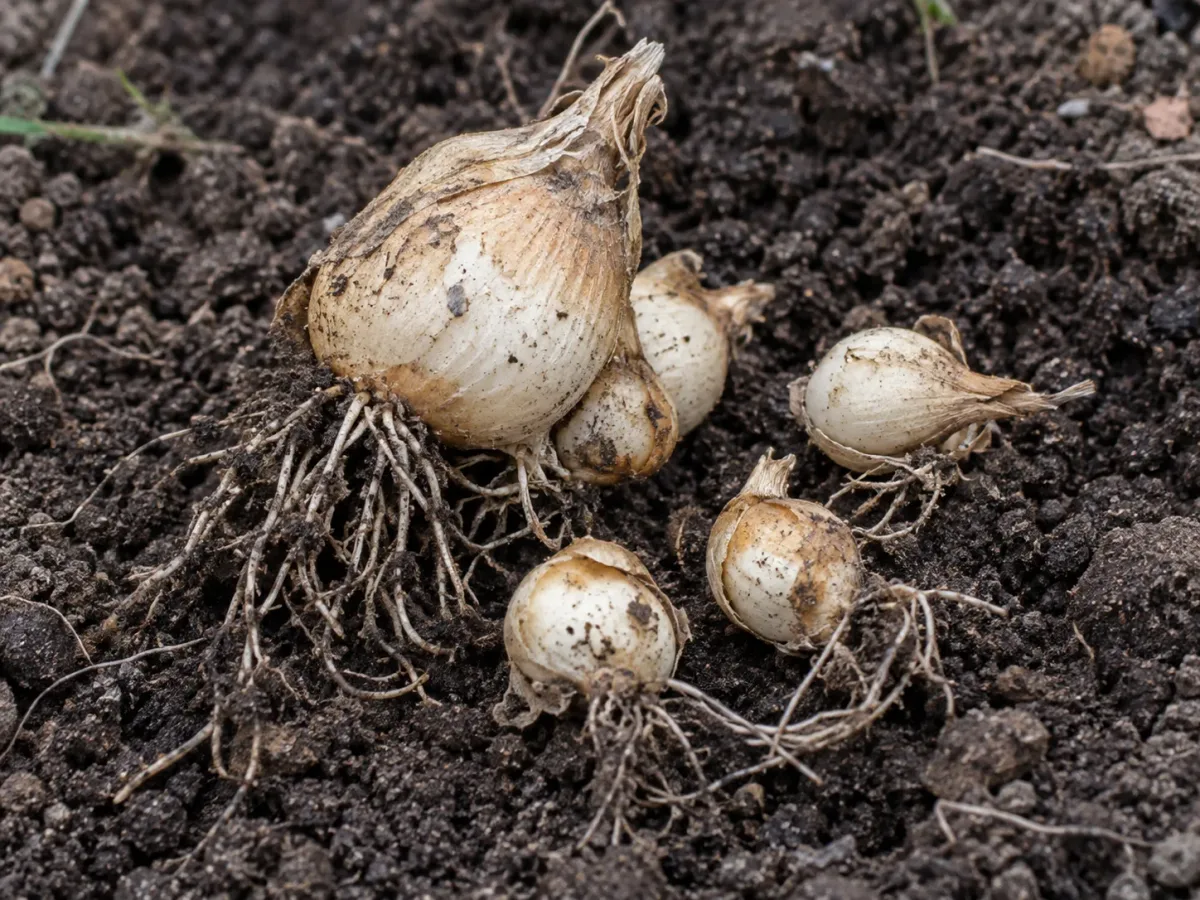
Dig well outside the clump because the bulb and root system may be much wider and deeper than the visible crown. Work gradually with a sharp spade, protect yourself from the weight of a large bulb, and avoid levering through the neck. Gently separate a well-developed offset from the mother bulb, keeping attached roots with it. Clemson notes that some bulblets are best moved once they have a substantial top and that offsets need roots to establish; small offsets may take a few years to flower. If a clump is too heavy to lift safely, remove only an accessible offset rather than attempting a full extraction alone.
Replant the mother bulb and offset at their original neck level as soon as possible, water to settle the soil, and keep the new planting evenly moist while roots recover. Mark the location and avoid moving it again to check for growth. A division can bloom sooner than a tiny offshoot or a seedling, but it can still pause after the stress of digging. UF/IFAS and Clemson Extension both recommend dividing during winter dormancy or slow growth and emphasize the value of rooted offsets.
Start Crinum From Seed Only If You Can Wait
Growing from seed can be rewarding when you have a species crinum that sets viable seed, but it is not the best route for a predictable named cultivar. Hybrids may not produce viable seed or seedlings identical to the parent; divisions and offsets preserve a cultivar more reliably. A seed-grown plant also needs years to build a flowering-size bulb. Clemson Extension reports that seed-grown crinums may take more than five years to flower, so treat the process as a long-term project rather than a shortcut.
If a mature plant produces a seed pod and you want to try, confirm the species first and sow fresh viable seed according to a reputable cultivar-specific or extension method. Label the pot with the parent and date, keep the medium moist but not waterlogged, and protect seedlings from cold and drying. Do not plant seedlings into their permanent bed until they are large enough to handle local conditions. If your goal is more of the same flowers soon, retain a rooted offset instead.
Solve Common Crinum Lily Problems
Most established crinums are resilient, so look for a cause before spraying or feeding. The first useful clues are where damage occurs, whether the plant was recently moved, how wet the soil stays, and whether other leaves show the same pattern. A simple check table can narrow the next action:
| What you see | Likely first check | Practical next step |
|---|---|---|
| No flowers, healthy leaves | Recent planting/division, deep shade, cultivar and season | Give it time; improve light only if practical; confirm the name |
| Yellow or soft leaves near the base | Soil staying wet, cold damage, or normal aging | Check drainage and neck depth; remove only dead leaves |
| Ragged holes or stripped leaf edges | Caterpillars or grasshoppers, including Eastern lubber | Inspect undersides and nearby foliage; hand-remove or use local extension advice |
| Fine pale stippling or webbing | Spider mites during hot, dry weather | Rinse foliage and recheck; identify pest before choosing a labeled treatment |
| Red lesions or yellow streaks | Possible red blotch or mosaic, not a routine nutrient issue | Isolate affected material, clean tools, and consult local extension for diagnosis |
The symptoms are not a diagnosis by themselves. UF/IFAS lists red blotch, crinum mosaic potyvirus, spider mites, and Eastern lubber grasshoppers among issues to watch; Clemson also notes that chewing insects are occasional and leaf spots can appear in moist shade. If a pattern persists or spreads, photograph several leaves and contact a local Extension office before applying pesticide. Use only a product labeled for the identified pest, plant, and site; do not assume a product marketed as “natural” is harmless to pollinators or pets.
Handle Crinum Safely Around Children and Pets
Treat crinum plant material as not edible. UF/IFAS warns that crinums contain toxic alkaloids and may cause poisoning if consumed; the NC State Plant Toolbox labels Crinum as causing low toxicity if eaten. These descriptions do not provide a dose or a reliable way to identify risk from an individual exposure, so keep bulbs, leaves, flowers, and seed pods away from children and animals that chew plants. Wash hands after handling, wear gloves if you have sensitive skin, and avoid getting sap in your eyes or mouth.
“Crinum lily” is also not the same as a true Lilium. Do not transfer toxicity claims between similarly named plants, and do not infer that a crinum is safe just because the true-lily warnings concern a different genus. If someone or a pet has swallowed any part, contact a poison center, medical professional, or veterinarian with the plant name and amount if known. Keep the supplier tag or a clear photo available for identification. UF/IFAS discusses crinum alkaloids, and NC State’s plant profile provides its own toxicity classification.
Conclusion
For reliable crinum lily care, start with the plant’s identity and your winter climate, then plant the basal bulb correctly while adapting neck depth to soil texture. Give the clump room and enough light, water during establishment and dry bloom periods, and leave green foliage in place after flowering. Most problems are easier to prevent than reverse: keep non-wetland types out of persistently soggy soil, do not move mature bulbs without a reason, and do not expect every new offset to flower right away.
Crinums are long-lived when their needs match the site, but the genus has real variation. A named cultivar label, regional extension advice, and a season of observation are better guides than a universal zone chart or fertilizer schedule. Once the plant has settled, a few deliberate checks—moisture, light, cold damage, and flower-stalk support—are often all it needs.



