How to Grow and Care for Marsh Mallow Plant
Learn how to grow marsh mallow (Althaea officinalis), from choosing a damp but drained site to planting, watering, pruning, flowers, pests, and seed starts.
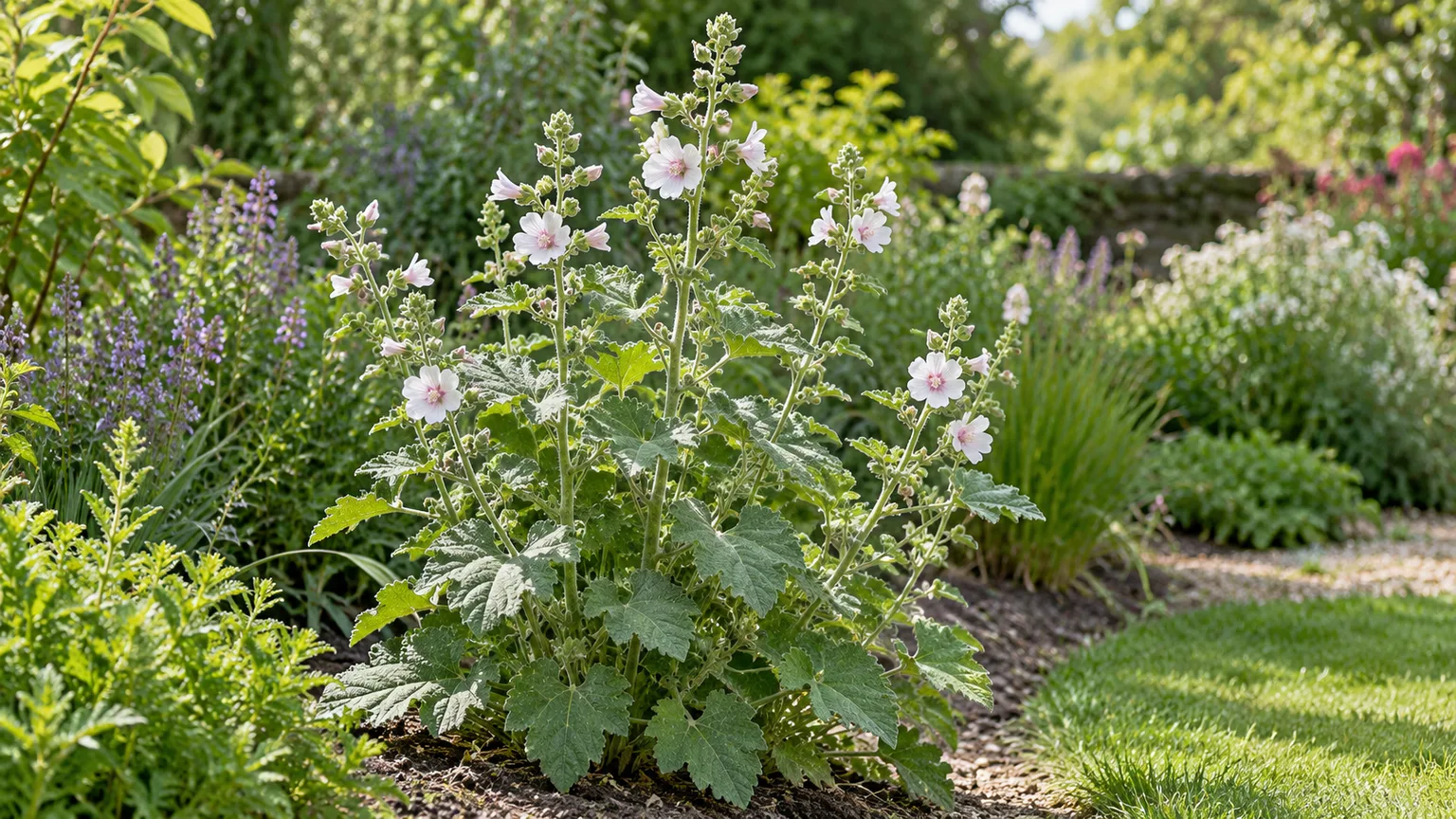
True marsh mallow (Althaea officinalis) is a tall, soft-leaved perennial for gardeners with a sunny spot that stays evenly moist. It is not a water-lily for a pond, and it is not the same plant as the large-flowered swamp rose mallow or the shrub called rose of Sharon. Get the identity and site right first; after that, its yearly routine is straightforward: water during dry spells, support the stems if exposed, and let the crown die back naturally for winter.
The name is also tied to a confection: the plant’s mucilaginous root was historically used in marshmallow sweets. Today’s candy is not a reason to eat garden plants or self-medicate. This is a growing guide, not advice for using the plant as food or medicine.
Identify Marsh Mallow Before Choosing a Site
The marsh mallow in a seed catalog should be labeled Althaea officinalis, a herbaceous perennial in the mallow family, Malvaceae. It grows upright on branching stems, with softly hairy, grey-green leaves and small, open, five-petaled flowers that range from nearly white to pale pink. A mature plant is substantial: the Royal Horticultural Society lists a potential height of 1.5 to 2.5 meters and a spread of 1 to 1.5 meters, though garden size varies with growing conditions (RHS plant profile).
It flowers from midsummer into early autumn in many temperate gardens, with bloom timing shifting by latitude and weather. Its upright flower stems add a soft, informal look to a cottage border or wildlife garden, and open flowers can be visited by insects. The species is native across parts of Europe, Asia, and northwestern Africa; Kew’s Plants of the World Online records A. officinalis as accepted and shows that it has also been introduced beyond that native range (Kew Plants of the World Online).
True marsh mallow versus rose mallow, hollyhock, and rose of Sharon
Plant labels are easy to confuse. “Marsh mallow” or “marshmallow plant” usually means Althaea officinalis. “Swamp rose mallow” is commonly Hibiscus moscheutos, a different perennial with much larger hibiscus-like flowers. “Rose of Sharon” is Hibiscus syriacus, a woody shrub that is also called althea in some places. Hollyhock, Alcea rosea, is another close relative grown for taller, showier flower spikes.
The family resemblance can make young plants hard to identify from a seedling photo alone. Confirm the Latin name before buying seed or transplanting a volunteer, especially if you intend to grow this specific herbaceous species. Cambridge University Botanic Garden describes A. officinalis as an erect perennial with silvery-haired foliage and pale pink flowers, and notes that it can grow in full sun or partial shade (Cambridge Botanic Garden plant profile).
Choose a Sunny Place That Stays Moist
Marsh mallow is useful where the soil does not dry as quickly as a typical border, but it still needs a spot that suits its size. Place it near the back or middle of a bed where its stems will not shade low-growing plants. A pond edge, rain-garden shoulder, or damp border can work if the crown is not sitting in stagnant water for long periods.
The word “marsh” describes its affinity for damp conditions, not a requirement for standing water. The reliable target is soil that remains evenly moist through active growth while allowing excess water to drain away. The RHS describes the plant as easy to grow in fertile, moist but well-drained soil; the Cambridge profile adds that it can also grow in more ordinary well-drained conditions (RHS; Cambridge Botanic Garden).
Full sun, partial shade, and wind
Choose a spot with at least six hours of direct sun if you want the fullest flowering. A little afternoon shade can help in a very hot climate, but deep shade commonly produces fewer flowers and looser, reaching stems. Avoid a position immediately behind a hedge, wall, or shrub that will block light as the season progresses.
Wind is the other site factor that often gets missed. Mature stems can rise several feet above a soft, leafy base, so a plant in an exposed corner may lean or lodge after rain even if the roots are healthy. A sheltered border or a discreet stake placed early is easier than trying to prop up a mature clump once its stems have flopped across neighboring plants. Homes & Gardens’ 2025 grow guide similarly recommends a sunny, damp site and support for tall stems in exposed positions (Homes & Gardens marsh mallow guide).
Soil that holds moisture but still drains
Before planting, check the bed after a soaking rain. If water pools around the crown for days, plant a little higher or choose a better-drained section; if the soil becomes powder-dry a day after watering, mix in finished compost and plan to mulch. Avoid trying to fix the site by adding a small amount of sand to heavy clay, which can make the structure worse. A generous organic matter amendment across the bed is a more useful way to improve tilth and moisture buffering.
Marsh mallow tolerates a broad range of soil types and pH, so there is usually no reason to add lime, sulfur, or a specialized “acid-loving” mix without a soil test. Keep mulch a few inches away from the crown so stems do not sit against constantly wet material. This makes the moisture available to roots while reducing the chance of soft, stagnant conditions right at the plant base.
Plant Marsh Mallow in the Ground
You can plant a nursery-grown marsh mallow in spring or early fall when the soil is workable and the plant can establish without facing its harshest weather immediately. If your summers are hot and dry, spring planting gives roots time to settle before peak heat. In regions with a mild late summer and reliable autumn rain, early fall can also work; avoid planting immediately before the ground freezes or during a heat wave.
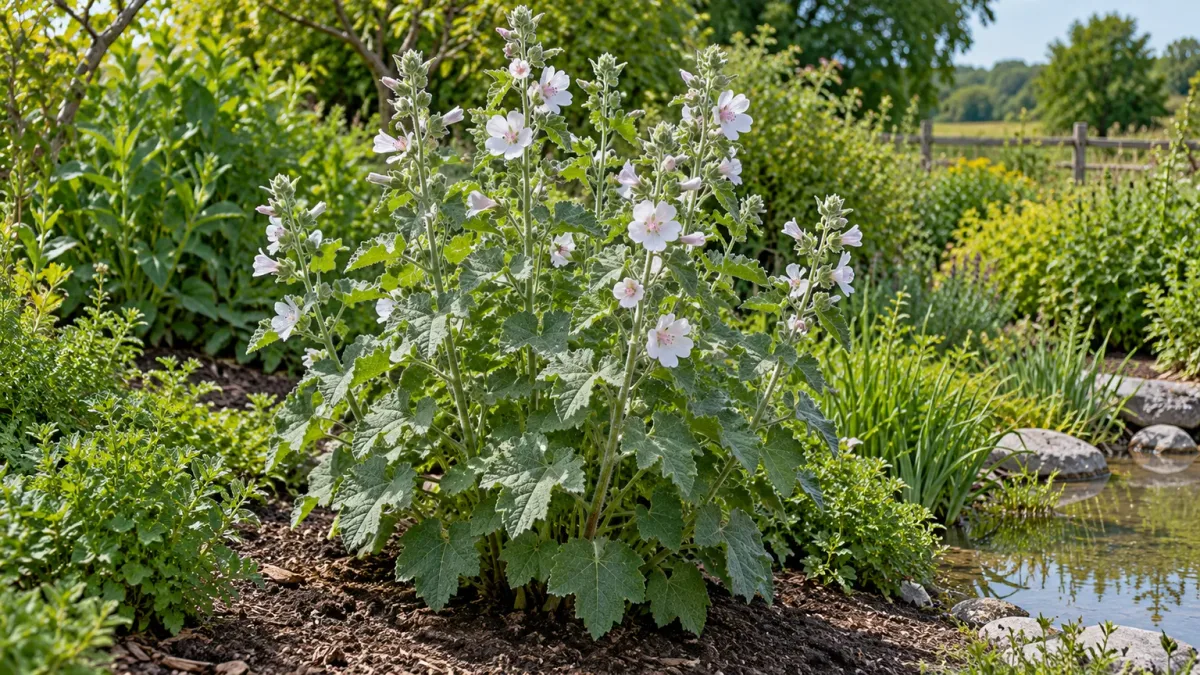
Choose a healthy nursery plant with firm stems and no spreading patches or rust-colored spots on the leaves. Water it in its pot before planting, then slide it out without breaking the root ball apart. Set the crown at the same depth it sat in the container, backfill, firm gently, and water slowly until the soil around the root ball is moist. Planting too deep in a wet bed can bury the crown; setting it too high can expose roots and dry them quickly.
Allow roughly 2 to 3 feet between plants as a starting point, then use the expected size on the plant tag. The RHS gives a potential 1 to 1.5-meter spread, so a compact planting can become crowded as the perennial matures. Space is not only aesthetic: airflow makes it easier to inspect the lower leaves for rust and gives you room to reach the crown for cleanup.
Set out a nursery plant at the right depth
After planting, water deeply and check the root zone every few days while the plant is establishing. The goal is to keep the root ball from drying out, not to maintain mud around the stem. Once you see fresh growth, add a 2- to 3-inch layer of organic mulch to slow evaporation, keeping it off the crown.
A young marsh mallow can look slow during its first stretch in the garden while it builds roots. Do not keep lifting it to check progress. If the leaves stay limp and the soil is dry several inches down, water thoroughly; if they droop while the soil is saturated, check drainage and stop adding water until the bed is no longer sodden. That simple soil check prevents the common mistake of treating every wilt as thirst.
Grow Marsh Mallow From Seed
Seed is a practical way to start this perennial if local nurseries do not stock it. The first year may be more about establishing a leafy plant than producing a tall flower display, so treat the packet’s bloom or maturity estimate as approximate. Start more seeds than the exact number of plants you need if you want a small patch, then keep the strongest seedlings and give them room.
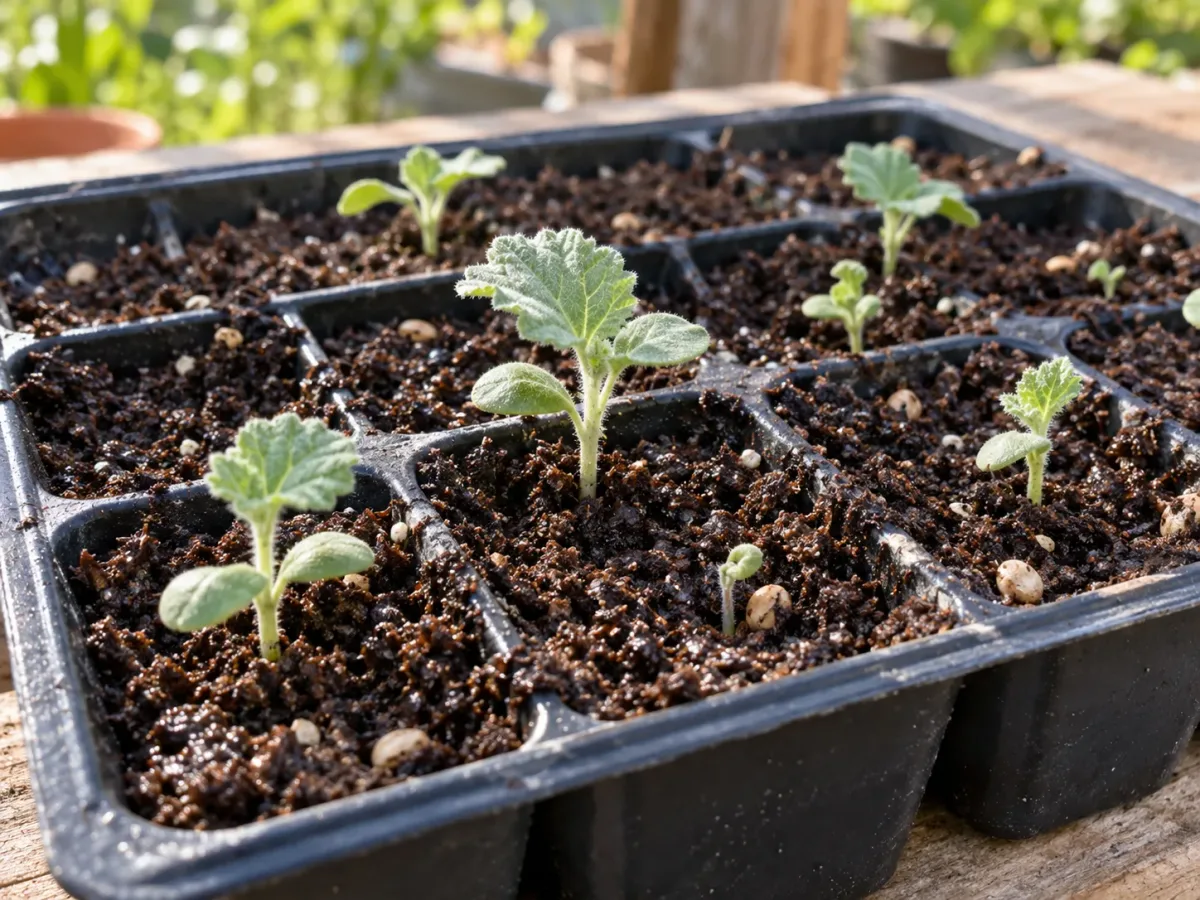
The sources differ on timing. The RHS profile recommends sowing seed in mid-summer, while the 2025 Homes & Gardens guide describes cold stratification for 8 to 12 weeks before sowing; Practical Self Reliance gives a shorter 3- to 4-week treatment and also notes that fall sowing can provide natural winter chilling (RHS; Homes & Gardens; Practical Self Reliance). Seed lots and instructions vary, so follow the supplier’s directions where provided rather than treating one chilling period as universal.
Cold stratification or autumn sowing
Cold stratification is a period of moist chilling that mimics winter for seeds whose dormancy responds to cold. If your seed packet recommends it, place seed with barely damp—not wet—sterile medium in a labeled, sealed bag or small container in the refrigerator for the stated time. Check it periodically for mold or early germination, and sow any seed that has begun to sprout promptly.
After chilling, sow into clean seed-starting mix in a deep cell or pot. Cover according to the packet directions, keep the mix evenly moist, and place it in bright light once seedlings emerge. Avoid keeping the tray waterlogged; continuously saturated seed mix encourages decay rather than stronger seedlings. Germination can be uneven, so give the tray several weeks before discarding it.
Autumn sowing outdoors is the lower-equipment option where winter is cold enough to provide a natural chill and the bed will not flood or wash seed away. Mark the location, protect the seedbed from disturbance, and expect emergence when conditions warm. In a mild-winter climate, or where winter rain is heavy, refrigerator stratification gives you more control than relying on weather.
When seedlings have several true leaves and a root system that holds the plug together, harden them off gradually and move them into their final bed while they are still small enough to transplant easily. Do not leave them confined in a shallow tray until the taproot becomes crowded. If a seedling has developed a long root, handle it gently and plant at the same depth it was growing.
Water and feed according to the soil
During the first growing season, check moisture at the root zone rather than watering by a rigid calendar. If the top few inches are dry and the root ball is not cool or damp below, water slowly at the base. Established plants tolerate a range of conditions, but prolonged drying can reduce growth and flowering; a mulch layer makes the moisture level more stable between rains.
Containers need more frequent attention because their limited soil volume warms and dries faster than a garden bed. A pot that is moist in the morning can be dry again after a hot, windy afternoon. If you must grow marsh mallow in a container, use a deep, heavy pot with drainage holes, keep it sheltered from strong wind, and be ready to water more often than an in-ground plant. Homes & Gardens considers containers less suitable because the tall perennial can become unstable and needs consistent moisture (Homes & Gardens).
Feed lightly, if at all. In soil amended with compost, extra fertilizer is often unnecessary. If the plant produces very weak growth and a soil test shows low fertility, correct the soil based on that test rather than applying a high-nitrogen feed by guesswork. Too much nitrogen can make stems soft and leafy without improving flowers, while staking and enough sun do more to help a tall plant hold its form.
Support, prune, and deadhead tall stems
Support exposed plants before the flower stems grow tall. A single unobtrusive stake or a loose ring can keep a plant from leaning into a path, but avoid tying every stem tightly into a narrow bundle; crowding traps damp air around the foliage. If the plant is consistently flopping, next season move it to a more sheltered site, use a support ring earlier, or give it more room so it can develop a broader base.
Deadhead spent flowers if you want a tidier clump or fewer volunteer seedlings. Cut the flower stem back to a healthy leaf or lateral shoot rather than clipping off random leaves. This can encourage the plant to keep producing side blooms when conditions remain favorable, but it cannot force flowers through heat, drought, or shade.
Decide whether to save seed
If you want seed, leave some flowers in place until the round seed capsules dry and begin to open. Collect mature seeds on a dry day, let them finish drying indoors, and store them in a labeled paper envelope in a cool, dry place. Seeds from a named cultivar may not come true to the parent, so expect variation in the next generation unless the supplier says otherwise.
If you do not want more plants, cut off seed heads before they turn fully brown and release seed. Deadheading the whole plant is optional; you can leave some flowers for insects and remove only the developing capsules later. Marsh mallow does not spread by fast-running surface stems, but volunteers can appear where seeds fall, so the decision is mostly about seed heads and garden space.
Encourage summer flowers and troubleshoot no blooms
In many temperate gardens, marsh mallow opens flowers from midsummer into early autumn. A flower on an individual stem does not last indefinitely, but the plant can produce a succession along its stems over the bloom period. The Cambridge Botanic Garden describes flowers from midsummer to autumn, and the RHS gives a similar summer-to-autumn window (Cambridge Botanic Garden; RHS).
If a mature plant has lots of leaves but few flowers, check light first. It needs a sunny position for the strongest bloom; nearby trees and fast-growing perennials may have shaded it since planting. Next look at fertility and moisture: a heavily fertilized plant may invest in foliage, and a plant that repeatedly dries out can stall. Finally, consider age and disturbance. Seedlings, recent transplants, and plants divided or moved recently may need a full season or more to reestablish before flowering well.
Do not solve a no-bloom problem by cutting the whole plant back during active growth or adding multiple fertilizers. Correct the limiting condition, keep moisture steadier, and wait for the next natural flowering window. If it is already late in the season, make notes on sun and soil now and adjust the site before the next spring rather than repeatedly moving a stressed plant.
Watch for flea beetles and rust
Marsh mallow is not immune to garden pests. The RHS notes that A. officinalis may be susceptible to flea beetles and rust, even though a healthy, established plant may tolerate some leaf damage (RHS plant profile). Inspect new seedlings and the undersides of older leaves before treating; a name like “rust” describes a symptom pattern, not every brown or orange mark.
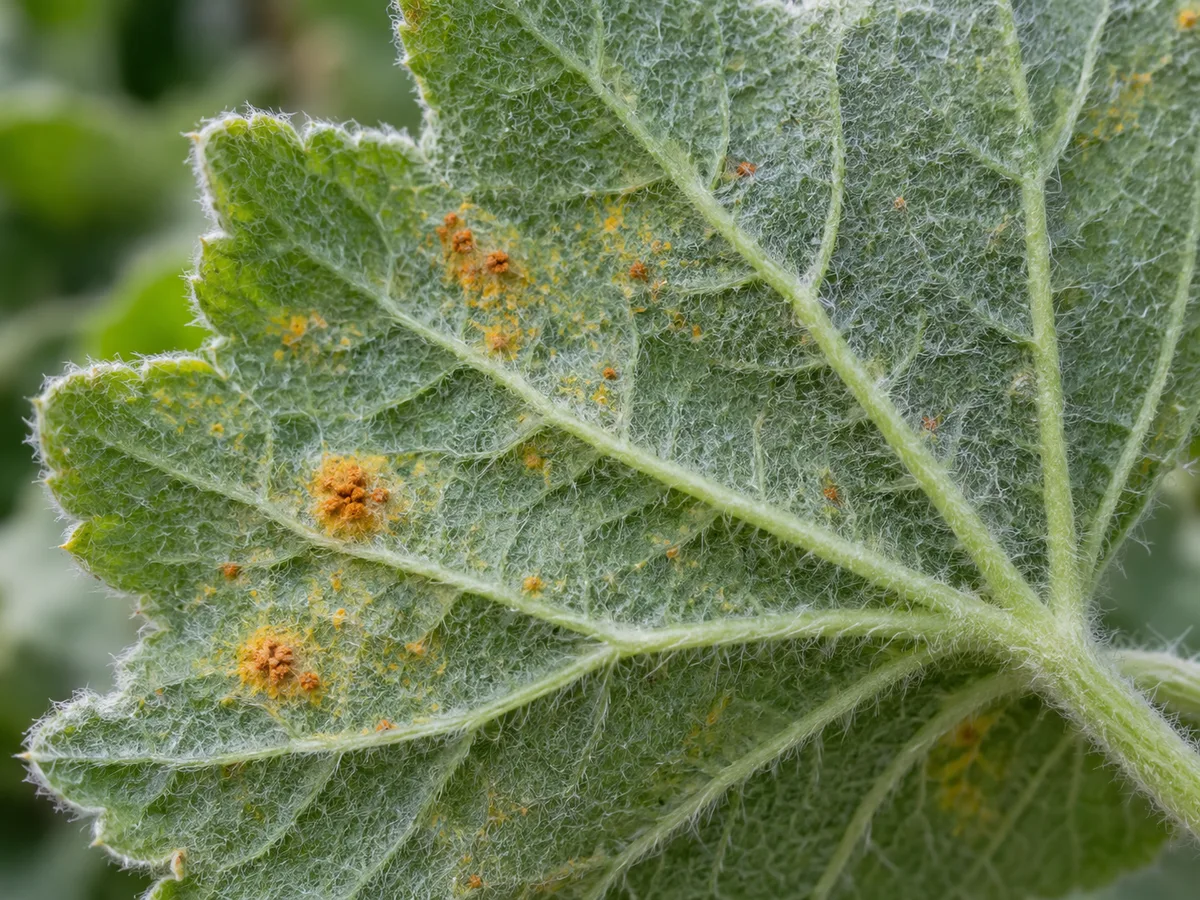
Mild rust appears as raised orange-brown pustules on the leaf underside; confirm the diagnosis before treatment.
Tell shot holes from orange pustules
Flea beetles are tiny, jumping beetles that leave many small round holes, especially on young leaves. A few holes on a large, healthy plant are usually less urgent than damage that is stripping seedlings or slowing their establishment. Keep seedlings vigorous, inspect them often, and consider a fine-mesh cover over young plants before pests arrive; remove it once plants need open access for pollinators or airflow. UC IPM describes screening and cultural controls as ways to exclude flea beetles from susceptible young plants, though its guidance is general rather than marsh-mallow-specific (UC IPM flea beetle guidance).
Rust usually presents as raised orange-brown pustules, often on the underside of leaves, with yellowing or brown patches developing as damage progresses. Remove a few affected leaves and discard them rather than leaving infected foliage under the plant; water at soil level, avoid crowding, and clear dead leaves at the end of the season. If symptoms spread quickly, get a local Extension or Master Gardener diagnosis before applying a fungicide, and follow the product label for ornamental plants and the target disease. Spraying without confirming the problem can harm beneficial insects and still miss the cause.
Protect the plant through winter
This is a hardy herbaceous perennial in temperate climates. Its above-ground stems and leaves die back as the growing season ends; the living crown and roots remain below ground and send up new growth when spring conditions return. Do not mistake winter dormancy for a dead plant, and mark the spot in fall if you plan to work the bed before spring emergence.
Once the foliage has yellowed or died back, cut stems near the ground and clear diseased material. The RHS recommends cutting the plant down after flowering, while Homes & Gardens describes pruning back during the dormant months; the practical timing is after the plant has finished active growth and before new shoots emerge (RHS; Homes & Gardens). A light layer of mulch can help moderate soil moisture, but do not bury the crown under a wet pile of leaves.
Cold hardiness does not mean the plant enjoys every winter condition. A consistently wet crown, repeated freeze-thaw in a poorly drained bed, or a dry container left exposed can still stress roots. For a potted plant, move the heavy pot to a sheltered, unheated place if your winters are severe, keep drainage open, and check that the root ball does not become bone-dry while dormant.
Manage self-seeding and the mature footprint
Marsh mallow is a large plant, so give it the space its mature spread deserves instead of treating it like a compact herb. It can self-seed if capsules mature, and Kew records the species as introduced in several North American states and provinces. “Introduced” is not the same as “invasive everywhere,” so check your local invasive-plant or noxious-weed list before planting, especially near natural wetlands or waterways (Kew Plants of the World Online).
To keep a garden patch bounded, deadhead or remove seed capsules before they open, then pull small volunteers while the roots are still short. Avoid dumping seed heads, roots, or unwanted plants beside a stream or wild area. If you need to remove an established clump, plan for a deep root: moisten the soil, dig broadly around the crown, and remove as much root as practical rather than chopping the top off and expecting that to stop regrowth.
Do not put marsh mallow in a small pot just to control its spread if you cannot keep up with daily summer checks. A ground bed with a deliberate edge and regular seed-head removal is often simpler. Where local restrictions or nearby wetland habitat make self-seeding risky, choose a non-seeding garden alternative instead.
Conclusion
Grow marsh mallow in a sunny place where the soil stays evenly moist but the crown does not sit in standing water. Give it enough room for a tall, branching perennial, water it through dry spells, support it if exposed, and let its foliage die back before winter cleanup. For seed, follow the seed supplier’s chilling instructions or use autumn sowing where natural winter stratification is dependable.
The most useful first step is confirming the label says Althaea officinalis. Once you have the true plant, a well-chosen site and sensible moisture routine do more for its growth than complicated feeding or constant pruning.



