How to Grow and Care for Boston Ivy in Your Garden
Learn how to grow Boston ivy, choose a safe climbing surface, water it through establishment, prune it away from gutters, and keep berries and spread in view.
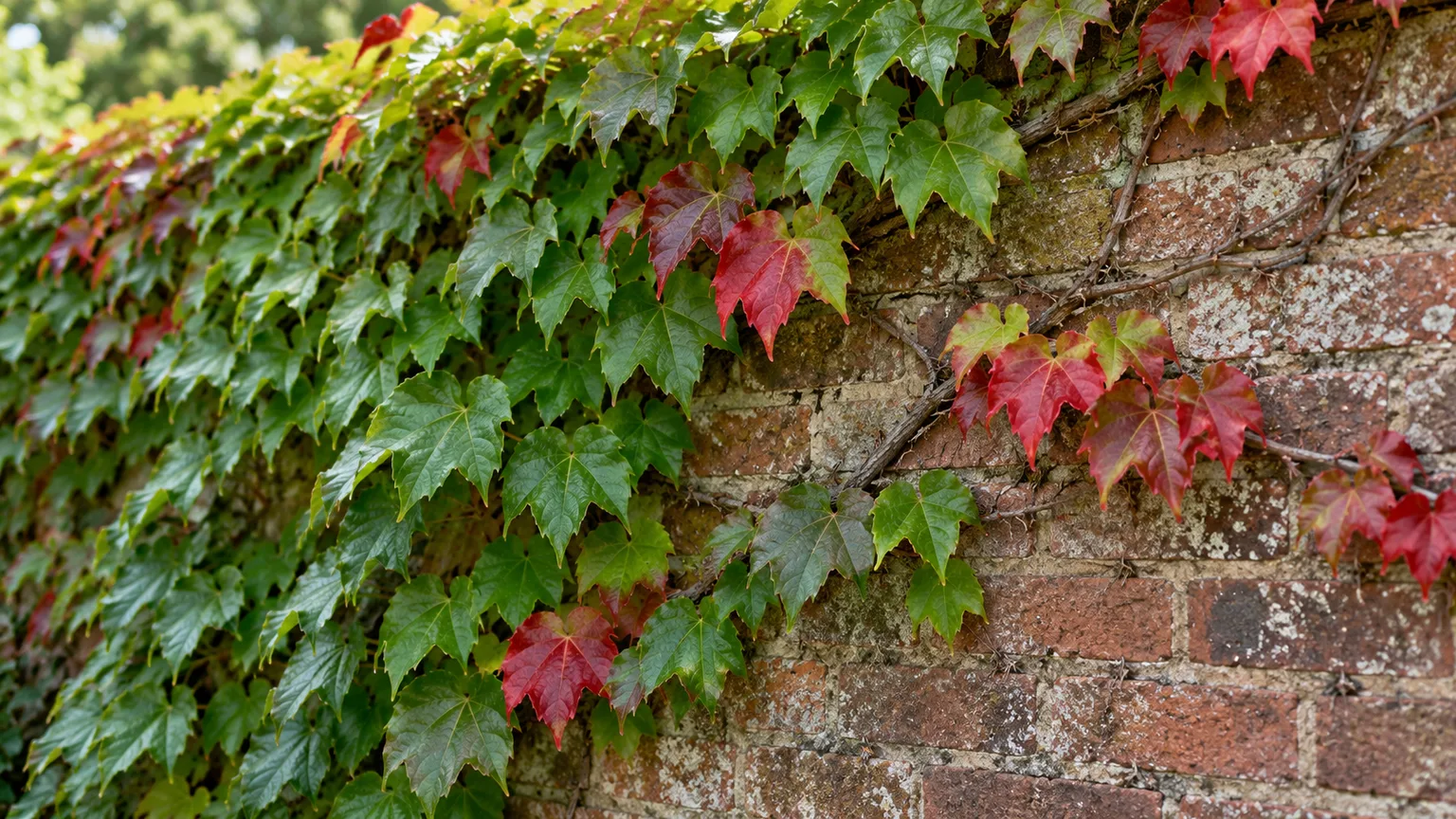
Boston ivy is a deciduous, woody vine grown for its lush summer cover and red-to-purple autumn foliage. Its botanical name, Parthenocissus tricuspidata, gives a more useful clue than its common name: it belongs to the grape family, not the true ivies. It can climb a wall by itself, but the best first question is not how quickly it will cover a surface. It is whether that surface, the nearby roofline, and your maintenance schedule can accommodate a vigorous vine for years.
The short care answer is straightforward: give Boston ivy a well-drained planting site, water it while it establishes, and prune it before stems reach gutters, shutters, windows, or places you cannot inspect. Its tendrils finish in adhesive discs rather than the rootlets used by English ivy, but that does not make every wall safe. Painted finishes, weak mortar, shingles, and neglected edges can still turn a decorative planting into a difficult removal job.
Is Boston Ivy Right for Your Site?
Choose Boston ivy when you have room for a large, deciduous vine and a surface you are willing to monitor. NC State Extension describes a possible mature length of about 30 to 60 feet and a spread of roughly 5 to 10 feet; the actual size depends on cultivar, growing conditions, and how often you prune. A small nursery plant may look easy to contain, but its mature framework can cover a broad wall or travel sideways into neighboring structures.
The seasonal change is part of the appeal and a practical trade-off. Leaves emerge in spring, stay green through summer, and turn shades of red, burgundy, or purple before falling; winter reveals the woody stems and the attachment points. If you need year-round screening, Boston ivy will leave the wall largely exposed in winter. If you want summer shade, seasonal color, and a bare winter facade, that deciduous cycle may suit the site.
Avoid planting it where regular inspection or pruning is impossible. A vine that can reach the eaves, roof, gutters, shutters, cables, or a neighbor’s fence needs a clear boundary plan before it goes in the ground. NC State Extension advises keeping it off wood and shingle walls and warns that it can attach to gutters, shutters, and wiring; Gardening Know How likewise emphasizes the maintenance commitment and difficulty of removing an established vine.
Identify Boston Ivy Before You Plant
Boston ivy is a fast-growing woody climber with glossy leaves that are usually broad and three-lobed when mature. The plant is deciduous, so it loses its leaves in fall. Young shoots may look different from mature growth, which is why checking the botanical label is more dependable than identifying a small plant from a single leaf.
The tendrils branch from the stem and end in small sucker-like adhesive discs, also called holdfasts. Those discs grip a surface; they are not roots growing into it. The distinction matters because it explains both the vine’s ability to climb without a trellis and the risk at removal: the pads can stay attached after a stem is pulled away. The NC State Extension Gardener Plant Toolbox describes this tendril-and-disc system and identifies Boston ivy as unrelated to English ivy.
Boston Ivy vs. English Ivy and Virginia Creeper
Boston ivy (Parthenocissus tricuspidata) and English ivy (Hedera helix) are not interchangeable. Boston ivy is deciduous, with larger leaves that commonly have three lobes and tendrils ending in adhesive discs. English ivy is an evergreen true ivy with a different climbing structure, aerial rootlets. The mechanisms, foliage, and regional risks differ, so do not buy a plant labeled only “ivy” for a wall without confirming its botanical name. Gardening Know How also warns shoppers to distinguish the two at purchase.
Virginia creeper is a closer relative because it shares the Parthenocissus genus, but mature leaves usually divide into five separate leaflets. Mature Boston ivy leaves are generally a single blade with three pointed lobes. NC State notes that young Boston ivy can have three leaflets, however, so juvenile leaves alone may not settle the identification. If you need a native North American climber, NC State lists Virginia creeper as a native alternative in its plant toolbox; check local guidance because native status and suitability depend on region.
Decide Where It Can Climb
Boston ivy does not need a support to climb a grippy surface, which is precisely why placement deserves thought. Tendrils reach outward and the adhesive discs attach as the stems grow; when the vine finds a window frame, gutter, wire, or neighboring structure, it can use that too. Decide its vertical and horizontal limits before planting, then keep those limits visible in your annual maintenance routine.
Do not allow it to climb living trees. A dense vine can shade foliage, add weight, and make inspection harder; NC State specifically cautions against growing Boston ivy up trees because it may overgrow and outcompete them. If using it as groundcover, keep the advancing shoots away from tree trunks, shrubs you want to preserve, and natural areas where seedlings would be difficult to spot.
Match the Vine to the Surface
Sound brick, stone, and concrete are more appropriate than painted or fragile surfaces, but “masonry” is not a blanket guarantee. Before planting, inspect for loose bricks, crumbling mortar, open joints, flaking coating, and cracks. The discs do not repair defects or make weakened masonry stronger; once the canopy becomes heavy, existing failures and inaccessible gaps become harder to inspect.
Avoid wood siding, cedar shingles, and other overlapping cladding. NC State warns that holdfasts can be difficult to remove, may creep beneath shingles, and can ruin paint; stems may also attach to gutters, shutters, and wiring. Painted masonry is a poor choice if you may want to remove the vine later because adhesive pads and the stems can take paint with them. Even on a suitable wall, keep the vine out of vents, roof edges, window tracks, downspouts, and service lines.
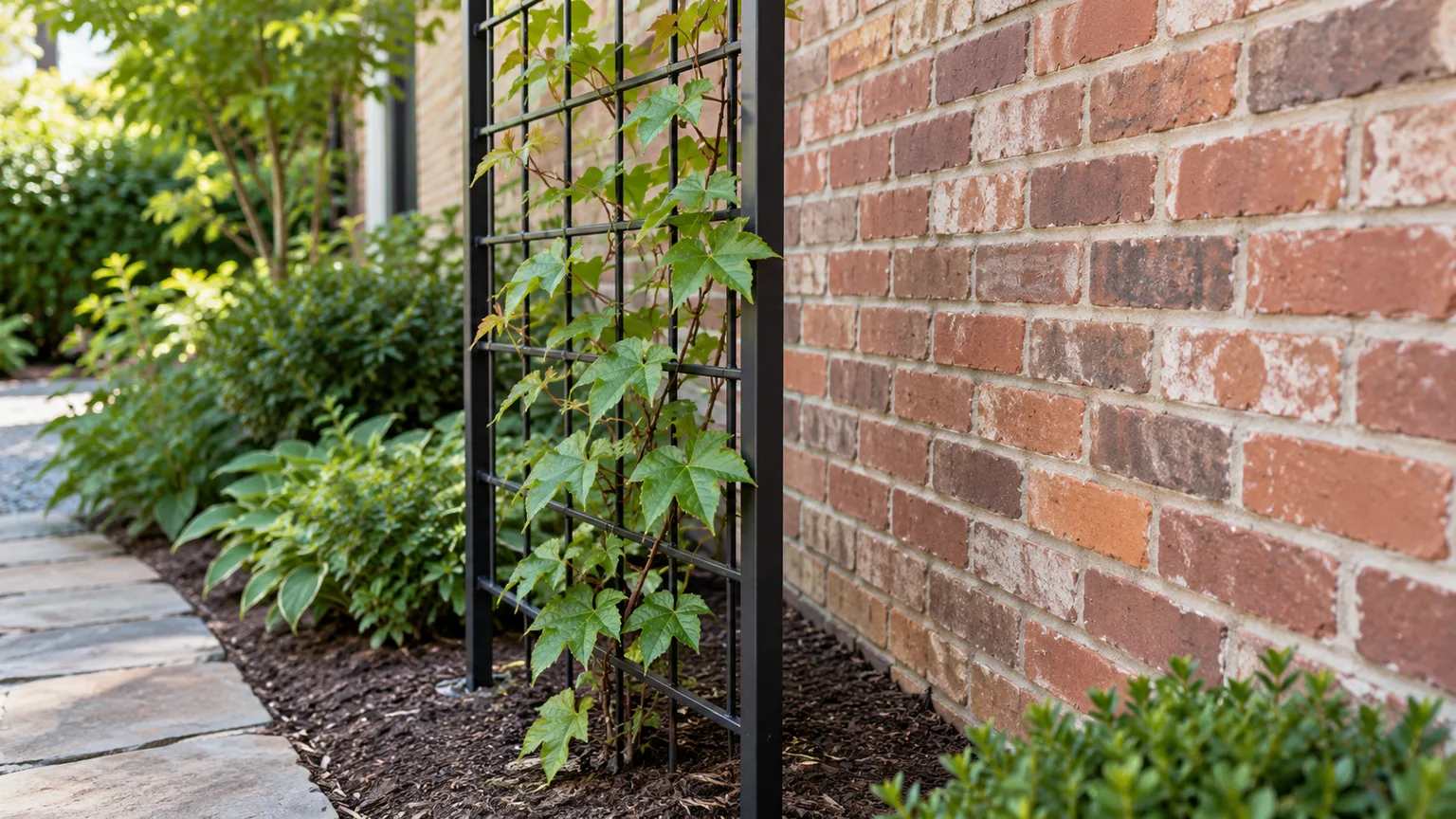
If you want the foliage but not direct wall attachment, grow Boston ivy on a separate, sturdy trellis or freestanding panel that you can access from both sides. Leave a working gap between support and building so you can see behind it, prune the edges, and repair the wall. The panel must be designed for a mature woody vine, not just the weight of a few new shoots; check that its anchors, posts, and footing are appropriate for your site.
Choose Light for Growth and Fall Color
Boston ivy grows in full sun, partial shade, and shade, so it can cover locations where many flowering vines would struggle. In deeper shade, expect slower or less dense coverage. A sunny site can support vigorous growth, which is an advantage when you want coverage and a disadvantage when you want less pruning.
Do not choose a wall aspect solely on a promise of a particular autumn color. The Royal Horticultural Society (RHS) lists full sun, partial shade, and full shade as suitable positions and recommends partial or full shade for the best autumn display. NC State describes summer foliage as varying from yellow-green in sun to lime green in shade, with fall shades of red, orange, and yellow. Cultivar, seasonal weather, and site conditions all influence what you see, so treat the exact intensity as variable rather than guaranteed.
Cultivars can change the foliage effect. NC State describes ‘Veitchii’ as having smaller leaves and bronze-purple spring growth before turning green, then red in fall; ‘Fenway Park’ has chartreuse or yellow-green leaves in sun and lime-green foliage in shade. Check the mature size and growth habit of the specific plant offered, and select by the space you can manage as much as by its spring color. RHS plant guidance also characterizes the species as a vigorous, self-clinging deciduous climber.
Prepare the Soil and Plant the Vine
Choose a site with drainage rather than trying to create ideal soil chemistry. NC State says Boston ivy tolerates several soil textures and pH ranges, from rocky soil to high-organic matter. The RHS similarly lists chalk, clay, loam, and sand, provided the soil is moist but well-drained or well-drained. A spot that stays waterlogged is a poor fit; a garden soil that drains after rain usually does not need wholesale amendment just for this vine.
Plant when the ground is workable and the plant can be watered consistently, avoiding frozen soil and the hottest, driest stretch of summer. Set the root ball at its nursery depth, firm soil around it, and water thoroughly to settle the root zone. Do not bury the crown or pack soil against a building’s siding. If the plant will climb a wall, place it where you can still reach the base to remove suckers and inspect the first stems.
Plant for Coverage or Train It onto a Support
For wall coverage, start at a location where stems can spread without immediately reaching the roof, wires, or neighboring surfaces. A newly purchased plant may not attach as effectively as a mature vine; NC State notes that juvenile growth lacks tendrils. You may need to direct new stems toward the intended route until the plant develops the climbing structures that holdfasts use. Use a support that can be removed or adjusted without drilling into weak masonry.
For a trellis or freestanding screen, place the support before the vine becomes woody. Loosely guide the flexible young stems along the frame, checking periodically that they are not wrapping around cables or pushing under siding. Avoid cinching ties tightly; stems thicken as they age. If the aim is a green screen, train several stems across the support rather than allowing one unchecked leader to run to the top and then out over the eaves.
Water in the First Season, Then Adjust
Water the root zone deeply after planting and keep checking it through the first growing season. The goal is steady establishment, not permanently wet soil. Feel the soil a few inches below the surface; if it is still damp, wait. If that layer has dried and the plant is actively growing, water slowly enough to moisten the root ball and surrounding soil rather than wetting leaves alone.
How often you need to water depends on rainfall, soil texture, heat, wind, and whether the vine is in a container or open ground. Sandy soil and a hot wall may dry faster than heavier garden soil. A simple weekly inspection is more useful than automatically watering once a week: water when the root zone needs it, and reduce supplemental water after the vine is established unless a prolonged dry spell causes stress.
Mulch can help buffer moisture, but leave a clear ring around the base of the stems. Do not pile mulch against a foundation or siding. If leaves wilt during a hot afternoon, check the soil before watering again; temporary heat response and dry root soil call for different responses. Repeated saturation can deprive roots of oxygen, while repeated drought during establishment can slow rooting and coverage.
Fertilize Only When Soil or Growth Calls for It
Boston ivy is already a vigorous climber, so fertilizer is not a routine requirement. Start with the soil you have rather than adding a high-nitrogen product in hope of faster coverage. Extra nutrients cannot correct poor drainage, insufficient support, a damaged root ball, or a plant placed where the vine has nowhere safe to go.
If growth is unusually weak despite good light, drainage, and establishment care, look for a cause before feeding. Check for root-zone dryness or waterlogging, stem injury, severe crowding, and repeated leaf loss. A soil test can help identify a genuine nutrient need in a garden bed; follow its recommendation or the fertilizer label, and avoid overapplying around a building or near storm drains.
Prune to Protect Openings, Gutters, and Boundaries
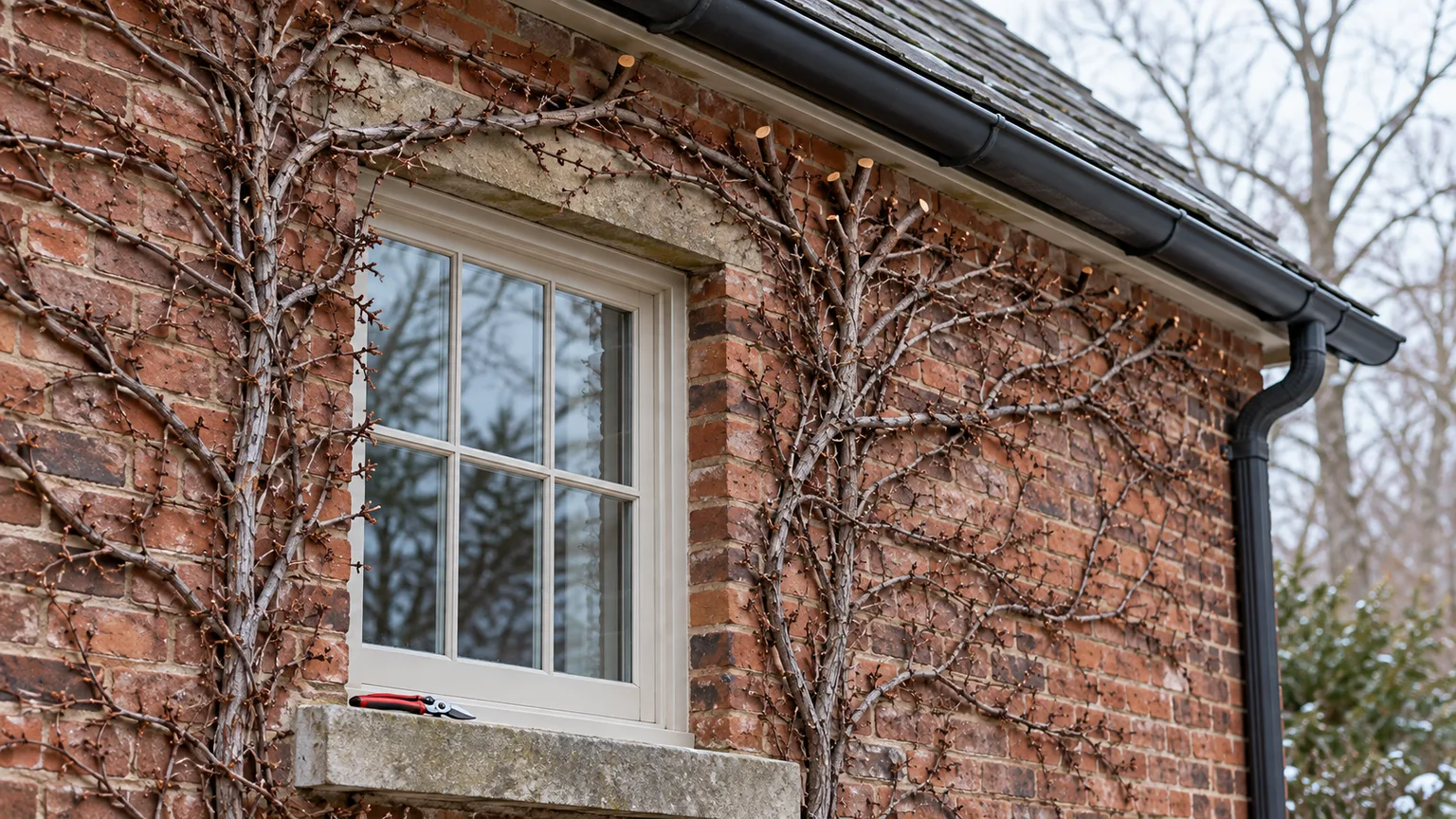
Prune for access and containment, not to force the vine into a small space it will quickly outgrow. The RHS places Boston ivy in pruning group 11, with pruning in early winter and additional summer cutting if needed. In practice, choose a dry period when you can see the framework, then remove stems that reach gutters, rooflines, windows, shutters, vents, wires, neighboring structures, or plants you want to keep clear.
Start by tracing each unwanted shoot back to a safe cut point. Use clean, sharp pruners for smaller stems and a pruning saw for woody growth that is too large for hand pruners; do not tug hard on stems attached to a wall. Cut just beyond a junction or branch collar without cutting into the structure you are trying to protect. If a stem has reached a gutter or cable, free it with care rather than pulling it across the fixture.
Use a light summer trim when a shoot crosses a boundary or enters a gutter, but save major reshaping for a time when you can see the woody framework. Revisit the same edges each year. A vine that has reached the roof once will do so again if you prune only the visible tips and ignore the main stems feeding them. RHS pruning advice and NC State’s plant profile support regular trimming to keep this fast-growing climber in bounds.
Removing Established Vines Safely
If you decide to remove Boston ivy from masonry, do not begin by yanking live stems off the wall. NC State advises severing the vine at its base and allowing it to die first; the adhesive pads deteriorate, making later removal less damaging. This takes time, and thick stems may remain attached after the foliage has died. Confirm that the plant is dead before working through the growth, then remove sections gradually and test a small area before scraping or brushing holdfasts from the wall.
Protect paint, mortar, glass, and nearby plants during cleanup. If the surface is already weak or the vine is high above ground, consult a qualified building or arboriculture professional rather than climbing or prying at the wall. Do not use fire or an unlabelled chemical method to detach the vine. The safest cleanup method depends on the wall material and condition, not only on the species.
Propagate Boston Ivy from Cuttings or Layering
Take stem cuttings from healthy, actively growing shoots and make sure each cutting includes at least one node, the point where leaves and buds attach. Remove leaves from the lower portion, place the cutting in a clean, free-draining medium, and keep it evenly moist while roots develop. Avoid leaving it in direct, hot sun or allowing the medium to stay waterlogged. Rooting time varies, so look for new growth and gentle resistance when you tug lightly rather than assuming a fixed number of weeks.
Layering is another option for an established vine with a flexible stem near the soil. Bend a section down, cover one or more nodes with soil while leaving the tip exposed, and secure the buried section so it remains in contact with the ground. Once roots form, separate the rooted section from the parent and transplant it. The RHS lists layering and hardwood cuttings as propagation methods; NC State lists stem and root cuttings in its propagation guidance. Start only as many plants as you have suitable space to manage—one vigorous vine can cover more ground than expected.
Spot Leaf Problems, Pests, and Stress
Boston ivy is generally not a high-input plant, but dense growth can make symptoms easy to miss. Inspect leaves and stems while pruning. A white powdery coating can indicate powdery mildew; irregular tan spots with darker borders and premature yellowing may indicate fungal leaf spot. The Connecticut Agricultural Experiment Station describes both problems and recommends cultural steps such as avoiding overcrowding, removing affected leaves, and watering early enough for foliage to dry.
If you see spots or mildew, first improve airflow by thinning crowded shoots and remove affected leaves from the area. Water soil rather than spraying the foliage late in the day. Do not assume every yellow leaf is a disease: normal fall color, drought, waterlogged roots, and physical damage can all change foliage. Note whether symptoms are limited to a few old leaves or are spreading across new growth before deciding what to do next.
Scale insects, leafhoppers, Japanese beetles, and vine weevils can affect Boston ivy, though an established outdoor vine may tolerate some leaf damage. Look for clusters of insects, sticky residue, notched leaves, or declining stems. Confirm the pest before treating; avoid broad pesticide use when hand removal or pruning is enough, and follow current local extension guidance and product labels if a serious infestation requires treatment.
Berries, Wildlife, and Regional Cautions
Small greenish flowers may be followed by dark blue or blue-black berries. Birds eat the fruit and can spread seeds, so collect or remove unwanted clusters if you do not want seedlings around the planting. The National Park Service’s Lowell National Historical Park says Boston ivy is not native to its region and that seeds can spread unintentionally by birds, while also noting that it is not a serious ecological detriment locally. That local assessment should not be applied automatically to every state or habitat.
Boston ivy is native to China and Japan, not North America. Nonnative does not mean invasive in every location, and regional guidance can differ; check your state extension service, local invasive-plant list, and rules for nearby natural areas before planting. In North Carolina, for example, NC State lists native Virginia creeper as an alternative. In another region, ask a local extension office for a climber suited to your habitat and the surface you want to cover.
The RHS marks Boston ivy as harmful if eaten and as a skin irritant. Treat the berries as ornamental, not edible, keep children and pets from tasting them, and wear gloves when pruning or handling large amounts of vine. The RHS recommendation is a precaution, not a diagnosis of what an exposure will do; contact an appropriate medical or animal poison service if ingestion occurs.
Common Boston Ivy Mistakes
- Planting it against a surface you may need to repaint. Adhesive discs can be difficult to remove cleanly. Choose a separate support if future wall access or refinishing matters.
- Assuming the attachment method makes every wall safe. Holdfasts do not root into a wall, but paint can lift, shingles can be disturbed, and weak mortar can still fail under an established vine’s weight.
- Ignoring gutters and wiring until the vine is mature. Inspect boundaries while shoots are still small and easy to redirect.
- Treating it as evergreen. Boston ivy loses its leaves. Choose it for seasonal screening and autumn color, not winter privacy.
- Watering by calendar alone. Check soil moisture, especially during establishment; a hot, windy wall and a sheltered garden bed do not dry at the same rate.
- Calling every Boston ivy plant invasive—or assuming it never spreads. It is nonnative in North America, and birds may move seeds. Local conditions and guidance determine whether it is a sensible choice.
- Trying to rip down a live vine. Cut it at the base first and let the holdfasts deteriorate before gradual removal.
Conclusion
Boston ivy is easiest to enjoy when you plan for its mature size before planting. It can grow in sun or shade, adapts to many well-drained soils, and brings summer cover followed by fall color, but the same vigorous growth demands a surface and maintenance routine that can handle it.
Use it on sound masonry only if you accept that the vine may become a long-term fixture. Keep it off wood siding, shingles, gutters, wires, and trees; train it onto a separate support when you need future access; and prune boundaries before stems become woody. With steady watering during establishment, modest feeding, and a yearly inspection, Boston ivy can be a striking climber without letting it decide where it grows next.



