How to Grow and Care for the African Spear Plant
Grow a healthy African spear plant with species-specific guidance on light, dry-down, gritty soil, repotting, propagation, pests, and pet safety indoors.
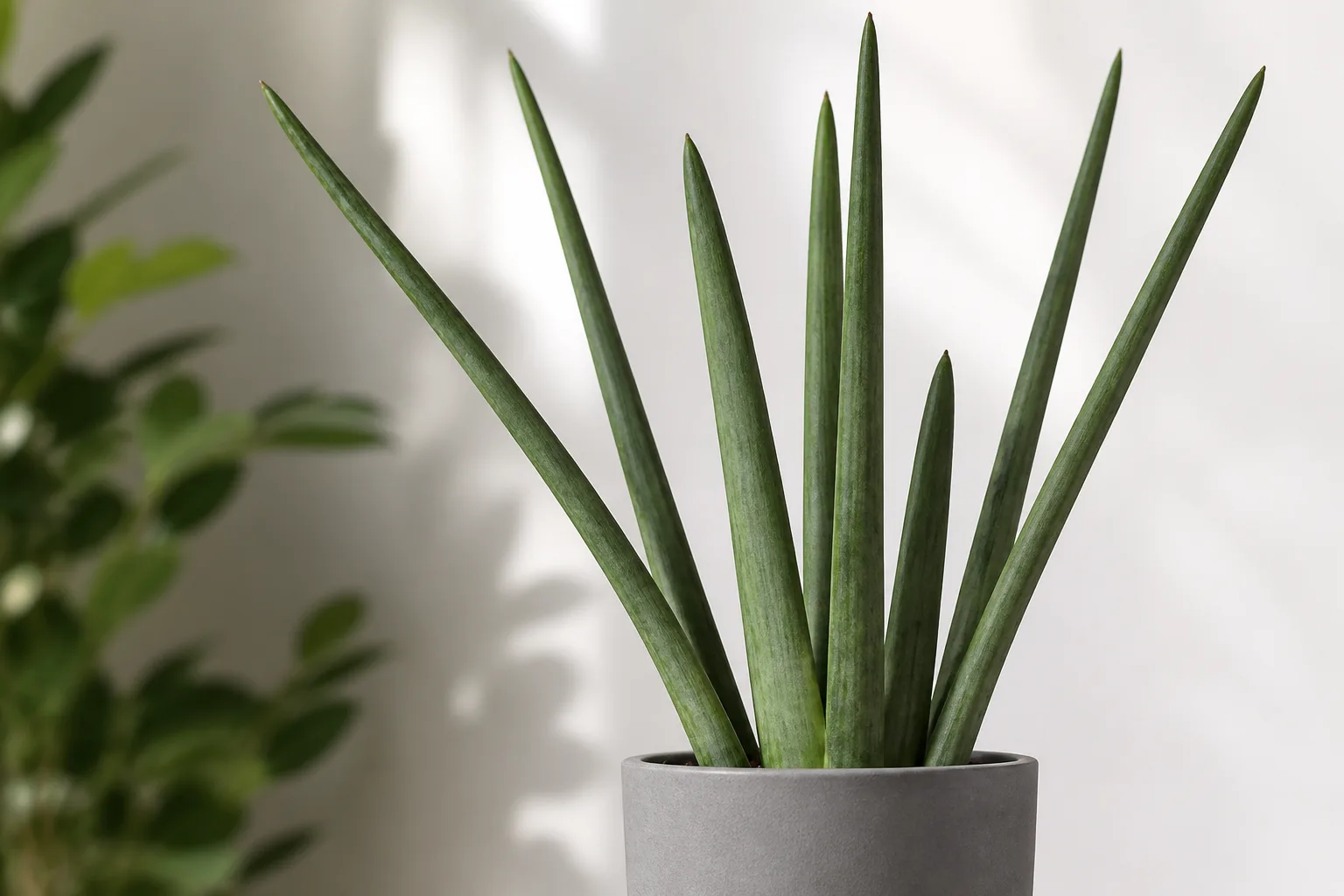
The African spear plant is a slow-growing succulent that asks for two things more than a watering schedule: bright light and a potting mix that does not stay wet. Give its roots air, let the container dry between thorough waterings, and keep it warm, and the plant is usually straightforward to maintain.
The name can be confusing. The plant most people mean by African spear is Dracaena angolensis, still widely sold as Sansevieria cylindrica or cylindrical snake plant. It is not lucky bamboo, and it is not the familiar flat-leaved snake plant; those distinctions matter because their forms, growth habits, and water needs are not identical.
Identify the African Spear Plant
Look for firm, upright, round or subcylindrical leaves with faint horizontal bands. They arise in a fan or clump from a short underground rhizome. Depending on the variety, leaves can be straight, curved, or branched; a compact starfish form is often sold as ‘Boncel.’ A plant with broad, flat, sword-shaped leaves is a different species, usually Dracaena trifasciata.
Taxonomic references do not all use the same name on their pages. Kew’s Plants of the World Online accepts Dracaena angolensis and lists Sansevieria cylindrica among its synonyms; the Royal Horticultural Society’s plant profile retains the older horticultural name.
Both names appear on labels and in search results, so knowing them helps you find species-relevant advice. Kew records the species as native to Angola, Zambia, and Zimbabwe; it belongs to the asparagus family, Asparagaceae.
Do not confuse it with lucky bamboo. Lucky bamboo is Dracaena sanderiana, a different plant often sold with its roots in water.
African spear is a drought-tolerant succulent; it needs an aerated potting mix and should not be kept standing in water. NC State Extension’s Dracaena overview lists these as separate species in the genus Dracaena.
African Spear Plant Care at a Glance
| Need | Practical starting point | What to adjust |
|---|---|---|
| Light | Bright filtered light indoors | Acclimate slowly before stronger sun |
| Water | Wait until the mix is dry through, then water thoroughly | Dry-down time changes with season, pot, mix, and light |
| Soil | Free-draining cactus or succulent mix | Add pumice or perlite if the mix stays wet |
| Pot | Drainage holes and enough weight to steady the leaves | Move up only when roots fill the container |
| Temperature | Warm room conditions; protect from cold | NC State advises bringing it in below 55°F (about 13°C) |
| Feeding | Light feeding during active growth | Skip fertilizer when growth and light slow |
These are starting conditions, not a timer. An African spear in a small terracotta pot near a bright window can dry much sooner than a large plant in a plastic pot several feet from the light. Check the plant and its medium before changing the routine.
Give It Bright, Manageable Light
Place the plant where it receives bright light for much of the day: near an east- or west-facing window, or a short distance from a bright south-facing one. This species tolerates lighter rooms, but “tolerates” does not mean it will grow as quickly or hold a compact, upright shape. Low light reduces growth and slows water use, so a pot that dried acceptably in summer sun may stay wet too long in a dim winter corner.
Bright light does not mean an abrupt move into intense afternoon sun. The RHS profile for S. cylindrica recommends bright filtered light under glass and cautions against full summer sun; its broader Sansevieria growing guide notes that S. cylindrica and some cultivars perform particularly well in bright light or full sun.
Those recommendations can be reconciled: the plant can adapt to more sun, but a houseplant moved directly from shade to hot midday rays can scorch before it acclimates.
If the plant will spend summer outdoors, start it in open shade or dappled morning light for a week or two. Increase sun exposure gradually while watching for bleached, tan, or papery patches.
Pull it back to filtered light if those marks appear; burned tissue will not turn green again, although healthy new growth can continue. Rotate an indoor pot occasionally if one side leans toward the window, but do not expect rotation to compensate for a room that is simply too dark.
Keep It Warm and Frost-Free
Ordinary comfortable room temperatures suit African spear plants. The RHS gives 15–24°C (60–75°F) as a typical range for sansevierias and advises avoiding cold drafts and hot radiators. Keep the pot away from an exterior door that chills at night, an air-conditioning vent, and a heater that can dry one side of the plant unevenly.
This is a tropical/subtropical succulent, not a frost-hardy garden perennial in most climates. NC State Extension recommends bringing the plant indoors when temperatures fall below 55°F (13°C), a useful conservative threshold for a container that has been outside.
Bring it in before cold nights rather than waiting for visible injury. If summering outdoors, shelter it from prolonged rain, which can keep the potting mix wet even when the plant itself is drought tolerant.
Humidity is rarely the limiting factor. A normal home is generally suitable; misting does not solve a root or watering problem and repeatedly wetting the leaf bases is unnecessary. If growth slows during a cool, dark winter, treat that as a seasonal change: water less often and pause feeding rather than trying to push the plant with extra fertilizer.
Water Only After the Mix Dries
Do not water an African spear plant every week by default. Wait until the potting mix is dry through most or all of the root zone, then water slowly until excess drains from the bottom.
Empty the saucer or decorative cachepot afterward. The RHS recommends checking compost with a finger rather than watering routinely, and University of Minnesota Extension’s succulent guidance similarly advises allowing the soil to dry completely between waterings and discarding runoff.
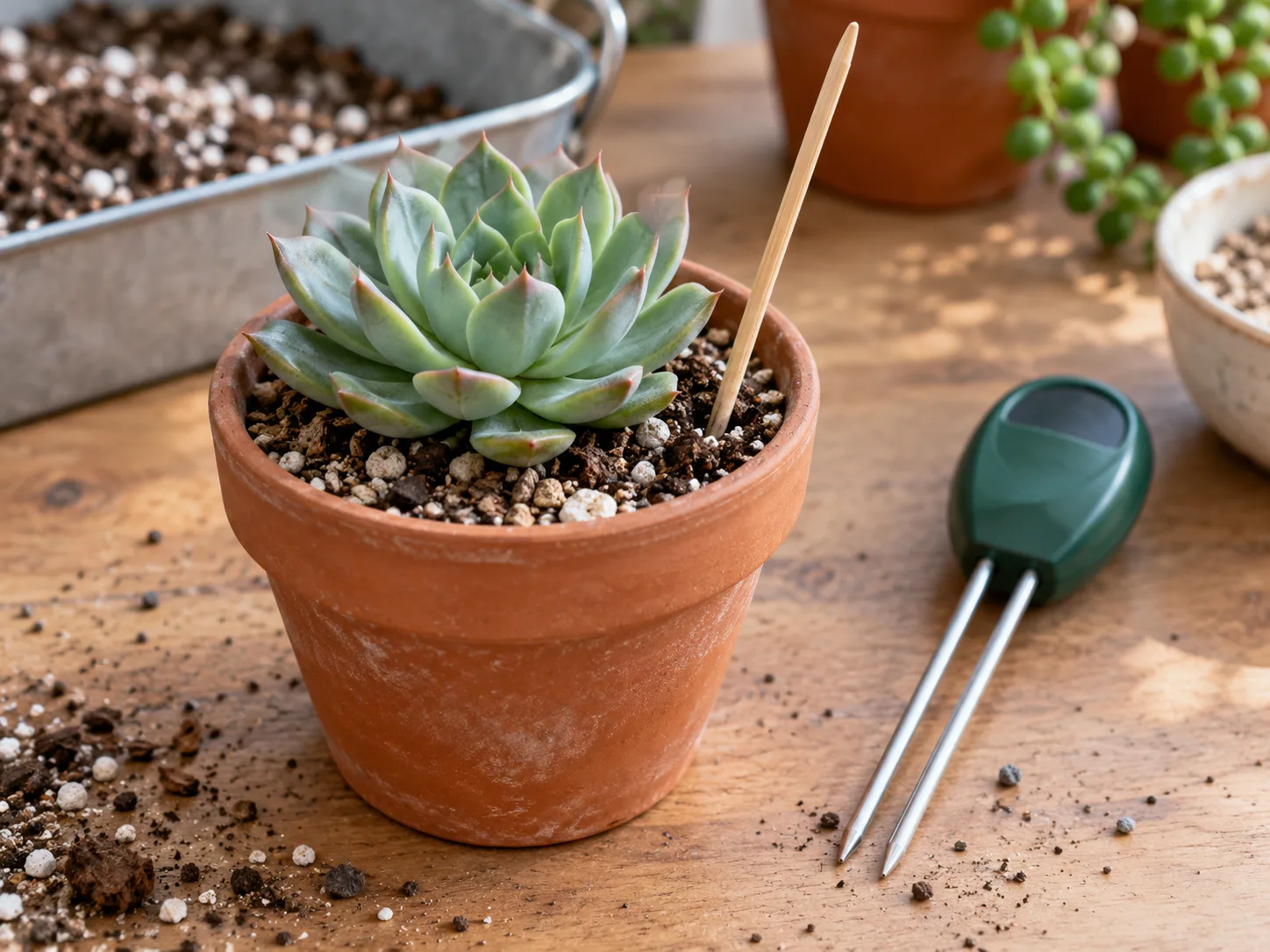
For a small pot, push a finger down several centimeters. In a deeper container, a wooden skewer inserted toward the bottom is more informative: if it comes out cool and damp with soil clinging to it, wait.
A moisture meter can help you learn how a particular mix behaves, but do not rely on its reading alone; coarse media, a narrow probe position, and uneven moisture can distort the result. The pot also feels lighter when dry, a useful cue after you have compared it just after watering and several days later.
When it is time to water, soak the medium evenly rather than giving frequent sips. A small splash only wets the top layer and may leave the deeper roots dry while keeping the crown damp.
If water runs straight through a very dry peat-heavy mix, apply it in two slow passes a few minutes apart, then let everything drain. Do not leave the plant in a standing reservoir.
There is no reliable universal interval. NC State’s species profile offers about every two weeks in summer and monthly in winter as a general rule, but those are calendar examples, not a diagnosis. In a warm, bright room with a porous potting mix, the plant may use water faster; in cool low light, a large plastic pot, or dense soil, it may need far less.
BBC Gardeners’ World Magazine also characterizes African spear as a slow-growing, drought-tolerant succulent, a useful reminder that a dry-down check matters more than a weekly reminder (growing guide). In winter, wait for the mix to dry and then give only enough water to keep the leaves from shrinking; the RHS growing guide says sansevierias barely need water when growth slows.
Use a Fast-Draining Mix and a Stable Pot
Use a commercial cactus-and-succulent mix as a starting point, not a guarantee. Some bagged mixes contain a lot of fine peat or coir and stay damp in a cool indoor room.
If yours feels dense or remains wet several days after watering, blend in pumice, perlite, or another coarse mineral component until the mix falls apart when lightly squeezed. The goal is a medium that holds enough moisture for roots to drink but leaves air spaces and drains freely.
The RHS recommends free-draining, peat-free cactus compost for sansevierias; UMN Extension’s succulent guidance also emphasizes porous soil and pots with drainage holes. Do not substitute a layer of gravel at the bottom for a drainage hole or a porous mix.
Water can still collect above that layer, leaving the roots in a wet zone. If you like a decorative cachepot, keep the plant in a nursery pot with holes and empty the outer pot after watering.
Choose a container with at least one unobstructed drainage hole. A squat, heavy pot can help balance the upright leaves, particularly if the plant is tall or top-heavy.
Terracotta dries faster than glazed ceramic or plastic, which can be useful in a humid room or with a slow-drying mix; it also means you may need to check the soil sooner. Pot material changes dry-down, so it changes the watering interval too.
Fertilize Lightly During Active Growth
African spear is adapted to lean conditions and does not need a frequent feeding program. If you want to encourage steady growth, apply a balanced houseplant fertilizer or cactus feed at a diluted rate during brighter, warmer months when the plant is actively growing. The RHS growing guide suggests monthly feeding through the growing season; if the label offers a lower-strength option for succulents or houseplants, start there rather than applying a concentrated dose.
Do not feed a plant whose roots are rotting, whose soil stays wet, or whose leaves are stressed by cold. Fertilizer cannot repair those problems and adds salts to a pot that may not be flushed often.
Skip feeding in winter or whenever new growth has paused. Pale leaves alone do not prove a nutrient deficiency; check light, moisture, root condition, and recent exposure first.
Repot When the Roots Fill the Pot
This plant grows slowly and can remain in the same container for years. Repot when the rhizome and roots have filled the pot, the container is cracking or unstable, or the medium has broken down and stays wet. Roots peeking from a drainage hole are a clue, not an emergency; a healthy, firm plant that drains and dries normally can often wait until a convenient warm season.
Move up only one pot size, roughly a few centimeters wider than the root ball. A much larger container holds a larger volume of damp mix than the roots can use, raising the chance of rot.
Use fresh gritty mix, keep the rhizome at its previous soil depth, and do not bury the leaf bases. If roots are crowded but healthy, loosen only the outermost circling roots; tearing the dense root mass apart to make it look tidy can set the plant back.
After repotting, give the plant a few days before watering if roots were disturbed or cut. Then water only when the new mix dries through.
This reduces the time that fresh wounds sit in wet soil. If you chose a heavier pot only to prevent tipping, you may be able to stabilize the plant without disturbing its roots; a pot change is not always a reason to repot.
Propagate by Division or Leaf Cutting
Division is the most predictable home method because a separated piece can retain both a growing point and roots. Leaf cuttings are possible, but they take longer and require careful orientation; they are best for a spare leaf or a plant that has suffered accidental breakage. The RHS species profile lists both division and leaf cuttings as propagation methods.
Propagate in spring or early summer if you can, when warmth and increasing light support recovery. Use clean tools, fresh porous medium, and a pot with drainage. Avoid dividing a recently purchased or already stressed plant simply to make more plants; let it settle and establish first.
Divide a Rooted Clump or Offset
Take the plant out of its pot and brush away enough soil to see the rhizome connecting the clump. Find an offset with its own roots, then separate it with a clean, sharp knife. Aim for a division with at least one firm spear, a healthy portion of rhizome, and roots; a loose leaf without those parts is not a division and may take longer to establish.
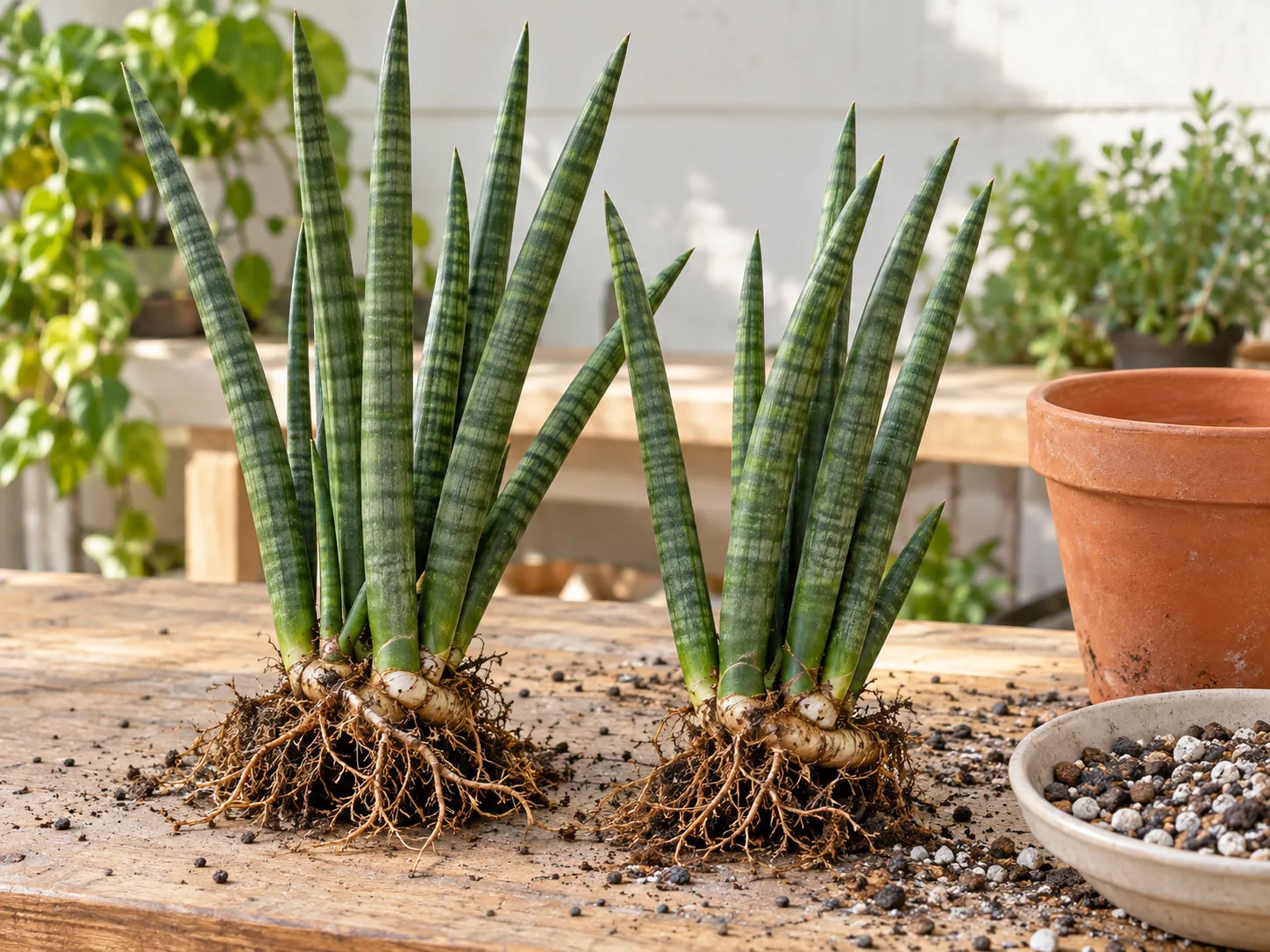
A useful division keeps a growing spear, a portion of the rhizome, and roots together.
Set the parent and offset into appropriately sized pots with drainage holes. Keep the rhizome level with the soil surface and firm the mix gently around the roots without compressing it into a dense plug.
If the cut is large, let it dry briefly in a shaded, airy place before planting. Resume cautious watering after the cut surface has callused; do not saturate a fresh wound.
A new offset may pause while it rebuilds roots, so judge success by firm tissue rather than immediate leaf production. Keep the newly divided plant in bright filtered light, protected from direct hot sun, and do not fertilize until you see active growth. An oversized pot and generous watering are the two common ways to turn an easy division into a rot problem.
Root a Leaf Cutting With the Correct Orientation
Use a healthy, firm leaf and mark which end was closest to the soil before cutting; reversing the piece can prevent it from rooting correctly. Cut a short section with a clean blade, allow the wound to dry until it is no longer fresh, then insert the basal end into a barely moist, gritty propagation mix. Keep the pot warm and bright but out of harsh sun, and let the medium dry between light waterings.
This method is slow and not every cutting succeeds. A leaf section may form roots before visible growth, so resist pulling it up to check. Some named cultivars do not reproduce their exact pattern from leaf cuttings, and a solid green plant may result from a variegated parent; division is the better choice when preserving a cultivar matters.
If the leaf is part of a braided retail specimen, do not cut or unbraid the entire plant just to propagate it. First understand which leaves are rooted and how the clump is assembled.
Keep Leaves Clean and Handle Braids Carefully
The plant needs little pruning. Remove a leaf at the base if it is fully yellow, mushy, or broken, using a clean blade and avoiding a deep cut into the rhizome. A leaf with only a dry brown tip can stay if the damage is cosmetic; trimming the tip may leave a blunt edge, and the cut will not make that section green again.
Dust smooth leaves with a soft damp cloth when needed so the plant stays clean and you can spot scale or mealybugs. Avoid glossy leaf products.
Some plants are sold with the leaves braided or with painted tips; those treatments are decorative, not a growth requirement. Braiding can constrict leaves or hide damage, so do not force a tight braid or pull individual spears apart. New shoots usually emerge from the base over time, and a severely tight tie can interfere with that growth.
What to Expect From Flowers
Mature plants may send up a narrow stalk with small, pale, fragrant flowers, but indoor flowering is sporadic. Light, maturity, and growing conditions influence the chance; there is no dependable schedule or technique that guarantees a bloom. A plant that stays healthy but never flowers is behaving normally.
Do not push high-phosphorus fertilizer or keep the roots crowded and dry solely to induce flowers. The trade-off is not worth stressing a foliage plant for an uncertain display.
If a flower stalk appears, enjoy it and remove it at the base after it fades if you prefer a tidier plant. Basic light, warmth, drainage, and dry-down matter more than chasing a bloom.
Diagnose Common African Spear Plant Problems
Start with the medium and roots before changing several conditions at once. Note how long the pot stays damp, whether the leaves feel firm or soft, and whether the affected tissue is at the base, tip, or sun-facing side. These details narrow the likely cause and help you avoid treating drought, root damage, sun scorch, and cold stress as if they needed the same fix.
Yellow or Pale Leaves
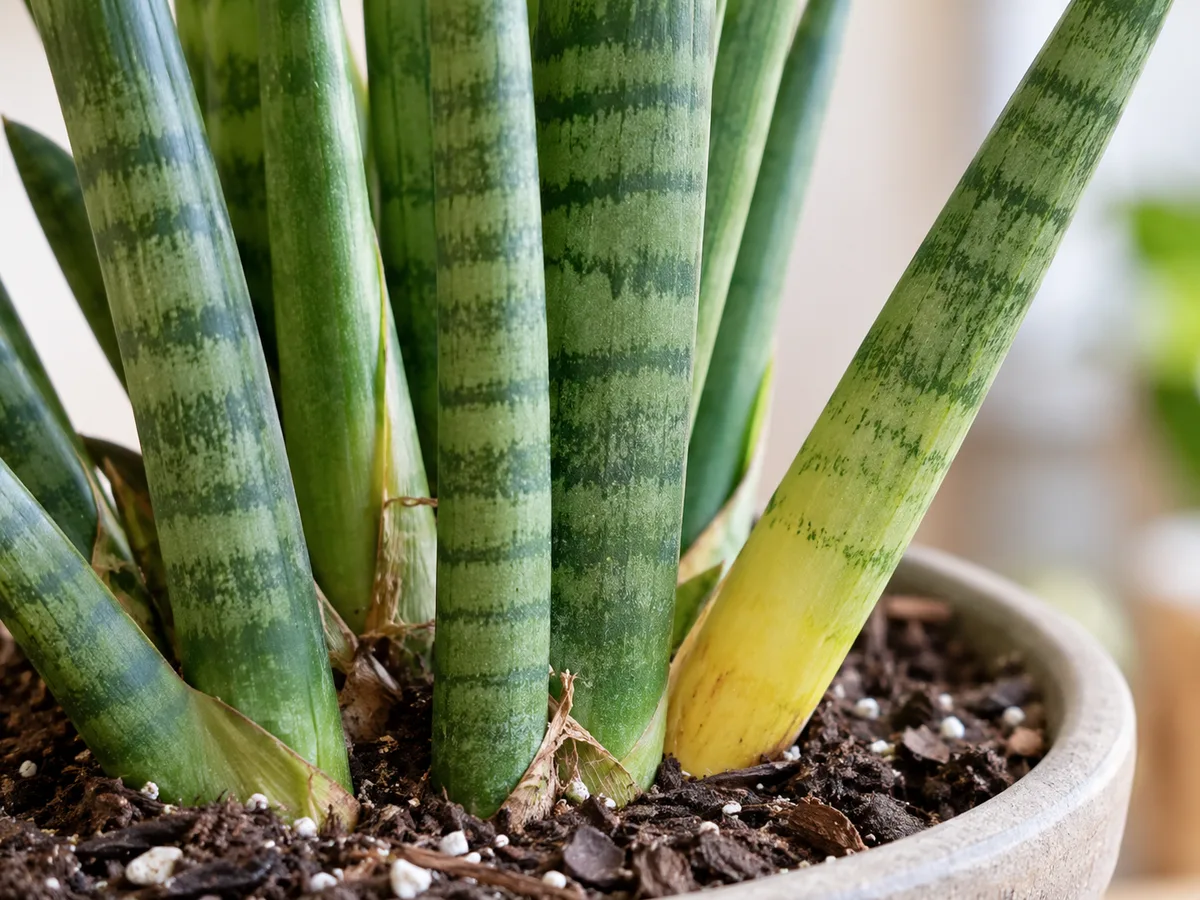
Yellowing is a symptom, not a diagnosis. If several leaves are turning yellow and the base feels soft while the mix is damp, suspect excess moisture or damaged roots first. If one of the oldest outer leaves yellows slowly while the rest of the clump remains firm and green, it may be normal aging; remove it once it is fully spent rather than changing the entire routine.
Work through these checks in order:
- Wet mix: Has it stayed damp for a long time, or is the pot sitting in runoff or missing a drainage hole?
- Cold exposure: Did the plant recently sit in a cold draft or against a chilled window?
- Sun exposure: Did it move from shade into strong direct sun, or sit in a hot afternoon beam?
If the soil is wet, pause watering and inspect the roots if yellowing advances or the plant loosens in the pot. If roots are firm and the mix is dry, consider light and temperature before adding water. The RHS notes that this species is vulnerable to winter wet, while NC State Extension advises protecting it from cold and strong afternoon sun outdoors.
Soft Leaves and a Mushy Base
Soft, translucent, or collapsing leaves near the soil line—especially with a sour smell or blackened roots—point toward rot, not thirst. Unpot the plant and inspect the rhizome and roots.
Healthy roots are firm; trim away mushy, dark tissue with a clean blade, discard the saturated mix, and repot the surviving firm portions in a clean container with drainage and fresh porous medium.
Do not place the recovering plant back in its old wet cachepot or water it on the same schedule as before. Let any cut surfaces dry, keep it warm in bright indirect light, and delay watering until the medium has dried.
If the center rhizome is entirely soft and no firm offset remains, recovery may not be possible. Root rot is primarily a moisture and aeration problem; simply applying a fungicide without correcting the pot, mix, and watering pattern will not solve it.
Wrinkled, Leaning, or Stalled Growth
Wrinkled leaves can follow prolonged dryness, but they may also appear when damaged roots can no longer take up water. If the medium is bone dry and the plant is still firm at the base, water thoroughly and let it drain.
If the medium is wet, do not add more water; examine the roots and correct the drainage problem. A plant in a bright, warm spot also uses water faster than one in a cool, dim room.
Leaning is often mechanical rather than a watering signal. Check whether the plant has tilted toward the window, whether the pot is too light for the top-heavy leaves, or whether roots and rhizomes have loosened.
Rotate the pot gradually, move it to brighter filtered light if it is persistently reaching, or use a heavier container at the next repot. Stalled growth on its own is rarely an emergency: African spear is naturally slow-growing, and a new offset may take time to appear. If leaves are also pale and stretched, improve light gradually; if roots are crowded and the mix no longer drains, plan a spring repot.
Watch for Pests and Keep the Plant Away From Pets
Pests are not the usual cause of decline, but inspect the leaf bases and undersides when growth looks speckled, sticky, or weakened. Mealybugs look like small white cottony clusters; scale appears as fixed brown or tan bumps.
Isolate an affected plant, remove visible insects with a damp cloth or cotton swab, and monitor the same spots weekly. If you use a labeled insecticidal soap, follow its label and test a small area first; a product safe for one plant or setting is not automatically appropriate for every use.
Place the plant where pets and young children cannot chew it. NC State Extension flags D. angolensis as toxic if ingested and notes saponins; the ASPCA Dracaena profile also lists Dracaena species as toxic to cats and dogs.
Avoid treating a pet’s symptoms at home based on a plant-care article. If a pet may have eaten the leaves, contact a veterinarian or animal poison-control service and share the plant’s botanical or common name.
Conclusion
For a healthy African spear plant, focus on the root zone: bright light, warm conditions, a draining pot, and a medium that dries before you water again. The species grows slowly and handles a missed watering better than roots kept constantly wet, so avoid fixing normal pauses in growth with more water or fertilizer.
When something looks wrong, use the texture and moisture of the plant and soil to guide your next step. Firm leaves in dry mix call for a different response than soft yellow bases in wet soil; a leaning plant may need more light or a heavier pot, not a drink. With those checks—and a little patience—Dracaena angolensis, the familiar Sansevieria cylindrica, can remain an uncomplicated, architectural houseplant for years.



