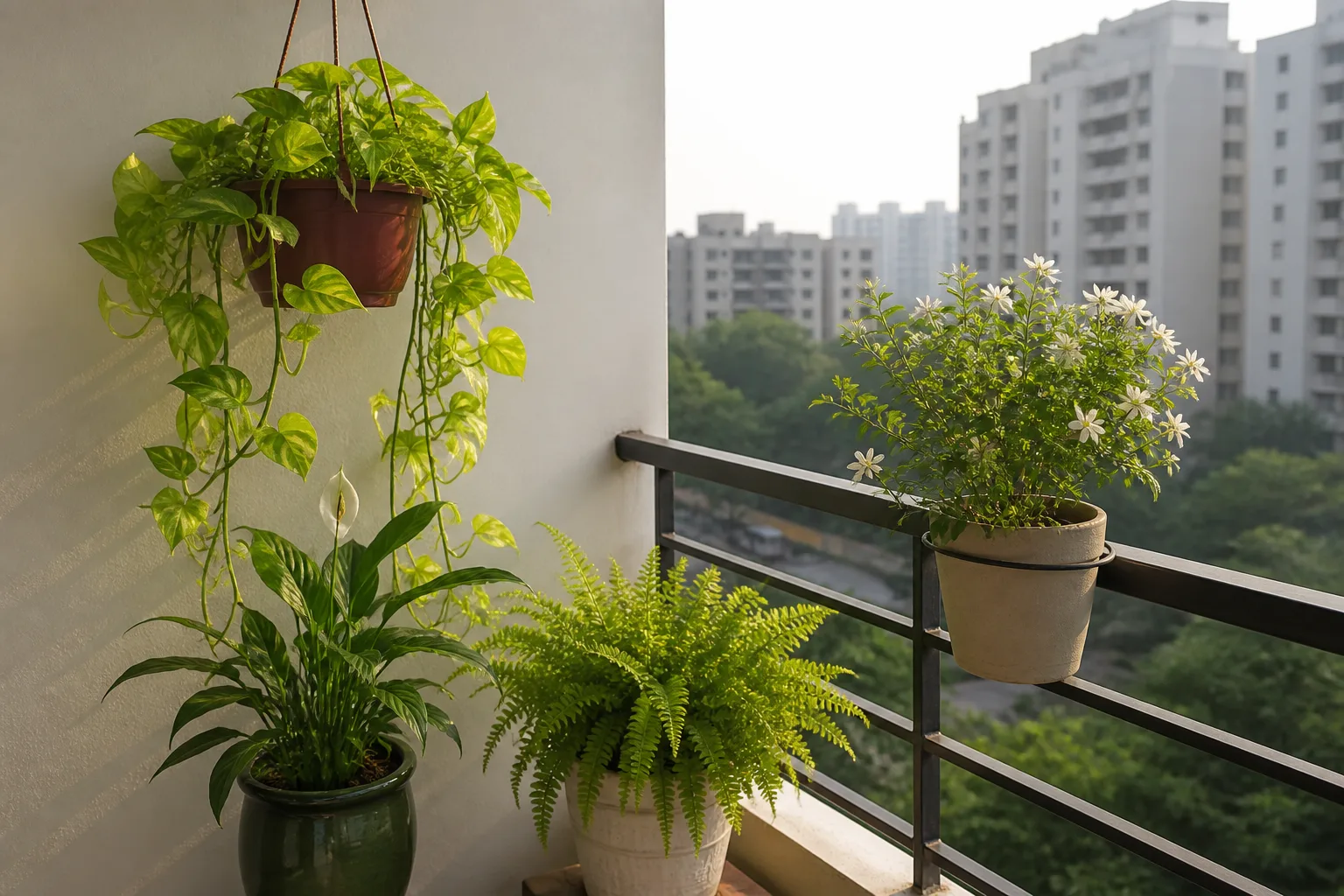
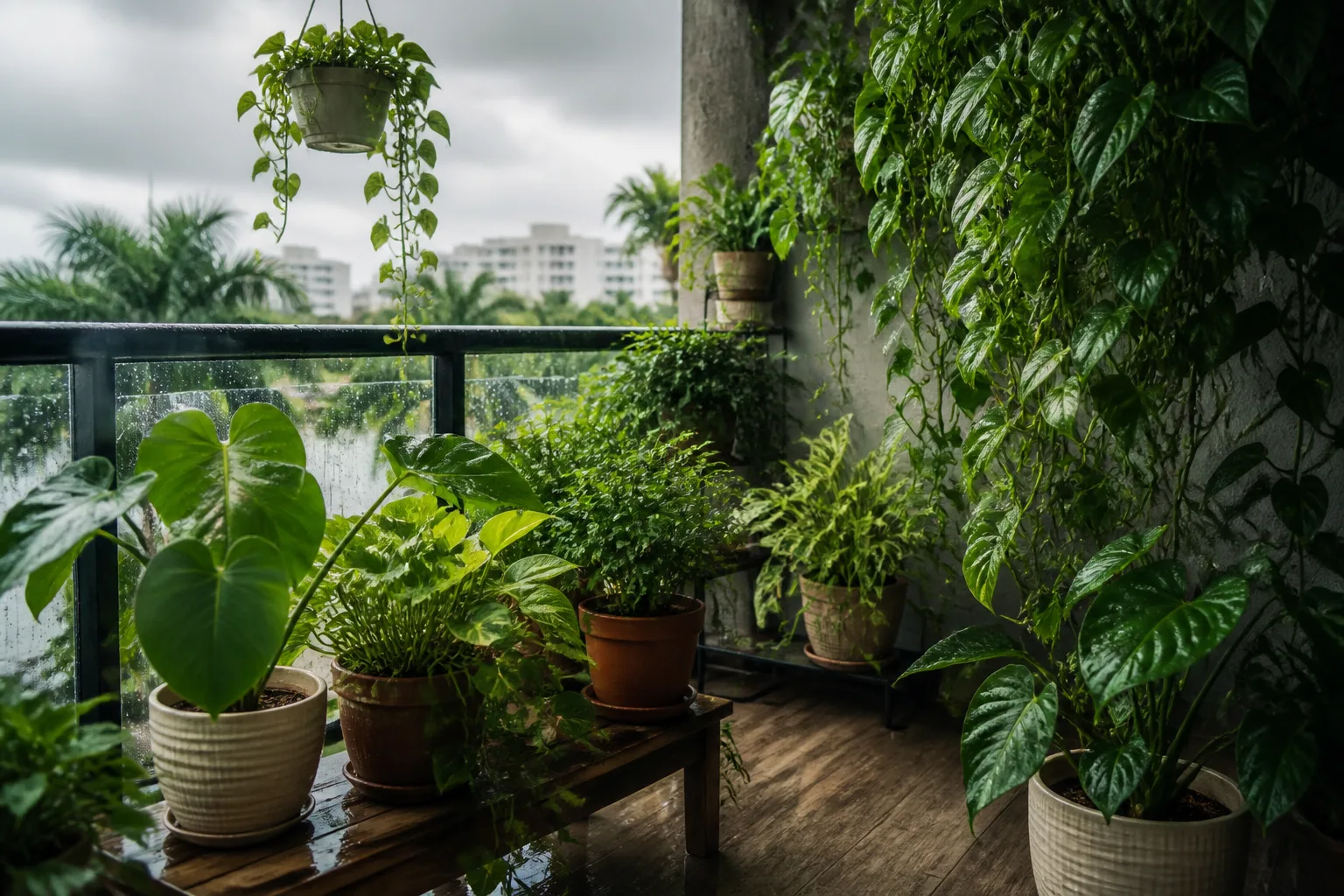
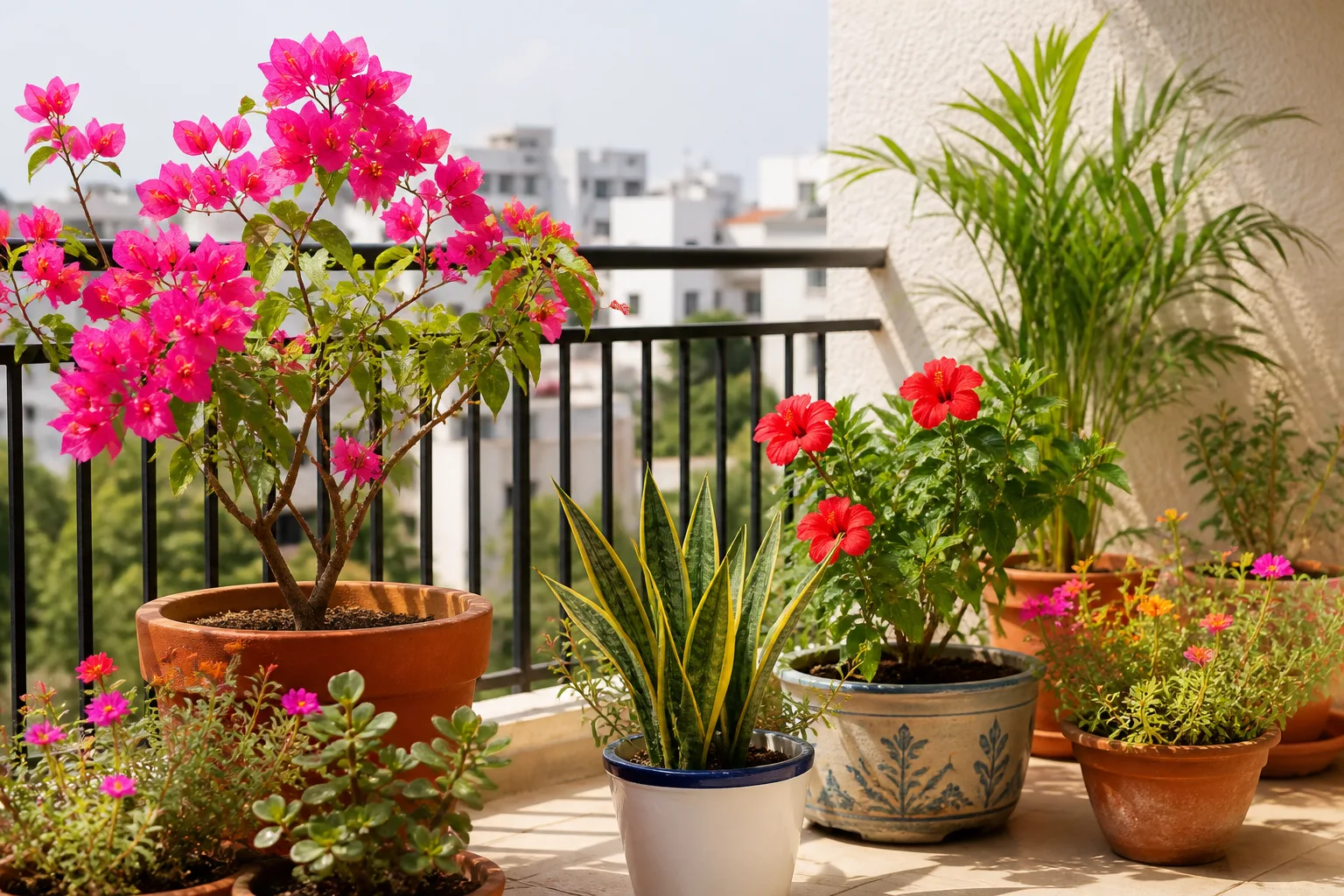
Best Plants for Chennai Balconies: Coastal Heat and Salt-Air Picks
Chennai balcony plants — salt rinse, cyclone prep, west-rail scorch, and expanded hibiscus and plumeria entries. Not a Bengaluru tower-shade copy.
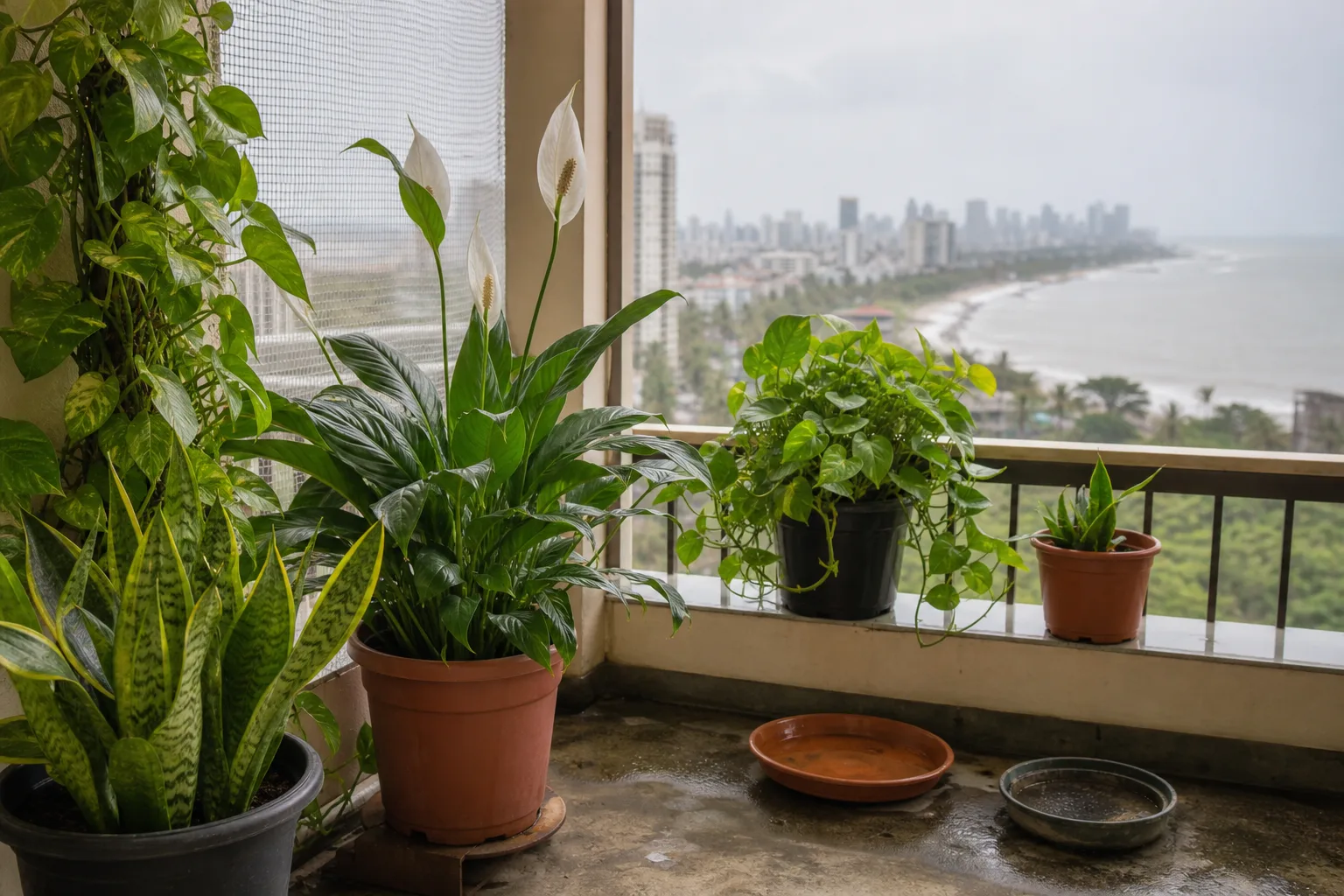
An Adyar east balcony is a different microclimate from an OMR west rail facing the sea breeze with salt crust on every saucer by Sunday. Chennai balconies get coastal heat, salt in the air, west-rail sun that scorches leaves by mid-afternoon — then monsoon arrives and the same pots sit wet for days because your summer watering habit never changed.
Read salt and cyclone sections before choosing species. For Bengaluru tower shade and milder inland rails, use plants for Bangalore balconies. For indoor summer picks, see houseplants in South India summer.
Coastal Chennai Balconies: Salt Before Species
UC IPM salinity guidance applies to any coastal container garden — salt spray deposits on leaves and soil surfaces, reducing water uptake and burning margins on sensitive species.
Salt rinse routine (sea-facing rails):
- Rinse leaves with plain water weekly in dry summer weeks
- Flush pots monthly with plain water until drain runs clear
- Empty saucers after every rain — salt concentrates as water evaporates
Do not mist — Chennai humidity is already high; misting invites leaf fungus. See houseplant care in coastal India for full coastal playbook.
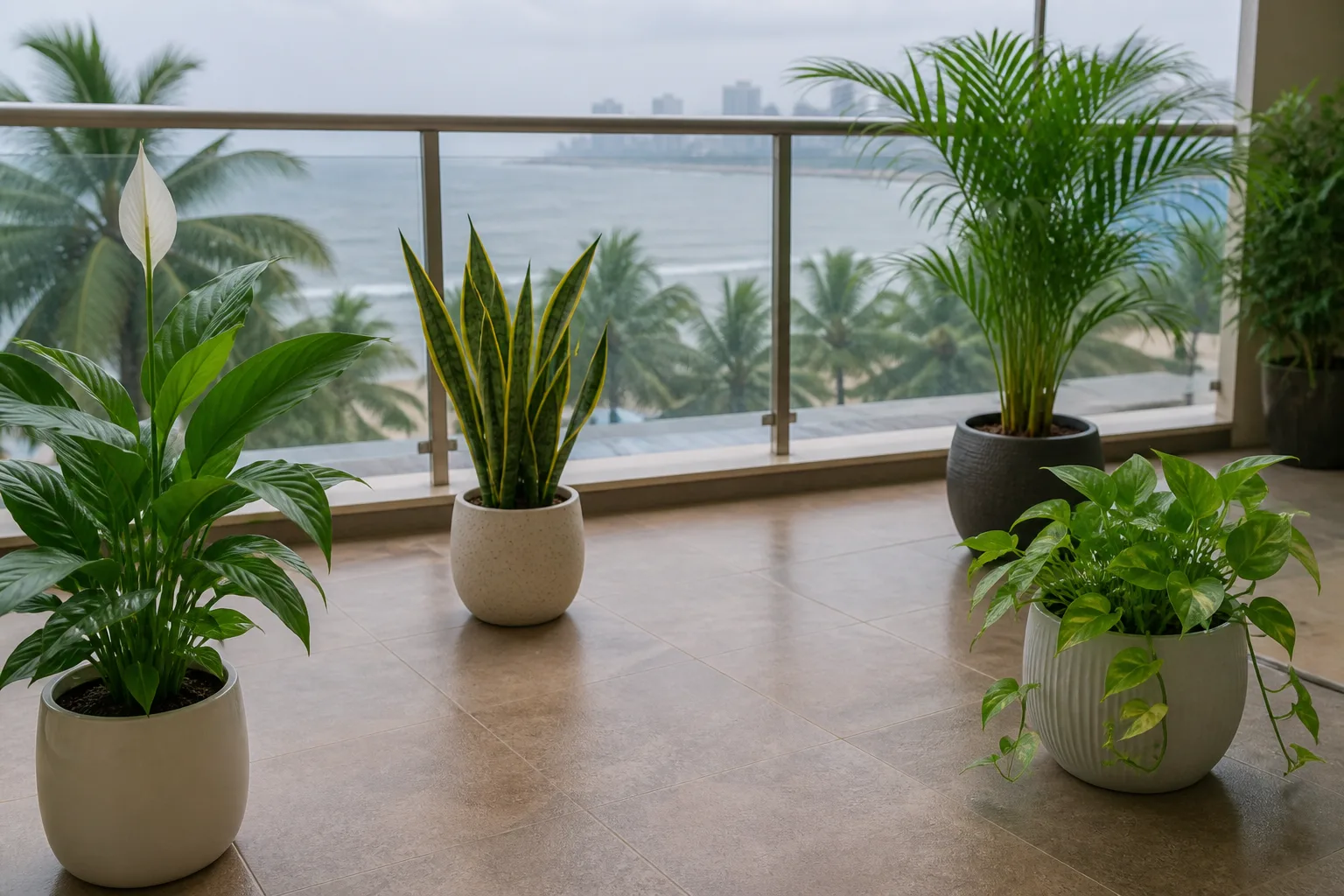
Cyclone and Storm Prep for Chennai Rails
When IMD cyclone warnings or extreme wind events approach:
- Move small pots and cuttings indoors
- Stake large hibiscus and plumeria; tie to grill securely
- Harvest tulsi and herbs you cannot move
- Drain saucers before storms — standing water plus wind topples pots
This section does not appear on inland Bengaluru guides — it is Chennai-specific value.
Chennai vs Bengaluru Balconies
| Factor | Chennai | Bengaluru |
|---|---|---|
| Salt spray | High on sea-facing rails | Rare |
| Humidity | Sustained coastal | Moderate; monsoon spike |
| Cyclone prep | Essential | Occasional wind only |
| Tower shade | Less central | Major lower-floor issue |
| Alternate guide | This page | Bangalore balconies |
Orientation Guide for Chennai
| Exposure | Heat level | Salt exposure | Top picks |
|---|---|---|---|
| East morning sun | Moderate | Lower | Pothos, spider plant, tulsi, ixora |
| West afternoon sun | Extreme | High (sea-facing) | Bougainvillea, portulaca, jade plant + shade net |
| North shaded | Low | Variable | Snake plant, syngonium, ferns (covered) |
| South bright | High | Moderate | Hibiscus, plumeria, aloe vera |
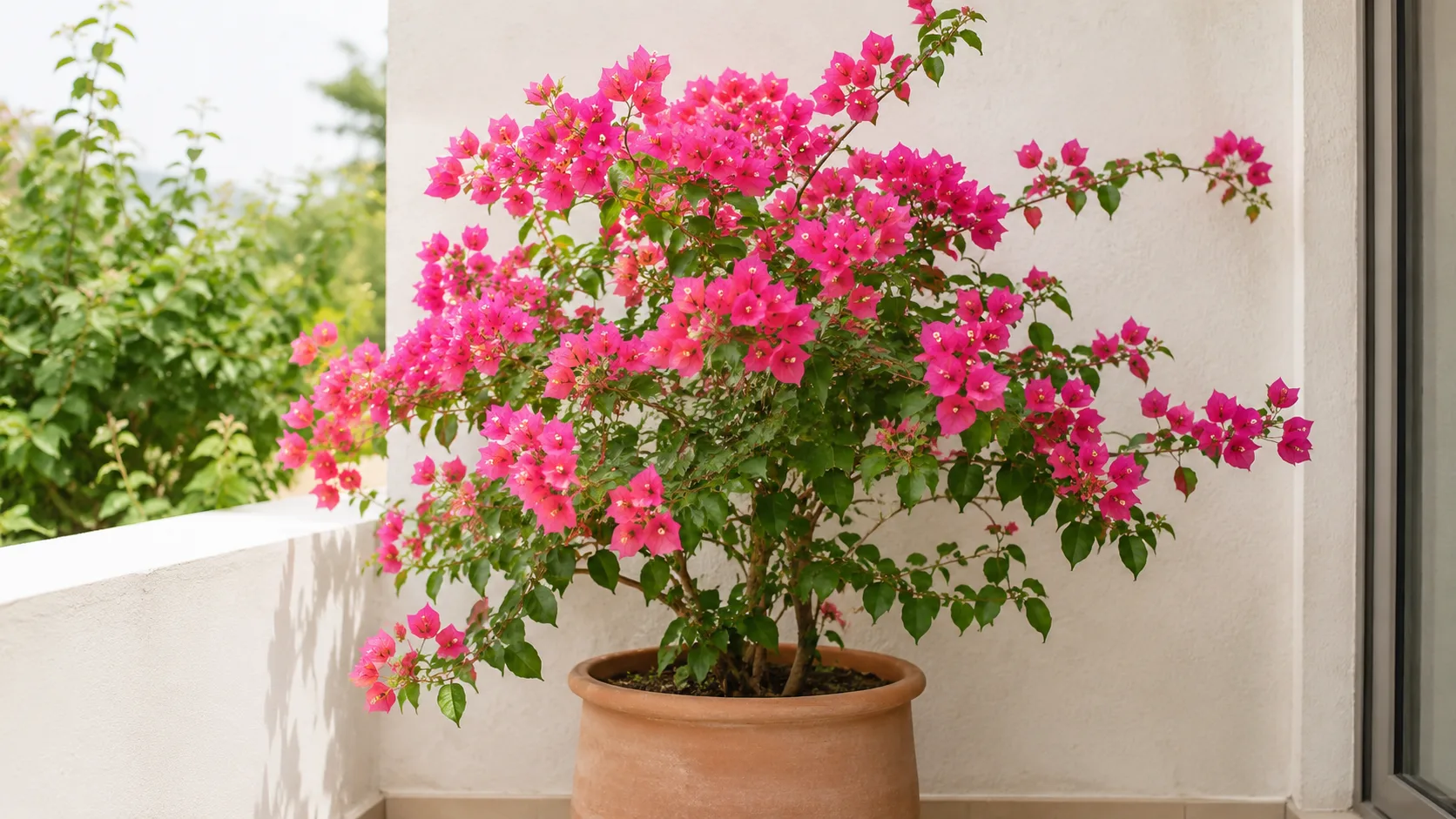
Bougainvillea — Salt-Tolerant West-Rail Default
Chennai’s west-rail workhorse. NC State Extension notes drought, heat, and salt tolerance. Large pot, sharp drainage, let soil dry slightly between waterings. Rinse salt monthly on sea-facing exposure. Thorns — keep out of pet reach.
Hibiscus — Daily Water, Bright Rails
Hibiscus rosa-sinensis loves tropical warmth and humidity — Chennai fits when drainage is excellent. Daily watering discipline in dry summer weeks; reduce frequency in humid monsoon while checking soil — not calendar. Bud drop often signals uneven watering or afternoon scorch, not nutrient lack. Bring into covered space during extreme cyclone weeks if pots are small.
Plumeria — Fragrance and Sap Safety
Fragrant coastal favorite for sunny south or west with afternoon shade net. Sap irritates skin — wear gloves when pruning. Salt rinse especially important on sea-facing plumeria; crusty leaves reduce bloom. Toxic if ingested; keep away from chewing pets.
Portulaca, Ixora, and Jade
Portulaca — small pots on sunny rails; low water; refresh if monsoon dampens blooms.
Ixora — compact blooms for east and filtered west; loves Chennai humidity with drainage.
Jade plant — sunny east sill or sheltered west with net; rinse salt monthly on sea-facing rails.
Snake Plant, Pothos, and Spider Plant
Snake plant — covered balconies and bright indoor-door placements. Stop summer-frequency watering during monsoon.
Pothos — trails on grills in filtered light; avoid open west afternoon without shade.
Spider plant — hanging on covered east rails; non-toxic to cats and dogs. Weekly salt rinse on coastal exposure.
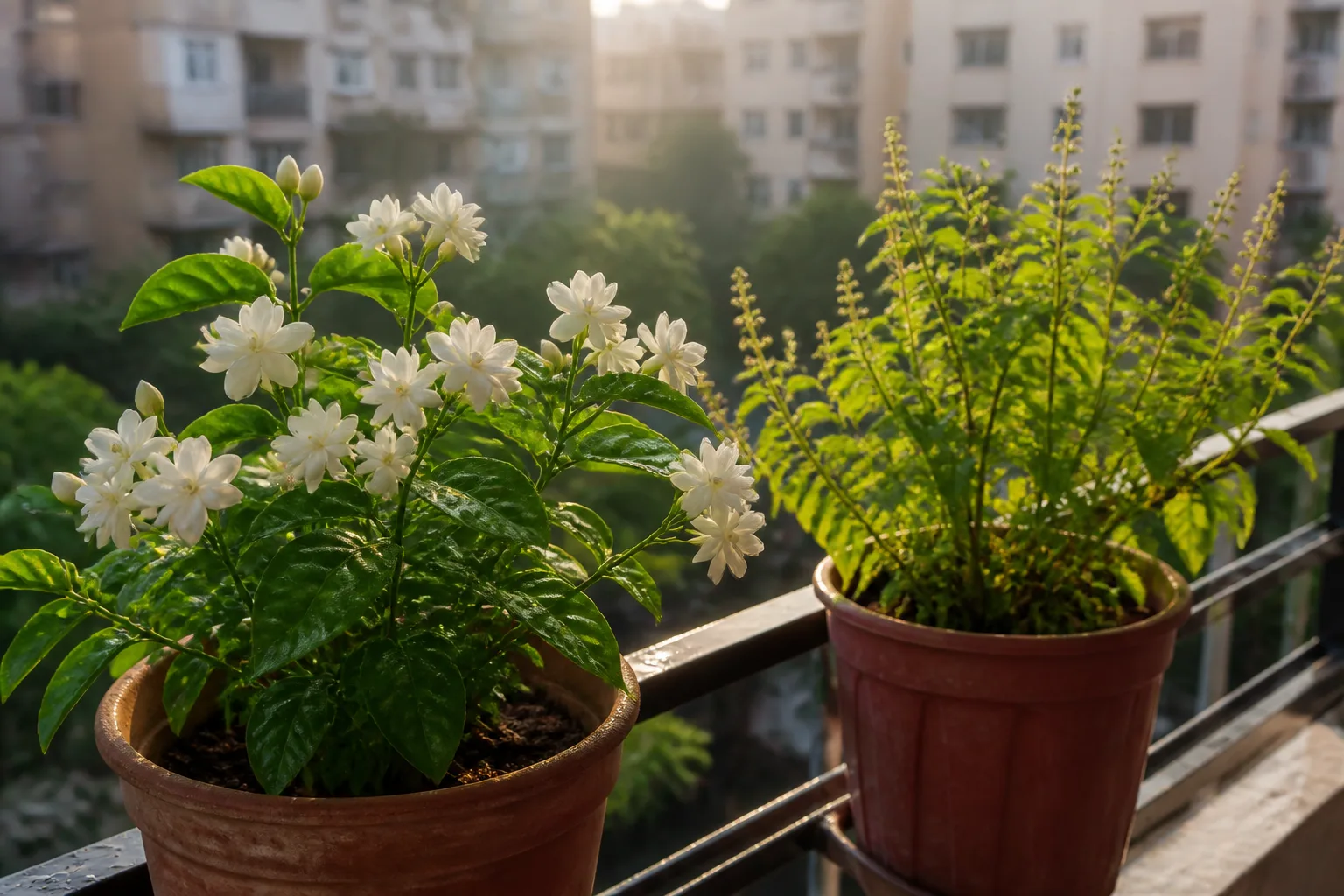
Tulsi on Chennai East Rails
Essential Chennai balcony herb for sunny east exposure — four to six hours of sun. Water daily to every other day in summer; reduce in humid monsoon while checking soil moisture. Cultural staple worth dedicating the brightest east pocket.
Shade Net and Summer Scorch
Non-negotiable on west and south-facing rails March–June. Chennai afternoon sun scorches leaves through pots and grill mesh. Use 40–50% green shade net; water early morning. Even heat-loving bougainvillea benefits during peak May weeks.
Monsoon Drainage and Watering Cut
When humidity keeps soil wet three-plus days, cut watering sharply. Clemson Extension warns overwatering kills more container plants than underwatering — monsoon is when Chennai growers drown established succulents.
Switch to monsoon houseplant care in India when dry-down slows. IMD monsoon onset helps time the shift — often June for Tamil Nadu coast.
Conclusion
Chennai balconies need salt-aware, cyclone-ready, heat-tolerant plants with strict monsoon drainage. West rails: bougainvillea, portulaca, jade with shade net. East rails: tulsi, pothos, ixora. Flowering: hibiscus and plumeria with daily water discipline. Covered spaces: snake plant and spider plant. Rinse salt; cut water when monsoon arrives.
Related guides
- Houseplants in South India summer — indoor heat picks
- Houseplant care in coastal India — salt and humidity indoors
- Plants for Mumbai humidity — west-coast parallels
- West-facing balcony plants in India — afternoon scorch
- Monsoon houseplant care in India — wet-season playbook
- Gardening in India — regional hub