Why Your Garden Has No Pollinators: 8 Causes
Learn why bees and butterflies skipped your garden, then build a next-year plan with native flowers, host plants, nesting sites, water, and safer pest control.
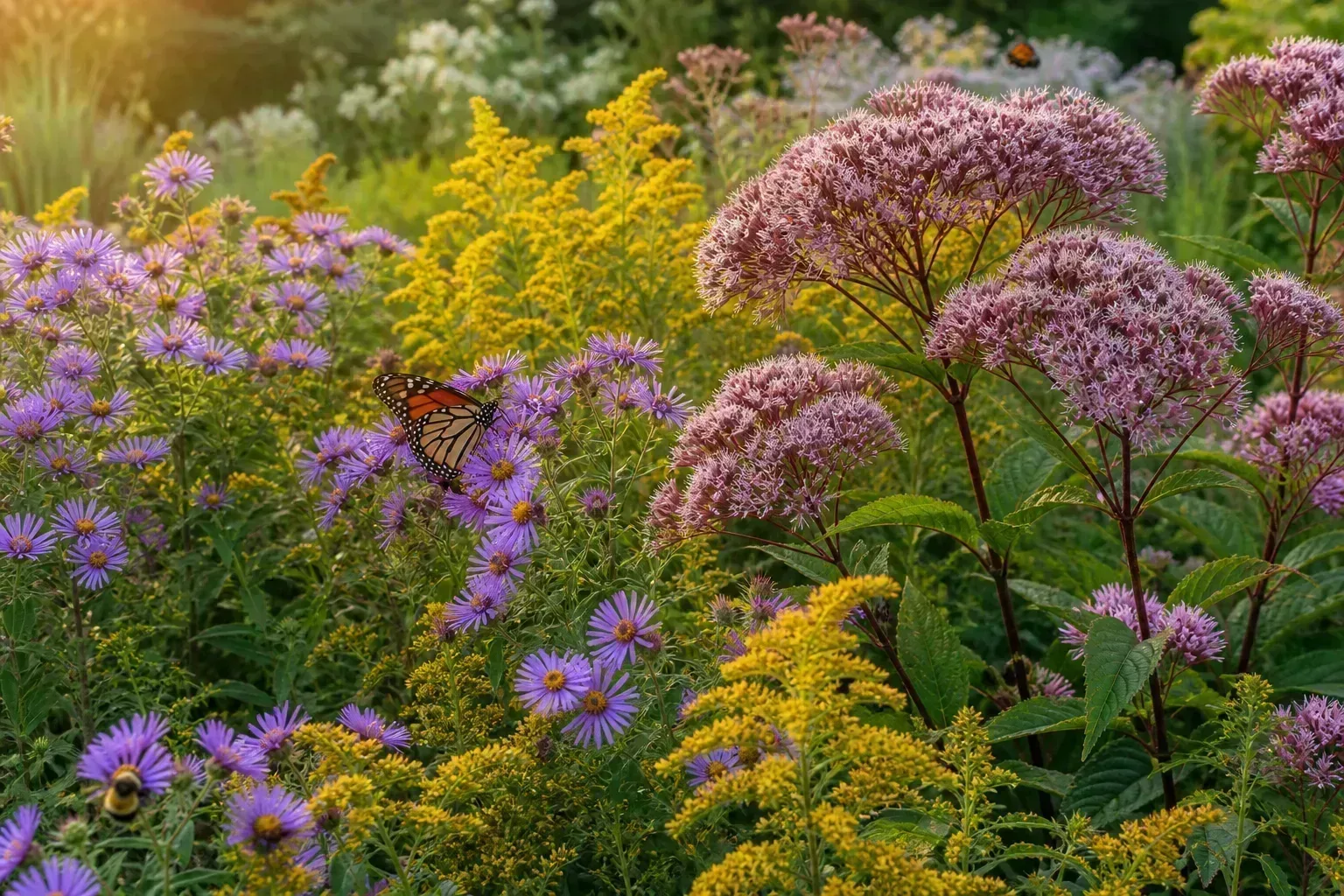
A quiet garden does not always mean you chose the wrong flowers. Pollinators can be present before you notice them, active for a short window you missed, or visiting plants at the edge of your property instead of the showiest bed. But if you had flowers and still saw almost no bees, butterflies, hoverflies, or other visitors all season, the garden probably had a missing link.
Think of pollinator support as a chain: food, access, water, shelter, nesting space, and low chemical exposure. A bed can have plenty of blooms and still fail as habitat if everything flowers for two weeks, every plant is isolated, the soil is covered with fabric, or a mosquito fogger drifts across the flowers. Cornell Cooperative Extension notes that more than 75 percent of flowering plants depend on pollination assistance, but the garden has to meet the needs of the animals doing the work (Cornell Cooperative Extension).
The Real Problem Is Usually a Missing Link
The most useful question is not “Which flower attracts bees?” It is “Which part of the habitat is missing here?” Adult insects need nectar and pollen, but many also need host foliage for their young, a place to nest, a protected place to spend winter, and water that does not become a drowning trap. Penn State’s pollinator habitat framework organizes the job around food, water, shelter and nesting sites, invasive-plant removal, and pesticide reduction (Penn State Center for Pollinator Research).
That model changes the repair. If the bed is empty in April and October, buy early and late bloomers before adding another midsummer flower. If you see flowers but no insects, inspect whether the flowers are double, stressed, isolated, or hard to reach. If activity stopped immediately after a yard-wide spray, chemical exposure moves to the top of the list.
There is also a normal amount of uncertainty. A cold spring, heavy rain, smoke, heat, wind, or a poor flowering year in the surrounding landscape can reduce visits even when your garden is well planned. The goal is to find repeatable weaknesses you can correct, not to blame the entire season on one empty afternoon.
Audit Your Garden Before Changing It
Do a short observation audit before you pull plants out or order seed. Choose three warm, reasonably calm days during the growing season and watch the bed for 10 minutes in the morning and 10 minutes around midday. If the weather is cool, rainy, very windy, or unusually smoky, note that beside your observations; a zero count under poor conditions tells you little.
Record the flower that is open, the insect’s rough type, the time, and whether it actually lands. Small metallic bees, hoverflies, beetles, wasps, moths, and tiny solitary bees all count. Colorado State University Extension points out that native bees vary widely in size, shape, and color and can be mistaken for flies or wasps, so “I saw no honeybees” is not the same as “I saw no bees” (Colorado State University Extension).
Walk the edges as well as the center of the bed. Look for open flowers, chewed host leaves, small soil mounds, holes in dead stems, leaf litter, standing water, spray residue, and a nearby source of wind or shade. Then use the clues below to pick the first intervention.
| What you observe | More likely explanation | First correction |
|---|---|---|
| A long stretch with no open flowers | Bloom gap or wrong seasonal timing | Add a locally adapted plant that flowers in that gap |
| Many blooms but almost no landings | Double flowers, inaccessible nectar, stress, or weather | Check flower structure, plant health, and observation conditions |
| One plant has visitors but the rest are empty | Plants are too scattered or the others are not useful at that moment | Group compatible plants and add a second flower shape |
| Flowers look fine, but the bed is sealed with fabric and deep mulch | Nesting habitat is missing | Reserve a sunny soil patch and leave some stems or litter |
| Activity dropped after a spray or fogging treatment | Direct exposure or drift | Stop routine applications and identify the actual pest before treating again |
| Butterflies visit but never stay | Nectar exists, but larval host foliage is missing | Add host plants and tolerate reasonable chewing |
| The garden is new and full of young plants | Plants and habitat are still establishing | Maintain them, fill the first gaps with annuals, and reassess next season |
This table is a starting point, not a diagnosis by itself. A bumblebee working one patch on a warm morning and disappearing by late afternoon is normal behavior; a bed with no bloom, no shelter, and no water deserves a much more active redesign.
1. Nothing Is Blooming When Pollinators Need Food
The most common design error is planning a flower list instead of a flower calendar. A yard can look spectacular for three weeks in June and offer almost nothing in early spring, late summer, or fall. Pollinators emerging from winter, raising young, or preparing for the next season need forage across those quieter windows too.
Start with the plants you already own. Write down when each one actually opened this year—not when a catalog said it would—and mark the beginning, peak, and end of bloom. Add a second row for weather or irrigation problems because a plant that normally flowers in July may open late after drought, transplant shock, or an unusually cool spring.
Build a Bloom Calendar, Not a Flower List
Build the calendar in four broad bands, then regionalize the names through a local extension plant list or native-plant nursery. Early spring might include native shrubs, willows, spring bulbs, or woodland ephemerals. Late spring and early summer can use flowering shrubs, alliums, catmint, phlox, penstemon, or other plants that bridge the gap before the main summer border.
Midsummer is often the easiest band to fill, so resist buying a fifth plant that peaks at the same time as the four you already have. Coneflower, bee balm, salvia, sunflower, lavender, yarrow, and zinnia can be useful in the right conditions, but the choice should follow your sun, soil moisture, and region. For fall, look to asters, goldenrod, late sunflowers, sedum, and other plants that hold forage after early perennials fade.
Plan overlap rather than a single plant for every month. Cornell’s garden guidance recommends a diversity of flowering species that bloom in succession from spring through fall and suggests planting drifts of at least three plants of each species when space allows (Cornell’s pollinator garden planting guidance). Repetition makes a patch easier to find and gives the pollinator more than one flower to work.
Plan for Early, Middle, and Late Gaps
If the garden was quiet in spring, do not judge it by the number of summer flowers it produced. Add one or two reliable early resources next year, and allow spring weeds such as clover or dandelion to flower in a low-traffic area unless you have a compelling reason to remove them. A spring fruit tree or flowering shrub can be more valuable at that moment than another summer annual.
If the gap appears between the first flush of summer and late-season bloom, use quick annuals as a bridge while perennials mature. Single-flowered zinnias, cosmos, sunflowers, calendula, or flowering herbs can provide a temporary supply, provided the plants fit your climate and watering capacity. Oak Hill Homestead’s practical vegetable-garden guidance makes the same seasonal point: early flowers, flowering herbs, and late-season annuals prevent the garden from becoming a series of short food pulses (Oak Hill Homestead).
If September or October is empty, protect late bloomers instead of cutting them down as soon as the border looks tired. Asters and goldenrod are not merely autumn color; they can be some of the last abundant resources available before cold weather. Let a few healthy seed heads stand unless a specific disease, safety, or local maintenance rule requires removal.
2. Your Flowers Are Attractive to You but Hard to Use
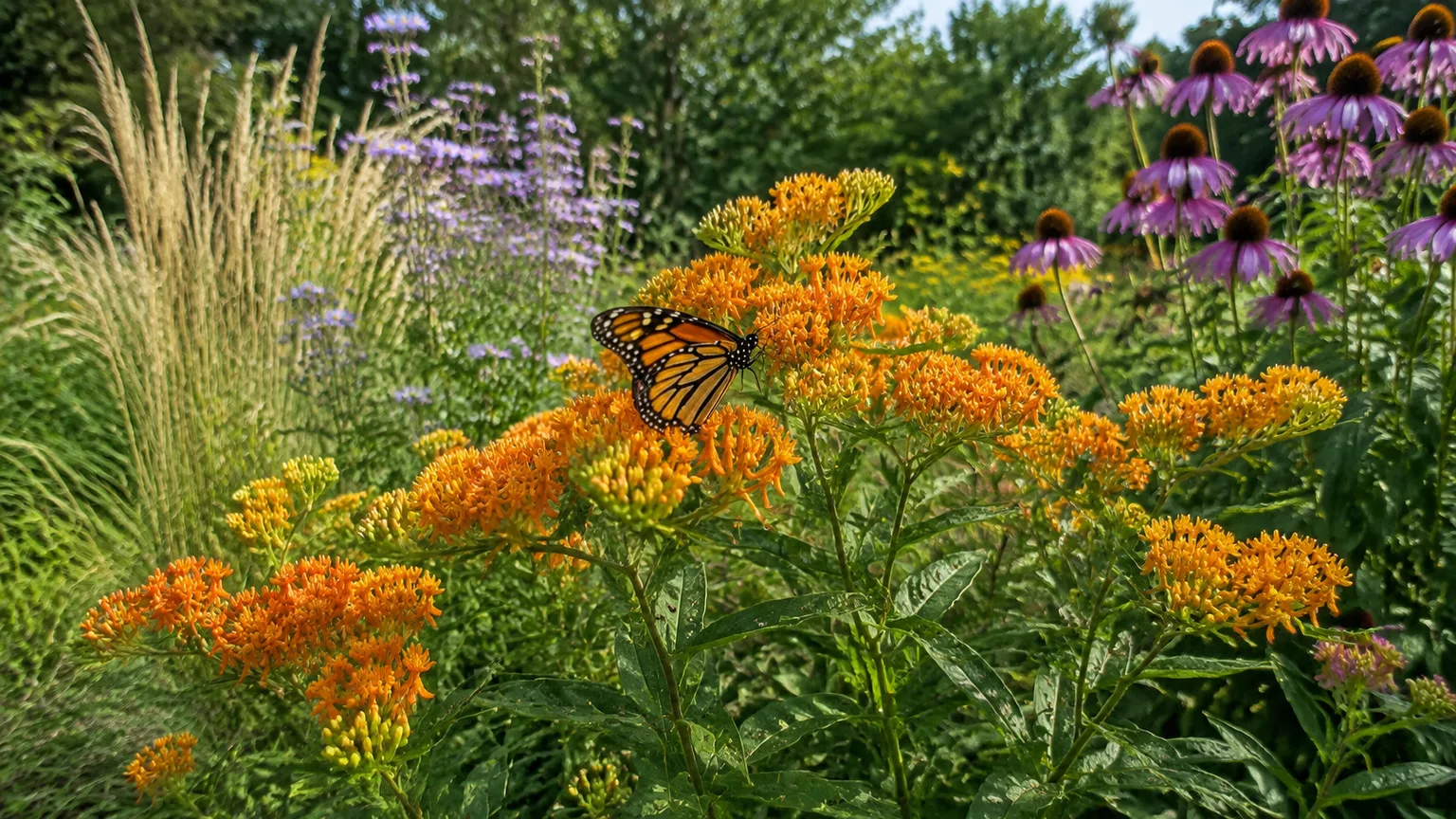
A flower can be beautiful and still offer little accessible pollen or nectar. Double flowers, with extra layers of petals, may hide the reproductive parts insects need or make it difficult for a short-tongued visitor to reach the center. This is not a verdict on every named cultivar, but it is a reason to include open, single flowers when wildlife value is the priority.
Native plants deserve a place in the plan because local insects and plants often share long-standing relationships. Cornell defines a host plant as one insects use to lay eggs and feed their young, which is a different job from supplying nectar to an adult (Cornell on native plants and host plants). A garden with zinnias may attract adult butterflies, while milkweed, parsley, dill, fennel, or rue can give particular caterpillars a reason to stay—if those species are appropriate and legal in your area.
Do not turn “native” into a purity test. A well-adapted non-native with an open flower can still feed generalist pollinators, while a local native in the wrong shade or wet soil may flower poorly. The stronger rule is native-first, regionally appropriate, and structurally diverse rather than a cart full of plants chosen only because a label says “pollinator friendly.”
Match Flower Shape to Pollinator Variety
Flower architecture is a practical filter. Tubular flowers such as bee balm, salvia, and cardinal flower favor hummingbirds and some long-tongued bees. Flat or bowl-shaped flowers such as coneflower, sunflower, yarrow, and zinnia provide landing surfaces for butterflies and many short-tongued bees. Shallow clusters of tiny flowers—think flowering herbs, some umbellifers, and small composite blooms—can serve small bees, hoverflies, and beneficial wasps.
You do not need to plant one of everything. At the same time, a bed made entirely of deep tubes may exclude butterflies, while a bed of only large flat daisies may offer little for hummingbirds. Pair at least two or three flower architectures during the same bloom window, then watch which insects use them. Savvy Gardening’s discussion of flowering shrubs is also a useful reminder that woody plants can combine adult forage, caterpillar host foliage, and overwintering structure in a way a short-lived annual cannot (Savvy Gardening).
3. Plants Are Too Scattered to Be Worth the Trip
One healthy flower is better than no flower, but isolated plants are easy to overlook and inefficient to forage. A bee that finds one bloom, then has to cross a lawn to find the next, spends more energy searching than a bee working a compact patch. The same logic helps a gardener: grouped plants are easier to water, observe, and protect from accidental spray.
Group plants by sun, soil, water, and bloom time, not simply by color. Place three or more of the same species together where space allows, then repeat that plant or its flower shape elsewhere in the border. Keep tall plants behind shorter ones so the flowers remain visible and the gardener can inspect the foliage without trampling the soil.
A small bed does not need to become a meadow. A six-foot pocket with a repeated group of open flowers, one tubular plant, and a fall anchor can be more useful than a large bed filled with unrelated singles. In containers, cluster pots that share water and light requirements; the visual concentration makes the group easier for insects to find and makes a balcony less exposed to wind.
4. The Garden Has Food but No Place to Live
Flowers feed adult insects, but they do not automatically provide a nest or a safe winter. A perfectly raked, fully mulched, fabric-covered bed can look immaculate while removing the spaces many native bees and other insects need. Colorado State University Extension summarizes a widely used estimate that about 70 percent of native bees nest in the ground and about 30 percent use hollow stems or existing cavities; the exact mix varies by region, but the design implication is clear: a bee hotel is not a substitute for soil and plant debris.
Make Room for Ground Nesters and Stem Nesters
Reserve a small patch of sunny, undisturbed soil near flowers. Keep it free of landscape fabric and heavy mulch, and do not till it repeatedly once you notice small nesting entrances or temporary soil mounds. Ground-nesting bees are not asking for a decorative “bee bank”; they need a place where the soil stays workable and is not compacted by regular foot traffic.
For cavity and stem nesters, leave a few hollow or pithy stems standing through winter. If you need to shorten tall perennials for visibility, cut some stems high rather than every stem at ground level, and delay the final cleanup until local spring warmth has returned. Colorado State recommends leaving drying stems, dead wood, and undisturbed areas and pruning stems later, after adults have emerged.
Bee hotels can help in the right setting, but they create a maintenance obligation. Use untreated materials with smooth, appropriately sized cavities, keep the structure dry and protected from driving rain, and clean or rotate nesting material as recommended for the design. A neglected hotel can collect moisture, parasites, or mold; a patch of soil, stems, and leaf litter is often the lower-maintenance first step.

Leave Some Leaves, Stems, and Dead Wood
Autumn cleanup is one of the easiest ways to erase next year’s pollinators. Leaf litter can shelter overwintering insects and caterpillars, while dead stems and old wood provide cavities or protected surfaces. Cornell’s water-and-shelter guidance describes leaf litter, faded plants, pithy stems, brush, rocks, and dead wood as useful forms of shelter and recommends a “less is more” approach to fall tidying (Cornell on water and shelter for pollinators).
You can keep the garden intentional without stripping it bare. Leave a visible habitat corner behind taller plants, use a crisp mowed edge beside a looser bed, and move leaves from the lawn into planting areas rather than sending every leaf to the curb. Remove material that is diseased, blocking a path, or creating a fire or pest hazard, but do not treat all brown stems as waste.
5. Water Is Missing—or Unsafe
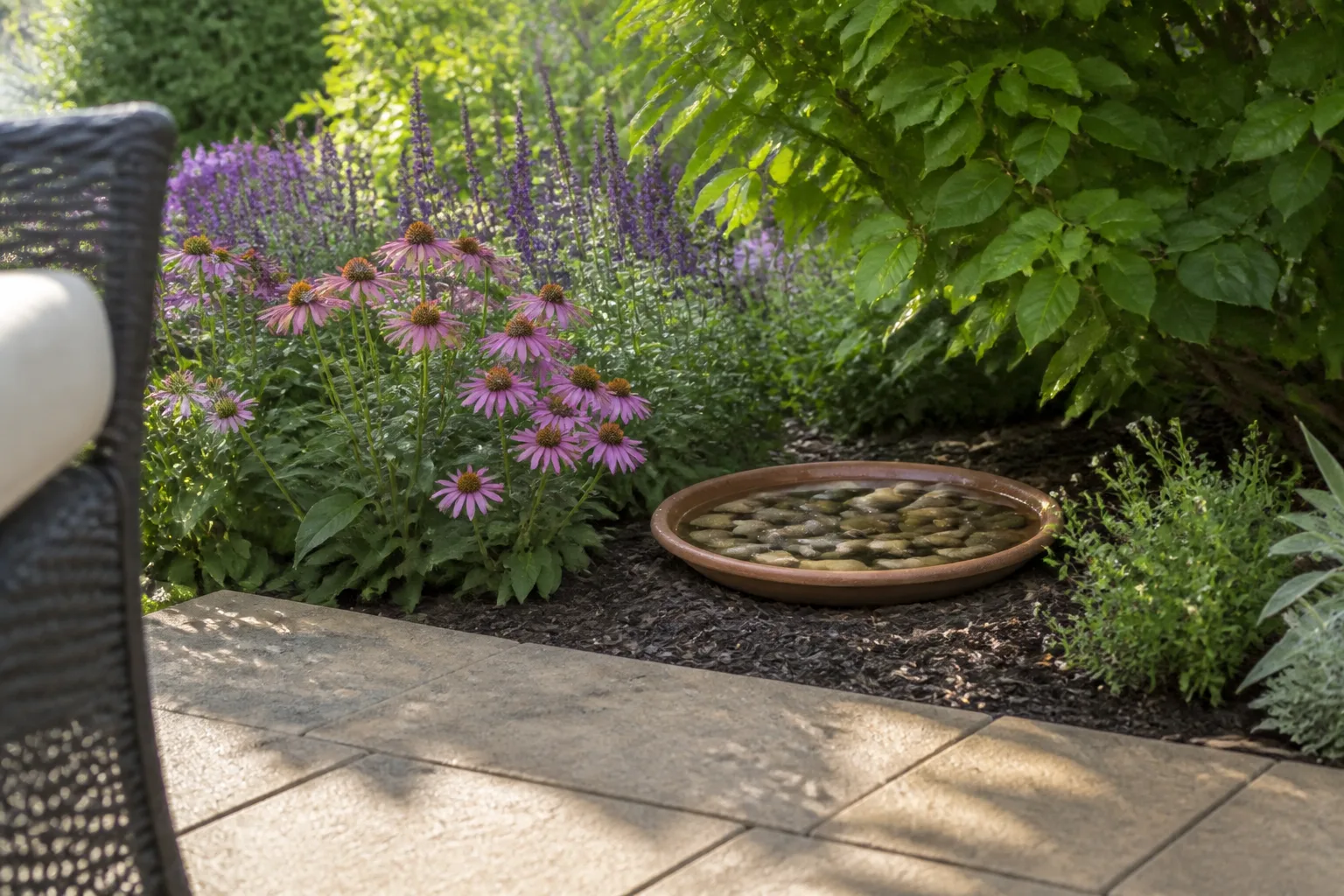
Pollinators may drink from irrigation, damp soil, mud, or natural water, but a small garden can still offer a reliable station. The safest version is simple: use a shallow, stable dish, add pebbles or flat stones as landing and exit points, and keep the water level low enough that insects are not forced to stand in deep water.
Set the dish near flowers where you will remember it, but away from areas that receive fertilizer or pesticide spray. Empty and scrub it regularly, then refill with clean water. Cornell Cooperative Extension recommends frequent cleaning and refilling for artificial water sources, while Colorado State Extension specifically warns that the pebbles help insects land and leave and that water dishes should be refreshed to avoid mosquito larvae (Colorado State’s bee habitat guidance).
Butterflies may also seek minerals at a damp patch of sand or soil, often called a puddling area. Treat that as a separate habitat feature rather than turning the drinking dish into a salty recipe. Do not add sugar, honey, fragrance, or essential oils to water; those additions can spoil, attract unwanted pests, or create a residue that has nothing to do with a clean water source.
6. Pesticides and Weed Control Are Erasing the Benefit
If the garden became quiet soon after a broad insecticide, herbicide, fungicide, mosquito fog, or “preventive” spray, treat that timing as important evidence. Pesticides do not distinguish perfectly between a pest and a beneficial insect, and spray drift can reach flowers that were not the intended target. Herbicide use can also remove the clover, dandelion, violets, or other flowering plants that were feeding insects before your ornamental bed opened.
Use an integrated pest management sequence. Identify the pest first, decide whether the plant can tolerate the damage, and try hand removal, a firm water spray, pruning, barriers, sanitation, or better airflow before reaching for a chemical. Caterpillars on a designated host plant are not automatically an infestation; leaf chewing may be the evidence that butterflies are reproducing in the garden.
If treatment is genuinely necessary, read the current product label for the crop, pest, application method, protective equipment, re-entry, and pollinator precautions. Cornell’s pesticide guidance says never to spray open flowers or plants nearly ready to bloom, and it explains that even night or early-morning timing does not make insecticide on flowers safe. Dusk can reduce direct contact with active foragers in some situations, but it does not excuse spraying blooms or allowing drift (Cornell on protecting pollinators from pesticides).
Do not rely on the word “organic” as a safety guarantee. Some low-impact products can still harm bees or other beneficial insects when they contact them, and systemic products can move through plant tissue. Never fog a whole yard just because a few mosquitoes are annoying; targeted personal protection, fans, habitat management, or advice from a local extension office may solve the actual problem with less collateral damage.
Strong outdoor fragrances are a much weaker first suspect than bloom gaps, habitat removal, or pesticide exposure. A citronella candle may change the immediate experience around a patio, but there is no useful reason to rebuild a garden around scent theories while ignoring flowers, nesting space, and spray drift. If fragrance is part of your entertaining setup, move it away from the main flower patch and observe whether activity changes; treat that as a small experiment, not the core solution.
7. Site Stress Is Reducing Flowering
A pollinator garden cannot feed insects if its plants are barely flowering. Many pollinator-friendly plants need at least six hours of sun, according to Cornell’s garden-creation guidance, although the exact requirement varies by species and climate. A bed that looked sunny in May may be shaded by a tree canopy in July, or a new fence may have changed the morning light.
Check light at the hours when the plants are expected to open. Then check the root zone: is it bone dry, waterlogged, compacted, or hot beside paving? Drought, poor drainage, transplant shock, and severe wind can all reduce vigor or shorten the time flowers stay attractive. Match plants to the site instead of trying to force a moisture-loving species into gravel or a dry-soil plant into a soggy low spot.
Be cautious with fertilizer as a rescue. If foliage is lush but flowering is weak, a soil test and a review of the product label are more useful than an automatic “bloom booster.” Extra fertilizer may create soft, excessive growth without solving shade, water, or an unsuitable plant choice.
New gardens also need time. Cornell notes that it may take a few seasons for plants to mature and for pollinators to find a developing habitat. Use annuals to bridge the first season, keep the soil and water conditions consistent, and judge the second year by new growth, bloom continuity, and repeat visits—not by whether a newly planted perennial immediately looks like a mature border.
8. You May Be Watching at the Wrong Time
Pollinator activity is not evenly distributed across the day. Warm, calm daylight may bring the most visible bee and butterfly traffic, but temperature, wind, cloud cover, flower opening, and species behavior all matter. Moths may appear around dusk or at night, while tiny solitary bees may work low flowers so quickly that you overlook them.
Change the observation method before changing the garden. Visit at the same two times on several suitable days and write down the weather. Look closely at the flower center for pollen, watch for repeated landings rather than dramatic hovering, and inspect small flowers and herbs. If you only checked during a cool evening or after a thunderstorm, you measured the weather more than the habitat.
Also look beyond the property line. Pollinators may be using a neighbor’s flowering tree, a roadside clover patch, or a nearby woodland and only crossing your yard briefly. A garden can contribute food without receiving a constant stream of insects, and a few short visits may be enough for pollination even if you do not see a butterfly posing on every flower.
A Next-Year Pollinator Reset That Works in Any Yard
Use the quiet season to make a small plan rather than starting over. First, sketch the garden and mark sun, wind, wet spots, existing bloom windows, and places where people or pets walk. Second, choose one early, one midsummer, and one late-season gap to close. Third, add habitat before buying more plants: a sunny soil patch, standing stems, leaf litter under a shrub, a small brush pile, or a clean shallow water dish.
Before next spring, check each plant’s local status, mature size, water needs, and host-plant value. Favor regional natives where available, but keep useful open flowers that are adapted to the site. Ask the nursery whether starter plants received systemic insecticides, and avoid relying on a generic national seed mix without checking the species and invasive-plant rules for your area.
When the season starts, make three changes at most. A good first-year experiment might be one early-blooming shrub or perennial, one late-season anchor, and a small nesting or water feature. Mark their locations and record the first flower, peak bloom, and the first repeat pollinator visit. That gives you evidence for the next adjustment instead of an endless cycle of buying plants.
Small Yard or Container Version
You do not need a large property. A sunny pocket bed, window box, or group of containers can offer meaningful forage when the plants are grouped and maintained. Choose a few plants that share light and watering needs, include at least two flower shapes, and plan for a bloom gap rather than cramming every pot with a different species.
Containers dry faster than in-ground beds, so an abandoned pot is not useful habitat. Put compatible pots together in a wind-protected place, check them during hot weather, and keep a shallow water station nearby without letting the pots sit in it. If there is no ground for nesting, compensate with stems, leaf litter in a sheltered corner, or a carefully maintained cavity nest—but remember that flowers and nesting space are complementary, not interchangeable.
For a tidy front yard, define the planting with an edge or mowed buffer and let the habitat features sit toward the back. A contained, repeated planting reads as intentional while still giving insects a more continuous resource than scattered decorative singles. If you already have a dedicated plan for curb appeal, the related pollinator yard guide covers the design side; the diagnostic sequence here is the place to start when the garden is unusually quiet.
Conclusion
When a garden attracts few pollinators, start by looking for the missing link rather than assuming the flowers failed. Audit the bloom calendar, flower accessibility, grouping, nesting space, water, chemical exposure, site conditions, and observation timing. Those checks usually reveal a practical first move.
For next year, aim for a living system: flowers that overlap from spring through fall, native and host plants suited to your region, clusters that are easy to find, a little bare soil and leaf litter, safe water, and pest control used only when necessary. The garden may never be busy every hour, but it can become more useful, more resilient, and noticeably more alive over time.



