Does Lavender Repel Mosquitoes? The Real Answer
Does lavender repel mosquitoes? Learn what lavender plants and essential oil can—and cannot—do, plus safer ways to protect your patio and skin.
The short answer: lavender is a supplement, not a mosquito barrier
Lavender has a reputation for making a patio smell lovely and making mosquitoes disappear. The first part is easy to believe; the second needs a much more careful answer. A healthy lavender plant may add a strong aromatic note near a sitting area, and lavender essential oil has affected mosquitoes in controlled laboratory tests. But putting one pot on the deck does not create an invisible ring of protection around the yard, and it should not replace a repellent, long sleeves, screens, or standing-water control.
The surprising distinction is between a plant and the concentrated oil made from it. A living plant releases a relatively small, variable amount of scent, mostly when its leaves or flowers are warm, brushed, or crushed. A laboratory test can expose mosquitoes to a measured concentration of oil for a measured length of time. Those are very different exposures. A result for the oil tells us that lavender compounds are worth studying; it does not prove that a lavender border will keep every mosquito away from every person.
So, does lavender repel mosquitoes? The honest answer is: lavender oil can repel or kill mosquitoes under some test conditions, while a lavender plant is best treated as a pleasant, limited, supplemental garden tool. Use it close to the place you sit, enjoy it for its flowers and fragrance, and build your real control plan around removing breeding water and protecting people directly.
Why lavender oil can affect mosquitoes in a lab
Lavender scent comes from a blend of volatile plant compounds. When those compounds are concentrated into essential oil, they can interact with an insect’s sensory system and, at sufficiently high doses, its nervous system. That is why “lavender” can show up in both repellent conversations and insect-control research. The effect is chemical and dose-dependent, not a magical property that automatically transfers to every lavender plant in every garden.
What the best lavender study actually tested
A useful peer-reviewed study tested steam-distilled essential oils from lavender, peppermint, and rosemary against Culex pipiens, a mosquito that can transmit West Nile virus. The researchers tested both larvae and adult female mosquitoes in laboratory conditions (the peer-reviewed study). The lavender oil came from the flowering tops of Lavandula angustifolia, so it is relevant to the familiar English lavender grown by gardeners, but the test still involved oil rather than a plant.
For larvae, the researchers used measured concentrations ranging from 62.5 to 1,000 parts per million and recorded mortality after 24 hours. At the highest concentration, the lavender oil caused 87.2 percent larval mortality in that test, with a reported LC50 of about 301 parts per million. That is a meaningful laboratory result, but it describes a water-based test container holding mosquito larvae and a known oil concentration. It does not describe a rain barrel, birdbath, or flowerpot saucer with a lavender plant growing beside it.
The adult test was also highly controlled. The researchers used approximately three-day-old female Culex pipiens, dissolved the oils in ethanol, and exposed mosquitoes to concentrations between 0.5 and 5 percent using a CDC bottle protocol. At 5 percent lavender oil, the study recorded 95.55 percent knockdown after one hour and 100 percent adult mortality after 24 hours. The reported median knockdown time was about 17 minutes, while the time for 90 percent knockdown was about 58 minutes.
Those numbers can sound like proof that lavender is an excellent backyard repellent. They are better understood as proof that a concentrated lavender-oil exposure can be biologically active under particular conditions. The study measured knockdown and mortality, not the comfortable, long-lasting protection a person wants while eating dinner outside. It also tested one oil sample, one mosquito species, specific life stages, and defined concentrations.
The oil’s chemical profile helps explain why the result should not be generalized too casually. The sample contained several aromatic compounds, including linalool and various lavender-related esters, in proportions that depend on the plant material, harvest, distillation, storage, and testing method. Another bottle labeled lavender may have a different composition. Even a plant of the same species can produce different amounts of oil as its flowers open, the weather changes, or the plant experiences stress.
Why essential oil results do not equal a garden plant
The first difference is concentration. Essential oil is not simply “the smell of a plant in liquid form”; it is a concentrated extract. A small amount can represent a large quantity of plant material. The leaves and flower spikes on a patio plant release scent into a moving volume of air, and the concentration falls quickly with distance. A laboratory container or treated bottle holds the test material close to the mosquitoes at a known dose.
The second difference is exposure time. A plant may smell strongest during warm, still periods and after its foliage is disturbed. Mosquitoes do not have to remain in that scented pocket. They can fly in from another direction, settle beneath furniture, or follow the carbon dioxide, heat, and body odors of people sitting nearby. Outdoor airflow disperses volatile compounds far faster than a closed test chamber does.
The third difference is the outcome being measured. Killing mosquito larvae in a test container is not the same as preventing adults from biting. A plant next to a water source may look like pest control while the real breeding site remains untouched. Likewise, a short knockdown in a bottle is not the same as reliable protection for an entire evening.
Research on essential oils makes this formulation problem clear. In contact-repellency assays, different oils and formulations produced very different protection times, and chemical composition varied by plant source, processing, and manufacturer (the essential-oil repellency study). The practical takeaway is not that essential oils never work. It is that the word “lavender” alone does not tell you the dose, the formulation, the duration, or the level of protection.
| What you are using | What it may do | What you should not assume |
|---|---|---|
| Living lavender plant | Add fragrance and possibly a small, local scent effect when foliage is warm or disturbed | It clears a yard or prevents bites |
| Lavender essential oil | Affect mosquitoes at a measured, concentrated dose in some tests | Every bottle works the same or is safe to apply undiluted |
| Registered personal repellent | Provide label-directed protection when used as directed | It removes mosquitoes from the property |
| Source reduction | Reduce the number of mosquitoes emerging nearby | It replaces personal protection during a high-exposure evening |
What you can realistically expect from a lavender plant
A lavender plant can still have a sensible place in a mosquito-conscious garden. It gives you flowers for pollinators, a useful culinary or craft herb when grown for that purpose, and a dry, sun-loving texture that works well in containers. Its scent may make the space feel less attractive to some insects at close range. Those are real benefits, but they are smaller and more local than the claim that lavender “keeps mosquitoes away.”
Where a lavender pot can help
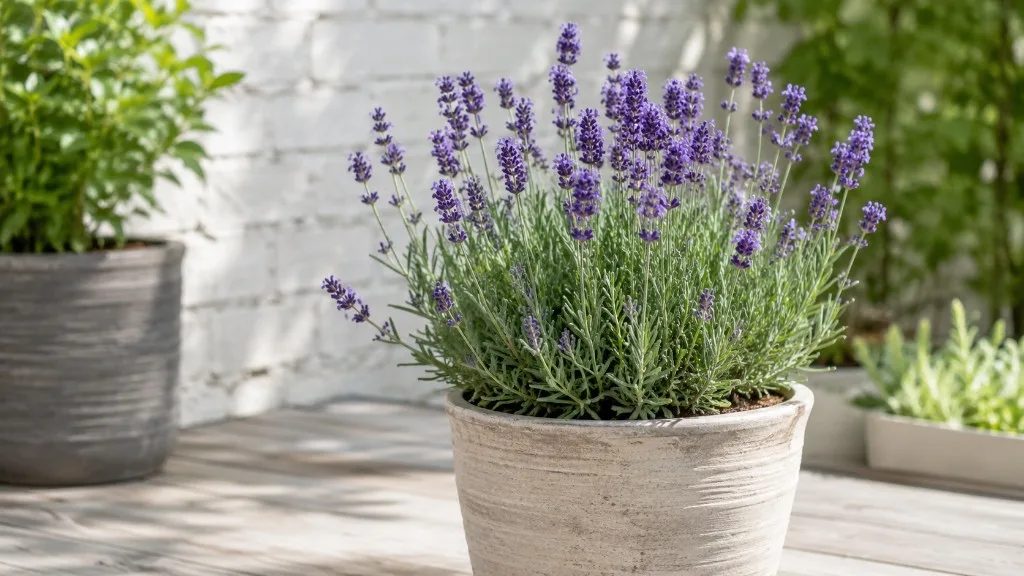
Start with the place where you actually notice mosquitoes: a favorite chair, a narrow porch, or the edge of a small dining table. A lavender container positioned nearby can put more foliage and flower spikes within the immediate scent zone than a plant placed at the far edge of the yard. Container placement also lets you move the plant into its brightest, driest location and bring it closer to the seating area when you are outside.
Think of the plant as part of the atmosphere, not a force field. Several healthy plants around a compact seating area may create more noticeable fragrance than one small transplant. A grouping can also make the patio look intentional, especially when lavender is combined with other plants that tolerate the same dry, sunny conditions. Gardening writers commonly recommend placing aromatic containers near seating and paths, while also warning that the effect is variable and limited (the container-plant guidance, the horticulture discussion of pest-fighting flowers).
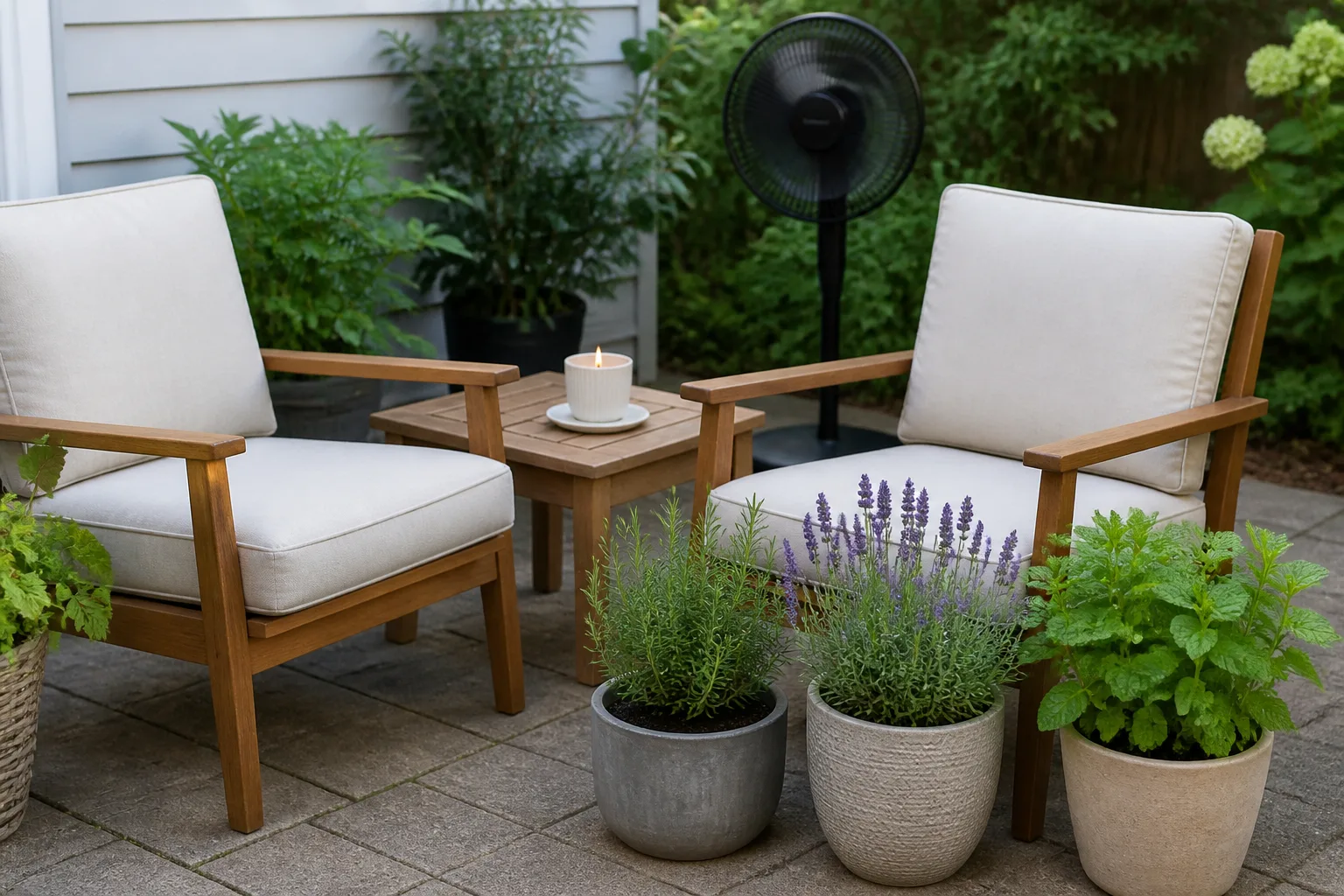
If mosquitoes are severe, test the claim instead of relying on wishful thinking. Sit in the area with the lavender in place for a few evenings under similar weather conditions. Pay attention to wind direction, dusk timing, shade, and whether bites happen on exposed ankles or arms. If the plant makes no noticeable difference, keep it for its horticultural value and add controls that address the actual exposure.
Why wind, distance, and mosquito species matter
Mosquito behavior changes with species, temperature, humidity, time of day, and habitat. Some mosquitoes are most active near dusk, some prefer shade, and some rest in dense vegetation or damp debris during the day. A scented plant may influence a small pocket of air without changing the number of mosquitoes resting under a deck, in tall grass, or beside a clogged drain.
Wind is especially important. A breeze that makes a patio comfortable also carries lavender volatiles away. On a still evening, scent can linger close to the plant, but a mosquito can still approach from above or from an unscented side. A large, open yard creates a much harder problem than a sheltered balcony with a container right beside the chair.
The plant’s condition matters, too. A drought-stressed lavender with few flower spikes may release less aroma than a vigorous plant in bloom. But increasing scent is not the same as increasing protection. Do not overwater lavender, bruise every leaf, or apply homemade mixtures in an attempt to make the plant “work harder.” That can damage the plant and expose people to an untested product without solving the mosquito problem.
How to use lavender around an outdoor sitting area
Use lavender in a way that respects both the plant and the limits of plant-based scent. The goal is to bring a healthy aromatic plant into the space while reducing the conditions that make mosquitoes likely to be there.
Choose the right placement and plant mass
Place lavender in full sun where it will not be splashed by frequent irrigation or trapped under a roof drip line. Around a patio, a good location is near the outside edge of the seating area, where the plant receives light and remains visible without blocking a walkway. A pot beside the chair can be more useful for fragrance than a shrub ten yards away, but leave enough clearance for air movement and for watering without soaking cushions or footpaths.
Use more than one small pot if the space is broad, but avoid crowding them into a damp cluster. Lavender prefers an open, airy setting. The intent is not to build a dense mosquito hedge; it is to place healthy plants where their flowers and foliage are part of the lived-in area. If you have a large yard, concentrate plants around the spots where people gather rather than scattering a few plants randomly and expecting property-wide control.
A container is convenient because you can evaluate the placement. Move it a little closer to the table, then farther from the windbreak, and notice whether the fragrance is apparent. Do not move a newly planted lavender repeatedly through hot weather, however. Let roots establish and make changes gradually so the experiment does not become plant stress.
Release scent without hurting the plant
Warmth and gentle contact naturally make lavender more fragrant. Brushing past flower spikes or harvesting a few stems for a vase releases some aroma without stripping the plant. Pruning after flowering also gives you a useful supply of dry stems for sachets and indoor fragrance, although a sachet is not a mosquito-control device.
Avoid aggressive leaf crushing as a routine strategy. Removing large amounts of foliage reduces the plant’s ability to photosynthesize and can leave ragged wounds that dry out in hot sun. It also gives you an inconsistent dose that changes from one handful to the next. If the plant’s fragrance is weak, improve the growing conditions and choose a naturally aromatic type rather than repeatedly damaging the leaves.
Do not place lavender in a stagnant, shaded corner just because it is close to a door. Poor light and wet soil can lead to a declining plant, and a declining plant is not likely to provide a satisfying fragrance. A sunny, well-drained container near the patio is the better compromise.
Don’t turn crushed leaves into untested skin repellent
This is the safety boundary that many casual plant tips skip. Lavender leaves and flowers are not automatically safe to rub on skin just because they are edible or pleasant-smelling, and crushed plant material has not been tested like a regulated personal repellent. Lavender-containing topical products can cause allergic skin reactions in some people, and the safety of lavender during pregnancy or breastfeeding is not well understood (the National Center for Complementary and Integrative Health safety overview).
Do not rub crushed leaves on your arms or ankles, and do not apply undiluted lavender essential oil to skin. Do not assume that adding oil to water makes a reliable spray; oil and water separate, the concentration is hard to control, and the finished mixture may irritate skin or eyes. Never use a homemade lavender preparation as protection against mosquito-borne disease.
When you need personal protection, choose an EPA-registered product and follow its label. The CDC specifically notes that the effectiveness of nonregistered repellents, including some natural repellents, is not known, and recommends registered products for protection from germs mosquitoes can spread (CDC prevention guidance). Lavender can stay beside the chair as a garden plant. Your skin deserves a product with clear directions and tested performance.
Grow lavender so it thrives near the patio
The best way to get any benefit from lavender is to grow a vigorous plant. A stressed plant has fewer flowers, less attractive foliage, and a shorter useful life. Fortunately, the conditions that lavender likes are often compatible with a sunny porch or patio.
Sun, drainage, and watering
Lavender wants plenty of sun and sharply draining soil. The Royal Horticultural Society recommends a sunny position and free-draining soil or a container, while warning against cold, damp locations (the RHS lavender growing guide). In practice, use a pot with drainage holes and a coarse, open mix rather than a water-retentive houseplant mix. Elevate the container slightly if water pools beneath it.
Water a newly planted lavender when the root zone is drying but before the plant is left wilted for an extended period. Once established in the ground, lavender is drought tolerant and usually needs little supplemental water except during severe drought. A container dries faster, especially on a hot patio, so check the mix rather than following a fixed daily schedule. Water thoroughly, then let excess drain away.
Overwatering is a more common lavender mistake than underwatering. Constantly wet roots reduce vigor and can lead to root problems. Do not place a saucer under an outdoor lavender pot where it can hold water for days; empty it after watering and include it in your weekly mosquito inspection. A plant chosen for mosquito control should not become the reason a small breeding container sits beside the chair.
English lavender and its hybrids are often the best starting point for a hardy, strongly scented garden plant. French and other tender types can be attractive but may need more protection or container culture in cool climates. Read the plant tag for mature size and hardiness, because a cultivar that thrives in your conditions will provide a better display than a supposedly more fragrant plant that declines after one season.
Pruning, harvest, and choosing a type
Prune lavender after flowering to keep the plant compact and encourage a fresh, branched framework. Make clean cuts in leafy growth and avoid cutting deeply into old, leafless wood, which may not resprout. Remove spent flower stems if you want a tidier container, or harvest them when some buds are open for drying and fragrance indoors.
Harvest with restraint. A handful of stems for a small vase or sachet is reasonable; cutting half the plant in midsummer is not a sound mosquito strategy. Leave enough green growth for the plant to recover and enough flower spikes for pollinators. More cut foliage does not guarantee more repellency, and it can leave you with less of the healthy plant you wanted to enjoy.
Match the plant to the site before thinking about mosquitoes. English lavender and many hybrids prefer dry, sunny conditions, while a wet, shaded patio may call for a different container plant altogether. The right plant in the right place is more attractive, more fragrant, and less likely to invite the extra watering that creates standing water in saucers, buckets, or nearby tools.
The mosquito-control steps that make the biggest difference
If you want fewer mosquitoes, start where mosquitoes reproduce and rest. A lavender plant can be a small part of the plan, but public-health guidance puts the emphasis on removing water-holding containers, blocking entry, using personal protection, and treating remaining water or resting areas only as directed.
Remove breeding water every week
Mosquitoes do not need a pond to reproduce. A flowerpot saucer, overturned toy, clogged gutter, bucket, wheelbarrow, discarded container, or low spot can hold enough water for larvae. Walk the property once a week and empty, scrub, turn over, cover, or throw out items that can collect water. The CDC specifically lists common household items such as tires, buckets, toys, pools, birdbaths, flowerpot saucers, and trash containers in its weekly guidance (the CDC home mosquito-control guidance).

The word “scrub” matters. Dumping water may remove the current larvae, but residue and eggs can remain on a container surface. Scrub the sides and bottom when you empty it, then store the item upside down or under cover. Refresh birdbaths according to their care needs, and make sure rain barrels and other water-storage containers have secure covers or fine mesh that prevents mosquitoes from entering.
Inspect areas that are easy to miss. Look under patio furniture, behind planters, in folded tarps, inside children’s outdoor toys, around downspouts, and in the saucer beneath a plant container. Check after rain as well as during dry weather. If a container must hold water and cannot be emptied, use a properly labeled larvicide only when the product is approved for that situation, and follow the label exactly. Do not put a product meant for ornamental water into drinking water.
Source reduction can make a bigger difference than adding another scented plant because it removes the next generation of mosquitoes. It will not instantly remove adult mosquitoes that have already arrived, but it reduces the local supply over time. If a neighbor’s property or a larger drainage area is the source, document the problem and contact the appropriate local public-health or vector-control office rather than relying on patio fragrance.
Use barriers and a proven personal repellent when needed
For an evening outdoors, combine layers. Wear loose, long sleeves and pants when practical, use screens on doors and windows, and consider permethrin-treated clothing or gear when appropriate. Use an EPA-registered repellent with an active ingredient such as DEET, picaridin, or oil of lemon eucalyptus according to the product label. Reapply only as directed and keep the product away from eyes, mouth, and damaged skin (CDC prevention guidance).
Airflow can help comfort as well. A fan near a seating area can make it harder for mosquitoes to fly and can disperse the body odors they use to find people. A fan is not a replacement for repellent, and it must be positioned safely around children, pets, cords, and wet areas, but it is a sensible patio layer when the space allows it.
If mosquitoes are entering the house, repair screens and remove indoor water sources such as vases, plant saucers, and pet bowls that are not being changed regularly. Outdoor adulticide treatments may target dark, humid resting places under furniture or around structures, but they require careful label compliance and should not be treated as a blanket solution. The CDC notes that indoor insecticide alone will not keep a home mosquito-free (CDC home mosquito-control guidance).
This layered approach also clarifies lavender’s role. Keep the plant where you enjoy it, but let direct protection do the work when someone is likely to be bitten. A beautiful container can support a comfortable patio; it cannot make an unprotected person safe in an area with heavy mosquito pressure.
What about citronella, rosemary, mint, and catnip?
Lavender is often listed with citronella, rosemary, mint, thyme, sage, and catnip as a mosquito-repellent plant. The same caution applies to most of these recommendations: the plant, its crushed leaves, its distilled oil, and a formulated product are not interchangeable. A citronella-scented geranium is also not the same thing as citronella grass, and a plant sold with “mosquito plant” language should not be assumed to have the same evidence as a tested oil.
These plants can be worthwhile for fragrance, flowers, culinary use, or container design. Mint is vigorous and can spread aggressively in the ground, while rosemary and thyme prefer conditions that may resemble lavender’s sunny, well-drained site. Catnip can attract cats, which may be a deal-breaker for some patios. Choose plants for the whole garden and treat any mosquito effect as a bonus unless a specific, tested product makes a stronger claim.
Fine Gardening’s discussion of pest-fighting flowers makes a useful broader point: garden results vary with the site, plant density, weather, and the insects present. A plant that seems helpful in one garden may do little in another. That variability is another reason to test a plant near the place you sit, keep expectations modest, and use source reduction and personal protection as the foundation.
Conclusion
Lavender really can affect mosquitoes when its essential oil is concentrated and tested under controlled conditions. That is the surprising part behind the popular claim. The less exciting but more useful answer is that a living lavender plant does not reliably repel mosquitoes from a yard, prevent bites, or replace an EPA-registered repellent.
Grow lavender in full sun and sharply draining soil, place healthy containers close to the seating area, and enjoy the fragrance without crushing the plant into a homemade skin treatment. Then spend your practical effort on the measures with clearer payoffs: empty and scrub water-holding containers each week, cover stored water, repair screens, use airflow, and protect exposed skin when mosquito activity is high. Lavender can make the patio nicer; a layered mosquito-control plan is what makes it safer.