Fiddle Leaf Fig vs Rubber Plant: Two Bold Ficus Statement Trees
Fiddle leaf fig vs rubber plant compared by fuss factor, light, watering, leaf drop, and space — choose the right Ficus statement plant.
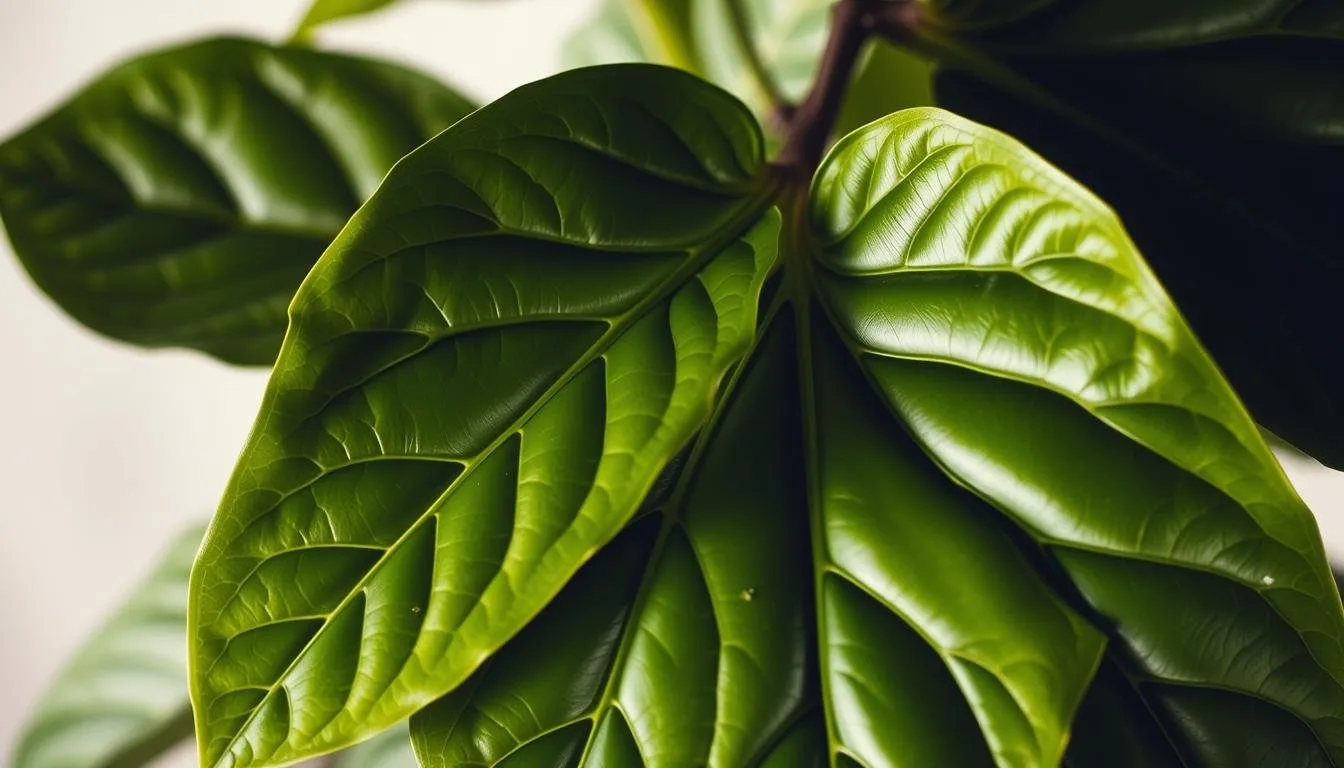
Fiddle leaf fig (Ficus lyrata) and rubber plant (Ficus elastica) are the two Ficus statement trees every design photo features — violin leaves versus glossy burgundy-green ovals. Both want bright rooms. Only one forgives a move across the living room without shedding half its canopy.
We have rotated a fiddle leaf fig 90 degrees for a photo and lost four leaves the following week — NC State on Ficus lyrata documents exactly this relocation sensitivity. The rubber plant in the same room did not notice. We have also kept both in drafty winter windows; rubber plant’s thick leaves held color while fiddle leaf fig developed brown edges and dropped lower foliage. Same genus, different temperament.
Compare species routines on the fiddle leaf fig hub and rubber plant hub. If you wanted Peperomia, not Ficus, see baby rubber plant — unrelated species, similar common name trap.
Same genus, different leaf strategy
Both are Ficus with milky latex sap — wear gloves when pruning if sensitive. Clemson HGIC on Ficus covers group light and watering patterns.
NC State on Ficus lyrata notes large violin-shaped leaves, bright indirect light, and leaf drop after relocation or environmental change.
NC State on Ficus elastica describes thick glossy leaves, bright indirect light, and allowing soil to dry partially between waterings.
Missouri Botanical Garden frames lyrata as an indoor tree habit. MOBOT on elastica notes cultivar range and latex context.
Bench ID: violin vs thick oval
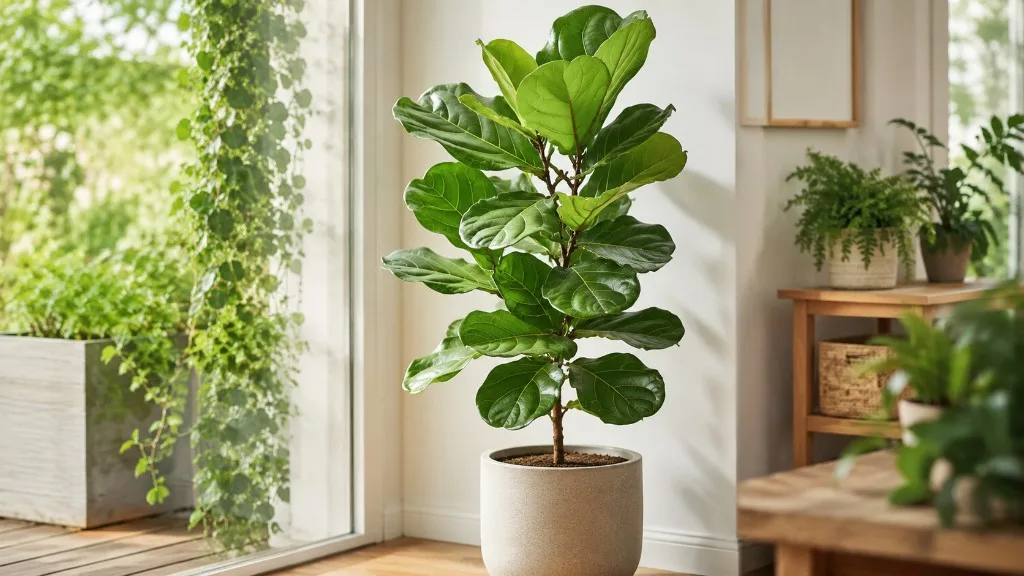
Fiddle leaf fig: large violin- or lyre-shaped leaves on a single tall trunk tree form. Leaves are thin relative to rubber plant — flexible, prominent veins, often 12–18 inches long indoors.
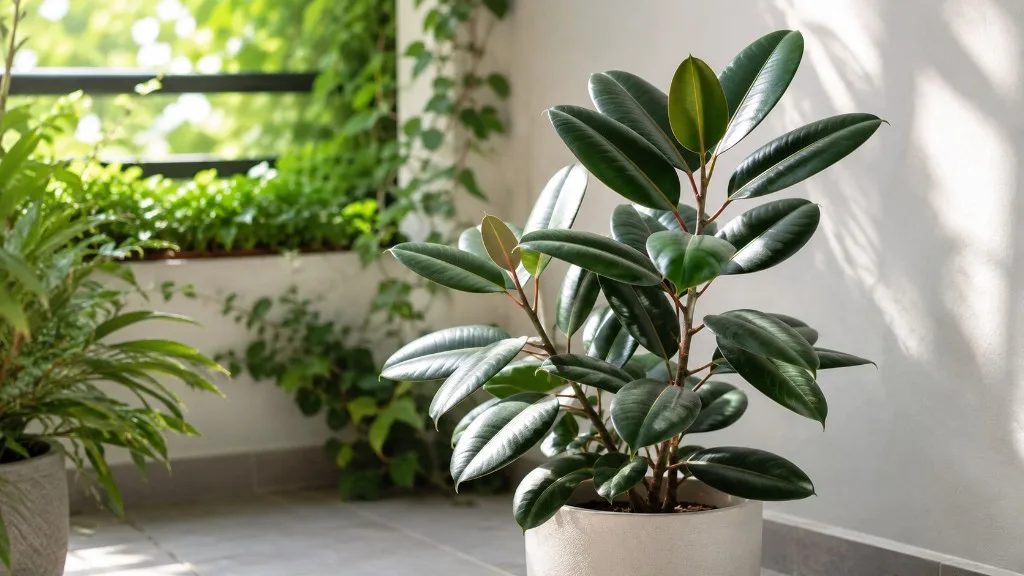
Rubber plant: thick glossy oval leaves, often with burgundy undertones on Burgundy cultivars. Bushier habit — multiple stems, shorter internodes. Leaves feel waxy and rigid.
If the leaf looks like a musical instrument, it is lyrata. If it looks like a polished leather paddle, it is elastica.
Light stability: the fiddle leaf fig trap
Fiddle leaf fig treats moving the pot like a crisis. Light angle changes, AC vent shifts, and seasonal sun path changes trigger leaf drop — sometimes bare lower stems before new growth fills in.
RHS on Ficus lyrata emphasizes warm, bright, draft-free conditions. Pick the brightest stable corner and leave it — literally. Compare fiddle leaf fig light.
Rubber plant also wants good light but recovers from minor environmental shifts without shedding half the canopy. Moderate indirect light works once acclimated. Compare rubber plant light.
Our rule for FLF: choose the spot before you unbox. Rotate only in 15-degree increments over weeks if you must — never spin it for Instagram in one afternoon.
Watering: steady moisture vs partial dry-down
Fiddle leaf fig hates swings
Ficus lyrata prefers steady moisture without soggy roots — dramatic wilt or drop follows alternating flood and drought. Check soil weekly; water when top inch is dry, soak, discard saucer water.
Rubber plant stores water in thick leaves
Rubber plant’s leaves are the reservoir — allow top inches to dry before soaking per NC State. Better match for forgetful waterers who still use drainage holes.
Winter: rubber plant often needs water every 2–3 weeks in a 10-inch pot; fiddle leaf fig may need weekly in the same room because thinner leaves transpire faster.
Sap, pruning, and skin contact
Both bleed white latex when cut. Wipe tools, avoid skin contact, prune in spring for shape. Rubber plant tolerates harder pruning for bushiness; fiddle leaf fig pruning is slower to refill with new leaves.
If you have latex sensitivity, treat both as hands-off plants. Sap on skin can irritate — not just pets.
Pet safety: ASPCA toxic for both
ASPCA lists fiddle leaf fig as toxic to cats and dogs.
ASPCA lists Indian rubber plant (Ficus elastica) as toxic.
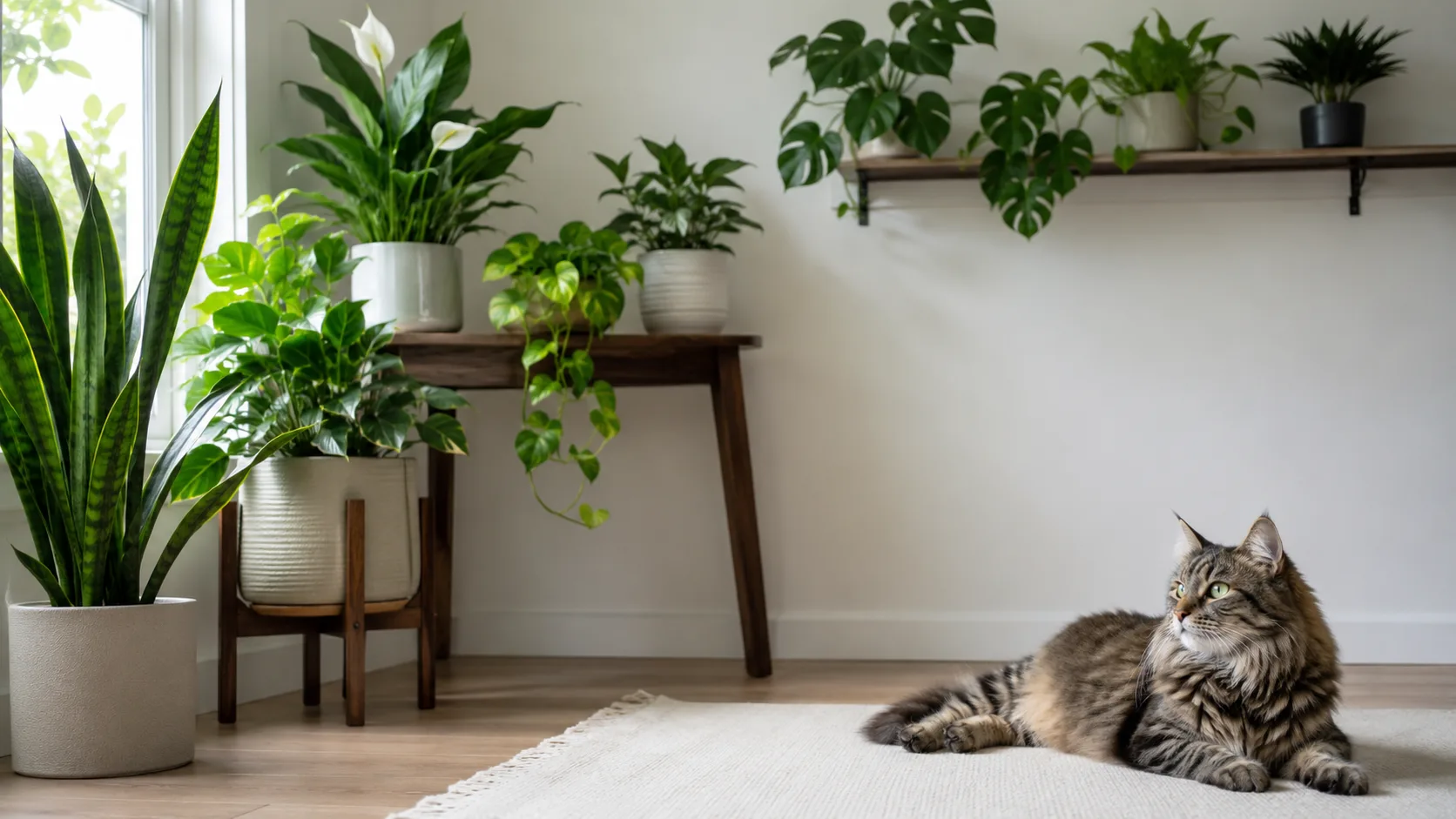
Sap can irritate mouth tissues if chewed. Floor-scale Ficus trees are within reach of dogs. Browse pet-safe houseplants if toxicity is non-negotiable.
Side-by-side comparison
| Factor | Fiddle leaf fig (F. lyrata) | Rubber plant (F. elastica) |
|---|---|---|
| Leaf shape | Large violin / lyre | Thick oval, often burgundy tones |
| Fuss factor | High | Moderate |
| Light | Bright indirect; stable | Bright to moderate indirect |
| Water | Evenly moist; hates swings | Partial dry-down between soaks |
| Relocation | Drops leaves easily | More stable |
| Humidity | Prefers moderate | Tolerates average rooms |
| Growth | Tall single trunk tree | Bushier; can stay shorter |
| Toxicity | Toxic | Toxic (latex) |
Which plant to choose
Design magazine violin leaves + stable bright corner: fiddle leaf fig — if you will not rearrange monthly.
Easier Ficus tree for first apartment: rubber plant.
You rearrange furniture often: rubber plant — or accept fiddle leaf fig leaf drop as the cost of design changes.
Dry winter air: rubber plant edges win; both appreciate humidity.
Pet household: neither.
Pot material for dry-down: see terracotta vs plastic pots — rubber plant benefits from terracotta in overwatering hands.
Beginner list ranking: rubber plant ranks higher than FLF in best indoor plants for beginners.
Winter, humidity, and draft management
Both are tropical — neither loves cold drafts from winter windows or AC blasts in summer. Fiddle leaf fig shows damage first: brown edges, lower leaf drop, stalled new growth.
Rubber plant’s thick cuticle buys more tolerance for average indoor humidity (30–40% RH). Fiddle leaf fig appreciates 40–50% or grouping with other plants — a humidifier near the FLF pot reduces winter edge burn in heated apartments.
Our winter setup: rubber plant stays on a bright sill away from the radiator. Fiddle leaf fig gets a humidifier tray and no repotting between October and March — root disturbance in low light triggers shed per NC State relocation notes.
Neither wants water ice-cold from the tap in winter. Room-temperature soak, empty saucer within 30 minutes.
Common mistakes we see in real homes
Rotating fiddle leaf fig for even growth without acclimating — triggers leaf drop. Rotate in small increments over weeks or accept asymmetry.
Buying rubber plant for a dark hallway — it survives lower light than FLF but still needs a real window within a few feet.
Confusing baby rubber plant (Peperomia) with Ficus elastica — completely different genus, care, and size. Check the tag.
Ignoring dust on rubber plant leaves — wipe monthly with a damp cloth. FLF’s large leaves collect dust faster and block light — both benefit from cleaning.
Related: fiddle leaf fig hub, rubber plant hub.
Conclusion
ID: violin leaves on a finicky tree → fiddle leaf fig. Thick glossy ovals → rubber plant.
Choose: stable bright spot + iconic FLF look → lyrata. Easier statement Ficus → elastica.
Care: bright indirect for both; fiddle leaf fig hates moves and watering swings more.
Follow the fiddle leaf fig hub or rubber plant hub — not a generic Ficus schedule that ignores relocation sensitivity.