Aloe Vera vs Haworthia: Care, Light, and Pet Safety Compared
Shopping for a small succulent? Compare aloe vera and haworthia by window light, pot size, watering dry-down, and which one ASPCA lists as pet-safe.

Aloe vera and haworthia share a nursery bench, a drought-tolerant reputation, and a rosette silhouette that makes beginners shrug and say “small spiky succulent.” That shrug costs you a year of care frustration. Aloe is a gel-filled light hog that eventually wants a south or west sill and a heavier pot. Haworthia is a compact banded rosette that can live on an east window or bright desk for years without outgrowing a 4-inch pot.
We have killed both the wrong ways — aloe stretched pale and floppy three feet from a “bright” living-room corner; haworthia turned mush in a dim cubicle because someone watered it every Friday like a fern. The fix is not a generic succulent schedule. It is matching window photons, pot volume, and pet risk to the plant you actually brought home. Use the aloe vera hub and haworthia hub for species-specific routines after you pick.
Why the succulent bench groups them together
Garden centers stack aloe and haworthia with echeveria and jade because all four tolerate missed water better than a peace lily. Marketing stops there. Botanically they are not close relatives: NC State Extension on Aloe vera places aloe in Asphodelaceae with thick medicinal leaves; NC State on Haworthia describes smaller Asparagaceae rosettes, often banded, with slow drought-adapted growth.
The practical split is scale and light appetite. NC State on aloe notes indoor plants reaching 2–3 feet in good conditions with offsets spreading the pot. Haworthia species stay desk-scale — Haworthia fasciata (zebra haworthia) is the classic 4-inch rosette you see labeled “zebra plant.” If your goal is a harvestable gel leaf on a sunny sill, you are shopping aloe. If your goal is a pet-safer miniature that tolerates the window your cat already owns, haworthia wins before we talk soil mix.
Tell them apart in sixty seconds at the nursery
Tags lie. “Succulent assortment” pots are where aloe pups and haworthia offsets get mixed. Run three checks before checkout — no magnifying glass required.
The thickness and splay test
Pick up the pot and look from the side. Aloe leaves are thick, smooth, and triangular, filled with gel. Mature leaves splay outward and upward like an open fan, not a tight fist. Haworthia leaves are shorter, more upright, and packed into a dense rosette — the whole plant looks like a striped pinecone sitting in soil.
If you can flex a leaf gently (do not snap it in the store), aloe feels rubbery and water-heavy. Haworthia feels firmer and more leaf-chip than water balloon. That gel reservoir is why aloe survives longer drought in bright light — and why haworthia rots faster when you overwater in a dim room.
Banded windows vs smooth gel leaves
Zebra haworthia (Haworthia fasciata) shows white horizontal bands on dark green leaves — the ID feature people remember. Many haworthias also have translucent leaf tips (“windows”) that glow when backlit. Aloe leaves are plain green or gray-green, sometimes with soft spots, but not zebra-striped.
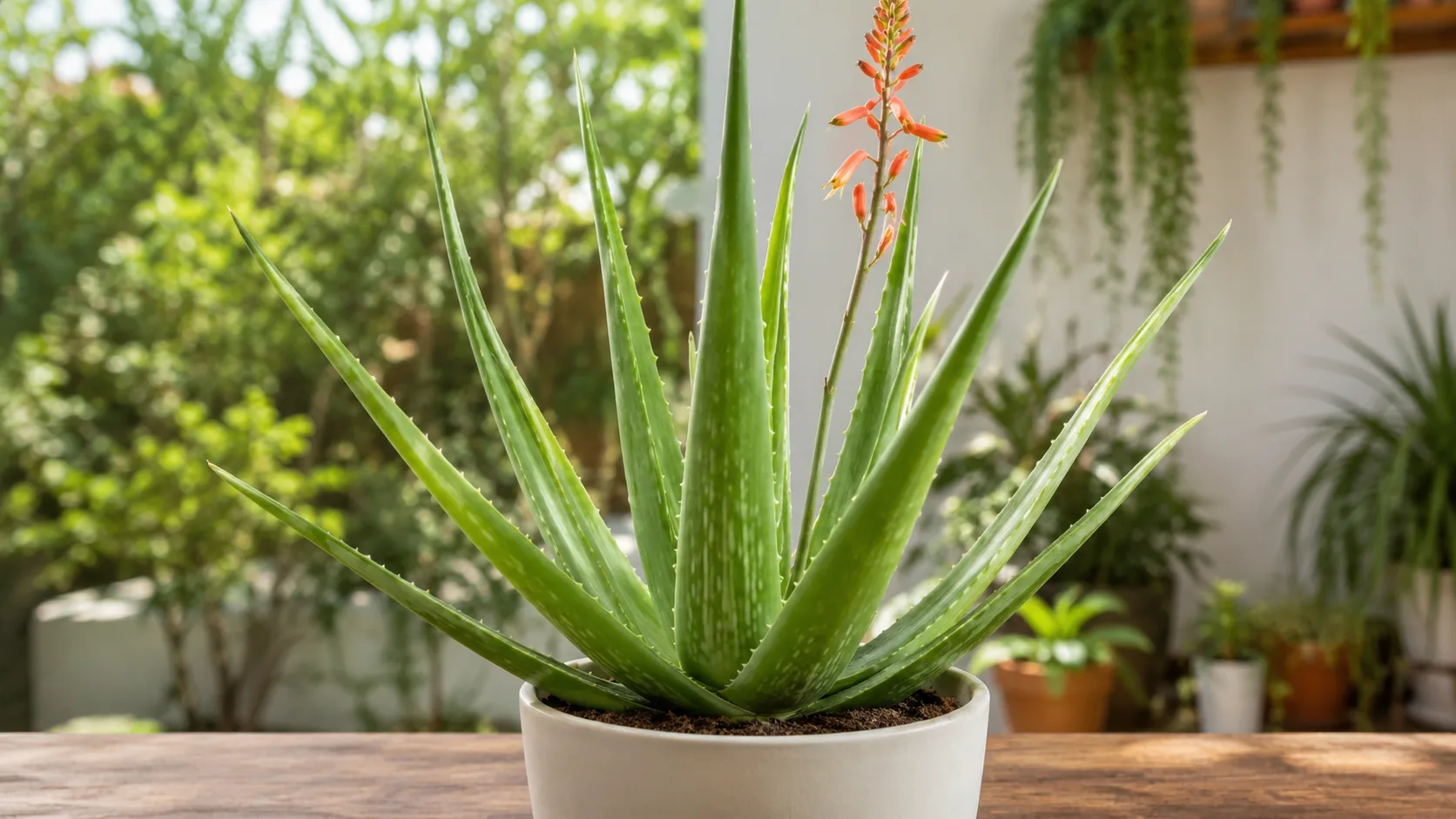
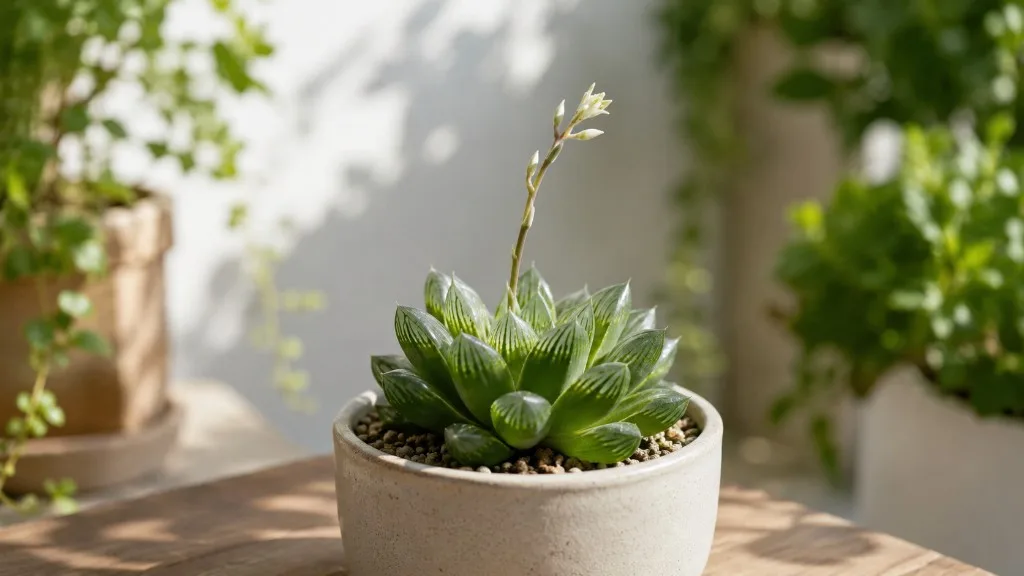
Aloe’s smooth, gel-filled leaves are the harvestable part people buy the plant for — external gel use only, with the toxicity caveats below. Haworthia is ornamental only; there is no gel harvest, and chewing any houseplant can still upset a pet’s stomach even when ASPCA lists the species non-toxic.
Pot size on the shelf is a clue
Nurseries often sell haworthia in 3–4 inch pots and aloe in 4–6 inch pots because aloe already outgrew the haworthia footprint at production time. A “small succulent” in a gallon pot with leaves longer than your hand is almost certainly aloe, not haworthia.
Aloe vera wants a real window
Aloe vera culture from NC State calls for full sun to partial shade outdoors and, indoors, very well-drained soil with the mix completely dry between waterings. UW–Madison Extension echoes bright light — weak light is the number-one reason aloe fails in apartments.
Light, stretch, and leaf flop
In insufficient light, aloe etiolates: internodes stretch, leaves thin, the rosette flops instead of standing. We see this constantly on aloe kept “near” a north window across the room. If your brightest spot is east or four feet from a south window, haworthia is the better buy. If you have direct sun on the sill for several hours — south or west — aloe will stay compact and firm.
Compare window placement detail on aloe vera light versus haworthia light.
Gel storage changes your watering calendar
Aloe’s large leaves store water. In bright light, that means longer dry-down between soaks — often two to three weeks in winter, shorter in summer when the pot dries fast. Clemson HGIC on indoor succulents stresses drainage holes and gritty mix for all succulents; aloe still wants more total light per drink than haworthia.
Water aloe when the lower half of the pot is dry, then soak until water exits the drainage hole. Never let it sit in a full saucer. See aloe vera watering for season-by-season timing.
Repotting and offsets over time
Plan to upsizes aloe every year or two when it is happy — offsets (“pups”) fill the pot rim. Missouri Botanical Garden on Aloe vera notes the species spreads by offsets and can move outdoors in summer in temperate climates. Haworthia can stay in the same small pot for years with slow root growth. If you need a plant that stays mug-sized, haworthia is the deliberate choice.
Haworthia survives the desk your aloe would hate
NC State on haworthia lists part shade to shade tolerance and small rosettes — language that maps to east windows, bright desks, and many office fluorescents in real homes. Missouri Botanical Garden on Haworthia fasciata describes the zebra species as a common indoor windowsill plant.
East windows and office-bright light
Haworthia tolerates lower photon budgets than aloe. It will survive a north-facing room longer — though it will not thrive in a closet. Give it bright indirect light when you can; banding and tight rosettes tighten up with more light. In a cube farm with only overhead fluorescents, haworthia holds color while aloe would slowly pale and stretch.
Small roots, fast rot if you water on autopilot
Here is the haworthia trap: because it is small and drought-tolerant, people water it like a tropical foliage plant. In low light, evaporation is slow. The small root zone stays wet. Haworthia rots from the center while outer leaves still look fine for a week.
Let the entire pot dry before soaking. In a dim office, that might mean three to four weeks between water in winter. If you cannot trust yourself to check soil, use a terracotta pot and read terracotta vs plastic pots for dry-down behavior. Full watering guide: haworthia watering.
Pet safety is not a tie — read the ASPCA listings
This is the decision that should not rely on forum rumors. For cats and dogs, the two plants land on opposite sides of the ASPCA database.
Aloe: saponins and anthraquinones
ASPCA lists Aloe vera as toxic to dogs, cats, and horses. Toxic principles: saponins and anthraquinones. Documented clinical signs include vomiting, lethargy, and diarrhea (ASPCA notes vomiting is not reported in horses). The listing also states the gel is considered edible — which confuses people — but chewing the leaf tissue is what poison-control cases involve. Do not assume gel extraction makes the plant safe on a windowsill a cat can reach.
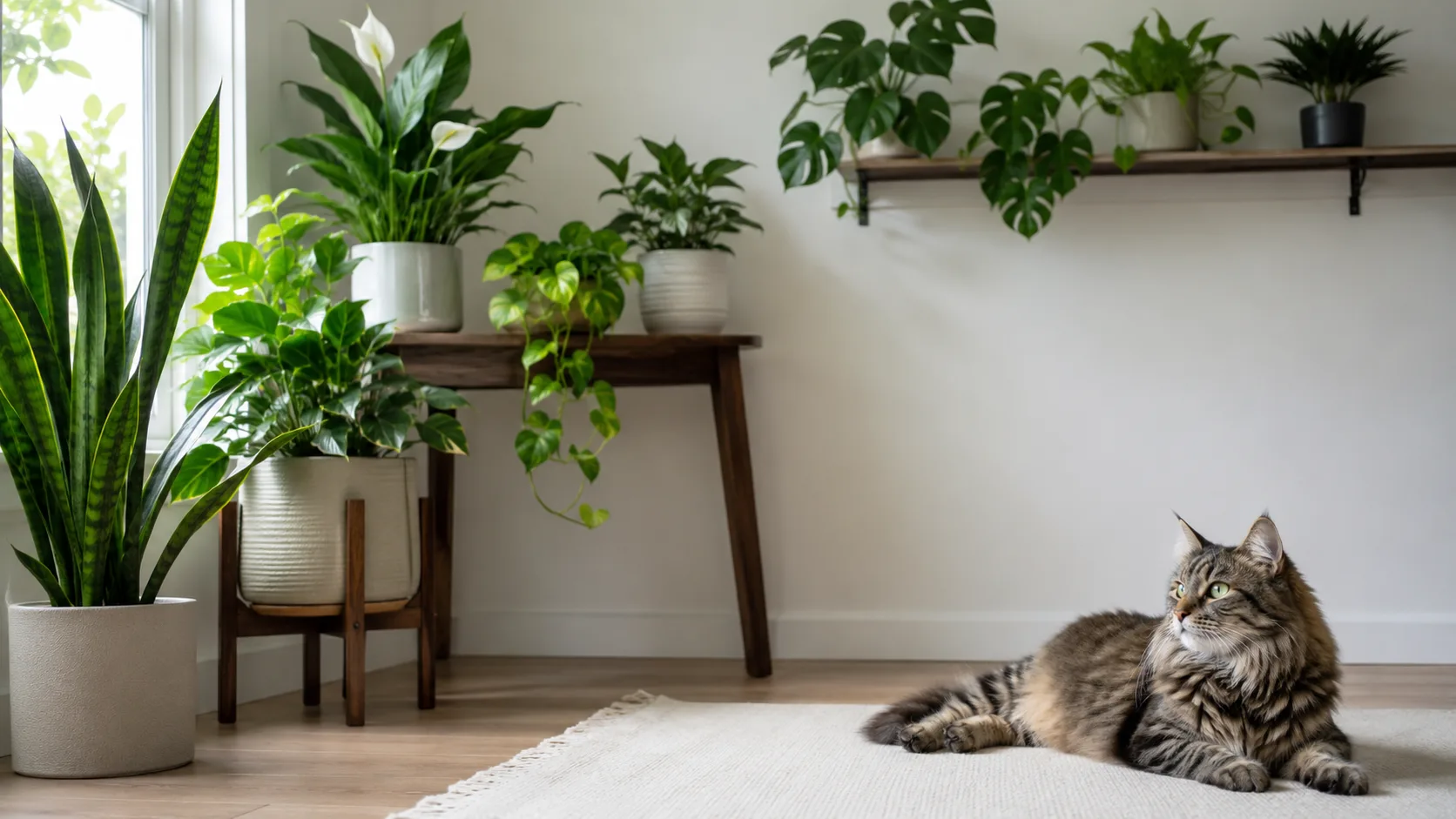
If you have nibblers, do not buy aloe unless it lives in a closed room or hanging shelf the pet cannot access. Browse pet-safe houseplants for alternatives that are not toxic-listed.
Haworthia: non-toxic listing with realistic caveats
ASPCA lists Haworthia species as non-toxic to dogs and cats, with non-toxic principles on the listing. That is the strongest reason beginners with cats choose haworthia over aloe — documented listing, not grocery-store folklore.
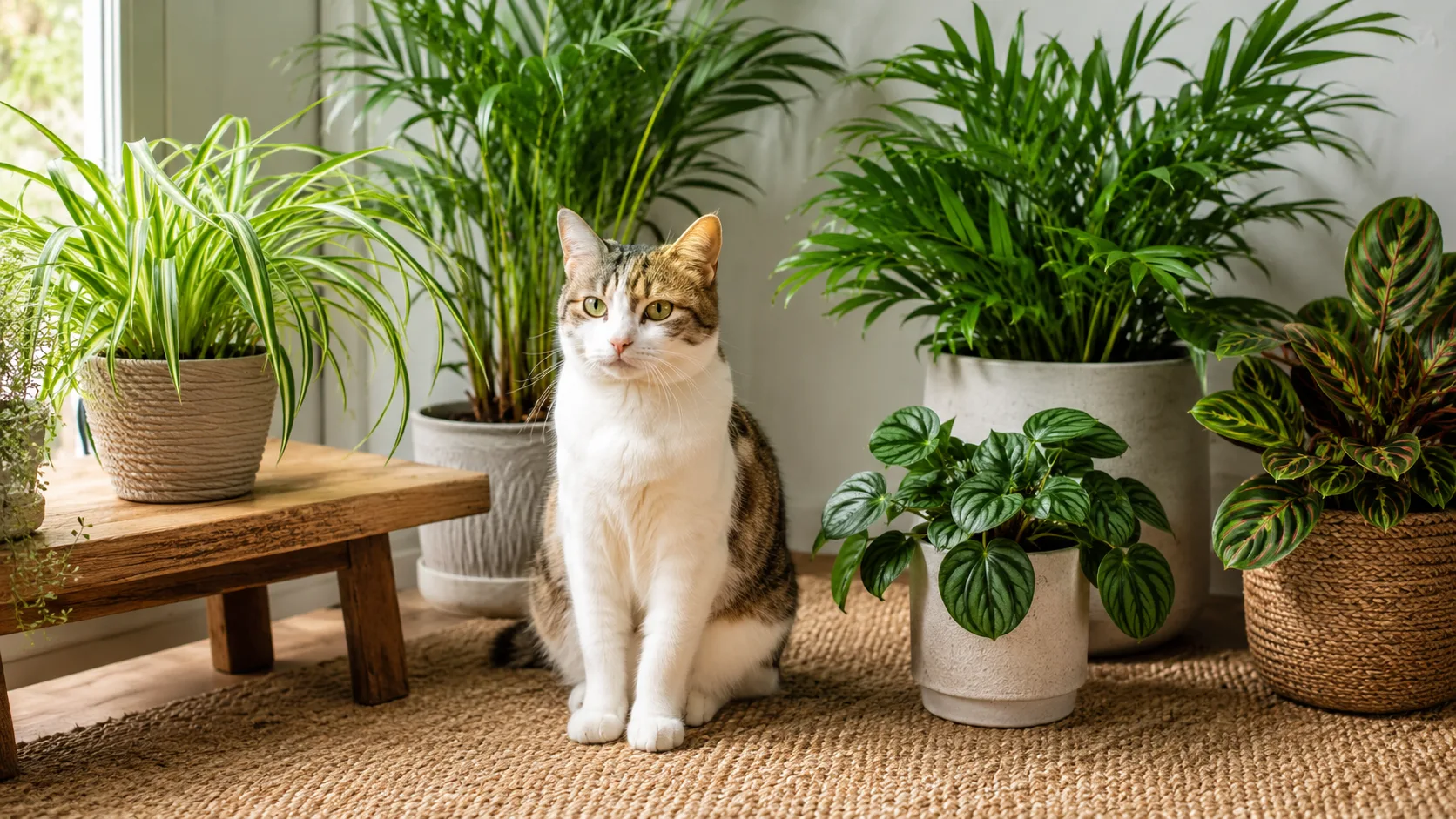
Non-toxic is not a salad invitation. Any chewed plant material can cause mild GI upset. Confirm the ID on the tag — mislabeled aloe pups have shipped in haworthia-looking pots before. When in doubt, treat the plant as toxic until identified.
Side-by-side care comparison
| Factor | Aloe vera | Haworthia |
|---|---|---|
| Typical indoor size | Medium to large (2–3 ft over time) | Small, desk-scale |
| Leaf feel | Thick, gel-filled, splaying | Compact rosette; often banded |
| Light | Bright; tolerates some direct sun | Low to bright indirect |
| Water | Soak; long dry-down in bright light | Soak; full dry-down; slower evaporation in dim light |
| Growth rate | Moderate with light | Slow |
| Cold sensitivity | Below ~50°F (10°C) | Similar — protect from drafts |
| ASPCA cats/dogs | Toxic (saponins, anthraquinones) | Non-toxic listing |
| Bonus use | External gel from leaves | Ornamental |
Match the plant to your room, not your Pinterest board
Buy aloe if you have a bright south or west window, want harvestable gel for external use, and can repot as offsets multiply. Start at the aloe vera hub.
Buy haworthia if you need a small footprint, have east or office-bright light, or pets that sample leaves — ASPCA non-toxic listing versus aloe’s toxic listing is the tiebreaker. Start at the haworthia hub.
Skip both if your only spot is a dark hallway and you will not add a grow light. Buy a snake plant for drought, or a ZZ plant for dim offices — then read ZZ plant vs snake plant because those two solve a different problem than haworthia.
Forgotten watering in a bright room: aloe’s gel reserves buy more time. Forgotten watering in a dim office: haworthia survives smaller mistakes only if soil actually dries — rot beats drought here.
For pot and mix choices shared by both, see terracotta vs plastic pots and beginner-friendly picks in best indoor plants for beginners.
Conclusion
At the bench: thick gel leaves that splay → aloe. Tight banded rosette in a tiny pot → haworthia. At the window: real sun → aloe. East sill or desk → haworthia. At the pet gate: ASPCA toxic → aloe out of reach. ASPCA non-toxic → haworthia is the small succulent we recommend for cat homes.
Drainage holes and gritty mix are non-negotiable for both. After that, follow the aloe vera hub or haworthia hub — not one shared “succulent” calendar that treats them as interchangeable.