ZZ Plant vs Snake Plant: Watering, Light, and Pet Safety Compared
Two drought-tolerant classics, different shapes. See how ZZ plant and snake plant differ on water, space, growth, and why neither is pet-safe per ASPCA.

ZZ plant (Zamioculcas zamiifolia) and snake plant (Dracaena trifasciata, formerly Sansevieria) share the same reputation: indestructible, fine in offices, forgive drought. That reputation hides a split beginners only learn after a soggy pot. ZZ stores water in potato-like rhizomes under glossy compound leaves and rots when cold wet mix sits around those rhizomes for weeks. Snake plant stores water in thick strap leaves and survives longer dry spells with a narrower footprint — but ASPCA lists both as toxic to cats and dogs.
We have kept both in the same dim office and the same bright living room. ZZ looked lush after a two-week vacation; snake plant looked identical after a month without water. We have also killed a ZZ by “being nice” with weekly water in winter — stems went yellow, rhizomes turned mush when we finally unpotted. The choice is shape, footprint, how dry you run the pot, and whether pets can reach either plant — not which one is “easier.”
Species routines live on the ZZ plant hub and snake plant hub. If pet safety is the filter, see spider plant vs snake plant for a drought-tolerant alternative on the non-toxic side.
Same marketing label, different survival hardware
Retailers file both under “low maintenance” because neither dies the week you forget a watering. Mechanically they solve drought differently. NC State on Zamioculcas zamiifolia describes waxy compound leaflets on arching stems emerging from thick underground rhizomes that store water. NC State on Dracaena trifasciata describes stiff strap-shaped leaves in rosettes, extreme drought tolerance, and slow spread by rhizomes.
ZZ is an Araceae relative (think peace lily family without the drama). Snake plant is Asparagaceae — closer to agave habits than to ZZ botanically. Tags that treat them as interchangeable on watering calendars cause rot on one and barely affect the other.
What the Latin names actually describe
ZZ rhizomes feel like potatoes underground
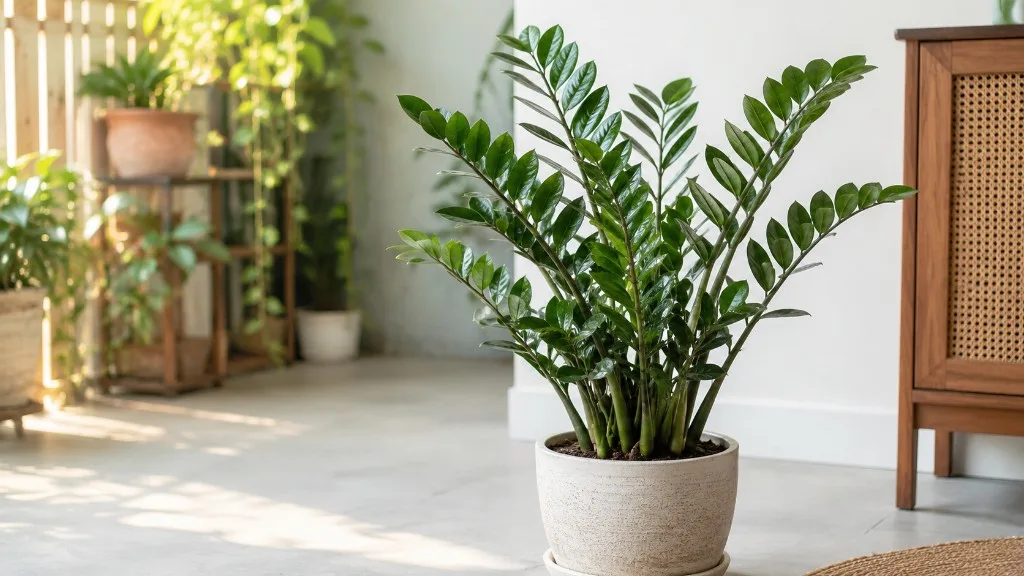
Repot a mature ZZ and you meet white to light-brown rhizomes the size of small potatoes clustered under the soil line. Those rhizomes are the drought battery — Missouri Botanical Garden on Zamioculcas notes bulbous fleshy rhizomes that make the plant highly drought tolerant. Above ground, each stem carries 6–8 pairs of glossy elliptic leaflets per NC State’s quick ID hints.
When ZZ fails, it often fails at the rhizome while leaves still look green for days. Cold + wet + low evaporation = hidden rot.
Snake plant leaves are the water tank
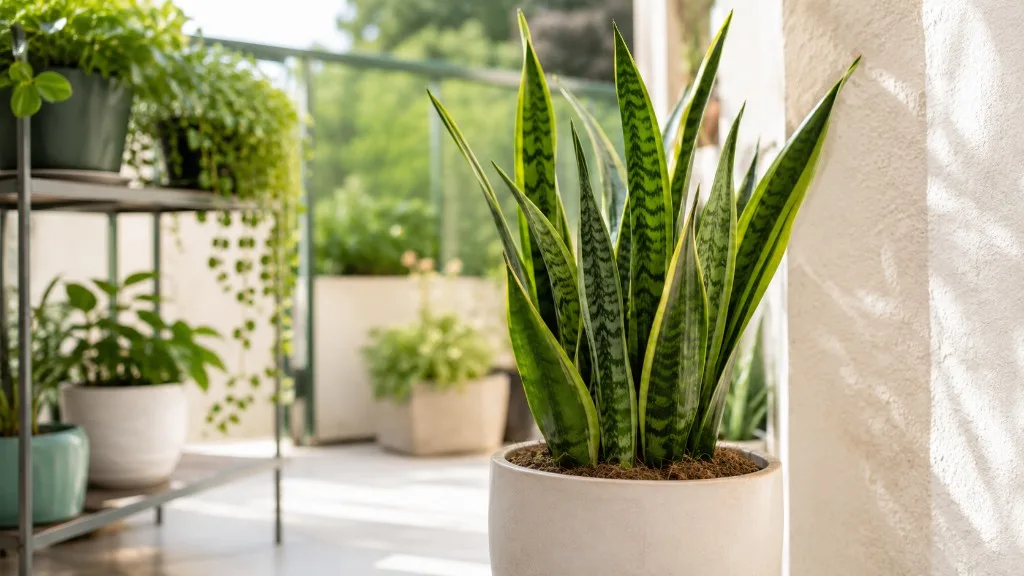
Snake plant skips the underground show. Each strap leaf is a water reservoir — squeeze a healthy leaf (gently) and it feels solid, almost rigid. Clemson HGIC on snake plant emphasizes letting soil dry thoroughly between waterings; many growers water monthly or less in winter.
Underwatering stress on snake plant shows as wrinkled or curled leaves before collapse. Overwatering shows as soft base rot — but the dry-down runway is longer than ZZ in the same light.
Bench ID without reading the tag
Stand the pots side by side. ZZ: arching stems, compound leaflets (many small leaves per stem), glossy waxy surface, bushy silhouette that widens over time. Snake plant: single thick straps per leaf, upright rosette or column, often variegated yellow edges on Laurentii, narrowest footprint in the aisle.
If the plant looks like a palm frond made of plastic — that’s ZZ. If it looks like swords stuck in gravel — that’s snake plant. Cultivars matter: bird’s-nest snake plants stay short and bowl-shaped; cylindrical snake plants grow vertical pipes. ZZ stays arching unless you prune — which most owners never need to do.
Watering is where both plants actually die
Both tolerate drought. Both die from overwatering more often than underwatering. The failure mode differs.
ZZ rot in cold wet mix
NC State on ZZ recommends watering routinely but allowing soil to dry between waterings — wet feet are not tolerated. In practice that means touch the soil, not the calendar. ZZ in a dim office with AC can hold moisture three weeks in winter. Watering every Friday because “it’s low maintenance” is how rhizomes rot.
Yellowing stems and black mushy rhizomes at repot time are the postmortem we see most. Compare ZZ plant watering for season adjustments.
Snake plant drought runway
Snake plant forgives longer drought once leaves are charged. UW–Madison Extension on snake plant describes drought tolerance and propagation by division — the plant is built for neglect after soil dries. If you water on autopilot without checking, snake plant usually survives longer than ZZ — but soggy mix still rots the base.
Full guide: snake plant watering.
Winter schedules that work in real homes
Our winter rule for ZZ in moderate light: water when the pot feels light and soil is dry to the bottom third — often every 3–4 weeks. Snake plant in the same room: 4–6 weeks is common, sometimes longer in cool rooms. Summer: both speed up when AC is off and sun heats the pot. Neither wants saucer water sitting underneath.
If you already killed a “bulletproof” plant by overwatering, snake plant gives more warning time — but fix the habit (drainage holes, discard runoff) rather than relying on tolerance.
Light, growth, and the office test
Both survive low light better than most houseplants. Neither grows much in deep shade.
NC State on ZZ notes ZZ will grow in very low light, even fluorescent-only rooms, but does best with bright indirect sun. In a fluorescent office, ZZ often pushes new glossy stems over a season — visible growth that makes owners think they are doing everything right while they overwater.
Snake plant stays alive in a north room but barely adds leaves — fine for a hallway accent, frustrating if you wanted a fast filler. Bright indirect light speeds both without scorching leaves; avoid hot midday sun on ZZ leaflets (NC State warns scalding in direct sun).
Footprint and design: hallway vs side table
Snake plant wins narrow spaces — 6-inch pots fit desk corners, toilet tanks, and entry tables. Cylindrical and bird’s-nest forms stay tighter than ZZ’s natural bush.
ZZ plant reads softer and fuller — better on a side table, plant stand, or office floor where width is fine. Mature ZZ reaches 2–4 feet height and spread per NC State; snake plant height depends on cultivar but often stays vertical rather than wide.
For a modern tropical look without sun, ZZ’s gloss does the job. For architectural vertical lines, snake plant is the default.
Pet households: document both ASPCA listings
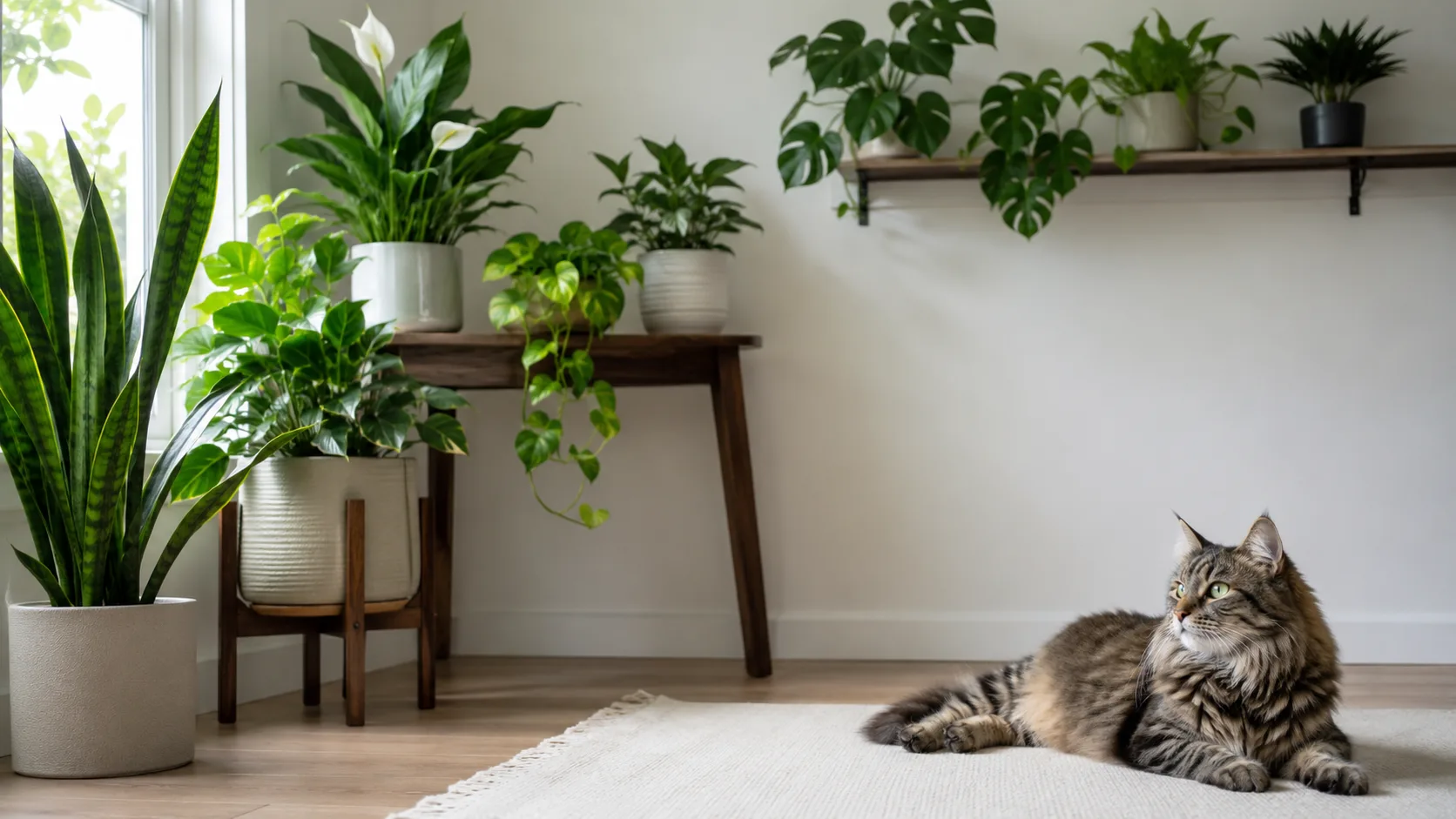
Neither plant belongs in a home where cats or dogs chew leaves. This is not negotiable nuance — both have ASPCA toxic listings.
ZZ plant calcium oxalate crystals
ASPCA lists ZZ plant as toxic to cats and dogs. All parts contain calcium oxalate crystals — the same irritant class behind many aroid poisonings. NC State notes medium toxicity to cats and dogs. Expect oral irritation, drooling, vomiting, and difficulty swallowing if ingested — standard calcium oxalate presentation. Size of pet and amount chewed matter; call ASPCA Animal Poison Control at (888) 426-4435 or your vet if ingestion happens.
Snake plant ingestion signs
ASPCA lists snake plant (Dracaena species) as toxic to cats and dogs. Documented clinical signs include nausea, vomiting, and diarrhea. NC State lists low-severity poison characteristics — low severity does not mean pet-safe; it means do not let pets treat it as grass.
If you need drought tolerance plus ASPCA non-toxic listing, pivot to spider plant or browse pet-safe houseplants. Do not assume “hard to kill” equals “safe for chewers.”
Propagation and long-term cost
Both propagate by division — split offsets at repot. Snake plant also roots from leaf cuttings (slow but reliable). ZZ leaf cuttings work but take months to push rhizomes; division is faster.
Long-term, snake plant often multiplies offsets in bright light, filling a pot horizontally. ZZ multiplies rhizomes underground, gradually needing wider pots. Neither is expensive to maintain; snake plant wins if you want free plants from leaf sections without buying another pot.
Which one to bring home
| Factor | ZZ plant | Snake plant |
|---|---|---|
| Leaf type | Glossy compound leaflets | Thick upright straps |
| Habit | Arching stems from rhizomes | Rosette or column |
| Light | Low to bright indirect | Low to bright indirect |
| Water tolerance | Dry down deeply; rot if wet | Longer drought between soaks |
| Growth in office fluorescent | Often pushes new stems | Survives; slow growth |
| Footprint | Bushy, wider over time | Narrow vertical |
| ASPCA cats/dogs | Toxic (calcium oxalate) | Toxic (nausea, vomiting, diarrhea) |
| Best for | Soft glossy accent in dim room | Tight corner, maximum drought |
Narrow vertical hallway: snake plant — especially cylindrical forms.
Dim office that should look lush: ZZ plant — if you commit to dry-down checks.
Month-long travel, no sitter: snake plant edges ZZ on extreme drought.
Pet chewers: neither — see pet-safe houseplants.
Already rotted succulents by overwatering: snake plant first, but install drainage and toss the calendar.
Related: ZZ plant hub, snake plant hub, terracotta vs plastic pots, best indoor plants for beginners.
Conclusion
ID at the bench: glossy compound arching leaflets on thick stems → ZZ. Upright strap rosette → snake plant. Choose by room: soft bushy tropical in fluorescent light → ZZ. Narrow drought champion for corners and travel → snake plant. Care: drainage holes mandatory; underwater beats overwater for both. Pets: ASPCA toxic listings for both — no false sense of safety because the plant survived your vacation.
Follow the ZZ plant hub or snake plant hub for cultivar-specific watering — not one generic succulent schedule that ignores rhizome rot versus leaf storage.