Spider Plant vs Snake Plant: Trailing Freshness vs Vertical Drought
Spider plant vs snake plant compared by watering, pet safety, light, propagation, and care — pick the right easy houseplant for your home.
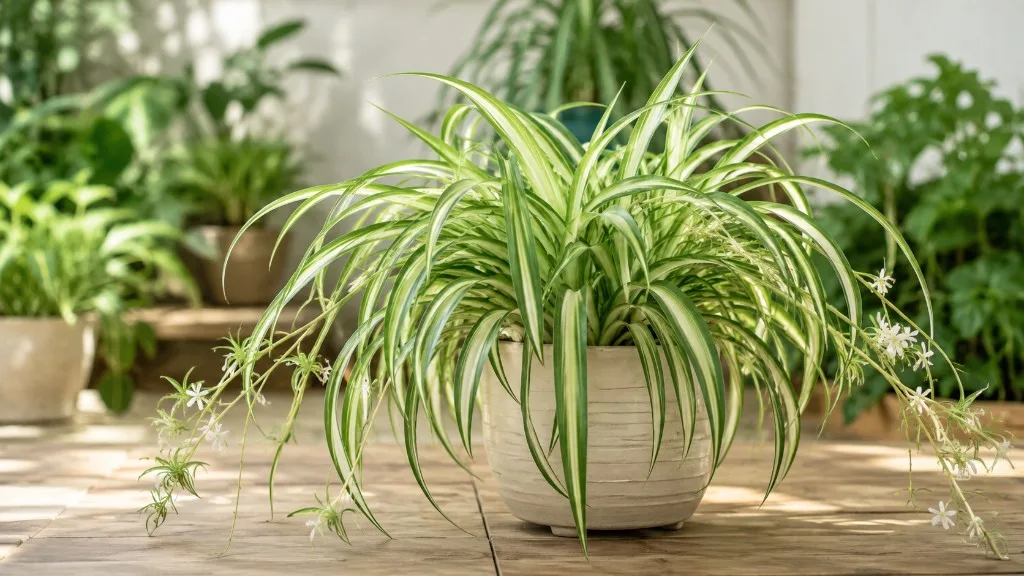
Spider plant (Chlorophytum comosum) and snake plant (Dracaena trifasciata) both land on “easy plant” lists — but they solve different problems. Spider plant brings arching variegated leaves, baby plantlets, and pet-safe peace of mind. Snake plant brings vertical drought tolerance and dim-corner survival at the cost of toxicity.
We have hung spider plants in bright kitchens where plantlets rooted in water jars within a week, and parked snake plants in north-facing hallways that went six weeks without a drop. The spider plant browned its tips when we treated it like the snake plant. The snake plant looked identical after a month of drought. The lesson is not which is “easier” — it is which failure mode you can live with: brown tips and a thirsty trailer versus toxic straps that forgive drought.
Use the spider plant hub and snake plant hub. For drought-only comparison without the pet split, see ZZ plant vs snake plant.
Same aisle, opposite survival hardware
Retailers file both under “low maintenance” because neither dies the week you forget them. Mechanically they are unrelated. NC State on Chlorophytum comosum describes arching variegated leaves, plantlets on stolons, bright indirect light, and evenly moist well-drained soil. NC State on Dracaena trifasciata describes upright drought-tolerant straps, low-light tolerance, and dry-down between waterings.
Spider plant is an Asparagaceae relative with soft, non-succulent leaves that transpire steadily. Snake plant stores water in thick leaf tissue and rhizomes — closer to a desert mindset. Watering both on the same Friday calendar is how spider plants get crispy and snake plants survive anyway.
Bench ID in sixty seconds
Stand the pots side by side before you trust the tag.
Spider plant: arching fountain of green-and-white strap leaves, often with baby plantlets (“spiderettes”) dangling on long thin runners. Leaves are flexible, not rigid. The whole plant weeps outward from a central crown.
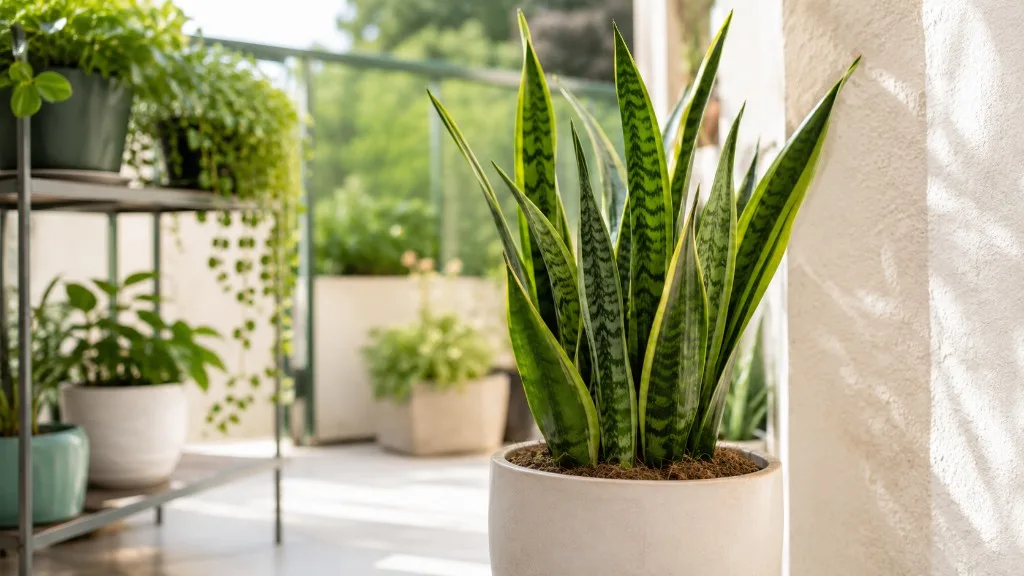
Snake plant: stiff upright straps in a rosette or column — no runners, no babies on strings. Leaves feel solid when you press gently. Variegated cultivars like Laurentii show yellow leaf margins.
If something is hanging over the pot edge on a wire-thin stolon, it is spider plant. If everything points at the ceiling like blades, it is snake plant.
Watering is where beginners split them
This is the practical divide — not light, not fertilizer.
Spider plant wants regular moisture, not swamp
Spider plant is not a succulent. NC State recommends evenly moist soil. In our homes that means: let the top inch dry, then soak until water exits the drainage hole. Leave it bone dry for three weeks and tips go brown — sometimes the whole leaf band crisps before you notice.
Winter in heated rooms: spider plant often needs water every 7–10 days in a 6-inch hanging basket. Summer with AC off: faster. Fluoride and dry air also brown tips — distilled or rainwater helps if tips persist despite correct watering. Full routine: spider plant watering.
Snake plant wants drought between soaks
Clemson HGIC on snake plant emphasizes letting soil dry thoroughly — root rot follows soggy mix. UW–Madison Extension describes extreme drought tolerance; many growers water monthly or less in winter.
Our winter rule for snake plant in moderate light: water when the pot feels light and soil is dry to the bottom third — often 4–6 weeks. Overwatering shows as soft base rot; underwatering shows as wrinkled leaves first. Guide: snake plant watering.
Do not share a calendar
If you already grow one well, do not copy the other’s schedule. We see spider plants in snake-plant-dry pots (brown tips everywhere) and snake plants in spider-plant-wet pots (still alive, surprisingly — until they are not).
Light, plantlets, and the hanging-basket test
Spider plant produces spiderettes in bright indirect light — the free propagation feature that makes it a gift-plant classic. Missouri Botanical Garden on Chlorophytum notes the arching habit and ease of indoor culture. In a dim corner, spider plant survives but thins — fewer plantlets, paler leaves.
Snake plant tolerates lower light than spider plant and stays upright without stretching as dramatically. Trade-off: it barely grows in a north room. Fine for a hallway accent, not for filling a basket fast.
For a bright kitchen hanging basket with babies to root in water, spider plant wins. For a dim entry table that only gets watered when you remember, snake plant wins — if pets cannot reach it.
Propagation: free babies vs division patience
Spider plant plantlets root in water or soil with minimal fuss — snip, float, pot when roots are an inch long. One mature spider plant can supply a dozen gifts per season.
Snake plant propagates by division (split offsets at repot) or leaf cuttings (slow but reliable). No dangling babies. If propagation joy matters, spider plant is the hobby.
Pet households: this is not a tie
The clearest split in this comparison. ASPCA lists spider plant as non-toxic to cats and dogs. ASPCA lists snake plant as toxic with nausea, vomiting, and diarrhea possible if ingested.
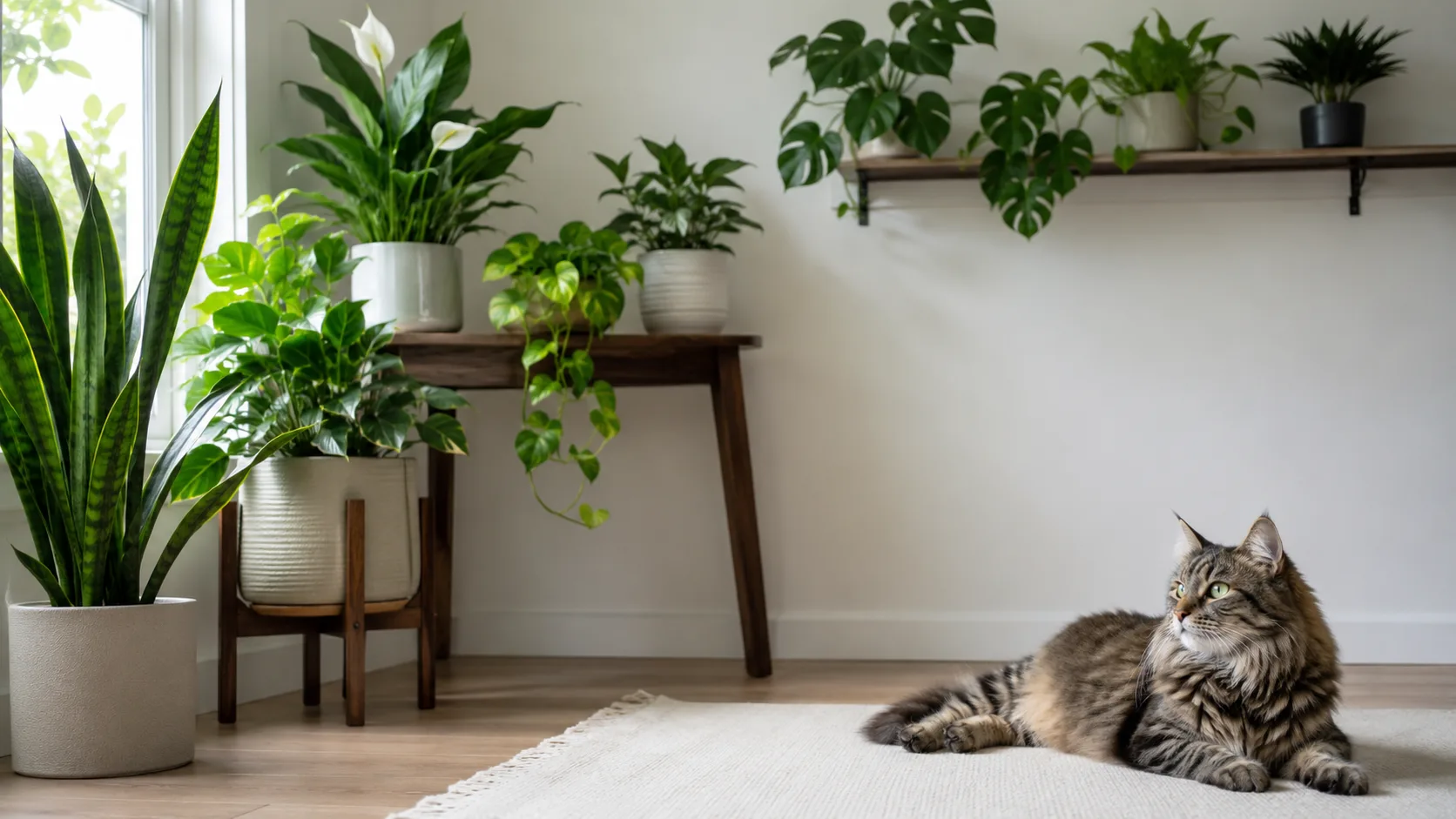
Non-toxic does not mean salad. Cats that chew spider plant may still get mild stomach upset in quantity — but you are not dealing with documented toxicity listing. Snake plant carries documented toxic listing — keep it on a high shelf or in a room pets cannot access.
For chewers, spider plant is the pick. Browse pet-safe houseplants if you need more options. Do not assume “hard to kill” equals “safe for cats.”
Side-by-side comparison
| Factor | Spider plant | Snake plant |
|---|---|---|
| Habit | Arching; produces plantlets | Upright rosette / column |
| Light | Bright to moderate indirect | Low to bright indirect |
| Water | Evenly moist; tips brown if dry | Dry thoroughly between soaks |
| Humidity | Average OK; tips crisp in dry air | Tolerates dry air |
| Propagation | Plantlets root easily | Division; leaf cuttings |
| Pet safety | ASPCA non-toxic | ASPCA toxic |
| Best display | Hanging basket, shelf | Floor corner, desk |
Which plant to bring home
Cats that chew leaves: spider plant — the only easy plant on this list with ASPCA non-toxic listing.
Weeks-long travel, no plant sitter: snake plant — if pets cannot reach it.
Free babies to share: spider plant plantlets on stolons.
Narrow hall vertical accent: snake plant — especially cylindrical forms.
Bright kitchen hanging basket: spider plant.
Both in one home: possible — separate pots, separate watering calendars, separate pet zones.
Already killed a plant by overwatering: snake plant forgives longer drought; spider plant needs more attention to soil moisture.
Related: spider plant hub, snake plant hub, ZZ plant vs snake plant, spider plants Chlorophytum definition.
Conclusion
ID at the bench: arching plantlets on stolons → spider plant. Upright thick straps → snake plant.
Choose: pet-safe trailing propagator → spider plant. Drought + dim corner (no pet chewers) → snake plant.
Care: spider plant wants regular moisture; snake plant wants rare soaks. Never one shared calendar.
Follow the spider plant hub or snake plant hub — not a generic “easy plant” schedule that ignores pet safety and watering opposites.