Water Propagation vs Soil Propagation for Houseplants
Compare water vs soil propagation for houseplants: visibility, rot risk, transition shock, third media, and which plant groups fit each method.
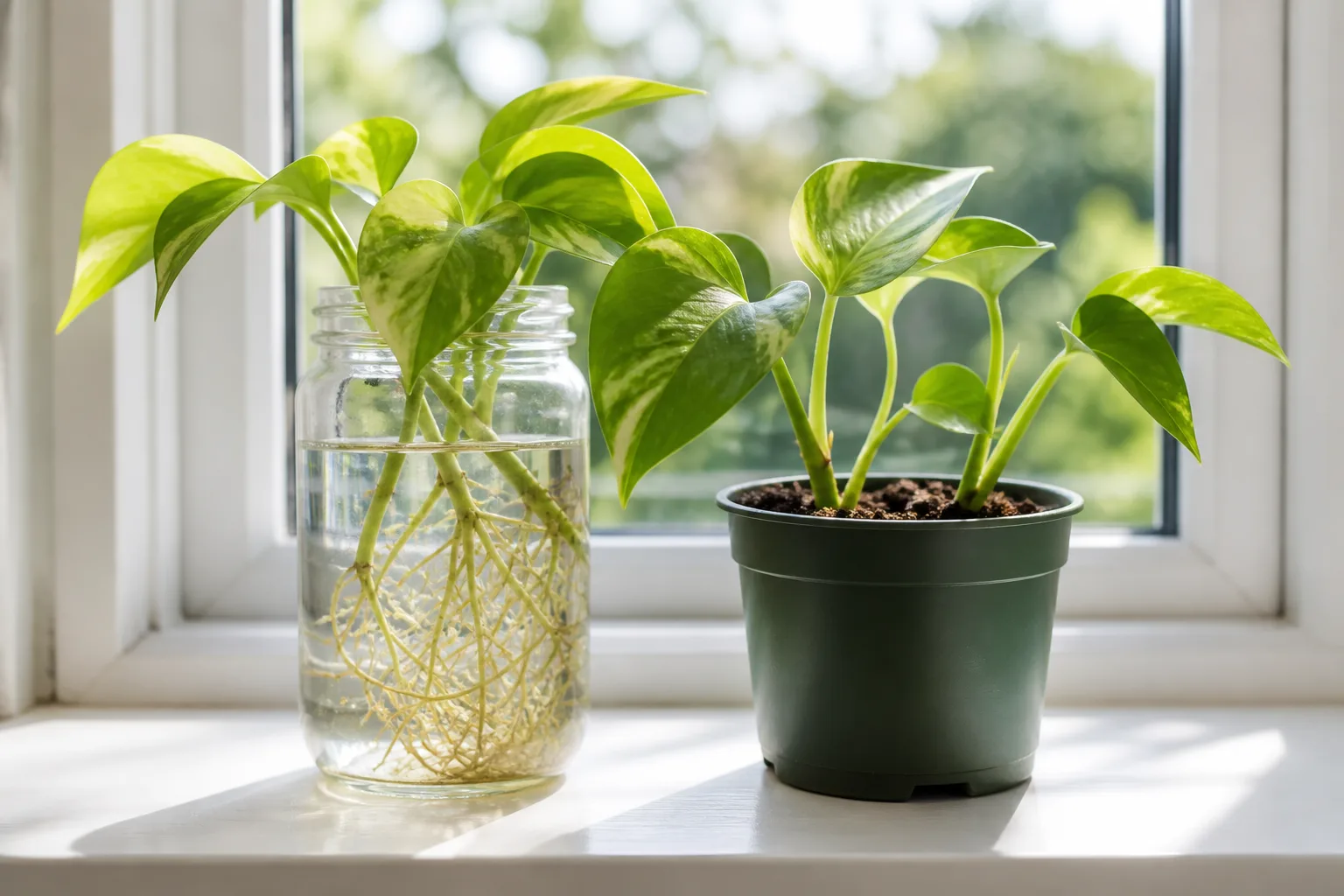
Your cutting just wilted after potting—or you are stuck between “always root in water” advice and a tray of soggy soil stubs. Neither water nor soil is universally better for houseplant cuttings. Water wins when you need visibility, fast feedback, and an easy hygiene check. Soil or a soilless rooting mix wins when you want roots already adapted to pot life and you want to skip a risky transplant. The real decision is which trade-off fits the plant, the cutting’s value, and how carefully you can manage moisture, oxygen, and cleanliness.
This is the cross-species method decision page: trade-offs, transition shock, plant-group fit, and the hygiene habits that prevent rot. Species anatomy and timelines live on dedicated pages such as Monstera water vs soil propagation and how to propagate pothos. Soft, collapsing stems after a failed attempt belong on houseplant stem rot.
Quick Decision: Water, Soil, or a Third Medium
Choose water when the plant is a soft-stemmed vine or herb that roots easily, you want to watch roots form, and you will transplant promptly once roots are short and branching—not when they fill the jar. Penn State Extension lists water as a valid propagation medium for leaves, stem tips, and stem sections alongside sand, vermiculite, perlite, and bark.
Choose soil or soilless mix when the cutting is valuable, rot-prone, woody, or succulent; when you hate transplant drama; or when you can keep media moist but not waterlogged. University of Nebraska–Lincoln Extension notes that some plants root easily in water, but perlite or vermiculite generally gives more satisfactory results for many cuttings.
Choose a third lane (perlite, vermiculite, bark, or sphagnum) when you want water-like control of moisture without leaving roots in a fully aquatic environment. Purdue Extension emphasizes that roots need air: a continuously waterlogged mix is devoid of air and cuttings rot rather than root. That oxygen rule is why “soil” in this article usually means an airy soilless blend, not heavy garden dirt.
If the parent plant is stressed, pest-ridden, or already soft at the base, pause. Propagation multiplies problems as easily as plants. Clean tools and healthy stock matter before the jar-or-pot debate starts.
Comparison Table: Visibility, Risk, Shock, and Best Fits
| Factor | Water (jar) | Soil / soilless mix | Third medium (perlite, vermiculite, bark, sphagnum) |
|---|---|---|---|
| Root visibility | Excellent — you see white roots vs brown mush | Poor — rely on gentle tug / patience | Partial — easier to inspect than dense mix |
| Infection risk at the cut | Higher when water goes stale or leaves are submerged (Ask Extension) | Lower with clean media + optional fungicide hormone | Low–moderate if kept moist, not soggy |
| Transplant / transition shock | Common when moving long water roots into mix | Minimal — roots form in the finish medium | Low if finishing in similar airy mix |
| Hygiene burden | Change water on cloudiness/smell; rinse jar | Pre-moisten media; sterilize trays/tools | Rinse/refresh media if algae or slime builds |
| Best plant groups | Soft vines (pothos, heartleaf philodendron, syngonium), many herbs | Succulents after callus, woody stems, fuzzy-crowned leaf cuttings, valuable clones | Aroids and mixed shelves that need oxygen + moisture control |
| Skip when… | No node, diseased stock, you forget jar changes | You cannot judge moisture and keep mix swampy | You need permanent decorative hydro (different project) |
Use the table for a one-screen pick, then read the sections below for failure modes that the grid cannot show.
What Water Propagation and Soil Propagation Actually Mean
Both methods ask a severed stem, leaf, or node to form roots before the cutting can live on its own. They differ in how oxygen, humidity, and observation work—and in what kind of root tissue you get at the end.
Water Rooting in a Jar or Vase
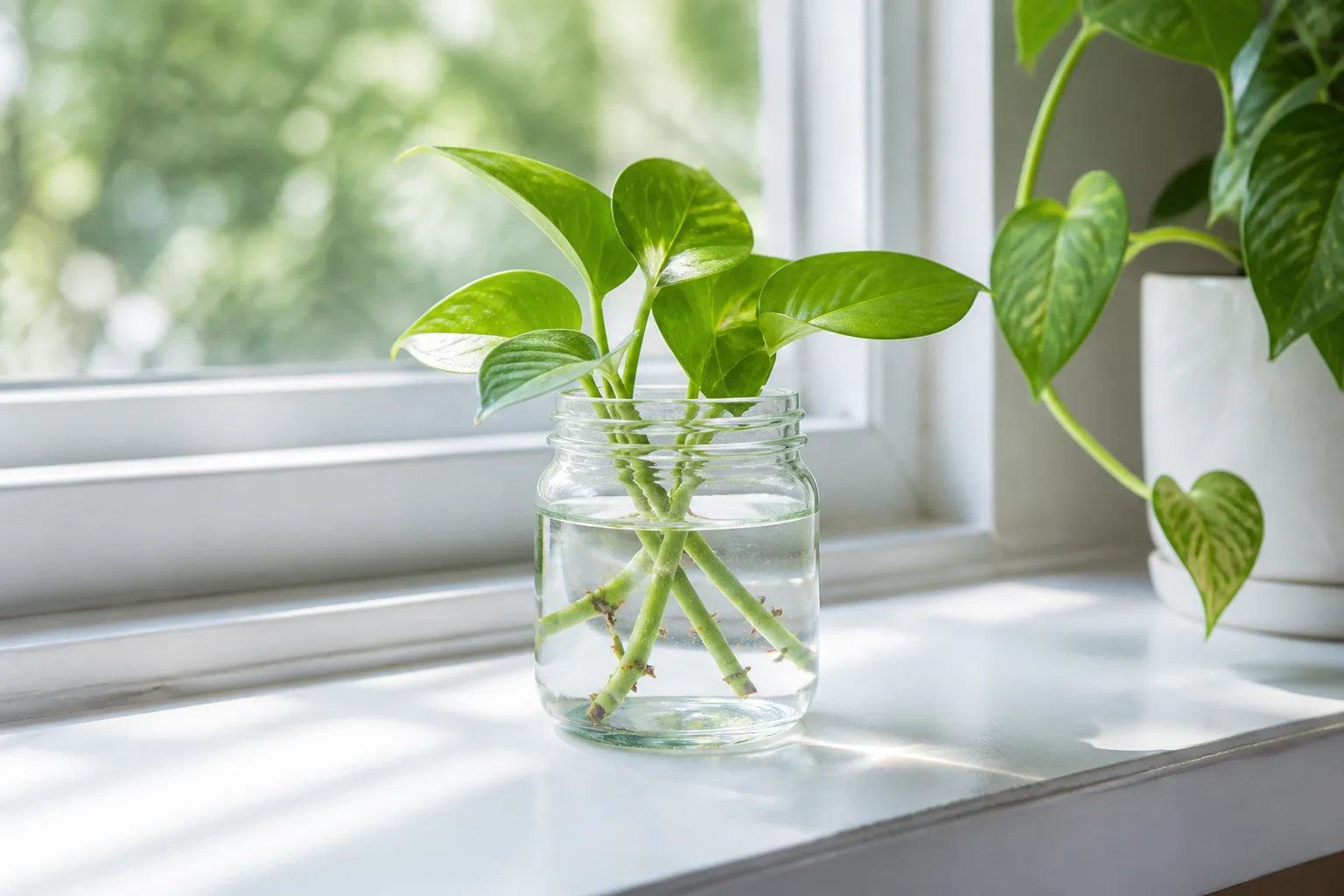
Water propagation places a node or cut stem into clean water so roots form underwater. You refresh the water when it clouds, smells off, or grows heavy algae—not only on a blind calendar—keep leaves above the waterline, and watch for white roots versus brown mush. Ask Extension notes that propagating nodes in water can be easier for observation than potting soil, but it comes with a greater risk of infection at the cut and can make later soil transition harder depending on the plant and how extensive the roots become.
Water roots are adapted to a low-resistance, low-air medium. They often look thinner and “glassier” than soil roots. That is not automatically failure—it is a different root phenotype—but it explains why a dramatic jar of long roots can still wilt after potting if the plant is not eased into mix.
Soil and Soilless Media Rooting
Soil propagation sticks the cutting into a moist, well-aerated medium so roots form in something closer to a finished pot. Penn State recommends media that stay moist but not saturated, bright indirect light, high humidity that is not so high that disease explodes, and rooting-media temperatures around 75–80°F for best results. Compost and garden soil are poor choices because they often carry pathogens and stay heavy and poorly aerated.
In practice, “soil propagation” for houseplants usually means peat or coco blended with perlite or vermiculite, a commercial seed-starting mix, or a straight perlite/vermiculite blend. University of Minnesota Extension also frames home propagation around clean media and species-appropriate methods rather than one universal jar rule (propagating plants at home). The goal is oxygen plus even moisture—not a dense, forever-wet plug.
Pros and Risks of Water Propagation
Pros. You see roots form, so you know whether the node is alive. You can spot early rot and trim it before the whole cutting collapses. Setup is cheap: a clean jar, room-temperature water, and bright indirect light. Soft vines such as pothos root reliably this way; Clemson HGIC states pothos stem cuttings root easily in soil or water when they include at least one node.
Risks. Constant wetness invites stem decay at the cut. Stale water, dirty glass, and submerged leaves accelerate failure. Long water culture can produce roots that stall when forced into dense mix. Algae and biofilm build when jars sit in strong light. Fertilizer in the jar often feeds algae more than roots. Ask Extension also flags that dosing liquid fertilizer in water is hard to get right.
Water is a monitoring tool as much as a rooting method. If you will not inspect the cut every few days, soil or perlite is often safer.
A second, quieter risk is false confidence. Long white roots look like success, so people delay potting until the jar is crowded. Those roots then break in transplant, compete for oxygen in a dense plug, and the top growth keeps transpiring as if nothing changed. Shorter roots and an earlier move usually beat a trophy jar.
Pros and Risks of Soil Propagation
Pros. Roots form in an aerated medium closer to the plant’s long-term home, so you usually skip a hard water-to-soil jump. Rooting hormone (often with a fungicide component in commercial mixes) is easy to apply at sticking time. UNL and Purdue both treat clean soilless media as the default professional path for many cuttings. You can bag the pot for humidity, then harden off gradually once roots hold.
Risks. You cannot see roots without a gentle tug test, so beginners overwater “just in case” and create rot in the dark. Dense or contaminated media kill cuttings that would have lived in a clean jar. Humidity tents left in direct sun cook soft tissue. Succulent cuttings stuck into wet mix without a callus window often melt.
Soil is the better long-term finish for most collection building. It asks for better moisture judgment up front.
Shared trays make soil efficient: several cuttings can root in one flat if leaves do not touch and airflow reaches the surface. Label cultivars the day you stick them—variegated and green look identical as stubs. Check progress with a gentle lift after two or three weeks on easy vines rather than daily digging. If resistance is slight and roots are short, firm the cutting back and wait; yanking weekly tears new tissue the same way rough jar rinses do.
Temporary Jar Nursery vs Permanent Water Culture
Most houseplant “water propagation” is a temporary nursery: root in clean water, then move into mix for long-term growth. That is the project this guide optimizes for.
Permanent water culture (decorative hydroponics, LECA with nutrients, long-term vase plants) is a different system. It needs stable nutrient dosing, cleaner vessels, species that tolerate constant wetness, and a plan for algae and salt buildup. Do not assume a cutting that rooted in a jar for three weeks is already a permanent hydro plant—or that a LECA setup is “just water propagation with beads.” If you want Monstera-specific moss or media lanes, use the Monstera water vs soil guide rather than stretching this cross-species page into a hydro manual.
Transition Shock: Why Water Roots Struggle in Potting Mix
Transition shock is the temporary stall—or collapse—when a water-rooted cutting moves into potting mix. Roots that grew in water are optimized for constant moisture and low mechanical resistance. Potting mix is drier between waterings, holds air pockets, and grips roots. The plant must rebuild fine root hairs and stomatal behavior while the top growth still loses water.
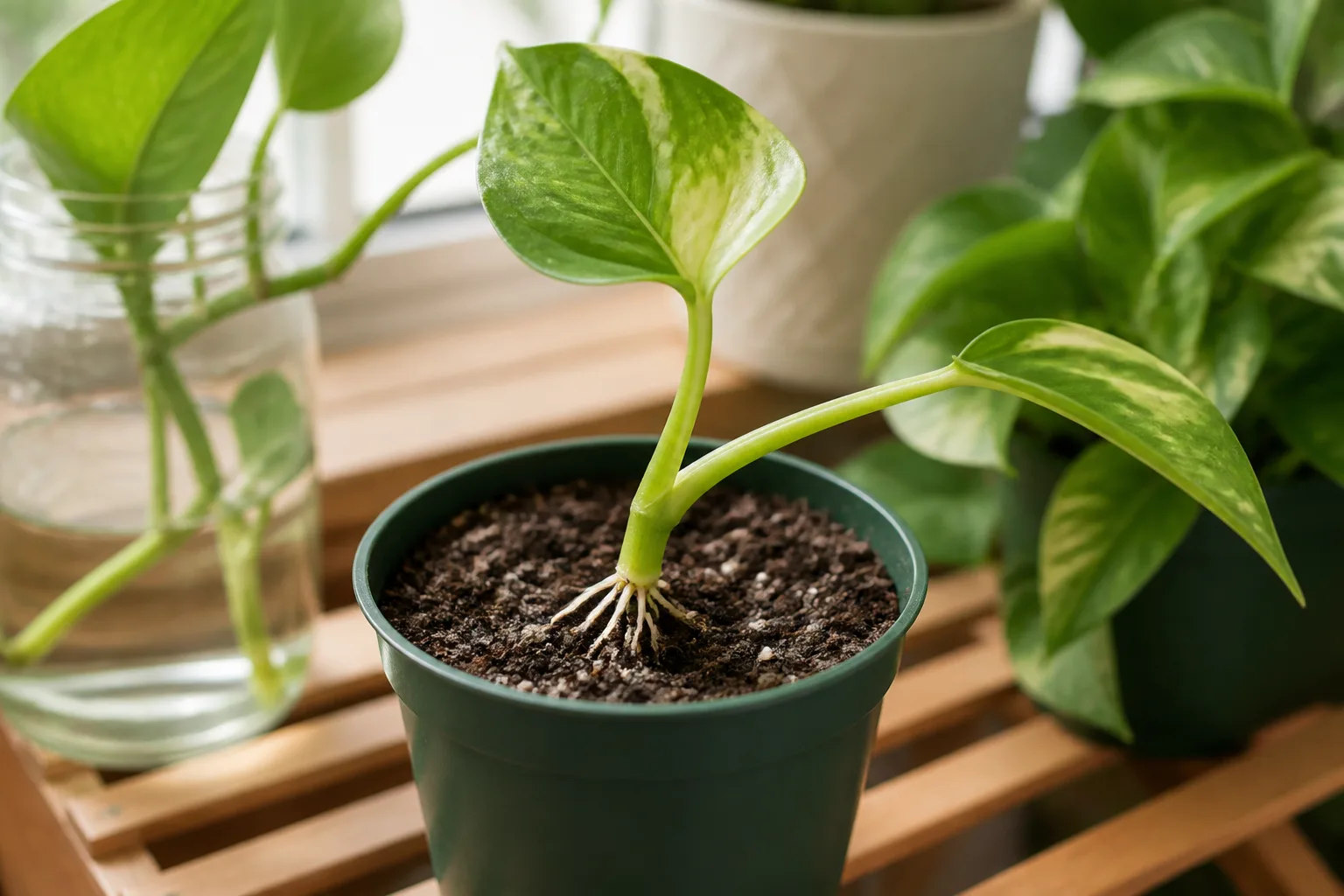
That is why a cutting that looked unstoppable in a jar can droop for one to three weeks after potting even when the roots were white. Ask Extension’s Monstera guidance captures the trade-off: water is easier to observe, but transitioning those roots to soil can be harder. The failure mode is often misread as “bad genetics” when it is really a media jump plus overwatering the new pot to “help” glassy roots that needed air.
Practical transplant window (grower judgment, not an extension quote): on easy vines, short branching roots about 1–3 inches (2–7 cm) usually adapt better than a dense water root ball. Woody cuttings may need a different timeline and often do better rooted in media from the start. Reduce shock with an airy mix, light moisture (not a swamp), bright indirect light, and a brief humidity bump while the plant adapts. If the stem end was already browning in water, trim to clean tissue and consider finishing in mix rather than waiting for a prettier jar photo.
Shock Versus Active Rot
Shock and rot can look similar for a day or two, so separate them before you panic-water. Shock usually means leaves soft or curled while the stem stays firm and the newest roots stay pale and intact. The plant often firms again after humidity and steadier light without a second soak. Active rot means the stem or node turns translucent, brown-black, or foul; roots may slim and shred when touched. Shock needs gentler conditions. Rot needs a clean cut back to firm tissue—or discard—and a reset of the jar or pot. Mixing the two diagnoses is how people drown a shocked cutting or keep a rotting one in the same water for another week.
Light, Temperature, and Humidity Targets
Cuttings fail when the environment fights root initiation. Penn State’s targets are practical: bright indirect light, media moist but not saturated, humidity high enough to slow leaf wilt without breeding constant disease, and rooting-media temperatures near 75–80°F when you can manage them. Cooler rooms still work; they just slow the clock. Hot sealed bags on sunny sills cook soft stems faster than any medium choice can save them.
Water jars belong in bright rooms out of harsh midday sun so algae stays manageable and water does not heat. Soil pots under a clear bag need the same rule—stakes or sticks to keep plastic off leaves, then daily checks for heat and mold. Purdue’s bag method is about reducing water loss from leaves while roots form; it is not a license to leave a cutting in a sauna. Once roots hold, open the bag a little more each day so the new plant learns normal indoor humidity before it sits on an open shelf.
If your home runs dry in winter, soil and perlite cuttings benefit more from a temporary humidity cover than water jars do, because jar water already supplies the stem. In muggy summers, prioritize airflow and cleaner water changes over extra misting. Mist on fuzzy leaves is a disease risk, not a propagation upgrade. Seasonal speed note: warm, bright months usually produce visible roots faster; cool, dark winters stretch timelines without changing the medium decision itself.
Hygiene Rules That Matter More Than the Medium
Medium choice cannot rescue a dirty process. UNL Extension tells home propagators to start with clean, sterile containers and tools, wash and sterilize with a 10 percent bleach solution, and dry completely before use. Take cuttings only from healthy plants and clean tools between plants. Purdue gives the same bleach guidance for tools and pots and insists on fresh soilless mix because garden soil can harbor disease.
Practical hygiene for either method:
Keep scissors or blades sharp and wiped. Remove flowers and damaged leaves that steal energy or rot underwater. In water, refresh when water clouds, smells, or films over; rinse the jar; keep only bare stem and nodes submerged. In soil, pre-moisten media so it is damp, not dripping; never reuse a diseased propagation tray without sanitation. Penn State reminds growers that high humidity prevents desiccation but excess humidity favors disease—vent bags if condensation turns into a permanent fog.
Process safety: if you use bleach for tools or jars, rinse thoroughly and let everything dry before cuttings touch those surfaces. Keep bleach solutions away from children and pets; do not pour leftover bleach water into houseplant pots.
If a cutting turns soft, foul, or black at the node, treat it as a sanitation event. Cut back to firm tissue or discard, and do not pour that water onto other plants. For soft-base collapse on mother plants or rooted pots, follow the diagnosis path in the stem rot guide rather than endlessly restarting jars from infected stock.
Which Houseplants Prefer Water, Soil, or Either
Plant biology beats influencer preference lists. Use groups first, then check a species page when the cutting is expensive or slow.
Best fits for water. Soft, vining aroids and many trailing houseplants tolerate water well: pothos (Epipremnum), heartleaf and Brasil-type philodendrons, syngonium, and many tradescantias. Clemson’s pothos guidance is blunt—cuttings root in water or soil with a node. Herbs with soft stems (basil, mint) and some begonias also show roots quickly in jars when leaves stay dry. Water is also the right training wheel when you are learning what a living node looks like. For these easy vines, pick water if you want weekly visual feedback; pick soil if you already know your node cuts are clean and you want the plant finished in mix.
Best fits for soil or callused media. Succulents and cacti usually want a dry callus, then a barely moist gritty mix—not a water vase. Woody or semi-woody stems (many ficus, croton, schefflera) often root more reliably in aerated media with optional hormone than in plain water. Plants with fuzzy crowns or water-sensitive foliage (African violets via leaf petioles, some gesneriads) are traditionally rooted in media under humidity, not left swimming—RHS covers leaf-cutting methods for plants that regenerate from leaf tissue rather than stem tips alone. Snake plant leaf sections can root in water, but soil or mix is often cleaner for long timelines—details live on the snake plant comparison guide.
Skip water when the cutting lacks a node (a pothos or monstera leaf alone will not make a plant); when the parent already shows soft stem or root disease; when the cutting is a one-of-a-kind variegate you cannot replace; or when you tend to forget jar changes. Division (peace lily, many ferns, snake plant clumps) and air layering (rubber plant, large dieffenbachia) are better primary methods than either jar or pot for those growth habits. UNL’s houseplant table still routes many species to tip, stem, leaf, division, or air layering rather than “always water.” NC State’s stem-cutting overview likewise centers media, humidity, and cutting type over a single jar recipe (plant propagation by stem cuttings).
How to Move Water-Rooted Cuttings Into Soil Without Stall
Transplant on a cool, bright day—not after the roots have circled the jar for months. Rinse algae gently. Pot into a small container with drainage and a light mix (plenty of perlite). Settle media around roots without jamming them into a dense wad. Water once to contact, then wait until the top of the mix begins to dry before the next drink.
Raise humidity with a loose clear bag or cloche for several days, then vent longer each day—the same harden-off logic Purdue describes after bagged soil cuttings root. Keep light bright and indirect; harsh sun plus tender water roots causes crisp collapse. Hold fertilizer until you see new leaf push. If the plant wilts but the stem stays firm, prioritize humidity and shade over more water. If the stem softens, unpot and check for rot immediately.
Some growers sidestep the jump by rooting in perlite kept barely moist, or by moving from water into a perlite “halfway house” for a week. That hybrid is useful for Monstera and other aroids; species timing still belongs on the Monstera water vs soil page and the Monstera deliciosa propagation hub.
Size the pot down. A single vine cutting in a 6-inch pot sits in a cold, wet mass for days. A 2–4 inch nursery pot or shared tray cell dries on a schedule the new roots can handle. After the first true new leaf, you can step up. Until then, small and airy beats big and “room to grow.”
First-Hand Notes From Water-to-Soil Moves
These are LeafyPixels collection notes from indoor shelves—single-home conditions, not universal thresholds.
2025-11-18 — golden pothos trophy jar stalled in dense mix. Three Epipremnum ‘Golden’ nodes sat in a clear jar for six-plus weeks until roots filled the glass. Potting into a peat-heavy 5-inch mix kept the plug wet for days; tops wilted and one node browned at the base. Restart: trim to firm tissue, 3-inch pots, half potting mix / half perlite, humidity bag for five days. Two of three pushed a new leaf within about ten days. Lesson: earlier transplant beat the trophy jar.
2026-02-03 — early short-root move under a bag. Heartleaf philodendron cuttings with roughly 1–2 inch branching roots went into 3-inch pots of airy mix the same week roots appeared. Loose clear bags for one week, then vented. Mild leaf soft for two days, then firm; new growth by day eight. No second soak during the soft window. Lesson: short roots + humidity harden-off handled transition better than “wait for longer roots.”
2026-04-21 — woody ficus failed in water, rooted in perlite. A semi-woody Ficus tip cutting browned and slimmed in water within ten days despite changes. A sibling cutting from the same flush stuck into barely moist perlite under a bag callused and rooted over about four weeks. Lesson: woodier material belonged in aerated media, not a jar.
2026-06-09 — cloudy-water save on Marble Queen. One variegated pothos jar turned cloudy and smelled faintly sour at day five. Immediate dump, rinse, fresh water, leaves kept high. Cut end was still firm; roots continued. A second jar left cloudy another week lost the node. Lesson: smell/cloud triggers beat a fixed “every Sunday” schedule when biofilm starts early.
Rooting Hormone: Optional Help, Not Magic
Rooting hormone is concentrated auxin (commonly IBA or NAA) sold as powder or gel. Penn State says a light dip can speed new roots in water or media, while too much slows development—tap off excess. Purdue notes many herbaceous cuttings root without treatment, but hormone often improves odds on slower material, and labels matter for concentration. Ask Extension adds a practical soil-side benefit: some products include a fungicide component that discourages stem rot while the wound calluses.
Use hormone when the cutting is woodier, historically slow for you, or going into media where you cannot see early decay. Skip the ritual for easy pothos nodes in clean water if you prefer minimal chemistry. Never dip the stock bottle with a wet cutting—portion hormone into a separate dish and discard leftovers so you do not contaminate the whole container. Hormone does not replace a node, clean tools, or oxygen in the root zone.
Common Mistakes That Cause Rot in Either Medium
Submerging leaves in water or pressing foliage into wet mix creates decay at the leaf-soil line. Using opaque, never-cleaned containers hides sludge. Overdosing rooting hormone slows roots—Penn State warns that excess hormone delays development. Keeping media soggy because “cuttings like moisture” ignores Purdue’s oxygen rule and invites the same pathogens that cause root rot in finished pots.
Other frequent failures: taking cuttings from flowering, droughted, or heat-stressed parents; rooting in direct sun inside a sealed bag; planting water roots into oversized pots that stay wet for days; and refusing to discard a mushy cutting that is already inoculating the tray. Patience is required—some species root in days, others in months—but patience is not the same as ignoring the smell of rot.
When to Use This Guide vs Species Pages
Use this guide when you are choosing a method across a mixed collection, teaching a beginner the trade-offs, or deciding whether transition shock is worth the visibility of a jar. Stay here for hygiene standards, plant-group preferences, the comparison table, and the water-to-soil move.
Use species pages when technique details change the odds:
- Propagate pothos — node cuts, timelines, and cultivar quirks for Epipremnum (plus the pothos propagation hub)
- Monstera water vs soil propagation — node anatomy, moss as a third lane, Monstera aftercare (Monstera deliciosa propagation hub)
- Snake plant water vs soil — leaf-section polarity, callus timing, variegation loss risks
- Propagate succulents — callus-first methods that usually skip water jars
- Houseplant stem rot — when the problem is soft tissue, not medium choice
Conclusion: Pick Rules Checklist
Water propagation and soil propagation are both legitimate. Water buys visibility and early rot detection at the cost of infection risk and possible transplant stall. Soil buys establishment and fewer transitions at the cost of blind moisture management.
Pick water when: the plant is an easy soft vine or herb, you will refresh water on cloudiness/smell, and you will transplant while roots are still short and branching.
Pick soil or an airy soilless mix when: the cutting is valuable, woody, succulent, or rot-prone; you want to skip a media jump; or jar hygiene is inconsistent for you.
Pick a third medium when: you want moisture control plus oxygen without committing to permanent hydro.
Treat transition shock as a predictable cost of temporary water culture, not a mystery failure. Treat hygiene as non-negotiable in both lanes. Label interpretive root-length ranges as practical guidance, then adjust for vine vs woody material. When a species has its own water-versus-soil deep dive, use that page for cutting anatomy and timelines, and keep this guide for the method decision across your shelf. Clean tools, healthy stock, oxygen in the root zone, and honest species fit beat any universal “always water” or “always soil” rule.