Houseplant Stunted Growth: Causes and Fixes
Diagnose houseplant stunted growth in order: season, light, roots, moisture, nutrients, pests. Fix one limit and track new leaves.
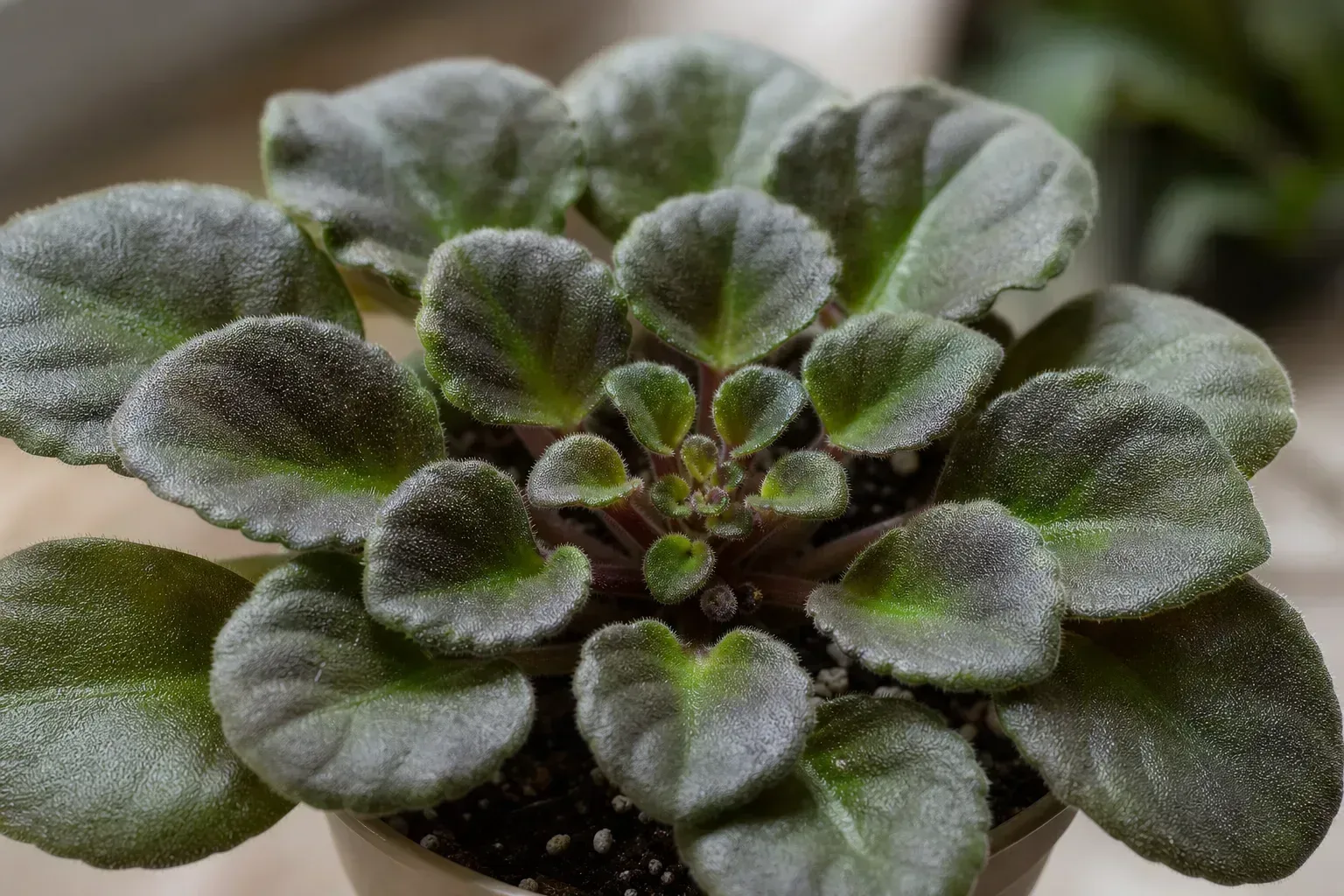
Your plant is alive, but it refuses to grow. New leaves are tiny, missing, or delayed for weeks while older foliage mostly holds on. You water on schedule, maybe even fertilize, and still nothing changes. That pattern is houseplant stunted growth — growth that stalls or stays undersized relative to what the plant should produce in the current season.
UC Statewide IPM notes that most indoor decline traces to care and environment first: watering extremes, fertilizer mistakes, root disease, sanitation gaps, and adverse conditions such as low light or low humidity, with pests as a secondary but real cause. (UC IPM) This guide is the ordered diagnosis and recovery hub: season and temperature, light, roots, moisture and recent moves, nutrients, then pests — so you fix the real limit instead of stacking random “growth boosters.”
What Stunted Growth Actually Looks Like Indoors
Stunted growth is a pattern across new tissue, not one dramatic leaf event. Compare the newest leaves and internodes with older ones on the same plant. If new leaves stay smaller, thinner, or paler, and the plant has not added meaningful size for a month or more during spring or summer, treat growth as constrained.
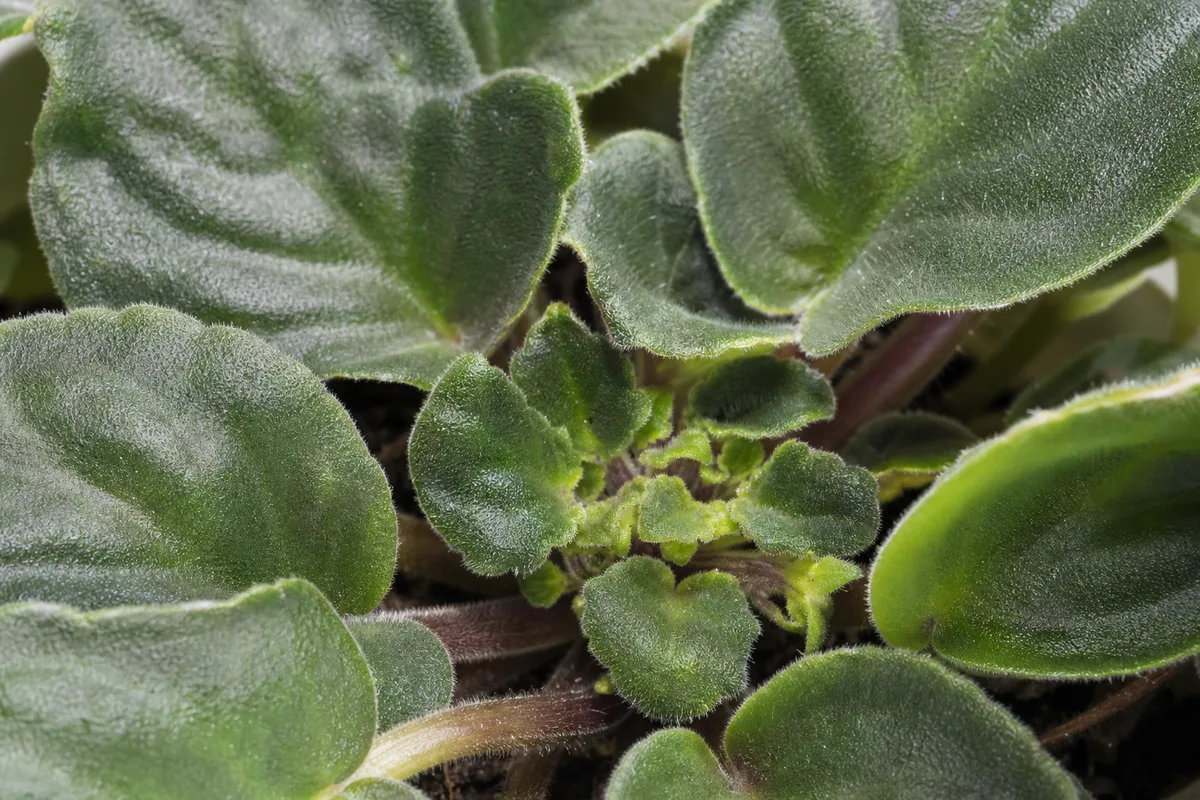
Common companion signs include longer gaps between leaves (stretch), a lean toward the window, soil that stays wet longer than it used to, roots at drainage holes, or sticky residue and webbing from pests. Weak, spindly growth, pale leaves, and poor flowering are classic low-light flags in RHS troubleshooting guidance. (RHS) UC IPM lists weak growth or light-green-to-yellow leaves under nutrient shortage, root rot, light extremes, or sap-sucking insects and mites. (UC IPM)
Stunted does not always mean dying. Many plants stay green while growth quietly stops. That is why “it still looks fine” is a weak reassurance — you need a baseline of expected seasonal pace for that species.
Also note what stunted growth is not. A single older leaf yellowing at the base can be normal aging. A temporary pause right after repotting or a hard prune is recovery, not chronic stunting. Chronic stunting shows as a repeated pattern on successive new leaves or a long quiet period during the months when that plant usually grows.
Stunted Growth vs No New Growth vs Natural Slow Growers
Stunted growth means some new tissue appears, but it is undersized, delayed, or weak compared with older growth. No new growth means the growing tips stay idle for a long stretch with no emerging leaves or shoots at all — use the no new growth houseplants guide when tips produce nothing for months in the growing season.
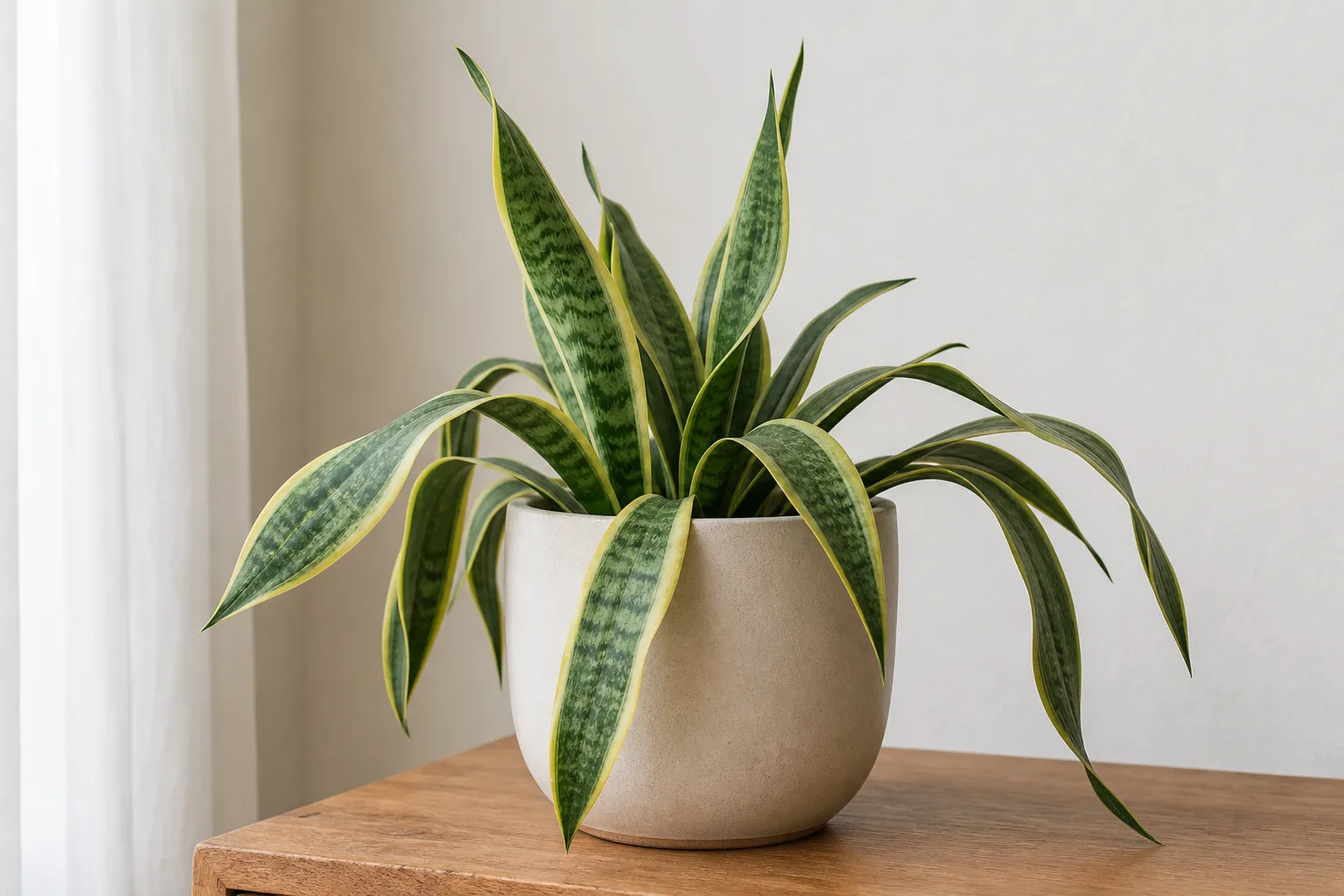
Natural slow growers are a third category. Snake plants, ZZ plants, many succulents, and hoyas often put out only a few leaves per year even in good conditions. Calibrate expectations against species before you treat “slow” as a crisis. If a normally moderate or fast grower — pothos, many philodendrons, monstera — has decelerated from its own past pace, investigate.
Use slow growing plants when you need growth-rate benchmarks by species. Use this page when the plant that used to push leaves on a predictable cadence has stalled or shrunk its new leaves. If symptoms are mixed and you are unsure where to start, route through the houseplant symptom checker first.
| Pattern | What you see | First move |
|---|---|---|
| Stunted growth | New leaves appear but stay small/weak | Run the diagnosis order below |
| No new growth | Tips idle for months in spring/summer | See no new growth |
| Natural slow grower | Few leaves/year, plant otherwise healthy | Compare to slow growing plants |
Quick Differential: Sign → Likely Cause → First Action
Use this chart to pick one primary hypothesis before you change three things at once.
| Sign | Likely cause | First action this week |
|---|---|---|
| Pale stretch, lean to window, greener variegation | Low light | Move closer to brighter light or add LED; see not enough light |
| Roots circling / through holes; pot dries in a day | Root-bound | Unpot; one-size-up repot if growth is the goal |
| Mix sour, soft brown roots, wilt while wet | Root damage / rot | Escalate to root rot houseplants |
| Mix bone-dry often; crispy tips; shriveled new leaves | Chronic underwatering | Water thoroughly, then adjust cadence to the plant |
| White crust on rim; brown tips after heavy feeding | Salt buildup / overfertilizing | Flush or refresh mix; hold fertilizer |
| Twisted, thickened, killed new tips (esp. African violet) | Cyclamen / broad mites | Isolate; inspect with a lens; discard if infestation rebounds |
| Stall only in short days; firm stems, no pests | Seasonal rest | Cut watering; skip fertilizer; improve winter light |
| Stall right after a big move or oversized pot | Acclimation / excess wet mix | Stabilize; avoid stacking more shocks |
Run This Diagnosis in Order
Change one major variable at a time and write down dates. Fertilizing a light-starved, pot-bound, waterlogged, or pest-loaded plant rarely restarts growth and can add salt stress. Work season and temperature first, then light, roots, moisture, nutrients, and pests.
Season and Temperature First
Short days, cooler rooms, and dry heated air slow many tropical houseplants. RHS notes that winter problems often stack from overwatering, poor light, and dry air, and that many plants recover once conditions improve. (RHS) UConn Extension points out that tropical forest-floor plants prefer fairly stable temperatures, and that thermostat swings or cold drafts at windows can stall or damage growth. (UConn Extension)
If it is late fall through late winter and the plant looks firm with no yellowing cascade, soft stems, or pests, reduce watering volume, hold fertilizer, and improve light before you assume disease. Resume stricter troubleshooting if spring arrives with adequate light and still no normal new growth.
Light Check at Leaf Height
Your eyes adapt; plants do not. UF/IFAS explains that a desk by a window can be many times brighter than a workspace across the hall, yet both may feel like “bright indirect light” after your eyes adjust. (UF/IFAS) Clemson HGIC calls light the most important indoor growth factor and notes that a well-lit home interior is often under 100 foot-candles while outdoor noon light can exceed 10,000. (Clemson HGIC)
Measure at leaf height midday with a meter or a phone app used only for ranking spots. Missouri Botanical Garden states that indoors the usual problem is too little light, and plants in that condition turn pale and stretch toward whatever light they can find. (Missouri Botanical Garden) For the full low-light symptom cluster and placement fixes, use signs your houseplants need more light.
Root Ball and Pot Fit
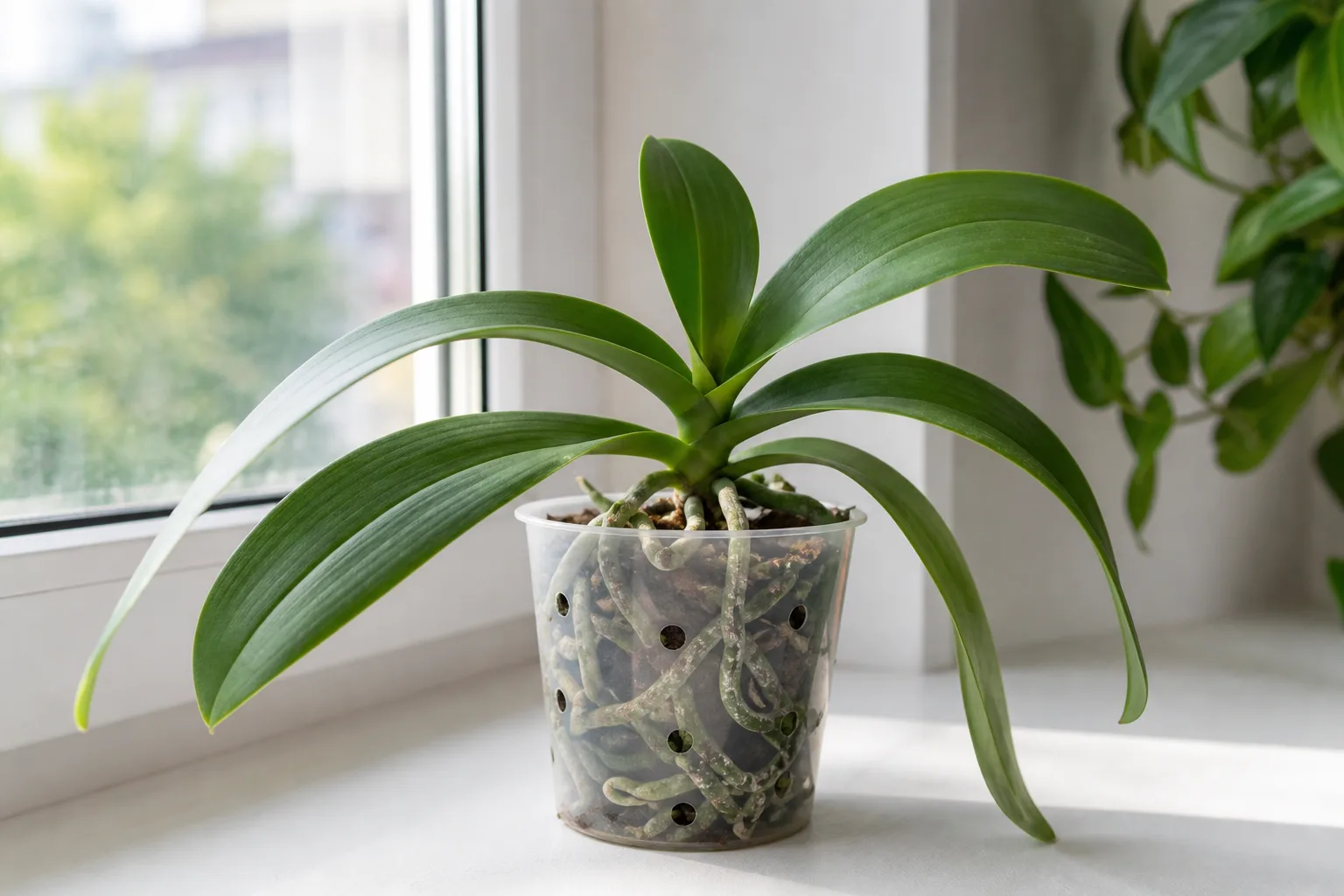
Slide the plant from its pot. Penn State Extension says if roots circle densely and you can barely see mix in the bottom third of the root ball, it is time to repot. (Penn State Extension) Other pot-bound clues include roots through drainage holes, water racing straight through, pots that dry in a day, and slowed growth even when you fertilize in spring and summer.
Soft, brown, sour-smelling roots are a different problem — root damage and rot — and they also stall growth; escalate with the root rot houseplants guide. Firm, cream-to-tan roots with some white tips are generally healthier for most tropical foliage plants. For circling roots with little remaining mix, continue to the root-bound section and the root-bound symptom hub.
Moisture Extremes and Recent Moves
UC IPM puts improper watering — too much or too little — among the most common reasons houseplants decline. (UC IPM) Chronic underwatering limits expansion of new leaves; chronic overwatering starves roots of oxygen and can stall growth even when the canopy still looks mostly green. University of Maryland Extension advises watering when the plant needs it, not on a fixed calendar, because mix, light, and temperature change dry-down speed. (University of Maryland Extension) Clemson HGIC likewise treats watering as a plant-by-plant decision tied to environment, not a weekly ritual. (Clemson HGIC)
Also ask what changed in the last four to eight weeks. A recent repot into a much larger pot, a hard prune, a move across rooms, or a sudden jump to bright glass can pause growth while roots and leaves recalibrate. Missouri Botanical Garden warns that placing a small root ball in an oversized pot leaves wet mix that roots cannot use fast enough and raises root-rot risk — go up about one size at a time. (Missouri Botanical Garden) Treat a post-move pause as acclimation if stems stay firm and pests are absent; treat it as a stall if soft roots, foul odor, or progressive decline appear.
Nutrients and Salt Buildup
UConn Extension groups deficiency symptoms into categories that include stunted growth, chlorosis, leaf spots, purpling, and necrosis, and notes nitrogen deficiency often shows as yellowing of older leaves with stunted, slow growth. (UConn Extension) Phosphorus deficiency is linked to purpling margins and stunted growth; potassium issues often show scorched older leaf edges.
Salt crust on the pot rim or a white film on the mix can signal overfertilizing or hard water residues. Clemson HGIC warns that salt buildup can damage roots and show as reduced growth, brown tips, lower-leaf drop, and wilting. (Clemson HGIC) Missouri Botanical Garden notes that indoor mixes deplete nutrients and accumulate salts over time unless flushed and refreshed. (Missouri Botanical Garden) Do not add more fertilizer until light and roots are adequate and the mix is not already salty.
Pests That Stall New Growth
Colorado State University Extension notes that stressed or poorly growing plants are more vulnerable to insect and mite injury, and that cyclamen mite often causes new growth to be stunted, twisted, and sometimes killed back — especially on African violet. (CSU Extension) Aphids, spider mites, mealybugs, and scale remove sap and distort or stall tender tips.
Check leaf undersides, nodes, new buds, and the soil surface with a hand lens. Sticky honeydew, fine webbing, white cottony clumps, or moving dots confirm pests before you blame “mystery nutrients.” If canopy pests are absent but tips still distort and roots look oddly clumped or cottony, escalate to a root inspection for soil pests such as root mealybugs. Quarantine new purchases for a few weeks when you can — CSU flags newly acquired plants as a common pest entry path.
Low Light: The Most Common Growth Brake
Light is the energy budget. Without enough intensity or duration, the plant cannot make the sugars needed to build full-sized leaves, no matter how perfect your watering routine looks. Clemson HGIC notes roughly 100 foot-candles for about 12 hours may only maintain quality for a year, while at least about 200 foot-candles for 12 hours is needed before foliage plants show meaningful benefit from fertilization. (Clemson HGIC)
That last point matters for stunted plants: feeding in deep shade often loads unused salts into the mix. Fix placement or add a full-spectrum LED on a timer first — see the grow lights complete guide for fixture distance and photoperiod starting points. RHS recommends moving many plants closer to south- or west-facing windows in winter and wiping dust so more light reaches the leaf surface. (RHS)
Etiolation — stretched, pale, spindly stems — is the stretch form of the same energy shortage. Existing long internodes will not shorten after you improve light; only new growth can tighten up. Pair this section with the light checks above and leggy plants when stretch dominates the picture.
Variegated plants add another clue. When light is too low, new leaves often come out greener and less patterned as the plant prioritizes chlorophyll over showy variegation. RHS notes that variegated plants kept in shade may revert toward green. (RHS) That reversion plus smaller leaves is a stronger low-light case than pale color alone.
Root-Bound Pots and Collapsed Mix
When roots fill the container, soil volume shrinks and water/nutrient buffering collapses. Penn State lists slowed or stopped foliage growth despite regular spring–summer fertilizing as a pot-bound warning sign, alongside faster dry-down and circling roots. (Penn State Extension) UC IPM also ties poor root health from pot-bound growth, compaction, poor drainage, and overwatering to yellowing and weak performance. (UC IPM)
Repot into a container only slightly larger — typically about one to two inches wider in diameter — not a massive jump. Oversized pots hold excess wet mix that can starve roots of oxygen and create a new stall from rot. Spring or early summer is the best window because plants resume active growth then. Technique and timing detail live in when to repot and repotting houseplants.
If you want the plant to stay small on purpose, root-prune and return it to the same pot with fresh mix instead of upsizing. That is a size-management choice, not a growth-restart strategy.
Fresh mix also resets structure. Old peat-heavy media can collapse, hold water unevenly, and leave roots with less oxygen even when the pot is not visually packed with roots. If the plant is only mildly root-bound but the mix smells sour or stays swampy for a week, refresh media in a same-size or one-size-up pot rather than drowning the plant in a huge container.
Nutrient Gaps, Salt Buildup, and Why Fertilizer Fails First
Potting mixes start with limited reserves. Over months of watering, nutrients leach and the plant consumes what remains. Nitrogen shortage commonly shows on older leaves first with overall slow, stunted growth; phosphorus shortage can stunt plants and delay maturity. (UConn Extension)
Clemson HGIC advises more frequent feeding during active spring and summer growth, and no fertilizer during a winter rest when plants receive little or no supplemental light. (Clemson HGIC) Prefer dilute liquid feeds during the growing season over heavy doses. If salts crust the pot, flush with several pot-volumes of water (if drainage is excellent) or refresh the mix at repotting.
Never use fertilizer as a substitute for light or root space. If the plant cannot photosynthesize or cannot explore moist mix, extra NPK sits unused and can burn roots — which then looks like “the plant got worse after I fed it.” For schedules and product types once growth resumes, use the fertilizing indoor plants complete care guide.
Sap-Sucking Pests and Distorted New Growth
Pests create a false “nutrition” story. Aphids cluster on soft tips and leave sticky honeydew; spider mites stipple leaves, bronze foliage, and leave fine webbing in dry rooms; mealybugs hide in leaf axils as cottony masses. CSU Extension describes spider mite flecking that progresses to an off-color bronzing and premature drop, and notes cyclamen mite stunting and twisting of new growth. (CSU Extension)
Management starts with identification and isolation. Wash soft pests with a strong water spray where foliage allows, then use insecticidal soap or horticultural oil labeled for houseplants if needed. Discard severely mite- or cyclamen-mite-infested plants when populations keep rebounding and threaten a collection. For mite-focused workflows, see spider mites on houseplants.
If new leaves are distorted, sticky, or speckled while older leaves look relatively normal, check pests before you raise fertilizer strength.
Seasonal Slowdown vs True Stall
Many houseplants reduce growth when day length shortens and indoor light quality drops. RHS flags winter as a high-risk season for overwatering because growth — and water use — slows. (RHS) Clemson HGIC describes a winter “resting stage” for plants that receive little artificial light and says not to fertilize during that rest. (Clemson HGIC)
Cold drafts from poorly sealed windows can compound the stall. UConn documents unexplained winter decline that traced to a displaced storm window creating a cold draft on plants that otherwise sat in acceptable room temperatures. (UConn Extension) Move sensitive plants off icy sills at night and away from exterior doors that blast cold air.
Use winter houseplant care and why houseplants struggle in winter when the calendar is the main backdrop. Treat winter slowdown as normal only when stems stay firm, pests are absent, and the plant resumes growth when days lengthen and light improves. Spring silence under good light is not normal rest — restart the diagnosis order.
Fix Plan: What to Change This Week
Pick the strongest evidence from your diagnosis and act on that first. Do not repot, fertilize, and move the plant to a south window on the same day unless the plant is clearly collapsing — stacked shocks hide which fix worked.
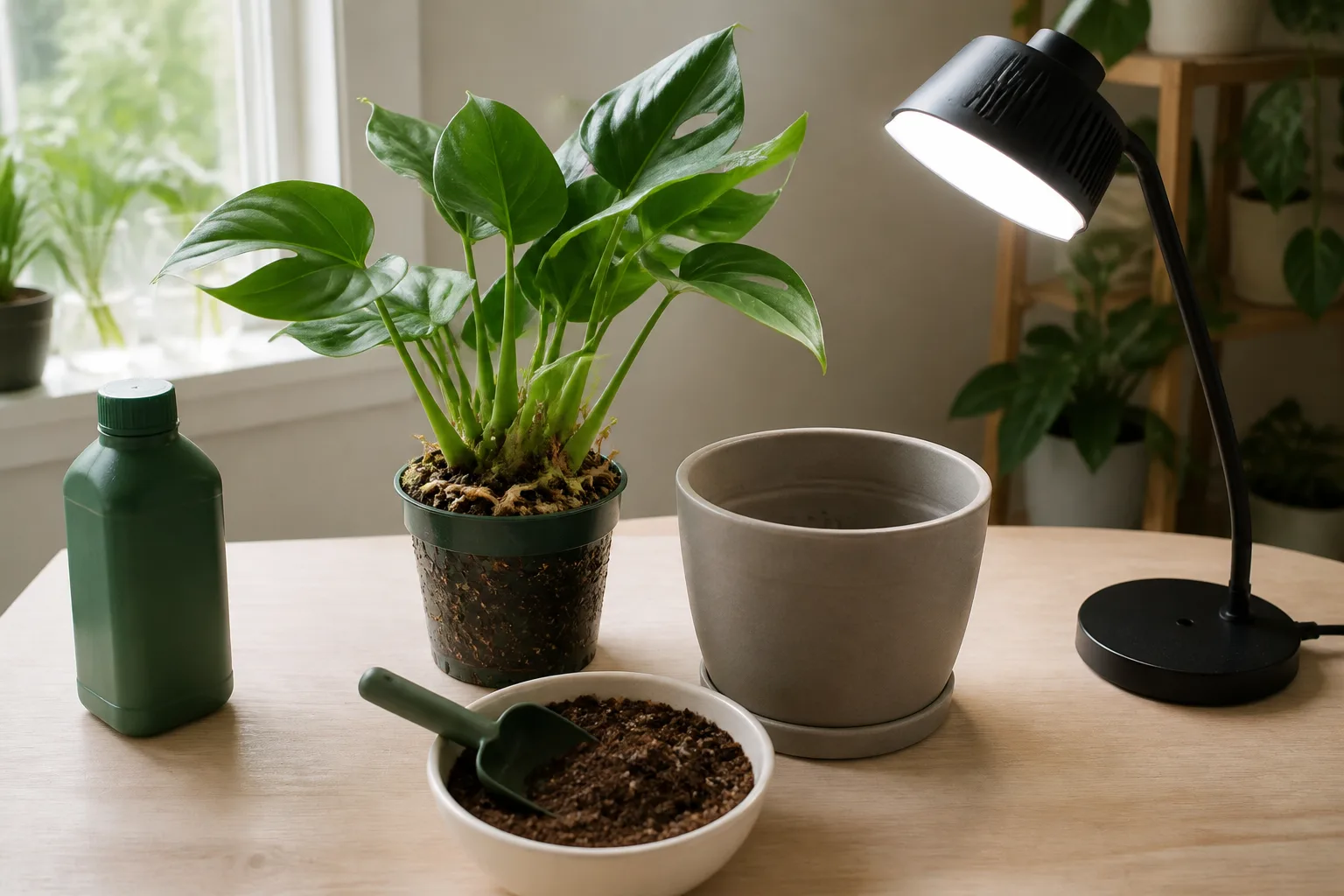
Raise usable light without scorching. Move closer to a brighter window in small steps over several days. Supplement with a full-spectrum LED on a timer when windows cannot deliver enough intensity. Clemson notes artificial light can supplement or replace daylight, and that stretching under ordinary hot incandescent bulbs is common — fluorescents and LEDs are better indoor options. (Clemson HGIC) UF/IFAS confirms many plants can grow entirely under appropriate artificial light. (UF/IFAS) Wipe dust from leaves. Acclimate gradually when jumping from a dim corner to bright glass so you do not trade stunting for sunscald.
Repot one size up when roots circle. Water the plant an hour before unpotting so the root ball slides cleaner. Tease circling roots gently, set the crown at the same depth, and leave headroom for watering. Penn State recommends moistening new mix beforehand so it wets evenly, and choosing a container only slightly larger with drainage holes. (Penn State Extension) Hold fertilizer for a few weeks after a major root disturbance.
Stabilize watering before you feed. If the mix swings from bone-dry to swampy, correct that cadence next. Thoroughly wet the root ball, drain fully, and empty saucers. Only after light and roots are adequate should you resume a dilute balanced feed during active growth. Clemson suggests label-rate feeding every two to three months, or much more dilute solutions used more often during the growing season, and skipping feed during winter rest without supplemental light. (Clemson HGIC)
First-Hand Notes: Recovery Timelines We Tracked
These are LeafyPixels editorial notes from plants we track in real rooms (Bengaluru apartment light; handheld meter at midday on clear days, foot-candle estimates). They are not lab trials — they show what recovery looked like after one primary fix.
Root-bound golden pothos (March–April). A golden pothos in a 4-inch nursery pot had roots circling the base with almost no mix visible in the lower third. New leaves were about half the width of older ones despite spring fertilizing. We moved it one size up (about 6 inches) with fresh mix on 12 March. The next two leaves, fully expanded by late April, matched older leaf width; internodes tightened after the second leaf. Old undersized leaves did not enlarge.
African violet tip distortion (January). An African violet produced successive tiny, thickened, slightly twisted center leaves while outer foliage looked acceptable. A hand lens did not show spider-mite webbing; buds looked packed and rough. Following CSU guidance on cyclamen-mite suspicion, we isolated the plant on 8 January and discarded it after two weeks when distortion continued — better than risking a shelf of violets. Lesson: distorted new growth is a pest check before a fertilizer bump.
Winter stall that resumed after LED + spring light (December–March). A heartleaf philodendron six feet from an east window measured roughly 50–70 ftc at leaf height in December and produced one pale, undersized leaf in six weeks. We added a clamp LED (~12 inches above the canopy, 13-hour timer) on 20 December and held fertilizer. By mid-February, new leaves were darker and closer to mature size; after we moved the pot within two feet of the window in early March (readings ~150–200 ftc midday), growth cadence returned to roughly one leaf every 10–14 days.
Recovery pace by habit (editorial checkpoints). Fast vines (pothos, many philodendrons): often a healthier leaf in 2–4 weeks in active season after the main limit is fixed. Moderate aroids (monstera juveniles): often 3–6 weeks before leaf size trends up. Slow growers (snake plant, ZZ): judge over 6–12 weeks and expect few leaves per year even when healthy.
Recovery Scoreboard and When to Worry
During spring and summer, expect the next new leaf within about two to six weeks after you correct the main limit — timing varies by species and how depleted the plant was. Judge success by leaf size and internode spacing on new growth, not by whether old leaves suddenly enlarge (they will not).
This week’s scoreboard
- Write the single primary cause you are treating and the date you changed it.
- Note light placement (or LED hours), watering cadence, and whether you unpotted.
- At week 2: look for a new leaf initiating or a healthier bud — not full recovery.
- At weeks 4–6: compare new leaf size and spacing with the last undersized leaf.
- Only then resume dilute fertilizer if light and roots check out.
Worry sooner when stunting pairs with soft stems, foul soil odor, rapid yellowing of many leaves, or expanding pest populations. UC IPM notes that once decline is advanced, restoring health is sometimes impractical and replacement can be the rational choice. (UC IPM) Escalate to root inspection if wet-soil wilt continues, and to pest treatment if tips keep distorting.
Track weekly: date of change, light placement, watering frequency, and whether a new leaf initiated. That log prevents the “I tried everything at once” dead end.
Related Guides
Use this page for ordered diagnosis and recovery. For a short symptom snapshot, see the stunted growth symptom hub. For the broader growth-problem article in the growth cluster, see stunted plant growth.
- No new growth houseplants — when tips produce nothing for months
- Not enough light — low-light cluster and meter checks
- When to repot — timing and pot-size decisions
- Slow growing plants — species growth-rate baselines
- Winter houseplant care — seasonal slowdown checklist
- Save a dying houseplant — multi-symptom revival triage
Conclusion
This week, pick one primary limit from the differential table, change only that, and start the scoreboard. In two to six weeks of active-season growth, judge the next leaf — not the old ones. Winter quiet with firm stems is often rest; spring silence under good light is a problem. Keep fertilizer last, after energy and roots are fixed, and escalate to pests or root inspection when tips distort or soil turns foul.