Houseplant No New Growth: Causes, Diagnosis and Fixes
Houseplant no new growth? Separate winter dormancy from light, root, and nutrient stalls — then fix causes in order without fertilizing first.
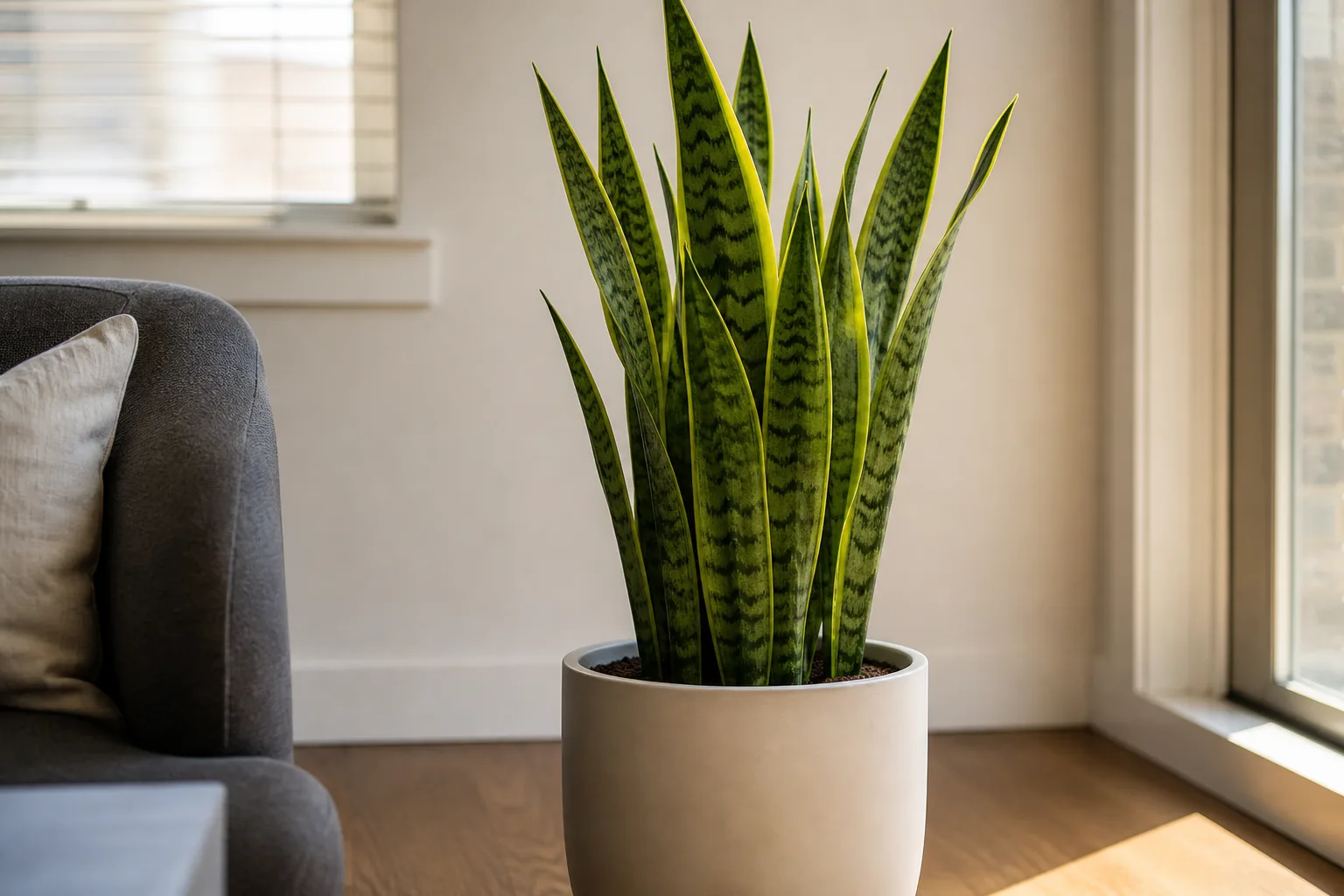
Your houseplant looks healthy enough. Leaves are mostly green. Stems are firm. Nothing is collapsing. And yet the tip has not moved in weeks — no new leaf, no lengthening vine, no fresh shoot from the crown. That quiet standstill is houseplant no new growth, and it is one of the most common indoor plant problems because it rarely announces itself with drama.
No new growth is not a disease name. It is a timing problem: the plant is maintaining existing tissue instead of investing in new leaves or stems. Sometimes that pause is normal seasonal rest. Sometimes it is a light, root, water, or nutrient bottleneck. The skill is telling those apart before you “fix” a resting plant with fertilizer, a bigger pot, or daily watering.
Do this first (next 10 minutes):
- Note the season and any move, repot, or pest treatment in the last 6–8 weeks.
- Compare newest leaves or tip length to growth from last spring or summer.
- Finger-check soil moisture 5 cm / 2 in deep — do not water or fertilize yet.
What “No New Growth” Actually Means
No new growth means the plant has not produced fresh leaves, shoots, or visible tip extension for long enough that you notice the pause. On a vine, that looks like a static growing tip. On a rosette plant, the crown stays the same size. On a cane plant, no new leaf unfurls from the tip.
Holding vs Declining Plants
The important distinction is between a plant that is alive and holding and a plant that is quietly declining. Holding plants keep firm stems and mostly healthy older leaves while growth stays flat. Declining plants add yellowing, soft stems, mushy roots, or progressive leaf loss on top of the stall. Holding plants need a constraint removed. Declining plants need the stress cause identified — often water, cold, pests, or root rot — not a growth stimulant.
Slow Genetics vs a Real Stall
Also separate slow genetics from a stall. ZZ plants, snake plants, cast iron plants, and many succulents put out few leaves even in good care. If that species has never been fast for you, you may be watching normal pace rather than failure. Worry rises when a previously active grower — pothos, philodendron, monstera, many ferns — goes silent during warm, bright months.
| Plant type | Typical indoor pace (editorial baseline) | Treat as a stall when… |
|---|---|---|
| Snake plant / ZZ | A few new leaves or spears per year in bright rooms | Zero new spears through a full spring–summer with firm crown |
| Pothos / philodendron | New leaves every 1–4 weeks in good light in active season | No tip movement for 6–8 weeks in spring–summer |
| Monstera | Steady leaf expansion in bright filtered light | Tip static for 6–8+ weeks while older leaves stay firm |
| Ferns | Continuous fronds in humid, bright shade | No new fronds for a month+ in warm season |
Use slow-growing plants when the species is naturally deliberate and you mainly need realistic expectations.
Dormancy vs True Growth Stall
Indoor tropicals rarely enter the deep winter dormancy of outdoor deciduous trees, but many still slow hard when days shorten, rooms cool, and window light drops. That cool-season slowdown is often labeled dormancy by growers even when the plant is closer to a light- and temperature-limited rest. Treating rest like a crisis is how overwatering and salt burn start.
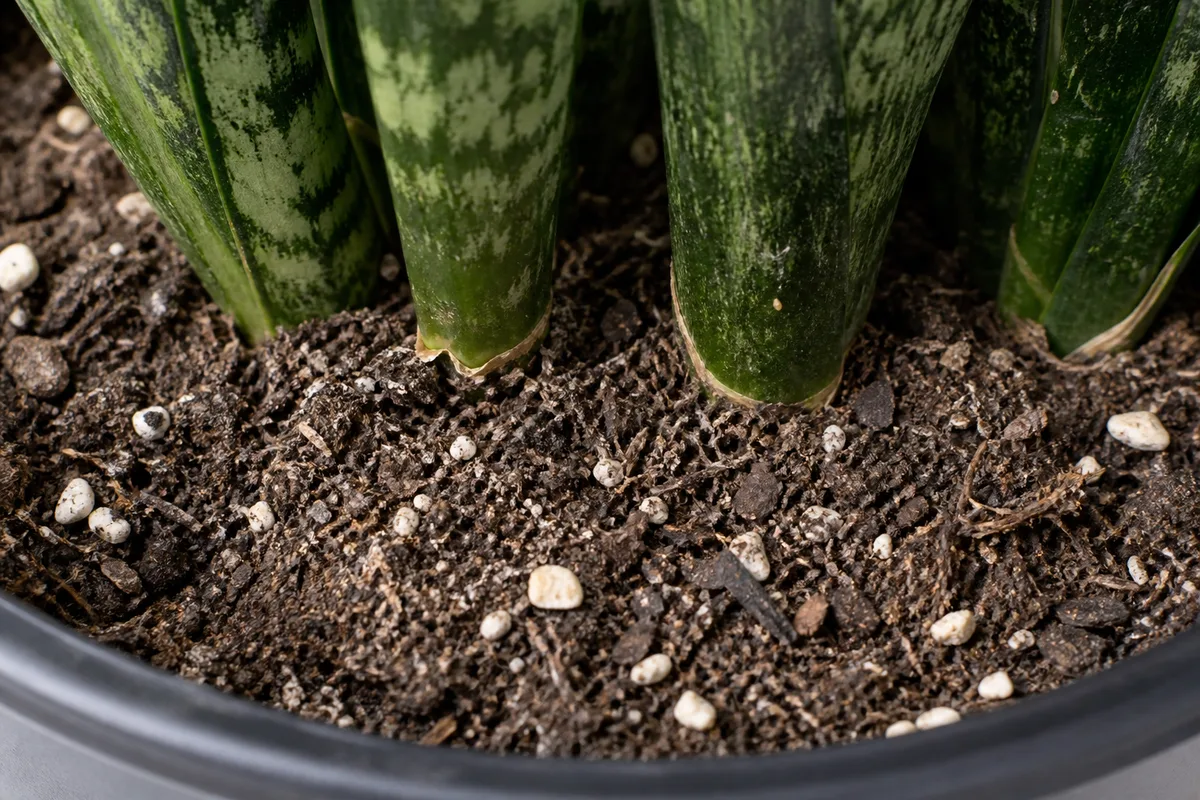
A true stall is different: conditions should support growth (adequate season, warmth, and expected light), yet tip growth stays absent for weeks while the plant otherwise holds. That pattern points to a bottleneck — most often light or roots, sometimes chronic water stress, occasionally nutrients or pests.
Seasonal Rest and Cool-Season Slowdown
As days shorten and temperatures fall, many plants reduce photosynthesis, respiration, and active tissue building. Extension educators describe plant dormancy as a protective slowdown: metabolism drops, water and nutrient movement slow, and growth pauses until cues improve (Lincoln County UGA Extension). That page focuses on outdoor deciduous trees — use it as an analogy for metabolic slowdown, not as proof that your tropical houseplant is in true endodormancy. Indoors, the practical version is simpler. Shorter days plus weaker winter sun mean less energy for new leaves, even in the same window that worked in June.
Clemson HGIC notes that during short winter days, many indoor plants that receive little or no artificial light enter a “resting stage,” and fertilizer should not be applied during that rest. RHS likewise warns that problems often rise in winter from overwatering, poor light, or dry air — because growth has slowed while watering habits have not. If it is midwinter, stems are firm, and leaves look stable, reduce watering frequency, skip fertilizer, improve light if you can, and wait for longer days before expecting a flush of tips.
When a Pause Means Something Is Wrong
Treat the pause as a problem when any of these are true. It is spring or summer and a normally active plant has produced no new leaf for 6–8 weeks. New leaves before the stall were getting smaller, paler, or farther apart on the stem. Roots circle the pot or push from drainage holes. Soil stays wet for many days in a dim spot, or dries in hours in a packed root ball. Yellowing, softness, pests, or progressive leaf drop accompany the standstill.
In those cases, seasonal patience is the wrong prescription. Move to diagnosis: light first, then roots, then water, then nutrients.
Quick Differential: Rest vs Light vs Roots vs Water vs Deficiency
Use this table once, then dig into the matching cause section. Change only one major variable at a time.
| Pattern | What you usually see | First move | Hold off on |
|---|---|---|---|
| Seasonal rest | Midwinter; firm stems; stable leaves; soil stays wet longer | Reduce water; skip feed; improve light if possible | Fertilizer, upsizing pot |
| Light stall | Small/pale newest leaves; stretch; lean to window; wet-staying mix | Move closer to brighter window or add grow light | Fertilizer |
| Root-bound stall | Roots from holes; circling ball; dry-out in hours; spring–summer silence | Spring repot one size up or root-prune + refresh mix | Jumping 2–3 pot sizes |
| Overwater / root damage | Heavy sour pot; soft roots; yellowing with stall | Dry-down, check roots, improve drainage/light | More water, more feed |
| True deficiency | Patterned chlorosis after light/roots look good; active season | Dilute complete feed once growth can use it | Blind winter feeding |
If new tissue appears but stays weak or undersized rather than absent, compare stunted growth. For the short symptom overview, see the no new growth symptom hub.
Cause 1: Not Enough Light
Light is the energy source behind every new leaf. University of Georgia Extension ranks adequate light as by far the most important indoor growth factor: without enough usable light, plants cannot make the sugars that fund new tissue. Missouri Botanical Garden notes that indoors the usual environmental problem is too little light, and plants in that condition turn pale and stretch toward whatever light they can find.
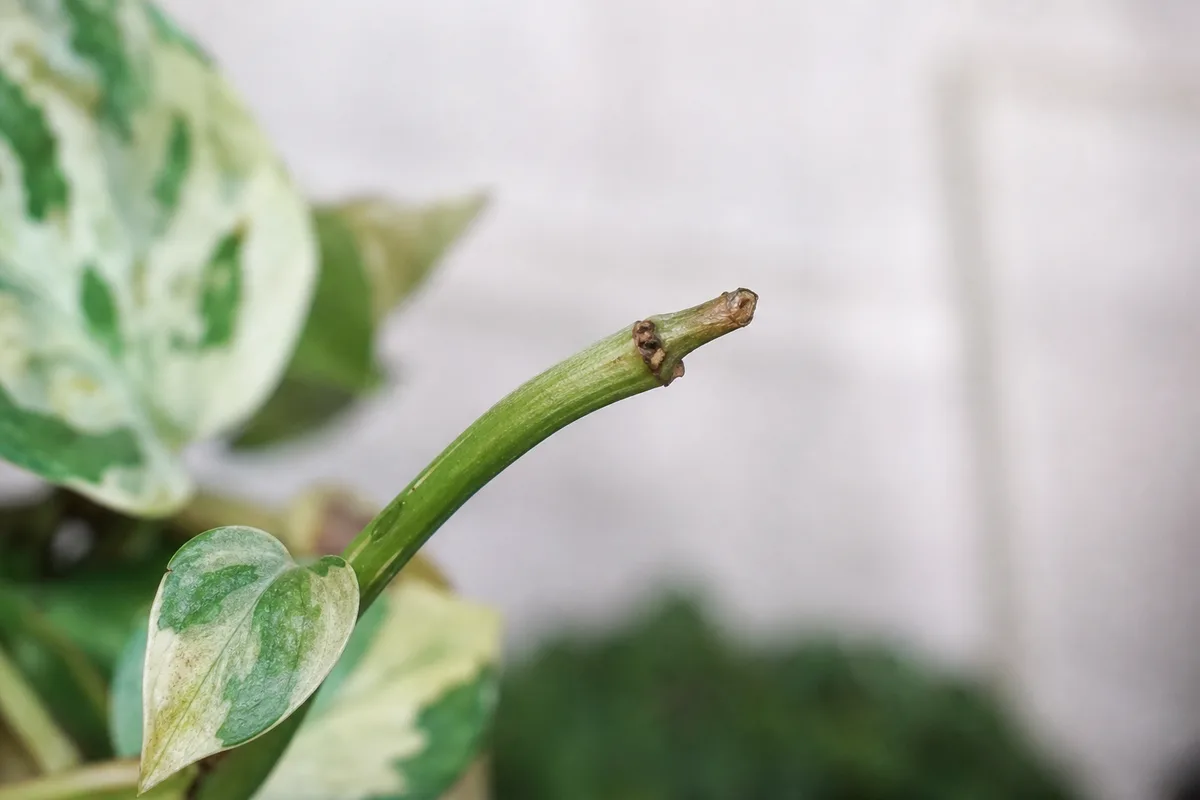
A light-limited plant often looks “fine” at a glance because older leaves remain green while the energy budget is too tight for new growth. That is why no new growth and low light so often travel together. RHS lists weak, spindly growth, pale leaves, poor flowering, and lower-leaf yellowing as classic insufficient-light signs. If your plant is alive but frozen in place in a dim corner, light is the first suspect — not missing fertilizer.
How to Confirm Light Is the Bottleneck
Do not trust your eyes alone. UF/IFAS explains that human vision adapts indoors, so a desk by a window can be many times brighter than a spot across the room even when both feel “okay.” Measure at leaf height midday with a handheld lux or foot-candle meter when you can. Phone apps are rough but useful for ranking sill versus sofa versus hallway — treat them as relative rankings, not lab-grade readings.
Practical signals that light is the stall cause include longer internodes on newer stems than on older growth, smaller or paler newest leaves, a lean toward the window, fading variegation, and soil that stays wet longer because the plant is using less water. UGA’s inadequate-light checklist matches that pattern closely. For a full symptom walkthrough and meter bands, use the dedicated not enough light guide before you change fertilizer or pot size.
Cause 2: Root-Bound or Root-Damaged Plants
When roots fill a container, little fresh mix remains to hold water, air, and nutrients in the volumes the canopy needs. Growth slows or stops even if you water and feed on schedule. Penn State Extension lists slowed or stopped foliage growth — even with regular spring and summer fertilizing — as a key reason to check whether a plant is pot-bound, along with roots growing through drainage holes.
Root damage creates a related stall. Overwatering reduces oxygen around roots and can progress to rot; damaged roots cannot support new top growth even if the canopy still looks passable for a while. If leaves are firm but tips never move, and the pot feels either rock-hard with roots or chronically heavy and sour, the root zone is your bottleneck.
Pot-Bound Signs You Can Check in Five Minutes
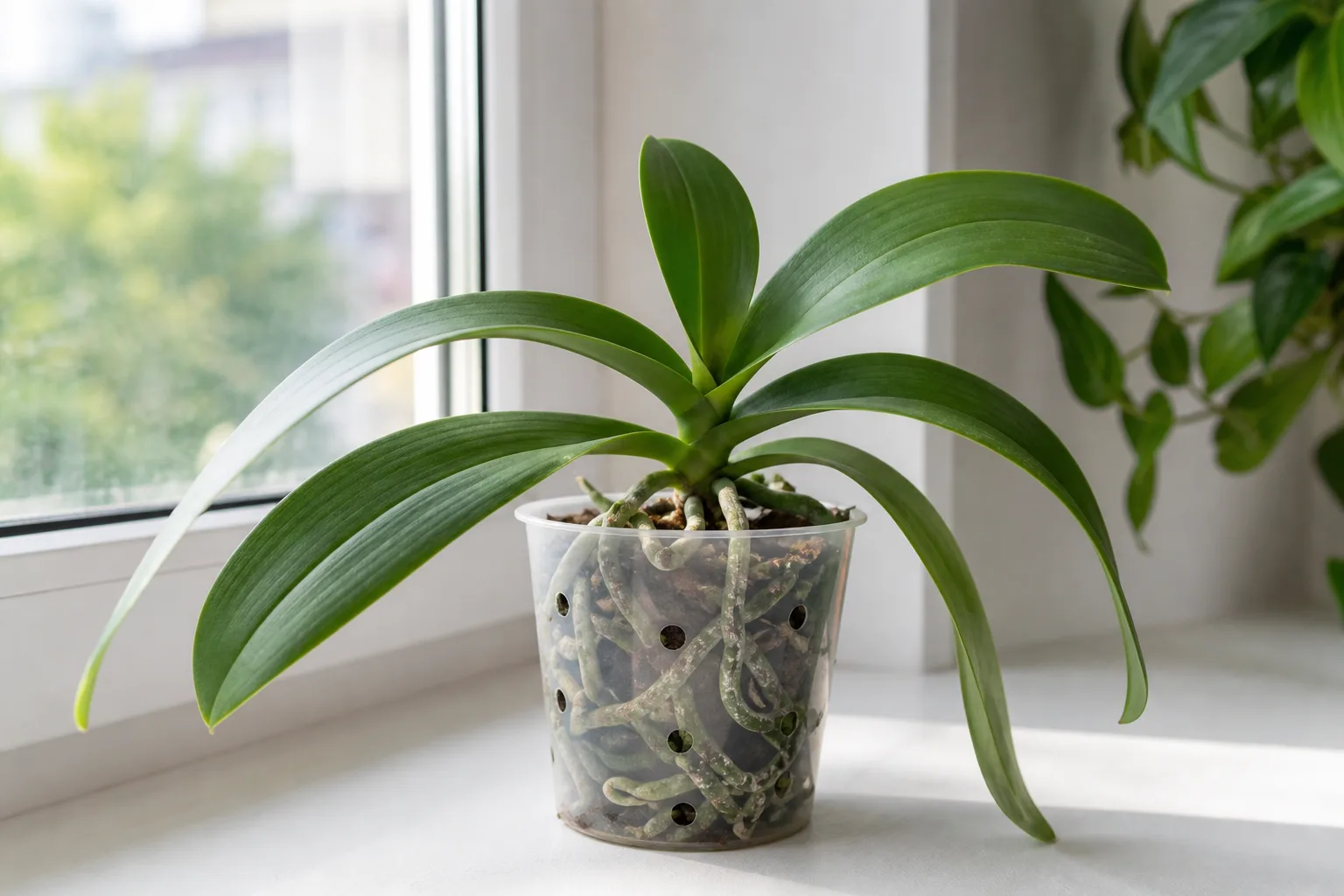
Slide the plant from its pot if it will release safely. Circling roots, a dense mat with almost no visible mix, and roots escaping drainage holes are clear pot-bound signs. Water that races through the pot or sits on a hydrophobic crust can also point to a packed root ball. Penn State advises spring as the best repot window because roots and shoots are primed to explore new mix — wait for active season when you can, unless the plant is in crisis.
If you want the plant to stay the same size, you can sometimes root-prune and refresh mix in the same pot rather than upsizing. If you want renewed canopy growth, move up only one pot size with drainage holes and fresh soilless mix. Oversizing the container trades one stall risk for another: excess wet mix around sparse roots. For the symptom pattern and next steps, see root-bound and repotting houseplants.
Cause 3: Nutrient Stall (and Why Fertilizer Often Fails First)
Nutrient shortages can slow or stunt growth. UConn Home & Garden groups stunted growth among classic deficiency symptoms and notes nitrogen deficiency often shows as yellowing of older leaves with stunted, slow growth. Phosphorus shortage can also stunt plants and delay maturity. Those patterns matter — but fertilizer is rarely the first fix for a houseplant with no new growth and no clear deficiency pattern.
Salt Buildup vs True Deficiency
Clemson HGIC is blunt on the indoor reality: plants in low interior light have reduced fertilizer needs, and many enter a winter resting stage when you should not fertilize. Clemson also notes that foliage plants need roughly higher sustained light — on the order of about 200 foot-candles for 12 hours — before they meaningfully benefit from fertilization. If light is too low, added nutrients cannot create growth; they often accumulate as salts that burn roots and further reduce growth, showing as white crust on the pot rim or mix surface, brown tips, and wilting. True deficiency usually shows patterned chlorosis or stunting after light and roots already look adequate — not as the first explanation for a silent tip in a dim room.
Rule of thumb: fix light and roots first. Resume a diluted, complete fertilizer only after the plant is in active season and showing that it can use the feed — new tip movement or healthy expanding leaves. If growth is lacklustre after those fixes, RHS suggests fresh peat-free compost and a suitable liquid feed during the growing season rather than constant winter feeding. For feeding schedules once growth resumes, see fertilizing indoor plants.
Cause 4: Water Stress and Cold Drafts
Chronic underwatering keeps a plant in survival mode: it protects existing leaves instead of funding new ones. Chronic overwatering does the opposite damage path — oxygen-starved or rotting roots that cannot support expansion. RHS notes overwatering is easy to mistake for drought because both can cause wilting, especially in winter when growth has already slowed. Check moisture a few centimetres down and lift the pot for weight before you add water.
Cold drafts and sudden temperature drops also stall tip growth. Blackened leaves, sudden droop, or collapse after a porch night or AC blast are cold-damage clues. Milder chill may only pause growth. Keep tropicals away from icy glass at night and heating vents that bake leaves by day. For season-specific winter pacing — less water, more light awareness, no force-feeding — use winter houseplant care and why houseplants struggle in winter. If cold injury is already visible, see cold damage on houseplants.
Pests should jump the queue when you see sticky residue, webbing, stippling, soft stems, or rapid leaf loss with the stall — treat the infestation before you expect a growth flush.
A Practical Diagnosis Order
Work this order once, without changing three variables on the same day.
- Season and recent stress. Winter rest or post-move / post-repot pause? Give stable conditions 2–4 weeks before declaring failure.
- Light at leaf height. Measure or rank spots. Look for stretch, pale small new leaves, and wet-staying mix. Fix light before anything else if the cluster matches.
- Root zone. Check drainage holes, pot weight cycles, and the root ball. Pot-bound or rotten roots explain many “alive but stuck” plants.
- Watering pattern. Confirm deep moisture, not calendar watering. Align frequency with slower winter use.
- Nutrients and salts. Only after light and roots pass. Flush crusty mix if salts are visible, then feed lightly in active growth.
- Pests and disease. Sticky residue, webbing, stippling, or soft stems need treatment before you expect a growth flush.
Use this page when the tip or crown has produced no new leaves and you need a dormancy-versus-constraint decision. Use plant not growing when you want the broader four-factor overview that also covers compacted mix and growth-rate baselines. This page stays focused on the no-new-leaves stall.
Fixes That Restart Growth Without Overcorrecting
The goal is not to force a flush overnight. The goal is to remove the limiting factor so the plant can resume on its own schedule.
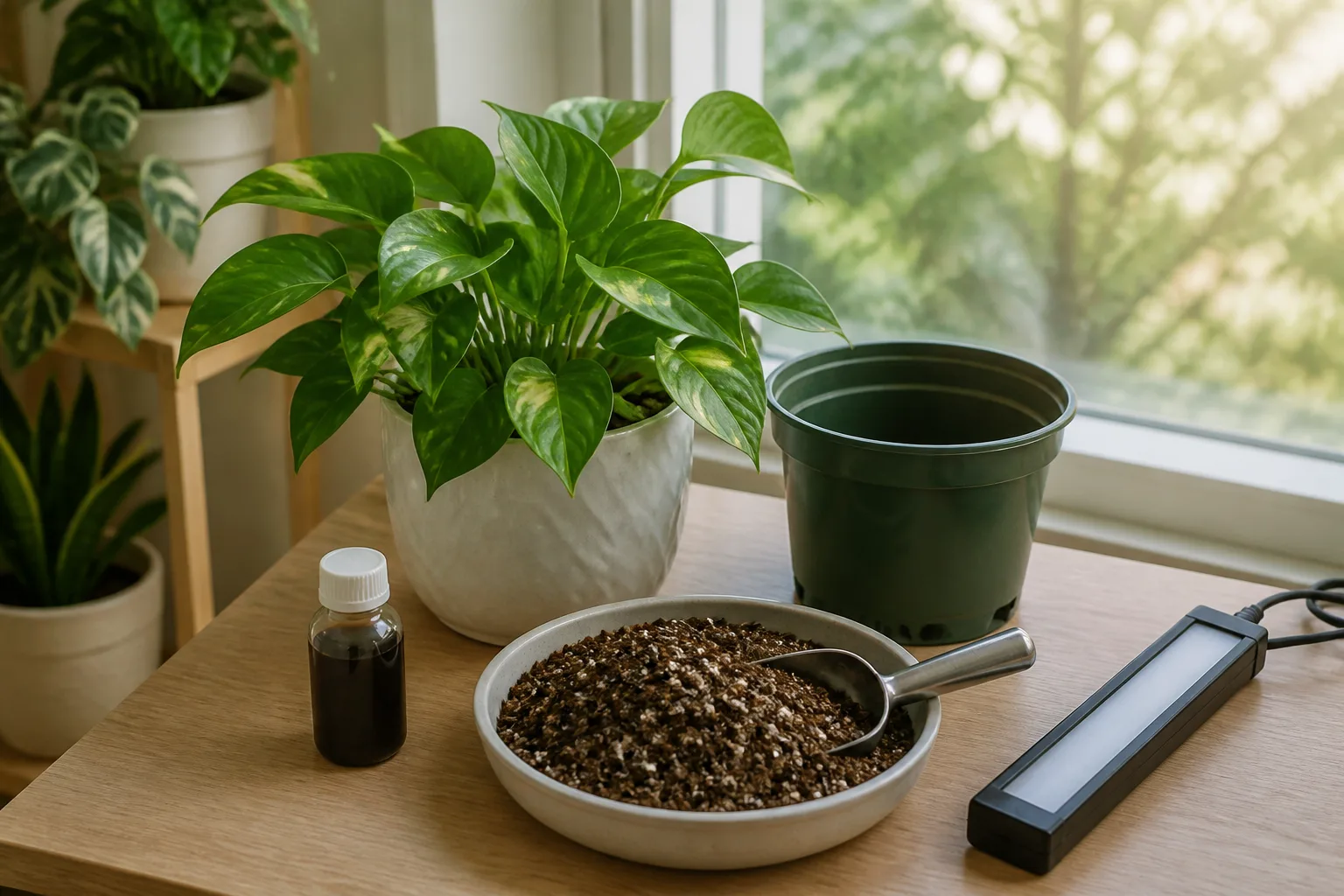
Raise light before you feed. Move the plant closer to a brighter window, rotate weekly, and wipe dust from leaves so more light reaches the surface. In winter, RHS recommends shifting many houseplants toward south- or west-facing windows when sunlight is weaker. If windows cannot deliver enough intensity, add a full-spectrum LED grow light on a timer — often around 12–14 hours with a dark period — starting near a foot above the canopy for many foliage bars, then adjusting if leaves bleach or stretch continues. Sudden bright-window moves can scorch shade-acclimated leaves; raise intensity over several days when you can. UF/IFAS confirms plants can grow entirely under appropriate artificial light when intensity and duration are right. For fixture setup detail, see grow lights for indoor plants. Do not fertilize the week you move a plant into much stronger light. Let it acclimate, watch for scorch, and wait for early tip response.
Repot only when roots are constraining growth. Repot when the root ball is circling, mix is nearly gone, or growth has stalled despite decent light and sensible watering. Choose a container only slightly larger, with drainage, and a quality soilless mix moistened before use. After repotting, expect a short pause while roots explore — that pause is not a new crisis if stems stay firm for two to three weeks. Avoid jumping two or three pot sizes “for future growth.”
Feed lightly after growth resumes. Once light and roots are adequate and the plant is in active season, use a balanced water-soluble fertilizer at a dilute rate. Clemson’s practical options include feeding at label rate every two to three months in the growing season, or a heavily diluted solution more often, while skipping feed during winter rest. If white crust appears on the pot or mix, cut back and flush with water until excess drains freely.
First-Hand Notes: Tip Metrics and Recovery Timelines
These are LeafyPixels grow-room notes, not controlled trials. Recovery timelines below are editorial starting points — species, season, and how long the constraint lasted all matter.
Pothos, east room → south sill (light stall). A golden pothos sat eight weeks with a static tip in a dim east corner (newest leaf length stuck at ~6 cm). After a move to a brighter south sill in mid-April, tip movement returned by day 12; a new leaf started by day 18. No fertilizer was added until the second new leaf began.
Snake plant, winter rest then spring flush. A snake plant produced no new spears from November through February while stems stayed firm and soil stayed wet longer. Watering was cut roughly in half and fertilizer skipped. Two new spears emerged in late March after days lengthened — no pot change, no feed.
Monstera, root-bound one-size-up. A root-bound Monstera deliciosa with roots from every drainage hole and no new leaf for ~10 weeks in May was moved one pot size up. Canopy stayed quiet for about four weeks while roots explored; a new leaf petiole emerged in week five. Treat that post-repot quiet as expected, not a second crisis.
How to run a tip scoreboard. Track one measurable signal weekly: tip length, newest leaf length, or days between leaves. After a meaningful light upgrade in spring or summer, many moderate growers show tip movement or a new leaf start within two to four weeks. After a root-bound repot, allow about three to six weeks for roots to use the new mix before judging canopy response. Winter improvements may not show until days lengthen. Flat metrics for another month after you fixed the diagnosed cause mean you missed a second constraint or the plant needs more time.
Common Mistakes That Keep Plants Stuck
Fertilizing a dim or resting plant ranks first. Nutrients cannot replace photons, and salts worsen root stress. Watering on a fixed calendar through winter ranks second — growth slowed, water use dropped, roots sat wet. Jumping to a much larger pot ranks third. Moving a plant from a nursery greenhouse into a dark corner and expecting the same growth rate ranks fourth. Ignoring species pace — demanding weekly leaves from a snake plant — ranks fifth.
Also avoid pruning hard or propagating every tip while the mother plant is still light-starved. New cuttings in the same dim spot will stall the same way. Fix the environment, then shape the plant.
Related guides
- Not enough light — meter checks and grow-light fixes when light is the stall.
- Plant not growing — broader light / roots / soil / season overview (use when compacted mix is in play).
- Winter houseplant care — rest-season watering, light, and no force-feeding.
- Repotting houseplants — when and how to relieve a constraining pot.
- Slow-growing plants — species pace baselines vs a true stall.
Conclusion
10-minute stall check (print or save):
- Season + stem firmness → rest vs problem.
- Leaf-height light check (meter or sill-vs-sofa ranking).
- Drainage holes + pot weight cycle + root-ball glance.
- Moisture at 5 cm — not the calendar.
- Only then: salts/feed in active season.
Tip scoreboard: log tip or newest-leaf length once a week for four weeks after one real fix. Rising numbers mean the stall is breaking even if the plant still looks quiet from across the room.
Use the Related guides list above for the next deep dive by job. Patience after a real fix is part of the cure — new leaves are the scoreboard, not the calendar alone.