Janet Craig Dracaena Care Guide: Fluoride, Light & Water
Learn Janet Craig Dracaena care: half-depth dry-down, fluoride-safe water, Compacta vs standard, soil, and tip-burn fixes for home and office.
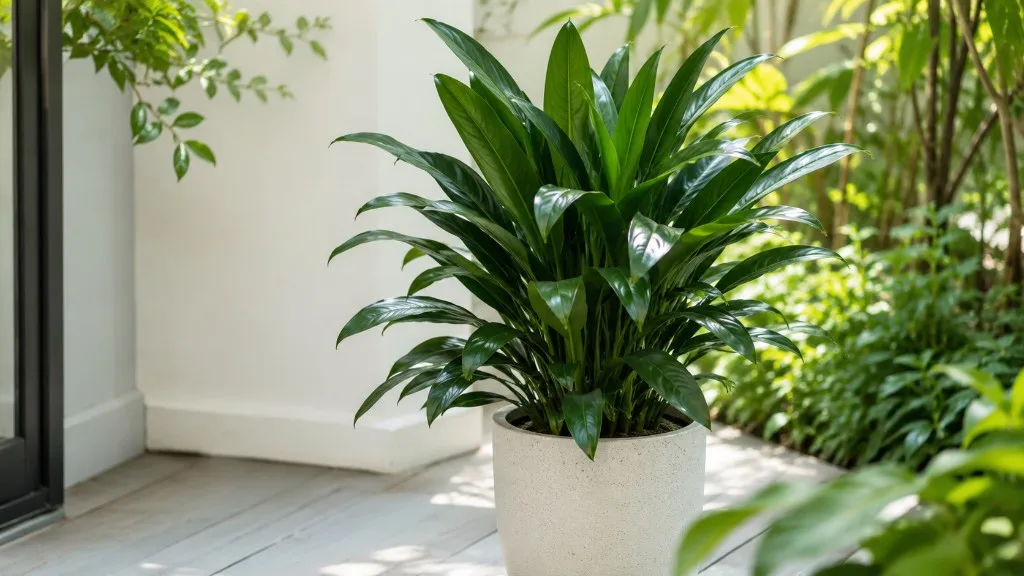
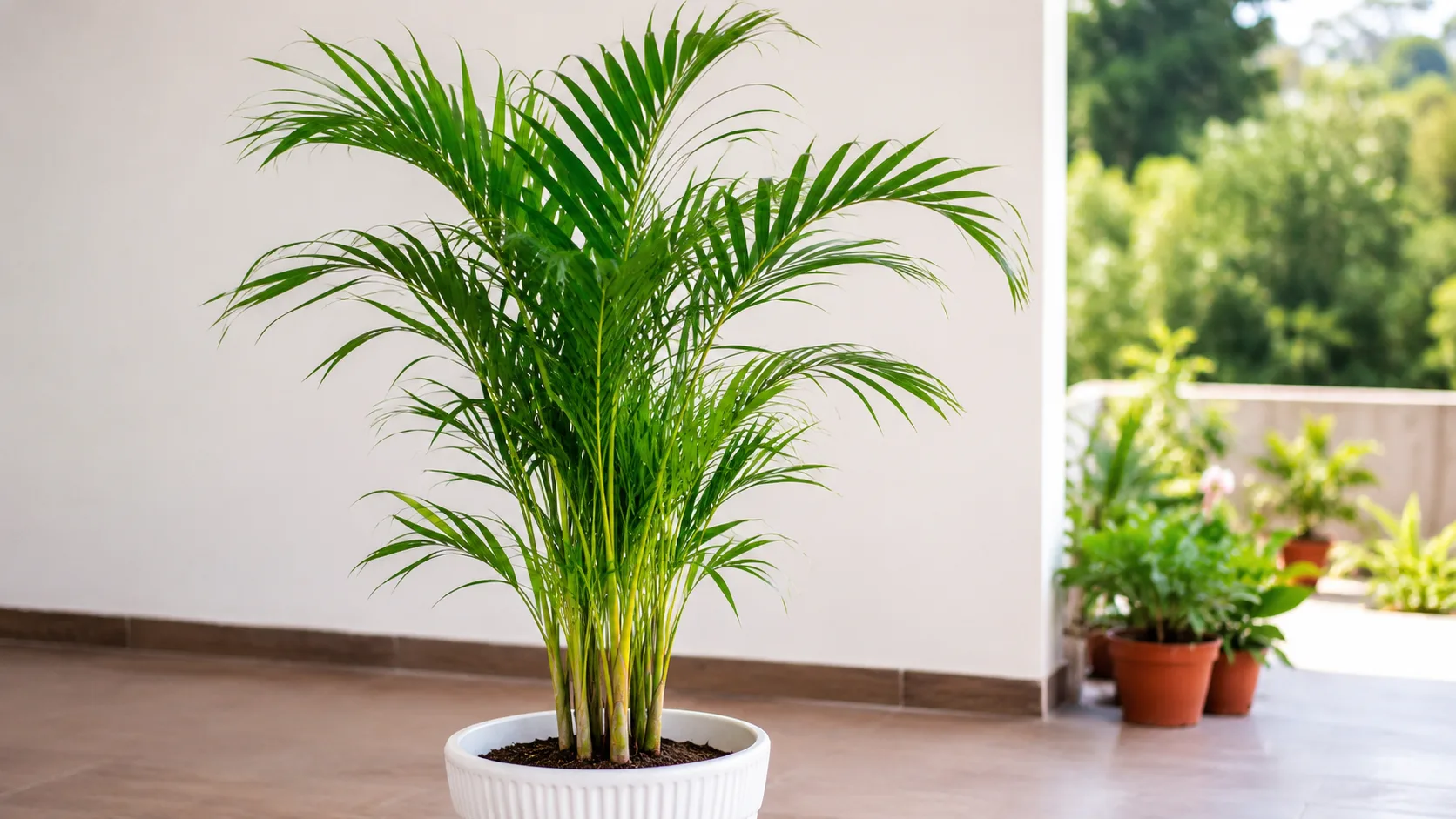
Janet Craig Dracaena is the deep-green floor plant people buy for dim offices when almost everything else stretches or fades. Sold as Dracaena deremensis ‘Janet Craig’ or under the Dracaena fragrans group, it earns that reputation through shade tolerance and slow growth — not through indifference to fluoridated water or a calendar watering habit. Get dry-down and water quality right and the plant stays glossy for years. Miss those two levers and you get the classic look: necrotic tips, soft yellow lower leaves, and a cane that eventually yields at the base.
By Sai Ananth · Reviewed by Sai Ananth (LeafyPixels editorial review) · Updated 2026-08-02
If your plant already shows soft yellow leaves over wet mix or crisp brown tips on firm foliage, start with the failure modes below, then lock in light, watering, and water quality before you repot or fertilize. Use the Janet Craig Dracaena hub when you need a symptom-first deep dive.
The Two Failure Modes That Ruin Janet Craig
Most “easy” floor plants fail from one dominant habit. Janet Craig fails from a pair: roots left wet too long in low light, and fluoride (plus fertilizer salts) accumulating at leaf tips. Marketing sells low-light toughness. Biology still needs oxygen in the root zone and irrigation water that does not slowly poison leaf margins.
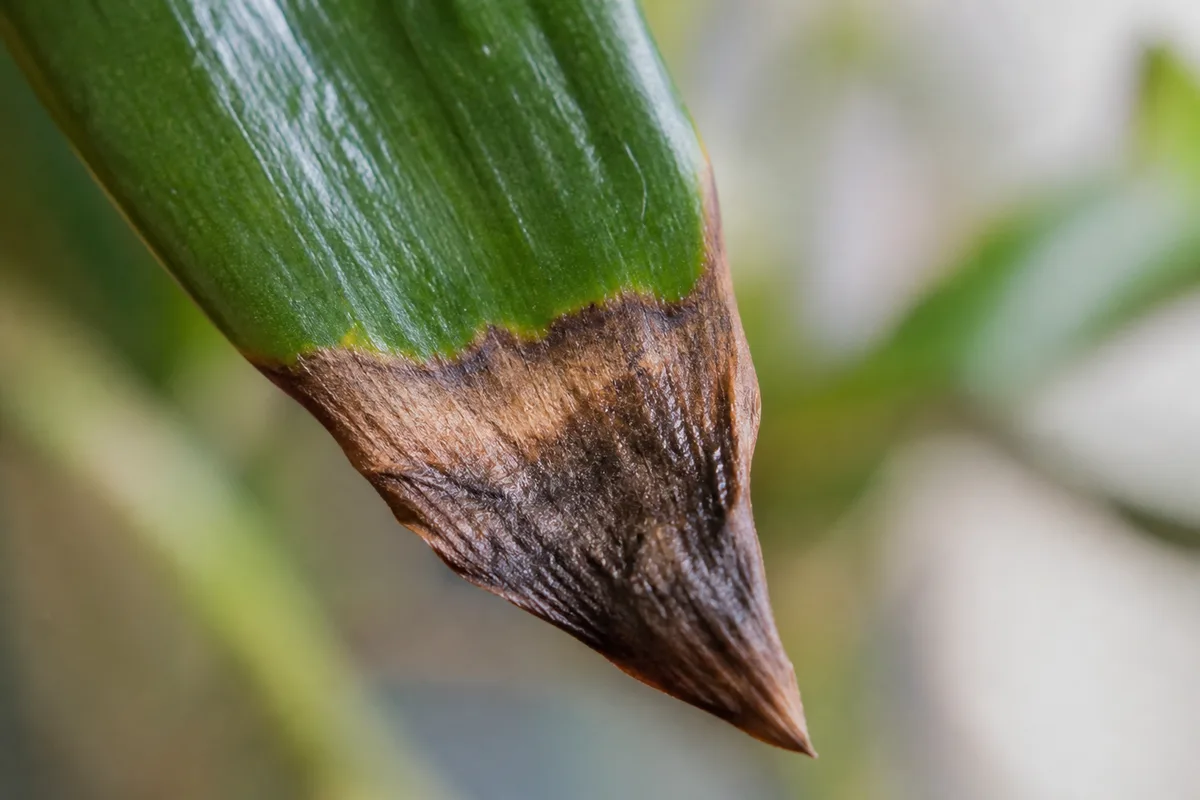
Clemson Cooperative Extension notes that Dracaenas are rugged interiorscape plants that tolerate lower light, but are very sensitive to fluoride, with tip or margin yellowing and scorched areas as classic injury. (Clemson HGIC) Pacific Northwest Pest Management Handbooks explain the pathway: municipal water often includes fluoride near 1 ppm; roots take it up; it moves in the transpiration stream and accumulates at tips and margins as necrotic tissue over months. Both Dracaena deremensis and D. fragrans are called out as very sensitive. (PNW Handbooks — Fluorine Toxicity)
Soft Yellow Over Wet Mix vs Crisp Tips on Firm Leaves
Use leaf texture and soil moisture together before you change three variables in one weekend.
Soft, limp-yellow leaves over a heavy, sour, or still-wet mix point to overwatering and possible root decline — especially under office fluorescents where dry-down is slow. Stop watering, improve light or airflow if you can, and unpot if the cane softens or decline continues. Clemson links root rot to poor drainage or overly frequent watering. (Clemson HGIC)
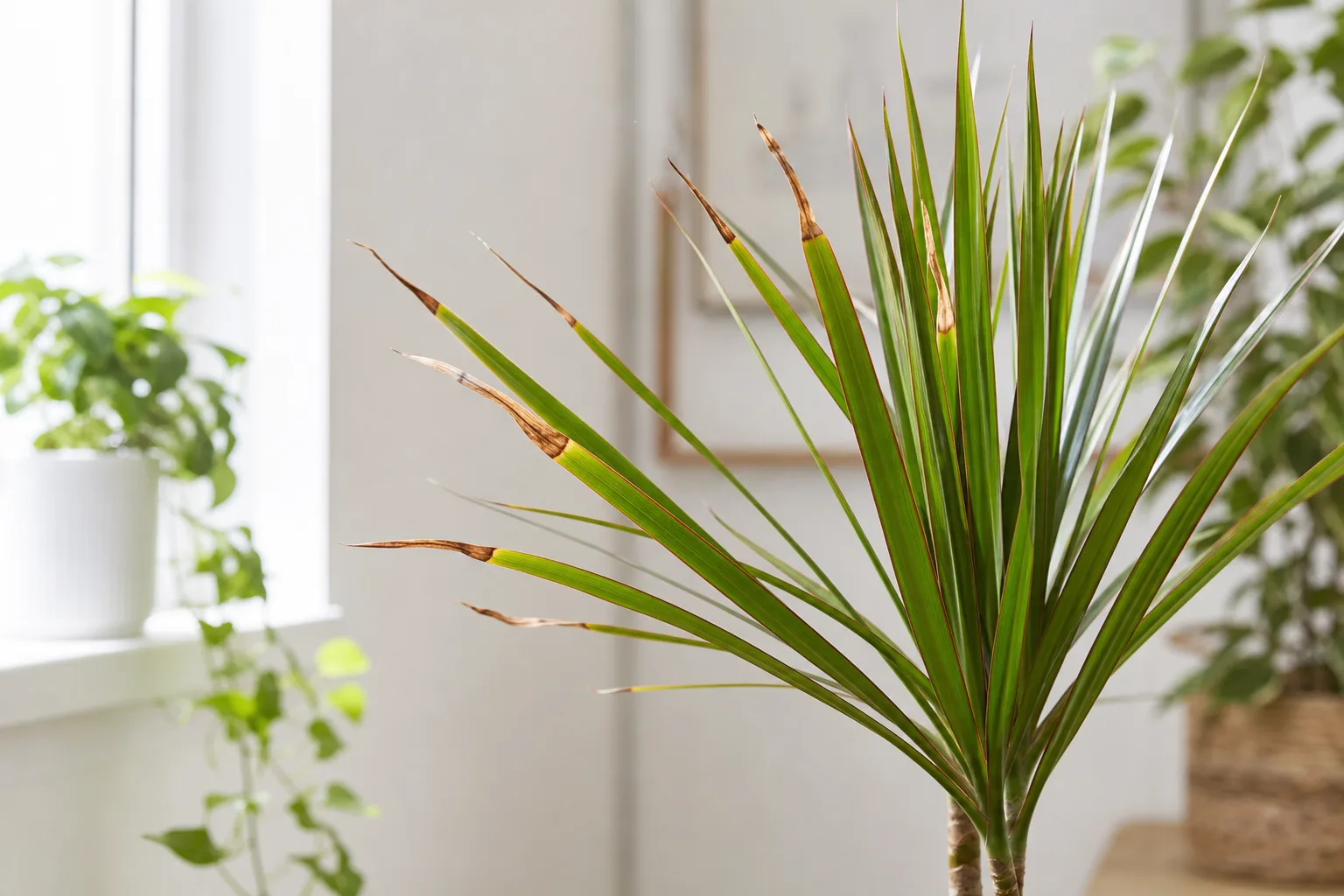
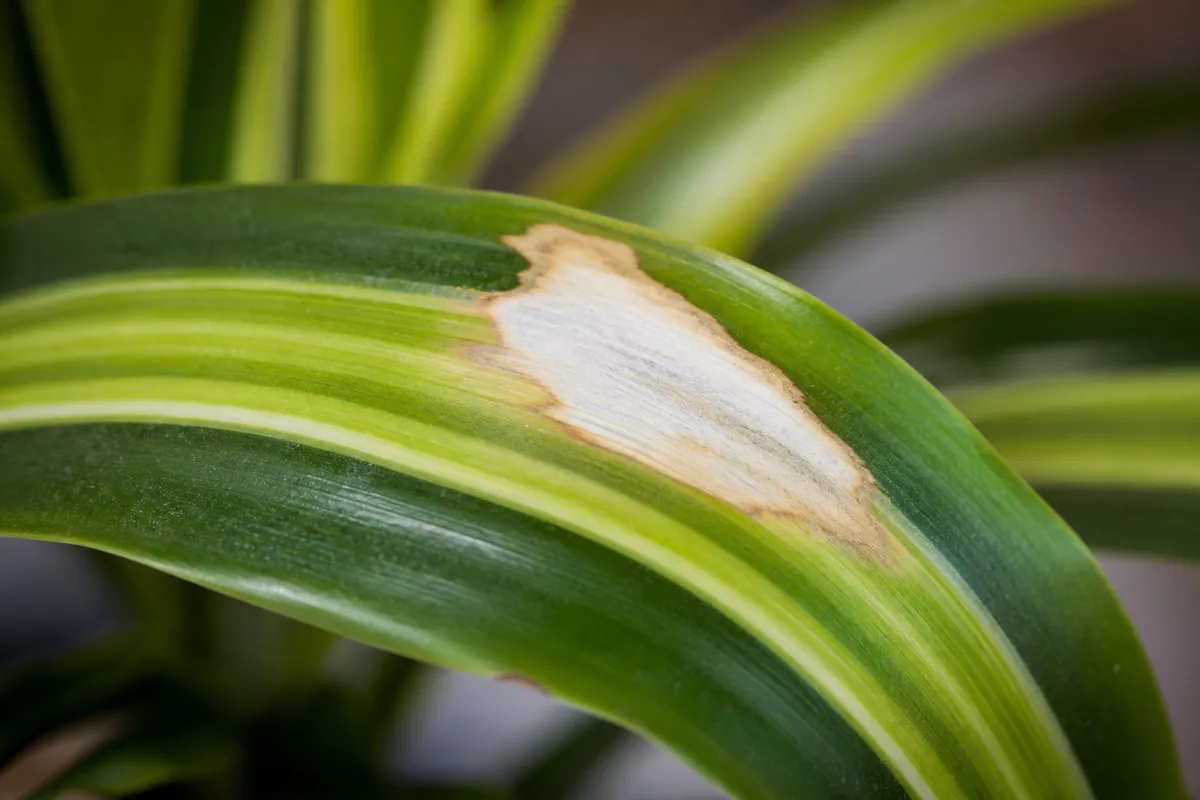
Crisp brown tips or margins on otherwise firm leaves with mix that is not swampy usually point to fluoride, fertilizer salts, extreme drought, or very dry winter air. Switch water source, flush crusted salts, confirm you are not bouncing between bone-dry collapse and flood, and stop overfeeding. Damaged tips will not turn green again; judge success on clean new growth. See brown tips on Janet Craig and overwatering on Janet Craig when one pattern dominates.
Quick Care Snapshot for Home and Office
For a healthy indoor Janet Craig, place the plant in medium indirect light when you want growth, accept low indirect light when you want maintenance mode, water when the top half of the mix has dried, use rain, distilled, or reverse-osmosis water when tips keep burning, and plant in a well-draining mix in a pot with a real drainage hole. Fertilize lightly only in active growth. Keep pets away — the plant is toxic if chewed.
| Care factor | Baseline target | Deeper guide |
|---|---|---|
| Light | Medium indirect; tolerates low light | Light guide |
| Water | Top half dry, soak, empty saucer | Watering guide |
| Soil | Indoor mix + modest aeration | Soil guide |
| Feed | Half-strength monthly in spring–summer | Fertilizer guide |
| Multiply | Tip cuttings or cane sections | Propagation guide |
Clemson’s genus summary maps cleanly here: bright indirect light preferred with low-light tolerance; dry the surface slightly, then water thoroughly; avoid cold water; keep daytime temperatures roughly 60–70°F with cooler nights; feed liquid foliage fertilizer monthly in spring and summer. (Clemson HGIC) Your job is translating that into the dim pots where Janet Craig actually lives.
Naming: Janet Craig, Compacta, and Deremensis Confusion
Janet Craig is an upright cane Dracaena grown for wide, glossy, dark green leaves held in arches along thick stems. Clemson notes ‘Janet Craig’ is widely used in home and commercial interiors and can reach about 10 feet indoors over many years. (Clemson HGIC) Missouri Botanical Garden places related corn-plant Dracaenas more often in the 4 to 6 foot range as typical U.S. container specimens. (Missouri Botanical Garden)
Retail tags still flip between Dracaena deremensis ‘Janet Craig’ and Dracaena fragrans ‘Janet Craig’. Taxonomists reorganized the group; for care, treat the plant as a fluoride-sensitive cane Dracaena regardless of the Latin name on the sticker. NC State Extension lists Janet Craig under the Dracaena fragrans complex and recommends bright to moderate, filtered light, commercial potting soil in a pot with drainage holes, and dry-down between waterings. (NC State Extension)
Standard Janet Craig vs Compacta Care Deltas
Do not confuse standard Janet Craig with Compacta (often sold as Compacta Janet Craig). Clemson describes Compacta as having about 5-inch leaves tightly clustered on slow-growing stems — a denser, shorter silhouette. (Clemson HGIC) NC State lists ‘Compacta’ or Dracaena Janet Craig as a solid-green form roughly 3 to 6 feet with dense short leaves and wavy margins. (NC State Extension)
| Trait | Standard Janet Craig | Compacta |
|---|---|---|
| Leaf habit | Wider, longer arches | Short, stacked, dense |
| Typical indoor height | Can approach tall cane floor plant (often 4–10 ft over years) | Usually shorter, denser frame (~3–6 ft class) |
| Shared rules | Same light, fluoride, drainage logic | Same |
| Extra risk | Tall cane softens if roots stay wet | Small nursery pots stay wet longer |
Care rules do not flip between the two. Compacta simply occupies less vertical space and can hide a soggy root ball longer in a tiny decorative cachepot without drainage.
Light: Survive in Offices, Thrive Near Windows
Light is the throttle for watering. More usable light means faster dry-down and firmer new leaves. Less light means slower metabolism and a higher rot risk if you keep a bright-window watering habit.
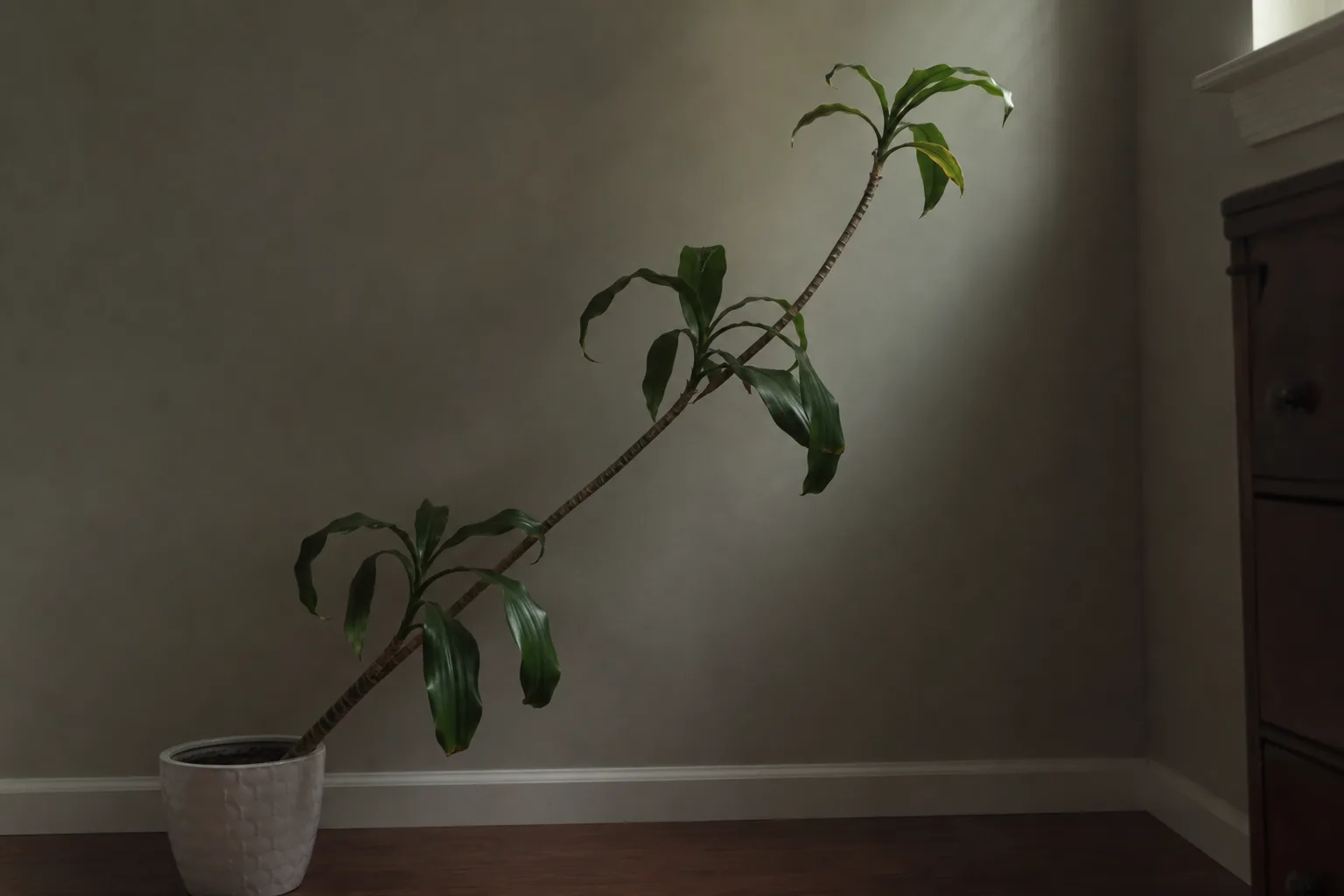
Survival in low light means existing foliage holds for months, new cane length barely appears, and watering intervals stretch dramatically. Many fluorescent offices sit in this band. Thriving needs medium indirect light: open-sky brightness without hot sunbeams on the dark leaf surface. Clemson notes that plants moved from dim spots to brighter indirect light produce thicker, stronger new leaves and grow faster. (Clemson HGIC) NC State warns that light that is too low narrows leaves, while direct sun can burn foliage. (NC State Extension)
An east window is the safest default. A bright north window works when the plant sits close to open sky. South and west windows need sheer curtains or side placement so midday beams never cook the foliage. Round dry patches and streaks often trace to excessive sun. (Clemson HGIC) Acclimate over one to two weeks when moving a shop-shelf plant brighter. Floor pots parked eight feet from a curtained window often receive far less light than the room “feels” — move closer before blaming soil or fertilizer. Details live in the Janet Craig light guide.
Watering: Top-Half Dry and Low-Light Timelines
Overwatering in low light kills more Janet Craig plants than underwatering. The cane stores some resilience against a missed week. Continuously wet, airless soil does not.
Let the top half of the potting mix dry, then water thoroughly until excess exits the drainage hole, and empty the saucer. In moderate indirect light, many pots reach that point every 10 to 14 days during warm months. In true low-light offices and cool interiors, expect 21 to 28 days or longer. Those ranges are starting points — pot size, mix, temperature, and root mass rewrite the calendar.
NC State guidance for Dracaena is to allow the surface to dry between waterings; for Janet Craig in dim rooms, waiting closer to half-depth dryness is safer because the lower root zone still holds moisture while the upper layer breathes. (NC State Extension) PNW tip-burn guidance notes that D. deremensis prefers soil kept evenly moist rather than extreme drought cycles, while D. fragrans is easier to overwater — the practical home translation is a solid dry-down, then a thorough soak that remoistens the whole root ball evenly, not daily sips or bone-dry collapse. (PNW Handbooks — Tip Burn)
Check with a finger, wooden skewer, or pot weight before every watering. A fixed Tuesday habit is the fastest way to rot a dim-corner specimen. Full check methods live in the Janet Craig watering guide and how to water indoor plants.
LeafyPixels Dry-Down Notes by Pot and Light
LeafyPixels grow notes (attributed editorial observations during hub documentation, not a controlled trial):
- 10-inch plastic nursery pot, north-facing office fluorescents (~68–72°F): half-depth dryness typically landed around 22–26 days in late spring through summer documentation sessions. The surface looked dry by day 10–12 while the mid-pot skewer still came up damp.
- Same mix, east window with morning sun blocked by sheer: half-depth dryness more often landed around 11–14 days in the same season.
- 6-inch Compacta in a decorative cover pot without drainage: stayed heavy past three weeks after a single thorough soak — saucer water and cachepot habits were the failure, not “thirst.”
- Tip-burn case: one standard cane watered with municipal tap showed progressive tip necrosis over several months; after switching to RO and flushing once, new leaves emerged with clean tips within about 6–8 weeks. Old burned tissue did not reverse.
Your room will differ. Treat these as condition-tagged starting points, then trust depth checks over any published day count.
Fluoride, Tap Water, and the Tip-Burn Protocol
Janet Craig is among the most fluoride-sensitive houseplants. PNW Handbooks describe fluoride as an accumulative foliar poison that inhibits photosynthesis and other processes as it concentrates at margins. (PNW Handbooks — Fluorine Toxicity) Clemson lists fluoride injury as tip or margin yellowing and scorched areas, and advises keeping soil pH roughly 6.0 to 6.5, avoiding fertilizers with superphosphate, and not relying on mixes with a very high perlite fraction because perlite can contribute fluorine. (Clemson HGIC) Missouri Botanical Garden notes that filtered or rain water can reduce tip browning from water additives. (Missouri Botanical Garden)
Excessive drying between waterings and heavy fertilizer can also brown tips, so diagnose moisture and salts alongside water source. (PNW Handbooks — Tip Burn) For a broader houseplant framing of tip burn from water quality, see brown tips on houseplants.
Water Hierarchy and What Overnight Sitting Does Not Fix
Practical hierarchy for Janet Craig:
- Rainwater, distilled, or reverse-osmosis water — best default when tips keep burning.
- Charcoal-filtered water — useful compromise; results vary by filter media and municipal chemistry.
- Standing tap water — removes some chlorine with time, but does not remove fluoride. Do not treat overnight sitting as a fluoride fix.
- Softener water — avoid. Softeners exchange hardness for sodium salts that stress many container plants.
PNW cultural controls for tip burn include avoiding fluoridated water or treating it by reverse osmosis, condensation, or charcoal removal of fluorine; fertilizing sparingly; and keeping calcium/pH in a safer band. (PNW Handbooks — Tip Burn) Change one major variable at a time when possible: water source first if tips are crisp on firm leaves, then flush if salts crust the surface, then reassess dry-down depth.
Soil, Pot Size, and Why High-Perlite Mixes Matter
Missouri Botanical Garden recommends organically rich, consistently moist, well-drained, loamy peaty potting soil in part shade for container corn-plant Dracaenas. (Missouri Botanical Garden) NC State asks for commercial potting soil in a pot with drainage holes. (NC State Extension)
For home mixes, start with a quality indoor potting base and add enough aeration that water exits within about a minute and the top half can dry between drinks. A workable default is roughly three parts peat- or coir-based potting mix to one part perlite, stepping aeration up with orchid bark in brighter rooms — while respecting Clemson’s caution against very high perlite loads on fluoride-sensitive Dracaenas. (Clemson HGIC) Never use garden soil. Skip gravel “drainage layers” that raise the perched water table. Match pot size to the root ball; oversized plastic pots in low light stay wet for weeks.
Repot when roots circle, lift the plant, or the mix smells sour and stays heavy. Move up only about 2 inches in diameter. Full recipes: Janet Craig soil guide and repotting guide.
Temperature, Drafts, and Winter HVAC Tip Burn
Clemson favors normal house temperatures around 60–70°F by day with cooler nights, and notes humidity below about 30–40% can contribute to dry tips. (Clemson HGIC) Missouri Botanical Garden prefers roughly 60–75°F and warns that outdoor placement should come inside before nights near 50°F. (Missouri Botanical Garden) NC State similarly recommends keeping temperatures above about 50°F, with corn plants happiest nearer 70–80°F. (NC State Extension)
Keep Janet Craig off cold glass, out of heater and AC blast zones, and away from doors that slam winter air across the foliage. Sudden leaf drop often traces to temperature swings, drafts, overwatering, or pests. (Clemson HGIC) Average household humidity of 40–50% is usually fine; a pebble tray or small humidifier helps more than constant misting that leaves wet leaves in still air. Winter office HVAC often stacks low humidity with fluoridated tap water — tip burn accelerates even when you did not change watering frequency.
Fertilizer Without Adding Tip Burn
Janet Craig is a light feeder. Clemson recommends liquid foliage fertilizer once a month in spring and summer. (Clemson HGIC) Use half label strength on moist soil, pause in fall and winter, and skip feeding on stressed, newly repotted, or barely growing low-light plants. Avoid superphosphate and high-phosphorus bloom formulas that can carry fluorine. Tip and margin burn from heavy feeding is a documented Dracaena failure mode. (Clemson HGIC)
If white crust appears on the soil or tips worsen after feeding, stop fertilizer, flush the pot thoroughly with clean low-fluoride water two or three times, and wait for clean new growth before any light feeding. NC State notes sensitivity to fluorides and built-up salts and suggests non-fluoridated water plus periodic flushing when tips brown. (NC State Extension)
Repotting and Pruning the Cane
Repot every couple of years or when the root ball forces the issue — Janet Craig is slow, so frequent upsizing is unnecessary. Spring or early summer is the calmest window. Refresh compacted nursery peat that stays wet for weeks even when you “barely water.”
Prune yellow lower leaves at the stem when they are fully spent; that shedding is how the cane silhouette forms. To shorten a leggy plant, cut the top as a tip cutting and leave the stump to push new shoots from dormant buds. Clemson notes that if stems become too long and bare, cutting them at the desired height lets new leaves appear. (Clemson HGIC) Expect stump sprouts over several weeks to a few months, not overnight. Keep the stump’s mix lightly cycling — not soggy — while buds wake. More detail: Janet Craig pruning and repotting.
Propagation: Tip Cuttings and Cane Sections
Propagation is straightforward once you respect nodes and orientation.
Stem tip cuttings: Take a 4 to 6 inch leafy crown with several nodes on the stem. Strip leaves that would sit underwater or underground. Root in room-temperature water or moist airy mix in bright indirect light around 65–75°F. Roots often form in several weeks in warm conditions; transplant when roots are about an inch long.
Cane sections: After removing the top, cut the bare cane into 3 to 4 inch sections with at least one node each. Mark the top so you plant base-down. Insert into moist perlite or a light mix; keep warm and evenly moist but not soggy. Leafless cane pieces may take longer than tips because they rely on stored stem energy until a new crown emerges.
Clemson lists tip or stem cuttings, air layering, and basal shoots as standard Dracaena methods. (Clemson HGIC) NC State lists stem cuttings for the genus and corn plant. (NC State Extension) Step-by-step photos and aftercare: Janet Craig propagation guide.
Problem Triage and When to Unpot
Read soil moisture and leaf texture first.
| Symptom pattern | Likely drivers | First move |
|---|---|---|
| Brown tips/margins, firm leaves | Fluoride, salts, drought extremes, low humidity, overfeeding | Switch water, flush salts, confirm dry-down |
| Bleached crisp sun patches | Direct sun | Filter light; see sunburn |
| Sparse, narrowed, leaning new growth | Chronic low light | Brighten gradually; stretch watering |
| Soft yellow leaves + wet mix | Overwatering / poor drainage | Stop water; improve light; consider unpot |
| Soft cane / musty mix / gnats | Root rot risk | Unpot, trim mushy roots, fresh mix |
| Scale, mites, mealybugs, thrips | Common Dracaena pests | Isolate; wipe; treat appropriately |
Clemson flags scale and mites as common Dracaena pests; NC State also notes thrips and mealybugs on corn plant. (Clemson HGIC) (NC State Extension)
When to unpot: several soft yellow leaves over soil that stays wet for weeks, a musty smell, fungus gnats that refuse to leave, or a cane that yields under gentle pressure. Trim black mushy roots, repot into fresh aerated mix, and water sparingly until new growth appears. Drought stress looks different: light pot, dry mix deep down, leaves that crisp rather than go limp-soft. Water thoroughly once, then return to the top-half-dry rule. Symptom pages: root rot, yellow leaves, underwatering.
Pet Safety for Cats and Dogs
Janet Craig is not pet-safe. The ASPCA lists striped Dracaena / Janet Craig plant as toxic to dogs and cats. Clinical signs can include vomiting, depression, inappetence, drooling, incoordination, and weakness; cats may also show dilated pupils, abdominal pain, and increased heart rate. Related ASPCA Dracaena listings cite saponins as the toxic principle with overlapping GI and neurological signs.
Keep floor specimens out of reach of chewers. If ingestion is suspected, contact your veterinarian or the ASPCA Animal Poison Control Center at (888) 426-4435 (consultation fee may apply). Do not induce vomiting unless a professional directs you. For low-light architecture without the same pet risk profile, compare snake plant care and ZZ plant care — and still verify toxicity for your household animals.
Related Guides
- Janet Craig Dracaena hub — full reference, fertilizer, propagation, repotting, and problem index
- How to water indoor plants — soil-check skills across species
- Brown tips on houseplants — water-quality and tip-burn framing beyond one cultivar
- Topic deep-dives already linked above for light, watering, and soil
Conclusion
Office 7-day reset checklist
- Confirm the pot has a drainage hole and empty any cachepot saucer daily this week.
- Check mid-pot moisture with a finger or skewer before any pour; skip water if the top half is still damp.
- Switch irrigation to rain, distilled, or RO if tips are crisping on firm leaves.
- Move the plant closer to usable daylight (or add a simple LED) before changing fertilizer.
- Wipe leaf undersides and look for scale or mealybugs while you are already inspecting.
- Note pot weight after a thorough soak so you can feel the next dry-down without guessing.
- Open the hub only for the one symptom that remains after moisture and water quality are honest.
Good Janet Craig Dracaena care is restraint matched to light, plus water that does not slowly burn tips. Fertilize lightly only while new leaves are forming. When something looks wrong, diagnose by moisture, water quality, and cane firmness before changing placement, fertilizer, and pot size in the same weekend. For symptom-specific fixes, start at the plant hub — the plant forgives missed waterings far more willingly than it forgives soggy soil and fluoridated tap water on repeat.