Root Rot on Janet Craig Dracaena: Causes, Checks & Fixes
Quick answer
Root rot on Janet Craig Dracaena follows chronic overwatering-especially in low-light offices where soil stays wet for weeks. Stop watering, unpot, and trim brown mushy roots; firm cane tissue above the rot can recover with fresh mix and dry-down discipline.
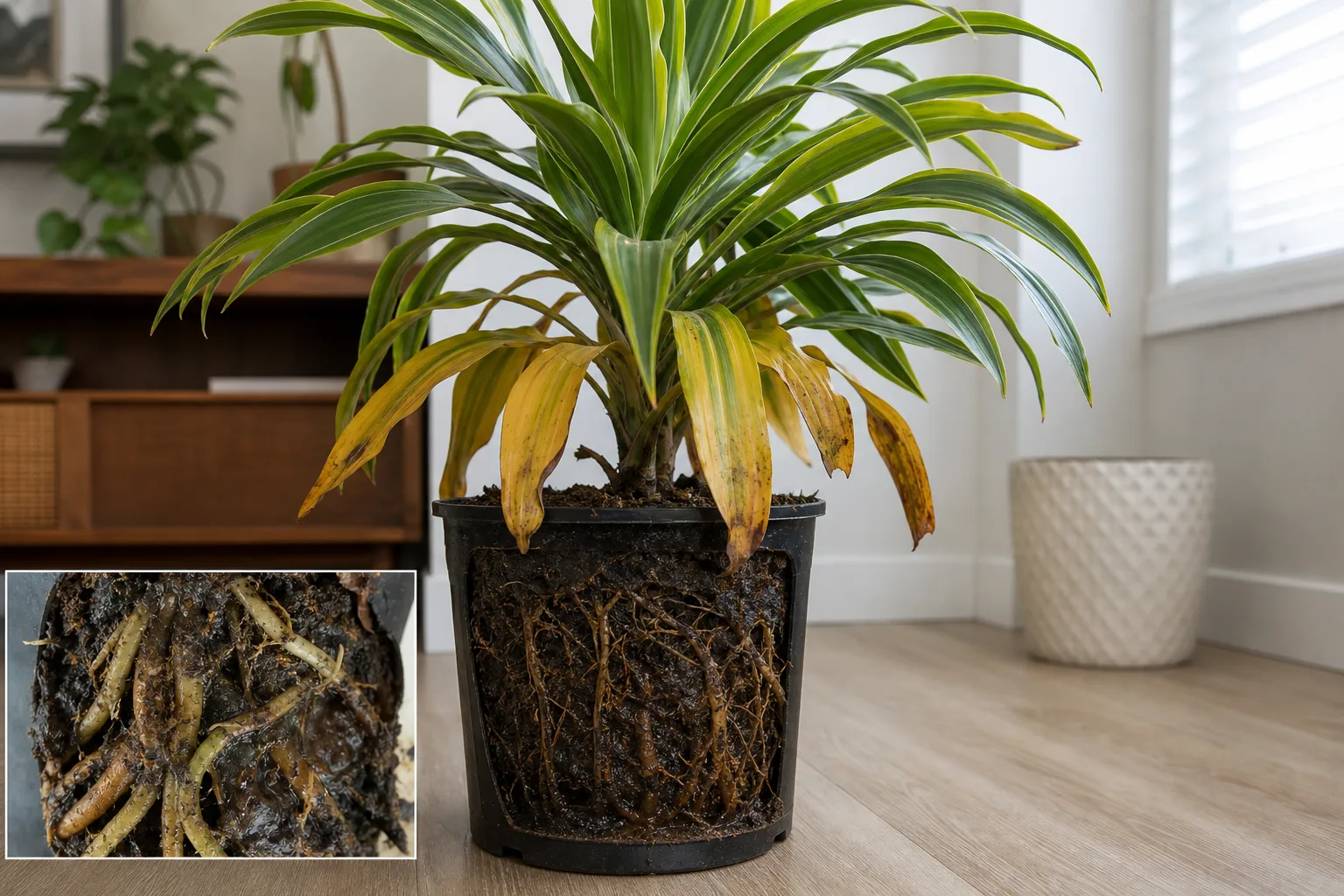
Root Rot on Janet Craig Dracaena: Causes, Checks & Fixes
This guide covers root rot on Janet Craig Dracaena. See also the general Root Rot guide, watering, and light pages for this plant.
Root Rot on Janet Craig Dracaena: Causes, Checks & Fixes
Quick answer
Root rot on Janet Craig Dracaena (Dracaena fragrans ‘Compacta’, formerly D. deremensis ‘Janet Craig’) is a cultural failure-roots sitting in wet, airless mix too long-not a random disease you catch from the air. It is especially common when a low-light-tolerant plant keeps receiving bright-room watering frequency in a dim office or hallway.
First fix: stop all watering and unpot to inspect roots before you repot. Firm cane tissue above soft roots can recover after trim, air-dry, and downsized repot. A mushy cane base throughout may require propagation from firm tissue higher up instead of another rescue repot.
If you are still deciding whether the problem is excess moisture versus thirst, start with overwatering triage on Janet Craig-this page assumes you have confirmed or strongly suspect active root decay.
Why Janet Craig gets root rot
Janet Craig has sturdy tan canes but fine feeder roots that still need oxygen between waterings. Extension guidance for dracaena emphasizes letting the mix dry between waterings and avoiding constantly wet conditions. In low light, transpiration drops sharply, so weekly watering can saturate the lower root zone long before the top half dries-the pattern detailed in the Janet Craig watering guide.
Low-light office dry-down mismatch
Janet Craig earned its reputation in lobbies and corridors because it tolerates deep shade better than most large houseplants. That same trait slows water use. Many office specimens need every three to four weeks or longer between thorough soakings once roots are healthy-not the weekly autopilot schedule that works for faster-growing plants in bright rooms. Watering on a calendar while the bottom half stays damp is the leading route to rot.
Fine roots and oxygen need
When soil stays saturated, oxygen is driven out of the root zone. Fine dracaena roots suffocate first; decay fungi follow. Poor drainage-no hole, compacted peaty mix, oversized pots, or standing saucer water-extends that saturation window. Janet Craig’s thick cane can stay firm while roots fail underneath, which is why cane checks matter as much as leaf color.
Cool-season calendar-watering trap
Keep temperatures above 50°F (10°C) when possible. Cool rooms below roughly 55°F (13°C) slow water uptake further, so autumn and winter overwatering is common when summer watering habits continue unchanged. A heavy wet pot in a cool dim corner can rot roots in weeks even though the cane still looks upright.
Fluoride stress is a separate pathway: dracaenas are sensitive to fluorides and built-up salts, and fluorine toxicity can compound root stress while brown tips distract owners into watering more. Switch to lower-fluoride water after rescue, not during active rot work.
What root rot looks like on Janet Craig
Early signs (thirst mimic on wet soil)
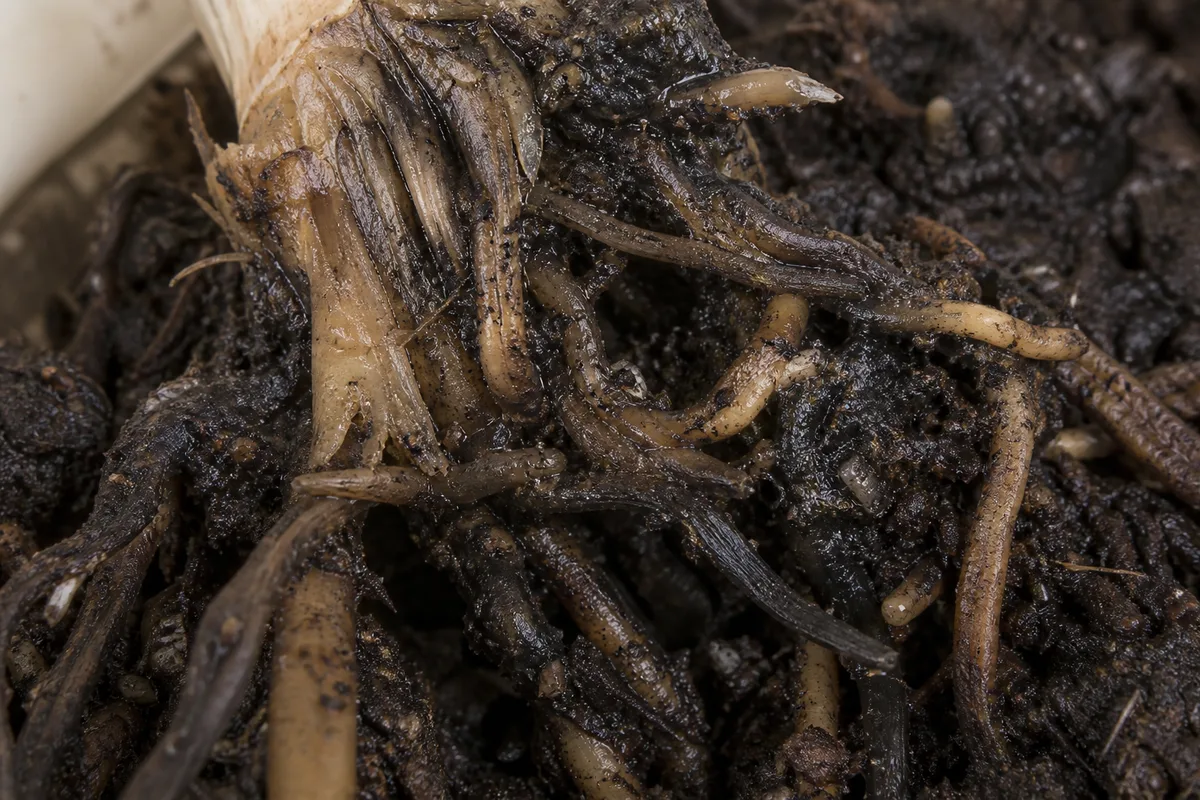
Root Rot symptoms on Janet Craig Dracaena - compare with healthy tissue on the same plant.
Early rot often mimics thirst: lower leaves yellow and droop while soil is wet, because damaged roots cannot move water upward even though the pot is heavy. Crown growth stops. Fungus gnats may appear around the damp surface-treat them as a moisture warning, not an isolated pest problem.
Cane firmness check at soil line
Press gently at the cane base where it meets the mix. Firm upright cane with wet soil and yellow lower leaves still warrants a root inspection-do not assume thirst and pour again. Janet Craig replaces lost lower leaves slowly; judge early rescue by cane firmness and root texture, not by whether old yellow foliage re-greens.
Advanced signs
Advanced rot shows soft or discolored cane tissue at the soil line, blackened or hollow roots, and a sour or swampy odor when you lift the plant. Wilt-on-wet-soil is the hallmark paradox: strap leaves collapse on a saturated pot. Compare that pattern with wilting on Janet Craig when you need to separate dry wilt from wet wilt before unpotting.
Root rot vs. wet-wilt vs. dry wilt
Use pot weight, half-depth moisture, cane firmness, and smell-not leaf limpness alone.
| Signal | Confirmed root rot | Wet-wilt (overwatering, roots declining) | Dry wilt (underwatering) |
|---|---|---|---|
| Pot weight | Heavy, cool inside for days | Heavy several days after watering | Noticeably light |
| Half-depth skewer | Cool, dark, damp | Cool and damp | Dry or barely moist |
| Cane at soil line | Softening or discolored | Firm early; softening = escalate | Firm |
| Leaf pattern | Yellow clusters on wet soil; crown stall | Lower yellow/drop on wet mix | Thin, papery blades; crisp tips possible |
| Mix smell | Sour or musty | Sometimes musty | Neutral or dusty-dry |
| First fix | Stop water → unpot → trim → repot | Stop water; extend dry-down; inspect if declining | One thorough soak after dry-down confirmed |
When symptoms sit between overwatering and confirmed rot, follow overwatering checks first. Return here once mushy roots, sour odor, or cane-base softening confirm decay.
How to confirm the cause (inspection checklist)
Run this sequence before repotting:
- Weight test: Lift the pot 5 to 7 days after the last watering. Still heavy? Root zone is likely saturated.
- Half-depth test: Insert a dry wooden skewer to about half the media depth. Cool, stained wood means wait-not water.
- Cane squeeze: Press the base at the soil line. Firm is better; give-way or denting is urgent.
- Smell: Sour or swampy odor from drainage holes or lifted root ball suggests active decay.
- Unpot and rinse: Gently remove the plant and rinse old mix from roots. Healthy Janet Craig roots are firm and whitish to tan. Rotted roots are brown, slimy, or hollow.
Confirmation heuristic (starting point, not a lab rule): If more than roughly a third of the root mass is mushy and the mix smells bad, treat root rot as confirmed. If roots are firm and mix is dry with drooping leaves, underwatering is more likely. Over-watered soil encourages fungus gnats and root problems together-persistent gnats plus a heavy pot strengthen the rot diagnosis.
Severity ladder
Branch rescue by how much tissue is still sound.
Mild: partial root loss, firm cane
Some brown mushy roots, but the cane is firm throughout and odor is mild or absent. Trim affected roots, air-dry briefly, repot downsized into fresh mix, and resume conservative dry-down. Old yellow lower leaves may drop but need not re-green-watch for new crown growth as the real recovery signal.
Moderate: more than half mushy roots, firm upper cane
More than half the roots are decayed, yet the cane above the soil line stays firm. Aggressive root prune, 24 to 48 hour air-dry in bright indirect light (home-climate starting point-extend in cool humid rooms), then repot into a pot matched to the trimmed root ball, not the old oversized container. Expect weeks before strong improvement.
Severe: mushy cane base throughout - propagate only
When the cane base is soft, discolored, or hollow through several inches, repotting the whole plant rarely saves it. Cut firm cane sections above all soft tissue and root per the Janet Craig propagation guide. Do not propagate from cuttings taken below rotted tissue. Multi-cane floor specimens may yield several salvageable tops-discard only the mushy base sections.
First fix for Janet Craig
Stop all watering immediately. Do not add fertilizer, peroxide drenches, or “corrective” extra irrigation on day one.
Then:
- Unpot and rinse roots to see true damage.
- Trim all soft, brown, or smelly roots back to firm tissue with sterilized scissors; sterilize between cuts.
- Optionally dust cut surfaces with cinnamon-optional home practice, not a substitute for air-drying cut roots.
- Let the trimmed root ball air-dry in bright indirect light for about 24 to 48 hours if damage is moderate (adjust longer in cool, humid rooms).
- Repot into fresh well-draining mix in a pot only slightly larger than the trimmed root mass.
- Water lightly about one week later only if the mix is genuinely dry at half depth-a starting heuristic; large pots in low light may need longer.
Use fluoride-free or low-fluoride water going forward. Match the repot blend to the Janet Craig soil guide: a practical rescue recipe is 3 parts peat- or coir-based houseplant mix to 1 part perlite by volume (roughly 25% perlite); for chronic wet-office recoveries, some growers use up to 35 to 40% perlite at the next repot.
Step-by-step recovery
- Unpot and gently rinse away old wet mix to expose root condition.
- Cut all soft, brown, or smelly roots; sterilize tools between cuts.
- Air-dry the trimmed root ball before repotting unless rot is mild and odor is absent.
- Repot with a drainage hole; plant at the same depth as before-never bury the cane deeper to “stabilize” a wobbly plant.
- Resume conservative dry-down per light level in the watering guide-longer intervals in low light.
Worked example (office hallway): A Janet Craig in a fluorescent-only corridor was watered every Tuesday. The pot stayed heavy, the mix smelled sour on unpot, roughly 40% of roots were mushy, but the upper cane was firm. After trim, 48-hour air-dry, downsized repot with 3:1 mix plus perlite, and first water delayed until day 10, crown growth resumed in about six weeks. Old yellow leaves did not re-green-that is normal on this slow crown.
Recovery timeline
Recovery is gradual; damaged tissue does not bounce back overnight.
| Phase | What to expect |
|---|---|
| Days 0–2 | Stop water; unpot, trim, air-dry. Leaf drop may continue-do not interpret as failure yet. |
| Days 3–7 | Repot downsized; mix should dry steadily at the surface. Cane should stay firm. |
| Week 2 | First cautious soak only if half-depth tests read dry. No fertilizer. |
| Weeks 3–6 | Leaf drop slows; pot weight normalizes for your light level. |
| Weeks 6–10+ | New crown leaves indicate real recovery on Janet Craig. Old yellow foliage may persist until you prune it. |
If softness climbs the cane, odor returns on dry mix, or the pot stays heavy without new crown growth after eight weeks of corrected dry-down, re-inspect roots or shift to propagation salvage.
Propagation salvage when the cane base is lost
When the base is mushy throughout, repotting the intact plant is usually futile. Instead:
- Identify the highest point on each cane where tissue is firm when squeezed.
- Cut 2 to 4 inches above that firm zone with a sterile blade.
- Remove any lower leaves that would sit below the water line if water-rooting, or pot the cutting directly into moist (not soggy) perlite-heavy mix per the propagation guide.
- Discard all soft basal tissue and contaminated old mix-do not compost near other houseplants.
Janet Craig stem cuttings root slowly; bright indirect light and patience matter more than frequent watering during callus formation.
What not to do
Do not keep watering wilting leaves when soil is already wet. Do not fertilize during recovery. Do not return to weekly watering in a dim office. Do not bury a wobbly cane deeper in mix. Do not treat cinnamon as mandatory fungicide-it is at best an optional drying aid for cut surfaces.
Dracaena is toxic to cats and dogs due to saponins-wear gloves when handling damaged tissue and keep trimmings away from pets. If a pet ingests plant material or contaminated soil, contact your veterinarian promptly.
How to prevent root rot next time
Match watering to light, not calendar guilt:
- In deep shade, every 21 to 28 days or longer between soakings is common once roots are healthy-confirm with half-depth checks, not the date.
- In brighter indirect light, intervals may shorten toward 10 to 14 days, but always verify dry-down first per the watering guide.
- Use drainage holes; empty saucers and cachepots after every soak.
- Size pots to current root mass-oversized containers extend re-wet cycles in slow-transpiration offices.
- Refresh compacted peaty mix every two to three years using the soil guide perlite ratios.
- Treat fungus gnats as a moisture warning.
When to worry
Act the same day if any of these appear:
- Cane base turns soft or dents under light pressure
- Mix smells sour while the pot stays wet
- Yellow leaves drop in clusters on saturated soil
- More than half the roots are mushy on inspection
- Crown collapse or rapid wilt spread despite wet mix
Those signs mean progressing root failure-not another wait-and-see watering experiment. Escalate to full trim-and-repot here, or to propagation if the base is lost. If crown tissue above the soil line softens without obvious wet roots, compare with stem involvement on the overview hub at Janet Craig Dracaena.
Related Janet Craig guides
- Janet Craig overview - species hub and care context
- Watering guide - dry-down tiers, fluoride-free water, pot checks
- Soil guide - perlite mix recipes and repot timing
- Propagation guide - cane cutting salvage
- Overwatering - early triage before confirmed rot
- Wilting - dry vs. wet wilt fork
- Fungus gnats - moisture warning follow-up
Related tool
Use the Root Rot Risk Checker to narrow causes for root rot on this plant before changing multiple variables at once.