Wilting on Janet Craig Dracaena: Causes, Checks & Fixes
Quick answer
Wilting on Janet Craig Dracaena means strap leaves have lost turgor and feel limp-often from a light dry pot in bright rooms or a heavy wet pot with failing roots in low light. First step: lift the pot and probe half-depth moisture before you add water.
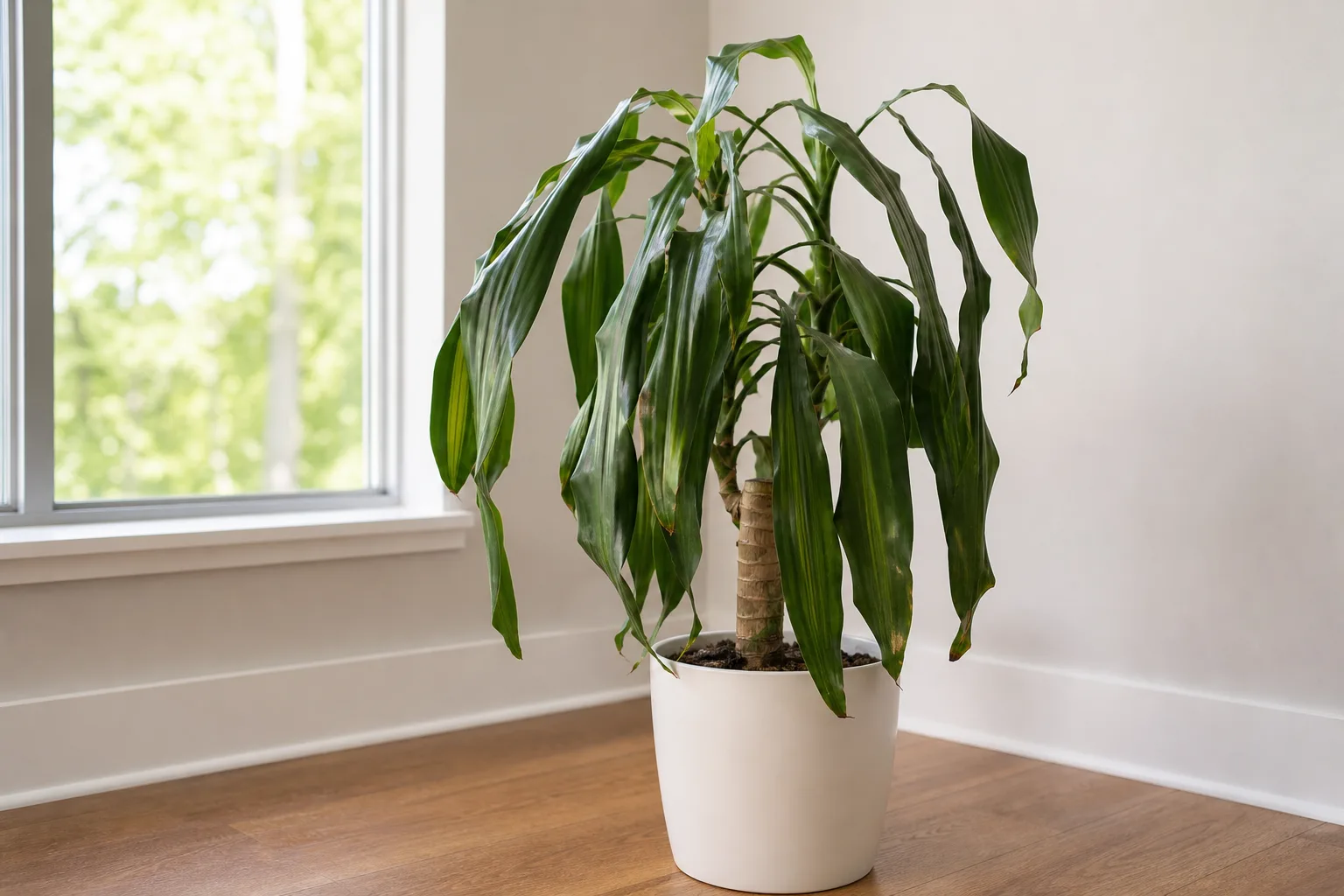
Wilting on Janet Craig Dracaena: Causes, Checks & Fixes
This guide covers wilting on Janet Craig Dracaena. See also the general Wilting guide, watering, and light pages for this plant.
Wilting on Janet Craig Dracaena: Causes, Checks & Fixes
Quick answer
Wilting on Janet Craig Dracaena (Dracaena deremensis ‘Janet Craig’) means strap leaves have lost turgor-they hang limp and feel thin instead of firm and glossy. The same collapse can come from opposite problems: a light dry pot in a bright room, or a heavy wet pot with failing roots in a dim office.
First step: lift the pot and probe half-depth moisture before you pour. A light container with dry mix through roughly the top half needs one thorough soak with filtered water, then a drained saucer. A heavy wet pot with yellow lower leaves means stop watering-rotting roots cannot move water upward even though the soil is wet.
Janet Craig is misleading when it wilts. Owners see limp foliage and reach for the watering can; in low-light offices that habit causes most rot cases. The moisture check separates dry wilt from wet wilt in under a minute.
Wilting vs. drooping leaves on Janet Craig
Wilting is turgor loss-strap leaves feel limp along the full blade, sometimes across the whole crown, and the plant can look like it is folding inward. Severe root failure produces wilt plus a softening cane base.
Drooping is mainly a posture change-leaves hang at a lower angle while the thick cane often stays upright and firm. Mild overwatering or physical bump after a move can droop foliage without full collapse.
Use this page when leaves feel uniformly limp, the crown softens, or decline spreads across most foliage within days. Route to drooping leaves on Janet Craig when strap blades hang lower but the cane is still firm and the problem feels like posture rather than total turgor loss.
What wilting looks like on Janet Craig
Healthy Janet Craig carries glossy, dark green strap leaves-typically 12 to 18 inches long on mature specimens-arranged in spirals along a thick tan cane. Wilting removes the springy firmness from those blades.
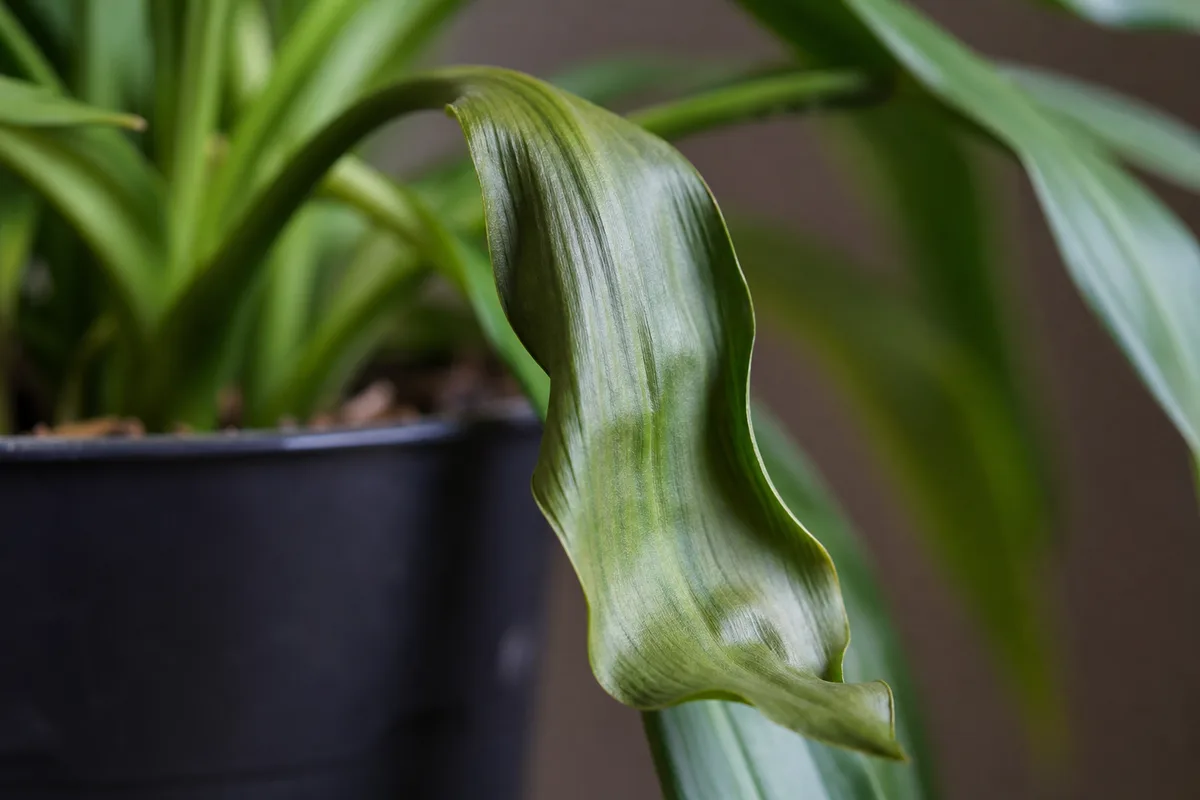
Wilting symptoms on Janet Craig Dracaena - compare with healthy tissue on the same plant.
Dry-pot wilt (underwatering):
- Strap leaves feel thin or papery, sometimes with crisp brown tips
- Mix is dry through roughly the top half; pot feels light when lifted
- Cane stays firm; lower leaves may yellow from drought stress
- Foliage often perks within 12 to 24 hours after one deep drink if roots are intact
Wet-mix wilt (overwatering / root failure):
- Leaves limp and may yellow, often starting on lower foliage while still partially green
- Mix stays damp at half depth; pot feels heavy and cool days after watering
- Sour or musty smell when you disturb the surface
- Fungus gnats may hover at the pot rim
- The paradox: plant looks thirsty while soil is wet-damaged roots cannot transport water
Draft wilt:
- Limpness after an AC blast, cold window contact, or winter draft
- Soil moisture reads normal; cane stays firm
- Often improves once placement stabilizes without any water change
Repot shock wilt:
- Temporary limpness within two weeks of Janet Craig Dracaena repotting guide
- Cane firm; mix may be unevenly wet if you watered heavily into fresh soil
- Clears in one to two weeks when drainage is open and you avoid soaking already-wet mix
Firm cane with wet mix usually means extend dry-down. Soft cane at the soil line on wet mix means inspect roots soon-see root rot on Janet Craig.
Why Janet Craig wilts
Janet Craig has thick cane-like stems that store some water, but relatively fine roots that need air between waterings. That combination creates the classic wilt paradox on office floors.
Low-light office biology. Janet Craig tolerates deep shade better than most large houseplants, which is why designers place it in dim hallways and fluorescent-only rooms. In those spots transpiration drops and evaporation slows-a well-meaning weekly watering schedule keeps the bottom half saturated for weeks while strap leaves wilt on heavy wet mix. Owners interpret limp foliage as thirst and water again, accelerating rot.
Wide-leaf transpiration in bright rooms. In brighter indirect light, broad strap leaves lose water faster. A missed watering week or a hot draft near a window can wilt an otherwise healthy plant on a light dry pot within days. The cane stores moisture, so brief drought is usually reversible-but prolonged dryness damages fine roots.
Root rot in chronically wet low-light mix. Saturated soil drives out oxygen; roots decline and cannot absorb water. Wet-mix wilt always pairs limp leaves with chronically damp mix, yellow lower leaves, and often fungus gnats. Janet Craig is sensitive to fluorides and built-up salts in wet root zones, adding combined stress that worsens limpness even when watering volume seems moderate.
Repotting and cold stress temporarily reduce root function. Recent repotting with heavy watering into fresh mix, or exposure below comfortable room temperatures, can wilt a firm plant without rot-though cold wet roots decline faster than cold dry ones.
How to confirm the cause
Work through these checks in order-do not skip the moisture test:
- Pot weight - Lift the container. Light with limp leaves fits underwatering. Heavy with limp leaves fits waterlogging or root rot.
- Half-depth moisture - Probe with a skewer or finger at mid-pot depth. Dry through the top half on a light pot confirms dry wilt. Cool, wet skewer on a heavy pot confirms wet wilt.
- Cane firmness - Press the stem at the soil line. Firm cane with dry soil points to thirst. Soft, darkening base on wet soil points to rot.
- Crown leaf color - Yellow lower leaves on a heavy wet pot support overwatering. Crisp yellow-brown tips on a light dry pot support drought.
- Smell and pests - Sour odor, surface algae, or fungus gnats support chronic saturation.
- Recent events - Repotting within two weeks, an AC blast, or a missed watering week narrows the cause quickly.
- Root spot-check if mismatch persists - Slide the plant out. Healthy Janet Craig roots are firm, white or tan. Brown mush that collapses between fingers confirms rot.
| Signal | Dry wilt | Wet wilt | Draft wilt | Repot shock |
|---|---|---|---|---|
| Pot weight | Light | Heavy | Normal | Normal to heavy |
| Half-depth moisture | Dry | Wet | Normal | Variable |
| Cane at soil line | Firm | Firm or soft | Firm | Firm |
| Lower leaf color | Crisp tips possible | Yellow, may drop | Normal | May yellow briefly |
| Smell / gnats | None | Sour smell, gnats possible | None | None unless overwatered |
| Recent trigger | Missed water, bright heat | Weekly water in shade | AC / cold window | Repot within 2 weeks |
Wilting is not always a call for water. Root injury from too much water decreases uptake; watering wet, wilted Janet Craig can make the problem worse.
First fix for Janet Craig (by likely cause)
Check pot weight and half-depth moisture-then act on what you find.
- If dry (light pot, dry skewer): Water thoroughly until drainage runs free. Empty the saucer within 30 minutes. Use filtered or non-fluoridated water. Do not give repeated shallow sprinkles-one deep drink rewets the root ball.
- If wet (heavy pot, wet skewer, yellow lower leaves): Do not water. Let the mix dry much longer-often an extra 7 to 14 days in low light. If the cane base softens or smell is sour, unpot, trim mushy roots, and repot into fresh well-draining mix. See overwatering on Janet Craig and root rot for full rescue steps.
- If draft wilt (normal moisture, firm cane, recent cold blast): Move away from vents and cold glass. No water change needed if skewer reads appropriate moisture.
- If repot shock (firm cane, recent repot): Hold off extra watering into already-wet fresh mix. Ensure drainage holes are open and saucer is empty.
That single diagnostic step prevents the most common mistake: watering a rotting Janet Craig because it looks thirsty.
Do not fertilize, mist heavily, or repot on day one unless you have confirmed mushy roots or clearly hydrophobic dry pockets in the center of the root ball.
Recovery timeline
Underwatering: Noticeable perk within 12 to 24 hours after a thorough drink on healthy roots; severely dehydrated plants may need 48 hours for full turgor on the widest strap leaves.
Overwatering / early rot: Days to weeks. Judge by firm stems and new crown activity, not old yellow leaves. Low-light offices may need one to three weeks of genuine dry-down before limpness eases.
Draft stress: Often overnight to 48 hours once placement stabilizes.
Repot shock: One to two weeks for foliage to feel firm again; hold fertilizer until new growth looks normal.
Collapsed strap leaves rarely become glossy again-they drop or stay limp while new crown leaves tell you recovery is real.
What not to do
Do not water every wilt without checking soil-wet-soil wilt needs drying and root inspection, not another drink.
Do not mist wilted leaves to fix root-zone problems; misting does not rehydrate failing roots and keeps glossy foliage damp in shade.
Do not use pebble trays to rescue wet-root wilt-they increase humidity around already-saturated mix.
Do not water on a fixed weekly schedule in deep shade when Janet Craig may need three to four weeks between soaks.
Do not leave the plant in a full saucer after watering.
Do not fertilize collapsed foliage-salt stress on damaged roots slows recovery.
Do not repot healthy dry wilt on day one-a deep watering usually fixes simple thirst.
How to prevent wilting next time
Match watering to how fast your pot dries in your light-not to how limp leaves look at first glance.
In deep shade and fluorescent-only offices, expect roughly the top half of mix to dry before the next soak-often every 21 to 28 days or longer in cool, dim conditions. In brighter indirect light, let the top half dry every 10 to 14 days in warm months, always confirming with skewer depth and pot weight rather than calendar dates.
Use well-draining mix, pots with open drainage, and empty saucers within thirty minutes. Allow soil to dry between waterings and use filtered water to reduce fluorine toxicity combined stress. Keep temperatures above 50°F (10°C) and away from cold AC blasts.
For complete species context-office dry-down rhythm, fluoride sensitivity, cane biology-see the Janet Craig watering guide and the Janet Craig overview.
When to worry - wet soil with soft cane base
Escalate immediately if the cane base dents under light pressure, the mix smells strongly sour, yellow lower leaves drop in clusters on wet soil, or a quick root check shows brown mushy tissue. Those signs mean wilting has progressed toward rot-dry-down alone is no longer enough.
Less urgent but worth fixing soon: mild limpness on a light dry pot that perks after one soak, or wilt right after repotting with firm stems and no rot smell.
Pet safety note
Janet Craig Dracaena contains saponins toxic to cats and dogs. Ingestion can cause vomiting, hypersalivation, and loss of appetite. Keep plants out of reach of pets that chew foliage. If ingestion is suspected, contact your veterinarian or the ASPCA Animal Poison Control Center at (888) 426-4435. Pet safety is separate from wilt diagnosis-correct moisture first, then address placement if pets are at risk.
Related Janet Craig problems
- Janet Craig overview - species hub and troubleshooting
- Janet Craig watering guide - dry-down rhythm by light level
- Drooping leaves on Janet Craig - posture change vs. full wilt
- Overwatering on Janet Craig - wet-mix deep dive
- Underwatering on Janet Craig - drought branch
- Root rot on Janet Craig - soft cane escalation
Conclusion
Wilting on Janet Craig Dracaena is a water-pathway signal on a shade-tolerant floor plant-not an automatic command to water. Pot weight, half-depth moisture, and cane firmness tell you whether to soak, dry, or inspect roots. Acting on that check first saves office plants from rot and rescues thirsty strap foliage before crispy damage spreads. Match watering to how fast your mix actually dries in your light-not to how limp the leaves look at first glance.
When to use this page vs other Janet Craig Dracaena guides
- Janet Craig Dracaena watering guide - Use for routine moisture checks before assuming wilting is the main issue.
- Janet Craig Dracaena problems hub - Browse all 50 common issues on this species.
- Overwatering on Janet Craig Dracaena - Different entry point when symptoms overlap with wilting.
- Yellow Leaves on Janet Craig Dracaena - Different entry point when symptoms overlap with wilting.