Drooping Leaves on Janet Craig Dracaena: Causes, Checks &
Quick answer
Drooping leaves on Janet Craig Dracaena mean strap foliage is hanging lower than usual-most often from overwatered roots on a heavy wet pot in low light, true drought on a light dry pot in bright rooms, or physical bump after a move. First step: lift the pot and probe half-depth moisture before changing anything.
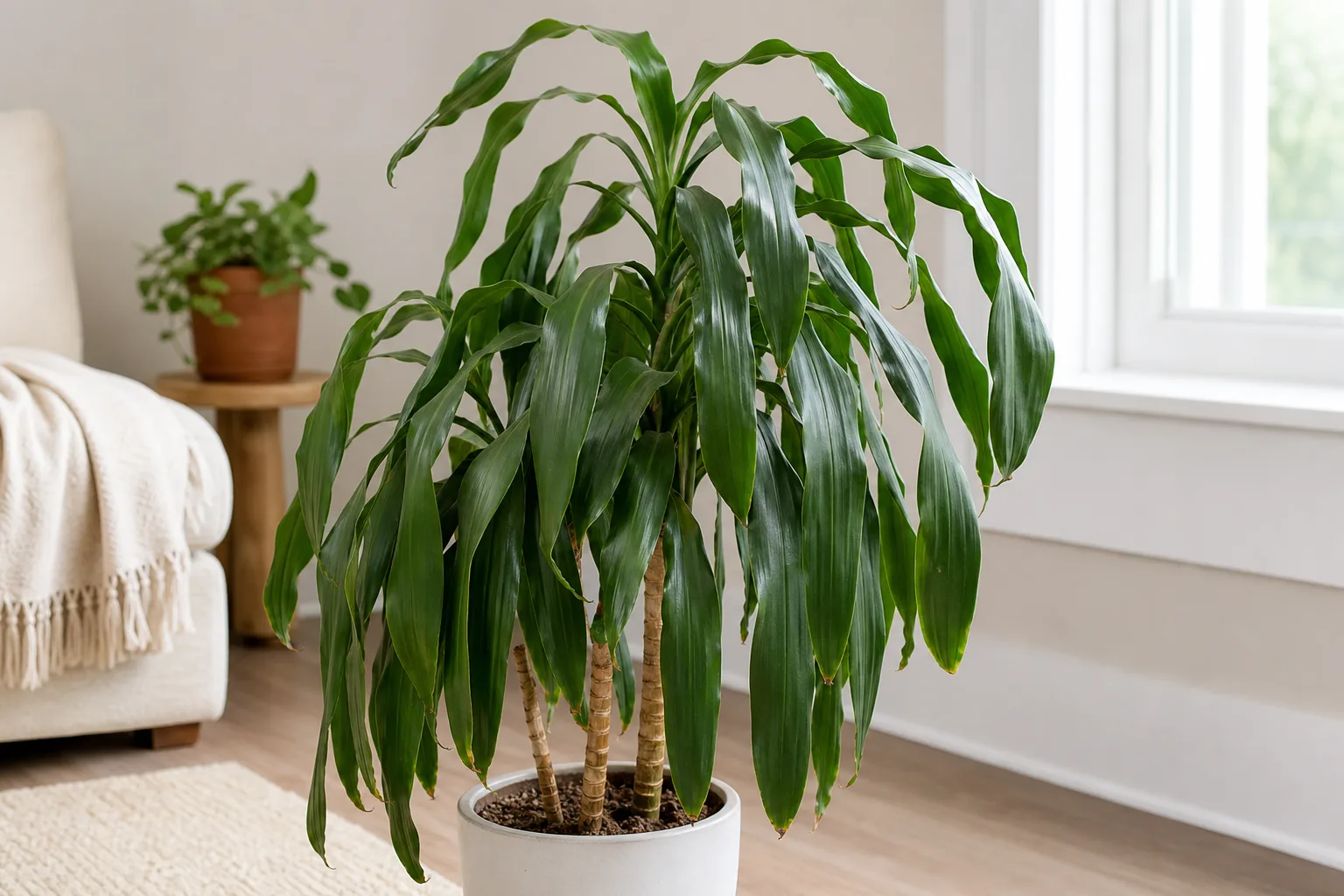
Drooping Leaves on Janet Craig Dracaena: Causes, Checks & Fixes
This guide covers drooping leaves on Janet Craig Dracaena. See also the general Drooping Leaves guide, watering, and light pages for this plant.
Drooping Leaves on Janet Craig Dracaena: Causes, Checks & Fixes
Quick answer
Drooping leaves on Janet Craig Dracaena (Dracaena deremensis ‘Janet Craig’) are a posture change, not one diagnosis. On this slow-growing floor plant with broad, strap-like leaves on thick cane stems, foliage hangs lower when roots fail on wet mix, when stored cane moisture cannot supply wide leaves on a light dry pot, or when physical bump after relocation bends petioles without any water problem. Janet Craig tolerates deep shade better than most houseplants-and that tolerance is exactly why droop from overwatering is common when owners water on autopilot in dim offices.
First step: lift the pot and probe half-depth moisture. If soil is wet and the container feels heavy days after watering, stop watering until that zone dries. If the pot is light, the mix is dry through roughly the top half, and strap leaves feel slightly softer along the midrib, water thoroughly once with filtered water and drain completely.
This page covers drooping strap foliage on Janet Craig. For full turgor collapse and overlapping wilt patterns, see wilting. For year-round dry-down rhythm, see the Janet Craig watering guide. For wet-soil deep-dives, see overwatering, underwatering, and root rot.
Drooping vs. wilting on Janet Craig
Drooping means strap leaves and their short petioles hang at a lower angle than usual while the thick cane often stays upright and firm. The plant looks tired or slumped at the foliage crown, not collapsed at the base.
Wilting is broader turgor loss-leaves feel limp and thin, sometimes across the whole crown, and the plant can look like it is folding inward. Severe wet-root failure produces both droop and wilt at once.
Use this page when strap leaves hang lower but the cane is still firm and the problem feels like posture rather than total collapse. Route to wilting on Janet Craig when foliage feels uniformly limp, the crown softens, or decline spreads fast across most leaves within days.
What drooping looks like on Janet Craig
Janet Craig carries glossy, dark green strap leaves-typically 12 to 18 inches long on mature specimens-arranged in spirals along a thick, tan cane. Healthy foliage sits at a slight upward arch from the stem. Drooping means those blades hang downward or outward at a sharper angle, sometimes touching neighboring leaves, without necessarily losing all internal firmness at once.
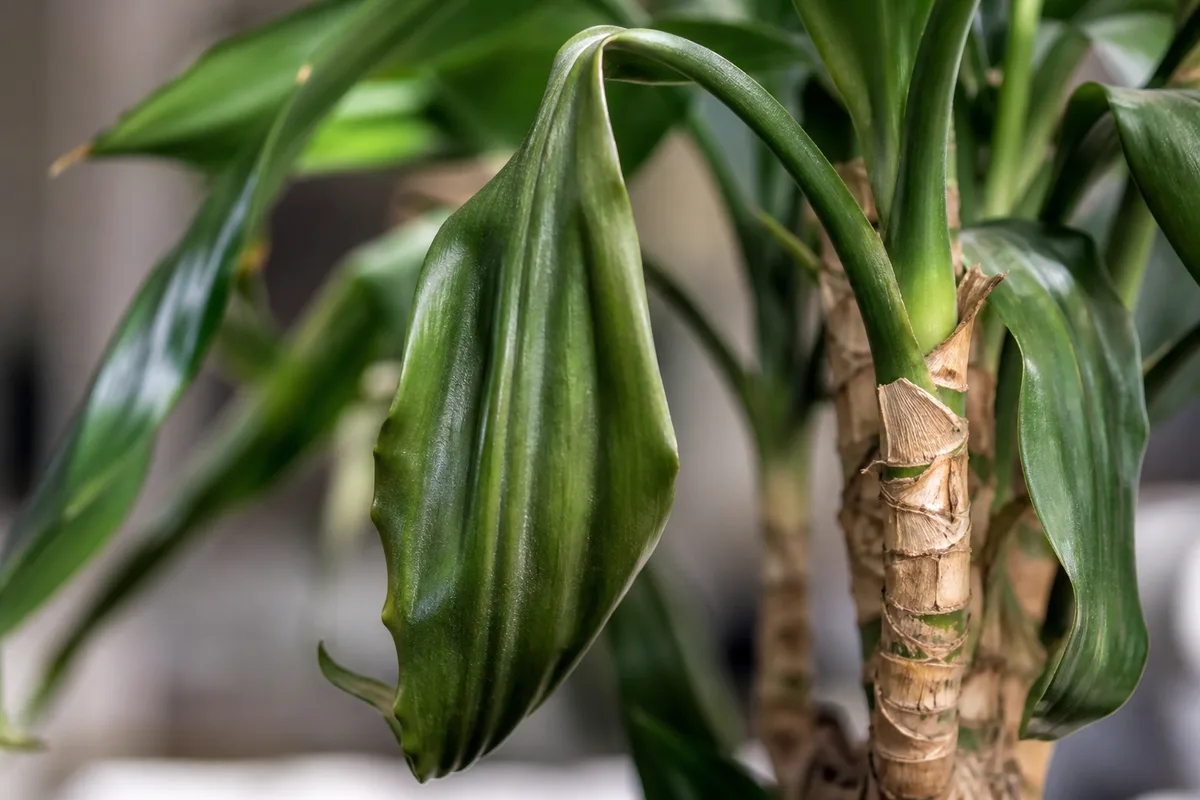
Drooping Leaves symptoms on Janet Craig Dracaena - compare with healthy tissue on the same plant.
Common droop patterns on Janet Craig:
- Overwatering / root stress - Strap leaves hang limply while mix stays damp and the pot feels heavy and cool several days after the last drink. Lower leaves may yellow while still partially green. A sour smell, fungus gnats at the surface, or soft tissue at the cane base points toward advancing rot. This is the classic wilt paradox: damaged roots cannot move water upward even though the pot is wet.
- Underwatering - Light pot, dry mix through roughly the top half, and leaves that look slightly thinner or softer along the midrib with crisp brown edges possible. Strap leaves droop; the plant often perks within hours after one thorough watering if the cane is still firm.
- Low-light office overwatering - Droop on a heavy pot in a dim hallway where the owner assumes leaves need more water because they hang lower. Half-depth skewer stays cool and wet for weeks; crown growth may stall for months.
- Bright-room drought - Wide leaves in a sunny window lose water faster than fine roots replace it. Light pot, dry half-depth, droop by midday that worsens over several dry days.
- Repot shock - Whole plant droops for days after root disturbance, especially if fresh mix was watered heavily or the pot was upsized. Cane should stay firm; decline after a week with sour soil means inspect roots.
- Physical bump droop - Strap leaves bent after moving a tall floor specimen or catching a door. Soil moisture normal, cane firm, no yellow lower leaves-no water change needed; leaves re-angle as new growth emerges.
- Cold draft droop - Occurs after AC blast or contact with a cold window; mix moisture normal, cane firm. Janet Craig loses vigor when temperatures drop below about 50°F (10°C) for extended periods.
What it does not look like: Crispy brown tips with firm upright strap leaves usually trace to fluoride or low humidity-not droop from root failure. One old lower leaf fading slowly on a developing trunk with green crown growth is normal aging, not an emergency droop event.
Why Janet Craig leaves droop
Low-light office biology and slow transpiration
Janet Craig earned its lobby reputation through exceptional shade tolerance, but low light means slow transpiration and evaporation. The bottom half of the mix can stay saturated for weeks if you water weekly on a calendar. Roots suffocate; strap leaves droop because fine roots lose oxygen in saturated soil even though water is abundant. In deep shade, expect 21 to 28 days or longer between thorough soaks-not seven.
Wide-leaf transpiration in bright rooms
In Janet Craig Dracaena light guide, Janet Craig’s broad strap leaves transpire faster. Missed dry-down cycles deplete stored cane moisture and petioles cannot hold blades upright. A light dry pot with slightly soft foliage confirms thirst-not a heavy, cool, damp container.
Fluoride and combined stress
Janet Craig is sensitive to fluorides and built-up salts. Chronic tap-water fluoride on a wet root schedule adds tip burn and weakens foliage, making droop harder to reverse even after you fix moisture. Fluorine toxicity concentrates in wet root zones with frequent watering.
Repot shock, drafts, and pest sap loss
Recent Janet Craig Dracaena repotting guide disturbs fine roots; oversized pots leave a ring of wet soil roots never reach. Cold drafts below comfortable room temperatures stress African understory biology. Pest sap loss from thrips or scale is less common but possible on chronically stressed specimens-inspect leaf undersides and cane joints if moisture checks are normal but droop persists.
How to confirm the cause
Work through this inspection in order:
- Pot weight - Heavy and cool days after watering supports overwatering. A light pot with droop may mean drought instead.
- Half-depth moisture - Push a dry skewer or finger to roughly half the pot depth. Cool, clinging mix means wait. Dry half-depth with a firm cane may mean underwatering.
- Cane firmness - Press gently at the soil line. Firm tissue with wet mix is overwatering you can fix with dry-down. Soft tissue means unpot immediately-you are past simple overwatering into root rot.
- Crown and lower leaf color - Yellow dropping lower leaves on wet soil fit overwatering. Crisp edges with dry half-depth fit drought.
- Smell - Sour odor at the drainage hole suggests anaerobic soil and possible rot.
- Light placement - Dark hallway with weekly watering? Bright window with missed drinks?
- Recent repot or move - Did you upsize, bottom-water into a cachepot, or bump the cane within the last two weeks?
- Draft exposure - AC vent, cold window, or winter door blast near the pot?
Confirmation decision table
| Pattern | Pot weight | Half-depth mix | Cane base | Lower leaves | Likely cause | First route |
|---|---|---|---|---|---|---|
| Strap leaves hang, heavy wet pot | Heavy, cool | Wet | Firm | Yellowing possible | Overwatering | Stop watering; see overwatering |
| Strap leaves hang, light dry pot | Light | Dry | Firm | Crisp edges possible | Underwatering | One thorough soak; see underwatering |
| Droop + wet soil + soft cane | Heavy | Wet | Soft | Yellow dropping | Root rot | Unpot now; see root rot |
| Droop after repot, firm cane | Variable | Fresh mix damp | Firm | Green | Repot shock | Hold water until half-depth dries |
| Droop after move, normal moisture | Normal | Normal | Firm | Green | Physical bump | No water change; stable placement |
| Droop after cold blast | Normal | Normal | Firm | Green | Draft stress | Move away from cold source |
Confirmed overwatering shows drooping strap leaves, heavy wet pot, and optionally gnats or soft stems. Confirmed underwatering shows a light pot, dry half-depth, and slightly soft foliage with a firm cane.
First fix for Janet Craig
Lift the pot and probe half-depth moisture before you change anything else.
That single step prevents the two most common mistakes-watering an already-wet root ball because strap leaves hang lower, and repotting drooping foliage on saturated soil. The wet branch and dry branch diverge here:
- If soil is wet and the pot is heavy: Stop all watering until roughly the top half of mix dries and the container feels noticeably lighter-often an extra 7 to 14 days in low light. Do not add water because leaves look limp while soil is already damp; waterlogged roots fail to transport water efficiently, and another drink makes recovery slower.
- If the pot is light and half-depth is dry: Water thoroughly once with filtered or non-fluoridated water until excess runs from drainage holes, then drain completely and empty the saucer within thirty minutes. Resume half-depth checks before every drink-do not return to calendar watering.
Do not fertilize, mist heavily, or repot on day one unless inspection shows mushy roots or blocked drainage holes. Make this one moisture correction first.
Recovery timeline
Stabilization often takes one to two weeks once moisture matches the confirmed cause-the cane should remain firm and new drooping should slow.
Dry-pot recovery: Strap leaves often perk within 12 to 24 hours after one proper soak if roots are healthy. Judge by improved leaf angle, not re-greening of yellow tissue.
Wet-mix recovery: Expect one to three weeks of extended dry-down in low light before leaves hold higher again. Yellow lower leaves that drooped will not re-green; watch for new crown leaves unfurling-the best sign of success during warm active growth, sometimes longer in a cool winter office.
Repot shock: Drooping often clears in one to two weeks when drainage is open and you avoid keeping fresh mix constantly damp.
Worsening signs: Cane base softens after appropriate dry-down, stems blacken upward from the base, sour smell intensifies, or drooping spreads to most strap leaves within days on wet soil-those point toward advancing root rot and need immediate unpotting.
Example recovery path: A lobby Janet Craig in a dim hallway showed strap leaves hanging lower on March 3 while the pot stayed heavy eighteen days after the last drink. Daily lifts showed weight dropping by March 12; half-depth was dry by March 16. Leaves began holding higher by March 22 after one thorough filtered-water soak on March 17 followed by another full dry-down-matching winter-slow drying in low light, not a calendar.
What not to do
Do not water more because strap leaves droop while soil is already wet-that converts overwatering into rot. Avoid mist as a droop fix; it does not rehydrate roots and keeps glossy leaves damp in shade. Do not feed a stressed plant hoping to perk drooping foliage.
Skip repotting into a much larger pot “to help drying”-extra wet soil volume slows dry-down in low light. Do not leave the plant in a full saucer after watering. Do not water on a fixed weekly schedule in deep shade when Janet Craig may need three to four weeks between drinks.
Do not assume all droop means thirst-check weight first. Physical bump droop with normal moisture needs stable placement, not another soak.
How to prevent drooping leaves next time
Match watering to how fast your pot dries in your light. Allow soil to dry between waterings-roughly the top half of mix in low light, often every 21 to 28 days or longer in dim offices; in brighter indirect light, let the top half dry every 10 to 14 days in warm months, always confirming with skewer depth and pot weight rather than dates.
Use well-draining mix, pots with open drainage, and empty saucers within thirty minutes. Water with filtered water to reduce fluoride combined stress. Keep temperatures above 50°F (10°C) and away from cold AC blasts. Stable placement reduces physical bump droop on tall canes.
For complete species context-office dry-down rhythm, fluoride, cane biology-see the Janet Craig watering guide and the Janet Craig overview.
When to worry - wet soil with soft cane base
Escalate immediately if the cane base dents under light pressure, the mix smells strongly sour, yellow lower leaves drop in clusters on wet soil, or a quick root check shows brown mushy tissue. Those signs mean drooping has progressed toward rot-dry-down alone is no longer enough.
If the cane stays firm, roots are pale when you inspect, and drooping slows after one proper moisture correction, you are on track. One slightly angled strap leaf on an otherwise firm plant with appropriate dry-down can wait for a routine check.
Pet safety note
Janet Craig Dracaena contains saponins toxic to cats and dogs. Ingestion can cause vomiting, hypersalivation, and loss of appetite. Keep plants out of reach of pets that chew foliage. If ingestion is suspected, contact your veterinarian or the ASPCA Animal Poison Control Center at (888) 426-4435. Pet safety is separate from droop diagnosis-correct moisture first, then address placement if pets are at risk.
Related Janet Craig problems
- Janet Craig overview - species hub and troubleshooting
- Janet Craig watering guide - dry-down rhythm by light level
- Wilting on Janet Craig - full turgor collapse and wilt paradox
- Overwatering on Janet Craig - wet-mix deep dive
- Underwatering on Janet Craig - drought branch
- Root rot on Janet Craig - soft cane escalation
Conclusion
Drooping leaves on Janet Craig Dracaena are a moisture, light, draft, or physical-stress signal on a shade-tolerant floor plant-not bad luck. Confirm the branch with wet heavy mix versus light dry pot, act on that single finding first, and judge recovery by firm new crown growth rather than old strap-leaf angle. Janet Craig forgives brief drought far more willingly than it forgives a wet, shaded pot left on autopilot.
When to use this page vs other Janet Craig Dracaena guides
- Janet Craig Dracaena watering guide - Use for routine moisture checks before assuming drooping leaves is the main issue.
- Janet Craig Dracaena problems hub - Browse all 50 common issues on this species.
- Overwatering on Janet Craig Dracaena - Different entry point when symptoms overlap with drooping leaves.
- Heat Stress on Janet Craig Dracaena - Different entry point when symptoms overlap with drooping leaves.