How to Grow and Care for Asiatic Jasmine
Asiatic jasmine is a fast evergreen ground cover for zones 7–11. Learn spacing, watering, mowing, cultivars, and how to stop it from taking over beds.
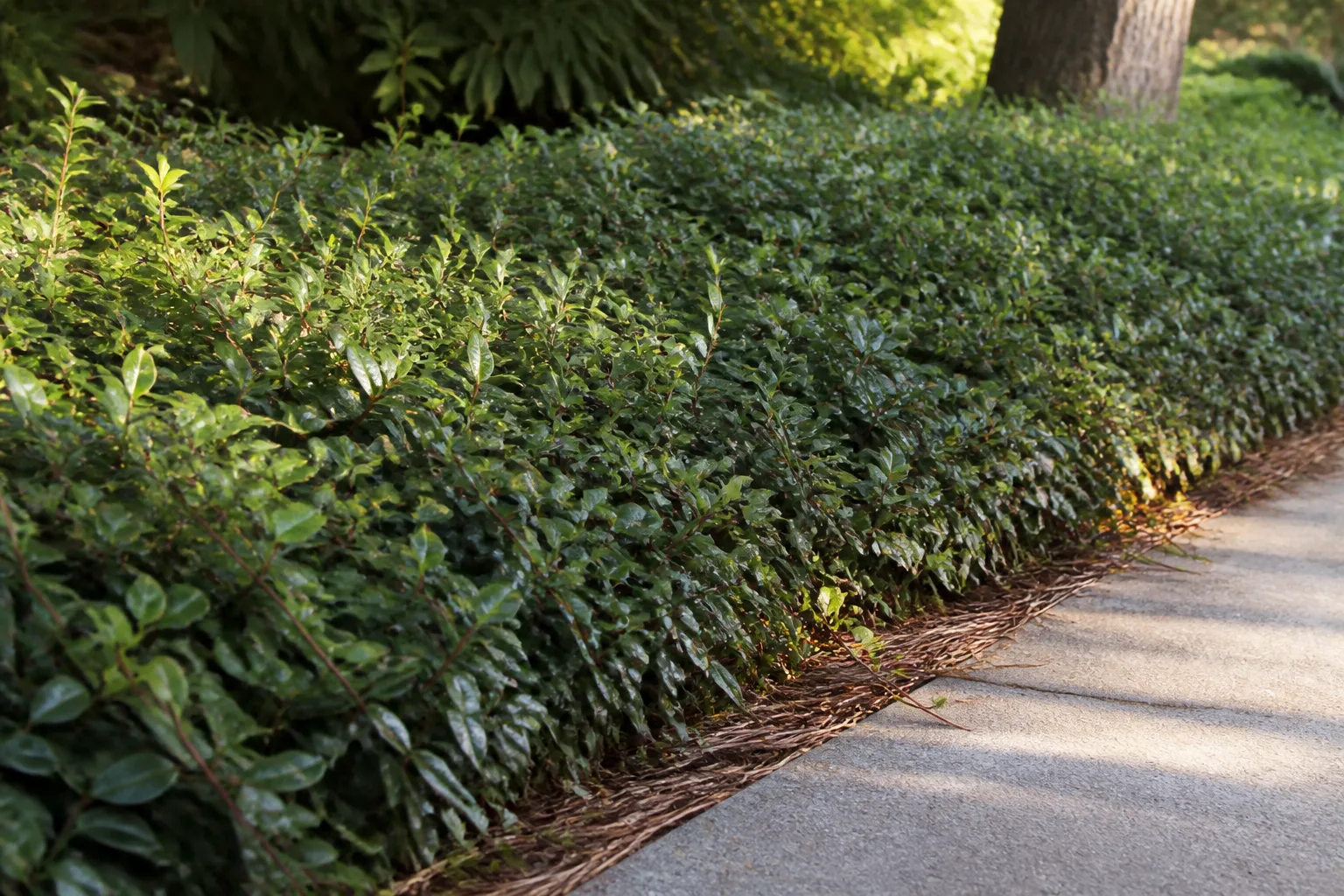
Asiatic jasmine (Trachelospermum asiaticum) is not a true jasmine — it belongs to the dogbane family (Apocynaceae), same genus as Confederate jasmine — but gardeners in warm climates treat it like one anyway: evergreen, fragrant when it flowers, and tough enough to replace turf where grass sulks in shade or on slopes. Most people buy it for the carpet of glossy leaves, not the pinwheel blooms that may never show up in your yard.
This guide starts with the decision that matters before you dig: ground cover, climber, or container trailer. Get that right, match spacing to your patience, and you get a low-input mat that suppresses weeds. Get it wrong — or overwater an established patch — and you spend years pulling vines off tree trunks and sidewalks.
Why Asiatic Jasmine Works When Turf Won’t
Lawns need sun, even moisture, and foot traffic tolerance. Asiatic jasmine trades those demands for a dense, twining mat that roots along stems as it spreads. UF/IFAS Gardening Solutions recommends it where turfgrass fails: under live oaks, along north-facing foundations, on slopes that erode, and in narrow strips between pavers where a mower cannot reach.
The plant stays evergreen through hard freezes in zone 7 and warmer, which is why Southern landscapers use it as a turfgrass alternative that needs mowing once a year instead of weekly. It is moderately salt tolerant for coastal yards, deer resistant in many regions, and bird friendly — songbirds nest in the thick cover. The trade-off is real: it does not handle heavy foot traffic, it can climb anything vertical if you ignore it, and NC State Extension rates maintenance as medium because you must edge and prune to keep boundaries.
If your goal is a walkable lawn substitute, look at fast-growing groundcovers that tolerate stepping — Asiatic jasmine is for look-but-do-not-stomp zones.
Asiatic Jasmine at a Glance
| Feature | Details |
|---|---|
| Common names | Asiatic jasmine, Asian star jasmine, yellow star jasmine |
| Botanical name | Trachelospermum asiaticum (Apocynaceae) |
| Plant type | Evergreen perennial ground cover and twining vine |
| Mature size | 1–2 ft. tall; 10–12 ft. wide as ground cover (NC State) |
| Growth rate | Rapid — 3+ ft. spread per year in sun with adequate moisture |
| Sun | Full sun to partial shade; afternoon shade in hot southern exposures |
| Soil | Loam, sand, or clay if drainage is good; high organic matter preferred |
| Soil pH | Acidic to neutral (6.0–7.5); growth slows above pH 8.0 |
| Hardiness | USDA zones 7–11 |
| Bloom | Small fragrant white to yellow flowers late spring through summer; often sparse or absent in hot, humid climates |
| Salt tolerance | Moderate — suitable for many coastal plantings |
| Foot traffic | Poor — not for paths or play areas |
| Toxicity | Apocynaceae sap can irritate skin; keep pets from chewing stems |
Native range spans Japan, Korea, China, and India. Despite the jasmine name, it is closer kin to oleander than to Jasminum species.
Ground Cover or Vine? Pick Your Role First
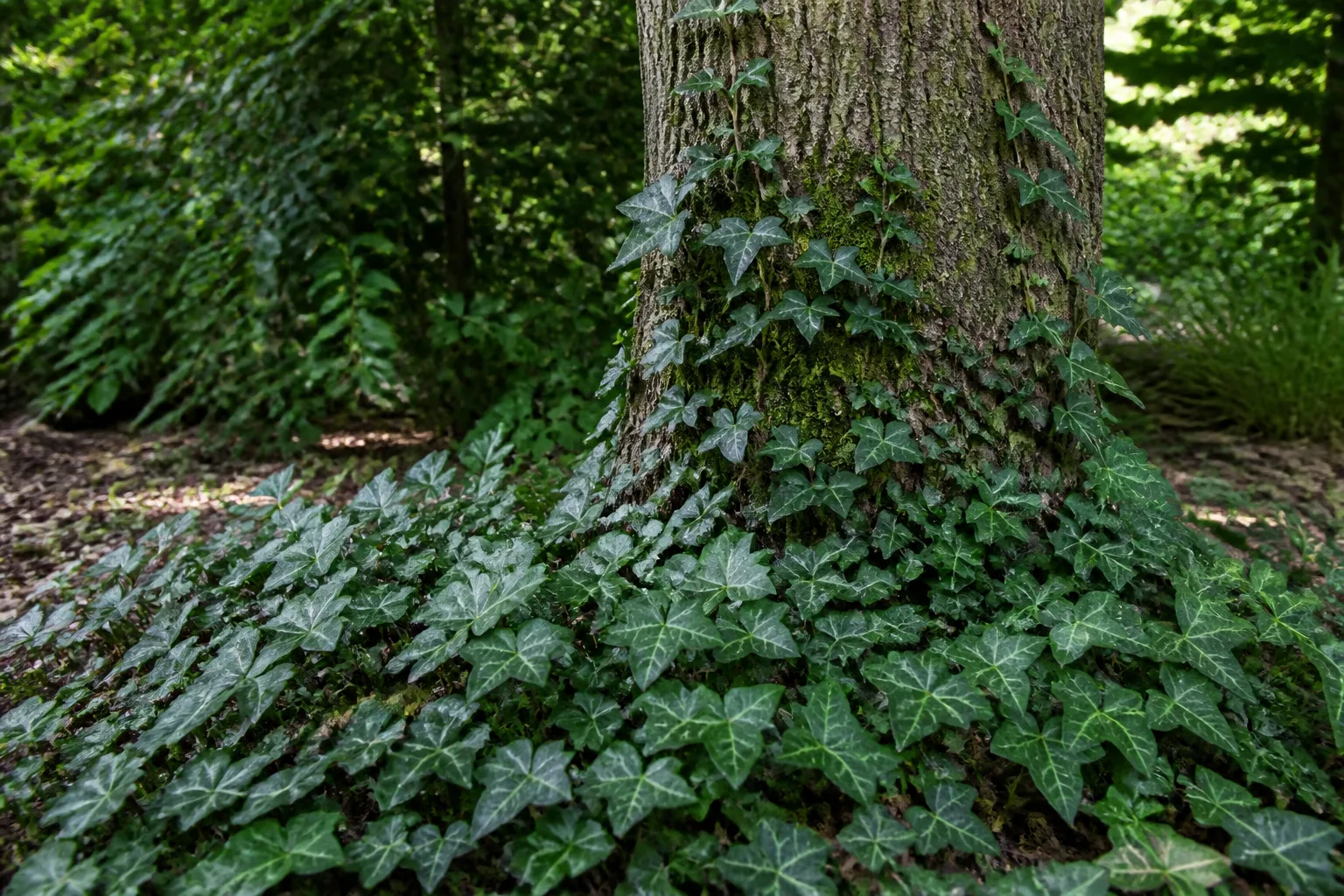
Trachelospermum asiaticum is a self-twining woody vine that most gardeners grow flat. Left alone, stems root at nodes and build a tangled blanket 6 to 18 inches deep. You can also train it up chain-link fence, trellis, or arbor — the same plant, different management.
Turfgrass Alternative Spacing and Fill Time
For mass planting, space transplants 18 inches apart on center in weed-free, loosened soil (UF/IFAS). At that density, expect roughly two growing seasons for a solid carpet. Tighter spacing (12 inches) fills faster but costs more upfront; wider spacing (24 inches) saves money and invites weeds between plants during year one.
Spread rate depends on light and water. In full sun with consistent moisture during establishment, individual plants can spread more than 3 feet per year. In dense shade, growth is slower but still steady — which is often exactly why you chose it.
When to Train It Up a Wall or Fence
Choose the climbing role when you want fragrance near a patio, a living screen on chain link, or vertical interest behind lower shrubs. Install support before planting, and trim ground-level runners monthly so the vine does not simultaneously carpet the bed and ascend your siding. For a dedicated climbing jasmine with larger flowers, compare star jasmine care — T. jasminoides is the showier vertical option.
Where and When to Plant
Plant Asiatic jasmine in cool weather: early spring after the last hard frost, or fall at least six weeks before your first average frost so roots settle before winter. Avoid midsummer planting in hot climates unless you can irrigate daily for the first month.
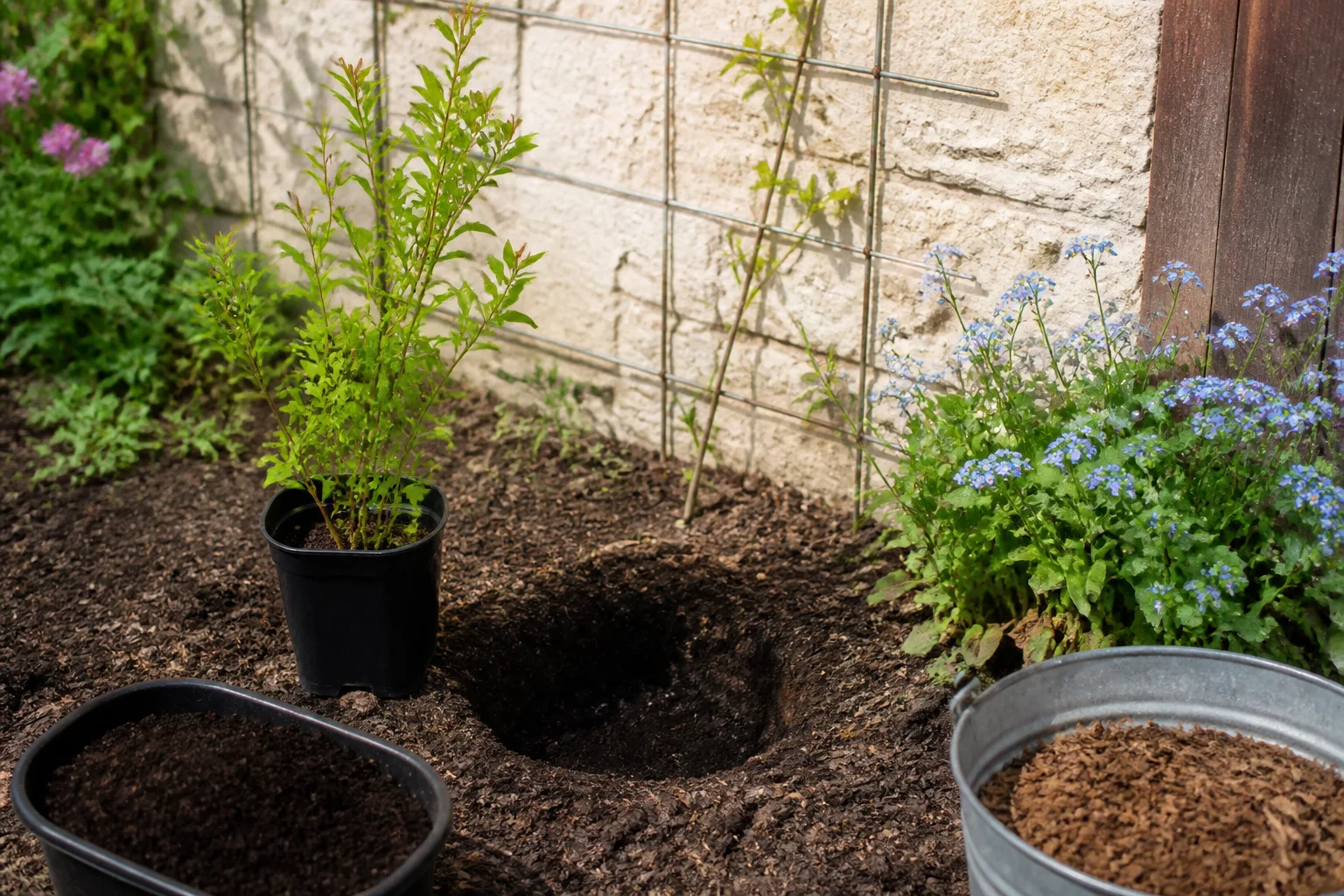
Site prep is simple: clear weeds, loosen the top 6 to 8 inches, and mix compost if soil is sandy or compacted. Dig holes the same depth as the nursery pot and twice as wide. Tease circling roots, set the crown level with the soil surface, backfill, and water deeply.
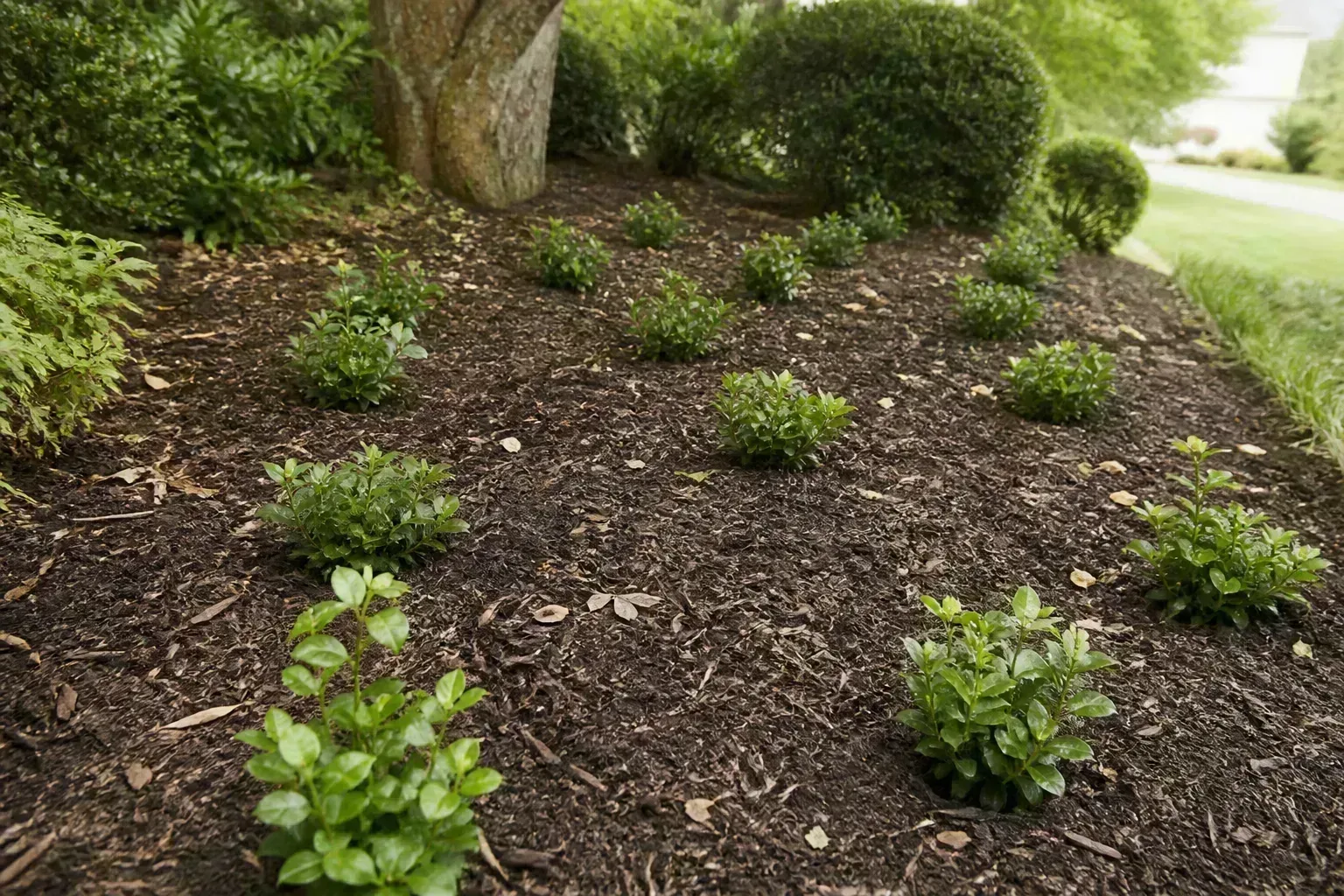
Slope planting is a strength — stems root as they spread, stabilizing soil. On steep grades, stagger rows in a brick pattern so runoff does not expose bare patches between plants. For privacy screening along a lot line, pair a low Asiatic jasmine ground layer with taller upright shrubs; the jasmine alone will not block sightlines above two feet.
Light, Soil, and Drainage
Asiatic jasmine tolerates full sun and partial shade, but the best balance in zones 8–11 is morning sun with afternoon shade — especially on western exposures where reflected heat scalds leaves. In zone 7, full sun is usually fine.
Soil texture matters less than drainage. Clay is acceptable if water does not pool for days after rain. Standing water invites root rot and aerial blight. Sandy soil works if you add organic matter at planting; pure sand dries fast and slows establishment.
Alkaline soil above pH 8.0 restricts nutrient uptake and produces pale, slow growth. If a soil test shows high pH, amend with sulfur or peat and plant acid-loving companions elsewhere — fighting chemistry year after year is cheaper to avoid than to fix.
Watering and Fertilizer
New plants need consistent moisture for the first two to three months. Water every three to four days for the first month, then weekly until you see active new growth at the edges. Mulch 2 inches deep with shredded bark or pine straw to hold moisture — keep mulch off stems to prevent rot.
Established Asiatic jasmine is moderately drought tolerant. In most climates, rainfall is enough once roots are deep. UF/IFAS notes a counterintuitive rule: well-established patches rarely need irrigation, and overwatering encourages disease and aggressive spread. Water only when leaves wilt during extended drought or when you are growing for flowers.
Container plants are the exception — hanging baskets and pots dry daily in summer heat. Check moisture every morning; water until it runs from drainage holes.
Fertilizer needs are low. Apply a balanced slow-release formula once in early spring — roughly one application per year. Overfeeding produces lush, soft growth that sprawls faster and invites pests. UF/IFAS explicitly warns that too much water, sun, and fertilizer together make the plant unruly. Neglect, within reason, keeps it manageable.
Best Cultivars for Foliage and Flowers
Species Asiatic jasmine has small dark green leaves and occasional fragrant blooms. Breeders have pushed foliage color for landscapes where flowers are unreliable:
- ‘Minima’ — compact, dense, drought-tolerant mat; rarely flowers; popular turf substitute; mow once yearly.
- ‘Ogon Nishiki’ (also sold as ‘Gold Brocade’, ‘Salsa’) — new growth orange, maturing to gold, green, and white variegation; fragrant white summer flowers.
- ‘Snow N Summer’ (‘HOSNS’) — leaves emerge pink, fade to white and green; fragrant white flowers; trademarked — propagation prohibited.
- ‘Summer Sunset’ — orange, red, yellow, and white foliage; low grower (6–12 inches) for containers; seldom blooms.
- ‘Variegatum’ — gray-green variegated leaves; ivory fragrant flowers; twining habit.
Choose ‘Minima’ when you want a weed-suppressing lawn alternative. Choose variegated cultivars when foliage color carries the design — but expect slower fill and more sun demand to keep colors bright. NC State also lists ‘Bronze Beauty’, ‘Goshiki’, and ‘Long Leaf’ for regional availability.
Pruning, Edging, and Annual Mowing
Fast growth is the main maintenance cost. Trim shoots that cross sidewalks, driveways, and tree trunks monthly during the growing season — Asiatic jasmine will climb bark and compete for light with shrubs if you let it.
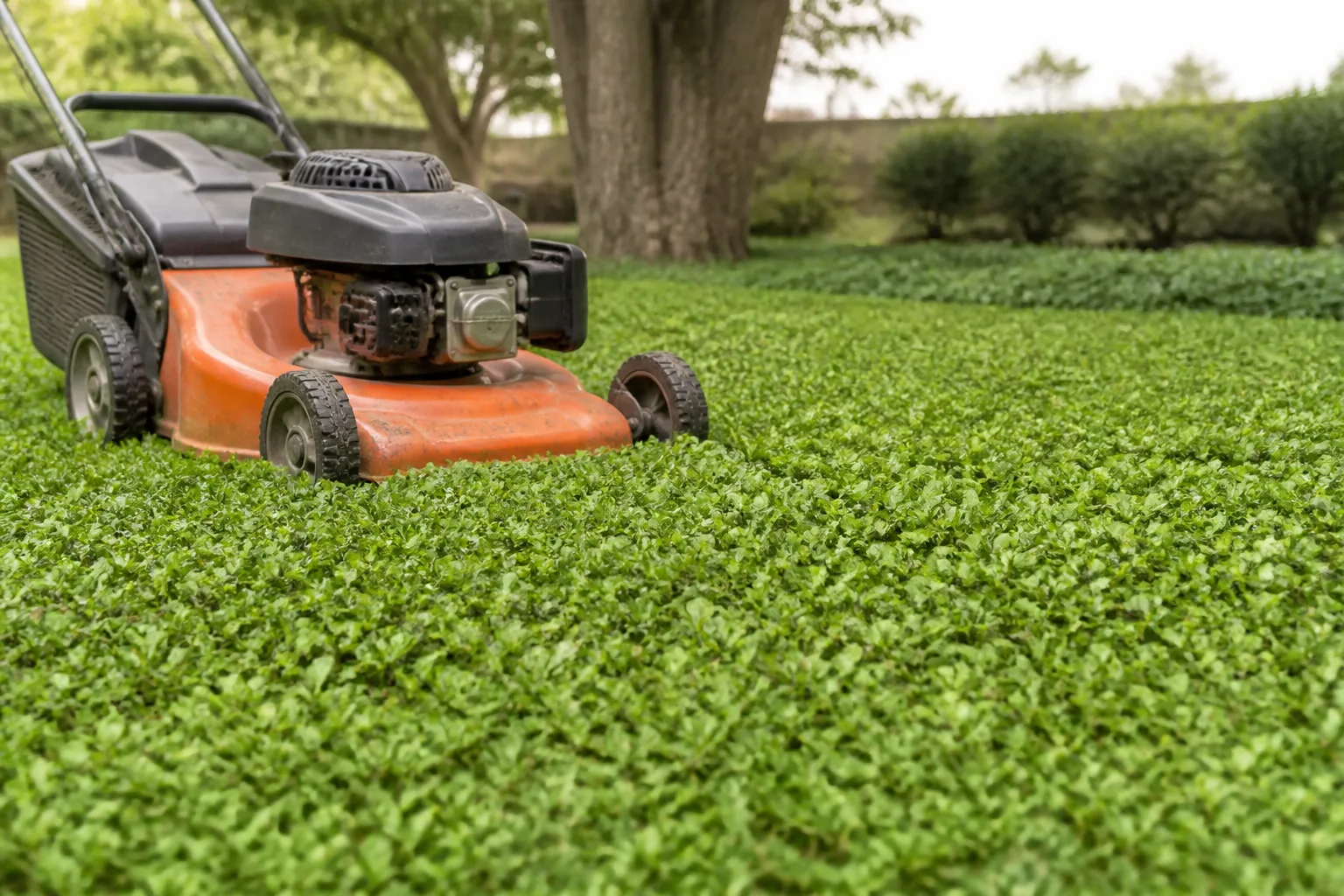
For ground-cover maintenance, mow once per year in early spring at the highest setting (3 to 4 inches). Sharpen blades first; dull blades shred woody stems and leave a ragged brown edge for weeks. Shearing with hedge trimmers between mowings thickens branching if you want a denser mat.
If you grow for flowers, delay hard pruning until after the bloom window (late spring through summer). Remove only dead or diseased wood before flowering. Flower buds form on previous season’s growth — a spring scalp removes the show.
Edging along beds is non-negotiable. Install physical edging (steel, brick, or a trench cut twice yearly) where the mat meets lawn or perennial borders. Runners cross bare soil faster than you expect.
Propagation: Cuttings and Sod-Style Transplants
Except for trademarked ‘Snow N Summer’, propagate freely from semi-hardwood cuttings in late spring or early summer:
- Cut 5 to 6 inches from a healthy green tip.
- Strip leaves from the bottom half; recut the base to fresh white tissue.
- Dip in rooting hormone; insert in moist potting mix.
- Keep humidity high and soil evenly moist in bright indirect light.
- Transplant when new growth appears — usually four to eight weeks.
For large areas, use the sod method UF/IFAS describes: cut established mats with a sharp spade or mechanical sod cutter, lift sections, lay on prepared weed-free soil, and water daily for two weeks until new white roots anchor. One healthy bed can stock an entire slope for the cost of labor alone.
Layering works too — pin a low stem to soil with a landscape staple until it roots, then sever and move.
Containers and Hanging Baskets
Smaller cultivars like ‘Summer Sunset’ suit hanging baskets and wide shallow pots. Choose containers at least 14 inches wide with large drainage holes. Avoid coir-lined baskets — they dry too fast for a plant that prefers steady moisture.
Use quality potting mix, not garden soil. Water slowly until drainage runs clear. Asiatic jasmine fills any container within a season or two; repot in early spring when roots circle the pot or emerge from drain holes. Divide root-bound plants with pruners and replant multiple pots rather than upsizing endlessly.
Trail stems over balcony rails for a soft green curtain — but plan to trim weekly so the display does not become a bird’s-nest tangle.
Overwintering Below Zone 7
In zones 6 and colder, grow Asiatic jasmine in containers and move it indoors before hard frost. The plant wants bright light, cool nights, and high humidity — a challenge in heated winter homes. South-facing windows, bathroom humidity, or a pebble tray help. Supplement with grow lights if leaves yellow and drop.
Acclimate gradually in fall (a few hours indoors, then out) and reverse in spring after frost danger passes. Expect leggy growth indoors; hard prune when you move outside to reset form.
Permanent in-ground planting is not realistic below zone 7 except in protected microclimates.
Pests, Diseases, and Aerial Blight
Serious problems are uncommon, but wet weather changes the equation.
Scale and whiteflies excrete honeydew; sooty mold follows on leaf surfaces. Prune infested sections, then apply horticultural oil per label directions in cool weather. Avoid oil sprays during peak summer heat.
Cercospora leaf spot shows tan centers with reddish borders. It is cosmetic in most cases — improve air circulation and avoid overhead irrigation rather than reaching for fungicides immediately.
Aerial blight (Rhizoctonia) is the destructive one. Prolonged rain or over-irrigation triggers large brown patches with dead stems. LSU AgCenter advises removing all dead tissue, stopping irrigation on established plantings, and applying a thiophanate-methyl fungicide (two to three applications per label) if spread continues. Healthy edges usually regrow without replanting if you dry the site out.
The prevention rule is simple: established Asiatic jasmine does not need sprinklers. If your irrigation clock runs the same cycle as your lawn, you are inviting blight and unnecessary spread.
Asiatic Jasmine vs. Confederate Jasmine
Gardeners confuse these constantly because both are Trachelospermum vines with fragrant star-shaped flowers. They are not interchangeable.
| Trait | Asiatic jasmine (T. asiaticum) | Confederate jasmine (T. jasminoides) |
|---|---|---|
| Primary role | Ground cover; flat mat | Climbing vine; upright |
| Leaf size | Smaller, leathery | Larger, glossy |
| Flowers | Small white-yellow; often sparse | Larger, highly fragrant; reliable in warm climates |
| Height | 1–2 ft. as ground cover | 10–20 ft. as vine (RHS) |
| Best use | Turf substitute, slopes, under trees | Fences, arbors, walls |
Want vertical fragrance? Plant Confederate (star jasmine). Want a living mulch that chokes weeds? Plant Asiatic. Mixing both without a plan usually means one overtakes the other.
Encouraging Blooms
Healthy Asiatic jasmine blooms in late spring through summer — small white to yellow pinwheels with soft sweet scent. In Florida and other hot humid regions, flowers are often rare or absent even on healthy plants (UF/IFAS). Most landscapes grow it for foliage; treat blooms as a bonus.
If flowers matter to you: provide morning sun, keep soil evenly moist (not soggy) during bud formation, avoid spring pruning before bloom, and skip high-nitrogen fertilizer that pushes leaves over buds. Drought stress during bud set reduces flowering more than almost any other factor.
Conclusion
Asiatic jasmine earns its place where grass fails and you can accept a plant that spreads on purpose. Match the role to your site — flat ground cover, supported vine, or container trailer — space plants 18 inches apart, water through establishment, then step back. Mow once in spring, edge monthly, and keep irrigation off mature mats unless leaves wilt.
Pick cultivars for foliage when blooms will not cooperate with your climate. Watch for aerial blight after wet spells. And when neighbors ask about “jasmine,” show them the tag: Trachelospermum asiaticum is its own plant with its own rules — tougher, flatter, and far less fussy than a lawn in shade.