Coffee Grounds and Christmas Cactus: What Works
Should you add coffee grounds to Christmas cactus soil? This guide explains acidity myths, root-rot risks, the 1% rule, and better feeding for holiday blooms.
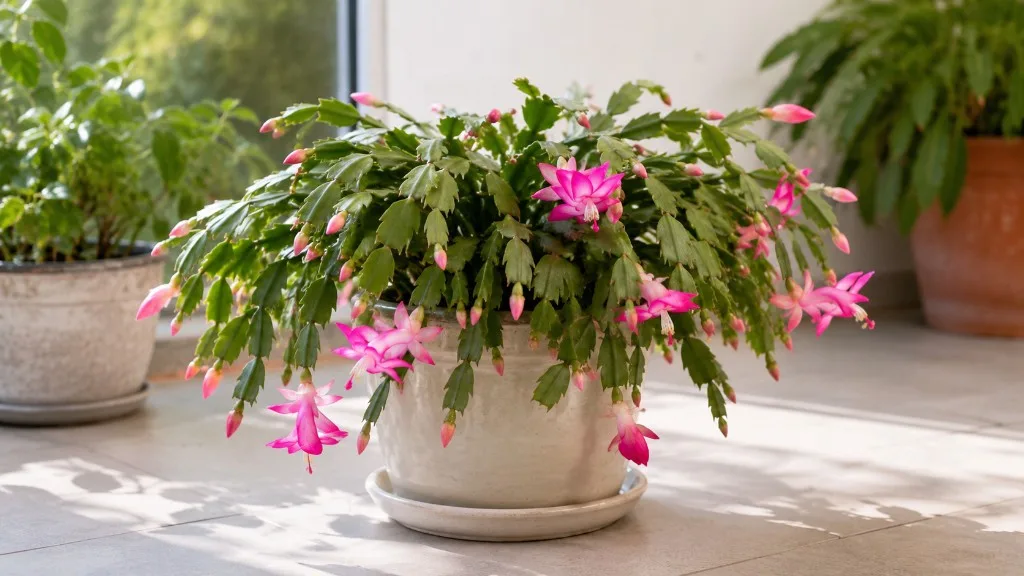
Used coffee grounds can be acceptable for a Christmas cactus only in tiny, dry, well-composted amounts — and they are never a substitute for a draining potting mix and a balanced fertilizer program. If you are holding a wet filter puck over a holiday cactus because you heard it “loves acid,” pause. The plant is an epiphytic rainforest succulent in a small pot, not a garden bed rose. What helps tomatoes in the yard can mat, hold water, and invite root rot on a windowsill Schlumbergera.
The practical question is not whether coffee grounds contain nutrients. They do, in small amounts. The question is whether those nutrients reach the roots safely in a container that must stay airy year-round. For most indoor growers, the answer is: compost the grounds elsewhere, fix the soil mix, and feed with a labeled houseplant fertilizer on a calendar that respects the bloom cycle.
The Short Answer: Sometimes, but Usually Not Directly
Coffee grounds are a kitchen scrap, not a Christmas cactus care plan. Oregon State University Extension notes that spent grounds contribute modest amounts of nitrogen, potassium, phosphorus, calcium, magnesium, and trace minerals — useful in compost, not a complete fertilizer on their own (Oregon State University Extension). UConn’s Home and Garden Education Center is equally clear that houseplants depend on you for the full nutrient profile fertilizers supply, and that excess salts can burn roots and block water uptake (UConn Home and Garden Education Center).
That framing matters because Christmas cactus failures are rarely about missing a teaspoon of nitrogen. They are about saturated soil, wrong timing, and disturbance during bud set. Coffee grounds can make each of those problems worse when applied wet, thick, or during the wrong season.
When Coffee Grounds Are Reasonable
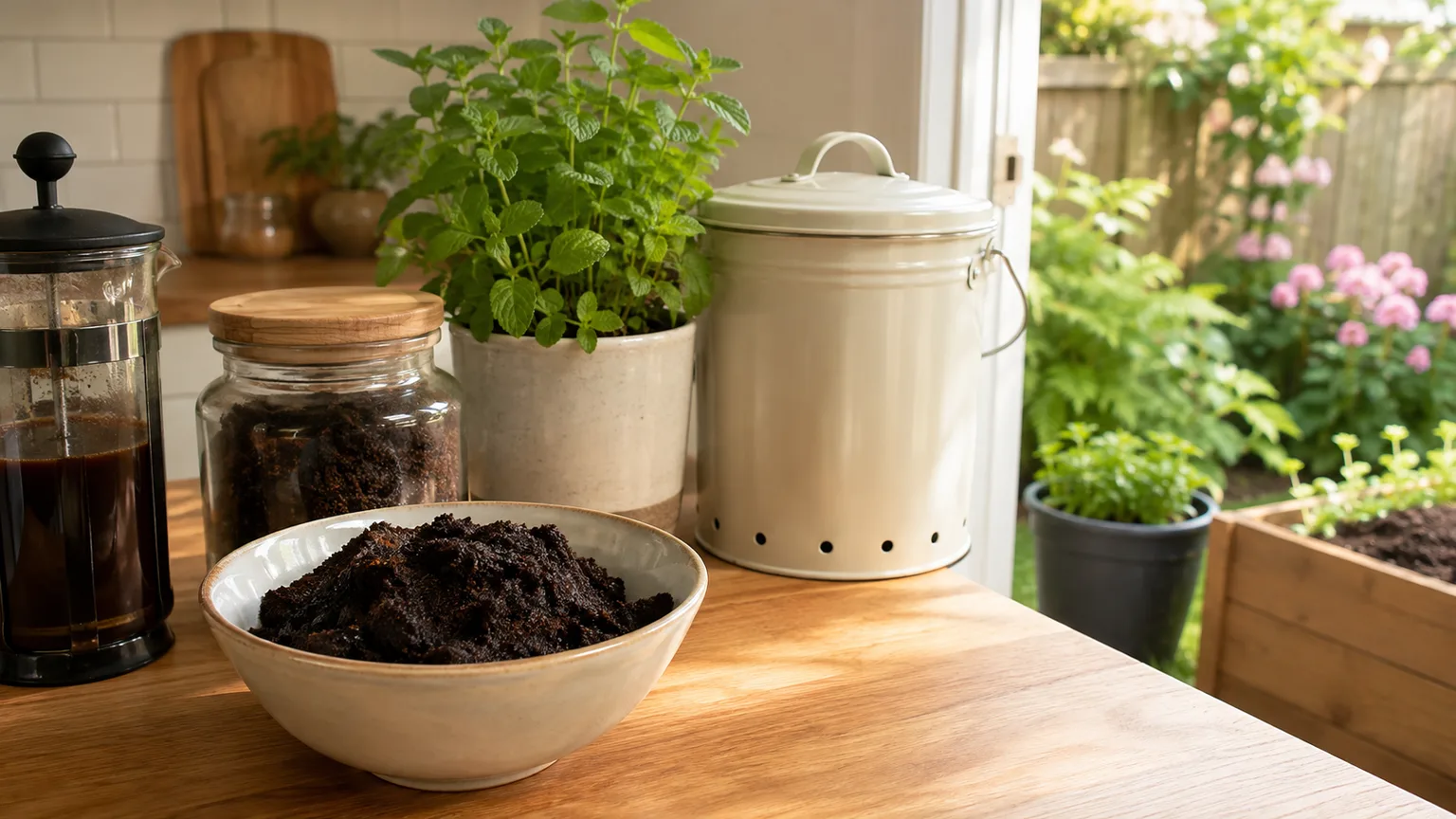
Dry, fully composted grounds mixed into fresh repotting mix at repot time are the least risky use. Think trace organic matter — well under 1% of total pot volume — not a visible layer. Some growers report success sprinkling a pinch of crumbly, oven-dried spent grounds into the top inch during spring repotting, then watering normally. That is a recycling choice, not a growth guarantee.
If you already maintain a compost pile and your finished compost includes coffee filters and grounds, using that compost as a minor component of a repot blend is reasonable. Microbes have already broken down caffeine and much of the acidity, and the material is crumbly rather than paste-like.
When to Skip Them Entirely
Skip coffee grounds if your plant is blooming, budding, newly repotted, wilted, or sitting in soil that stays wet. Skip them if you have fungus gnats, sour-smelling mix, or mushy roots. Skip fresh unbrewed grounds on houseplants — they are more acidic, higher in caffeine, and slower to release nutrients in a useful form.
If your Christmas cactus is not flowering, coffee will not fix that. Bud formation needs weeks of long nights, cool nights, bright days, and stable conditions — not a kitchen amendment. For bloom troubleshooting, see why cover Christmas cactus and avoid stacking experimental feeds on top of a plant that is already stressed.
Why Christmas Cactus Is a Picky Soil Partner
Christmas cactus (Schlumbergera hybrids) evolved in Brazilian coastal mountains, growing in tree-crotch pockets where organic debris collects above ground. Penn State Extension describes these holiday cacti as epiphytic plants that prefer filtered light, short-day flowering cues, and potting media that drains well while holding some moisture — not desert dryness and not boggy peat (Penn State Extension).
That origin explains the central conflict with coffee grounds. In a garden, a thin sprinkle might disappear into pounds of soil. In a 6-inch pot, a tablespoon of wet grounds can dominate the surface layer.
Epiphyte Roots Need Air and Fast Drainage
Healthy Christmas cactus roots need oxygen between waterings. PSU lists root rot from saturated soil among the top reasons for poor blooming and bud drop. Anything that slows drainage — heavy peat, lack of perlite, a crusted top layer — works against the plant’s biology.
Used coffee grounds are roughly 40% organic matter and can hold water when layered on the surface. As they dry, they can also compact into a hard cap that repels water while the layer just below stays oddly wet. That is the opposite of what an epiphyte wants.
Slightly Acidic Mix — Without Chasing a Myth
Christmas cactus tolerates slightly acidic conditions, often cited around pH 5.5 to 6.2 in popular houseplant references. Many peat-based mixes already land near that range. The Royal Horticultural Society growing guidance for Schlumbergera emphasizes good drainage and regular feeding during growth rather than acidifying soil with kitchen waste (Royal Horticultural Society).
Here is the myth to drop: brewed coffee grounds are not a reliable soil acidifier. Most acidity brews into your cup. Used grounds are typically closer to neutral. Fresh grounds are more acidic but are a poor direct amendment for potted houseplants. Chasing “acid-loving plant” labels with coffee usually adds organic matter and moisture risk without measurably shifting pH in a small pot.
What Coffee Grounds Actually Add (and What They Do Not)
Nitrogen and Organic Matter
Spent grounds supply slow-release nitrogen and carbon-rich organic matter. That can support green growth when the plant is actively growing in spring and summer. It does not supply balanced N-P-K in the ratios flowering plants use, and it will not replace phosphorus for bud development.
UConn notes that flowering houseplants often benefit from fertilizers with adequate phosphorus, while foliage plants lean nitrogen-heavy (UConn Home and Garden Education Center). Coffee grounds skew nitrogen. Using them during bud formation can encourage soft growth or salt stress at the wrong moment.
The pH Story After Brewing
Brewing removes much of the soluble acidity and caffeine. Fresh grounds near pH 5.0 or lower are a different product from crumbly spent grounds that have been dried on a tray. For houseplants, always choose brewed, dried grounds if you use them at all — and still use very little.
Moisture Retention and Compaction Risk
This is why many experienced growers — including those quoted in recent holiday-cactus coverage — prefer not to use coffee grounds directly on Christmas cactus. The material can keep the upper root zone wetter than the rest of the pot, encouraging stem segment rot at the soil line and fungal growth on the surface. If you have ever seen white mold on potting soil after a “natural” top-dressing, you have seen the failure mode.
Fresh, Brewed, and Composted Grounds Are Not Interchangeable
| Form | Typical use for Christmas cactus | Main risk |
|---|---|---|
| Fresh unbrewed grounds | Not recommended | Excess acidity, caffeine, slow nutrient release |
| Wet spent grounds straight from the filter | Not recommended | Surface mold, compaction, gnats |
| Dried spent grounds | Tiny repot blend or rare top-dress | Matting if over-applied |
| Finished compost containing grounds | Best of the coffee options | Still not a fertilizer replacement |
Dry your spent grounds on a baking sheet until crumbly before storage. Never seal damp grounds in a jar beside your plant shelf. If you want more safe reuse ideas for the kitchen bucket, see leftover coffee grounds hacks — but treat Christmas cactus as a low-dose exception, not the default destination.
Four Ways People Apply Grounds — Ranked by Risk
Mixed Into Compost (Safest)
Add filters and grounds to a compost bin at normal kitchen-scrap ratios. When the compost is finished, crumbly, and earthy-smelling, use it as no more than 10–15% of a repot blend combined with commercial potting mix, perlite, and bark. This dilutes moisture-holding particles and gives microbes time to stabilize the material.
Blended at Repotting (Moderate)
When you repot every three to four years — PSU’s general window for tired holiday cacti — mix a pinch of dried grounds into the new batch before planting. Aim for invisible distribution: if you can see a coffee layer, you added too much. Repot only after flowering ends; never disturb a plant in full bloom.
Weak “Tea” Watering (Use Caution)
Some growers steep spent grounds in water for 24–48 hours, strain, and water with the dilute solution. This can add a little organic matter and color to the water, but concentration is hard to control. Do not use strong coffee, sweetened coffee, or dairy coffee drinks. If the liquid looks like your morning mug, it is too strong. One cautious spring application is enough to test tolerance; stop if segments soften or tips brown.
Dry Top-Dressing (Highest Risk in Small Pots)
Sprinkling grounds on the soil surface is the fastest method and the one most likely to fail. Even an eighth-teaspoon can form a crust as it dries. If you insist on top-dressing, use fully dry, crumbly grounds, work them into only the top half-inch, and watch for fungus the following week. At the first sign of mold or gnats, scrape the layer off and go back to plain water.
The Soil Mix That Matters More Than Coffee
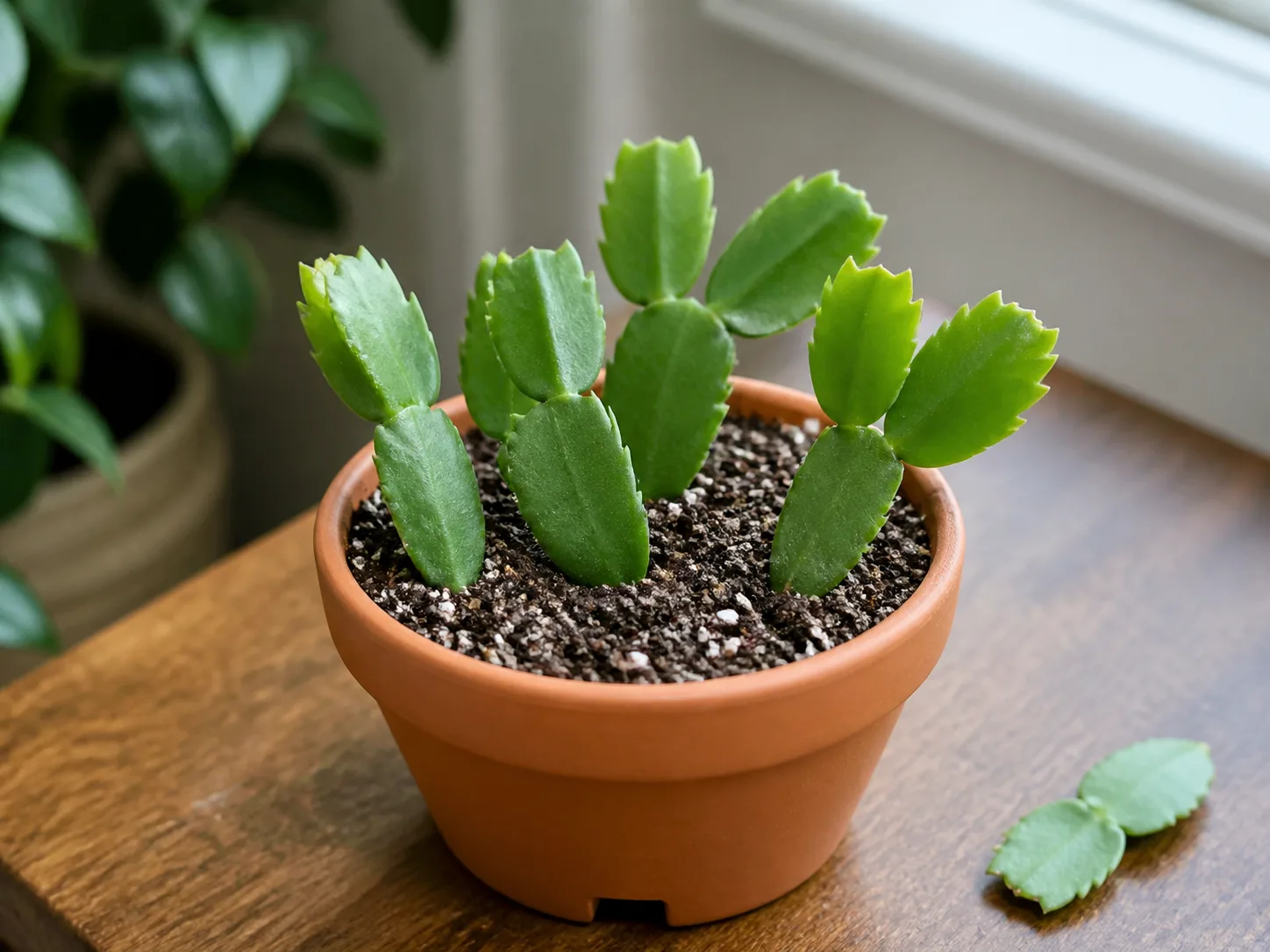
No amendment rescues a dense, peat-heavy mix in a pot without drainage holes. Before you debate coffee, build a blend that mimics tree-crotch conditions:
- 50% quality peat- or coir-based potting mix for structure and baseline moisture
- 25% perlite or pumice for drainage and air pockets
- 25% orchid bark, shredded pine bark, or coconut coir chunks for chunky porosity
That ratio mirrors what many nursery growers use for epiphytic cacti and succulents. Perlite prevents the slow collapse that causes holiday cacti to stop absorbing water even when you irrigate faithfully. Bark and coir hold moisture without staying soggy the way fine peat alone can.
Repot into a container only one size larger, keep the root ball an inch below the rim, and water moderately after a two- to three-day shaded recovery period — the same post-repot rest PSU recommends (Penn State Extension). Coffee belongs after the mix works, not instead of fixing it.
When and How to Fertilize for Growth and Blooms
Spring and Summer Feeding Window
UConn advises fertilizing houseplants during active growth, typically March through October, with a balanced or bloom-appropriate product diluted according to label directions (UConn Home and Garden Education Center). Christmas cactus fits that calendar: feed lightly every two to four weeks in spring and early summer when new segments appear.
A balanced water-soluble fertilizer such as 10-10-10 or 20-20-20 at half label strength is a dependable baseline. Flowering plants can also use formulas with slightly higher phosphorus during growth, but avoid heavy nitrogen while buds are forming.
Why Bloom Season Is the Wrong Time
PSU lists overfertilization during bud development as a direct cause of bud drop. Once you see buds in late fall, stop feeding. Let the plant finish its show undisturbed — no moves, no repotting, no experimental kitchen teas. Resume a light feeding program after flowers fade and the plant enters its post-bloom rest.
Water when the top inch of mix feels dry, use bright indirect light, and add humidity with a pebble tray if winter air is desert-dry — standard care that matters more than any scoop of grounds. For pruning and shaping after bloom, see how to prune a Christmas cactus.
Warning Signs You Used Too Much
Stop all coffee applications and switch to plain water if you notice:
- Soft, translucent stem segments at the soil line — early rot from excess moisture
- White or green mold on the soil surface within a week of top-dressing
- Fungus gnats hovering after a wet grounds layer
- Bud drop after feeding during initiation — often linked to salts or disturbance
- Brown, crisp segment tips with wet soil — possible fertilizer salt burn
- Water running off the surface while the root ball stays dry — compaction crust
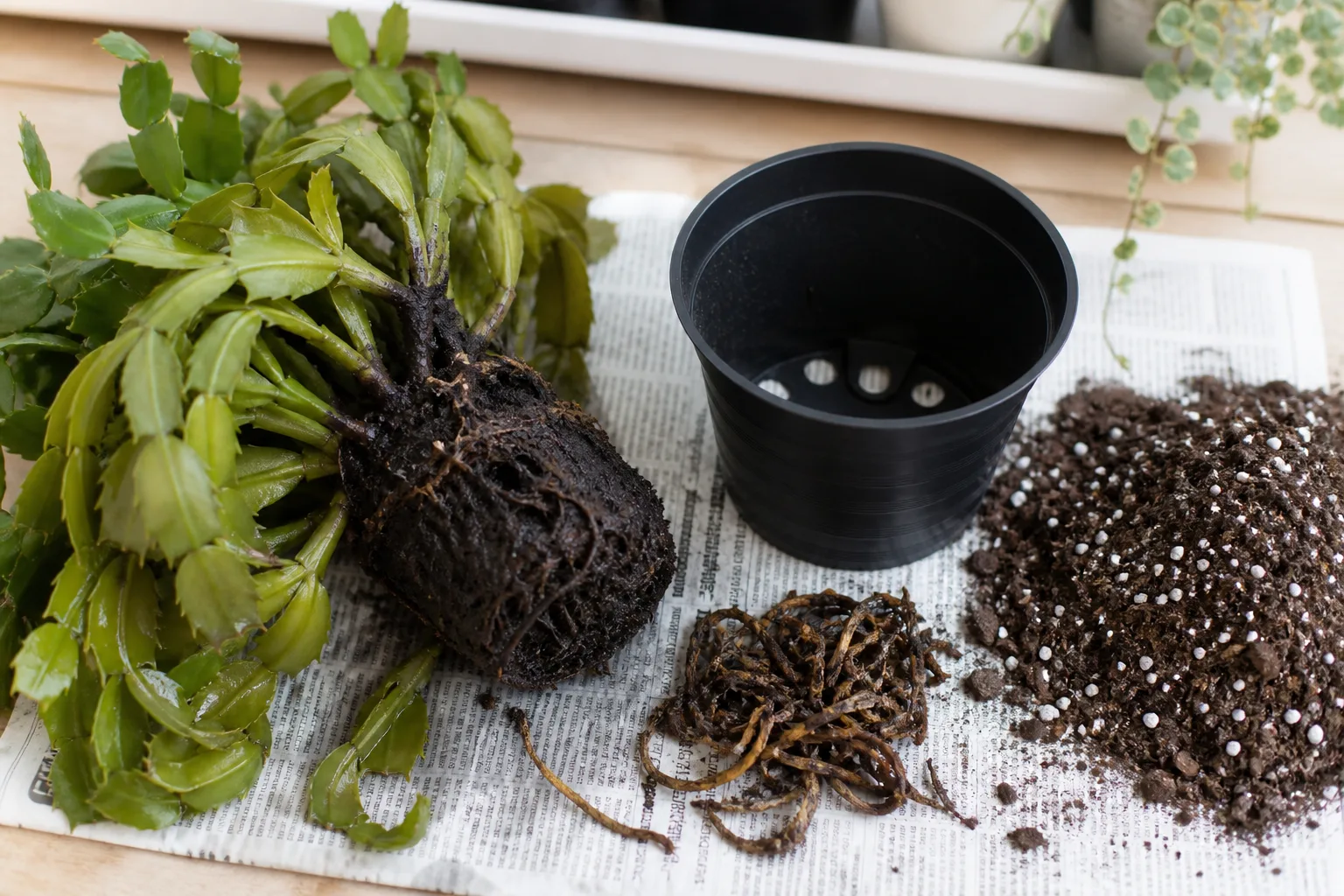
If roots smell sour or feel mushy when you gently slide the plant from the pot, trim damaged roots, repot into fresh airy mix, and withhold fertilizer until new growth returns. Coffee will not sterilize rotting tissue.
Better Alternatives If You Want Reliable Results
If your goal is healthier foliage and more reliable holiday blooms, prioritize these steps before recycling coffee:
- Confirm identity — scalloped Christmas cactus vs. toothed Thanksgiving cactus bloom on different schedules; mislabeling makes any feed look like a failure.
- Fix light and temperature cues — 12–14 hours of uninterrupted darkness nightly for six to eight weeks in fall, with cool nights near 60–65°F and bright days.
- Use a complete fertilizer on a spring/summer schedule instead of nitrogen-heavy scraps.
- Repot on time into the chunky mix above when roots circle the pot or water runs straight through.
- Keep the plant still while budding — drafts, heat vents, and rearranging shelves cause bud abort.
Coffee grounds can sit in the compost bucket while you run that list. They are optional garnish, not the engine.
Conclusion
Coffee grounds are not toxic magic and not essential food for Christmas cactus. Used sparingly, fully dry, and preferably after composting, they can add a little organic matter when blended into repotting mix. Used carelessly — wet, thick, fresh, or during bloom — they raise the odds of compaction, mold, gnats, and root stress in a plant that already punishes overwatering.
Build a draining epiphyte-friendly mix first. Feed with a balanced houseplant fertilizer during spring and summer growth. Protect the dark-and-cool bloom window in fall. Keep kitchen experiments small, seasonal, and easy to reverse. If you want a safer “what not to pour on your holiday cactus” companion read, compare this approach with why you should not use sugar water for Christmas cactus. Your plant will thank you with segments that stay firm and buds that stay put — no coffee required.