Why Cover a Christmas Cactus? The Dark-Night Cue
Learn why covering a Christmas cactus can trigger buds, how to create 13 hours of true darkness, and what to change once buds appear.
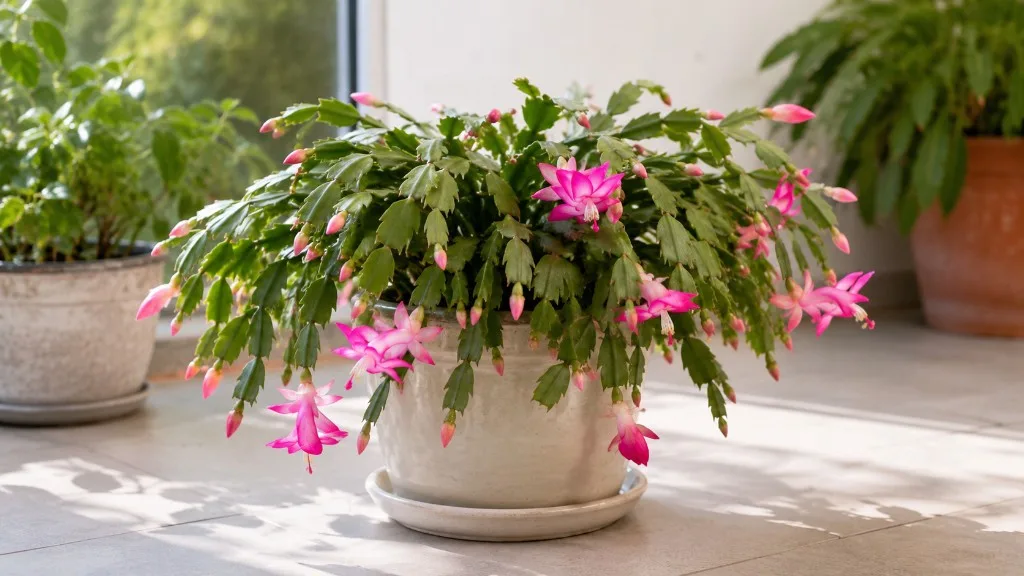
If your Christmas cactus is healthy but refuses to flower, the missing ingredient may be darkness rather than more sunlight. Covering the plant at night creates the long, uninterrupted night that holiday cacti use as an autumn signal to start forming flower buds. It is a real plant response, but it is not a guaranteed hack: the plant still needs suitable temperatures, enough water to stay healthy, and good daytime light.
The practical version is simple. Give the plant at least 13 hours of uninterrupted darkness each night for several weeks, pair that routine with a distinct cool spell, and stop manipulating the environment once buds appear. A dark closet may do the job; an opaque cover works when the plant must stay in place. The best method is the one you can repeat without forgetting a night or overheating the pot.
The short answer: darkness is the cue
Christmas cactus is a short-day, or long-night, plant. The name describes the flowering signal: buds are more likely when nights become long enough and temperatures fall in autumn. In plant science, the response to day length is called photoperiodism. The cactus is not checking a calendar or recognizing a holiday; it is responding to the pattern of light and dark around it.
In a home, the natural night can be accidentally shortened by a lamp, television, hallway light, security light, or a bright window facing a street. If the plant receives bright indirect light during the day but never gets a truly dark night, it may keep producing green segments instead of switching into bud formation. NC State Extension lists at least 13 uninterrupted dark hours among the conditions that support flowering in holiday cactus, along with adequate moisture and stable temperatures. (NC State Extension)
That is why covering works. It does not feed the plant, warm it, or make a weak root system stronger. It simply protects the night portion of the daily cycle from stray light. If your plant already sits in a naturally dark room from evening until morning, adding a cover may accomplish nothing and may make the plant warmer than it should be.
First confirm you have a Christmas cactus
The common name “Christmas cactus” is used loosely for several Schlumbergera hybrids. Before you blame the light schedule, look at the stem segments and flowering season. A true Christmas cactus, often sold as Schlumbergera × buckleyi, generally has softer, rounded segment edges and flowers that hang or point downward. A Thanksgiving cactus, commonly Schlumbergera truncata, has more pronounced claw-like points and often flowers earlier.
The distinction matters for timing, not because one plant is difficult and the other is easy. NC State Extension notes that S. truncata is frequently sold under holiday names and is often confused with Christmas cactus; it also describes the pointed stem projections that help identify it. (NC State Extension) The RHS groups both Schlumbergera species and hybrids under its Christmas cactus guide and notes that flowering can run from late November into late January. (RHS Growing Guide)
Use the plant in front of you as the final authority. A cactus purchased in full bloom in November may be a Thanksgiving cactus or a hybrid selected for early flowers. If it blooms in January, that is not automatically a failure. The goal is a strong flowering cycle for that plant, not forcing every holiday cactus to open on the same date.
What the cover is actually doing
Think of the cover as a light shield, not a blanket. During the day, the plant needs light to photosynthesize and maintain the segments that will support flowers. At night, the same plant needs a long, predictable dark interval. A cover divides those two jobs without requiring you to move a heavy hanging basket or rearrange a windowsill twice a day.
The plant does not need to be sealed in darkness for 24 hours. It needs a consistent day-night rhythm. Remove the cover in the morning, or open the closet, so the cactus gets its normal daytime brightness. Keeping it covered all day can reduce useful light, trap heat, and make it harder to notice wilting, pests, or a soil problem.
The cover also has a limitation: it cannot correct a plant that is already declining. If the segments are shriveled, the soil smells sour, roots are rotting, or the plant has been sitting in harsh direct sun, solve that stress first. A cactus under stress may be biologically capable of responding to long nights but physically unable to hold buds.
Start the routine from the bloom date
Choose the date you would like the first flowers to open, then count backward about eight to ten weeks for the start of the dark routine. That range is a planning aid, not a promise. Cultivar, plant maturity, temperature, daylight through the window, and whether the plant has already experienced a natural autumn shift can move the result earlier or later.
If Christmas flowers are the goal in the Northern Hemisphere, an early- to mid-autumn start is usually more useful than waiting until the calendar says December. A plant that needs six or more weeks to set buds cannot be rushed reliably in the final few days before a holiday. In the Southern Hemisphere, reverse the seasonal wording and work from the local late-autumn period instead.
Before the first night, choose the daytime location, decide how you will cover the plant, and set a reminder or timer. Practical growers commonly use a several-week combination of lower temperatures, slightly reduced watering, and 13–16 dark hours; that experience-based sequence is described by Get Busy Gardening, but its timing should be treated as a range rather than a fixed guarantee. (Get Busy Gardening)
Build a light-proof routine you can repeat
The easiest schedule is often a 14-hour night. For example, uncover the plant at 7 a.m., give it bright filtered light through the day, and cover or move it to darkness at 5 p.m. If your household routine starts later, shift the clock; the exact hours matter less than repeating the same uninterrupted block every night.
Use a phone alarm, outlet timer, or a note beside the plant. Do not rely on “I will remember after dinner” when the plant needs the same long night for six to eight weeks. The routine is also easier if the cover is stored next to the pot and the daytime location does not require lifting the plant.
Make the night interval long enough to include the room’s late-evening activity. Covering at 8 p.m. but leaving the plant exposed to a living-room lamp until midnight does not create a long night; it creates a short one with a late start. Build the schedule around the last likely light exposure, not the moment you first think about the plant.
Choose a cover that blocks light without trapping heat
An opaque cardboard box, dark fabric cover, or light-proof closet can work. The material should be large enough that it does not crush the stems and should allow some air around the plant. A rigid box is convenient because it blocks light consistently, while dark cloth is easier for a wide, cascading plant.
Do not wrap plastic tightly around the cactus or drape a heavy blanket directly over damp soil. The point is not to create a sealed mini-greenhouse. Trapped warmth and still air can encourage problems, especially if the plant is watered just before the cover goes on. Keep the cover off the foliage when possible, leave air space, and check the temperature during the first few nights.
If a dark closet is available, it may be the cleanest solution. Put the pot in the closet after the household lights are off, then return it to the same daytime spot in the morning. Avoid a closet beside a furnace, water heater, or laundry appliance; darkness is useful only when the temperature remains appropriate.
How to count uninterrupted darkness
Count darkness as one continuous block, not as a daily total. Thirteen hours of darkness split by a hallway light is not equivalent to 13 uninterrupted hours. This is the detail that makes casual covering fail: the gardener may see a long dark span on paper, but the plant experiences a bright interruption in the middle.
Audit the whole area. Check table lamps, kitchen lights, night-lights, televisions, grow lights, motion sensors, outdoor floodlights, and the blue glow from nearby electronics. You do not need a laboratory-grade light meter. Stand where the pot sits after the room is dark and look for any direct light falling on the segments; if you can clearly see the plant, improve the cover or move the plant.
The light does not need to be bright enough for you to read by to be worth correcting. A narrow beam through a gap may illuminate only a few segments, but a consistent nightly interruption makes the environment less predictable. A closet with a door that closes fully is often more dependable than a cover with gaps around the pot and window.
Start the next morning’s daytime period after the dark block ends. Avoid opening the cover repeatedly to check for buds during the night. A quick inspection is less risky than leaving the plant exposed for hours, but the best check is a morning check when the scheduled night is complete.
Pair darkness with cooler autumn temperatures
Long nights are the headline, but temperature is the companion signal. The RHS recommends a cooler spell of about 12–15°C (55–59°F) in autumn and a return to about 18–20°C (65–69°F) once buds appear. (RHS Growing Guide) That does not mean you should put the pot beside an open window in freezing weather or swing it from a heated room to an unheated porch every evening.
Aim for a distinct but gentle seasonal drop. A bright room that stays near 75°F around the clock may need the plant moved to a cooler interior room at night, provided that room is dark and free of drafts. In a mild climate, a sheltered outdoor location can supply cool nights, but only when the temperature remains safe and the plant is protected from rain, slugs, and direct sun.
Cold is not automatically better. NC State Extension notes that exposure to about 40°F for several successive nights can force flowering in S. truncata, but that is an extreme tactic, not a universal home-care target. (NC State Extension) A stable 55–59°F rest period is easier to control and kinder to a plant that must transition back indoors.
Use a small room thermometer if you are unsure. More important than chasing one perfect number is avoiding abrupt changes: a cold window at midnight, a hot radiator at dawn, and a 75°F living room by breakfast create the kind of instability that can make buds drop later.
Watering during the flowering trigger
During the autumn trigger, let the top few centimeters of potting mix dry between waterings, but do not leave the plant bone-dry for weeks. RHS guidance describes reduced watering during the autumn rest while warning that the compost should not dry out entirely; once buds begin developing, watering should return to a regular rhythm without becoming soggy. (RHS Growing Guide)
Check the mix with a finger or wooden skewer and lift the pot to learn its dry weight. When the surface has dried and the pot feels lighter, water thoroughly enough for some drainage, then empty the saucer. Do not add a small sip every night simply because the plant is covered; that keeps the surface repeatedly damp while the center of the pot may stay wet.
The right interval depends on the pot, soil, humidity, light, and temperature. A small plant in a porous pot may dry in days; a large plant in dense peat-based mix may stay damp for much longer. Calendar rules such as “water every two weeks” are less useful than observing how quickly this particular pot dries.
Once you see small pointed buds at the stem tips, stop extending the dry period. The plant has moved from the bud-setting stage into the bud-development stage. Give it enough moisture to prevent shriveling, but continue to let excess water drain fully. Overwatering at this stage can damage roots just as the plant is trying to support flowers.
Place the plant correctly during daylight
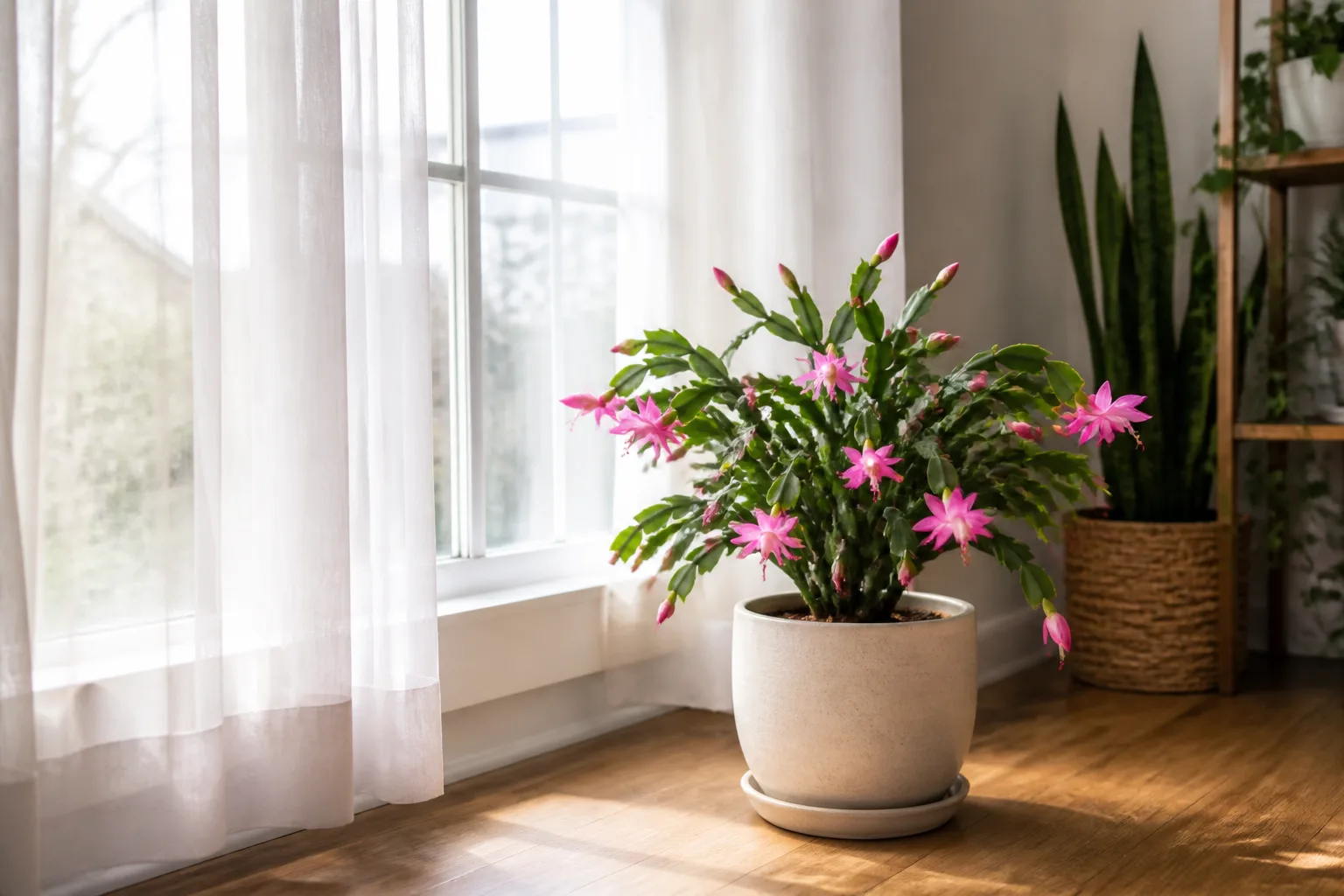
Remove the cover or open the closet each morning and return the cactus to bright, indirect light. An east-facing window is a reliable starting point; a west- or south-facing window may work with a sheer curtain or a position set back from the glass. The goal is enough usable light for healthy segments and flowers without harsh midday sun scorching the plant.
This is a rainforest cactus, not a desert cactus. RHS describes Schlumbergera as a tropical rainforest plant that prefers dappled light, humidity, regular watering during growth, and protection from strong sunshine. (RHS Plant Guide) A dark nighttime routine does not give you permission to leave the plant in a dark corner all day.
Keep the daytime location stable as the weeks pass. Rotating the pot once before the routine starts is reasonable if the plant has grown toward the window, but repeatedly turning or relocating it while buds are forming adds unnecessary changes. Wipe dust from the flat segments occasionally when the plant is not covered so the leaves can use available light efficiently.
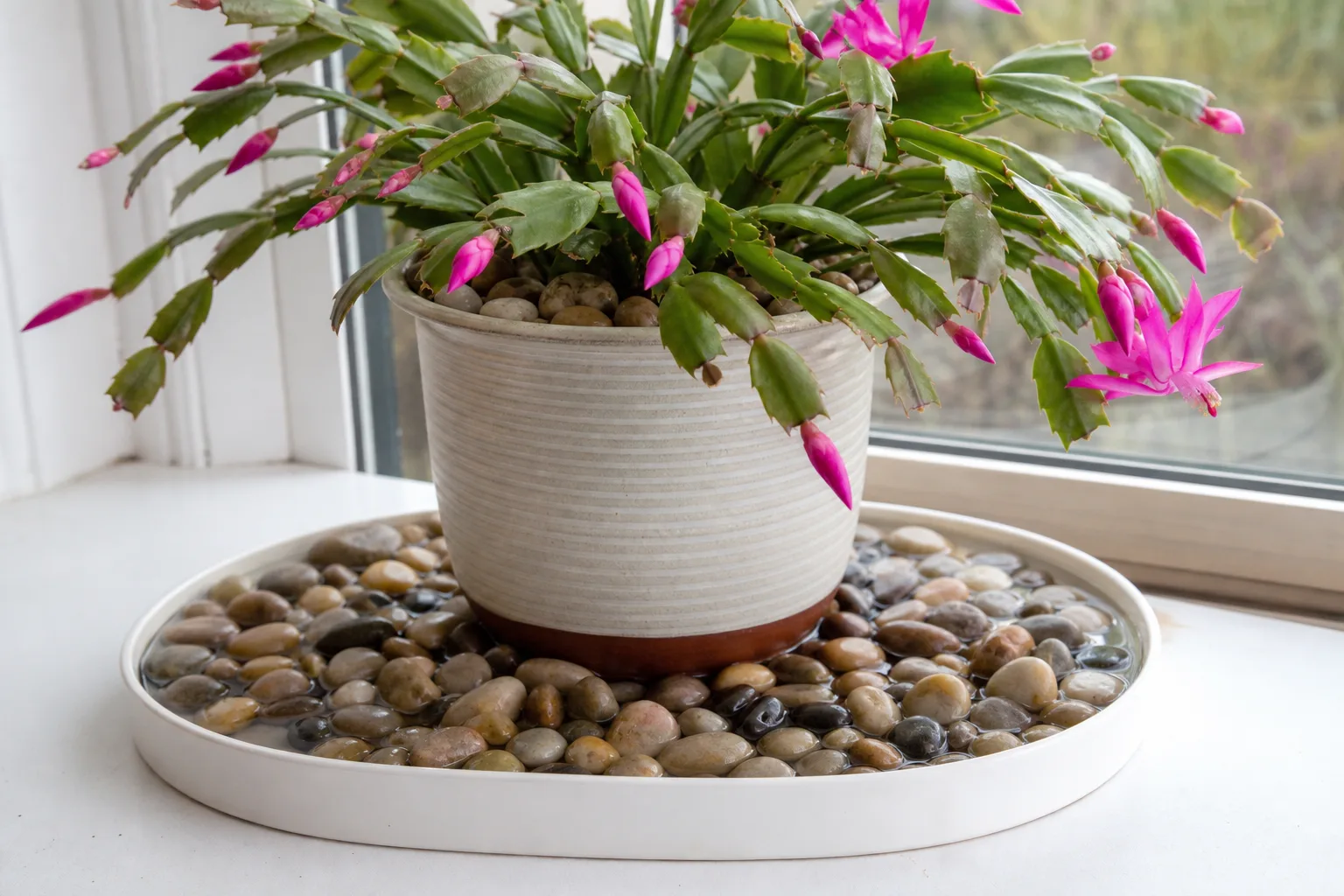
Humidity can help the plant remain comfortable in heated indoor air, but it is not a substitute for darkness. A humidifier in the room or a correctly built pebble tray can raise local moisture without keeping the potting mix wet. Never set the drainage hole directly into standing water.
When buds appear, stop changing the setup
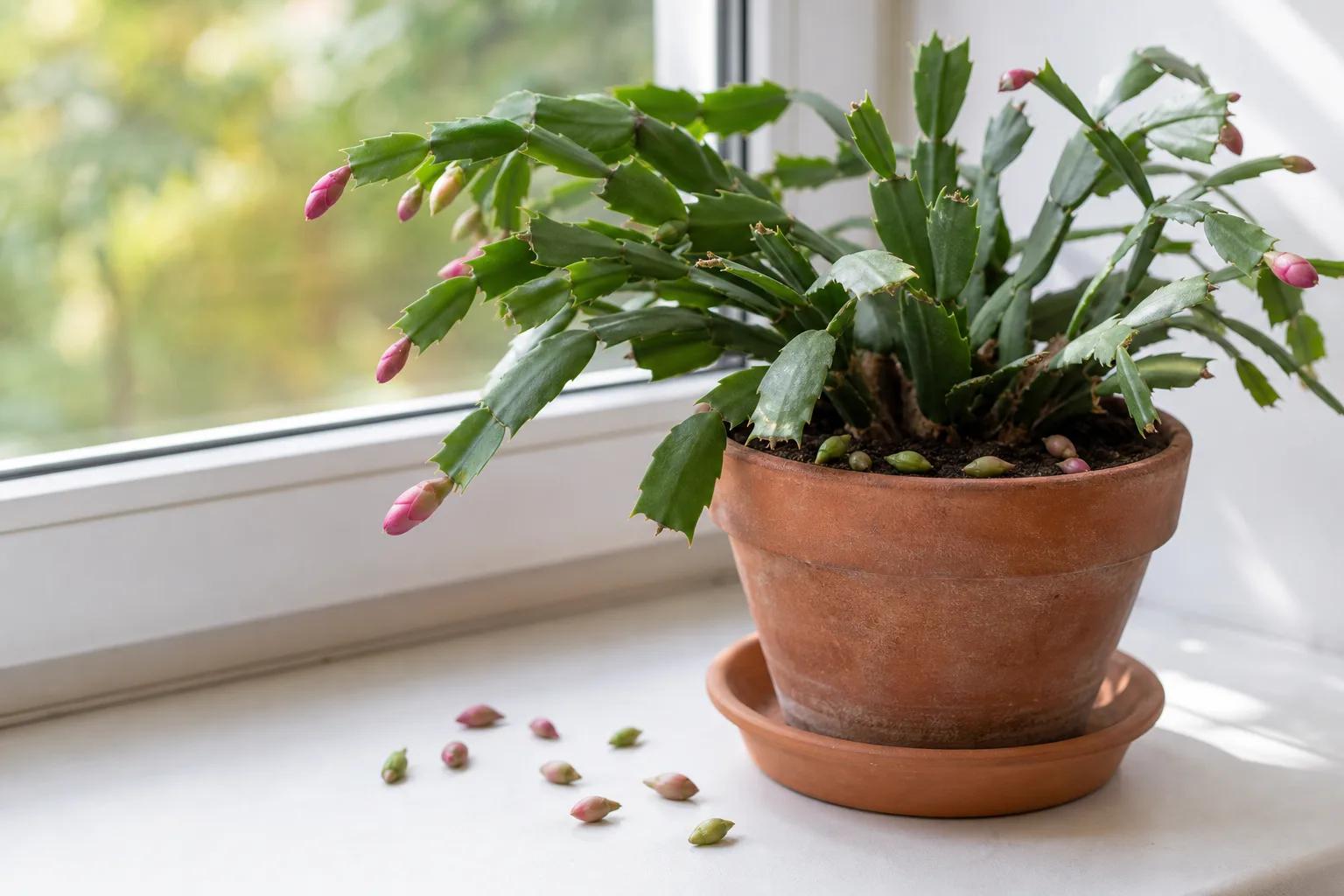
The first visible buds are the handoff point. You no longer need to keep pushing the dark routine as if the plant has not responded. Move it into its normal bright, indirect daytime location, return to steadier watering, and keep the temperature as even as you can.
The plant may still be sensitive while the buds swell. Homes & Gardens quotes plant experts who warn that moving or even turning a budded cactus can alter light angle, temperature, and humidity enough to trigger bud drop. (Homes & Gardens) That observation fits a practical rule: once the plant has buds, choose the display location before you start the dark routine, or move it only once and gently.
Protect buds from temperature swings and drafts
Keep the budded plant away from heat vents, fireplaces, radiators, exterior doors, and windows that become very cold at night. A room that feels comfortable to you can still produce a hot blast on one side of the pot or a cold draft through the foliage. Sudden changes are more dangerous than a modest difference between day and night.
Do not move the plant outdoors to gain cool air after buds are visible unless the weather is reliably mild and the plant can remain in one protected position. The convenience of a cooler night is not worth exposing a budded plant to wind, rain, pests, or a sharp temperature drop. Once flowers open, moderate indoor temperatures around 65–70°F usually make a more reliable display than continued forcing.
Keep moisture steady without making the soil soggy
Flower buds need a functioning root system, and roots need oxygen as well as water. Water when the surface has dried slightly, soak the mix, let it drain, and empty the saucer. If the pot is still heavy and cool several days after watering, wait rather than adding more.
If the segments begin to wrinkle, check the soil before assuming the plant needs a larger drink. Dry soil points to underwatering, but wet soil with wrinkled or soft segments can indicate root damage. In the second case, more water will not solve the problem; you need to improve drainage and inspect the roots after flowering unless the plant is rapidly collapsing.
Treat light and movement as part of the environment
After buds appear, light should remain bright but filtered. Do not place the plant under a strong grow light for 16 hours because you are trying to make the flowers open faster, and do not park it in a dark dining room for display. The plant needs enough light to support bloom while avoiding a new photoperiod shock.
Keep the pot facing the same direction if possible. This is not a superstition about turning plants; it is a way to avoid changing the light angle, temperature pocket, and airflow all at once. If you must move it, carry it once, keep the root ball level, and settle it into a spot that can remain unchanged through flowering.
If December has arrived and there are no buds
You can still improve the plant’s conditions, but be honest about the calendar. Starting a full dark routine in December may help a late-blooming plant set buds, yet there may not be enough time for a Christmas display. A plant that blooms in January is still responding normally, especially if it is a late hybrid or was exposed to warm, bright evenings earlier in autumn.
Start by checking the simplest failure first: does the plant receive at least 13 uninterrupted dark hours? Next check whether it is warm all night, sitting in direct sun, staying wet, or struggling in a pot that is far too large. The RHS lists no or few flowers as a possible result of insufficient shortening day length or temperatures that remain too high into autumn. (RHS Growing Guide)
Do not repot, heavily fertilize, prune, and move the cactus outdoors all at once. Those actions make it impossible to tell what changed and can add stress when the plant needs stable conditions. Choose one correction—usually a reliable dark period and a suitable cool room—then give the plant several weeks before judging the result.
If the plant is severely shriveled, has mushy segments, or smells sour at the soil line, flowering is not the immediate priority. Stabilize the roots and moisture first. A healthier plant next season is a better outcome than forcing a weak one to carry a few late flowers.
Care after flowering sets up next year’s bloom
When the last flowers fade, remove spent blooms gently and give the cactus another rest period rather than returning immediately to heavy feeding and constant moisture. RHS recommends a second cooler, drier spell after flowering, roughly from late January to late March, before regular spring and summer growth care resumes. (RHS Growing Guide) Your local light and temperature may shift the exact window.
After the rest, increase watering as new growth begins and feed during the active growing season according to the label for a houseplant or cactus fertilizer. Do not use extra fertilizer as a shortcut to more flowers; lush green growth without an autumn rest can leave the plant looking vigorous but flowerless.
Spring is also the safer time to repot if the roots have filled the container, to refresh a compacted mix, or to prune a leggy plant. Holiday cacti prefer a snug pot, so move up only slightly and use a well-drained mix. RHS recommends taking stem cuttings in spring and notes that removing a few tip segments can encourage branching, which eventually creates more flowering tips. (RHS Growing Guide)
Treat the next bloom as a cycle with two distinct phases: build healthy segments in spring and summer, then supply the cooler, darker autumn signal. The cover matters only during the second phase. A strong plant with plenty of terminal segments has more places to form buds than a plant that spends the year in dim light, soggy soil, or repeated stress.
When you should not cover a Christmas cactus
Skip the cover when the plant already has a genuinely dark, cool night and is beginning to set buds. Covering it anyway may add heat without adding useful information. There is also no reason to cover a plant simply because it is called a Christmas cactus if it is already flowering or if your priority is maintaining open flowers rather than inducing new buds.
Do not cover a plant that is hot, wet, infested, or recently moved from a very different environment until you have corrected the underlying issue. An opaque box can hide pests and delay the moment you notice wilting. If the plant is under a grow light in the evening, change the light schedule or move the plant to a dark room instead of improvising a cover that blocks ventilation.
Be cautious with outdoor experiments. A covered pot left on a porch can overheat in daytime sun, become drenched by rain, or fall below a safe temperature overnight. Indoor control is usually easier: a dark room, a breathable box, a thermometer, and a consistent morning reveal give you the same flowering cue with fewer variables.
A five-minute troubleshooting check
When covering has not produced buds, run this sequence before adding products or changing five care variables:
- Check the plant identity. Pointed segments and an earlier bloom may indicate a Thanksgiving cactus or hybrid, not a late Christmas cactus.
- Check the dark block. Confirm that the plant gets at least 13 continuous hours with no lamp, TV, grow light, hallway, or streetlight reaching it.
- Check the temperature. Look for a gentle 55–59°F autumn rest, not radiator heat, freezing glass, or a nightly roller coaster.
- Check the roots indirectly. Feel the mix and lift the pot. Very wet soil, a sour smell, or soft segments shifts the priority to drainage and root health.
- Check the daytime light. Make sure the plant returns to bright indirect light rather than spending the entire day in the dark.
- Check the stage. If buds are already present, stop forcing and stabilize the plant. If there are no buds, continue the routine for several weeks before concluding it failed.
This order prevents a common mistake: blaming the cover when the real problem is an oversized pot, chronically wet mix, too little daytime light, or a plant that simply blooms later. Covering is one lever in a seasonal system, not the whole system.
Conclusion
People cover Christmas cacti because the plant uses long, uninterrupted nights as an autumn flowering cue. Give it at least 13 hours of real darkness for roughly six to eight weeks, protect that darkness from household light leaks, and pair it with a controlled cool spell around 55–59°F when possible. Keep the mix slightly drier during bud initiation, then return to steadier moisture and brighter indirect light when buds appear.
The most important decision is knowing when to stop. Once buds form, leave the plant in a stable location and protect it from heat vents, cold drafts, wet soil, and unnecessary turning. If a cover does not work, check the dark interval, temperature, roots, and daytime light in that order. A healthy plant with a repeatable seasonal rhythm is far more dependable than any one-night trick—and it can give you a better bloom display year after year.