When to Cut Back Coneflowers: Fall or Spring?
Should you cut back coneflowers now or wait until spring? Use this season-by-season guide to balance blooms, birds, disease, and tidy beds.
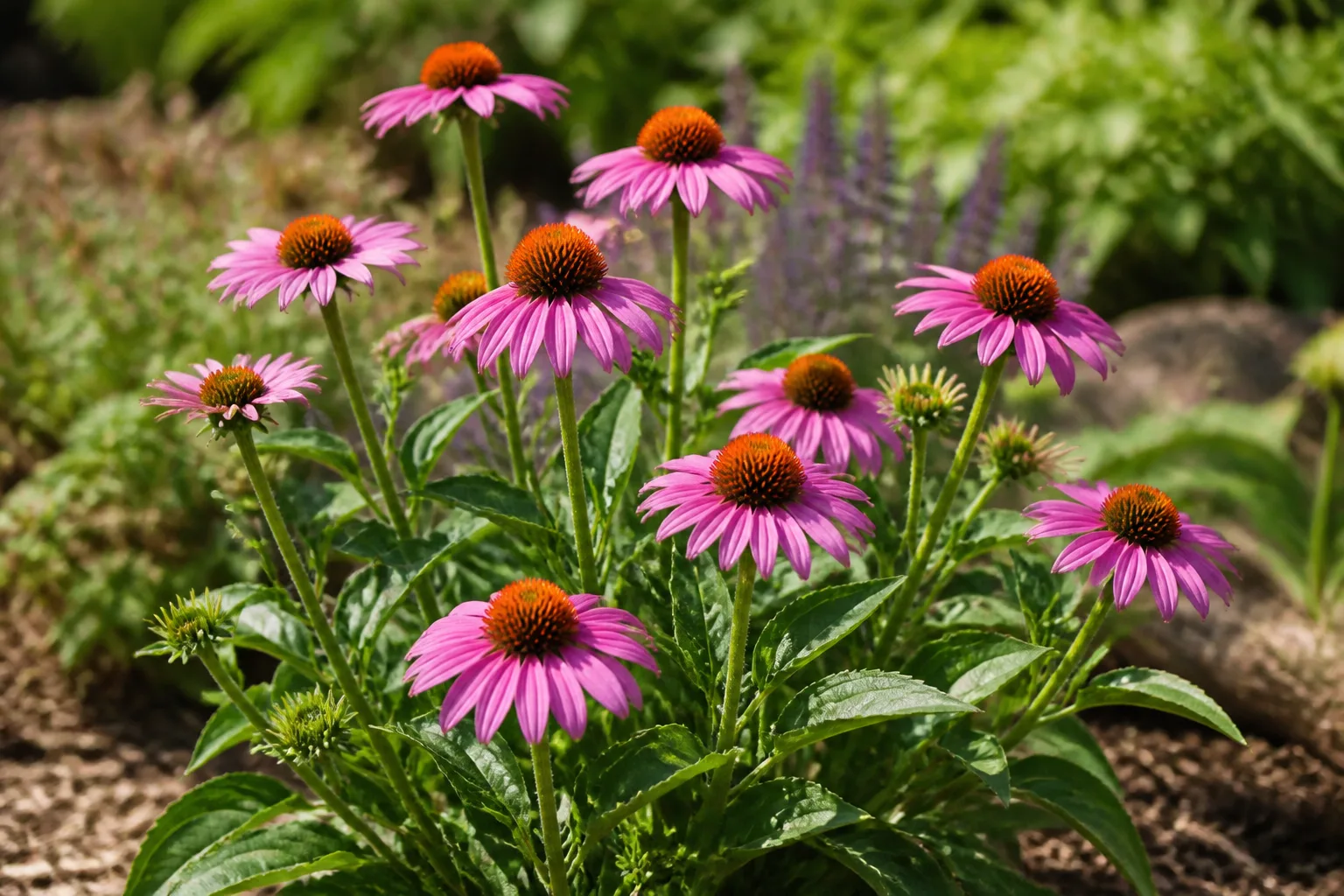
If your coneflowers are brown, top-heavy, and full of spent flower heads, the right answer is usually wait until spring—unless the plant is diseased or the stems are already a cleanup problem. Healthy coneflowers do not need an annual fall shearing to survive. Leaving them standing can feed birds, add winter structure, and protect the garden’s small wildlife, while a late-winter cut gives you a tidy reset before new shoots expand.
That does not mean every brown stem deserves to stay. A plant with obvious disease, collapsed wet foliage, or badly damaged growth is a sanitation case. And if you want a formal bed, dislike self-sown seedlings, or need to clear a path, you can cut a dormant plant without ruining next year’s bloom. The key is to decide what job you want the cut to do before you decide when to make it.
The Short Answer: Wait on Healthy Plants, Cut Diseased Growth
For a healthy, established coneflower, leave the stems and seed heads through winter and cut them in late winter or early spring, just before the crown sends up a lot of new growth. This is the best default when you value goldfinches, winter texture, self-sown plants, or a gradual, wildlife-friendly garden cleanup. Clemson Cooperative Extension says established Echinacea foliage and stems can be removed in fall, winter, or early spring, but specifically notes that delaying deadheading lets goldfinches use the seed heads in winter. Clemson’s coneflower guide also places most garden coneflowers in a broad, species-dependent hardiness range of Zones 3 to 9, so local cold and the cultivar still matter.
Cut in fall or during winter instead when the plant has a documented disease or pest problem, when dead stems are lying on neighboring plants and staying wet, or when the bed must be clear for access. Wait until the plant is actually dormant; do not cut green leaves just because the calendar says autumn. If a coneflower has aster yellows, remove the infected plant and dispose of it rather than treating it as ordinary seasonal debris.
One useful refinement is the first-winter window. NC State Extension’s 2025 stem-habitat study sampled almost 3,000 perennial stems from 20 North Carolina gardens and found no nests in intact first-winter stems, while stems became more usable to stem-nesting bees after they had been cut or naturally damaged. That means cutting this season’s intact stems between the first fall frost and the last spring frost can create next year’s nesting stubble—but stems you already cut or deadheaded earlier in the growing season should not be cut again during winter.
Deadheading and Cutting Back Are Different Jobs
Deadheading removes individual spent flower heads while the plant is still growing. You do it to keep the display fresh, reduce unwanted seed, and sometimes encourage another flush of flowers. It is a small, selective cut made high on the stem, usually just above a healthy leaf set or side bud.
Cutting back removes the old season’s stems and foliage after the plant has slowed or gone dormant. It is a whole-plant cleanup, not a bloom-by-bloom beauty treatment. Confusing the two leads to the most common coneflower mistake: cutting down a green plant in late summer when all it needed was a few spent flowers removed.
You also do not have to treat every stem in a clump the same way. Deadhead the flowers you want to keep tidy, leave a few mature cones for birds, and save the full cutback for the end of the season. That staggered approach protects late flowers and gives you more control over self-seeding without sacrificing every seed head at once.
Why Healthy Coneflowers Can Stay Standing
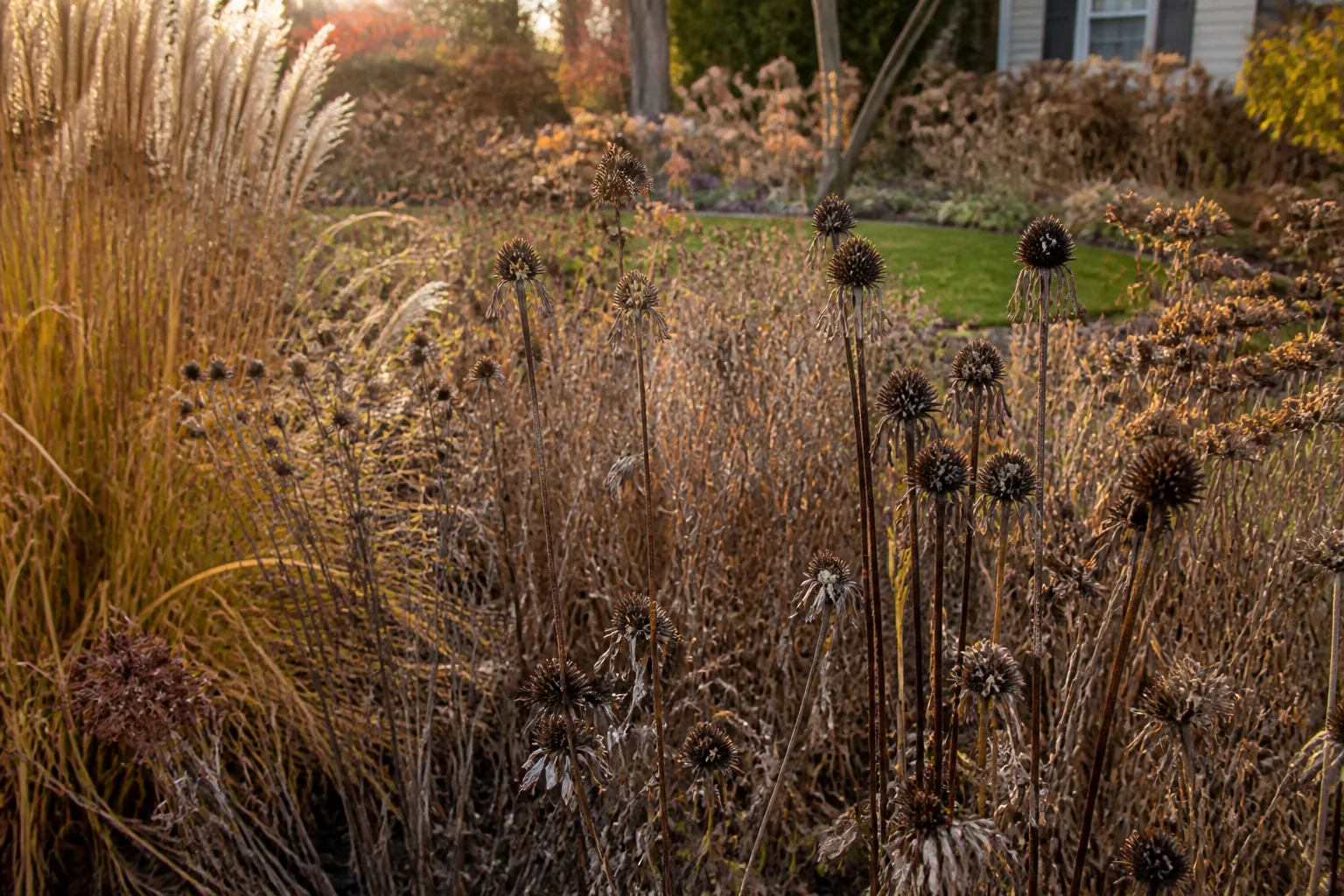
Coneflowers are herbaceous perennials: their aboveground growth naturally fades, while the crown and roots wait for the next growing season. Once the leaves have turned brown and the stems are dry, there is little cosmetic benefit in keeping every stem, but there is also no automatic horticultural emergency that requires removing them in October.
The old cones are useful in three ways. First, birds can pick through them for seed when fresh summer food is harder to find; Penn State Extension’s deadheading guidance lists coneflowers among the perennials whose seed heads are especially valuable to winter birds. Second, upright stalks create texture and help the bed look intentional under frost or a light snow. Third, standing stems and their bases leave more structure for insects and other small organisms than a completely bare bed.
The living plant still benefits from a little patience. Green foliage is not “dead” merely because the flowers are over; it can continue making and moving carbohydrates while the season is winding down. If the leaves are still green, remove only what is damaged or genuinely spent unless you have a specific design reason to do more.
When Fall Cutback Is the Right Choice
Fall cutback is reasonable when plant health, access, or garden design outweighs winter habitat. The strongest case is a clump that had powdery mildew, leaf spot, stem rot, or a serious pest issue. Removing affected material reduces the amount of contaminated debris left around next year’s emerging foliage, especially when the bed is crowded or poorly ventilated.
It is also sensible for coneflowers that have collapsed into a path, blocked a drain, flopped across a neighboring plant, or repeatedly trapped wet leaves against their crowns. A tidy formal border may justify a dormant cut even when the plant is healthy. You are trading bird food and winter structure for a clearer bed; that is a garden preference, not a failure.
Self-seeding is another legitimate reason. Echinacea purpurea can sow itself freely when seed heads are left to mature, while some modern hybrids produce little or no viable seed. If you want a few volunteers, leave several cones and remove the rest. If you want each plant to remain in its assigned spot, deadhead before seeds loosen or remove the heads during dormant cleanup.
Do not read “fall cutback is allowed” as “cut as soon as the first flower fades.” Let the plant finish flowering, let foliage lose its green color, and choose a dry day. A late cut through actively growing tissue is more stressful and removes food-making leaves before the plant has finished its seasonal work.
Read the Plant Before You Pick Up the Shears
Use the plant itself as your timing signal. A quick inspection can sort most coneflowers into one of four decisions:
- Green leaves and firm stems: leave the structure; deadhead only individual spent flowers.
- Brown, dry, fully dormant growth: either leave it for winter or make a planned cut in the fall, winter, or early spring.
- One damaged stem: remove that stem cleanly and keep the rest of the clump standing.
- Spots, mildew, distorted flower heads, or unexplained decline: pause to identify the problem before deciding how aggressively to clean up.
The flower cone itself helps with deadheading. A new coneflower can briefly look like a bare cone before its petals fully open. A genuinely spent flower has faded or drooping petals, a darkening cone, and a dry, prickly seed surface. Look for unopened buds lower down the stem before making a cut; removing a green bud is how a tidy pass turns into fewer blooms.
A Season-by-Season Coneflower Pruning Calendar
Summer: Deadhead Selectively
During active growth, prune for flowers and shape, not for winter cleanup. When a bloom fades, follow its stem down to the first healthy leaf set or side bud and cut just above it. That leaves the plant’s remaining foliage working and may encourage branching, but it will not force every cultivar into a second flush.
If you want seed for wildlife or future sowing, stop deadheading some flowers in late summer. Penn State Extension recommends keeping seed pods on many perennials in autumn, and specifically calls out coneflower seed heads as winter food for birds. You can create a simple rotation: deadhead the front or path-facing stems and leave the back half of the clump to mature.
Fall and Early Winter: Let the Plant Finish
After the first hard frost or once the entire clump is brown and dry, make the decision again. Healthy plants can stand. Diseased plants should be cleaned up. A formal garden can be cut back, while a naturalistic bed can leave most stems in place.
If you choose to cut this year’s intact stems for a neat bed or for future stem habitat, the winter period between the first fall frost and the last spring frost is a useful window. NC State Extension found that first-winter stems were not occupied by bees in its study, but also cautions that stems cut or damaged earlier in the growing season may already be available to nesting insects. Do not repeatedly recut the same stems simply to make the bed look freshly clipped.
Spring: Finish the Cleanup Before New Growth
Spring is the safest all-purpose time for a healthy coneflower you intentionally left standing. Watch the crown rather than a fixed date. When new shoots are still short and easy to see at the base, cut the old stems down and clear them without stepping on the emerging growth.
Spring cleanup is particularly useful if winter weather has loosened stems, birds have stripped the seed heads, or the plant’s old foliage has become a damp mat. Finish before new shoots are tall enough to be caught in the shears. If stems are already cut to a wildlife-friendly 12 to 24 inches, leave any older, previously damaged stalks that may now contain nests and remove only the current season’s intact growth.
How Far Back Should You Cut Coneflowers?
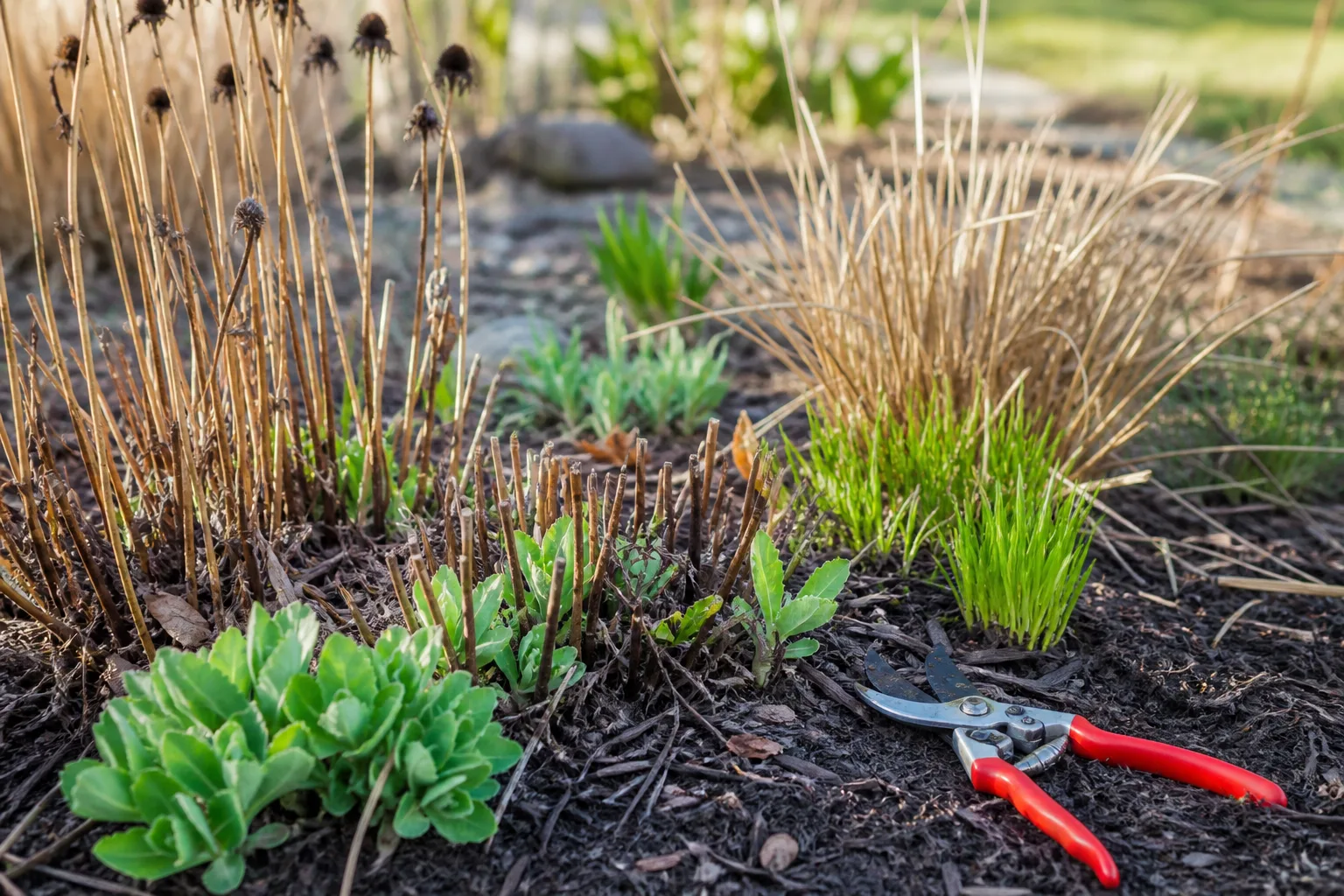
For a conventional dormant cleanup, cut the old stems to about 2 to 3 inches above the soil line. That short collar is low enough to make room for spring growth but high enough that you are not scraping the crown or slicing into basal buds at ground level. Clemson Extension describes removing dead foliage and stems after establishment but does not require one universal height; the best cut is the one that clears old material without injuring the crown.
For a wildlife-focused winter cut, leave 12 to 24 inches of stem stubble instead of cutting to 2 inches. NC State Extension recommends this height to create accessible cut ends for stem-nesting bees while retaining a relatively orderly appearance. You can use the taller option on a few clumps and the shorter option on a prominent border without treating the whole garden identically.
Cutting to the ground will not normally kill a dormant, established coneflower, but it removes the habitat value of the stems and increases the chance of accidentally nicking the crown. If you are cutting diseased material, make the cut below affected tissue and follow disposal guidance rather than preserving a tall stubble that still carries the problem.
How to Deadhead Without Sacrificing New Buds
Start with clean, sharp bypass pruners or garden scissors. Find the spent flower, trace its stem downward, and stop at the first healthy pair of leaves or a visible side bud. Make one clean cut just above that point; leaving a long bare stub looks untidy and can die back farther than expected.
Do not shear the entire top of a coneflower clump to remove a few faded flowers. Shearing removes fresh buds that are still forming, disrupts the plant’s natural succession of blooms, and makes it harder to decide which cones you want to keep for seed. If you cannot tell whether a cone is spent, wait a few days and check whether the petals are truly dry and whether the cone has developed a rough, spiky seed surface.
Deadhead more often when you want a controlled, flower-forward display; deadhead less when you want birds and volunteer seedlings. The best frequency is not a fixed weekly schedule. Walk the bed when you water, remove only clearly finished flowers, and stop once the late-season seed heads become part of your winter plan.
How to Cut Back Coneflowers Safely
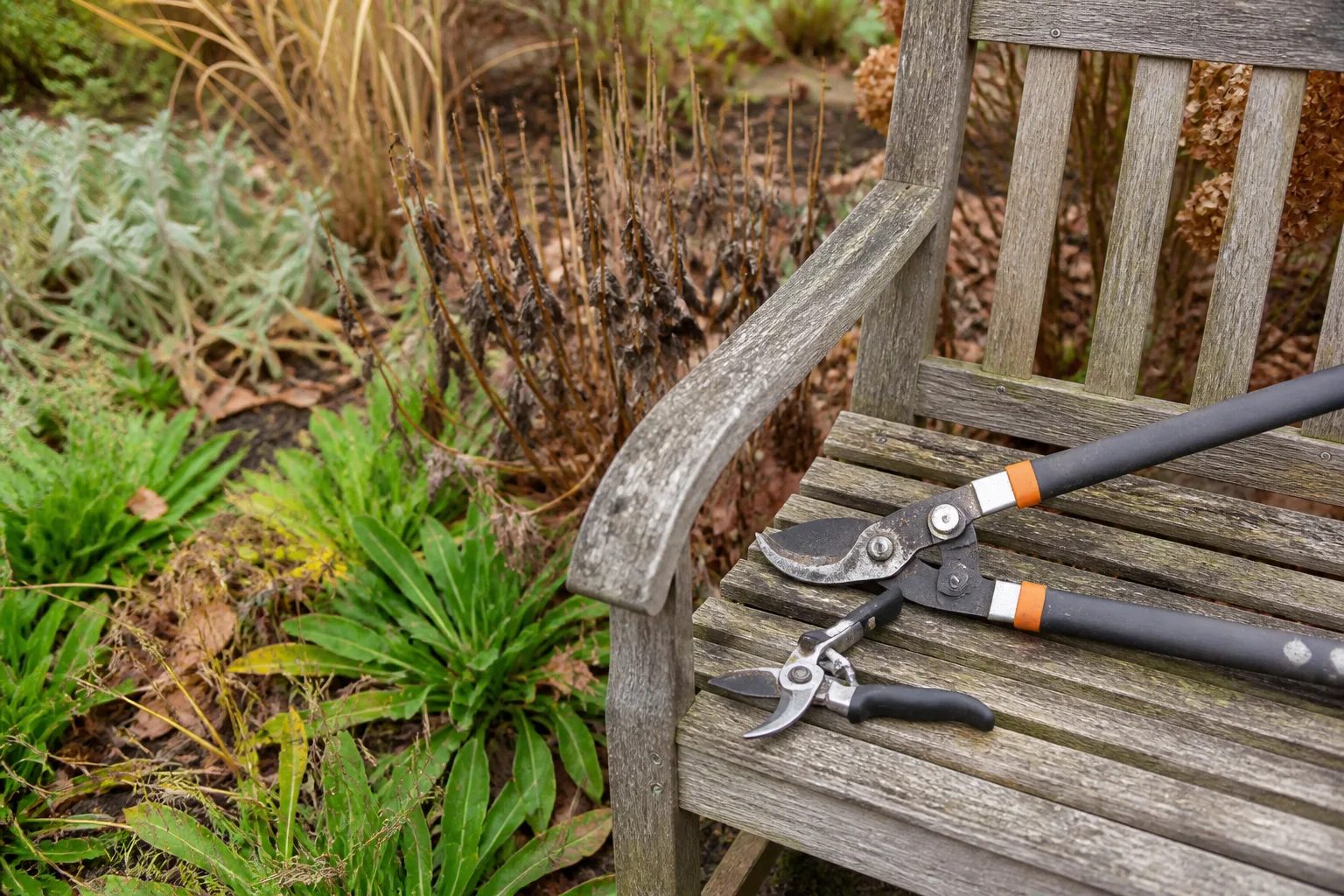
Use the smallest tool that makes a clean cut. Hand pruners handle a few stems and let you work around new basal growth. Garden scissors are useful for thin stems and selective cleanup. Hedge shears save time on a large, fully dormant clump, but they encourage indiscriminate cutting, so use them only after you have decided that the whole plant should come down. Epic Gardening’s pruning overview also recommends choosing between hand pruners, garden scissors, and hedge shears according to the size of the clump rather than treating one tool as mandatory.
Choose a dry day when the plant surface is not wet with dew or rain. Wipe or disinfect blades before you begin, between plants when disease is suspected, and after the job. A clean cut does not cure a disease, but dirty blades can move contaminated sap or spores from one plant to the next.
Gather the stems before cutting so they do not fall across neighboring crowns. Cut in manageable bundles, keeping the blades above the crown and away from any green basal shoots. Then inspect the center of the clump; the first pass often hides a few old stems that are leaning into new growth.
The Wildlife and Self-Seeding Trade-Off
Leaving coneflowers standing is not a moral test. It is a choice about what your garden should provide in winter. Mature cones can feed goldfinches and other seed-eating birds, while upright stems and seed heads preserve height and movement when most flower color has disappeared. Cornell University’s purple coneflower profile describes the plant as a native perennial whose seed heads can be left for winter interest and birds, while also warning that doing so increases self-seeding.
The seed question depends on the plant you own. A straight species or open-pollinated cultivar may produce seedlings that resemble the parent imperfectly. A sterile or highly hybridized selection may keep its dried cones for texture but provide less viable seed. If you do not want surprises, remove the seed heads before they loosen or place a shallow layer of mulch where a few volunteers are easy to pull.
You can also support stem-nesting bees without leaving every plant untouched until May. Trim intact first-year stems during the first winter and leave a 12-to-24-inch stubble, then allow those stems to weather through the next growing season. If a stem has already been cut, broken, or damaged earlier, leave it alone during winter because its hollow or pithy interior may now be occupied.
Disease, Pests, and Aster Yellows: The Exception
Do not leave visibly infected foliage in place simply because winter wildlife is valuable. Powdery mildew, leaf spot, stem rot, and severe pest damage deserve a targeted cleanup. Remove affected leaves and stems, collect fallen debris around the crown, and keep it out of home compost if the pile does not reliably reach disease-suppressing temperatures.
Aster yellows requires a more decisive response. Look for abnormal green flower parts, tufts of distorted growth, witches’-broom-like shoots, or a flower that seems to produce leafy growth instead of a normal cone. Clemson Extension explains that aster yellows is spread by leafhoppers and recommends removing and destroying infected plants to prevent further spread. Do not simply cut off the odd flower and leave a suspicious clump beside healthy coneflowers.
Separate sanitation from cosmetic pruning. If one stem is diseased but the rest of the clump is healthy, remove that stem and reassess. If symptoms are widespread or the crown is collapsing, bag the material, clean the tools, and avoid moving the debris through the bed. For an unknown problem, take a clear photo and ask a local extension office or diagnostic clinic before applying a pesticide or composting the cuttings.
Climate, Cultivar, and Garden-Style Nuance
In cold regions, standing stems can catch snow around the crown and add visual structure, but a tall, wet plant can also be awkward beside a path or vulnerable to repeated wind. If your ground freezes early, do not wait until the week before the first deep freeze to start a large cleanup job. You can leave healthy plants standing, or cut intact dormant stems during the early winter window when the soil is workable.
In mild or wet climates, the calendar is less reliable than the plant. If basal growth stays green through winter, avoid a hard cut through active tissue. If autumn rains keep old leaves pressed to the crown, selective removal and better spacing may matter more than whether the final cut happens in November or February. A practical fall-versus-spring comparison from Homes & Gardens reaches the same conditional conclusion: the best window depends on climate, plant condition, and the result you want from the bed.
Cultivars vary in height, branching, fertility, and disease tolerance. A compact hybrid may need little shaping, while a tall Echinacea purpurea clump may benefit from selective deadheading or a spring support check. Clemson Extension notes that species and cultivars differ in hardiness and that proper spacing helps air circulation; treat the 2-to-3-inch cut as a practical maintenance baseline, not a command that overrides the plant’s own growth pattern.
Your garden style counts, too. A pollinator border, a cottage bed, and a highly visible entry border can all make different choices and still grow healthy coneflowers. A good compromise is to leave one group standing for seed and habitat, cut a second group to taller stubble, and keep only the most formal edge fully tidy.
The Optional Chelsea Chop for Shorter Plants
The Chelsea chop is not fall pruning. It is a selective late-spring or early-summer cut made while stems are actively growing, usually before the main flower display. Cut selected stems by roughly one-third to one-half, or shorten them by about a foot, to delay their bloom and create a shorter, potentially sturdier plant.
Use it on a portion of a clump, not automatically on every coneflower. The value is timing and shape: chopped stems may bloom later or branch lower, while uncut stems flower on the plant’s normal schedule. That can extend the overall display, but the result depends on cultivar, weather, fertility, and how late you make the cut.
Do not use the Chelsea chop as a rescue for a diseased or drought-stressed plant. Stabilize the plant first, and avoid cutting when heat or dry soil will make recovery difficult. If your coneflowers are already carrying flower buds, a late hard cut can trade a near-term bloom for a delayed one.
What to Do After Cutting—and the Mistakes to Avoid
After a healthy cutback, rake away loose dead leaves that are packed against the crown, but do not churn the soil or bury the basal growth. If your garden uses winter mulch, spread a light, even layer around the plant after the soil cools and keep it off the crown itself. Established coneflowers are drought-tolerant once rooted, but water a newly planted or unusually dry clump deeply before the ground freezes.
Skip high-nitrogen fertilizer as a “recovery” treatment. Coneflowers are not heavy feeders, and pushing soft new growth late in the season can make the plant less prepared for cold. A spring top-dressing of finished compost is usually more sensible than a late-season feed, especially if a soil test does not show a deficiency.
Avoid these common errors:
- Cutting green coneflowers to the ground in late summer because the first flowers faded.
- Removing every seed head when birds are part of the garden’s purpose.
- Waiting until spring to recut stems that were already damaged or deadheaded earlier in the growing season.
- Cutting so low that the blades scrape the crown or sever emerging basal buds.
- Composting material from a known disease problem in a cool backyard pile.
- Assuming a tidy cut guarantees more flowers; bloom depends on light, moisture, cultivar, and plant health as well as pruning.
A Simple Yearly Maintenance Plan
In early summer, inspect the clump and use the Chelsea chop only if you need shorter, staggered bloom. During the flowering season, deadhead a few spent heads at a time, always checking for unopened buds. In late summer, decide which cones will be left for birds, seed, and winter structure.
After frost, inspect for disease and remove clearly infected material. For healthy plants, either leave the intact stems standing or cut them during the first-winter window and leave a wildlife-friendly stubble. In late winter or very early spring, finish the cleanup before new growth becomes dense, choosing a 2-to-3-inch cut for a tidy bed or leaving older, potentially occupied stems in place when habitat is the priority.
This plan keeps pruning purposeful. You are not cutting because coneflowers are “supposed” to be cut at one particular month; you are deadheading for flowers, cutting back for a defined cleanup goal, and leaving stems when their winter work is more valuable than a bare bed.
Conclusion
For most healthy coneflowers, wait until late winter or early spring if you want one simple, low-risk answer. Leave the seed heads through winter when birds, winter texture, self-sown plants, or habitat matter; cut dormant plants in fall or early winter when a formal bed, access, or first-winter stem management makes that the better fit.
Cut diseased material promptly and dispose of it carefully. Deadhead selectively during summer, make dormant cuts about 2 to 3 inches above the soil for a conventional cleanup, or leave 12 to 24 inches of first-winter stubble when supporting stem-nesting bees. Once you stop treating every spent flower as a signal to shear the whole plant, the fall-versus-spring decision becomes much easier: read the plant, name your goal, and make only the cut that goal requires.



